











What certifications should a commercial silicone sealant supplier have? | Insights by KINGDELI
What certifications should a commercial silicone sealant supplier have?
When buying commercial silicone sealant for façade, glazing, firestopping, potable water or food-contact projects, the certifications and test documentation a supplier provides determine whether the product will meet regulatory, performance and warranty requirements. Below are six specific, buyer-focused questions (long-tail, pain-point oriented) that often lack in-depth answers online — followed by practical, evidence-based answers, the documentation you should request, and how to verify claims.
1. How can I confirm a supplier's CE/EN (Declaration of Performance) actually covers my external façade joint type and movement class?
What to check: For products sold into the EU (and UKCA where applicable), a commercially supplied silicone intended for construction use must carry a Declaration of Performance (DoP) tied to its CE marking under the Construction Products Regulation. DoP documents list the harmonised standard (e.g., EN 15651 series where applicable), intended use (façade, glazing, sanitary), and declared performance characteristics (e.g., adhesion, movement capability, compatibility with primers).
How to verify:
- Request the supplier’s DoP and the specific EN standard referenced. The DoP must include the product name, intended use category and the notified body (if assessment was by a notified body).
- Confirm the product’s declared movement capability and service category match your joint design and substrate. If your project has high movement joints, ensure the declared movement capability (e.g., ±25% or ±50% as stated in the DoP/TDS) aligns with your design movement.
- Ask for third-party test reports or a notified body certificate when the DoP indicates third-party assessment. Cross-check the notified body number in the DoP with the official NANDO database if needed.
- Request compatibility and adhesion test data for your substrate (e.g., anodised aluminium, treated concrete). CE/EN documents cover performance, but substrate-specific adhesion tests (supplier or third-party lab) are required to ensure no bond failure on-site.
Why this matters: CE/EN compliance documented by a DoP confirms regulatory conformity but does not replace substrate- or project-specific verification. A DoP that lists the correct EN part and movement capability is the baseline; independent adhesion tests and the supplier’s installation instructions complete the compliance picture.
2. Which ASTM/ISO test reports should I request to ensure a silicone sealant will retain adhesion and elasticity after 10 years in a coastal installation?
Key performance risks in coastal exposure are UV degradation, salt-induced corrosion at bonded interfaces, loss of elasticity and adhesive failure. Request documented accelerated and real-time testing focused on these mechanisms:
- Accelerated weathering: UV exposure reports per ASTM G154 or ISO equivalents (e.g., ISO 4892‑2) showing retention of elongation, tensile strength and adhesion after specified cycles.
- Salt-fog/corrosion exposure: ASTM B117 salt spray results on representative substrates and fasteners to show no substrate corrosion or adhesion loss attributable to the sealant.
- Cyclic movement and adhesion: ASTM C719 (adhesion and cohesion under cyclic movement) or equivalent dynamic movement tests that demonstrate retained adhesion after movement cycles and aging.
- Tensile/elongation and hardness: baseline and post‑aging results (tensile strength, elongation at break, Shore A hardness) per ASTM D412 or ISO 37 to quantify elasticity retention.
- Field exposure / long-term data: Wherever possible, request field performance case studies from comparable coastal projects with years of in-service data and references.
How to demand evidence: Ask for lab reports from ISO/IEC 17025 accredited labs (SGS, Intertek, TÜV, etc.). Verify the lab accreditation on the report. If the supplier only provides internal QC reports, require a third-party validation before accepting a large or critical supply.
3. Which environmental and chemical compliance certificates (REACH, RoHS, VOC) are non-negotiable for supplying silicone sealants to EU and US construction projects?
Regulatory and sustainability compliance is often project-critical. The non-negotiable items depend on application and jurisdiction:
- REACH: For the EU market, ask for a supplier statement of REACH compliance and confirmation that the product does not contain SVHCs above threshold levels. For substances of very high concern, suppliers should provide either registration details or a clear policy and test evidence.
- RoHS: Required when silicone adhesive/sealant is used in electrical/electronic equipment placed on the EU market. Request a RoHS compliance statement and lab testing when the product will be incorporated into electronics assemblies.
- VOC limits / local air-quality rules: For US projects, confirm compliance with CARB, SCAQMD and local VOC regulations. For EU projects, ensure the product meets relevant VOC criteria under national or local market programs. Where low-emitting materials are specified, provide GREENGUARD or equivalent indoor air quality certification if required for LEED credits.
- Waste and disposal: Ask for guidance on disposal, recyclability and any hazardous classification on the SDS (Safety Data Sheet).
What documentation to request: Supplier declarations for REACH and RoHS, VOC test reports and SDS. For green-building projects, request GREENGUARD, GreenLabel or equivalent certificates and the product’s emissions test report (ISO 16000 series or ASTM D5116 as applicable).
4. How do I verify a supplier's firestopping silicone is certified for a specific UL-rated wall/ceiling penetration or joint system?
Firestop approvals are system-specific. A silicone firestop product is only valid for a particular UL or tested assembly if it is explicitly listed in that system’s tested configuration.
Steps to verify:
- Request the product’s UL listing or FM Approvals report and the exact system number(s) where the product is used. Many joint and penetration systems are tested to UL 2079 (tests for fire resistance of building system joints) or to specific hourly-rating listings in the UL fire resistance directory.
- Confirm the assembly: The tested assembly includes substrates, joint geometry, supporting materials (backer rod, insulation), and installation instructions. The supplier must provide the tested system drawing and step-by-step installation instructions used in the test so the field installation matches the tested condition.
- Look for third-party evaluation: ICC-ES Evaluation Reports (ESR) or FM Global system approvals supplement UL listings and can be required by code officials or insurers.
- Verify with the authority: Cross-check the UL or FM listing number in the online directories. If in doubt, request a copy of the specific test report from the issuing body or confirmation from the supplier’s technical team.
Important note: A general ‘fire-resistant’ claim is insufficient. Only a listed system with matching installation instructions satisfies code requirements and insurance expectations.
5. For food-contact or potable-water applications, what documentation should a silicone sealant supplier provide to prove compliance and long-term safety?
Food-contact and potable-water applications require regulatory proof and migration testing because sealant formulations can leach residuals over time.
Documentation to request:
- Regulatory declarations: For the US, request a supplier statement of compliance with applicable FDA regulations (e.g., FDA food-contact clearance where relevant). For EU projects, request compliance with Regulation (EC) No 1935/2004 and any applicable national rules; a Declaration of Compliance (DoC) should be provided.
- NSF/ANSI standards: For potable water, NSF/ANSI 61 (drinking water system components) or equivalent local approvals are commonly required. For food-equipment contact, NSF 51 may be relevant.
- Migration and extractables testing: Ask for overall and specific migration test reports using recommended simulants and conditions for your intended use (temperature, contact time). Tests should be performed by an ISO/IEC 17025 accredited lab.
- TDS/SDS and DoC: The Technical Data Sheet (TDS), Safety Data Sheet (SDS) and a formal Declaration of Compliance for food contact/potable water should be on file and include test report references and limits of detection.
How to interpret: A supplier’s ‘food grade’ label must be supported with documented tests run against the use-case. For example, a sealant used around commercial food equipment will need a different dossier (higher temperature cycles, grease exposure) than one used on potable water pipe joints.
6. What factory audit and traceability records should I request to ensure batch-to-batch consistency for a multi-phase commercial project?
Large or phased projects require consistent product performance across many batches and long lead times. Request the following traceability and quality records before awarding supply:
- ISO 9001 certification: Confirms the supplier’s quality management system and procedures for manufacturing control, nonconforming product disposition and corrective actions.
- Batch traceability: Request the format of batch/lot numbering, certificate of analysis (COA) tied to each shipment, and the supplier’s retention policy for QC records (typically a minimum number of years depending on contract and regulation).
- Certificates of Analysis (COA): Each batch should include a COA with key properties (viscosity, density, pot life if two-component, Shore hardness, tensile/elongation, movement capability) and acceptance criteria.
- Factory audits and third-party inspection: For critical projects, require a supplier to allow third-party factory audits (SGS, Bureau Veritas, Intertek) and provide recent audit reports. Audits should review raw material sourcing, finished goods testing, equipment calibration records and corrective action history.
- Raw material control: Ask for supplier statements on critical raw materials (siloxane polymers, crosslinkers, fillers) and change-control procedures. Any change in raw material should trigger notification and requalification testing for your project.
- Lab accreditation: Confirm that test data supplied is from an ISO/IEC 17025 accredited lab, or that the supplier’s lab is accredited and participates in proficiency testing.
Contractual safeguards: Include requirements in your purchase order specifying required documentation on delivery (COA, SDS, TDS, batch number), and acceptance testing clauses allowing random batch testing at the supplier’s expense if performance deviates.
Concluding summary: advantages of choosing certified commercial silicone sealant suppliers
Opting for a certified, well-documented commercial silicone sealant supplier reduces risk across the lifecycle of a project: regulatory compliance (CE/DoP, REACH), proven long-term performance (ASTM/ISO accelerated and field testing), fire and life-safety assurance (UL/FM/ICC-ES listings), and material safety for potable water and food-contact uses (NSF/FDA/DoC). Certifications and third-party testing shorten approval cycles with authorities having jurisdiction, limit costly rework from adhesion or compatibility failures, and protect warranties and insurance positions. Finally, factory audits and batch traceability reduce variability on multi-phase projects — ensuring consistent application performance from first delivery to last.
If you need project-specific verification or a formal quotation, contact us for a personalized quote at www.kingdelisealant.com or email info@kingdeliadhesive.com.
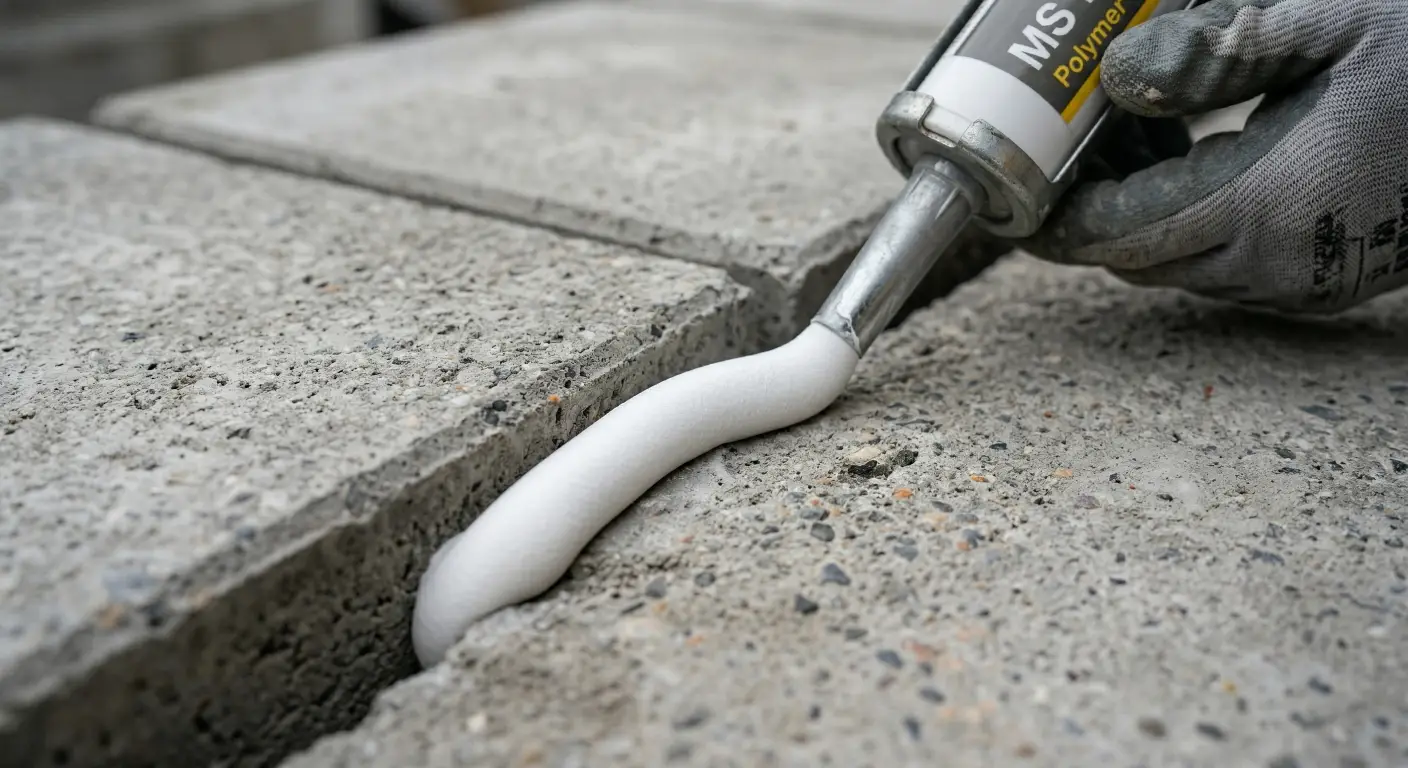
MS Polymer Sealant: The Ultimate Professional Guide for Modern Construction
The 2026 Ultimate Guide to Glass Silicone Sealant: Everything You Need for a Perfect Finish
OEM vs. Branded Acetic Silicone Sealant: What’s Best for Your Distribution Business?
The Future of Sealants: 5 Emerging Trends in Wholesale Neutral Silicone Sealant Technology for 2026
HY-976
How does the adhesive cure?
It cures by water evaporation, which means at least one of the bonded surfaces must be porous.
HY982
Is a primer required before application?
In most cases, no primer is required. HY982 bonds strongly to clean and sound substrates. For highly absorbent or unusual materials, a small adhesion test is recommended prior to full application.
HY993
Can HY993 be painted after curing?
Yes. HY993 is fully paintable with most water-based paints after it has cured.
Distributor Partnership
Do you support OEM and private label production?
Absolutely. We offer full OEM/ODM services—including packaging, color, formulation, and branding customization.
HY925
What materials can HY925 bond with?
HY925 adheres well to metals, glass, concrete, stone, precast panels, various paints, and many other common construction substrates.
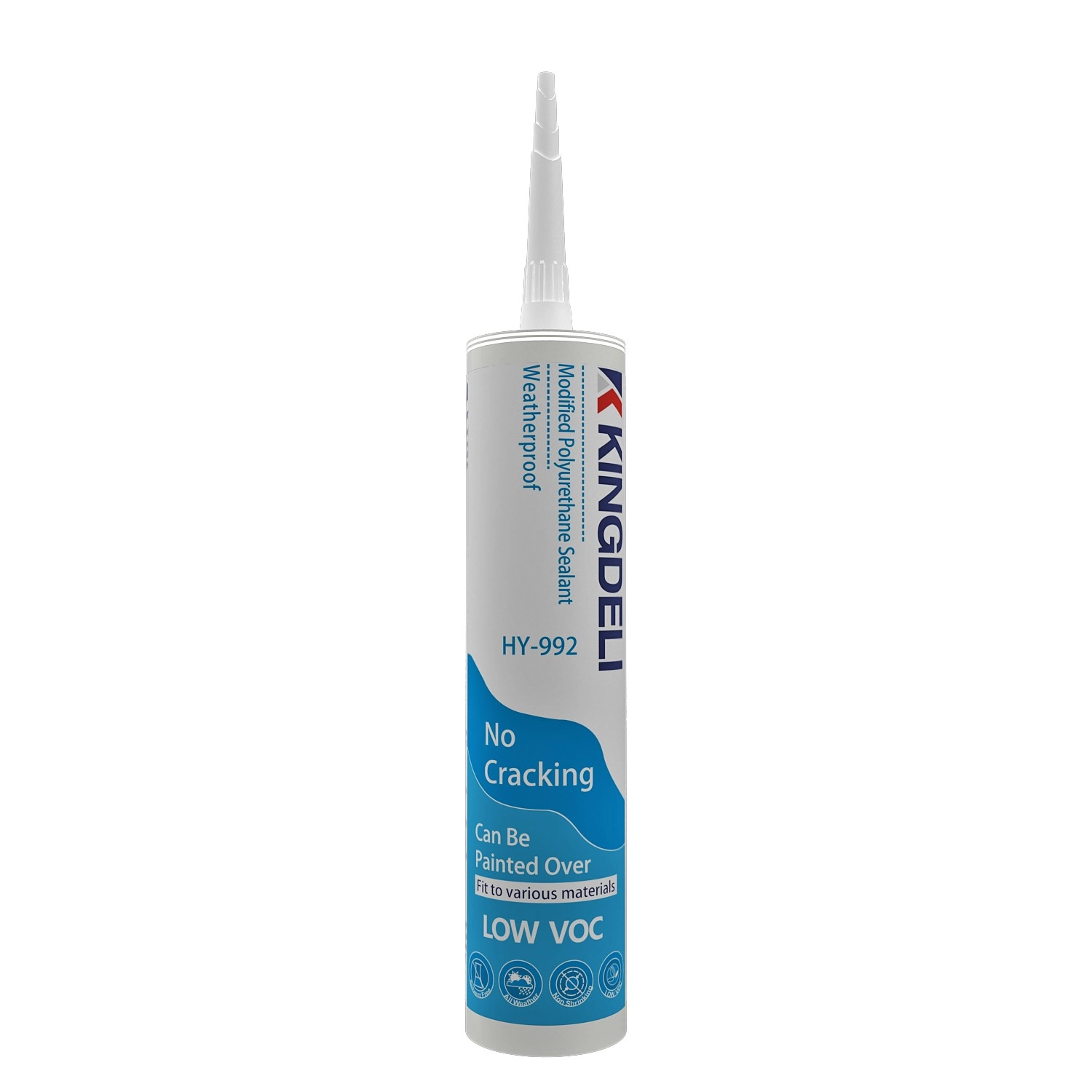
HY992 Modified Polyurethane Construction Sealant
HY992 Modified Polyurethane Sealant is a one-component, moisture-curing construction sealant designed for professional building and structural sealing applications. It provides excellent adhesion, weather resistance, and durable elasticity, making it suitable for a wide range of construction materials.
The formulation delivers strong bonding performance without corrosion or substrate contamination, while maintaining low VOC content for environmentally responsible construction projects.

HY995 Crystal Clear Ms Polymer Adhesive/Sealant
HY995 Crystal Clear Ms Polymer Adhesive/Sealant is a new generation MS Polymer adhesive / sealant formulated for all bonding and sealing applications where long term reliability is required. It has excellent bonding strength on various materials. It will cure to form a durable, flexible, waterproof seal.

HY997 High-Performance Anti-Microbial MS Polymer Sealant
HY997 MS polymer sealant for is is a premium one-component, neutral-curing modified silane sealant engineered for demanding interior applications. It offers a Class 20 movement capability, ensuring long-lasting flexibility and reliable performance under dynamic joint conditions. Curing at room temperature, HY997 delivers superior anti-microbial and mildew-resistant properties, maintaining hygienic and clean environments over time.
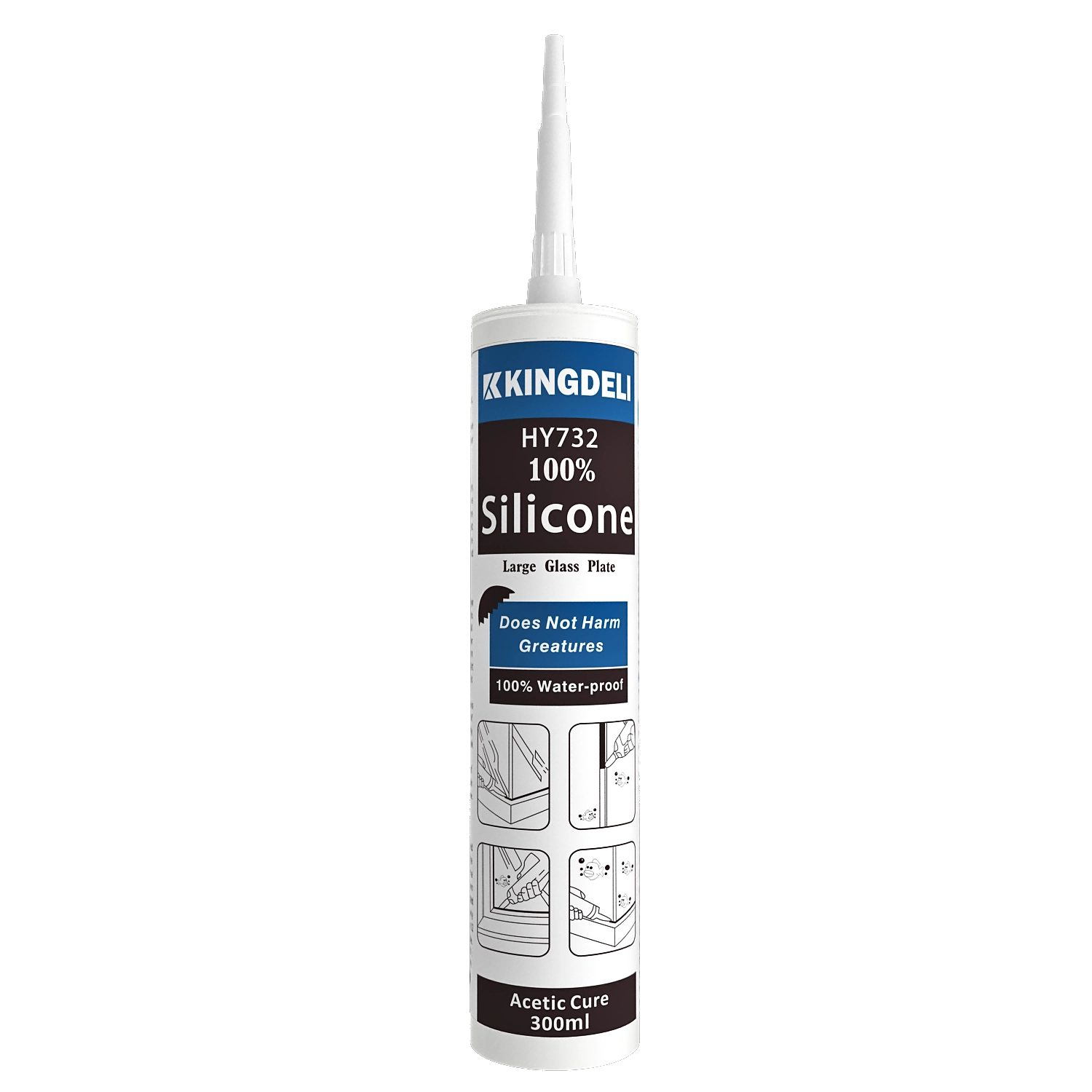
KINGDELI HY732 Professional Acetoxy Cure Silicone Sealant
KINGDELI HY732 is a professional-grade, one-component acetoxy cure silicone sealant designed for fast curing, strong adhesion, and long-lasting flexibility. Ideal for aquariums, glass applications, aluminum doors and windows, kitchens, and bathrooms, it provides reliable sealing performance with excellent anti-fungal protection in high-humidity environments.
Let’s Build Stronger Bonds with Quality Adhesives and Sealants
Have questions about the topic or need tailored sealant solutions for your project?
Our team is ready to provide expert guidance, product recommendations, and application support.
Innovating with Integrity, Bonding the World
Since 1998, KINGDELI has delivered trusted, sustainable sealant solutions that connect industries and inspire progress worldwide.
Whatsapp: +8618825946249
Kingdeli
Kingdeli
Kingdeli
Kingdeli
Kingdeli