


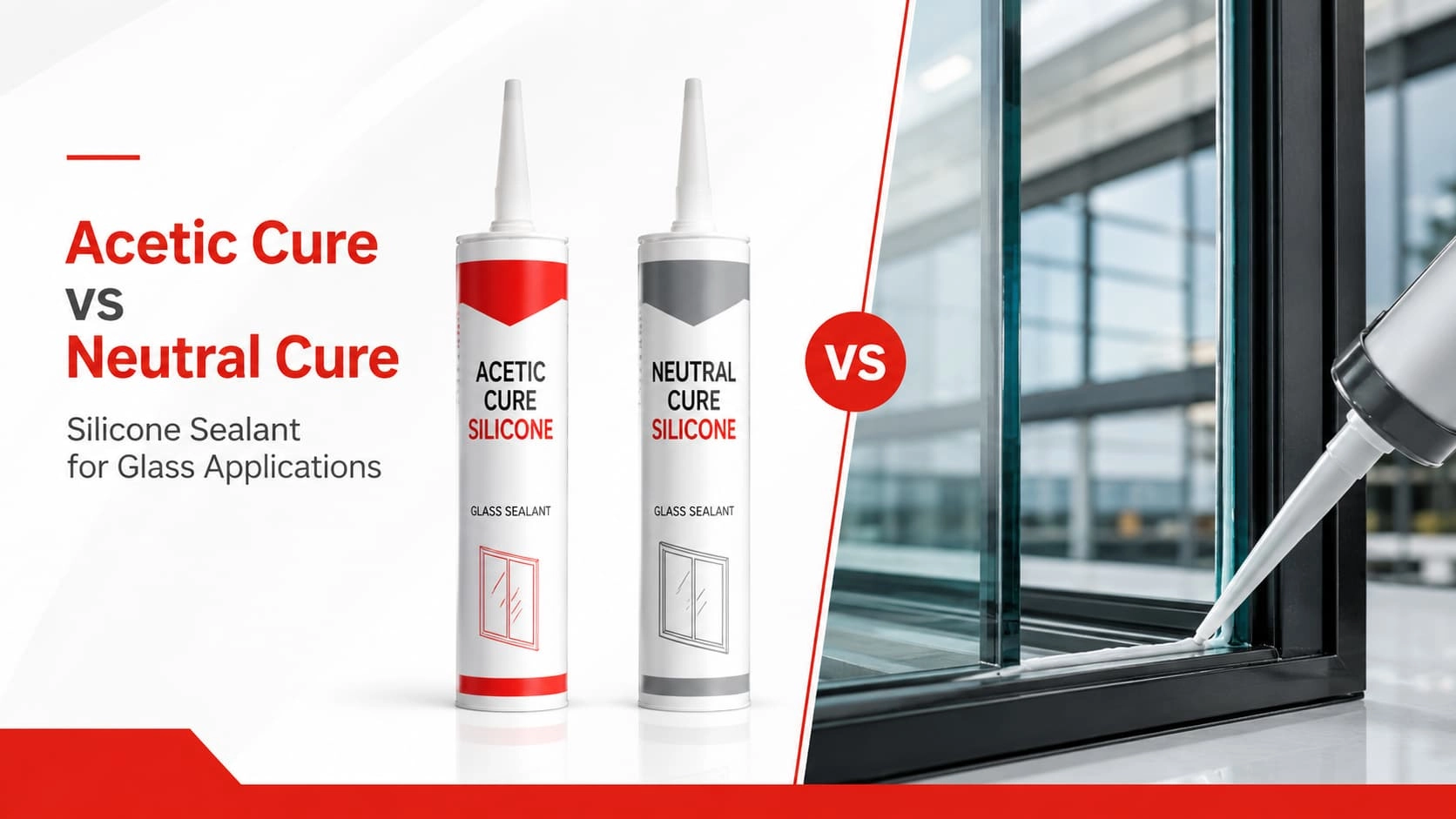
Acetic Cure vs Neutral Cure Silicone: Which Sealant Is Best for Glass?
Choosing between acetic cure and neutral cure silicone depends entirely on what you're bonding to. Get it right and you have a durable, long-lasting seal. Get it wrong — particularly on bare metal, mirrors, or alkaline stone — and you risk corrosion, desilvering, or adhesion failure that shows up months after installation.
This guide compares the two curing systems directly: what each one means chemically, how they perform on different substrates, which one is right for glass specifically, when you should avoid acetic silicone entirely, and what "non-acetic" or "non-acetoxy" silicone actually refers to.
Quick Answer: Acetic vs Neutral Silicone for Glass
For clean glass, glazed ceramic, and other smooth non-porous surfaces, acetic cure silicone is usually the better choice because it cures faster and offers strong adhesion to properly prepared glass surfaces.
For metal, mirror backing, concrete, marble, natural stone, or any project involving mixed substrates, neutral cure silicone is the safer choice because it does not release acetic acid during curing.
If your project is glass-to-glass or glass-to-glazed-frame with no exposed metal or stone in the bond line, acetic cure is widely used in glazing applications. If metal, mirror, or masonry is anywhere in the equation, switch to neutral cure to reduce the risk of substrate damage.
What Does Acetic Cure Silicone Mean?
Acetic cure silicone — also called acid cure or acetoxy cure silicone — uses an acetoxy cross-linking system. When the sealant is extruded and exposed to atmospheric moisture, the siloxane polymer chains link together in a reaction that releases acetic acid as a byproduct. This byproduct is what produces the sharp, vinegar-like smell associated with this type of sealant during curing.
The acetic acid release is more than an odor characteristic; it is part of the curing behavior that helps acetic silicone develop strong adhesion on clean, smooth, non-porous substrates such as glass. Once fully cross-linked, the result is a resilient elastomeric rubber with strong adhesion to non-porous surfaces and a comparatively fast cure.
Acetic cure and acetoxy cure refer to the same curing chemistry — the terms are used interchangeably in the sealant industry. For glass, glazed ceramic, and similar non-porous applications, a dedicated acetic silicone sealant is often selected when fast handling and strong surface adhesion are required.
What Does Neutral Cure Silicone Mean?
Neutral cure silicone uses a different chemical formulation — typically an alkoxy or oxime cross-linking system. Instead of releasing acetic acid as it reacts with moisture in the air, it releases a non-corrosive alcohol or oxime compound, depending on the formulation. Because this byproduct is close to pH-neutral, neutral cure silicone produces significantly less odor than acetic systems.
The defining advantage of neutral cure silicone is substrate safety: it is formulated specifically to avoid negative reactions with sensitive, porous, or metallic substrates. This makes it the appropriate choice for applications where the acidic byproduct of acetic cure could cause damage — bare metals, mirrors, and alkaline masonry materials in particular. For these projects, a neutral silicone sealant is usually the more practical option.
Acetic Cure vs. Neutral Cure Silicone: Key Differences
The easiest way to understand the difference is to compare curing byproduct, odor, cure speed, substrate compatibility, and corrosion risk side by side. Acetic cure trades broader substrate compatibility for fast curing and strong performance on clean glass. Neutral cure trades some of that speed for safer use across metals, mirrors, stone, concrete, and mixed building materials.
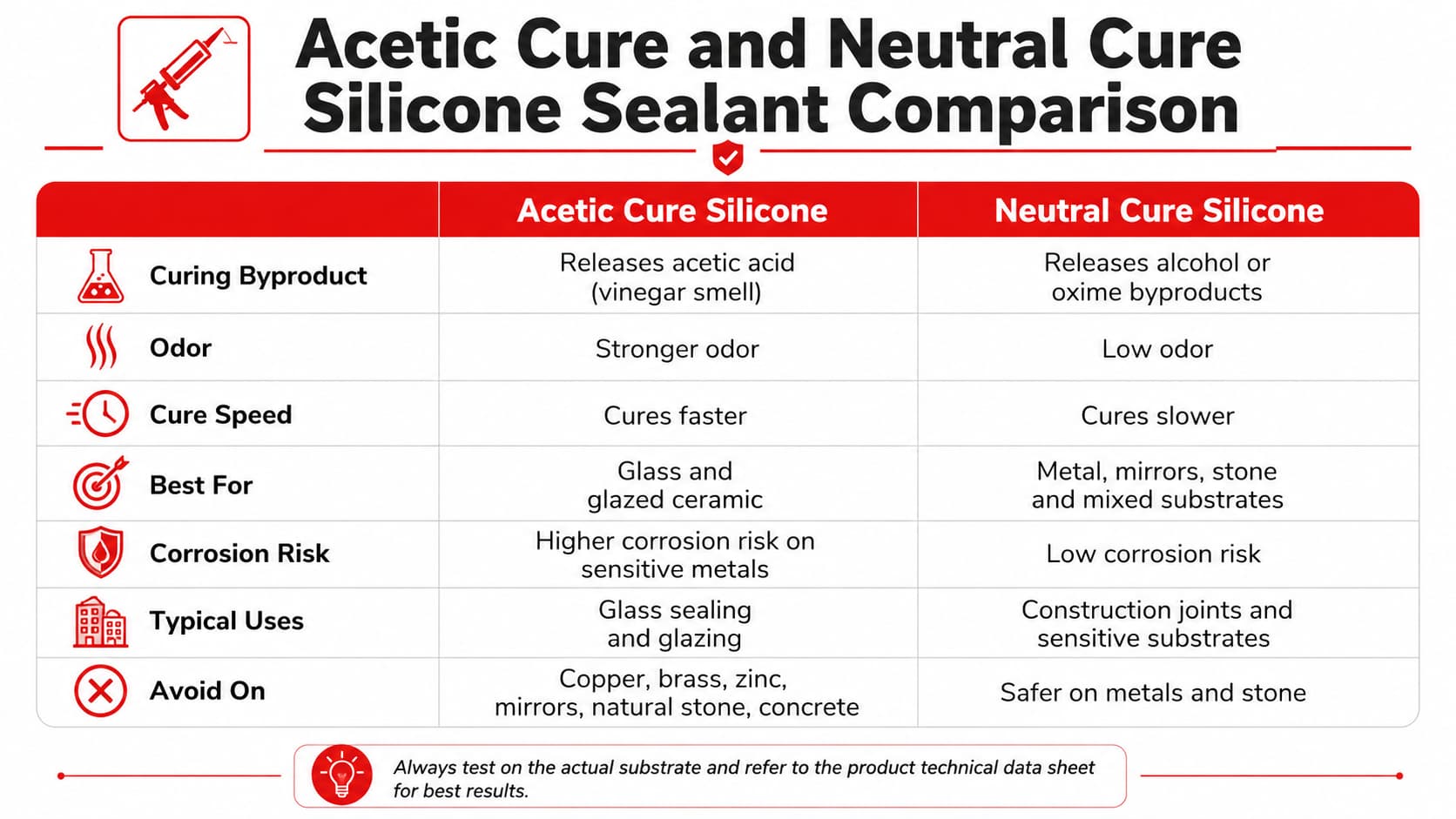
| Comparison Factor | Acetic Cure Silicone | Neutral Cure Silicone |
|---|---|---|
| Curing byproduct | Acetic acid | Alcohol or oxime, depending on formulation |
| Odor during cure | Strong, vinegar-like | Mild to low |
| Cure speed | Faster skin-over and handling time in many applications | Generally slower than acetic cure systems |
| Adhesion strength on glass | Excellent on clean, properly prepared glass surfaces | Good, but usually less aggressive than acetic cure on bare glass |
| Adhesion on porous materials | Not recommended for many alkaline or porous materials | Better suited to stone, concrete, masonry, and mixed substrates |
| Corrosion risk on metal | May cause corrosion on bare copper, brass, zinc, galvanized steel, and other sensitive metals | Non-corrosive for most common building substrates |
| Best substrates | Glass, glazed ceramic, smooth non-porous surfaces | Metal, stone, concrete, mirrors, mixed-substrate assemblies |
| Avoid on | Bare metals, mirrors, concrete, marble, limestone | Generally safe across a wider range of substrates |
| Typical buyer | Glass processors, window manufacturers, glazing contractors | Construction, facade, metalwork, stone, and mirror installers |
Which Silicone Sealant Is Best for Glass?
Glass is entirely non-porous, extremely smooth, and chemically inert — properties that make it a demanding substrate for adhesion. A sealant needs to develop reliable contact and bonding performance with the glass surface rather than relying on mechanical grip into pores, which is how adhesion works on materials like stone or wood.
Why Acetic Silicone Bonds Well to Glass
The acetic curing system helps promote strong adhesion to clean, properly prepared glass surfaces. This is one reason acetic cure remains widely used in glazing work such as aquarium assembly, glass shower enclosures, window glazing, and glass-to-glass bonding.
Beyond adhesion, acetic systems often skin over faster than neutral systems, which can be useful in commercial glazing and manufacturing environments. Faster handling time can reduce dust contamination on the curing bead and allow glazed units to move through production more efficiently, depending on the formulation, bead size, humidity, and working conditions.
Once cured, acetic silicone offers strong UV stability, resistance to cracking and yellowing, and the flexibility needed to accommodate thermal expansion and contraction in glass and window frame applications. For dedicated glass projects, a glass glazing silicone sealant can provide a more application-specific solution than a general-purpose sealant.
When Neutral Silicone May Be Better for a Glass Assembly
Glass projects are not always pure glass-to-glass. A window assembly often includes an aluminum frame, a mirror with silver backing, or a stone or masonry surround. If any part of the bond line touches bare metal, mirror backing, or alkaline material, the acidic byproduct of acetic cure becomes a potential risk rather than an advantage — even if the glass portion of the bond would benefit from it.
In these mixed-substrate situations, neutral cure silicone is the safer single-product choice. Its adhesion to glass is suitable for many construction assemblies, and it reduces the risk of damaging other materials in the joint.
When Should You Avoid Acetic Silicone Entirely?
Despite its strength on glass, acetic silicone is not a universal sealant. The same acidic byproduct that supports strong performance on smooth glass can create risks on other common building materials. Avoid acetic cure silicone on the following substrates:
Acetic acid released during curing may cause corrosion on bare copper, brass, zinc, galvanized steel, and other corrosion-sensitive metals, especially in enclosed or poorly ventilated joints. Coated metal should still be tested before full application.
Concrete, mortar, marble, and limestone can react poorly with acidic byproducts. This may lead to staining, surface residue, or adhesion failure over time, particularly when the joint is exposed to moisture.
The acid in acetic silicone can damage the delicate silver backing on the rear of a mirror, causing black staining and desilvering. Mirror installation should use neutral cure or mirror-specific sealant.
For all of these substrates, neutral cure silicone is the appropriate choice because it reduces the risk of corrosion, alkaline reaction, and mirror backing damage.
What Is Non-Acetic or Non-Acetoxy Silicone?
Non-acetic silicone, non-acetoxy silicone, and acid-free silicone sealant are terms that generally refer to the same thing: a sealant that does not use the acetoxy curing system and therefore does not release acetic acid during cure. In practice, this almost always means neutral cure silicone.
Unlike acetic or acetoxy cure systems, non-acetic silicone cures through an alkoxy or oxime mechanism, releasing alcohol or oxime byproducts instead of acetic acid. Because there is no acidic reaction, non-acetic silicone is generally safer for corrosion-sensitive metals, mirror backing, concrete, mortar, marble, and other alkaline or porous masonry.
If you searched for "non-acetic silicone" or "acid-free silicone sealant" because you are working with metal, stone, or mirrors, what you are looking for is usually a neutral cure silicone product.
Substrate Compatibility at a Glance
For B2B purchasing, the substrate is the most important selection factor. Before choosing a sealant, check every material that will touch the bond line — not only the visible surface.
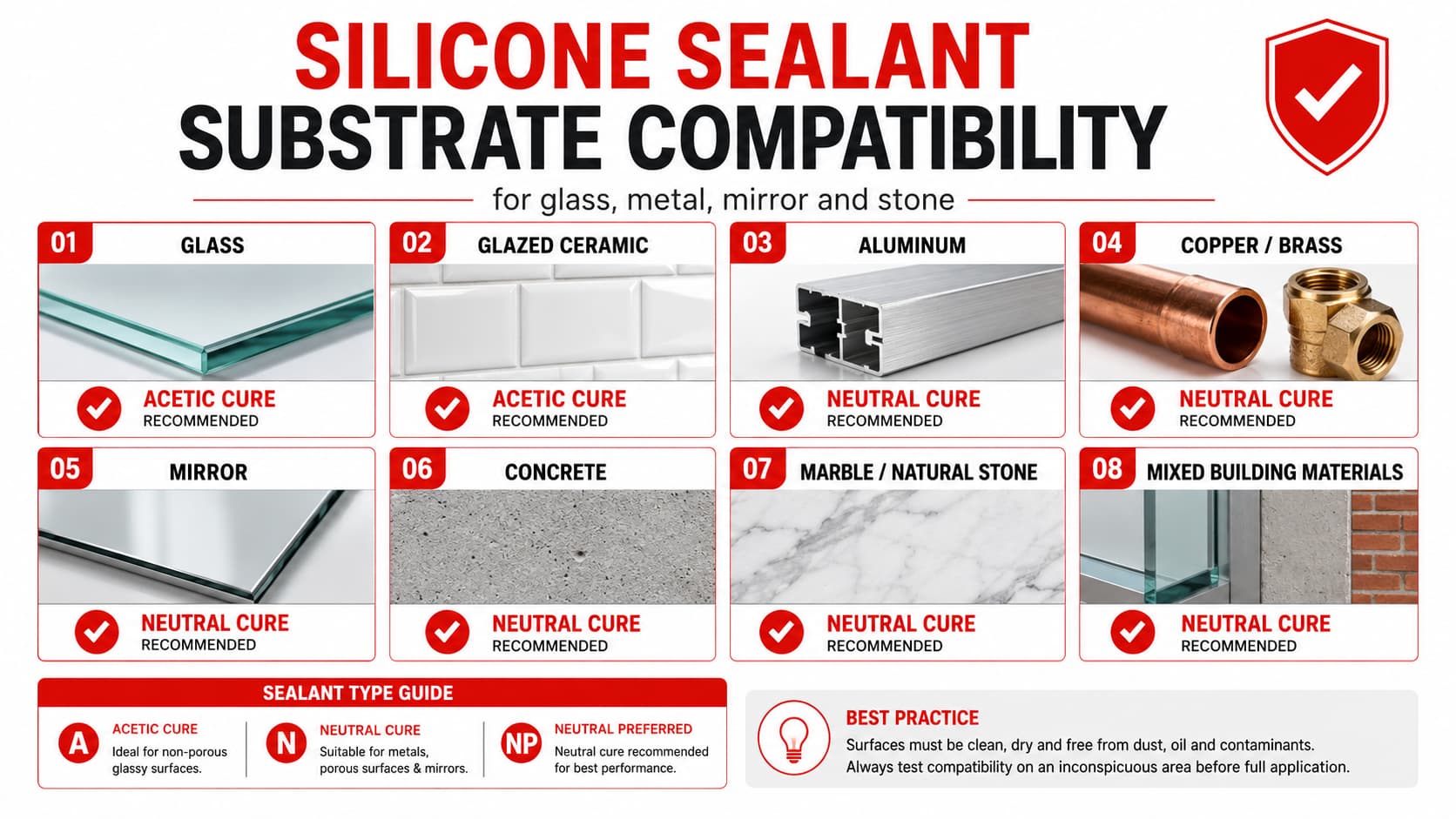
| Substrate | Better Choice | Why |
|---|---|---|
| Glass | Acetic cure silicone | Strong adhesion on clean, non-porous glass surfaces |
| Glazed ceramic | Acetic cure silicone | Fast curing and strong surface bonding |
| Bare aluminum | Neutral cure silicone | Reduces corrosion risk on exposed metal |
| Anodized or painted aluminum | Depends on coating condition | Coating may protect the metal, but compatibility testing is still recommended before bulk use |
| Copper, brass, zinc | Neutral cure silicone | Acetic acid may corrode these metals |
| Mirror backing | Neutral cure silicone | Helps prevent desilvering and black staining |
| Concrete, mortar | Neutral cure silicone | Avoids alkaline reaction and adhesion failure |
| Marble, limestone | Neutral cure silicone | Reduces risk of staining and poor adhesion |
| Mixed-substrate assemblies | Neutral cure silicone | One product is safer across multiple materials in the same bond |
KINGDELI Silicone Sealant Solutions for Glass and Construction
After confirming the substrate, the next step is to choose a sealant range that matches your application, packaging needs, purchasing volume, and market positioning. KINGDELI provides silicone sealant solutions for glass glazing, construction, hardware channels, distributors, and private-label buyers.
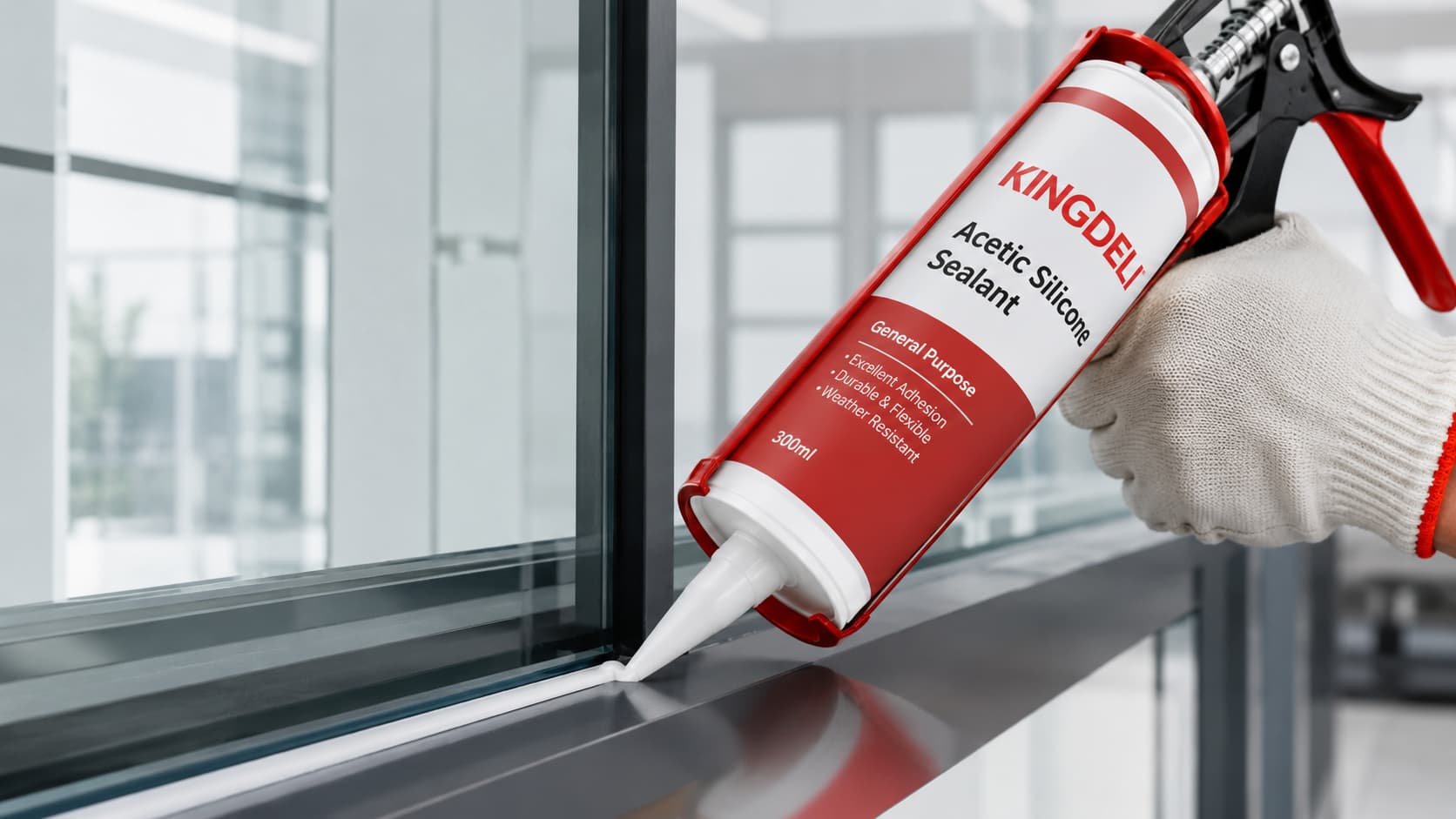
Acetic Silicone Sealant for Glass
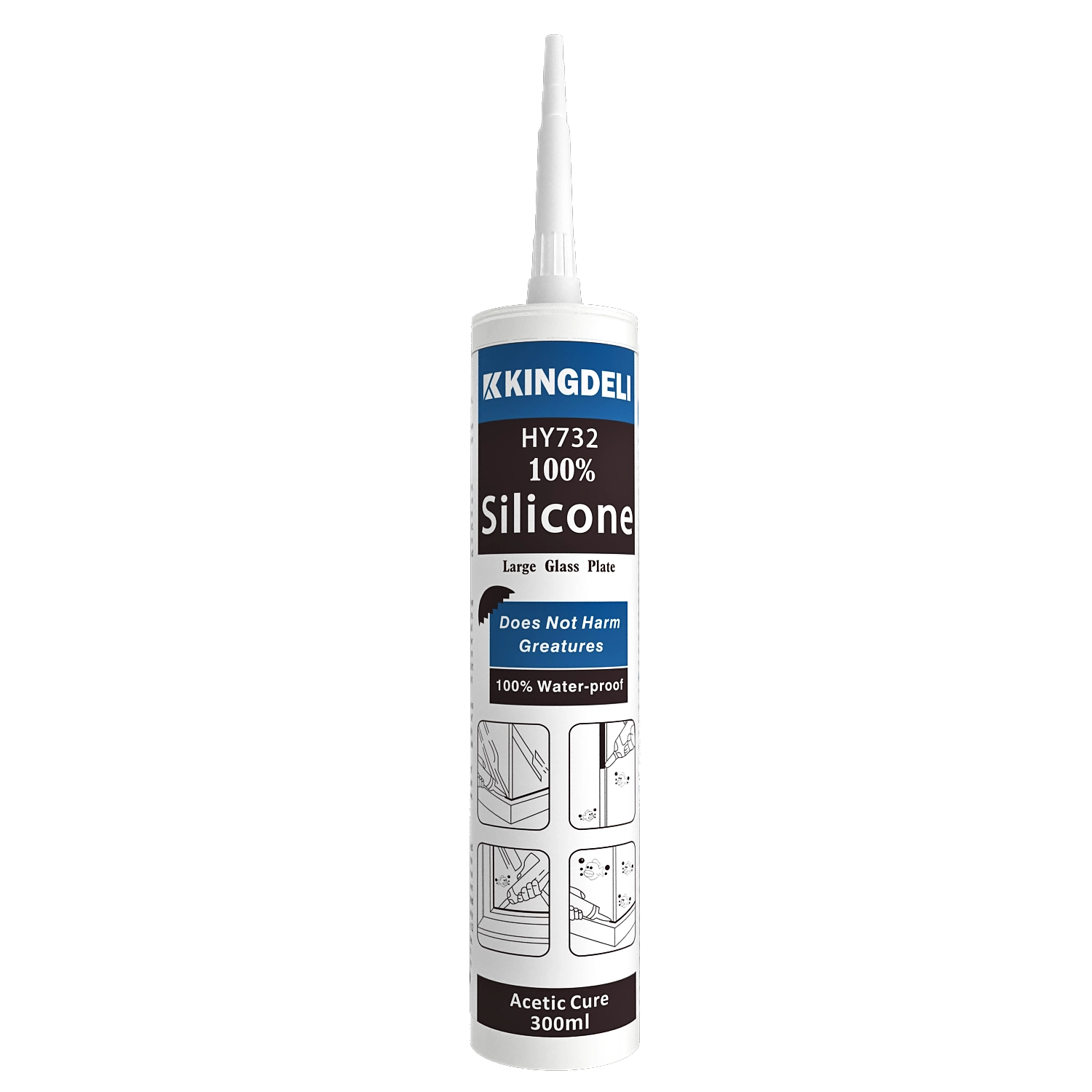
KINGDELI acetic silicone sealant is designed for glass, glazed ceramic, window sealing, and other non-porous surface applications where fast curing and strong adhesion are important. It is suitable for professional glazing work, hardware distribution, and brands sourcing factory-direct silicone sealant products.
Neutral Silicone Sealant for Sensitive Substrates
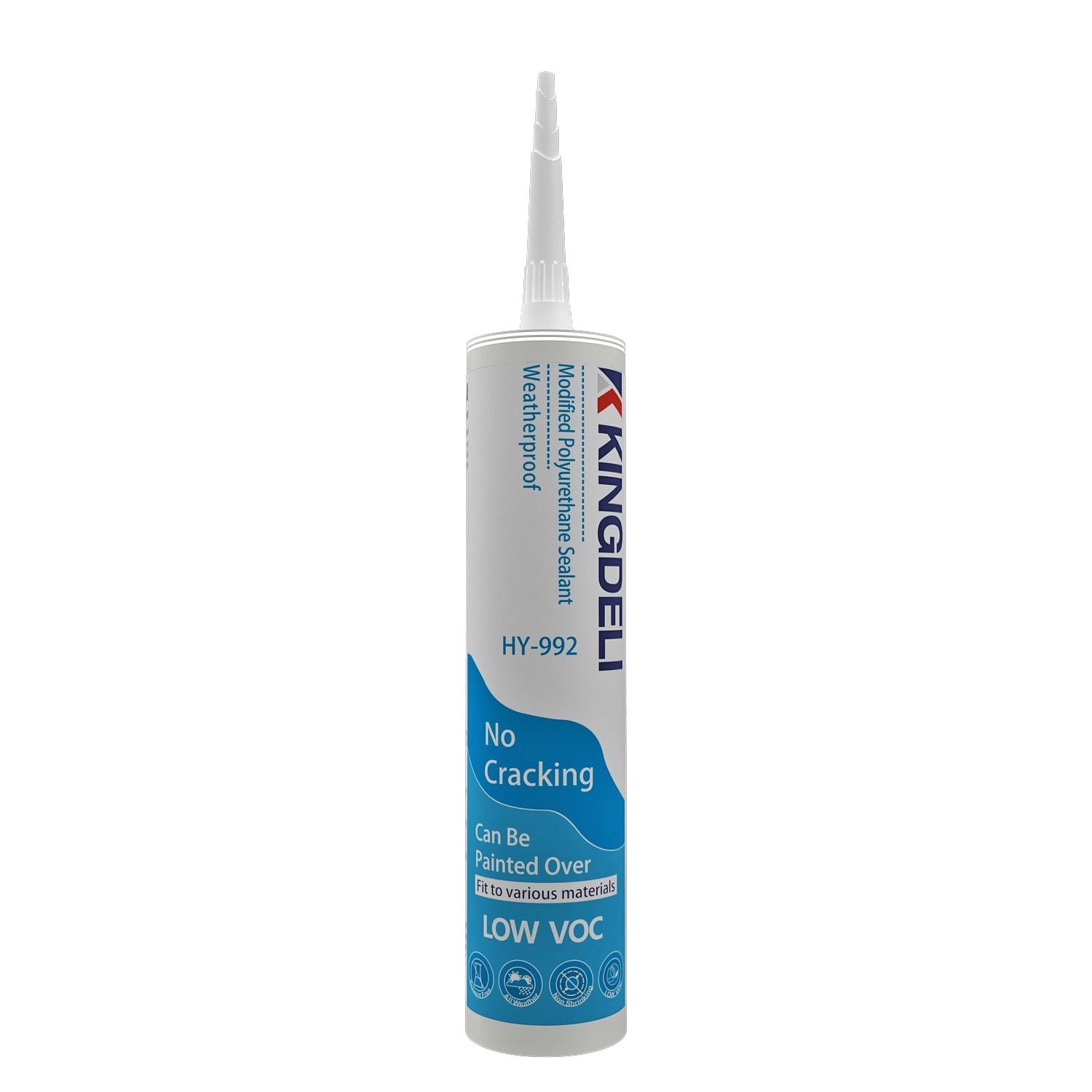
For metal, stone, mirror, and mixed-substrate projects, the neutral silicone sealant range provides non-corrosive, low-odor formulations suitable for facade work, metal framing, masonry joints, and applications where acetic cure would put the substrate at risk.
Glass Glazing and Bulk Supply
For window manufacturers, glazing contractors, and engineering projects requiring dedicated glazing formulations, see the glass glazing silicone sealant range. For brands and importers that need private label packaging, custom colors, or formulation support, KINGDELI provides OEM/ODM sealant manufacturing. Distributors and wholesalers can also review the sealant distributor cooperation page or contact KINGDELI for sourcing support.
Buyer Checklist: How to Choose the Right Silicone Sealant
Before placing an order, confirm the actual working conditions rather than choosing only by product name. The same sealant can perform differently depending on substrate preparation, joint design, humidity, bead thickness, and exposure conditions.
- What substrates are in the bond line? If it is purely glass-to-glass or glass-to-glazed-frame, acetic cure can be appropriate. If metal, stone, or mirror is present anywhere in the assembly, default to neutral cure.
- Is the metal coated or bare? Anodized, painted, or powder-coated aluminum may be more resistant than bare metal, but compatibility testing is still recommended before volume use.
- What cure speed is required? Acetic systems often skin over faster and can be useful where production throughput or handling time matters.
- Is odor a concern for the application environment? Neutral cure produces significantly less odor, which matters for enclosed spaces or odor-sensitive installation environments.
- Is this a bulk or private-label order? Confirm formulation consistency, packaging options, labeling, color requirements, and supplier support before committing to volume.
Frequently Asked Questions
What does acetic cure silicone mean?
Acetic cure silicone — also called acid cure or acetoxy cure — is a silicone sealant that cross-links by releasing acetic acid as it reacts with atmospheric moisture. This produces the characteristic vinegar smell during curing and supports strong adhesion on clean, non-porous surfaces like glass.
What does neutral cure silicone mean?
Neutral cure silicone uses an alkoxy or oxime curing system that releases a non-corrosive alcohol or oxime compound instead of acetic acid. It produces less odor and is safer for metals, stone, mirrors, and mixed substrates.
Is acetoxy silicone the same as acetic cure silicone?
Yes. Acetoxy cure and acetic cure refer to the same curing chemistry. Both terms describe silicone sealants that release acetic acid during cure.
What is non-acetic silicone?
Non-acetic silicone, also called non-acetoxy or acid-free silicone, refers to a sealant that does not release acetic acid. In most practical applications, this means neutral cure silicone.
Is acetic silicone corrosive to copper or brass?
Yes, acetic acid released during curing may cause corrosion on bare copper, brass, zinc, galvanized steel, and other sensitive metals. For these substrates, neutral cure silicone is the safer choice.
Can I use acid-cure silicone on aluminum window frames?
It depends on the aluminum surface. Coated, anodized, or painted aluminum may be more protected, but bare untreated aluminum should use neutral cure silicone. Always test compatibility before bulk application.
Which silicone is better for glass?
Acetic cure silicone is generally preferred for clean glass applications because it offers strong adhesion to non-porous surfaces and usually skins over faster than neutral cure systems.
Which silicone is better for mirrors?
Neutral cure silicone is better for mirrors. Acetic acid can damage the silver backing and cause permanent black staining or desilvering.
How long does acetic silicone take to cure?
Acetic systems often skin over within 5–10 minutes, but full cure time depends on bead thickness, joint depth, humidity, temperature, and product formulation. Always refer to the product technical data sheet.
When should I choose neutral cure silicone instead of acetic?
Choose neutral cure whenever the bond line includes bare metal, mirror backing, concrete, marble, limestone, or other alkaline or corrosion-sensitive materials. It is also safer for mixed-substrate assemblies.
Related Reading
Explore more KINGDELI sealant solutions and sourcing support:
Need Help Choosing the Right Silicone Sealant?
If you are sourcing silicone sealant for glass glazing, construction, hardware distribution, or private label supply, KINGDELI can help you compare acetic cure and neutral cure options based on substrate, packaging, application, and order volume.


Whatsapp: +8618825946249
Kingdeli
Kingdeli
Kingdeli
Kingdeli
Kingdeli