











How to order custom-colored silicone sealant for large projects? | Insights by KINGDELI
How to Order Custom-Colored Silicone Sealant for Large Projects: 7 Crucial Questions Answered
For architects, contractors, and procurement managers, ordering custom-colored silicone sealant at scale is more than picking a color swatch. You must control color consistency across production batches, verify pigment compatibility with the silicone chemistry, manage lead times and logistics, and comply with regional regulations. Below are 7 long-tail, practitioner-focused questions beginners often ask — each with precise, actionable answers and references to industry standards.
1. What minimum order quantity (MOQ) and lead time should I expect for custom-colored silicone sealant in large projects?
Typical MOQs and lead times vary by manufacturer and the degree of customization, but common industry ranges are:
- MOQ: commonly 200–1,000 kg per color for industrial/ODM suppliers; smaller custom runs (50–200 kg) may be possible from specialty formulators at higher per-unit cost.
- Lead time: 4–8 weeks from color approval for standard neutral-cure formulations; 6–12+ weeks when custom chemistry adjustments, extra testing, or large-volume packaging (drums/totes) are required.
Why the range? Custom colors require pigment procurement, lab color-matching, pilot production, QC sampling and, for large runs, batch segregation and extra packaging logistics. For large projects, plan procurement at least 8–12 weeks ahead to allow for sample trials and on-site mockups.
Recommendation: get firm MOQs and lead-time commitments in writing during RFQs, and require a sample batch and signed color approval before full production.
2. How should I specify color so the factory can reproduce it consistently across batches?
Vague descriptions (close to beige) cause failures. Use a multi-part specification:
- Color standard: provide a Pantone, RAL or a CIELAB target value (L*, a*, b*) measured on the actual substrate or a printed swatch.
- Measurement method: specify instrument (e.g., spectrophotometer), geometry (usually 45/0 or d/8), and illuminant (D65) and observer (2°) used to generate CIELAB values.
- Acceptance tolerance: define an objective ΔE threshold and the formula (for example, CIEDE2000 ΔE00 ≤ 2 for near-imperceptible differences, ΔE00 ≤ 3 often acceptable for field use).
- Sample approval: require a physical 1–5 kg production sample, applied to the same substrate and cured, for final sign-off before full production.
Using spectrophotometer data and a formal ΔE acceptance limit removes subjectivity. For background on color-difference metrics, see this overview: Color difference (CIEΔE).
3. Which silicone chemistries and pigments are compatible — could the colorant affect cure or performance?
Yes. Compatibility depends on silicone cure chemistry and the pigment formulation. Main considerations:
- Silicone chemistries: acetoxy-cure (acidic), oxime/alkoxy (neutral), and addition-cure (platinum) behave differently. Neutral systems (oxime/alkoxy/addition) are preferred for sensitive substrates and many architectural applications because they don’t release acetic acid.
- Pigment types: inorganic pigments (metal oxides like iron oxide, titanium dioxide) are usually stable and widely used in silicones; many organic pigments (certain phthalocyanines, some azo dyes) can be more reactive or less UV-stable and may require testing.
- Cure inhibition: some pigments, fillers or extenders can inhibit cure—this is especially a risk in platinum-cure (addition) systems where certain amines, sulfur compounds, or organometallic impurities can prevent crosslinking.
Best practice: require the manufacturer to run compatibility and cure tests with the chosen pigment at production pigment loading. Ask for:
- On-substrate cure profile (tack-free time, full cure time)
- Mechanical properties (shore A, elongation, tensile) vs. unpigmented control
- Adhesion tests on your substrates with/without recommended primers
Reference standards for joint sealant performance such as ASTM C920 and factory classification standards such as ISO 11600 help define mechanical and movement criteria.
4. How do I set realistic color tolerance and weathering tests for acceptance onsite?
Set objective acceptance criteria and environmental testing requirements:
- Color tolerance: specify ΔE method (CIEDE2000 recommended) and acceptance limit. For façade and visible joinery, ΔE00 ≤ 2 is a good target for high-end projects; ΔE00 ≤ 3–5 may be acceptable for less critical areas.
- Weathering/UV: require accelerated weathering per ISO 4892-2 or equivalent tests and compare color change (ΔE) after cycles. Include salt spray or pollutant exposure if project is marine/industrial.
- Field trial: mandate a 3–6 month outdoor mockup on project substrate and orientation (sun exposure) to review real-world color stability before the main production run, where practical.
Document the tests and limits in the purchase order. For weathering/testing norms, see ISO and artificial weathering references such as ISO 4892 (overview).
5. What packaging and on-site handling practices reduce waste and guarantee color consistency for large-volume orders?
Choose packaging and logistics that suit project deployment and maintain product integrity:
- Bulk packaging: for large projects, sausages (aluminum bags), 200–220 kg drums, or 1000 kg IBCs/totes reduce cost per kg versus cartridges; ensure your dispenser equipment is compatible.
- Batch segregation: keep each production batch separate and label with color lot, batch number, manufacture and expiry dates to avoid mixing batches on site.
- Storage: store at recommended temperature (usually 5–25°C for most silicones), dry conditions, away from direct sunlight to maintain shelf life (commonly 12–24 months—confirm vendor-stated shelf life on the COA).
- On-site application: train applicators to avoid mixing different batches unless they meet identical batch/color codes and have been pre-mixed and verified. For field touch-ups, stock a dedicated supply of the approved color lot.
Ask suppliers for application equipment recommendations and sample SOPs for storage, priming and tooling to ensure field performance matches lab samples.
6. What regulatory, VOC and labeling requirements must custom-colored silicone meet across regions?
Regulatory compliance is region-dependent and must be verified during procurement:
- EU: ensure compliance with REACH (substances of very high concern) and any VOC limits in local building codes. Consult the European Chemicals Agency (ECHA) REACH guidance for obligations: ECHA REACH overview.
- US: check state/local VOC regulations (e.g., California Air Resources Board, SCAQMD) for limits on construction sealants. Also verify any manufacturer declarations required for LEED or other green building programs.
- Labeling and SDS: require a compliant Safety Data Sheet (SDS) and product label showing ingredients, hazard info, storage and disposal instructions, and batch/lot number.
Request conformity documentation, including declarations of compliance, SDS, and any regional VOC test reports, before shipment.
7. How should I structure supplier agreements, QC checks and traceability to avoid color or performance failures?
Put clear, measurable requirements into contracts and inspection plans:
- Define specs: exact color targets (LAB/Pantone/RAL), ΔE acceptance, mechanical performance, shelf life, packaging, and acceptable deviations.
- Sample & approval workflow: require pre-production samples (signed-off physical sample and spectrophotometer readouts) and a first-article inspection report before mass production.
- Batch traceability: insist each shipment includes a Certificate of Analysis (COA), batch/lot number, manufacture date, pigment lot number, and curing report.
- Inspection & testing: include third-party or in-house QA testing clauses (color, adhesion, elongation, VOC) and reserve right to reject or require rework for nonconforming batches.
- Warranty and remediation: specify remedies for color or performance failures (replacement product, refunds, site remediation) and allocate responsibility for field failures linked to material defects.
These contractual elements reduce ambiguity and financial risk on large orders.
Quick checklist to include in your RFQ for custom-colored silicone
- Exact color spec (Pantone/RAL or CIELAB + measurement conditions)
- ΔE acceptance limit and method (CIEDE2000 recommended)
- Required standards (ASTM C920, ISO 11600, EN 15651 as applicable) — see ASTM C920 and ISO 11600
- MOQ and lead-time expectations
- Packaging options (cartridges, sausages, drums, IBCs) and dispensing equipment
- Regulatory requirements (local VOC limits, REACH/SDS)
- Sampling, testing and approval workflow
Why this approach reduces risk
Objective color metrics + approved physical samples + formal testing protocols make color and performance verifiable and legally enforceable. Without them you rely on subjective judgments, which is the most common cause of disputes on façade and architectural projects.
References and further reading
- ASTM C920 — Standard Specification for Elastomeric Joint Sealants (overview): https://www.astm.org/Standards/C920.htm
- ISO 11600 — Building sealants — Classification: https://www.iso.org/standard/56155.
- Color difference (CIE ΔE) explanation: https://en.wikipedia.org/wiki/Color_difference
- ECHA — Understanding REACH (European regulatory context): https://echa.europa.eu/regulations/reach/understanding-reach
Conclusion — Why choose KINGDELI for custom-colored silicone sealant
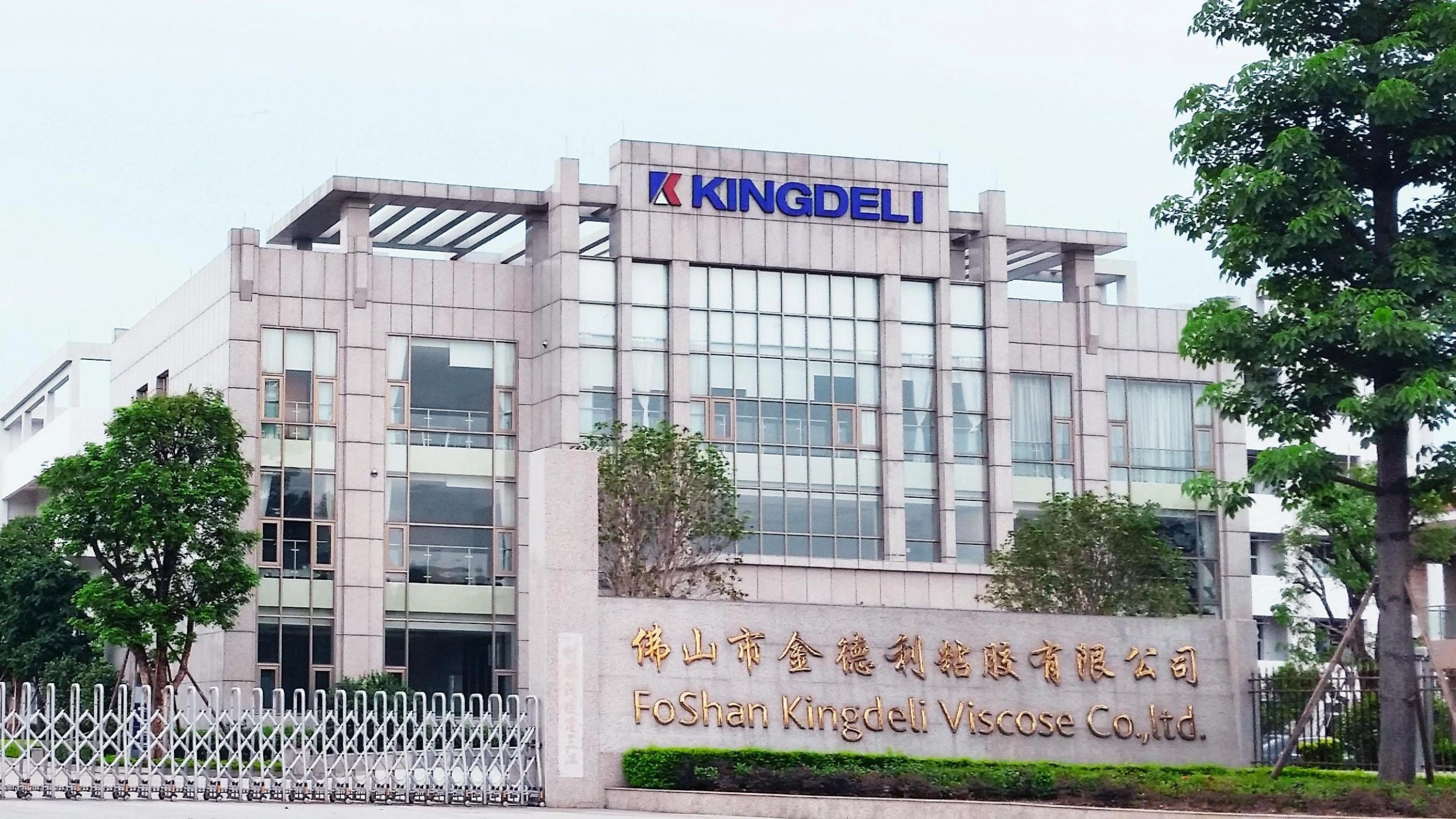
KINGDELI combines formulation expertise, in-house color-matching labs and industrial production scale to deliver consistent custom-colored silicone sealants for large projects. Our advantages:
- Dedicated color lab with spectrophotometer calibration and CIE L*a*b* reporting
- Proven compatibility testing across neutral- and addition-cure silicones to prevent cure inhibition
- Flexible packaging (cartridges, sausages, drums, IBCs) and project-level batch segregation
- Comprehensive QC documentation: COA, SDS, batch traceability and weathering reports
- Project support from sample stage to field mockup, reducing on-site color or performance failures
For project quotes, color approval workflows and lead-time estimates, contact KINGDELI: www.kingdelisealant.com or email info@kingdeliadhesive.com.
How to Apply High Temperature Silicone Sealant Like a Pro: 5 Secrets for a Lifetime Seal
Acid Cure vs. Neutral Silicone: Why Choose Acetic Silicone Sealant for Glass?
7 Critical Mistakes to Avoid When Using Neutral Silicone Sealant for High-End Projects
What’s the Difference Between Silicone Sealant and MS Adhesive for ACP?
HY994
What are the typical applications for HY994?
✓Common uses include:
✓Elevator and security door reinforcement bonding
✓Ceiling and panel joint sealing
✓Flooring system bonding
✓Metal structures, machinery, electronics, cleanrooms, ventilation equipment, containers, and general industrial joint sealing
HY-966
What colors and packaging options are available?
HY-966 is available in white and cream, supplied in 280 ml and 300 ml cartridges.
HY922
Is HY922 suitable for outdoor applications?
Yes. HY922 offers excellent weather resistance and performs well in outdoor environments, including exposure to moisture, frost, and temperature variations.
HY939A
Is this product suitable for outdoor use?
Yes. It features outstanding resistance to weathering, UV radiation, ozone, and aging, making it suitable for long-term outdoor applications.
HY924
What is the shelf life?
Aluminum cartridge: 9 months
Aluminum foil sausage: 12 months
Store in a cool, dry place for best shelf performance.
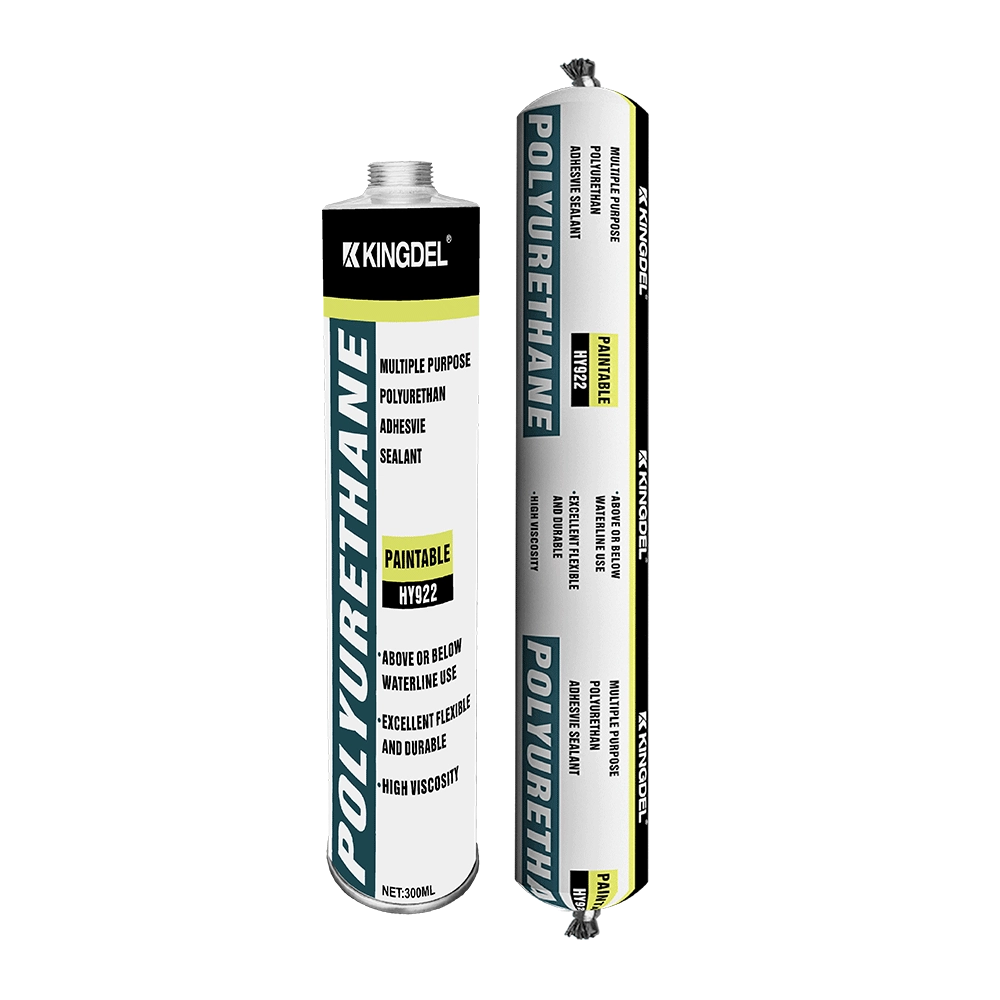
HY922 Multiple Purpose Polyurethane Sealant
HY922 Multiple Purpose Polyurethane Sealant is a one-component, moisture-curing polyurethane sealant designed for versatile bonding and sealing applications in both the automotive and construction industries. It cures to form a flexible yet tough elastomeric joint with excellent adhesion to a wide range of substrates. The formulation is non-corrosive, solvent-free, and produces a smooth, bubble-free finish during application.
HY922 delivers fast surface drying and quick positioning, improving installation efficiency while maintaining long-term durability. With strong weather resistance and good creep resistance, it performs reliably in demanding indoor and outdoor environments, including moist and partially submerged conditions.
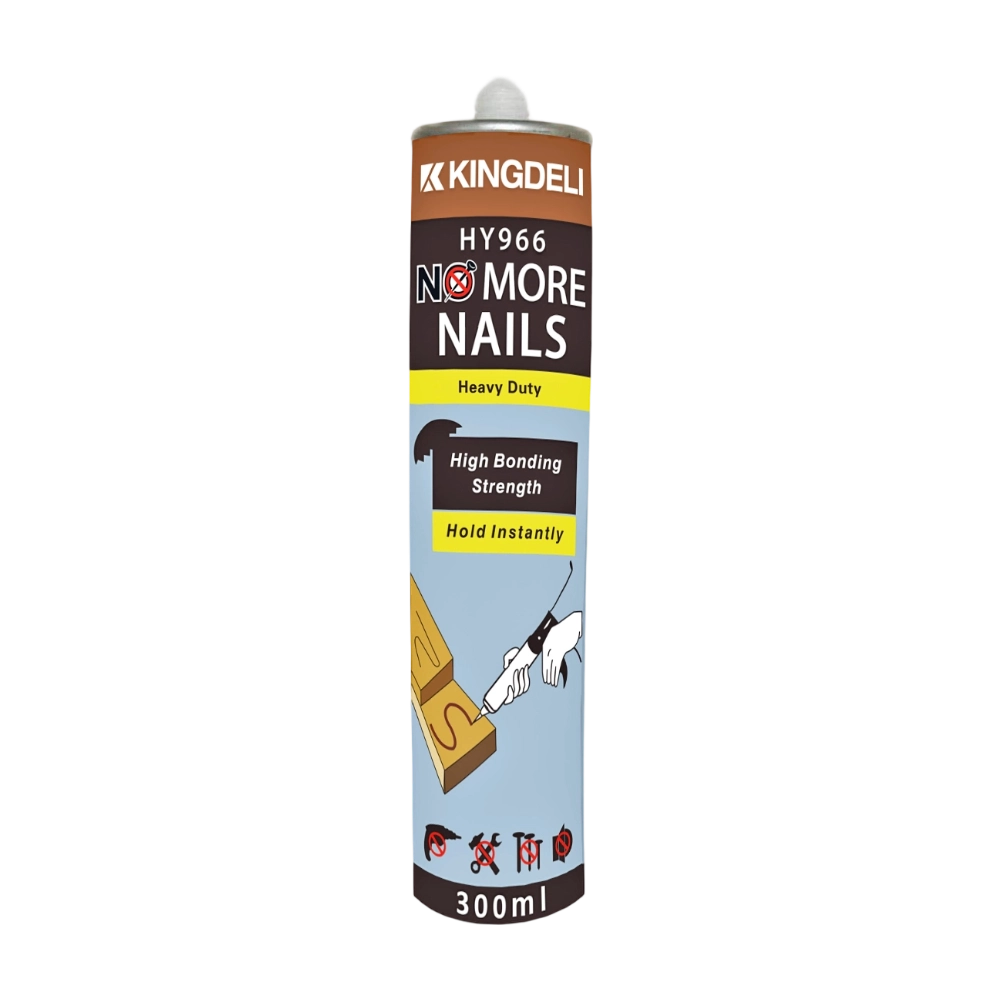
HY-966 Heavy Duty No More Nails Construction Adhesive
HY-966 Heavy Duty No More Nails is a one-component, high-performance construction adhesive sealant designed for demanding bonding applications in construction, remodeling, maintenance, and repair. Its instant grab formulation secures materials immediately, significantly reducing the need for bracing or mechanical fixing during installation.
HY-966 cures reliably in moist environments and delivers durable adhesion across a wide range of substrates. It provides excellent resistance to water, temperature variation, and aging, ensuring long-term performance in interior construction applications.
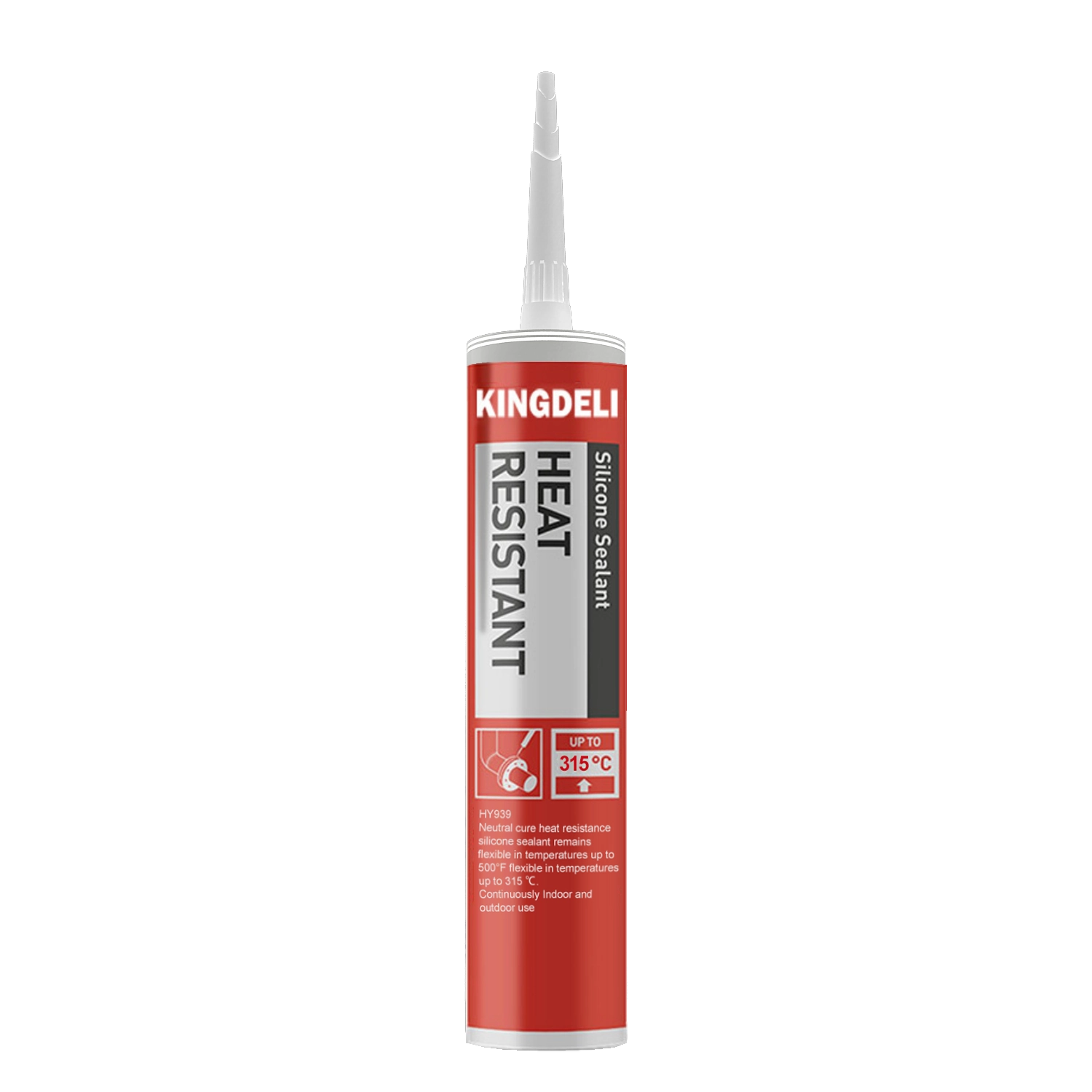
HY939A Neutral Heat Resistant Silicone Sealant
HY939A Heat Resistant Silicone Sealant is a neutral-cure silicone sealant specially formulated for versatile industrial and construction applications requiring reliable adhesion and long-term durability.
The sealant provides strong, non-corrosive adhesion to a variety of substrates, including glass, metal, gypsum board, marble, and certain plastics, making it ideal for both structural and sealing purposes.
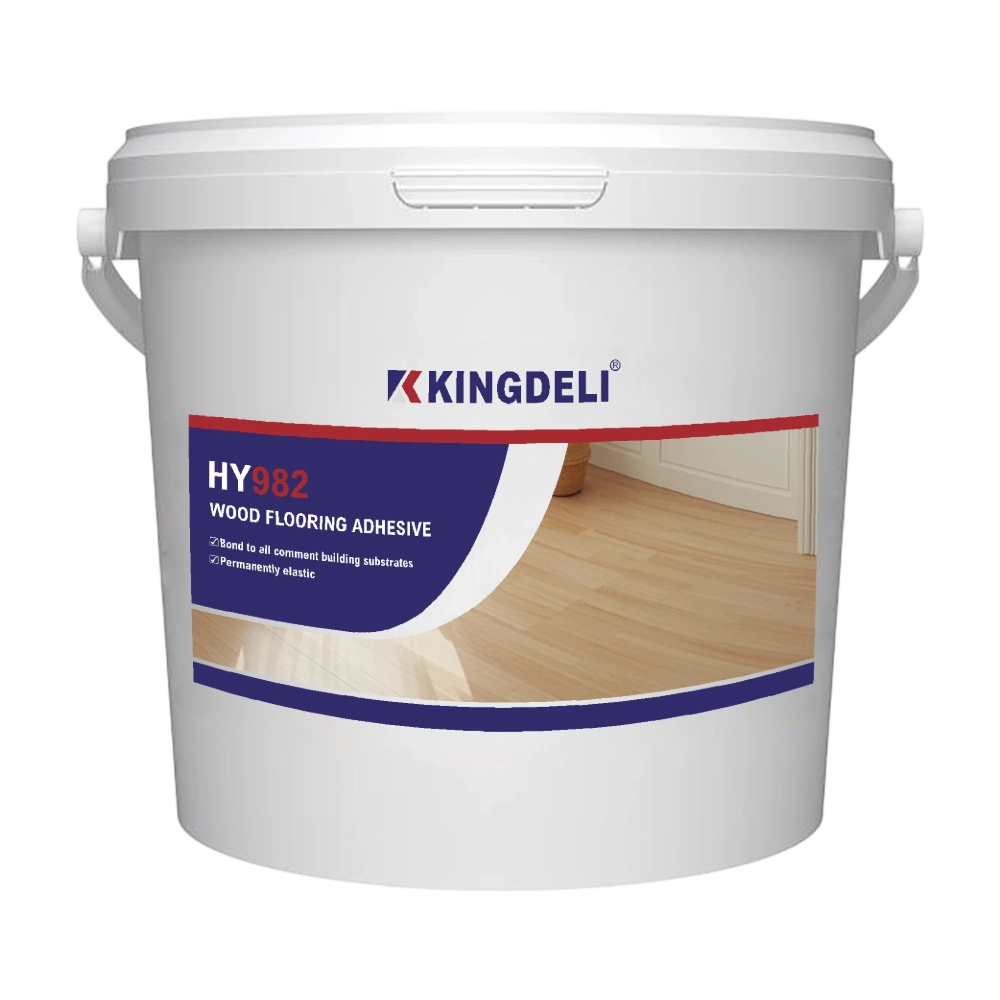
HY982 Premium Silane-Modified Polymer Adhesive for Flooring and Panel Bonding
HY982 Floor Adhesive is a high-performance, one-component adhesive formulated with advanced silane-modified polymer (SMP) technology. It is paintable, non-staining, and environmentally friendly, offering exceptional bonding strength without the need for a primer.
Designed for modern interior installations, HY982 Floor Adhesive provides excellent adhesion to wood, metal, stone, sintered slabs, glass, ceramics, and many other common building materials—making it the ideal choice for flooring installation and panel bonding applications crystal clear formulation.
Let’s Build Stronger Bonds with Quality Adhesives and Sealants
Have questions about the topic or need tailored sealant solutions for your project?
Our team is ready to provide expert guidance, product recommendations, and application support.
Innovating with Integrity, Bonding the World
Since 1998, KINGDELI has delivered trusted, sustainable sealant solutions that connect industries and inspire progress worldwide.
Whatsapp: +8618825946249
Kingdeli
Kingdeli
Kingdeli
Kingdeli
Kingdeli