











What are acetic silicone sealant specs buyers must check?
1) How do I predict cure-through time for an acid-cure (acetic) silicone bead in cold, high‑humidity job sites so I don't trap uncured core and cause adhesion failure?
Acetic silicone (acid‑cure silicone, often sold as RTV silicone) cures by moisture diffusion — a skin forms quickly at typical conditions while the core cures more slowly. Cure rate is controlled primarily by ambient relative humidity (RH), temperature, and bead cross‑section (diameter/depth).
Key practical points and how to calculate:
- Typical ranges (industry practice): skin-over time 5–30 minutes at 20–25°C and 50% RH; cure rate (through‑cure) commonly 1–3 mm per 24 hours under moderate conditions. These are typical, not guarantees — always check the product data sheet.
- Humidity effect: higher RH accelerates cure. At RH above ~70% cure rate can approach the upper end of the range; below 30% cure slows markedly. In cold environments (<10°C) cure rate can drop substantially.
- Geometry effect: cure proceeds from the outside inward. For a bead of 10 mm depth you may see full cure in 3–7 days depending on conditions; for 25 mm depth curing could be weeks.
What to request from the supplier before purchase:
- Manufacturer’s measured cure rate (mm/24 h) at 10°C, 20°C, and 35°C and at RH points (30%, 50%, 80%). Ask for lab reports showing the method and conditions.
- Skin-over time and tack-free time measured per ASTM C679 or equivalent.
Field controls and best practices:
- Limit joint depth: do not exceed the manufacturer’s recommended maximum bead depth (commonly 10–12 mm for single‑component acetic silicones). Use a backing rod to control depth and avoid deep sections.
- Maintain or raise humidity where possible (temporary misting or humidifiers) to speed curing in dry, heated interiors. Avoid condensation on joints as that can interfere with adhesion.
- For very thick sections or low-temperature projects, plan for extended curing times in the schedule or switch to a neutral‑cure silicone or two‑component system designed for deeper sections.
Risk of trapping uncured core: if the bead is too deep relative to ambient moisture, trapped uncured core may later migrate, cause adhesion loss, or lead to staining. Always verify the manufacturer’s cure-rate matrix and run on‑site mockups.
2) Which metals will acetic silicone corrode or discolor, and what pre‑treatments or primers prevent that corrosion?
Acetic silicones release acetic acid vapors during cure. This acidic environment can accelerate corrosion or staining on sensitive metals if contact or vapors are present during cure.
Metals often at risk:
- Copper and copper alloys (brass, bronze): can discolor, darken, or form verdigris in presence of acetic acid.
- Galvanized steel and zinc: acid vapors can attack the zinc layer, causing white rust or loss of protection.
- Lead and some soft solders: risk of corrosion or joint degradation.
Less at risk but still require caution:
- Anodised aluminium and stainless steel generally tolerate acetic silicones well, though dirty or unpassivated surfaces can show issues.
How to prevent corrosion and ensure long‑term adhesion:
- Use neutral‑cure silicone when sealing directly against sensitive metals in critical applications; neutral silicones are formulated to minimize corrosive byproducts.
- If acetic silicone must be used, apply an appropriate barrier/primer: ask the supplier for a recommended metal primer and test report. Epoxy or polyurethane coatings are commonly used as barriers on sensitive metals.
- Specify surface preparation: degreasing, removal of oxidation, and passivation per supplier instructions (e.g., solvent wipe with isopropyl alcohol, mechanical abrasion where appropriate).
- Request accelerated corrosion test data: salt spray (ASTM B117) on representative metal panels with the cured sealant, and visual/adhesion assessments after exposure.
Documentation to request from suppliers:
- A compatibility chart listing metals tested and results.
- Third‑party test reports (ISO 17025 lab) showing no corrosion or only acceptable cosmetic effects after defined exposures.
3) Suppliers list movement capability as “25%” — how do I verify that and what test reports should I demand so movement won’t cause cohesive failure?
Movement capability (movement accommodation) indicates the maximum percent joint width change the sealant can withstand without loss of performance. For silicones, ±25% is common for many joint sealant grades, but field performance depends on joint geometry, substrate stiffness, and adhesion.
What the buyer should require:
- Test standard: request results from standard movement/fatigue tests per ASTM C719 (low temperature flexibility) and ASTM C794 or EN 1464 for adhesion/cohesion where applicable. Also check manufacturer claims against ISO 11600 and EN 15651 (for façade and sanitary sealing) which specify movement classes (e.g., 25LM).
- Third‑party verification: insist on an independent lab report (ISO 17025) that documents cyclical movement testing across the claimed percent movement for at least 25,000 cycles or the equivalent endurance protocol used.
How to design joints to match movement capability:
- Calculate required width: Required Width = Expected Maximum Movement / Movement Capability. Example: if your element may move 5 mm and the sealant movement capability is 25%, design the joint width as W = 5 mm / 0.25 = 20 mm.
- Maintain recommended width-to-depth ratio (commonly 2:1) so the sealant can accommodate movement without peel stresses — see next question for detailed ratios.
Beware of overstated claims: some manufacturers quote optimum laboratory values; require field‑relevant testing on substrates, surface treatments, and temperatures that match your project.
4) For sanitary and food‑adjacent environments, what exact microbial and safety certificates must I require for acetic silicone, and which tests do those certificates represent?
Acetic silicone is frequently used for sanitary joints around tubs, sinks, and food processing equipment — but not all formulations are safe for these uses. Buyers must verify specific certifications rather than relying on marketing phrases like “mildew resistant.”
Certificates and test methods to request:
- Fungal resistance: ASTM G21 or ISO 846 — tests fungal growth on plastic materials. Request a report showing no fungal growth after the specified incubation period.
- Antibacterial/antimicrobial claims: ask for ISO 22196 (measurement of antibacterial activity on plastics and other non‑porous surfaces) if the supplier claims antibacterial properties.
- Potable water and food contact approvals: NSF/ANSI 61 (drinking water system components) and NSF/ANSI 51 (food equipment) where applicable. Many acetic silicones do not have NSF potable‑water approval; confirm before using in potable systems.
- Sanitary grade and building code compliance: for European projects, EN 15651‑3 covers sanitary sealants for internal sanitary joints and includes criteria for microbiological behavior and VOCs.
- VOC and emissions: request product VOC data (g/L) and any emission test results such as AgBB/VDI 4300 or ISO 16000 series if indoor air quality is critical.
Additional practical steps:
- Ask for product samples and run your own lab or third‑party accelerated fungal growth tests if the installation is in a high‑risk environment (e.g., humid public showers, commercial kitchens).
- Verify the presence and type of fungicide in the formulation and request leaching/toxicity data if used in sensitive areas.
5) What exact width-to-depth ratio and maximum bead depth should I design for a 25% movement acetic silicone joint to avoid cohesive failure or adhesive peel? Provide calculations and examples.
Design rules (industry standard guidance):
- Preferred width‑to‑depth ratio: 2:1 (width double the depth). This gives the sealant room to flex and avoids unsupported deep sections that can trap uncured core or concentrate stresses.
- Typical minimum depth: 5 mm for most single‑component silicones to allow adequate thickness for elasticity; typical maximum depth without special formulations is 10–12 mm.
How to size for 25% movement capability:
- Determine maximum expected movement (M) in millimeters. Example: building element expected to change by 4 mm.
- Required joint width (W) = M / movement capability. With movement capability of 25% (0.25): W = 4 / 0.25 = 16 mm.
- Depth (D) = W / 2 = 8 mm (2:1 ratio). Confirm depth is within the product’s min/max recommendations.
Worked examples:
- Example A: Maximum movement 2 mm -> W = 2 / 0.25 = 8 mm, D = 4 mm (may be below typical minimum; consider increasing depth to 5 mm and width to 10 mm to maintain proper bead form).
- Example B: Maximum movement 6 mm -> W = 6 / 0.25 = 24 mm, D = 12 mm (this is approaching or at the typical maximum depth; for depths above 12 mm consider multi‑component or structural sealants or plan for cavities/backer rod and multiple joints).
Practical notes:
- Use an inert closed‑cell foam backing rod sized to provide the correct depth and to prevent three‑sided adhesion (which restricts movement).
- Avoid using foam tapes as backing unless explicitly recommended; closed‑cell polyethylene rod is standard.
- If depth limits force a thinner bead than recommended, use a higher‑performance silicone designed for deeper section cure or redesign the joint.
6) How can I run quick on‑site adhesion and weathering trials for acetic silicone on tricky substrates (polycarbonate, powder‑coated aluminum, composite cladding) before committing to bulk purchase?
A practical on‑site testing protocol reduces the risk of large‑scale failures. The goal is to replicate real service conditions in a compressed timeframe.
Step‑by‑step on‑site trial:
- Prepare representative substrate coupons (100 × 100 mm or larger) of the same batch and surface finish: powder‑coated panels, polycarbonate sheets, anodised aluminum, etc.
- Clean as you would on the job: solvent wipe (isopropyl alcohol), allow to flash off. Record preparation steps and surface profile.
- Apply the sealant per manufacturer instructions (ambient temp/RH), using the same tooling and backing rod as planned on site. Make 2–3 joints per substrate type.
- Cure monitoring: record skin‑over, tack‑free, and time to surface cure. Mark dates/times. Photograph daily.
- Adhesion check after full cure recommended by manufacturer (or after 7 days if uncertain): perform a manual peel test and if possible a standard cross‑cut adhesion test (ISO 2409 / ASTM D3359) and a simple 90° peel test. Note mode of failure: adhesive (detachment from substrate) or cohesive (within sealant).
- Accelerated weathering (if possible): expose coupons to cycles of heat, UV, and moisture using available facilities (or local conditions) for 2–4 weeks and re‑test adhesion. For corrosion concerns, include salt spray (ASTM B117) if project is coastal.
What to record and demand from the supplier:
- Ask the supplier for a list of primers and adhesion promoters specific to each substrate and request primer adhesion test reports.
- Document all failures with high‑resolution photos and conditions; forward to supplier to verify if primer or alternate chemistry is required.
- If the sealant shows adhesion loss or blooming on the substrate, require the supplier to provide a solution (primer or alternative neutral cure product) and test reports.
When to sample from multiple production lots:
- For critical projects, require sample certificates and performance from the manufacturer’s current production lot and, if feasible, run these on‑site checks on a preproduction sample.
Concluding summary: why buyers still choose acetic silicone sealant and when to avoid it
Advantages of acetic (acid‑cure) silicone sealants:
- Fast initial tack and good adhesion to glass, glazed ceramic, and many non‑porous building materials; excellent UV and weather resistance for exterior glazing and window perimeter joints.
- Long‑term elasticity and high elongation (typically several hundred percent), making them good for joints that require durable movement accommodation.
- Low shrinkage and stability across a wide temperature range make them a first choice for façade glazing and glazing tapes.
When to avoid acetic silicone:
- Do not use directly against sensitive metals (copper, zinc) unless a neutral‑cure alternative or an appropriate primer/barrier is specified and verified.
- Avoid acetic silicones where painting is required — most are not paintable and will interfere with coatings.
- For potable water, food contact, or where specific antimicrobial certification is required, verify NSF and microbial test certificates; many acetic silicones lack these approvals.
Final practical checklist to demand from any acetic silicone supplier before purchase:
- Product data sheet with typical cure rates (mm/24 h) across temperature and humidity ranges.
- Movement capability test reports (ASTM/ISO standards) and third‑party lab verification (ISO 17025) for stated percent movement.
- Compatibility/ corrosion testing on representative metals (salt spray ASTM B117 where relevant).
- Microbial/fungal resistance reports (ASTM G21 or ISO 846) and any NSF/ANSI certifications for potable or food contact use.
- Recommended primers and on‑site adhesion test protocols with acceptance criteria.
For project‑specific guidance, sample testing, or to request certified test reports and competitive pricing, contact us for a project quote. Visit www.kingdelisealant.com or email info@kingdeliadhesive.com for samples, technical datasheets, and accredited lab reports.
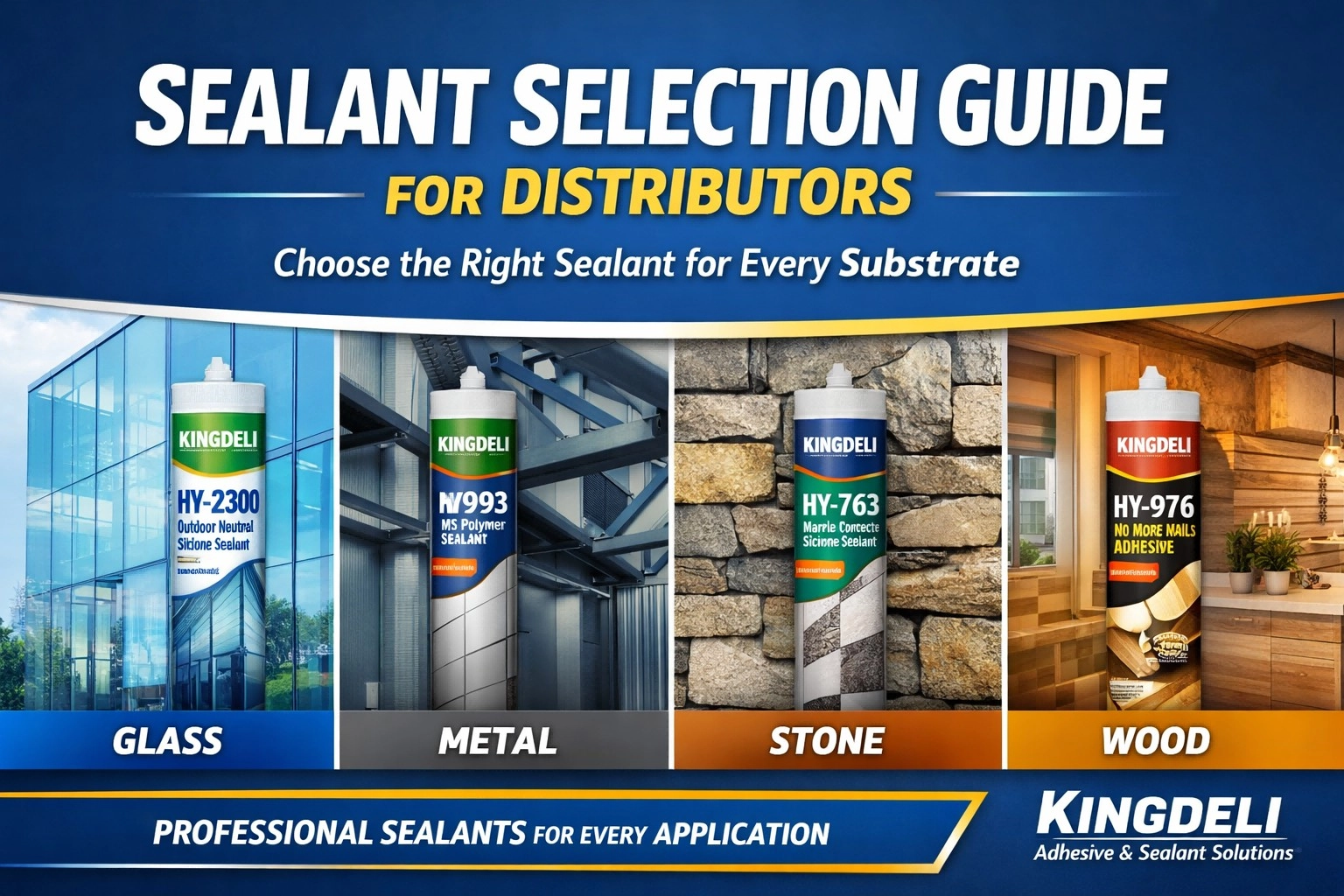
The Complete Sealant Selection Guide for Distributors & Building Supply Partners
How to Apply High Temperature Silicone Sealant Like a Pro: 5 Secrets for a Lifetime Seal
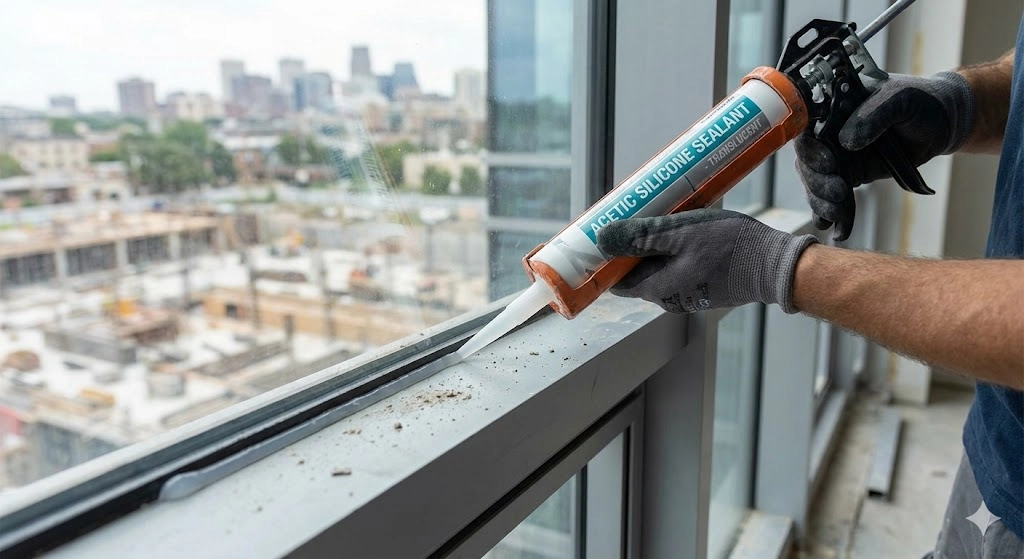
Acid Cure vs. Neutral Silicone: Why Choose Acetic Silicone Sealant for Glass?
7 Critical Mistakes to Avoid When Using Neutral Silicone Sealant for High-End Projects
HY939A
Is this product suitable for outdoor use?
Yes. It features outstanding resistance to weathering, UV radiation, ozone, and aging, making it suitable for long-term outdoor applications.
HY-951
Can HY951 bond hard materials?
Yes. HY951 can be used not only for joint filling but also for bonding various hard materials in kitchens, bathrooms, and interior installations.
HY982
How is the product applied?
HY982 is supplied in bucket packaging and should be applied using a trowel, spatula, or serrated spreader. Stir well before use and spread evenly to ensure full surface contact.
HY922
Is HY922 suitable for outdoor applications?
Yes. HY922 offers excellent weather resistance and performs well in outdoor environments, including exposure to moisture, frost, and temperature variations.
HY-722
Can it be used outdoors?
Yes. It has excellent weather resistance for both indoor & outdoor use.
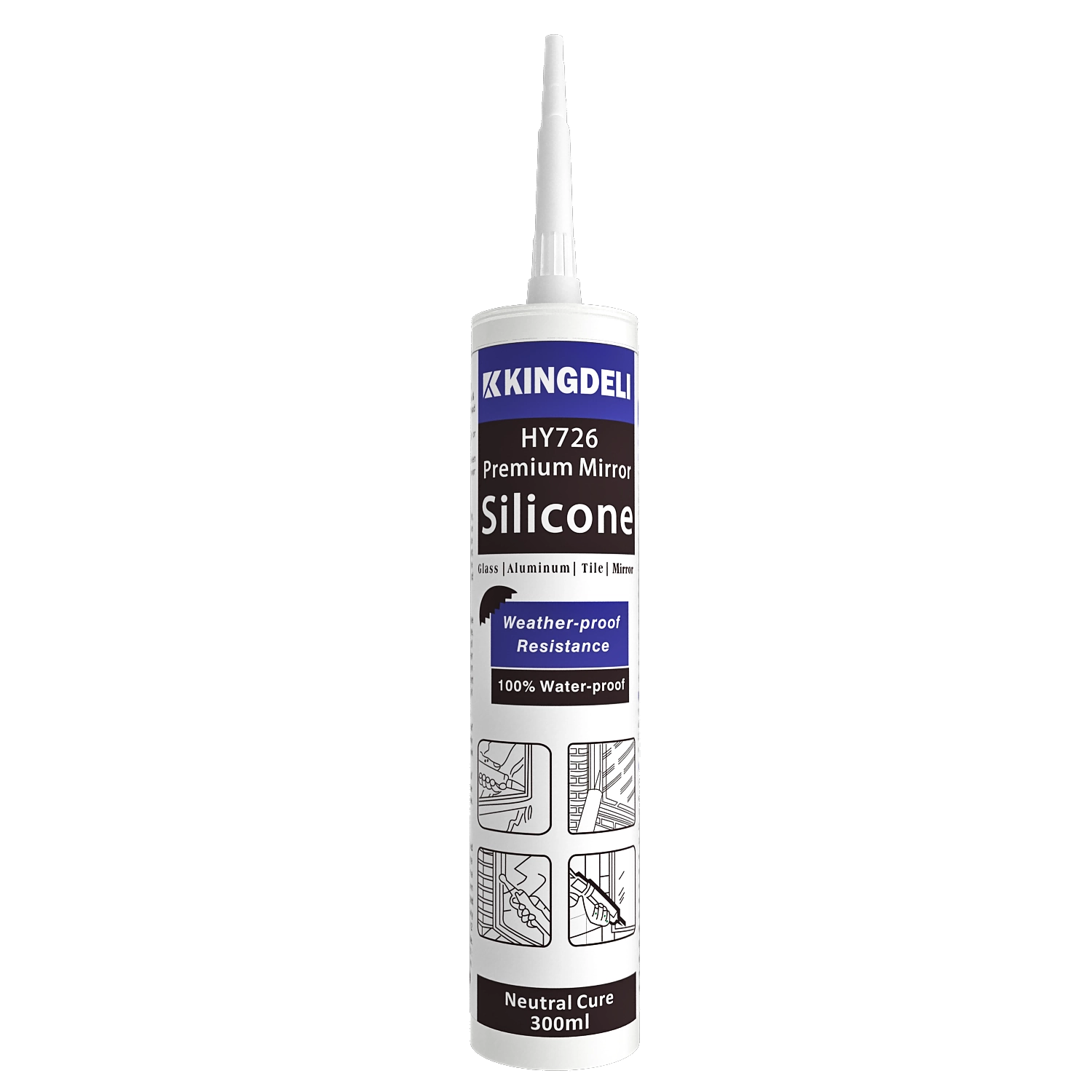
HY-726 Premium Clear Neutral Silicone Sealant
HY726 one-component, shelf-stable, 100% silicone elastomeric adhesive using alkoxy technology. It is specifically designed for sealing sensitive surfaces such as copper, gold, and metal-coated mirrors.
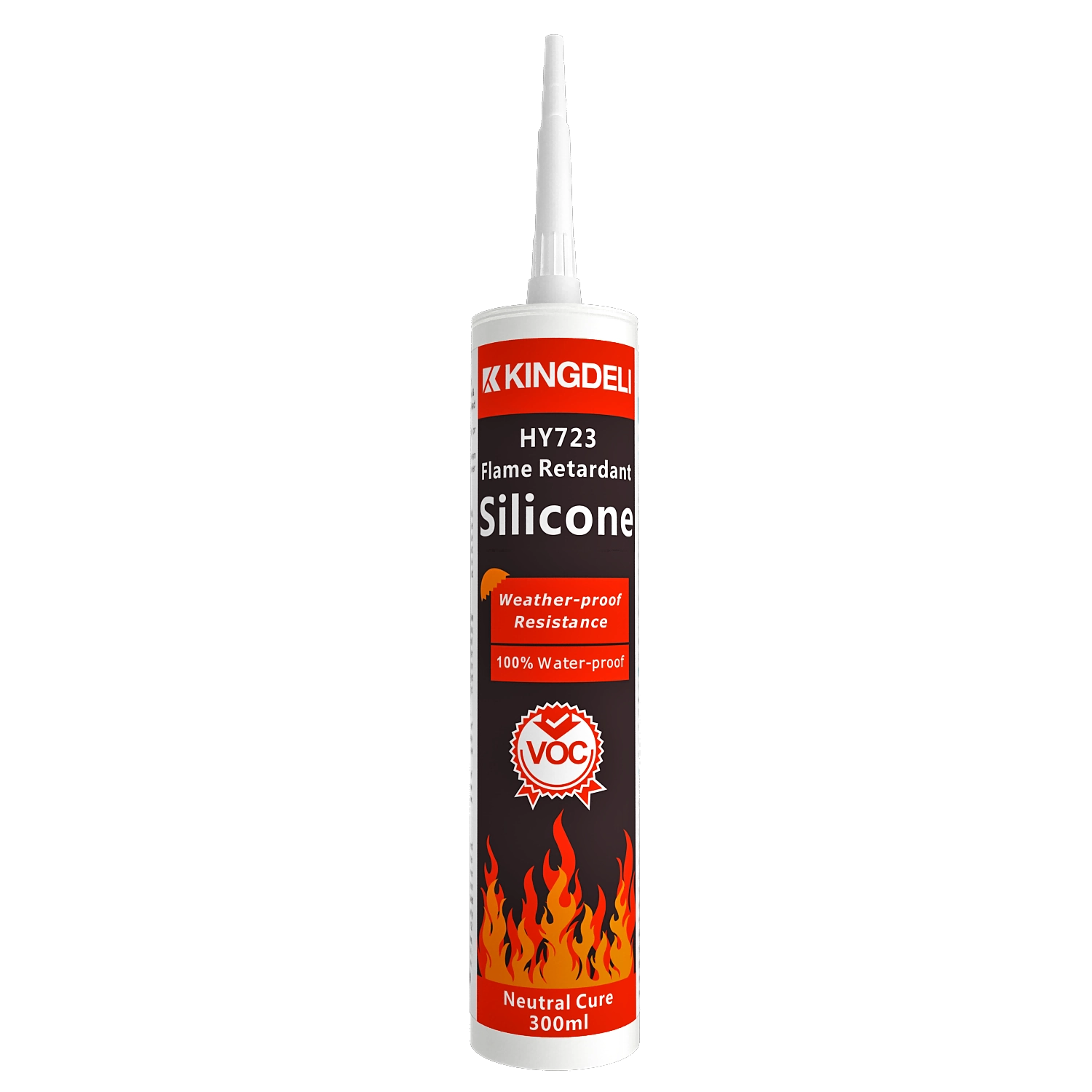
HY-723 Flame Retardant Neutral Silicone Sealant
HY-723 Flame Retardant Neutral Silicone Sealant is a high modulus one-component, shelf-stable, neutral cure, elastomeric adhesive. s. It helps control the spread of fire, smoke, and toxic fumes within a given area surrounded by firewalls for a period of up to four hours, depending on joint configuration.
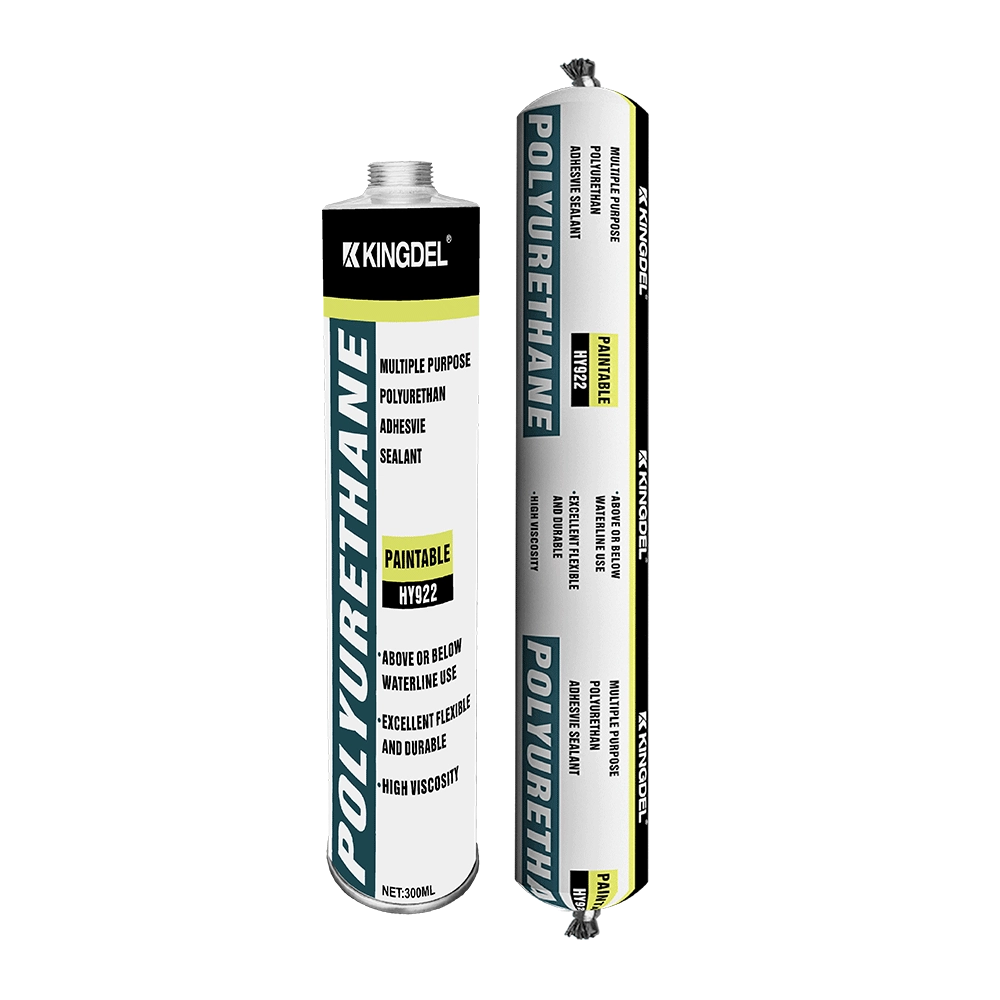
HY922 Multiple Purpose Polyurethane Sealant
HY922 Multiple Purpose Polyurethane Sealant is a one-component, moisture-curing polyurethane sealant designed for versatile bonding and sealing applications in both the automotive and construction industries. It cures to form a flexible yet tough elastomeric joint with excellent adhesion to a wide range of substrates. The formulation is non-corrosive, solvent-free, and produces a smooth, bubble-free finish during application.
HY922 delivers fast surface drying and quick positioning, improving installation efficiency while maintaining long-term durability. With strong weather resistance and good creep resistance, it performs reliably in demanding indoor and outdoor environments, including moist and partially submerged conditions.
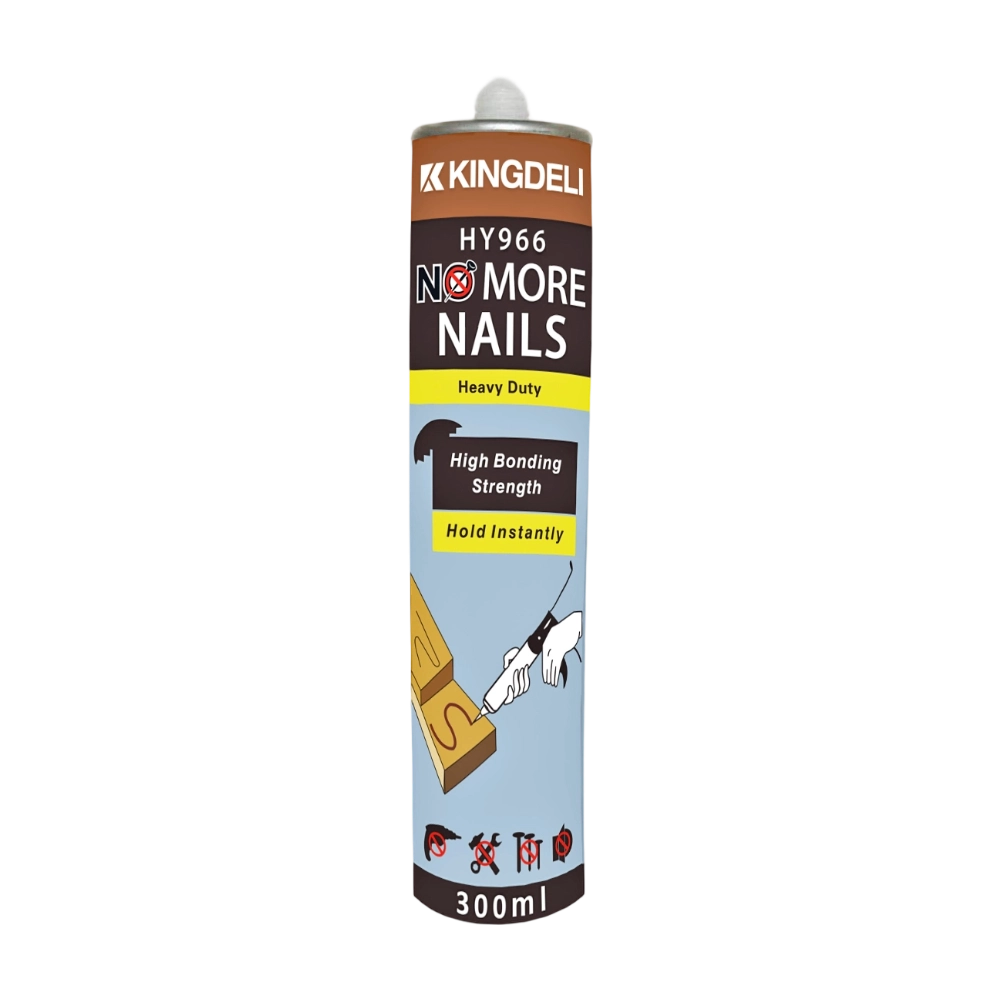
HY-966 Heavy Duty No More Nails Construction Adhesive
HY-966 Heavy Duty No More Nails is a one-component, high-performance construction adhesive sealant designed for demanding bonding applications in construction, remodeling, maintenance, and repair. Its instant grab formulation secures materials immediately, significantly reducing the need for bracing or mechanical fixing during installation.
HY-966 cures reliably in moist environments and delivers durable adhesion across a wide range of substrates. It provides excellent resistance to water, temperature variation, and aging, ensuring long-term performance in interior construction applications.
Let’s Build Stronger Bonds with Quality Adhesives and Sealants
Have questions about the topic or need tailored sealant solutions for your project?
Our team is ready to provide expert guidance, product recommendations, and application support.
Innovating with Integrity, Bonding the World
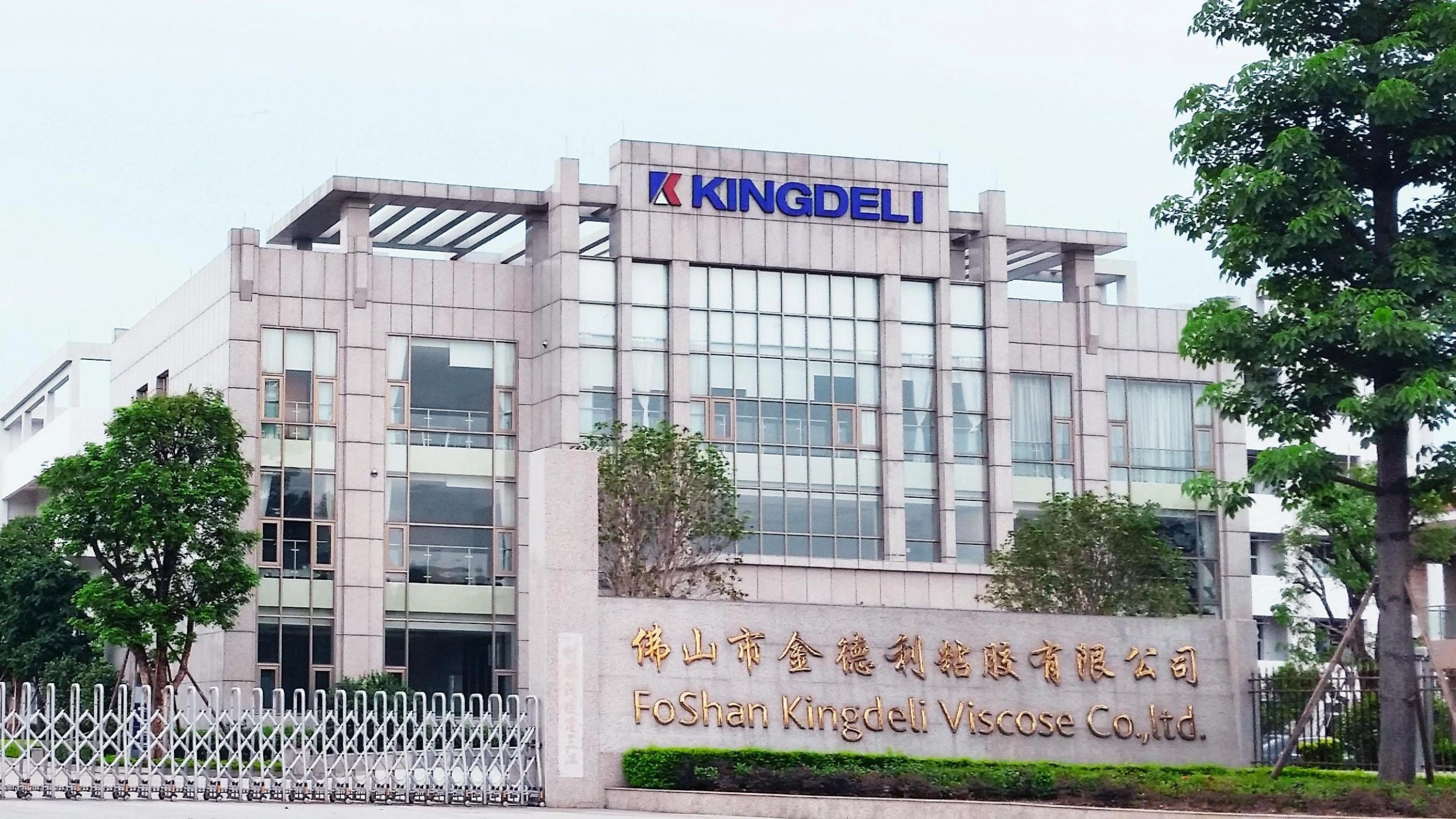
Since 1998, KINGDELI has delivered trusted, sustainable sealant solutions that connect industries and inspire progress worldwide.
Whatsapp: +8618825946249
Kingdeli
Kingdeli
Kingdeli
Kingdeli
Kingdeli