











What certifications should acetic silicone sealant suppliers have?
What Certifications Should Acetic Silicone Sealant Suppliers Have? 6 Beginner Questions Answered
Acetic (acetoxy) silicone sealant is widely used because of its fast skinning, excellent UV resistance and long-term elasticity. However, buyers frequently run into gaps in supplier documentation or misinterpreted test data. Below are six targeted, pain-point oriented questions beginners ask but that often lack deep, up-to-date answers online — each followed by an in-depth, actionable response you can use in procurement and specification.
Embedded terms: acetic silicone sealant, acetoxy silicone, acid-cure silicone, silicone adhesive, curing rate, volatile acetic acid, UV resistance, weatherproofing, VOC, SDS, EN 15651, ASTM C920, ISO 9001, REACH.
1. How long will the acetic smell (off‑gassing) persist in confined indoor spaces after applying acetic silicone sealant, and how should I mitigate IAQ and worker exposure?
Why this matters: buyers on interior projects are often surprised by the strong vinegar-like odor of acetoxy silicones — the odor is acetic acid released during cure. Indoor projects, occupied buildings, and poorly ventilated spaces require specific mitigation or a different product (neutral-cure silicone).
What happens chemically: acetoxy (acetic) silicones cure by releasing acetic acid vapour as the cross-linking reaction proceeds. Off-gassing is highest during the initial skin formation and the first 24–72 hours; the sealant continues to cure inward at a typical rate of ~2–3 mm per 24 hours depending on temperature and humidity. Most perceptible odor drops substantially after 48–72 hours in normal conditions, but thin beads or deep joints may take longer to fully stop emitting low levels of acetic vapour.
How to assess and mitigate:
- Check the supplier SDS: Section 9 (physical and chemical properties) and Section 8 (exposure controls) will indicate acetic acid hazards and recommended PPE/ventilation.
- Quantify exposure in sensitive projects: ask the supplier for measured VOC content (g/L) and any volatile organic compound (VOC) spec tests performed to ASTM D3960 (or local equivalent). If the product is labeled “acetoxy” it will emit acetic acid; request measured acetic acid concentration during initial cure from the supplier if IAQ is critical.
- Engineering controls: ensure controlled ventilation (make-up air, local exhaust), run HVAC fresh-air mode during and 48–72 hours after application; use portable air cleaners with activated carbon in small, enclosed areas.
- PPE and worker safety: goggles and gloves are mandatory; if exposures exceed local OELs, provide respirators per SDS recommendations.
- Alternatives: for occupied interiors or sensitive substrates, specify a neutral‑cure or oxime silicone adhesive instead — they have much lower acetic off-gassing.
- Reactive or sensitive metals: acetic acid can accelerate corrosion on copper, brass, lead, and some zinc‑coated metals. Do not use acetoxy silicones on these metals unless a corrosion-resistant barrier or primer is specified.
- Natural stones and calcium-rich masonry (marble, limestone): acetic acid can cause etching or staining on sensitive stones — prefer neutral-cure silicones or test mock-ups.
- Low surface energy plastics: polyethylene (PE), polypropylene (PP), PTFE typically show poor adhesion without surface treatment or a primer.
- Wet, contaminated or frosted surfaces: acetoxy silicones require clean, dry surfaces for reliable adhesion; they do not bond well to damp substrates.
- Mock-up adhesion test: prepare a representative mock-up with the exact substrate (same finish, coating, age) and environmental conditions. Apply bead per manufacturer instructions and cure for the supplier‑recommended time (often 7–28 days for full physical properties).
- Perform adhesion tests: simple peel or cross‑cut tests are a minimum. For formal verification, request ASTM C794 adhesion‑in‑peel tests or ISO equivalents. Ask the supplier to provide batch-specific adhesion test results to those standards (including displacement rates and failure mode—adhesive vs cohesive).
- Check failure mode: adhesive failure (sealant separates cleanly) indicates surface incompatibility; cohesive failure (sealant tears) indicates good adhesion. Only cohesive failure is acceptable for critical joints.
- Primers and surface prep: if the mock-up shows marginal adhesion, request recommended primer, surface-cleaning procedure (solvent type, no residue), and re-test with those conditions. Require the supplier to specify primer brand and compatibilities.
- EN 15651 series (Europe) — product standard for sealants used in façade and pedestrian joints (EN 15651‑1 for façade sealants, EN 15651‑4 for sanitary). Look for declared performance, movement capability, and reaction‑to‑fire classification under the Construction Products Regulation (CE marking).
- ASTM C920 classification (North America) — verifies movement capability, adhesion, and weathering properties for elastomeric joint sealants. Request the certificate or test report showing the specific class (e.g., Class 25, Type S) and test conditions.
- Accelerated weathering: request results from ASTM G154 (UV‑A fluorescent UV‑condensation cycles) or ASTM G155 (xenon‑arc) or ISO 4892‑3 xenon‑arc testing. Key outputs: change in tensile properties, loss of adhesion, cracking, chalking, and color change after specified exposure hours.
- Aging and thermal cycling tests: results showing adhesion retention after cyclic temperature changes, freeze‑thaw, or thermal shock. Look for post‑aging adhesion tests (ASTM C792 / EN test equivalents) showing % retention of tensile strength/elongation.
- Salt spray and corrosion screening (if near marine environments): ASTM B117 or equivalent tests on metal substrates to demonstrate that the cured sealant does not promote corrosion or lose adhesion.
- Third‑party lab accreditation: verify that test reports are from an ISO/IEC 17025 accredited lab and include batch or lot numbers, sample conditioning, and precise test procedures.
- Copies of full test reports (not summaries) for the relevant batch or recent batch family, including test lab accreditation.
- Clear statement of movement capability (e.g., ±25% or ±50%) verified by the test standard referenced in the report.
- Acceptance criteria and comparison to baseline: e.g., tensile strength retained ≥80% after X hours of xenon‑arc exposure, adhesion retained >90% in peel tests after aging.
- Confirm cure chemistry: if the SDS or TDS uses words like “acetoxy”, “acetoxy‑silane”, or “acetic acid”, this is an acetoxy (acid‑cure) silicone and will release acetic acid during cure.
- SDS Section 3 (composition): look for CAS numbers (e.g., acetic acid CAS 64‑19‑7 or CASs for other organics). Manufacturers sometimes list proprietary silanes — ask for exact CAS disclosure if metals or sensitive substrates are involved.
- SDS Section 9 and 8: find VOC (g/L) and recommended exposure controls. High VOC or a lack of measured VOC data is a red flag for indoor projects.
- Corrosion risk: request analytical reports for halide/chloride content (ppm) and sulfur/halogen traces. Halide contamination in sealants can accelerate corrosion of stainless steel and plated metals — suppliers should provide halide test certificates on request.
- Request specific laboratory analyses when concerned: GC‑MS headspace analysis of uncured volatiles to quantify acetic acid and other byproducts; halide/chloride assays (ion chromatography) on the cured material; heavy metals screening for lead, cadmium (ICP‑MS), and declaration of compliance with REACH (SVHC) limits if used in EU projects.
- Look for stated shelf life, storage conditions, and batch traceability on the TDS — missing batch traceability complicates warranty claims.
- Vague or missing composition details and refusal to provide CAS numbers for key components.
- No VOC or headspace emission data for acetoxy sealants when requested for indoor works.
- No halide or heavy‑metal screening available for projects involving stainless or architectural metals.
- ISO 9001 (Quality Management) — shows the supplier has formal QA/QC systems, document control, and traceability. Reduces production and batch inconsistency risk.
- EN 15651 product declaration + CE marking (for EU projects) — mandatory when specifying construction products governed by the Construction Products Regulation; demonstrates declared performance for façade and structural joint use.
- ASTM C920 compliance (for US/North America) — required or strongly recommended for many façade and movement-joint specifications; maps directly to common US standards in contract documents.
- ISO/IEC 17025 accreditation for testing laboratories — ensures the reported test results (weathering, adhesion, VOC) are reliable and reproducible.
- REACH compliance and SDS/GHS conformity (EU) — required in EU procurement; verifies chemical safety obligations and absence of SVHCs above regulatory thresholds.
- Industry accessibility certifications: building‑specific approvals such as FM Global or UL listings for fire-rated joint systems (e.g., UL 2079 for fire resistance) when joints cross-rated for fire performance are required.
- Environmental/low‑emission certifications: GREENGUARD, EU Ecolabel, or local low‑VOC declarations (or compliance with local VOC rules like SCAQMD Rule 1168 in California) — useful for green building (LEED/BREEAM) credits.
- Specify the exact standard (EN 15651‑1 / ASTM C920) in the specifications. Don’t use generic language like “meets industry standards”.
- Require submittals to include third‑party laboratory reports (ISO/IEC 17025) for the relevant batch and the DEQ (Declaration of Performance / test reports) with CE for EU projects.
- For public tenders, require a QA plan (documented under ISO 9001), SDS compliance, and evidence of batch traceability. Tie warranty duration and remediation obligations to those submittals.
- Material performance warranty: require a minimum 10‑year manufacturer warranty for exterior acetic silicone sealants on façades, with an option to negotiate 15 years if the supplier can provide supporting accelerated weathering and field history data. Many silicone sealants have documented service lives that exceed 20 years, but typical commercial warranties are 5–15 years.
- Movement capability and performance clause: specify the required movement capacity (e.g., ±25% or ±50%) and require supplier certification (test report) showing the product meets that class under ASTM C920 or EN 15651 movement tests.
- Failure-rate or adhesion retention: require documented evidence of adhesion retention and elastomeric property retention after accelerated aging (e.g., tensile strength and elongation retained ≥80% after specified xenon‑arc hours). Tie warranty coverage to those objective performance thresholds.
- Installer and workmanship warranty: require combined warranty (material + workmanship) for a specified period (commonly 1–5 years) with clear disclaimers for exclusions (improper substrate prep, contamination, non‑approved primers, mechanical damage).
- Remediation and indemnity: define the supplier’s obligations on confirmed failures — replacement of material at no cost, reasonable reinstallation labor if failure is due to material defect, and a clear claims procedure including batch number verification and on‑site sample testing.
- Batch traceability and sampling: require batch numbers on shipping docs and retention samples for 12 months after delivery to support any failure investigation.
Red flags to watch for from suppliers: refusal to provide VOC or measured acetic-acid emission data, or vague SDS entries. For large indoor works, require measured emission data and a recommended ventilation plan as part of the technical submittal.
2. Which substrates are unsuitable for acetoxy silicone sealant despite manufacturer claims, and how do I validate adhesion before full-scale use?
Why this matters: adhesion failures are one of the most frequent warranty issues. Not all substrates listed as “paintable” or “adhesive-compatible” actually perform long-term with acid-cure silicones.
Substrates to avoid or to treat carefully with acetoxy (acetic) silicones:
How to validate adhesion (practical protocol):
Include a contractual requirement: acceptance of a mock-up (minimum three test joints, cured and tested) before the main supply or installation proceeds. This reduces the risk of large‑scale failures and warranty disputes.
3. What specific test reports should buyers request to verify long‑term weathering and UV resistance for exterior façade use?
Why this matters: marketing claims of “UV stable” or “suitable for façades” are common, but buyers need standardized, third‑party evidence that a sealant will maintain adhesion, elasticity and appearance after years of sun, rain and temperature cycles.
Essential tests and certifications to request (and why):
What to require in the submittal:
Red flags: only summary statements without lab reports, or lab reports from unaccredited labs. For façade projects, insist on full EN 15651 or ASTM C920 documentation plus accelerated weathering reports.
4. How do I read an SDS and technical data sheet to spot hidden red flags like high volatile acetic acid concentrations, halide contamination or corrosion‑accelerating impurities?
Why this matters: many failures (metal corrosion, staining, worker complaints) trace back to impurities or volatile species not obvious unless you know where to look in the documentation.
Practical SDS/Data Sheet review checklist:
Red flags in supplier documentation:
Action step: require relevant analytical test certificates (halide content, GC‑MS headspace, VOC) as a contractual submittal item for sensitive projects. Insist these tests come from ISO/IEC 17025 labs.
5. Which supplier certifications specifically reduce procurement risk for large construction projects and how do they map to contract requirements (public tenders)?
Why this matters: procurement offices and public tenders commonly require a checklist of certifications. Knowing which certifications actually reduce technical and contractual risk helps you choose suppliers and write enforceable specifications.
Core supplier and product certifications to request (and what each mitigates):
Mapping to contract clauses:
Red flags: supplier claims to “meet ASTM/EN” but no test report, or only internal lab data without independent verification. For public tenders, only accept accredited lab reports and certified product declarations.
6. What warranty terms and failure‑rate guarantees should buyers require for acetic silicone sealant used in high‑movement expansion joints?
Why this matters: movement joints are high‑risk. Sealant failures in these joints quickly become visible and expensive to repair. Typical supplier warranties can be ambiguous about material vs. workmanship coverage.
Reasonable, enforceable warranty expectations and contract language:
Red flags: warranties that merely promise “product will perform as marketed” without numeric pass/fail criteria, or warranties that exclude UV or weathering failures without defining what exposures are covered.
Conclusion: Advantages of acetic silicone sealant when paired with the right supplier documentation and certifications
Acetic (acetoxy) silicone sealants offer fast skin times, excellent UV resistance, and durable elasticity that make them a cost‑effective choice for many exterior and non‑sensitive interior applications. However, their acid‑release cure chemistry introduces risks (metal corrosion, indoor odor) that must be managed by (1) selecting the correct chemistry for the substrate and environment, (2) requiring specific, accredited lab test reports (EN 15651 / ASTM C920, xenon‑arc/UV tests, adhesion after aging), (3) reviewing SDS and analytical data for halides and VOCs, and (4) insisting on supplier certifications (ISO 9001, CE/EN declarations, ISO/IEC 17025 lab reports) and clear, measurable warranty language. When these controls are in place, acetoxy silicones deliver long service life, reliable weatherproofing and cost advantages versus alternatives.
For a tailored submittal package, batch‑specific test reports or a quotation, contact us for a quote: www.kingdelisealant.com • info@kingdeliadhesive.com
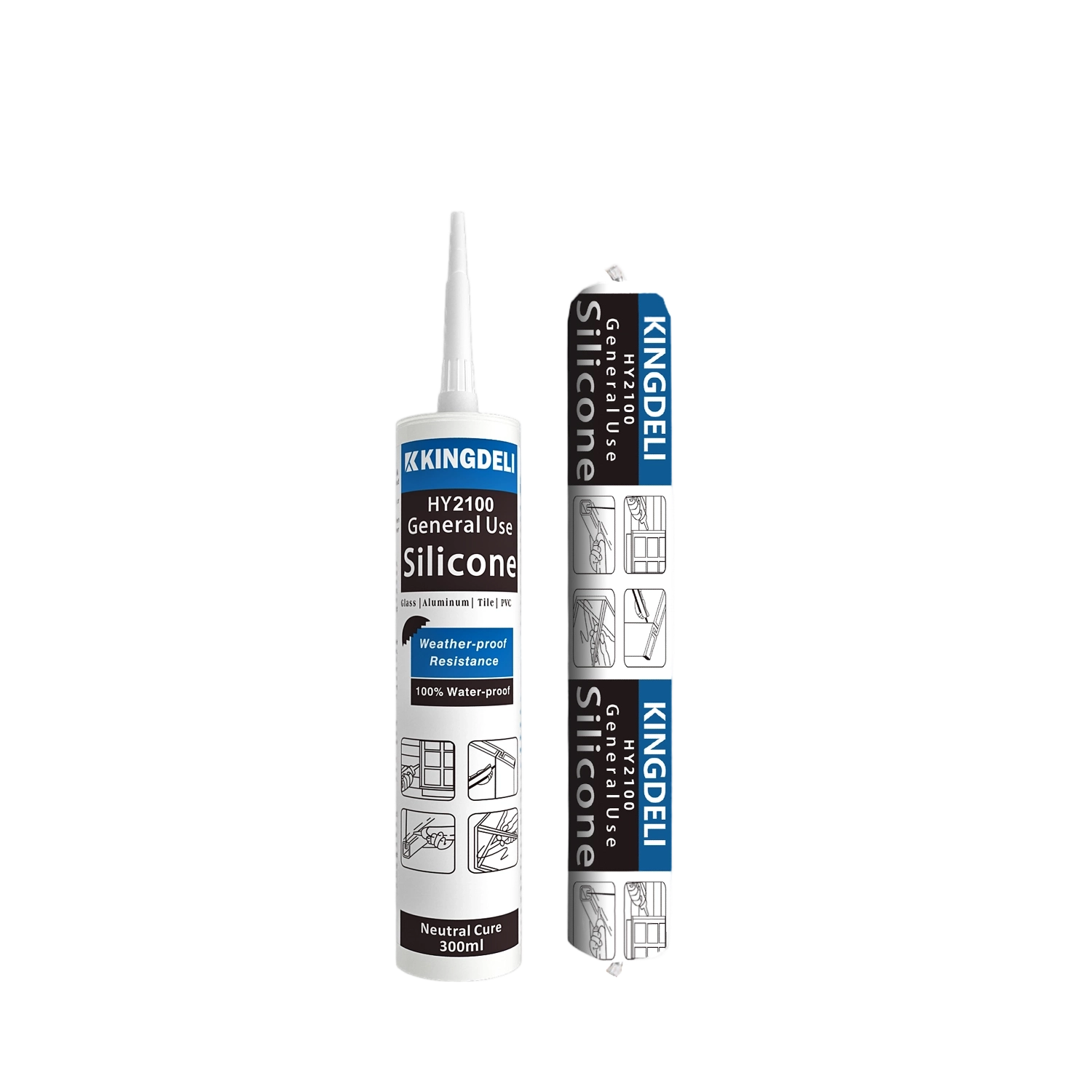
Industrial Applications of Acetic Silicone Sealant: Beyond Basic Glass Sealing
Top Factors to Consider When Choosing an Acetic Silicone Sealant Manufacturer in China
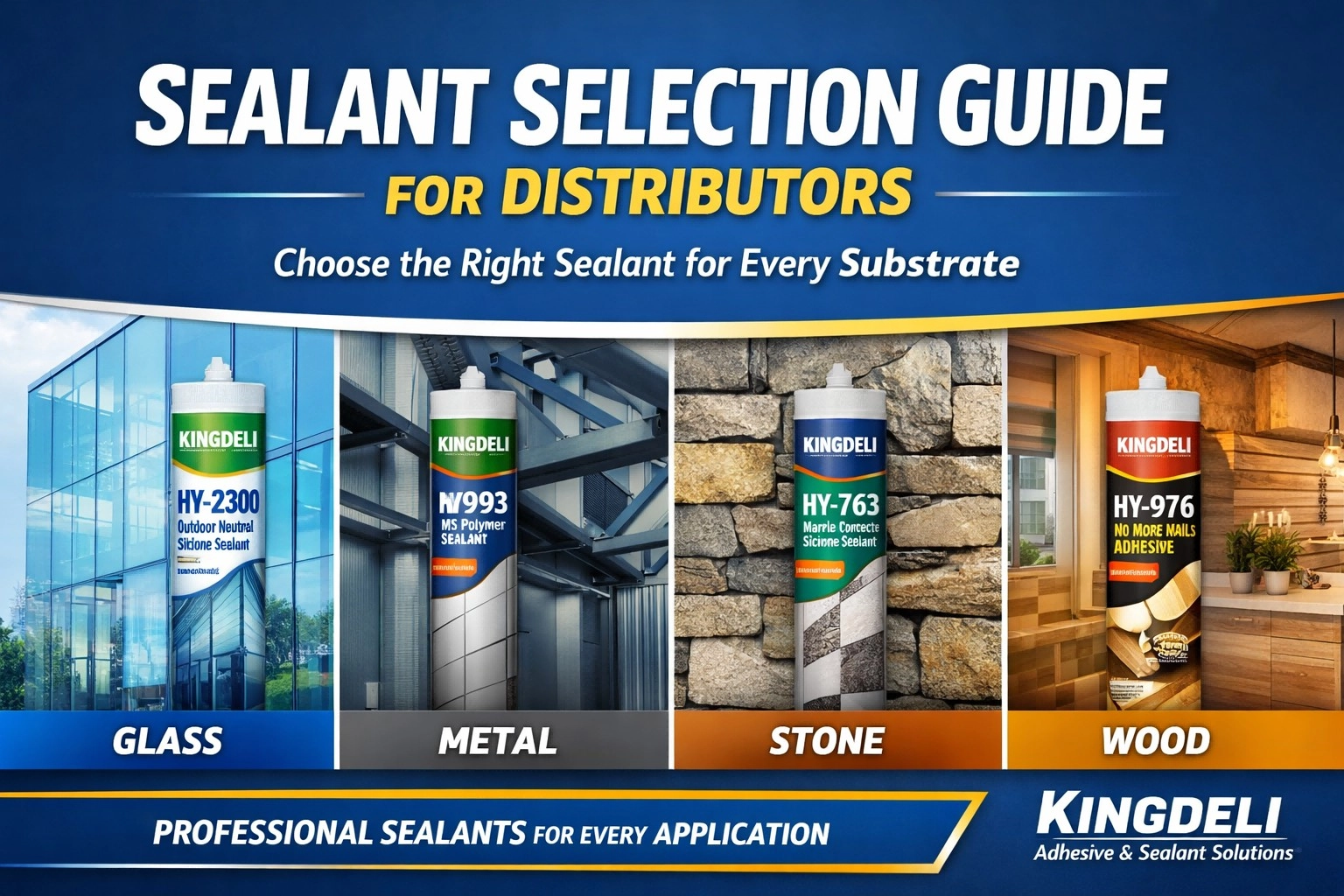
The Complete Sealant Selection Guide for Distributors & Building Supply Partners
How to Apply High Temperature Silicone Sealant Like a Pro: 5 Secrets for a Lifetime Seal
HY993
What substrates does HY993 adhere to?
HY993 bonds strongly to most common construction and industrial materials, including glass, stainless steel, PVC, PC, ABS, wood flooring, galvanized sheet, aluminum, hardware, siding, brick, concrete, and ceramic. It also adheres well to many automotive substrates.
HY-2300
What is the working temperature for application?
Application environment should be maintained between 4℃–40℃ for optimal performance.
HY994
What substrates can HY994 bond or seal?
HY994 adheres strongly to stone, ceramic tile, aluminum, stainless steel, metals, plastics, concrete, wood (non-oily), and many porous or smooth surfaces. It is also effective on slightly damp substrates.
What are the recommended application temperatures?
HY994 should be applied when the substrate temperature is between 4°C and 40°C. Outside this range, workability and adhesion may be affected.
Are there substrates where HY994 is not recommended?
Yes. Do not use HY994 on materials that release oils, plasticizers, or solvents (e.g., oil-treated wood, certain rubber materials).
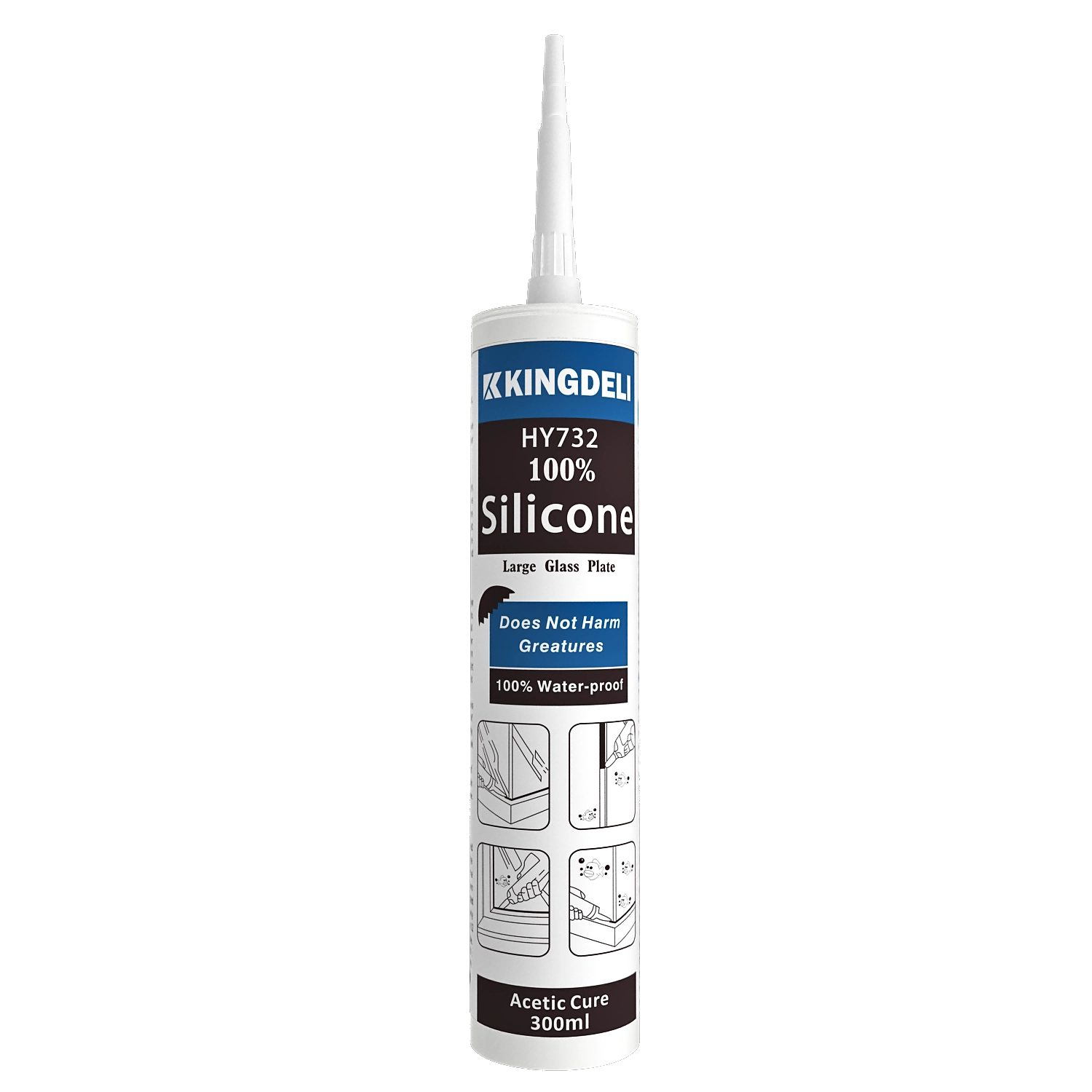
KINGDELI HY732 Professional Acetoxy Cure Silicone Sealant
KINGDELI HY732 is a professional-grade, one-component acetoxy cure silicone sealant designed for fast curing, strong adhesion, and long-lasting flexibility. Ideal for aquariums, glass applications, aluminum doors and windows, kitchens, and bathrooms, it provides reliable sealing performance with excellent anti-fungal protection in high-humidity environments.
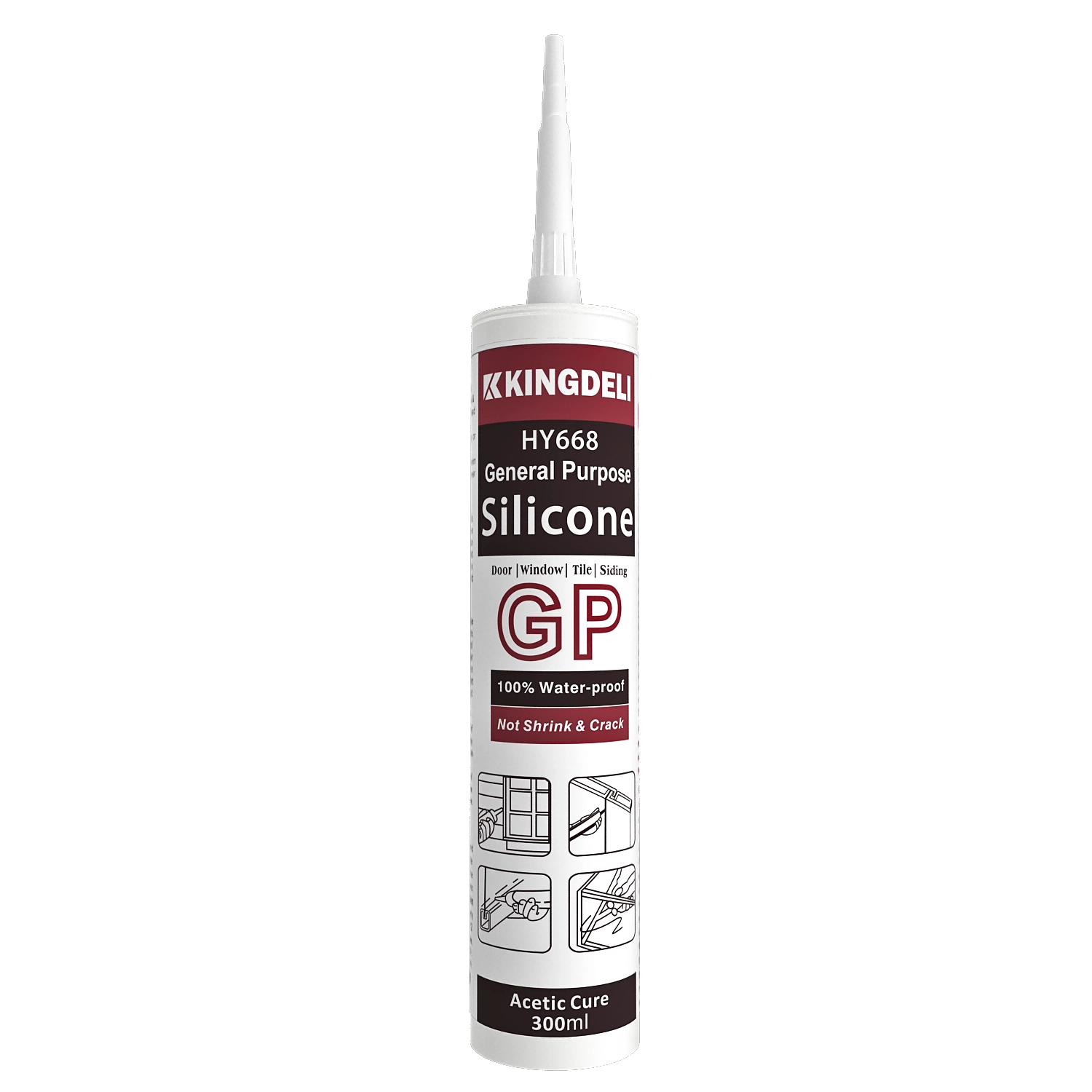
HY668 General Purpose Acetic Silicone Sealant
HY-668 General-Purpose Acetic Silicone Sealant is a easy-to-use sealant for everyday sealing and glazing applications. It offers good adhesion, fast curing, and a durable flexible seal, making it ideal for windows, doors, interior joints, and general construction use
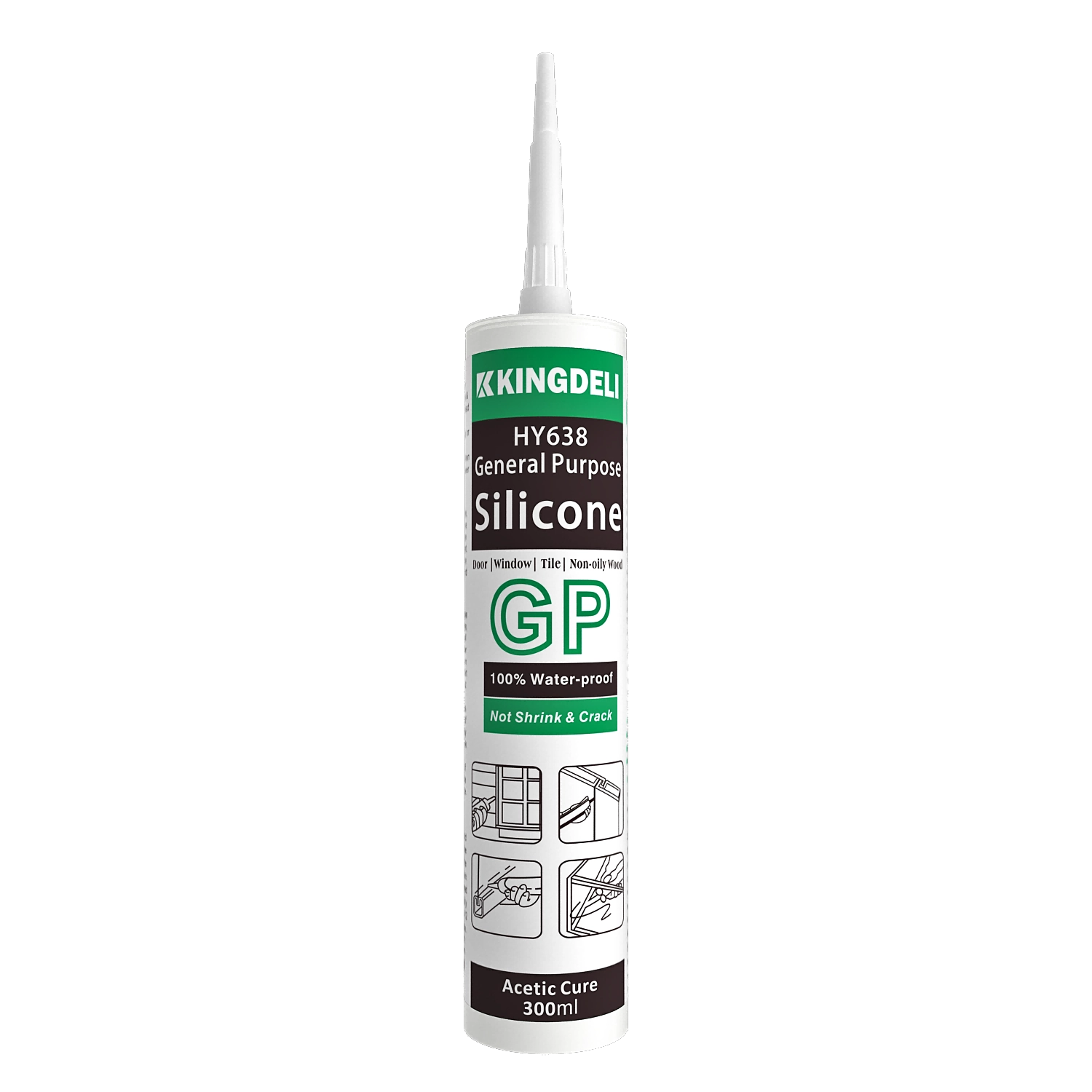
HY638 Economic General Purpose Acetic Silicone Sealant
HY-638 Economic General-Purpose Acetic Silicone Sealant is a cost-effective, one-component, shelf-stable, acetoxy-curing silicone sealant designed for general-purpose sealing and bonding applications. After curing, it forms a durable, elastomeric seal with the following characteristics:
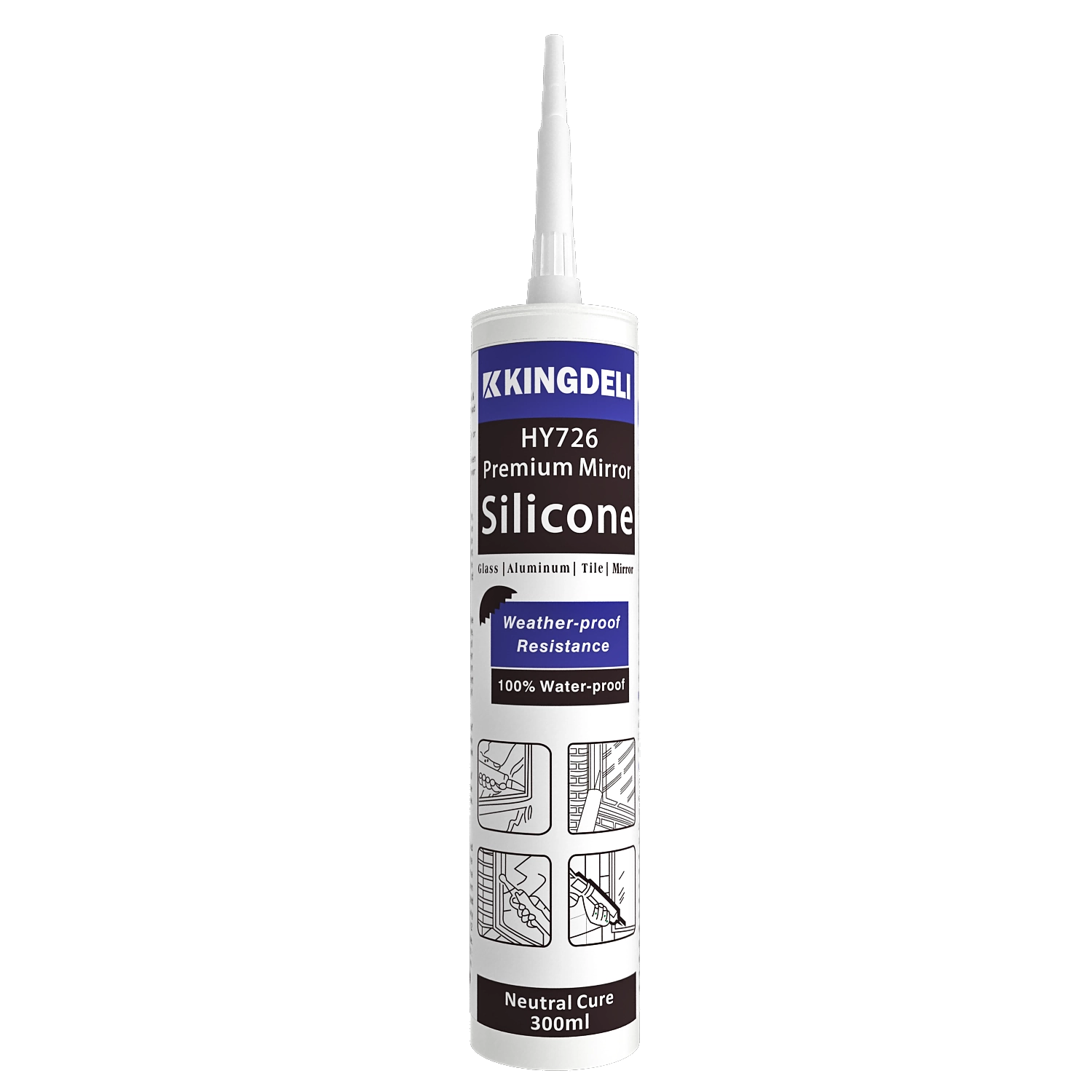
HY-726 Premium Clear Neutral Silicone Sealant
HY726 one-component, shelf-stable, 100% silicone elastomeric adhesive using alkoxy technology. It is specifically designed for sealing sensitive surfaces such as copper, gold, and metal-coated mirrors.
Let’s Build Stronger Bonds with Quality Adhesives and Sealants
Have questions about the topic or need tailored sealant solutions for your project?
Our team is ready to provide expert guidance, product recommendations, and application support.
Innovating with Integrity, Bonding the World
Since 1998, KINGDELI has delivered trusted, sustainable sealant solutions that connect industries and inspire progress worldwide.
Whatsapp: +8618825946249
Kingdeli
Kingdeli
Kingdeli
Kingdeli
Kingdeli