


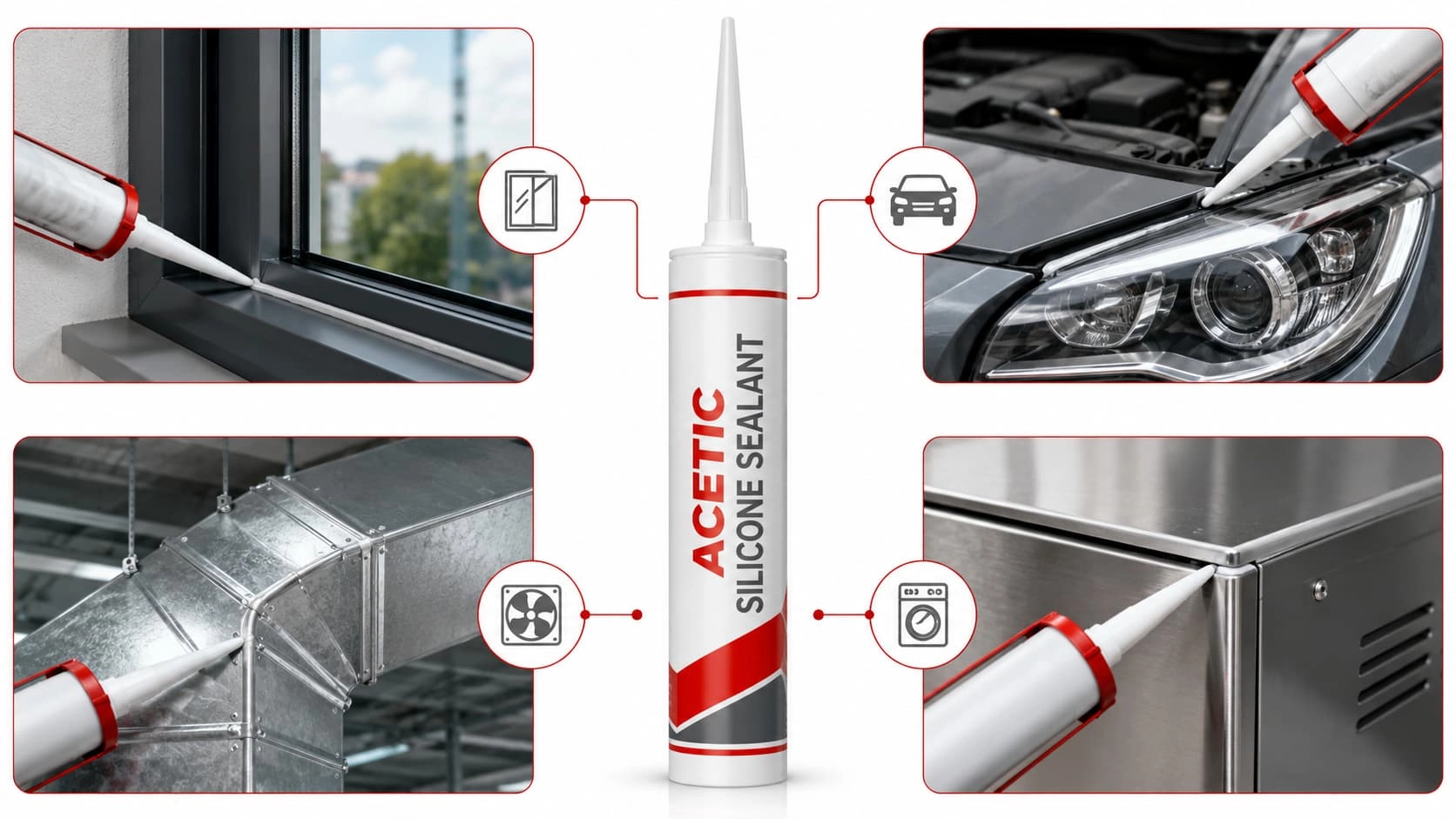
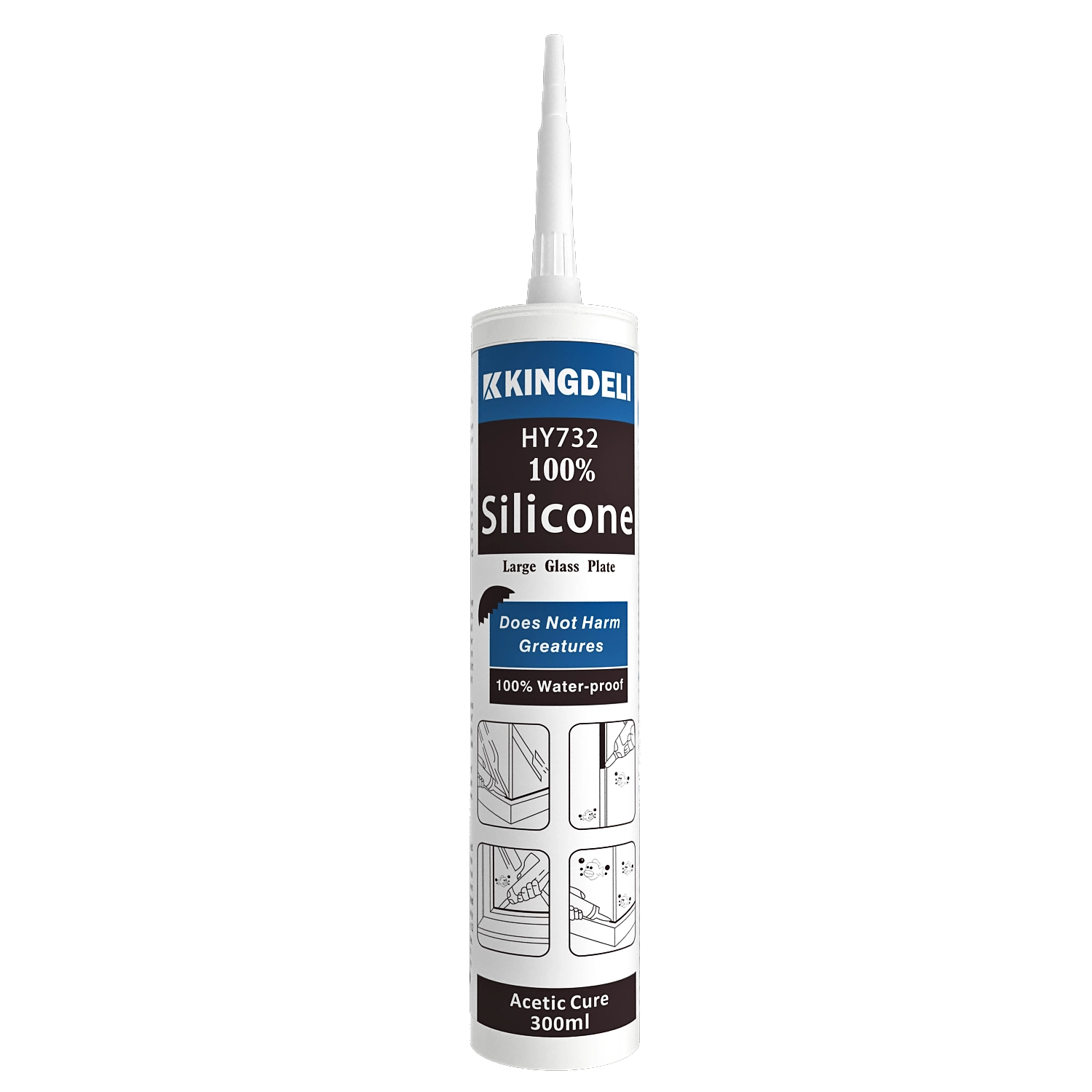
Quick answer: Acetic silicone sealant is best suited for glass, glazed ceramic, aquariums, HVAC ductwork, kitchen and bathroom joints, and coated or painted metal surfaces. It is not recommended for bare metal, mirror backing, natural stone, concrete, or sensitive electronics — neutral silicone or MS polymer sealant is a better choice for those substrates.
Glass, glazed ceramic, aquariums, coated or galvanized metal, HVAC, and appliances.
Bare metal, mirror backing, natural stone, concrete, and electronics.
Glass & glazing, aquarium/marine, HVAC, appliance manufacturing, and automotive.
If you are trying to confirm whether acetic silicone sealant is the right choice for your project — or whether you should switch to a neutral-cure formula — this guide breaks down exactly where it performs best, where it can cause problems, and how to source it for industrial-scale use.
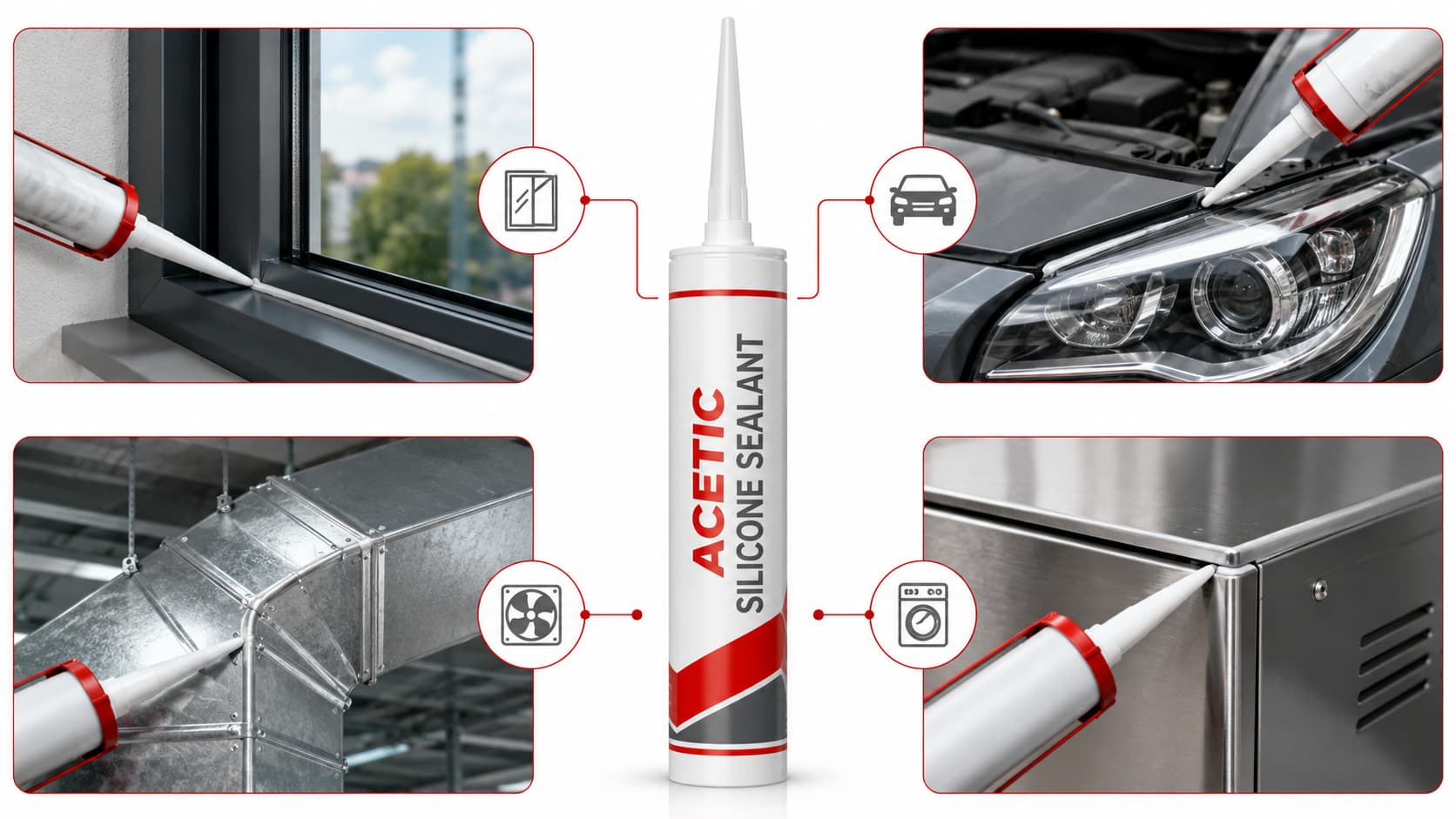
What Is Acetic Silicone Sealant?
Acetic silicone sealant, also called acetic cure silicone or acetoxy cure silicone, is a one-component silicone that cross-links when exposed to atmospheric moisture. During curing, it releases acetic acid — the same compound found in vinegar — which is why it has a distinct sharp smell while curing and why it is not compatible with every substrate.
This curing byproduct can help improve adhesion performance on many non-porous, smooth surfaces like glass and glazed ceramic. The trade-off is that the same acid can corrode certain metals and damage acid-sensitive materials, which is the main reason acetic silicone is not a universal sealant.
Compared with neutral-cure silicone, acetic formulations typically cure faster and bond more aggressively to glass and ceramic, but they have a narrower range of compatible substrates. For product selection, you can also review KINGDELI's acetic silicone sealant range.
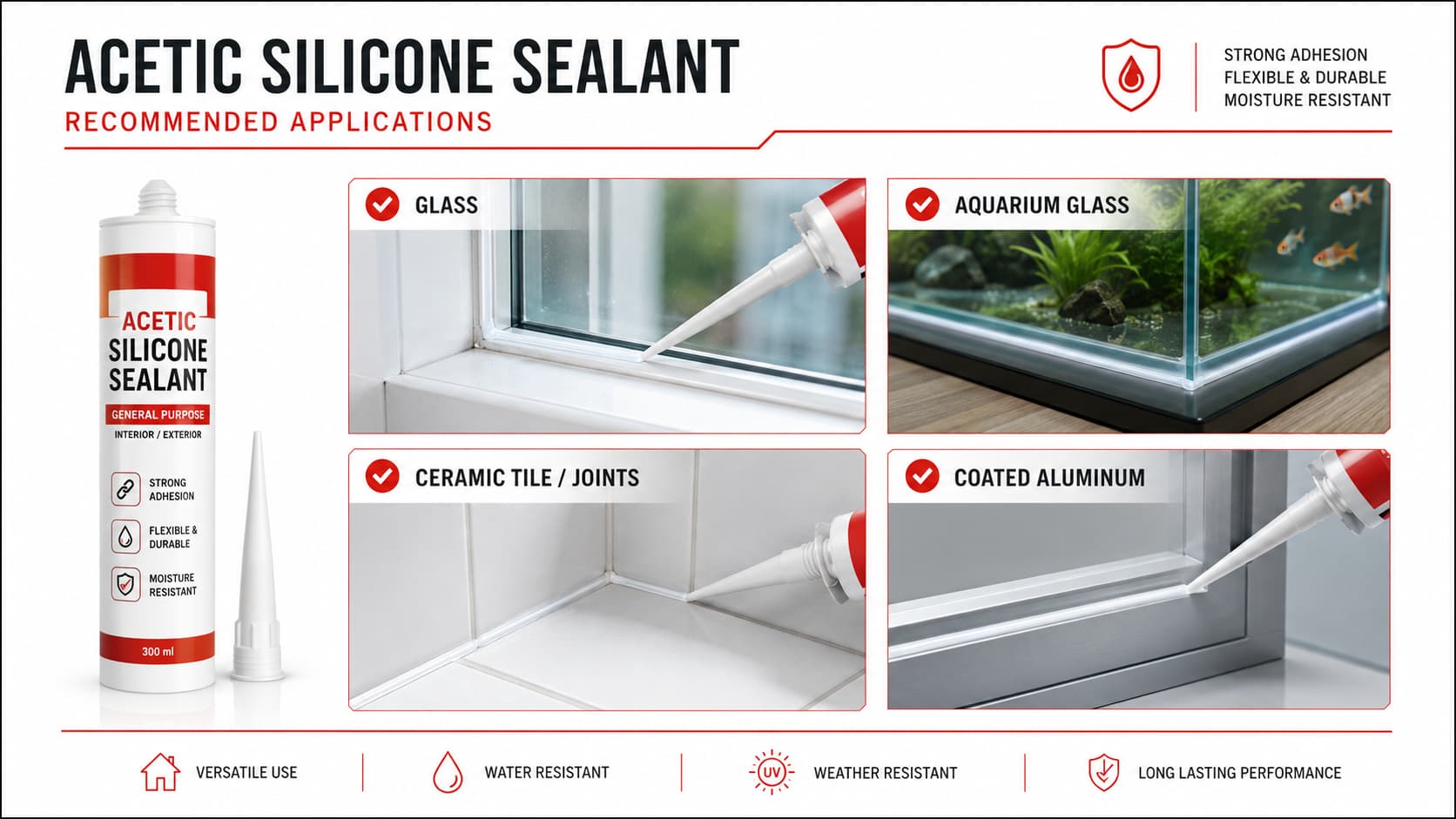
Best Uses of Acetic Silicone Sealant
Acetic silicone sealant performs best wherever a fast, strong bond to a smooth, non-porous, acid-tolerant surface is needed.
| Application | Suitable Substrates | Why It Works |
|---|---|---|
| Glass sealing | Glass, glazed ceramic | Strong adhesion and fast curing on smooth, non-porous surfaces. |
| Aquarium assembly | Thick glass panels | Excellent long-term water resistance once fully cured. |
| Kitchen & bathroom | Ceramic tile, glass, sanitary joints | Moisture resistance and mildew resistance in humid environments. |
| HVAC duct sealing | Coated or galvanized metal | Stays flexible under repeated thermal cycling. |
| Appliance manufacturing | Oven glass, freezer seams | Withstands both high heat and freezing temperatures. |
Where Not to Use Acetic Silicone Sealant
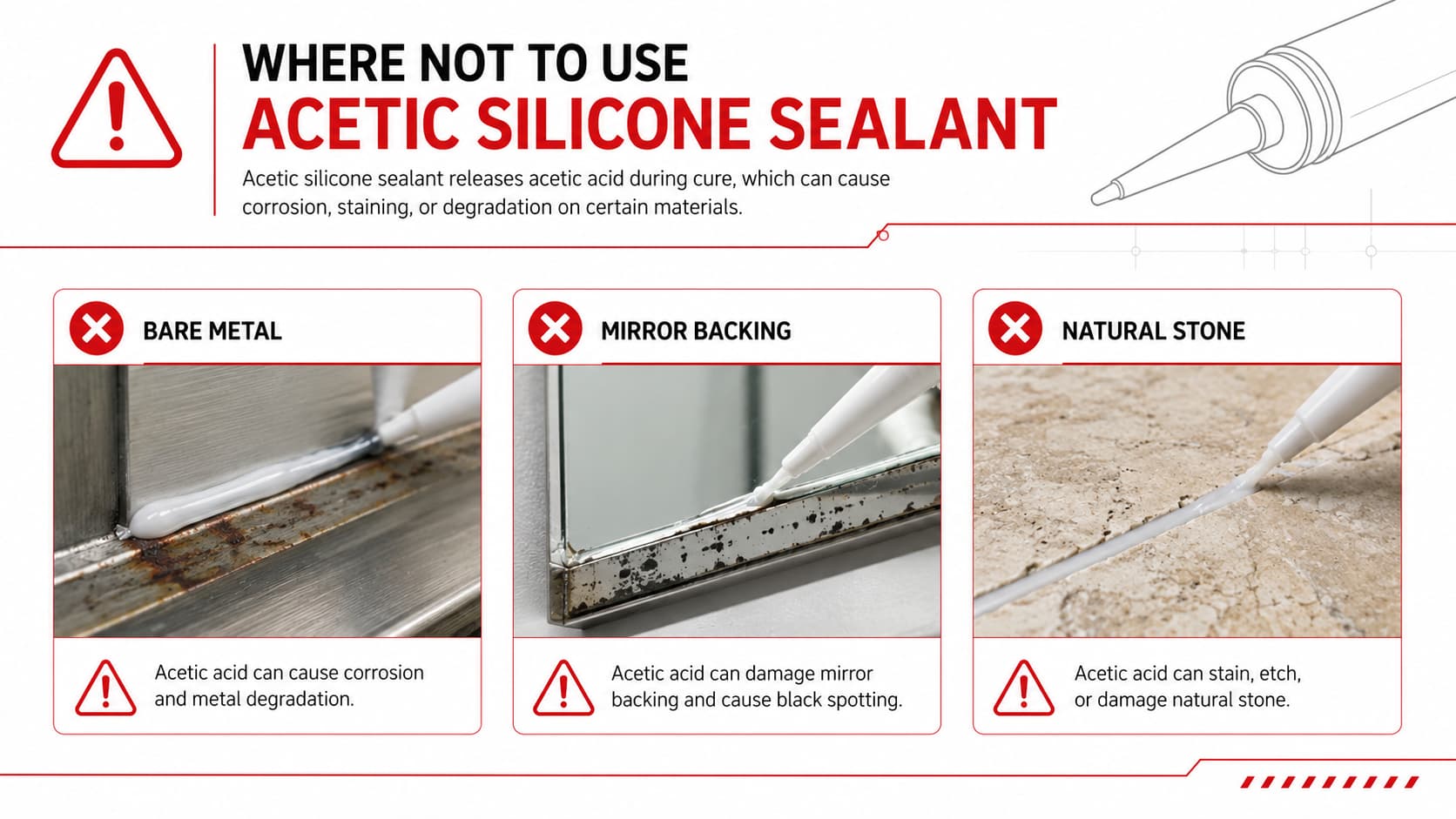
This is the part most buyers actually need before placing an order — using acetic silicone sealant on the wrong substrate can lead to corrosion, staining, or joint failure.
- Bare metal — raw steel, copper, brass, and zinc can corrode from the acetic acid released during curing.
- Mirror backing — the acid can damage the reflective silver backing and cause dark spots.
- Natural stone, marble, and concrete — acid exposure can etch or stain porous, alkaline surfaces.
- Sensitive electronics — acetic acid vapor can corrode exposed circuitry and metal contacts.
For these substrates, neutral silicone sealant or an MS polymer sealant is the safer and more reliable choice.
If your project involves any of the substrates above, it is worth reviewing our neutral silicone sealant range before finalizing your specification.
Industrial Applications by Sector
Glass & Glazing Manufacturing
Acetic silicone is a standard choice for sealing glass-to-glass and glass-to-frame joints in glazing production, where its fast cure and strong initial grab reduce handling time on the line.
Suitable substrates: glass, glazed ceramic, anodized aluminum frames.
Avoid: raw aluminum or steel frame components without coating.
Aquarium and Large Glass Assembly
For large aquariums and marine display tanks, acetic silicone provides the structural bond needed to withstand sustained water pressure across thick glass panels.
Suitable substrates: thick glass panels, glazed ceramic bracing.
Buying tip: confirm the sealant is rated for continuous water immersion, not just general-purpose glazing.
HVAC Ductwork and Coated Metal Joints
In HVAC manufacturing, acetic silicone seals sheet metal ductwork joints, provided the metal is coated, painted, or galvanized rather than bare.
Suitable substrates: galvanized steel, coated sheet metal.
Avoid: uncoated raw steel ducting, which is more prone to acid-related corrosion over time.
Appliance Manufacturing
Commercial oven doors, walk-in freezer seams, and other appliance components rely on acetic silicone's resistance to both extreme heat and freezing cold.
Suitable substrates: oven glass, glazed enamel panels, coated metal housings.
Buying tip: request thermal cycling test data (TDS) if the sealant will be exposed to repeated hot/cold transitions.
Automotive and Transportation Sealing
Commercial transport manufacturers use heavy-duty acetic silicone to seal insulated panels in refrigerated trucks and cargo containers, where it needs to absorb vibration while blocking moisture and exhaust exposure.
Suitable substrates: coated aluminum panels, glazed composite panels.
Avoid: exposed bare metal chassis components.
Ceramic and Sanitary Applications
In sanitaryware and tile installation, acetic silicone seals joints around sinks, tubs, and tile work where moisture and mildew resistance matter most.
Suitable substrates: ceramic tile, porcelain, glass.
Avoid: natural stone countertops and tile — use neutral silicone instead to prevent etching.
Acetic Silicone vs Neutral Silicone: Which One Should You Choose?
| Factor | Acetic Silicone | Neutral Silicone |
|---|---|---|
| Cure byproduct | Releases acetic acid | Releases alcohol, oxime, or other neutral byproducts. |
| Cure speed | Usually faster | Usually slower. |
| Best for | Glass, ceramic, non-porous substrates. | Metal, stone, concrete, electronics-adjacent areas. |
| Odor during cure | Noticeable, vinegar-like. | Minimal to none. |
| Main limitation | Can corrode acid-sensitive substrates. | Generally higher material cost. |
Rule of thumb: if your application involves glass, ceramic, or glazed surfaces and speed matters, acetic silicone is usually the better fit. If your application involves bare metal, stone, concrete, or anything acid-sensitive, choose neutral silicone sealant instead.
For flame-retardant or acid-sensitive applications where neutral curing is required, you can also review HY-723 Flame Retardant Neutral Silicone Sealant as a neutral-cure alternative.
How to Choose Industrial Acetic Silicone Sealant
Beyond confirming substrate compatibility, procurement teams should evaluate acetic silicone sealant against the following technical and supply criteria:
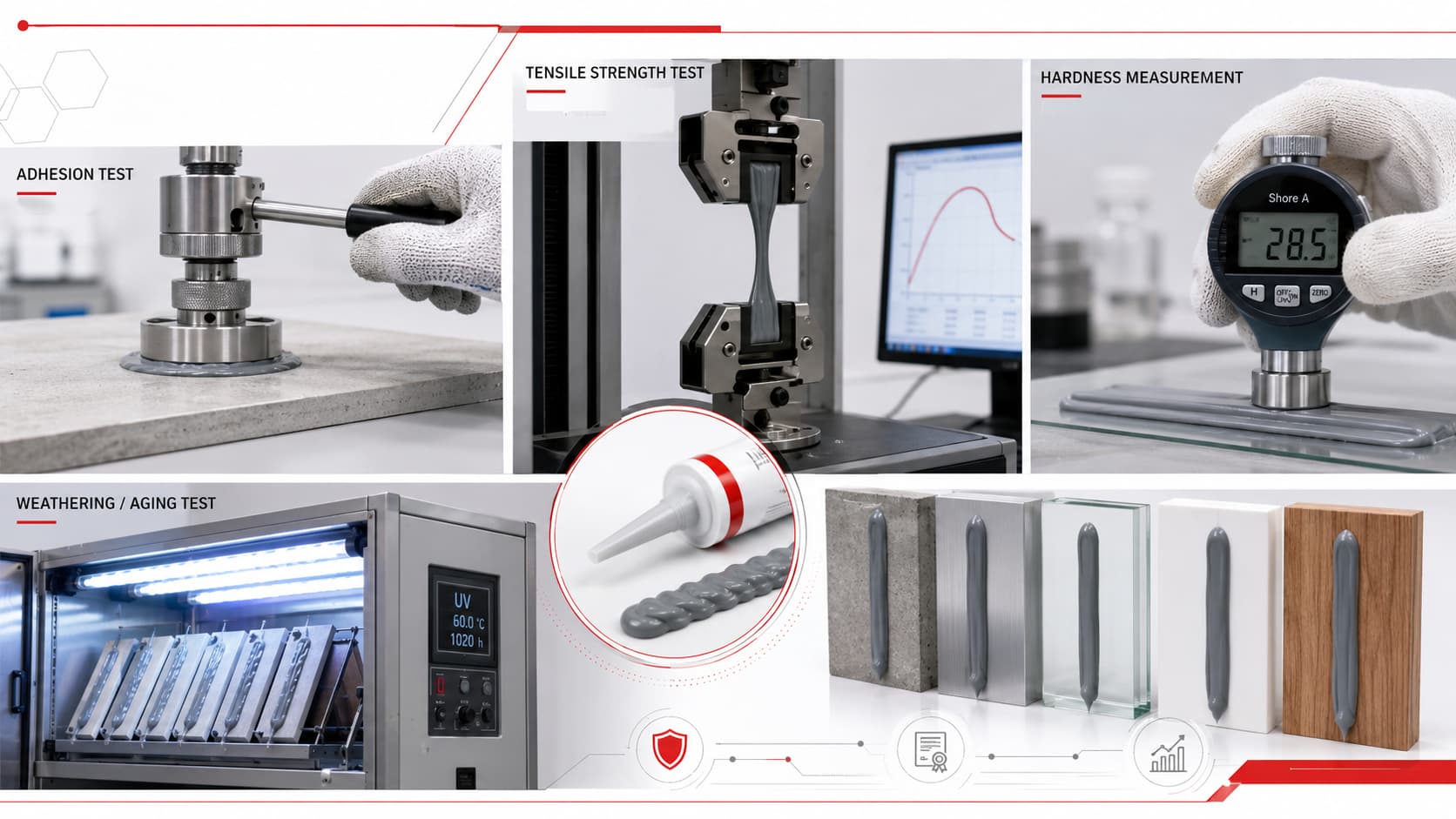
- Tensile strength and elongation — determines how much joint movement the sealant can absorb.
- Shore A hardness — affects flexibility versus rigidity of the cured joint.
- Skin-over time and full cure time — impacts production line throughput.
- Temperature resistance range — check against your actual operating environment, not just general specs.
- UV and weathering resistance — important for exterior or outdoor-facing applications.
- Packaging options — cartridges, foil sausages, or bulk drums for automated dispensing.
- OEM/ODM formulation support — ability to adjust cure speed, color, or packaging to your line requirements.
- Documentation — TDS, SDS, and third-party test reports available on request.
Why Source Acetic Silicone Sealant from KINGDELI
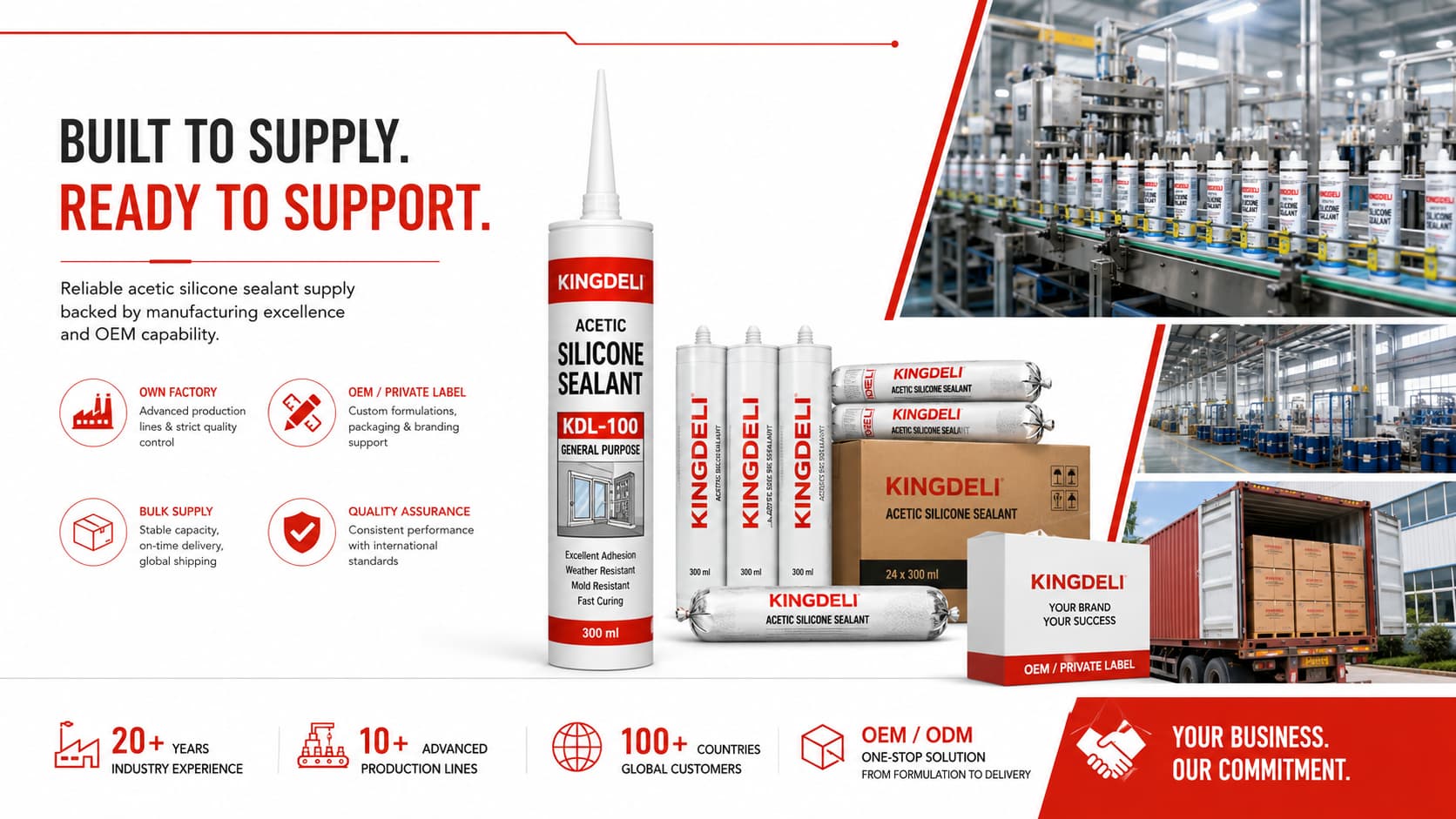
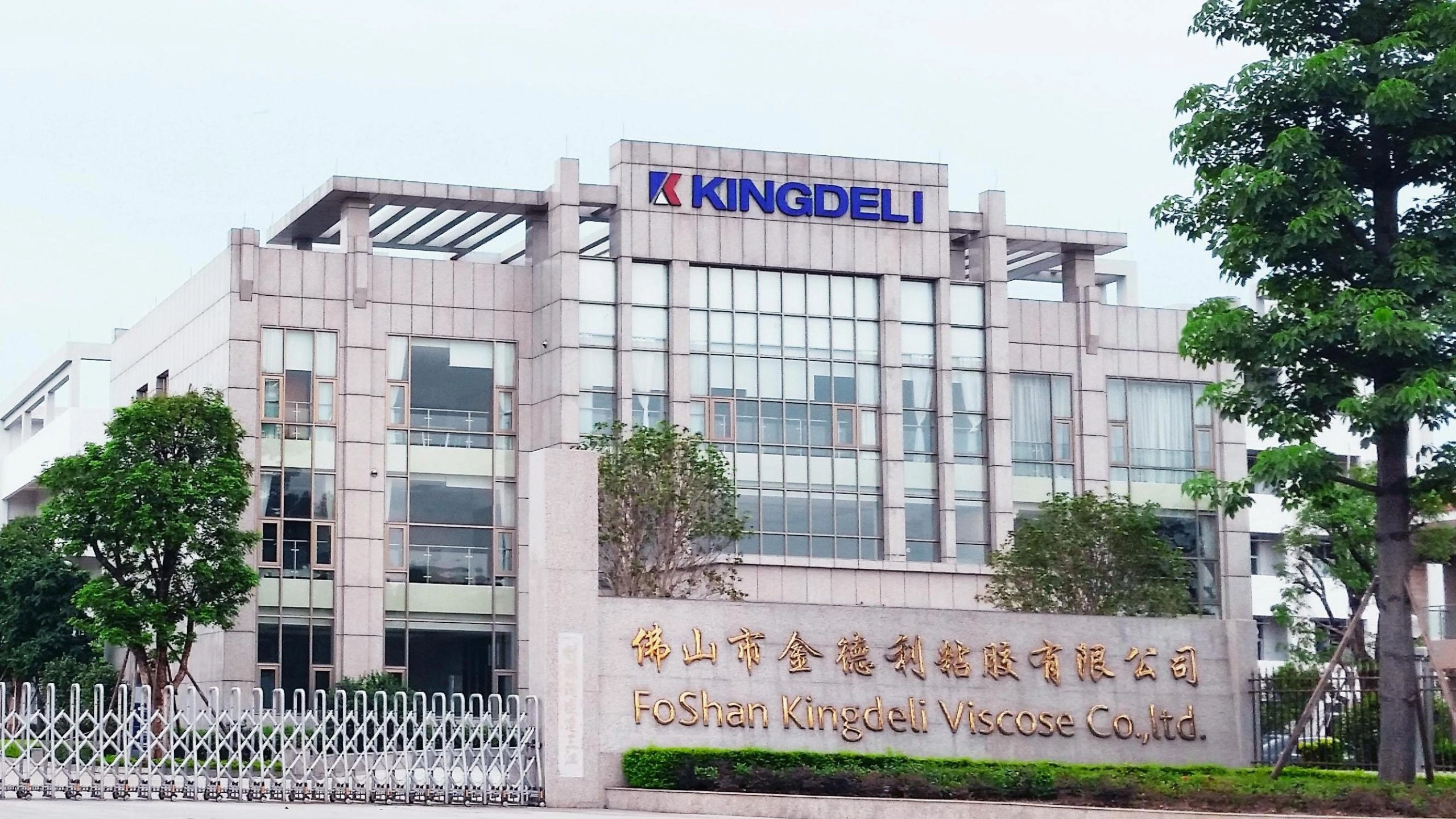
For B2B buyers, the real risk is not just choosing the right chemistry — it is finding a supplier who can deliver that chemistry consistently, batch after batch, at industrial volume. Learn more about KINGDELI and how our manufacturing system supports long-term industrial supply.
- Stable, consistent batch quality — formulated from 100% high-purity siloxane polymers without volatile plasticizer dilution, avoiding shrinkage and adhesion failure.
- OEM/ODM support — cure speed, packaging, and formulation can be tailored to your production line.
- Large-scale, uninterrupted supply — produced at a fully automated 66,000 m² facility built for high-volume manufacturing.
- Full documentation on request — TDS, SDS, and test reports to support your quality and compliance checks.
- Flexible packaging — standard cartridges, foil sausages, or bulk drums for automated dispensing systems.
For projects requiring custom formulation or high-volume packaging, our OEM/ODM and Bulk Order Inquiry teams can scope your requirements directly.
Need Help Choosing the Right Sealant Formula?
Send us your substrate, curing speed, packaging format, and monthly volume requirement — our technical team can recommend a suitable acetic or neutral silicone formulation for your application.
For industrial projects, private label orders, or long-term supply planning, contact the KINGDELI B2B solutions team to discuss your specification.
FAQs
What is acetic silicone sealant used for?
It is used for glass sealing, aquarium assembly, ceramic and sanitary joints, HVAC ductwork on coated metal, and appliance manufacturing — anywhere a fast, strong bond to a smooth, non-porous surface is needed.
Where should acetic silicone sealant not be used?
Avoid bare metal such as raw steel, copper, brass, and zinc, as well as mirror backing, natural stone, concrete, and sensitive electronics. The acetic acid released during curing can corrode or stain these substrates.
Acetic silicone vs neutral silicone sealant: which is better?
Neither is universally better. It depends on the substrate. Acetic silicone cures faster and bonds more strongly to glass and ceramic. Neutral silicone is safer for metal, stone, concrete, and acid-sensitive areas.
Can acetic silicone sealant be used on metal?
Only on coated, painted, or anodized metal. It should not be applied directly to bare or untreated metal, as the curing byproduct can cause corrosion over time.
Is acetic silicone good for glass and aquarium sealing?
Yes. It is one of the most common choices for glass and large aquarium assembly because it forms a strong, water-resistant bond on thick glass panels and cures relatively quickly.
Does acetic silicone sealant perform well in extreme temperatures?
Yes. Once fully cured, it maintains elasticity and adhesion across a wide range of hot and cold industrial conditions without becoming brittle.
Can the cure speed be customized for automated production lines?
Yes. Manufacturers can adjust the formulation to control skin-over and full-cure time to match different assembly line speeds.
Is acetic silicone sealant resistant to industrial chemicals?
It offers good resistance to UV exposure, weathering, and common cleaning agents. For exposure to concentrated or harsh solvents, compatibility testing is recommended.
What packaging options are available for bulk industrial orders?
Standard cartridges for manual application, foil sausages, and bulk drums for automated dispensing systems are all available depending on your production setup.
Does KINGDELI support custom OEM formulations?
Yes. KINGDELI's B2B team can adjust cure speed, packaging, and formulation details to match specific industrial or automated production requirements. Contact the B2B team to discuss your specification.
How do I choose between acetic silicone sealant and neutral silicone sealant for industrial purchasing?
Start with substrate compatibility. Choose acetic silicone for glass, ceramic, aquariums, and coated metal where fast curing and strong adhesion are priorities. Choose neutral silicone for bare metal, stone, concrete, mirror backing, electronics-adjacent areas, or applications where corrosion risk and odor control matter more.


Whatsapp: +8618825946249
Kingdeli
Kingdeli
Kingdeli
Kingdeli
Kingdeli