











What curing time and temperature for acetic silicone sealant?
Acetic (acetoxy) silicone sealants are widely used for glazing, sanitary and exterior sealing because of fast skinning and excellent weathering. Below are six detailed, buyer-focused questions beginners—and some specifiers—frequently ask but rarely find fully answered online. Each section includes practical cure numbers, test checks, and references to standards and product data sheets you should check for your specific product.
1. What curing time and temperature for acetic silicone sealant?
Acetic silicone (often called acetoxy silicone) cures by reacting with ambient moisture to form a rubbery elastomer that resists UV and weathering. Key practical parameters you need to use in purchase/spec decisions:
- Skin (tack-free) time: typically 5–30 minutes at 23 ± 2°C and 50% relative humidity. High humidity shortens skin time; very dry air lengthens it.
- Cure (depth) rate: typical cure rate is about 1–3 mm per 24 hours at 23°C and 50% RH for most commercial acetoxy silicones. Thinner sections cure fully faster; deep beads take days to weeks depending on depth.
- Recommended application temperature: most manufacturers specify an application window of roughly +5°C to +40°C. Optimal curing performance is around 20–25°C and 40–60% RH.
- Temperature effects: higher temperatures speed the chemical reaction (faster cure), but if temperature is raised without sufficient humidity the surface can skin while the core remains uncured. Avoid rapid heating above 40–50°C during initial cure unless the product technical data sheet (TDS) explicitly permits it.
Always confirm the TDS/MSDS of the specific acetoxy sealant you buy. Industry standards such as ASTM C920 and EN 15651 define performance classes and test methods; manufacturers report specific skin times and cure rates under defined conditions on their TDS.
2. How does relative humidity affect cure speed — and what are safe ways to accelerate cure in cold, dry conditions?
Because acetic silicones cure by moisture, relative humidity (RH) is a primary control of cure speed. Practical guidance:
- RH dependence: at 50–70% RH cure is at the typical 1–3 mm/24 h. At RH below 30% cure may slow dramatically; below ~10% curing can be very slow or incomplete.
- Cold air: low temperature reduces reaction kinetics. At 5–10°C cure rate may drop by 50% or more compared with 23°C. Application near freezing is not recommended unless the product is rated for it.
- Safe acceleration techniques: increase ambient RH with a humidifier or controlled steam (avoid direct wetting of bead), raise ambient temperature modestly to 20–30°C in a controlled way, and apply thinner beads to reduce depth. For internal work, use a portable humidifier to bring RH into the 40–60% band. Never use solvents or open flames to “speed cure” — these damage finish and can trap uncured core.
Note: accelerating cure by heat and humidity must respect manufacturer limits; excessive surface heating can cause surface skin to form, trapping moisture-less core and causing uncured centers or voids.
3. How do I calculate cure profile for deep joints (e.g., >6 mm) and avoid an uncured core?
Deep joints are where acetoxy systems most commonly cause problems (uncured core, adhesive failures). Follow these steps:
- Design joint geometry: maintain a joint depth-to-width ratio of approximately 1:1 to 1:2 depending on movement requirements (commonly 6–12 mm depth for many building joints). For very deep gaps, use backer rod (closed-cell polyethylene) to limit depth and provide an open-sided cure path.
- Estimate cure time: using the cure rate (1–3 mm/24 h), calculate full-core cure. Example: a 12 mm bead may take 4–12 days to fully cure at 23°C/50% RH. Increase this for lower temperatures/RH.
- Avoid trapping solvents: do not use thick single beads on deep joints unless the product is designed for structural deep-fill. If you must fill deep gaps, use layered application (allow each layer to skin/cure) or use filler/foam backing to reduce cured thickness.
- Testing: cut a cross-section sample from a non-critical area at the expected cure completion; verify no tack and that the core has reached expected Shore A hardness per the TDS before loading or painting.
For critical structural or movement joints, specify a neutral-cure or specially formulated deep-fill silicone or consult manufacturer application engineers to ensure the cure profile meets the project schedule.
4. Which substrates require primer or adhesion promoter when using acetic silicone sealant?
Beginners often assume silicone adheres to everything — it does not. Acetoxy silicones have good adhesion to glass, glazed ceramics and many metals, but performance on porous substrates and certain plastics is limited. Practical primer guidance:
- Good adhesion (usually no primer): clean, non-porous glass, glazed tiles, anodized aluminium (check for mill scale and coatings), and many painted metals where coating is stable.
- Usually requires primer: porous concrete, masonry, unglazed terracotta, some powder-coated or fluoropolymer paints, polycarbonate, ABS, and other engineering plastics. Also prime when long-term water immersion or structural load is expected.
- Metal corrosion-sensitive substrates: copper, brass, galvanized steel and some zinc-coated metals can be attacked by acetic acid released during cure. Use a primer recommended by the sealant maker or choose a neutral-cure silicone instead.
- How to choose: consult the sealant TDS for recommended primers and adhesion promoters. Perform a cross-hatch adhesion test and an accelerated weathering test if the joint is critical.
Always clean substrate (solvent wipe where appropriate), remove oil/contaminants, and use a correct backer rod to control geometry before priming and sealing.
5. How to avoid metal staining and electronic compatibility problems when using acetic silicone around metals or electronics?
Acetic cure releases acetic acid vapor during cure which can corrode sensitive metals and cause white corrosion/staining. Electronics or circuit boards near freshly-applied acetoxy silicone can develop contamination or corrosion under humidity. Practical mitigations:
- Avoid acetoxy near sensitive metals or PCBs: where copper, brass, zinc or electronic components are present, specify a neutral-cure (oxime or alkoxy) silicone sealant to eliminate acetic acid emissions.
- Barrier methods: mask and protect metal surfaces with corrosion-resistant tape or coatings during cure. For electronics, completely shield boards or allow a full cure in a controlled, ventilated chamber away from components.
- Inspection: after cure check for white corrosion, discoloration or loss of continuity; if present, replace or clean components and switch to neutral cure for future work.
Manufacturers and standards warn against using acetoxy silicones in proximity to sensitive electronic assemblies unless ventilation and protective measures are in place. For purchasing, state your substrate and environment so suppliers can recommend the correct chemistry.
6. How to test and confirm full cure before painting, loading, or commissioning a sealed assembly?
Relying on surface tack-free status is risky. Use these practical inspection and test steps before overcoating or subjecting joints to load:
- Tactile test: press the bead gently in an inconspicuous area. No tack or transfer indicates surface cure but not necessarily core cure.
- Cut-and-inspect: where possible, slice a small cross-section of the bead to visually confirm an uncured sticky center is not present. This is the most reliable quick check.
- Durometer/Hardness: measure Shore A hardness per TDS; cured silicone should approach the product’s rated Shore A after full cure. Compare against manufacturer values.
- Adhesion test: for critical joints, perform a peel or adhesion test on a sample area following ASTM methods referenced in the product literature (ASTM C794 for adhesion-in-peel or manufacturer-specified tests).
- Allow safety margin: add 24–72 hours to manufacturer’s stated cure for low temperature or low humidity conditions before loading. When in doubt, wait longer; premature loading risks adhesion failure.
Document acceptance criteria in your specifications and require suppliers to provide TDS cure curves and lab test evidence (ASTM C920/EN 15651 where applicable) for the exact product batch when used in critical applications.
Concluding summary of advantages and buyer takeaways: Acetic silicone sealants deliver rapid skin formation, strong adhesion to many non-porous substrates, excellent UV and weather resistance, high elongation and long service life — making them cost-effective for glazing, sanitary joints and external weather sealing. Limitations include acetic acid release during cure (not suitable near sensitive metals/electronics), slower full cure in deep or low-humidity joints, and limited paintability. For critical substrates, deep joints or metal-sensitive environments, evaluate primers, backer rods and neutral-cure alternatives and insist on TDS/MSDS data and ASTM/EN classification from your supplier.
Kingdeli recommends always checking the product technical data sheet for specific cure rates, skin times and approved primers (see ASTM C920 and EN 15651 references for performance classes). For a site-specific recommendation or a bulk quote, contact us for a tailored solution and technical support.
Contact us for a quote: www.kingdelisealant.com or info@kingdeliadhesive.com
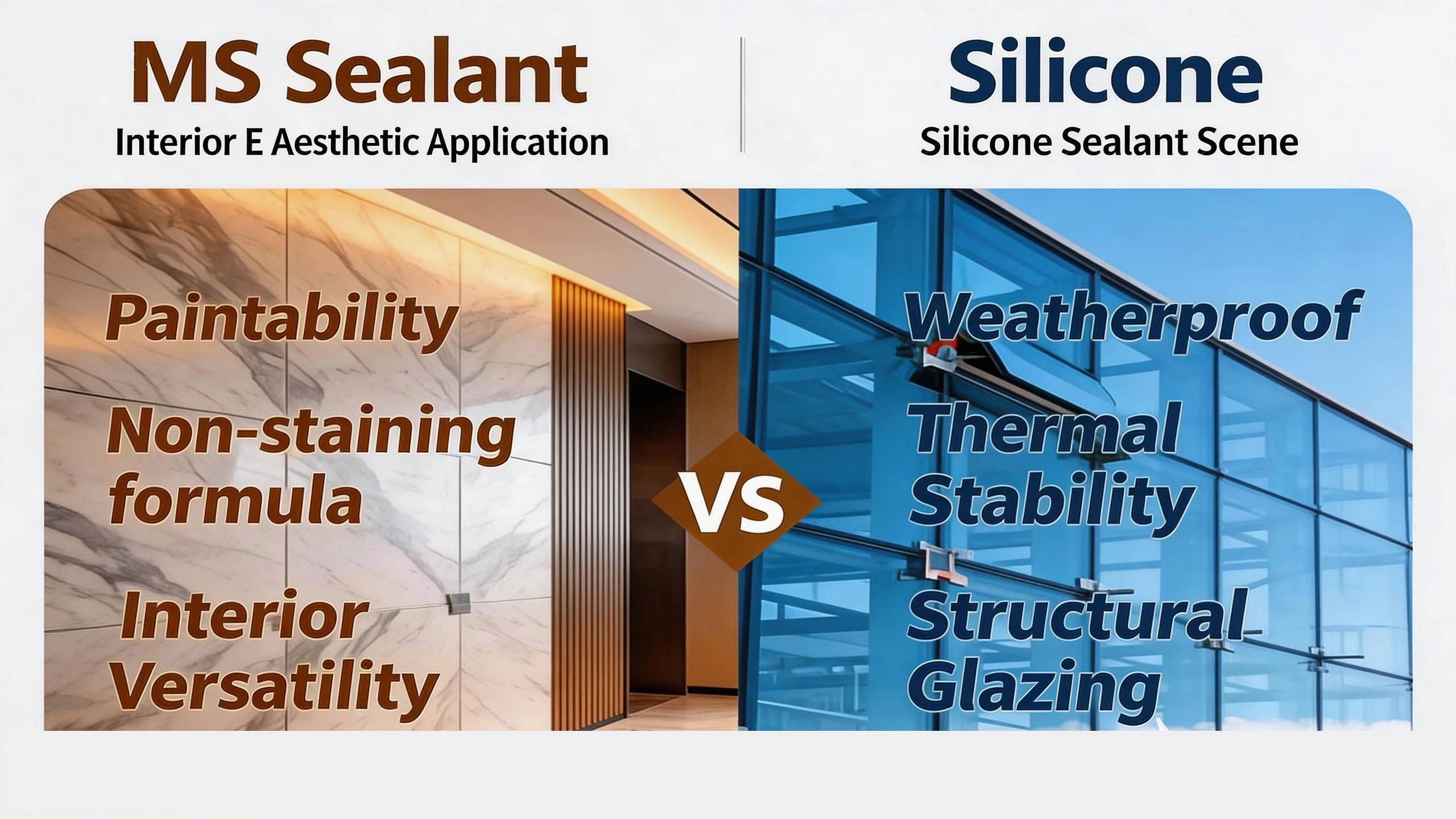
MS Sealant vs. Silicone: Which is Right for Your Construction Project?
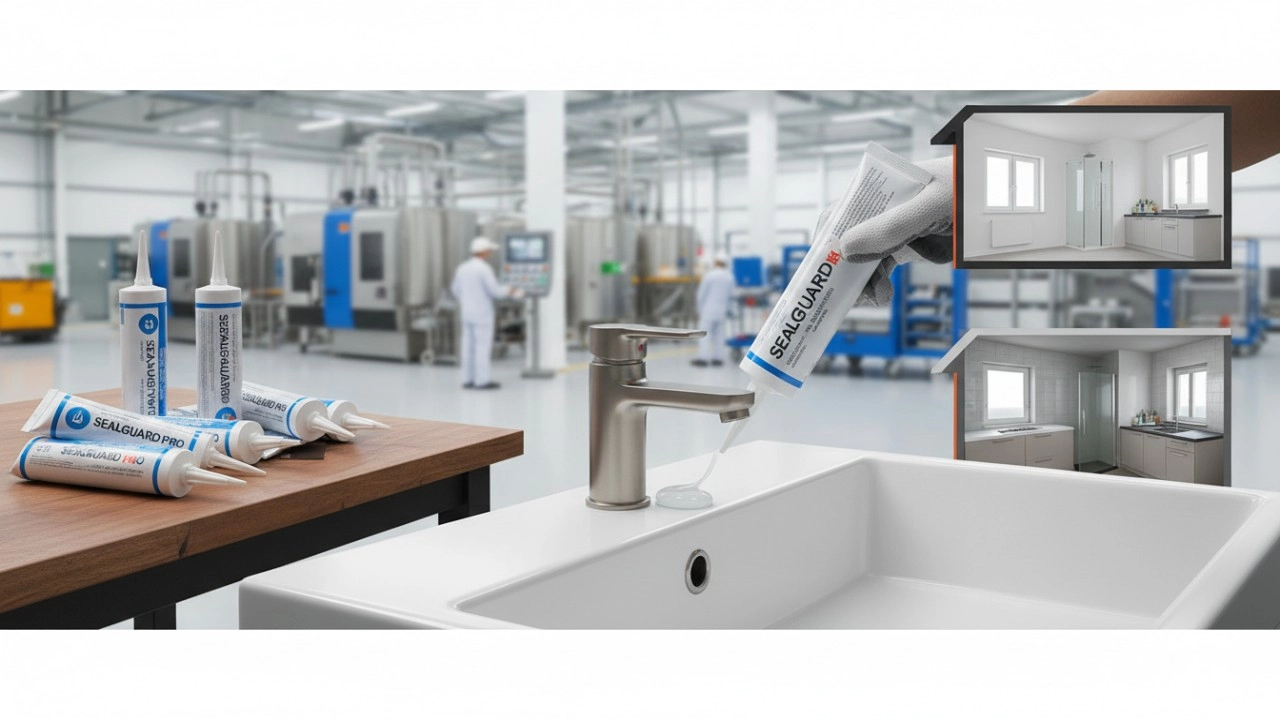
The Ultimate Guide to Choosing a Silicone Sealant Manufacturer in 2026: 10 Critical Factors Often Overlooked
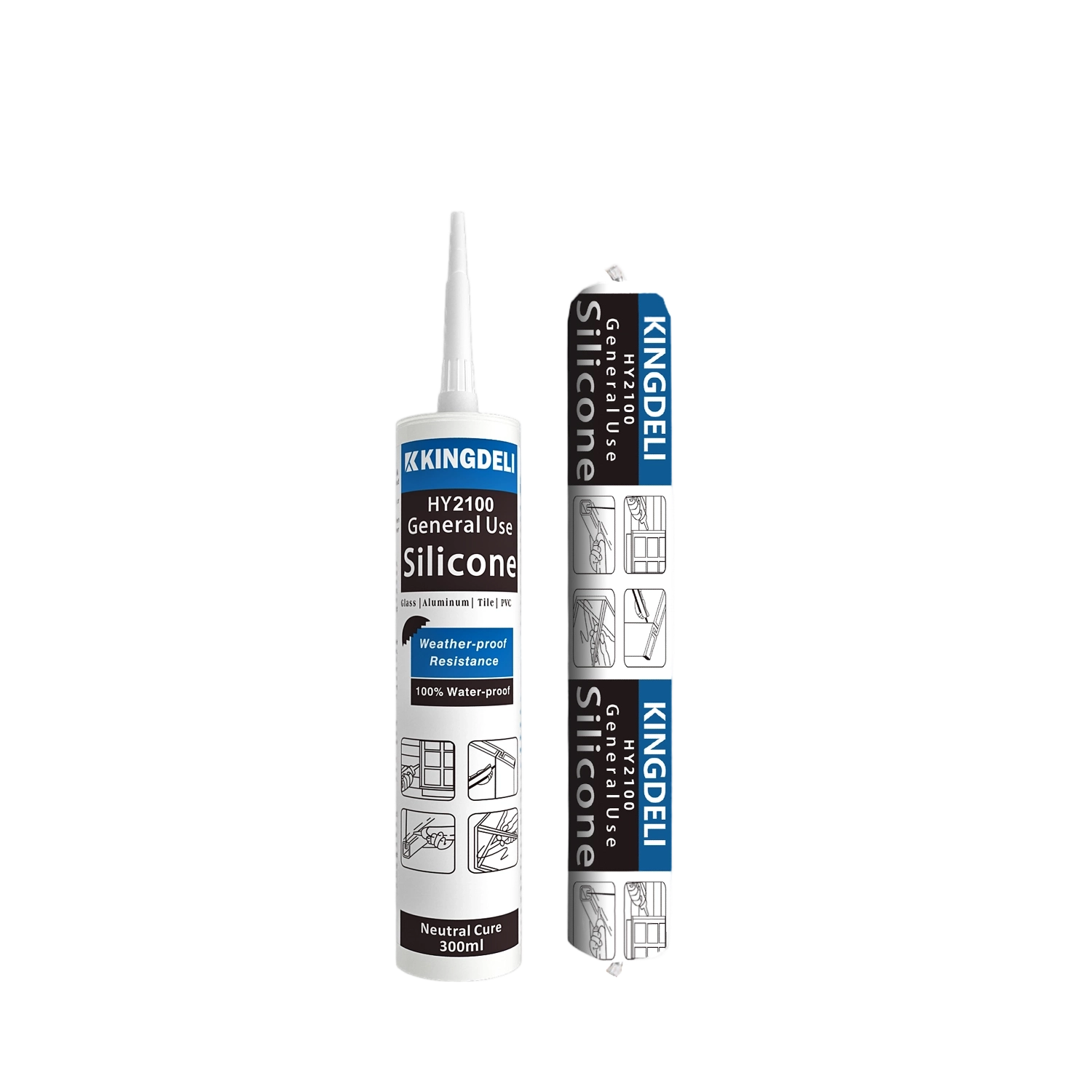
Industrial Applications of Acetic Silicone Sealant: Beyond Basic Glass Sealing
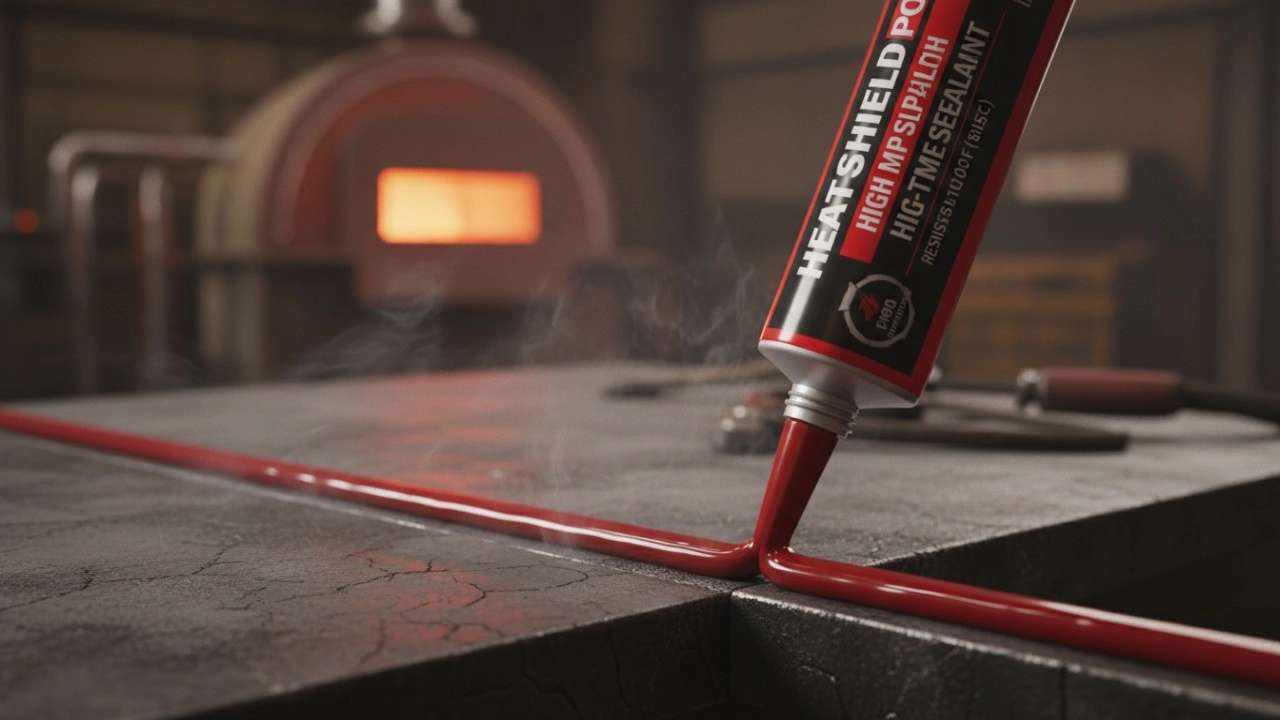
Top Factors to Consider When Choosing an Acetic Silicone Sealant Manufacturer in China
HY-2100
Is HY-2100 environmentally friendly?
Yes. It features low VOC and low odor, making it user- and indoor-environment friendly.
HY-682
Can the cured sealant be painted over?
Yes. Once cured, it is compatible with water-based paints and coatings.
HY723
How long does the sealant resist fire?
It provides fire resistance for up to four hours, though the exact duration depends on the specific joint configuration.
HY726
Does HY-726 produce a strong or unpleasant odor during application?
No. HY-726 is formulated to be free of pungent odor. While a mild alcohol scent may be present during the curing process, it is significantly less offensive than acetoxy (acetic acid) silicones, which emit a strong vinegar-like smell. This makes HY-726 suitable for use in enclosed or poorly ventilated spaces.
HY-951
What are the main advantages of HY951 compared to cement or water-based grout?
HY951 offers excellent waterproofing, mildew resistance, anti-yellowing properties, and strong chemical resistance. After curing, it forms a dense, smooth surface that is easy to clean and maintains its appearance over time.
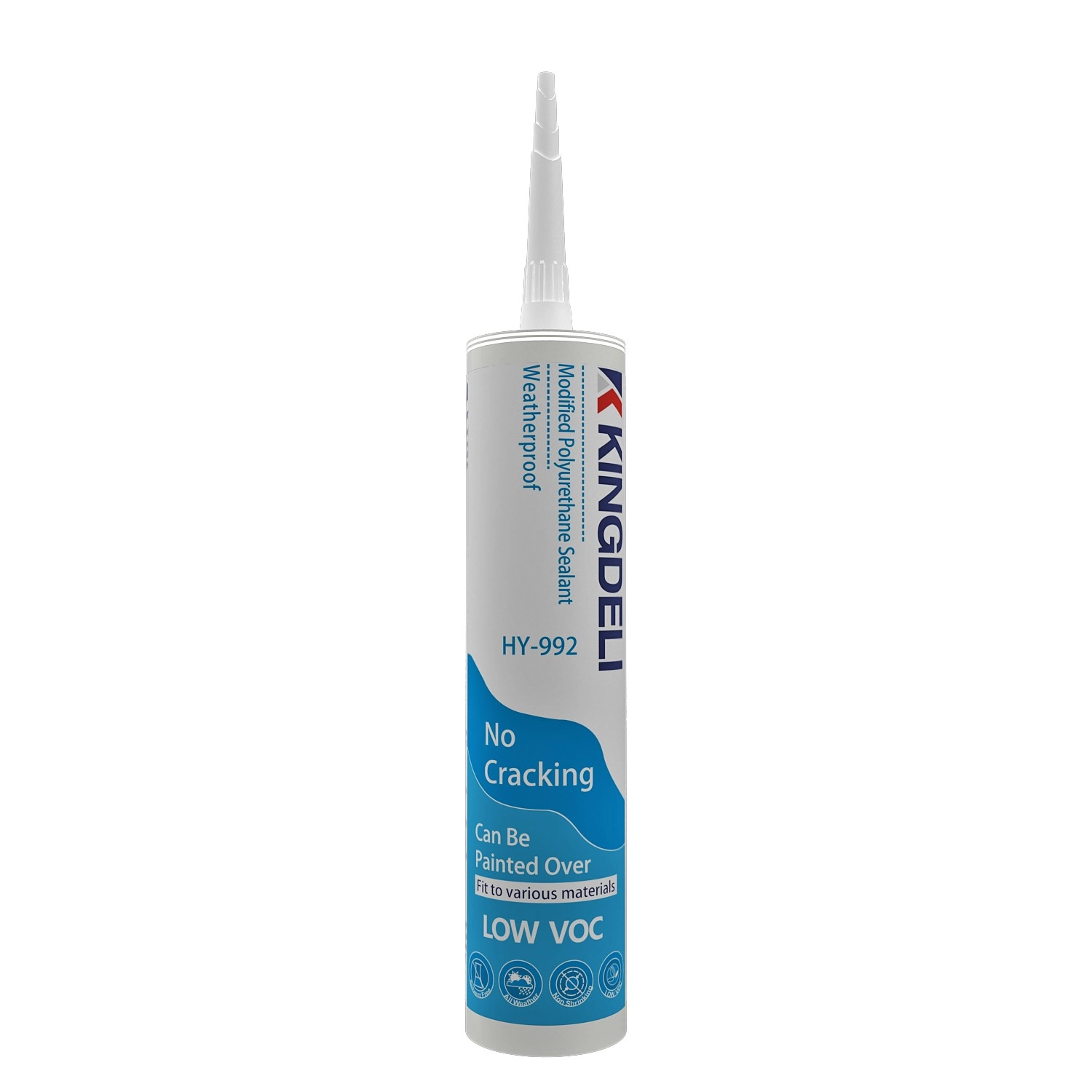
HY992 Modified Polyurethane Construction Sealant
HY992 Modified Polyurethane Sealant is a one-component, moisture-curing construction sealant designed for professional building and structural sealing applications. It provides excellent adhesion, weather resistance, and durable elasticity, making it suitable for a wide range of construction materials.
The formulation delivers strong bonding performance without corrosion or substrate contamination, while maintaining low VOC content for environmentally responsible construction projects.

HY995 Crystal Clear Ms Polymer Adhesive/Sealant
HY995 Crystal Clear Ms Polymer Adhesive/Sealant is a new generation MS Polymer adhesive / sealant formulated for all bonding and sealing applications where long term reliability is required. It has excellent bonding strength on various materials. It will cure to form a durable, flexible, waterproof seal.

HY997 High-Performance Anti-Microbial MS Polymer Sealant
HY997 MS polymer sealant for is is a premium one-component, neutral-curing modified silane sealant engineered for demanding interior applications. It offers a Class 20 movement capability, ensuring long-lasting flexibility and reliable performance under dynamic joint conditions. Curing at room temperature, HY997 delivers superior anti-microbial and mildew-resistant properties, maintaining hygienic and clean environments over time.
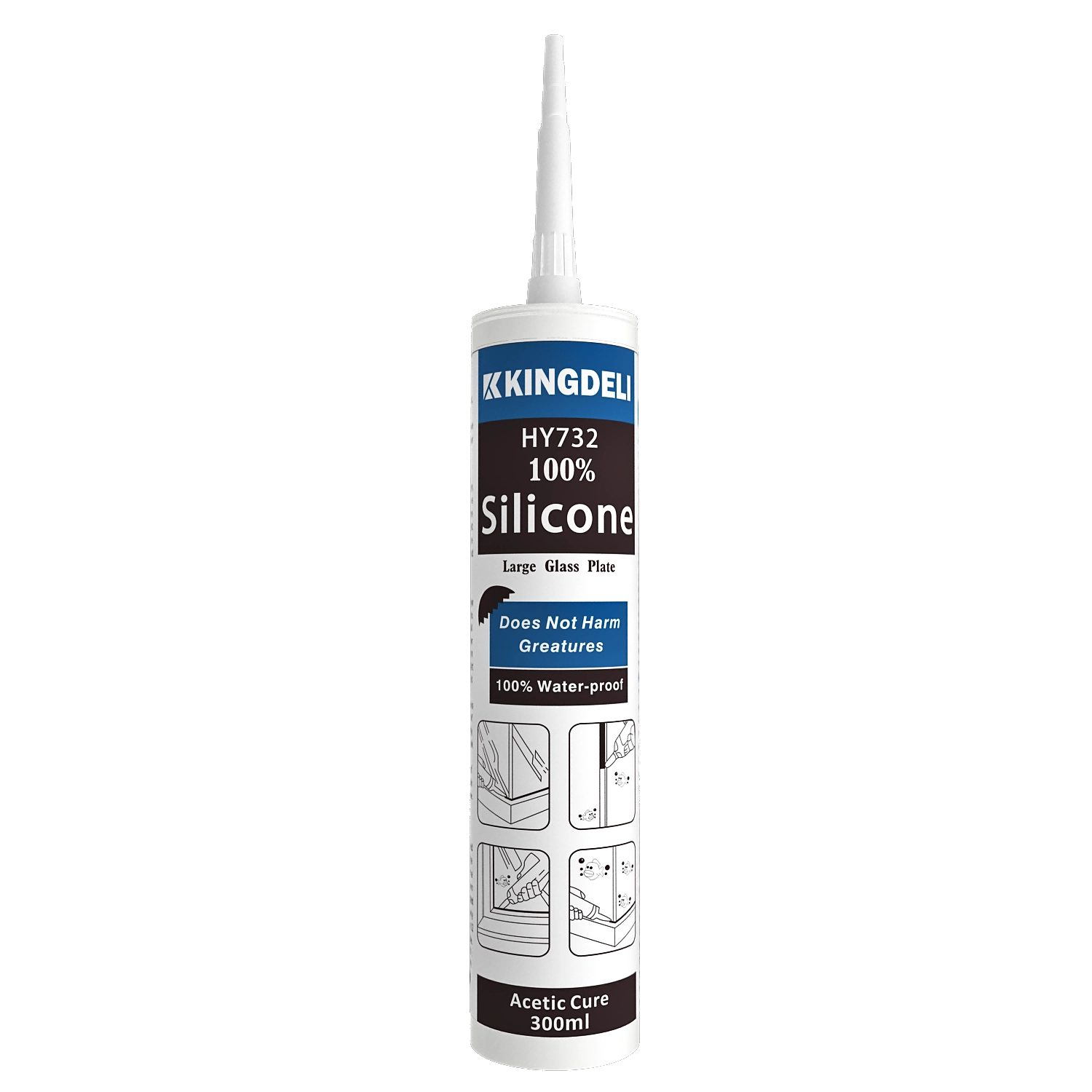
KINGDELI HY732 Professional Acetoxy Cure Silicone Sealant
KINGDELI HY732 is a professional-grade, one-component acetoxy cure silicone sealant designed for fast curing, strong adhesion, and long-lasting flexibility. Ideal for aquariums, glass applications, aluminum doors and windows, kitchens, and bathrooms, it provides reliable sealing performance with excellent anti-fungal protection in high-humidity environments.
Let’s Build Stronger Bonds with Quality Adhesives and Sealants
Have questions about the topic or need tailored sealant solutions for your project?
Our team is ready to provide expert guidance, product recommendations, and application support.
Innovating with Integrity, Bonding the World
Since 1998, KINGDELI has delivered trusted, sustainable sealant solutions that connect industries and inspire progress worldwide.
Whatsapp: +8618825946249
Kingdeli
Kingdeli
Kingdeli
Kingdeli
Kingdeli