











How to calculate cost per meter for acetic silicone sealant?
1) How do I calculate exactly how many 300 ml cartridges I need for a linear joint (specific bead size)?
Begin with geometry. Convert your joint cross-section to a volume in milliliters (1 ml = 1,000 mm3). Two practical shapes are used by installers: rectangular (for controlled depth with a backer rod) and circular (approximate bead from a round nozzle).
- Rectangular bead (common when using backer rod): Volume (ml) = width (mm) × depth (mm) × length (mm) ÷ 1000.
- Circular bead (no backer rod, round profile): Area = π × (d/2)2 (d in mm). Volume (ml) = Area (mm2) × length (mm) ÷ 1000.
Example (clear worked example): You have a 10 m run (10,000 mm) and plan a 10 mm wide × 5 mm deep joint using a backer rod. Volume = 10 × 5 × 10,000 ÷ 1000 = 500 ml. A standard cartridge is 300 ml, so 500 ÷ 300 = 1.67 → round up to 2 cartridges. Add 5–10% contingency for wastage and tooling: 500 ml × 1.10 = 550 ml → still 2 cartridges.
Notes and practical tips:
- If you use a circular bead of 6 mm diameter: A = π×3^2 = 28.27 mm2, length per 300 ml = 300,000 mm3 ÷ 28.27 ≈ 10,610 mm (≈10.6 m). Always test a short run to confirm bead profile.
- Keep a small overage (5–15%) for starts/stops, nozzle purge, and spillage.
- Use a backer rod to control depth (recommended depth often equals half the width for silicone, see question 5) which ensures predictable volume and better adhesion of the silicone sealant.
2) How to calculate cost per meter for acetic silicone sealant (step-by-step formula with example)?
Use a simple four-step approach that separates material volume from price and factors in waste and joint geometry.
Step A — Determine bead volume per meter (ml/m):
- Rectangular bead: ml/m = width (mm) × depth (mm) × 1,000 ÷ 1000 = width × depth (because 1 m = 1,000 mm and the ÷1000 cancels). So a 10 mm × 5 mm joint uses 10×5 = 50 ml per meter.
- Circular bead: Area (mm2) = π×(d/2)2, ml/m = Area × 1,000 ÷ 1000 = Area (mm2). For d = 6 mm, ml/m ≈ 28.27 ml per meter.
Step B — Convert volume to cartridges: cartridges per meter = (ml/m) ÷ cartridge volume (ml). For a 300 ml cartridge and 50 ml/m, cartridges/m = 50 ÷ 300 = 0.1667.
Step C — Multiply by cartridge price and add waste.Cost per meter = cartridges/m × price per cartridge × (1 + waste factor).Example (illustrative): cartridge price = $4.00 (example only), waste = 10% (0.10). Using 50 ml/m: cartridges/m = 0.1667. Cost/m = 0.1667 × $4.00 × 1.10 ≈ $0.73/m.
Step D — Add consumables/labor if needed. If you need backing rod, primer, or tooling time, add per-meter costs.
Practical notes:
- Always check cartridge size: 300 ml, 280 ml or 600 ml are common – adjust calculations accordingly.
- When using a circular nozzle bead, remember bead flattening and profile variability; test to confirm ml/m.
- This method gives the material-only cost per meter for the acetic silicone sealant (acetic cure silicone). For a turnkey price include labor and primer costs.
3) Can I use acetic silicone directly on concrete, masonry or natural stone — what surface prep and primers are required?
Acetic silicone releases acetic acid (vinegar smell) during cure and is excellent on non-porous substrates (glass, glazed tile, many metals), but porous or alkaline substrates (concrete, masonry, some stones) require care.
Key points:
- Porous substrates absorb low-molecular-weight acids and siloxanes and can cause poor adhesion or discoloration. Concrete may contain lime and moisture which affect cure and adhesion.
- Many manufacturers recommend a primer (silane or alkoxy primers) for concrete, unpainted masonry and some natural stones when using acetic cure sealants. Check the product datasheet — some acetic silicones do have compatible primers.
Surface prep steps:
- Clean: Remove dust, efflorescence, oil, curing compounds and loose materials using a wire brush and solvent wipe (isopropyl alcohol or manufacturer-recommended cleaner).
- Dry: Ensure the substrate is dry; high substrate moisture reduces adhesion and increases cure time.
- Prime: Apply the specified primer if the technical data sheet (TDS) demands it for concrete/masonry. Allow correct flash-off time.
- Use a backer rod to control depth and avoid three-sided adhesion.
Alternative: For direct application onto porous/alkaline materials, consider a neutral cure silicone or a polyurethane sealant which may handle alkalinity better and avoid stone staining. Always perform a small adhesion test and consult the sealant’s technical datasheet before committing.
4) Why does acetic silicone sometimes corrode metals or stain stone — and how do I prevent it?
Acetic silicone’s curing releases acetic acid vapors; the acid can react or accelerate corrosion on reactive metals and can cause staining on porous natural stones.
Which materials are at risk?
- Reactive metals: copper, brass, bronze, and some plated/galvanized steels can show discoloration or corrosion.
- Porous stones: some limestones, marbles and sandstones can trap siloxane residues or acids causing staining.
Prevention measures:
- Use neutral cure silicone or a specialist non-acetic sealant when sealing around sensitive metals or stones. Neutral cure silicones (oxime, alkoxy, acetoxy alternatives) avoid acetic acid release and are safer on reactive substrates.
- If acetic silicone must be used, isolate the substrate with a compatible primer, tape or a thin protective coating, and remove excess material immediately before cure.
- Always check compatibility charts on the manufacturer’s TDS. For façade jobs where appearance matters, test a mock-up before large-scale application.
5) How do I size joints for thermal and structural movement when using acetic silicone (practical formula and example)?
Sizing movement joints requires combining substrate expansion calculations with the movement accommodation capability of the sealant (often given as ±% in the TDS).
Step 1 — Calculate expected movement (Δ) using coefficient of thermal expansion (α):ΔL = α × L × ΔT,where ΔL is change in length, α is linear expansion coefficient (/°C), L is length (m), ΔT is temperature differential (°C).Common α values: aluminum ≈ 23 × 10^-6/°C, glass ≈ 9 × 10^-6/°C, concrete ≈ 10–12 × 10^-6/°C (use project-specific data when possible).
Step 2 — Convert ΔL to percent movement relative to joint spacing or the element length.Movement % = (ΔL / original gap or element length) × 100.
Step 3 — Select joint width so that expected movement does not exceed the sealant’s movement capability. Many silicone sealants (including many acetic types) provide roughly ±20–25% movement accommodation, but you must verify the product TDS.
Worked example (façade mullion expansion): An aluminum panel 6 m long, ΔT = 60°C, α = 23×10^-6/°C. ΔL = 23e-6 × 6,000 mm × 60 = 8.28 mm of linear change. If panels are butted at joints spaced every 1.5 m, the movement across a joint from differential expansion could be up to several millimeters. If the sealant is rated for ±25% movement, and you expect ±4 mm peak movement on a joint, choose a nominal joint width that keeps ±4 mm ≤ 25% of joint width → required joint width ≥ 16 mm.
Practical rules of thumb:
- Minimum depth: 4 mm. Maximum practical depth for most silicone joints: 12 mm–15 mm. Many installers use depth = width/2 for silicone (so 10 mm width → 5 mm depth).
- For large thermal movements increase joint width and use a high-movement silicone system; consider backing material (closed-cell backer rod) to control depth.
- Always verify with project engineers and consult ASTM C920 classifications for sealant performance.
6) My acetic silicone bead pulls away, shows shrinkage or white blooming after cure — what causes this and how to prevent it?
Common failure modes and corrective actions:
Adhesion loss (pull-away or cohesive failure)
- Causes: Contaminated substrate (dirt, oil, curing compounds), insufficient primer, wet substrate, or three-sided adhesion (no backer rod).
- Prevent: Clean, prime where required, use backer rod to ensure two-sided adhesion, and follow manufacturer’s recommended joint design.
Shrinkage or soft uncured core (tacky center)
- Causes: Joint too deep relative to width (deep joints cure too slowly as acetoxy cure needs moisture from the surface), low ambient humidity or low temperature, or incompatible substrate chemistry.
- Prevent: Control joint depth (depth = width/2 or at least 4 mm), increase humidity if possible on cold/dry days, and use a suitable primer.
Silicone blooming or white residue (exudate or silicone oil bloom)
- Causes: Low-molecular-weight silicone components migrating to the surface or reactions with contaminants; often called silicone bloom or exudation.
- Prevent/resolve: Use a higher-grade formulation if bloom is aesthetic problem; clean cured bloom with solvent/cleaner recommended by manufacturer. Ensure substrate is clean — oils on the substrate can increase bloom risk.
Corrosion/staining
- Prevention covered in Q4: isolating reactive metals, using neutral cure formulations where necessary.
General QA checklist (pre-application): review TDS for working temperature and joint design, trial adhesion test, ensure correct primer use, control joint depth with backer rod, and allow full cure before subjecting to movement or painting.
Concluding paragraph summarizing advantages of acetic silicone sealant
Acetic silicone sealant (acetoxy cure) offers fast skin formation, excellent adhesion to glass and glazed surfaces, long-term flexibility and weather resistance, and simple tooling for glazing and exterior joints. It cures reliably in normal ambient humidity, forms durable elastic seals suitable for many façade and window sealing tasks, and is widely available in 300 ml cartridges for efficient onsite application. However, weigh those advantages against its acetic by-product — avoid on reactive metals and some porous stones or use a primer/neutral-cure alternative when required. For engineered façades and precise cost estimates, use the volume-based calculations above, validate with a small mock-up, and consult the product datasheet (ASTM C920 classifications and the manufacturer’s adhesion chart).
Contact us for a detailed quote and product recommendation — visit www.kingdelisealant.com or email info@kingdeliadhesive.com for project-specific calculations and certified technical data sheets.
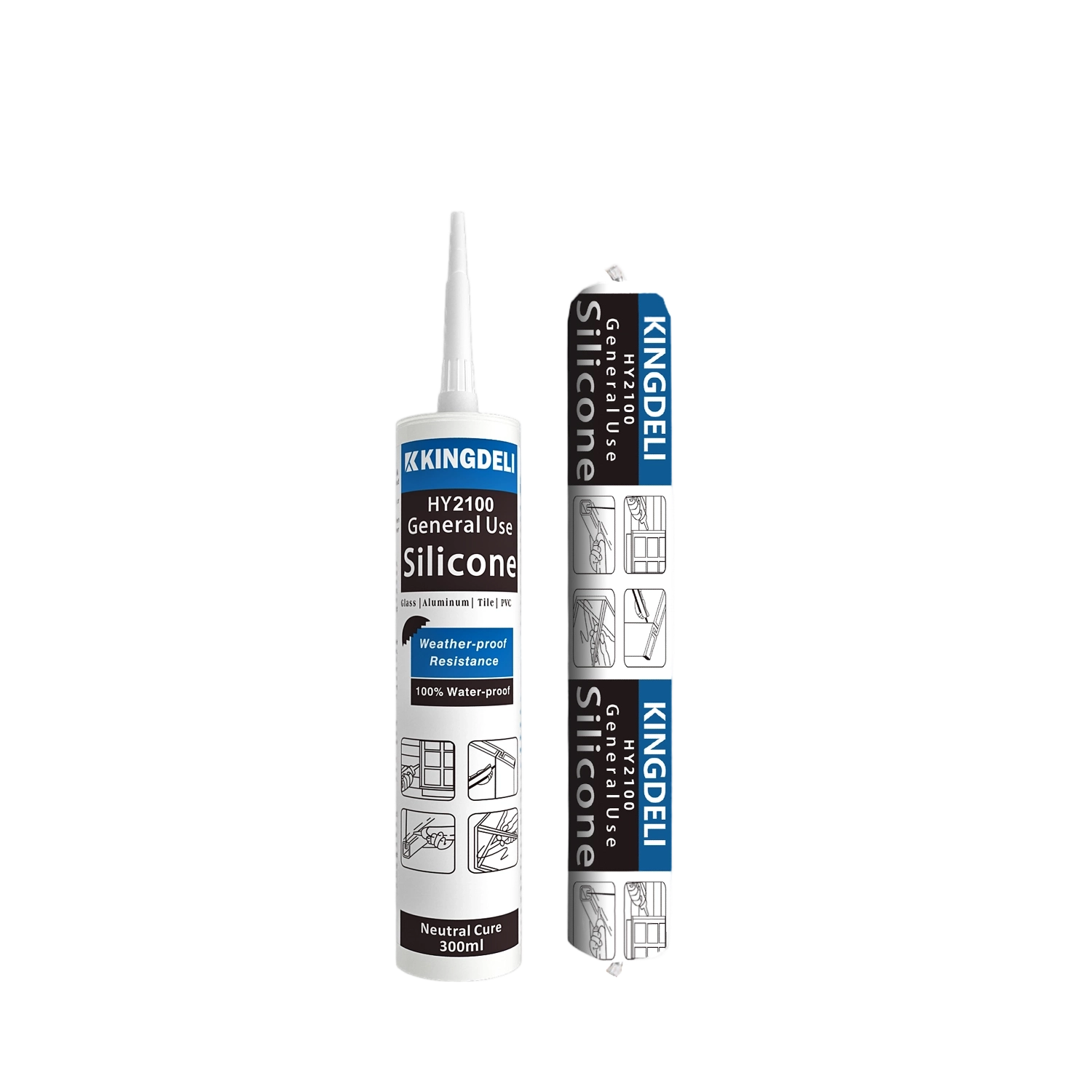
Industrial Applications of Acetic Silicone Sealant: Beyond Basic Glass Sealing
Top Factors to Consider When Choosing an Acetic Silicone Sealant Manufacturer in China
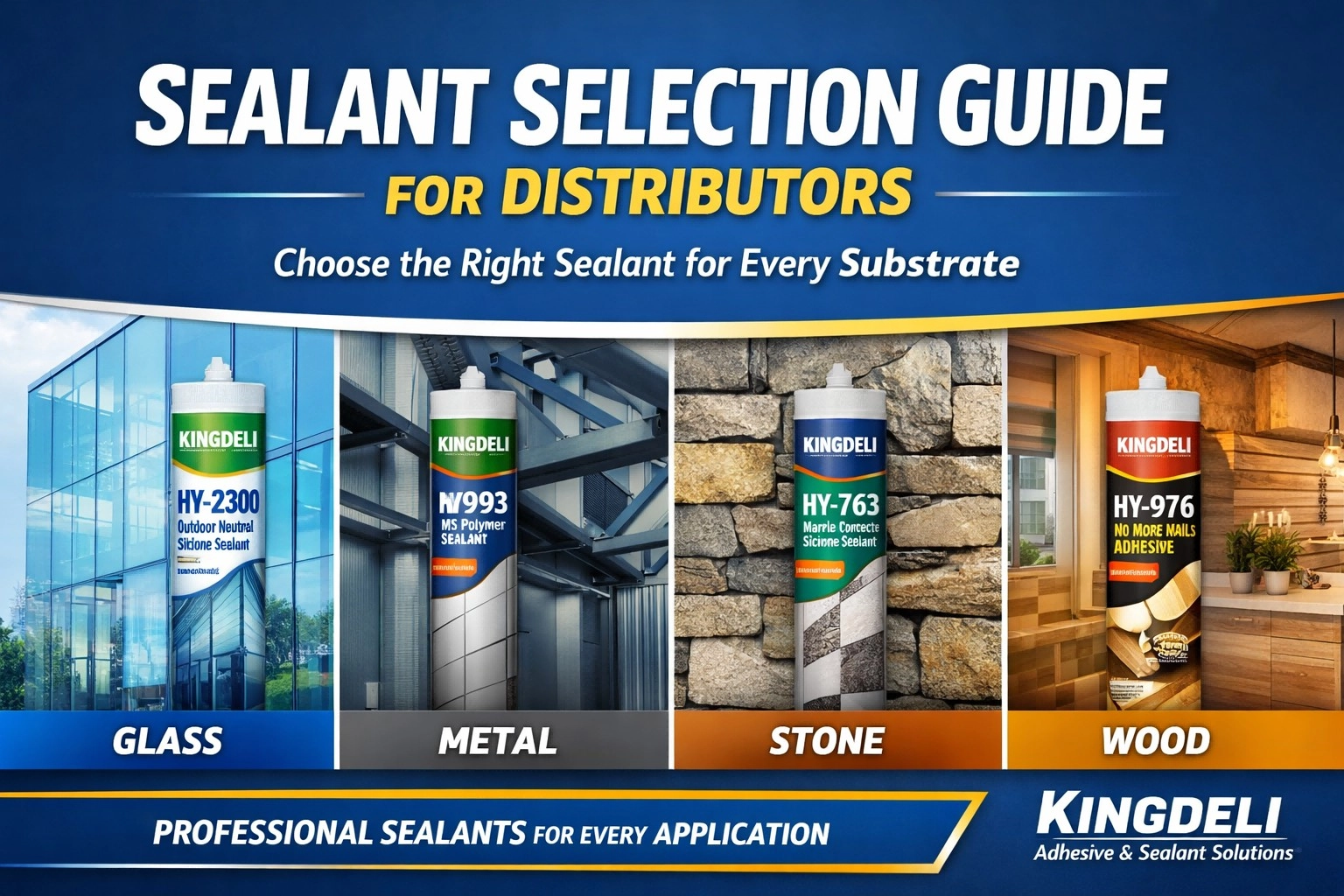
The Complete Sealant Selection Guide for Distributors & Building Supply Partners
How to Apply High Temperature Silicone Sealant Like a Pro: 5 Secrets for a Lifetime Seal
HY723
What is the primary application of HY-723?
It is primarily used to control the spread of fire, smoke, and toxic fumes within areas surrounded by firewalls, such as construction joints and partitions.
HY-3300
How long is the shelf life of HY-3300?
Cartridge: 12 months
Aluminum foil: 12 months
Store in a cool, dry, and well-ventilated area below 25℃ for best performance.
HY-2100
What materials does HY-2100 adhere to?
HY-2100 bonds well to most common building substrates including glass, aluminum, stainless steel, tile, marble, cement, plastic, and non-oily wood.
HY-951
Does the grout change color or turn yellow over time?
No. HY951 features strong anti-yellowing performance and long-lasting color stability when applied and cured correctly.
HY925
What is the shelf life?
Aluminum cartridge: 12 months
Aluminum foil: 12 months
Store in a cool, dry place below 25°C for optimal performance.
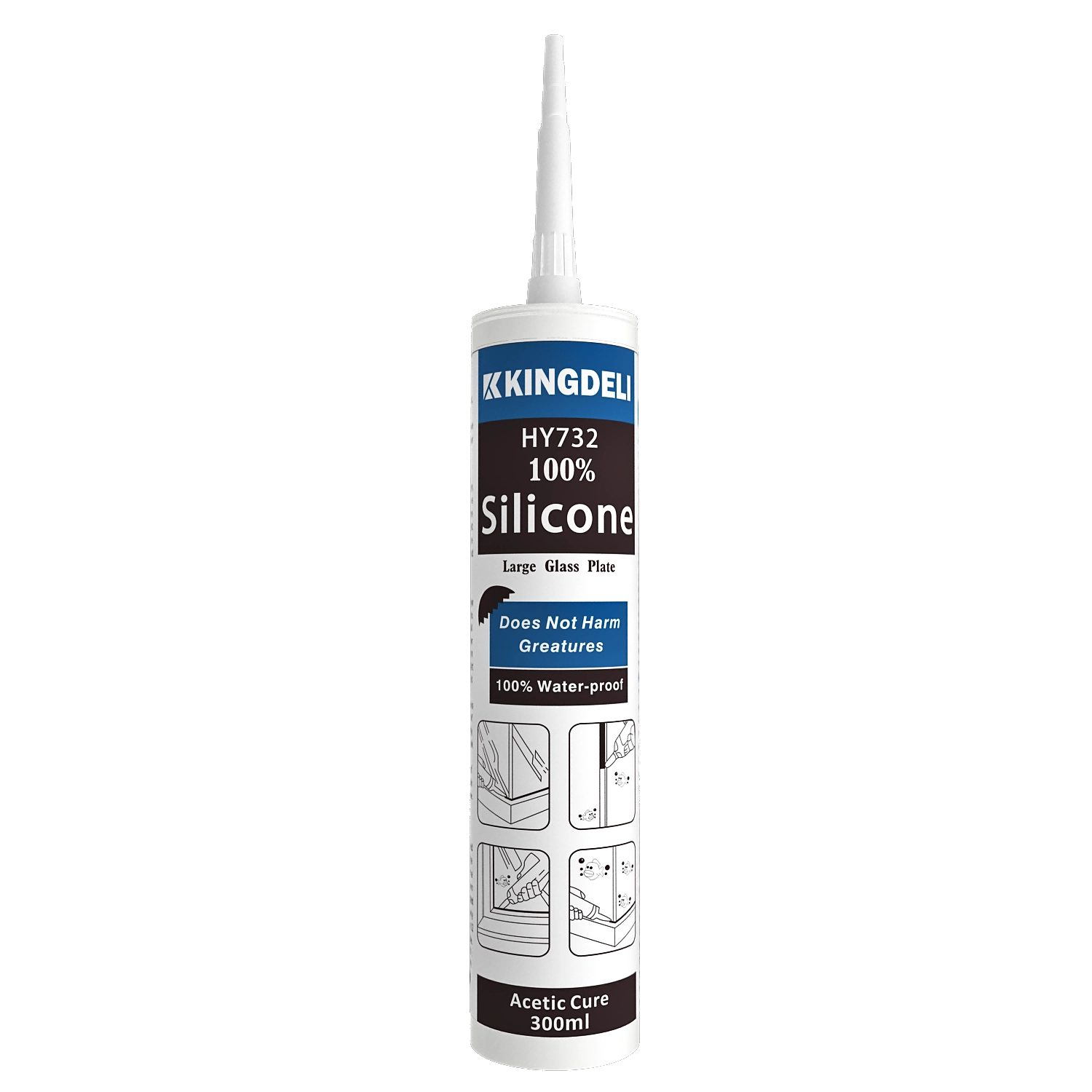
KINGDELI HY732 Professional Acetoxy Cure Silicone Sealant
KINGDELI HY732 is a professional-grade, one-component acetoxy cure silicone sealant designed for fast curing, strong adhesion, and long-lasting flexibility. Ideal for aquariums, glass applications, aluminum doors and windows, kitchens, and bathrooms, it provides reliable sealing performance with excellent anti-fungal protection in high-humidity environments.
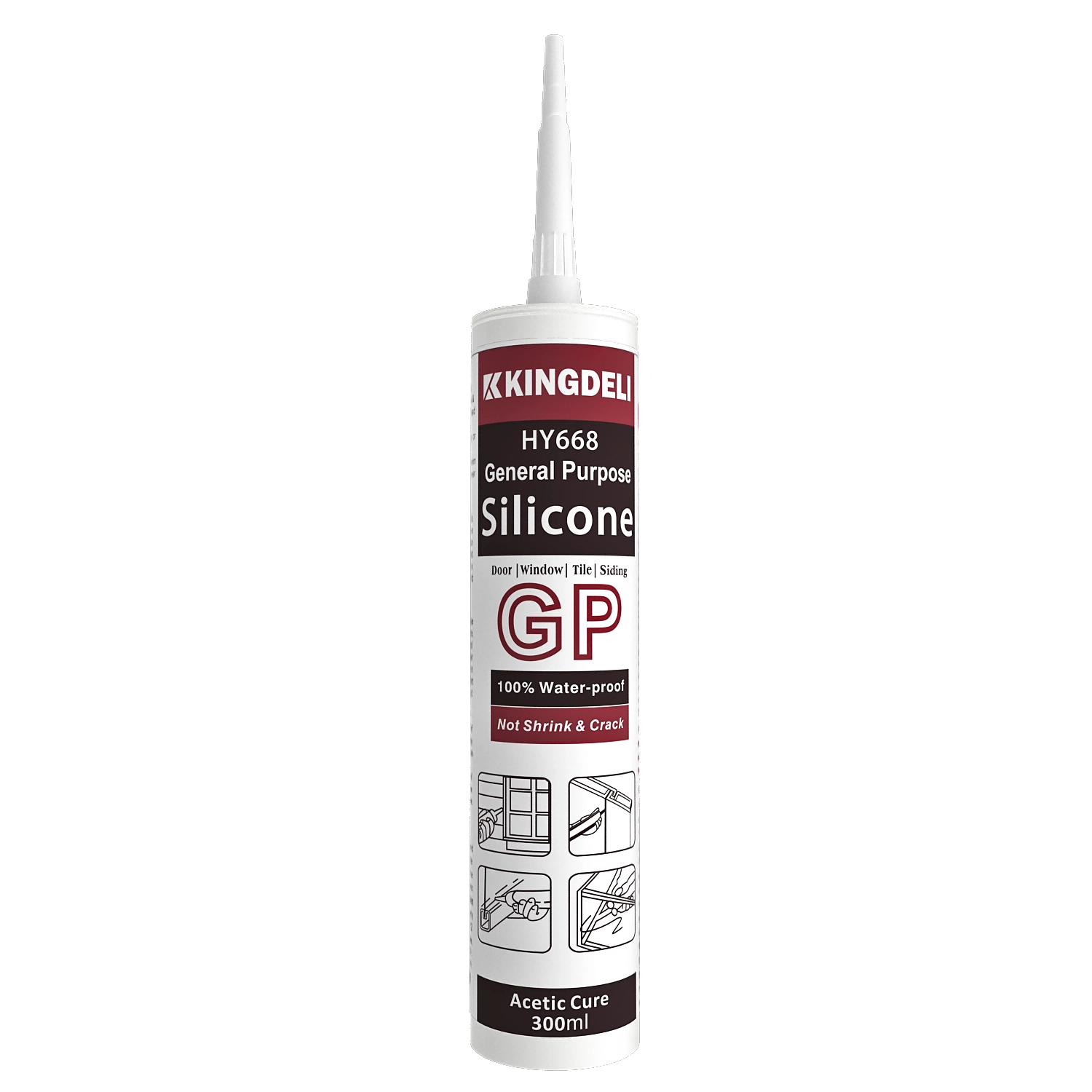
HY668 General Purpose Acetic Silicone Sealant
HY-668 General-Purpose Acetic Silicone Sealant is a easy-to-use sealant for everyday sealing and glazing applications. It offers good adhesion, fast curing, and a durable flexible seal, making it ideal for windows, doors, interior joints, and general construction use
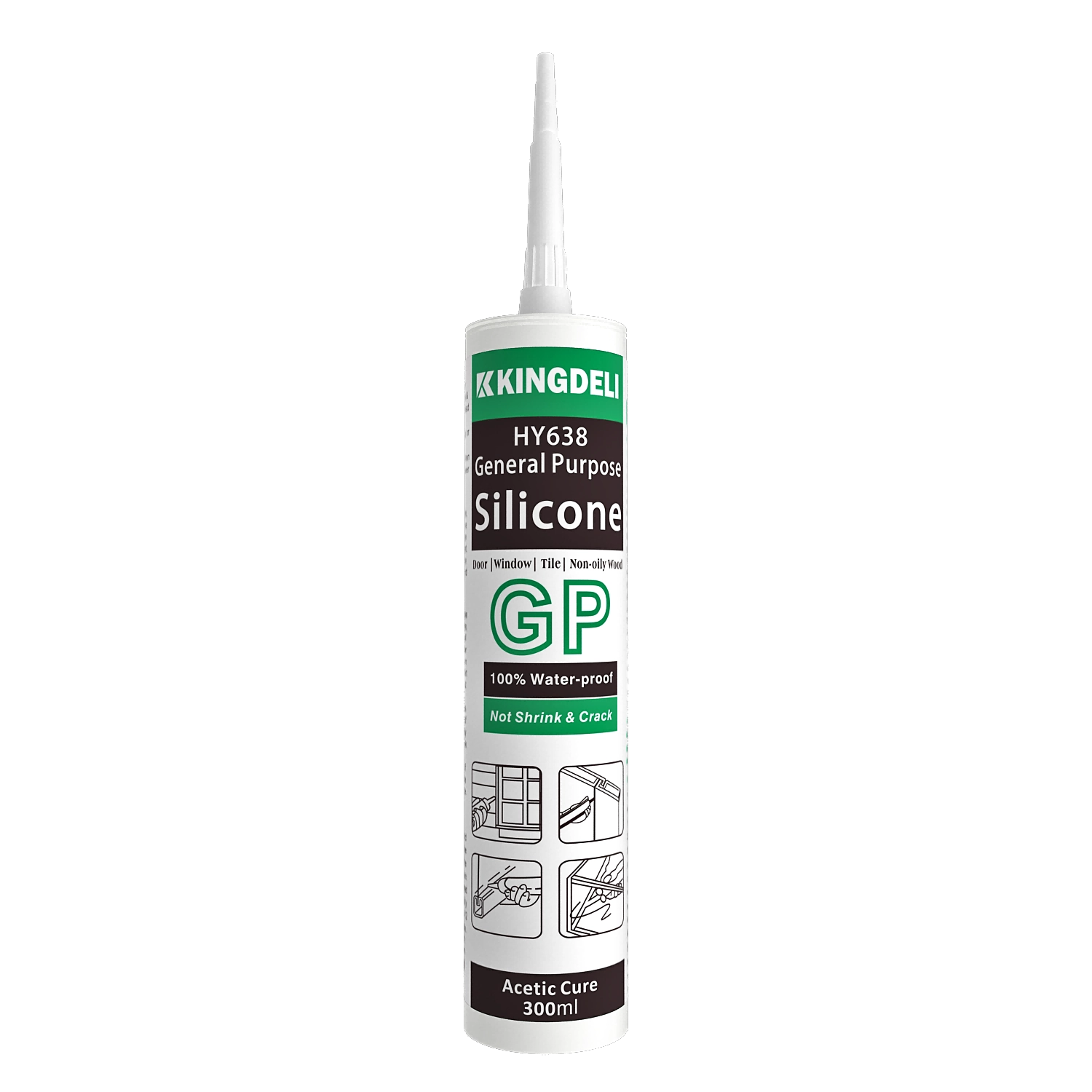
HY638 Economic General Purpose Acetic Silicone Sealant
HY-638 Economic General-Purpose Acetic Silicone Sealant is a cost-effective, one-component, shelf-stable, acetoxy-curing silicone sealant designed for general-purpose sealing and bonding applications. After curing, it forms a durable, elastomeric seal with the following characteristics:
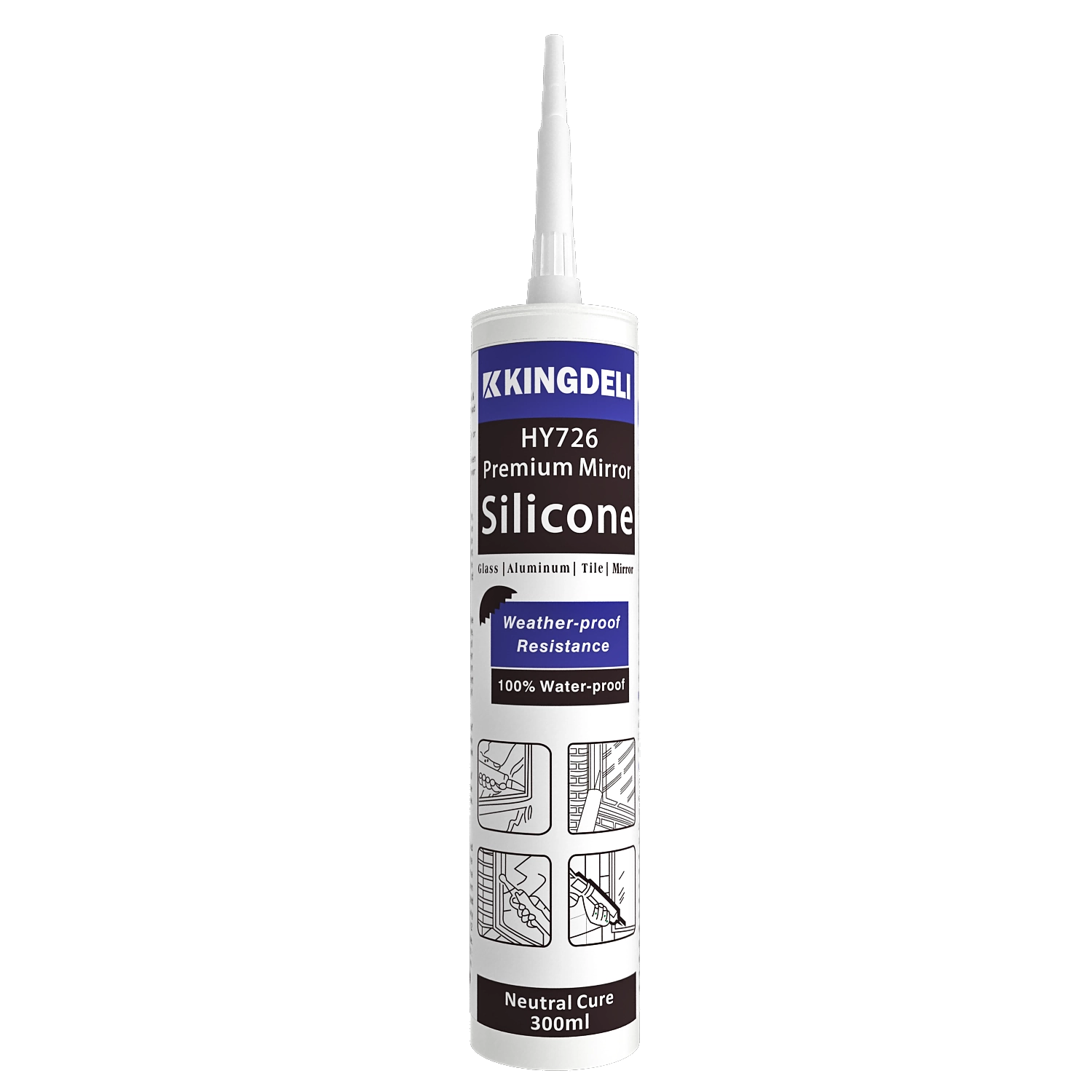
HY-726 Premium Clear Neutral Silicone Sealant
HY726 one-component, shelf-stable, 100% silicone elastomeric adhesive using alkoxy technology. It is specifically designed for sealing sensitive surfaces such as copper, gold, and metal-coated mirrors.
Let’s Build Stronger Bonds with Quality Adhesives and Sealants
Have questions about the topic or need tailored sealant solutions for your project?
Our team is ready to provide expert guidance, product recommendations, and application support.
Innovating with Integrity, Bonding the World
Since 1998, KINGDELI has delivered trusted, sustainable sealant solutions that connect industries and inspire progress worldwide.
Whatsapp: +8618825946249
Kingdeli
Kingdeli
Kingdeli
Kingdeli
Kingdeli