











How to optimize joint design using ms silicone sealant for panels?
1) How do I calculate the exact joint width and depth for MS silicone sealant on metal sandwich panels so the sealant accommodates thermal movement without shear failure?
Start from the expected movement, not a generic rule. Movement in a panel joint comes primarily from thermal expansion: ΔL = α × L × ΔT. For anodized/aluminum panels use α ≈ 23 × 10⁻⁶ /°C. Example: a 3 m panel exposed to a 50°C swing: ΔL = 23e-6 × 3000 × 50 ≈ 3.45 mm. That is the total change for one panel edge.
Choose a sealant with a published movement capability (expressed as ±% of original joint width). The required initial joint width (W) to accommodate a total expected movement Mtotal is:
W ≥ Mtotal / (2 × movement_pct)
Example: if Mtotal = 6 mm (±3 mm) and the MS silicone sealant has ±25% movement, required W = 6 / (2 × 0.25) = 12 mm. Then set depth (D) to satisfy the recommended width:depth ratio. Industry guidance commonly uses a 2:1 width:depth ratio for many elastic sealants (W : D = 2 : 1). So for W = 12 mm, D ≈ 6 mm.
Practical notes:
- Minimum workable joint width is usually 6 mm — below that many sealants can’t develop the designed elastic behavior.
- Maximum practical width for façade joints is often 20–25 mm without special formulation; consult the manufacturer’s TDS.
- For very wide joints, use segmented joints or multi-stage sealing to avoid excessive stress.
- Design to avoid three-sided adhesion using backer rod and bond-breaker tape to ensure pure axial movement and reduce shear.
2) Which primer and surface preparation will reliably ensure durable adhesion of MS silicone sealant to anodized aluminum ACP panels without staining?
Surface preparation is the most common cause of failed adhesion. Follow a documented sequence:
- Clean: remove oils, machining residues and silicone contamination using a suitable solvent (isopropyl alcohol or an aliphatic hydrocarbon solvent). Use lint-free wipes. Do not use household cleaners with conditioners.
- Dry and inspect: ensure the substrate is bone dry. Check for residual contamination with a white cloth wipe test.
- Mechanical keying: where required, lightly abrade the contact area (non-destructive scotch-brite) and remove dust with a solvent wipe.
- Choose a primer recommended by the sealant manufacturer for anodized aluminum. Some MS polymers are claimed to be primerless on clean aluminium, but for long-term façade installations and to avoid staining or adhesive creep, a tested primer is best practice.
Important for staining prevention:
- Use neutral-cure products. Acetoxy silicones release acetic acid and can corrode metals or cause staining—avoid for anodized/aluminum systems.
- Confirm primer compatibility by mock-up testing under expected environmental exposures (UV, humidity, ponding water, salt spray if coastal).
- Ask the supplier for ionic contamination reports (chloride/sodium levels) and manufacturer’s corrosion tests—these reduce risk of hidden corrosion later.
3) How should I design movement joints for insulated panels so the MS silicone sealant doesn’t squeeze out or compress the insulation core?
Insulated panels present dual constraints: allow face-sheet movement and avoid compressing the core foam or thermal bridge. Workflow and design tips:
- Calculate expected panel movement (thermal expansion) across the maximum panel length as in Q1.
- Position joints where the panel design can tolerate face movement — typically at panel ends or dedicated control joints rather than through load-bearing fixings.
- Use a backer rod sized to compress ~25–50% to: 1) control depth, 2) provide a bond-breaker so the sealant does not adhere to the foam core, and 3) prevent extrusion into the cavity. Backer rod diameter should be about 1–2 mm larger than the joint opening.
- Ensure the backer rod is non-absorbent closed-cell polyethylene for foam protection; open-cell rods can trap moisture and compress over time.
- Keep the sealant bead geometry shallow enough to avoid bearing on the core—use recommended depth (commonly 6–12 mm depending on joint width).
Practical numeric example (thermal): For a 4 m panel with ΔT = 60°C, ΔL ≈ 23e-6 × 4000 × 60 = 5.5 mm. If you expect ±2.75 mm movement and choose a ±25% sealant, initial W = 5.5/(2×0.25) = 11 mm. Set depth to ≈ 5–6 mm and fit a 12–14 mm backer rod depending on opening.
4) Can I paint over MS silicone sealant on different panel finishes and what is the correct painting schedule?
Not all silicones are paintable. Key distinctions:
- Neutral-cure MS-polymer (often marketed as “MS silicone” or hybrid) products are frequently paintable once fully cured—check the manufacturer’s TDS and paint compatibility list.
- Neutral-cure silicones and acetoxy silicones: acetoxy silicones are typically non-paintable; neutral silicones may still present adhesion issues with many paints.
Recommended painting workflow:
- Choose a paintable MS polymer sealant and confirm the paint manufacturer approves overpainting in writing or via a test report.
- Allow the sealant to reach full cure. Typical MS polymer cure rates vary (skin-over in 15–60 minutes; full cure 24–72 hours depending on bead size and humidity). Follow the supplier’s cure schedule—painting too early can trap solvents and cause adhesion failure.
- Perform an adhesion test: cross-hatch test and a small area of the real paint system under the full exposure expected (UV, humidity, wash).
- If painting with a solvent-based system, verify that the solvent will not soften or swell the cured sealant (manufacturer’s compatibility matrix).
Always maintain mock-ups and keep TDS and test results with project quality records to satisfy E-E-A-T and specification compliance.
5) How do I prevent galvanic corrosion or staining when sealing metal-to-metal junctions with MS silicone sealant?
Galvanic corrosion is driven by dissimilar metals, electrolyte presence (water), and an electrical path. A sealant can help by excluding moisture and providing an insulating gap, but selection and detailing matter:
- Prefer neutral-cure MS polymers (non-acidic) with low ionic contamination; ask suppliers for ionic content or conductivity data.
- Use a corrosion-inhibiting primer where recommended. Primers can both improve adhesion and create a barrier to chemical interaction between sealant and metal.
- Detail to avoid metal-to-metal contact through the sealant where current can pass—use insulating shims or dielectric tape when necessary.
- Design drainage and prevent water traps; sealant will fail faster where water is retained and freeze–thaw cycles occur.
- Confirm with manufacturer’s salt-spray and long-term weathering data for the chosen product when specifying for coastal or industrial atmospheres.
6) What is the correct installation workflow and tooling (backer rod, bond-breaker, primer, cure checks) for MS silicone sealant on vertical exterior panel joints in cold climates?
Cold installation requires adjustments because cure rate and adhesion behavior change at low temperatures:
- Temperature limits: check the sealant TDS. Many MS polymers recommend minimum substrate and ambient temperatures (commonly 5–10°C). Below those temperatures cure slows dramatically and adhesion can be compromised.
- Substrate prep: in cold climates, ensure surfaces are free of frost—use heaters or conduct work in time windows when surface temperature is above dew point. Solvent cleaning evaporates more slowly—allow extra dwell time for solvents to flash off.
- Primer: apply primer in temperature ranges specified by the manufacturer; some primers require minimum curing time before sealant application which increases in cold weather.
- Backer rod & bond-breaker: use closed-cell polyethylene backer rods sized for 25–50% compression. Use bond-breaker tape where necessary to prevent three-sided adhesion on shaped joints.
- Application: use a properly sized extrusion nozzle. Tool the bead within the manufacturer’s tooling time to create a concave finish that ensures correct contact angle for weathering. Tooling helps remove solvents and improves substrate wetting.
- Cure checks and protection: in cold, allow longer tack-free and full-cure windows. Protect fresh joints from rain and ice until tack-free. Record ambient temp and relative humidity in QA documentation.
Field verification: perform adhesion tests (pull-off or cross-hatch) after cure, and maintain mock-ups exposed to the same environment to confirm long-term behaviour.
Concluding summary — advantages of MS silicone (MS polymer) sealant for panel joints:
MS silicone (hybrid MS polymer) sealants provide a robust mix of high adhesion to a broad range of substrates, neutral cure chemistry (reducing metal staining and corrosion risk), paintability after full cure, good UV and weathering resistance, and elastic movement capability suitable for façade and insulated panel joints. When combined with proper joint design (width:depth control), correct backer rod, and manufacturer-matched primers, MS polymers deliver durable, low-maintenance seals for exterior panels while minimizing substrate damage and maintenance headaches.
For project-specific calculations, compatibility data sheets, or a formal quotation, contact us for a mock-up and technical support: www.kingdelisealant.com or info@kingdeliadhesive.com
The Future of Sealants: 5 Emerging Trends in Wholesale Neutral Silicone Sealant Technology for 2026
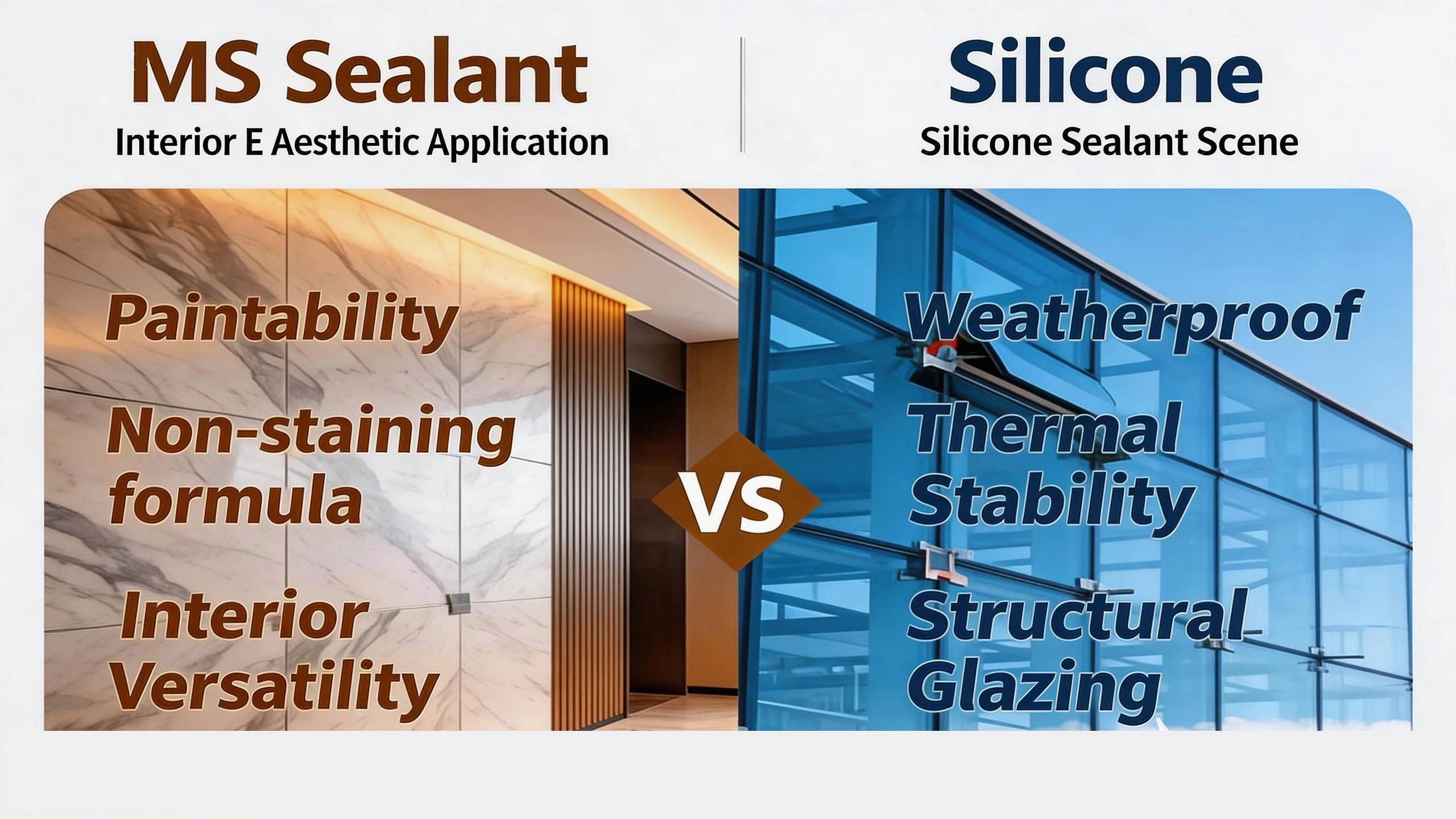
MS Sealant vs. Silicone: Which is Right for Your Construction Project?
The Ultimate Guide to Choosing a Silicone Sealant Manufacturer in 2026: 10 Critical Factors Often Overlooked
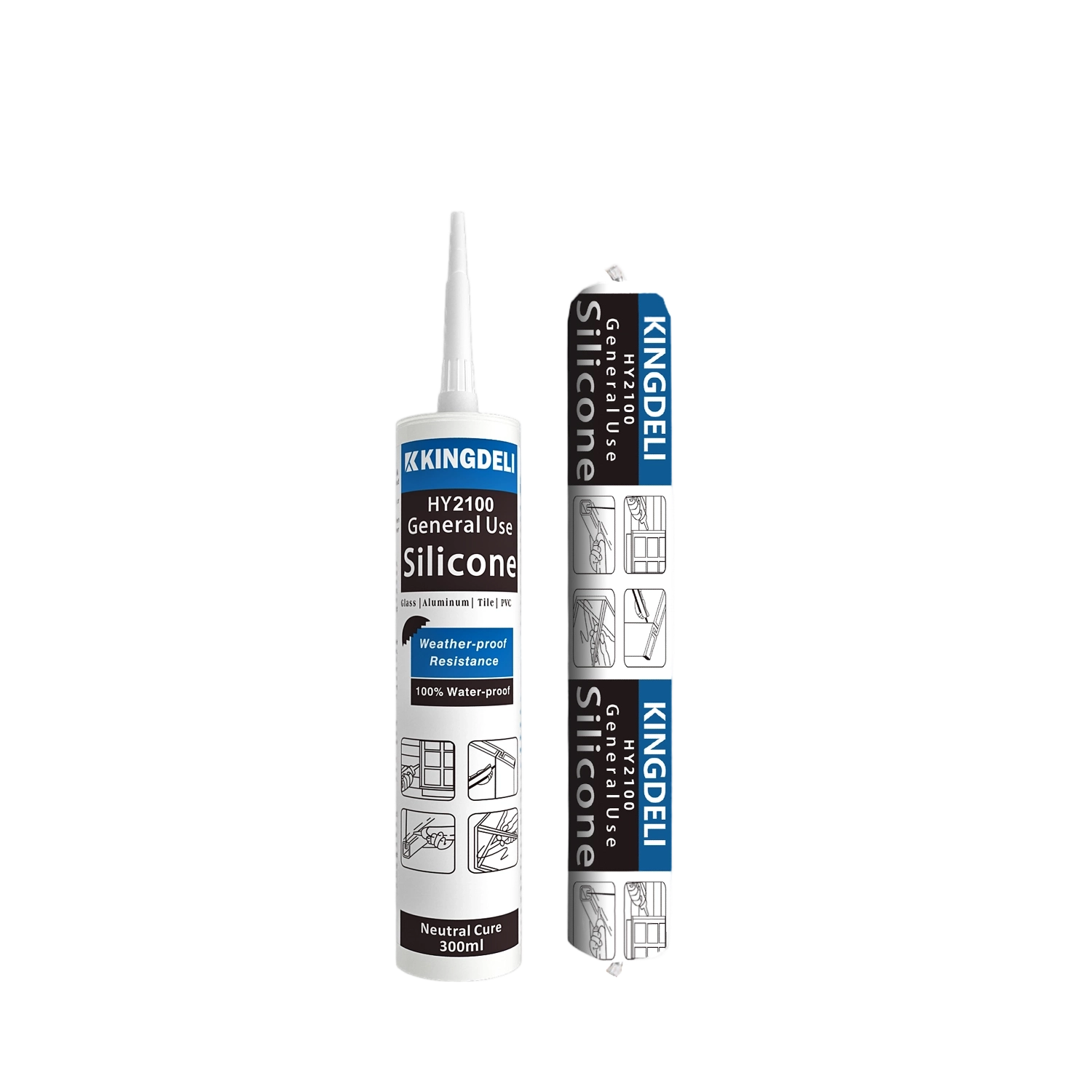
Industrial Applications of Acetic Silicone Sealant: Beyond Basic Glass Sealing
HY-951
Does the grout change color or turn yellow over time?
No. HY951 features strong anti-yellowing performance and long-lasting color stability when applied and cured correctly.
Distributor Partnership
Do you provide exclusive distribution?
Yes, market exclusivity is available for qualified partners with committed annual purchase volumes.
HY723
What temperature range can HY-723 withstand?
It maintains stable performance in extreme temperatures ranging from -50℃ to 200℃.
HY-2100
What color options are available?
Standard colors include clear, black, grey, and white, with custom color matching available upon request.
HY-4300
What is the service temperature range after curing?
After full curing, HY-4300 maintains excellent adhesion and elasticity between -50°C and +250°C.
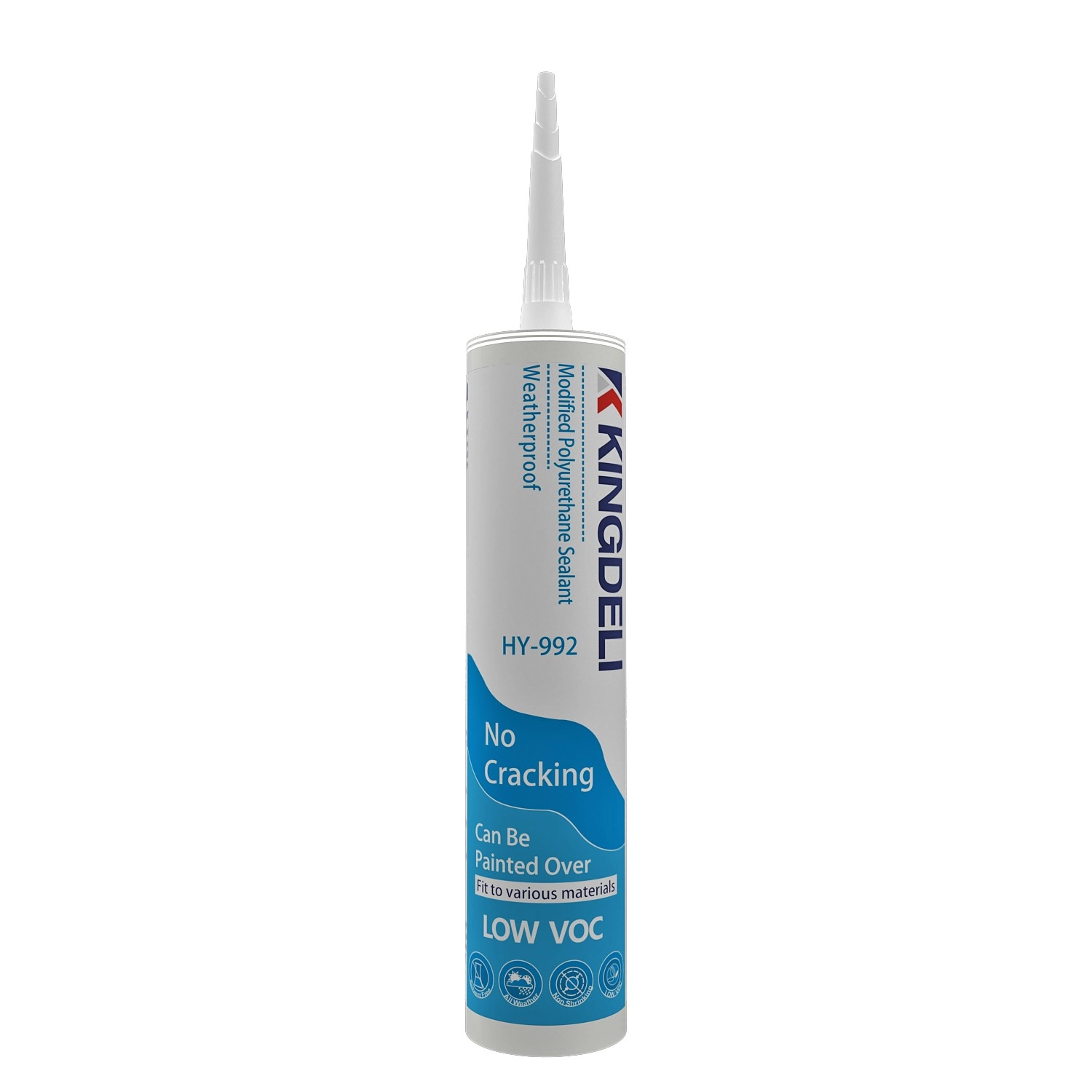
HY992 Modified Polyurethane Construction Sealant
HY992 Modified Polyurethane Sealant is a one-component, moisture-curing construction sealant designed for professional building and structural sealing applications. It provides excellent adhesion, weather resistance, and durable elasticity, making it suitable for a wide range of construction materials.
The formulation delivers strong bonding performance without corrosion or substrate contamination, while maintaining low VOC content for environmentally responsible construction projects.

HY995 Crystal Clear Ms Polymer Adhesive/Sealant
HY995 Crystal Clear Ms Polymer Adhesive/Sealant is a new generation MS Polymer adhesive / sealant formulated for all bonding and sealing applications where long term reliability is required. It has excellent bonding strength on various materials. It will cure to form a durable, flexible, waterproof seal.

HY997 High-Performance Anti-Microbial MS Polymer Sealant
HY997 MS polymer sealant for is is a premium one-component, neutral-curing modified silane sealant engineered for demanding interior applications. It offers a Class 20 movement capability, ensuring long-lasting flexibility and reliable performance under dynamic joint conditions. Curing at room temperature, HY997 delivers superior anti-microbial and mildew-resistant properties, maintaining hygienic and clean environments over time.
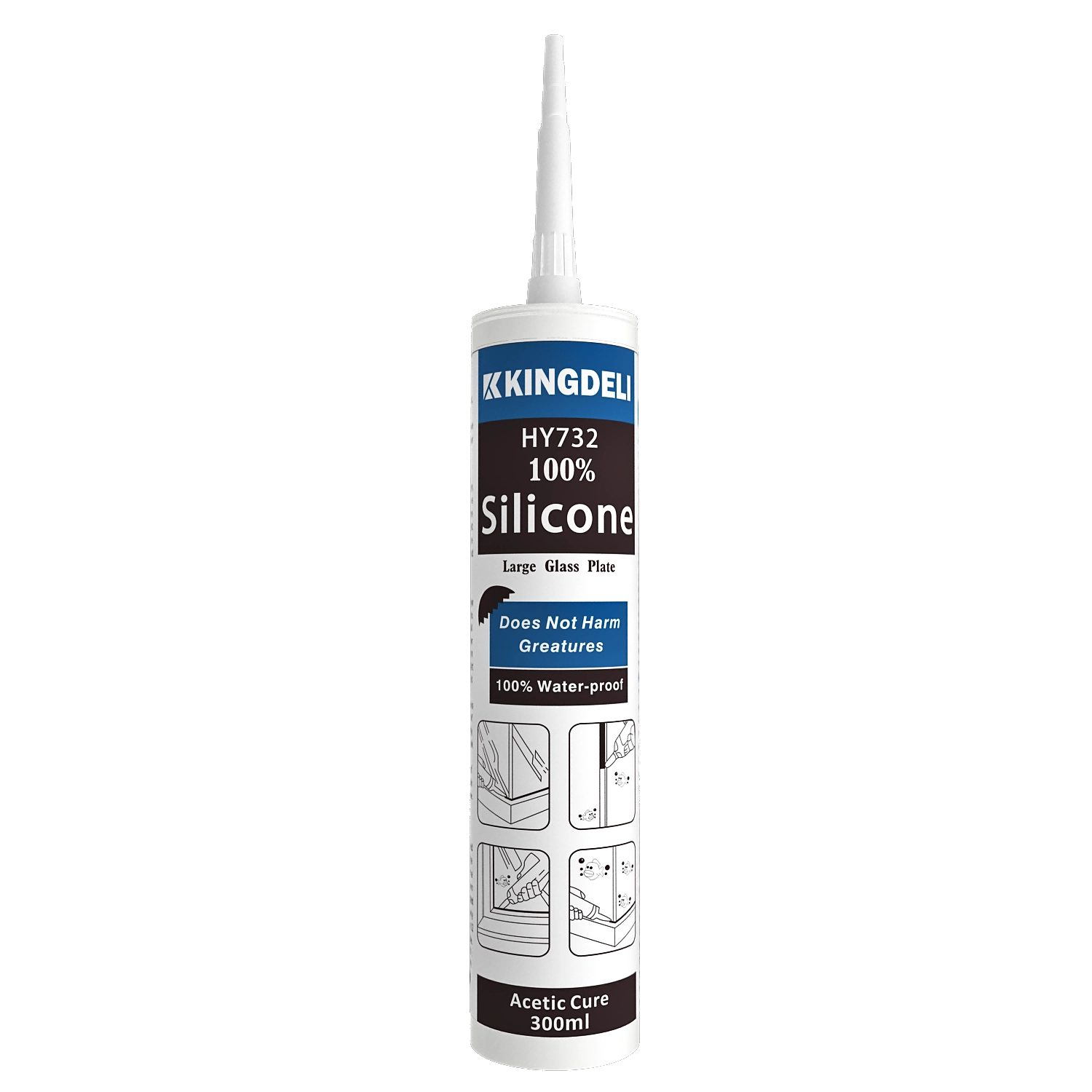
KINGDELI HY732 Professional Acetoxy Cure Silicone Sealant
KINGDELI HY732 is a professional-grade, one-component acetoxy cure silicone sealant designed for fast curing, strong adhesion, and long-lasting flexibility. Ideal for aquariums, glass applications, aluminum doors and windows, kitchens, and bathrooms, it provides reliable sealing performance with excellent anti-fungal protection in high-humidity environments.
Let’s Build Stronger Bonds with Quality Adhesives and Sealants
Have questions about the topic or need tailored sealant solutions for your project?
Our team is ready to provide expert guidance, product recommendations, and application support.
Innovating with Integrity, Bonding the World
Since 1998, KINGDELI has delivered trusted, sustainable sealant solutions that connect industries and inspire progress worldwide.
Whatsapp: +8618825946249
Kingdeli
Kingdeli
Kingdeli
Kingdeli
Kingdeli