











What are procurement best practices for neutral cure silicone sealant?
Neutral Cure Silicone Sealant: 6 Procurement Questions Every Specifier Needs Answered
This guide gives in‑depth, actionable answers to six long‑tail procurement and specification questions professionals face when buying neutral cure silicone sealant for façade glazing, metalwork, sanitary and interior joints. It embeds practical checks—batch testing, primer selection, environmental cure profiling, shelf‑life protocols, indoor‑air compliance, and arrival acceptance tests—so procurement teams, facade engineers and installers can reduce risk and achieve durable joints.
1. How can I verify batch traceability and Certificate of Analysis (CoA) for neutral cure silicone sealant on critical façade glazing projects?
Pain point: Owners and contractors need assurance that each delivery corresponds to a tested production batch and that performance parameters were met—especially for multi‑phase façade projects where different lots may be installed over months.
What to request from suppliers:
- Lot number and production date stamped on each cartridge, sausage or drum and cross‑referenced to a Certificate of Analysis (CoA).
- CoA content: raw material batch references, measured extrusion force, tack‑free time, specific gravity/viscosity, Shore A hardness, tensile/elongation (if provided), and curing profile at 23°C/50% RH. The CoA should be signed and dated.
- Manufacturer’s SDS (Safety Data Sheet) and product technical data sheet (TDS) for the lot delivered.
- Manufacturing quality system evidence where applicable (ISO 9001 certificate and internal QC trace logs).
Recommended procurement clauses:
- Require CoA with every delivery and reserve right to reject lot if CoA is missing or mismatched.
- Specify independent third‑party testing on random lots (e.g., tensile/elongation and adhesion coupons tested to ASTM C794) before installation starts on critical areas.
- Insist on full material traceability through the supply chain (manufacturer → distributor → site) with signed delivery receipts that include lot numbers.
On practical verification at delivery:
- Match lot numbers on packaging to the CoA. If using bulk drums, ensure drum serials are included on the CoA.
- Retain 1–2 unused samples from each lot (in original packaging) for 12–24 months to allow for forensic testing if defects appear.
Why this matters: Neutral cure silicones are formulated to be non‑corrosive to metals (alkoxy or oxime chemistries). A single off‑spec batch may have poor adhesion, altered cure profile or increased VOC/odour. Traceability and CoA-backed acceptance minimize litigation and rework risk.
2. Which primers and surface‑preparation methods reliably secure long‑term adhesion of neutral cure silicone to anodized aluminum and stainless steel?
Pain point: Poor adhesion on metal substrates leads to edge‑lifting, water ingress and warranty disputes—especially where anodized aluminum has variable surface chemistries and stainless steel may carry oils or passivation residues.
Key steps for robust adhesion:
- Cleaning: Begin with a staged cleaning—degrease with a suitable solvent (isopropyl alcohol or manufacturer‑recommended cleaner), then remove particulate with lint‑free wipes. For heavy oils or machining residues, use a dedicated alkaline or solvent degreaser as directed by the substrate and primer manufacturer.
- Mechanical preparation: For heavily contaminated or aged anodized finishes, mild abrasion (non‑metallic scotch‑brite or light fine grit) can improve wettability—but test to ensure aesthetic finish is acceptable.
- Primers/Silanes: Use a primer/silane specifically approved by the silicone manufacturer for the substrate. For anodized aluminum and stainless steel, organofunctional silane primers (e.g., methacryloxy or amino functional silanes) or manufacturer‑recommended alkoxy/oxime primers improve chemical bonding. Always cross‑check that the primer is compatible with the chosen neutral cure chemistry (oxime vs alkoxy).
- Application and flash time: Apply primer evenly in thin coats and allow the recommended flash/evaporation time before sealant application. Over‑wetting or re‑contamination before sealing voids the benefit.
- Adhesion testing: Require adhesion‑in‑peel tests (ASTM C794) on representative substrate samples prepared identically to site procedures before bulk installation. For critical façades, specify field adhesion coupon tests at first installation and at regular intervals.
Procurement language to include:
- “Sealant manufacturer must confirm primer compatibility in writing for specified anodized aluminum and stainless steel finishes.”
- “Provide adhesion test reports (ASTM C794) on project‑specific panels prior to approval of first lot.”
Notes: Neutral cure silicones reduce metal corrosion risk compared with acetoxy (acid) silicones. However, proper primer selection and contamination control remain essential—do not assume ‘neutral’ removes the need for surface prep.
3. How should procurement evaluate cure profile and tack‑free time of neutral cure silicone in cold, high‑humidity site conditions before acceptance?
Pain point: Field conditions differ from factory test labs. Cold or very humid environments slow or alter cure, causing blocked joints, long tack times or incomplete cure through the section—leading to missed schedules or joint failures.
What affects cure:
- Chemistry: Neutral cure silicones (commonly oxime or alkoxy cure types) cure by reaction with atmospheric moisture. Cure rate is strongly temperature and relative humidity (RH) dependent—higher RH generally accelerates surface cure; lower temperature slows the reaction and full crosslinking.
- Joint depth: Thicker beads cure more slowly at the core. Specify maximum recommended joint depth and backer rod to enable two‑sided cure where necessary.
Procurement and specification actions:
- Require manufacturer‑supplied cure charts showing tack‑free time, surface cure and full cure at multiple temperatures and RH levels (e.g., 5°C/40% RH, 10°C/70% RH, 23°C/50% RH). Insist these are based on measured data, not generic claims.
- Specify minimum allowable tack‑free time for site acceptance and define remedial actions if tack‑free time exceeds the limit (e.g., reject lot or accept with extended protection period).
- For low‑temperature work, include preconditioning requirements for sealant (warm storage) and substrate (above dew point). Use temporary enclosures, heaters or heated sealant dispensers to maintain conducive cure temperatures.
- Include on‑site cure verification: apply small witness beads in the first boxes delivered; measure tack‑free time and adhesion on coupon panels under current site conditions before full application.
Field measurement tips:
- Use standard pendulum tack tests or simple finger‑touch tack checks at predetermined intervals; document times and environmental conditions (temperature, RH).
- Record joint depth, bead size and substrate condition for traceability.
Why this protects you: Incorporating cure profile requirements into procurement prevents scheduling surprises, reduces rework and ensures appropriate supplier support for adverse site conditions.
4. What objective shelf‑life controls and accelerated ageing checks should be specified in procurement contracts for bulk neutral cure silicone sealant?
Pain point: Sealant stored incorrectly or used past its effective shelf life can exhibit increased extrusion forces, poor cure, or loss of elasticity—issues that may only appear weeks after installation and are costly to remediate.
Recommended contract clauses and controls:
- Define shelf life: Require manufacturer declared shelf life (commonly 12–24 months depending on packaging and formulation) and ensure lot expiry dates are stamped on each package. Procurement should use FIFO (first in, first out) and avoid accepting product with less than a contractually defined remaining shelf life (e.g., minimum 6 months remaining for long projects).
- Storage conditions: Mandate storage temperature range and light/moisture protection per TDS/SDS (typically cool, dry, away from direct sunlight and below specified maximum temperatures). Include rights to inspect storage facilities at distributor warehouses.
- Acceptance testing: For long projects, require accelerated ageing checks on retained samples from each lot if storage >6 months. Common quick checks include extrusion force (manual or pneumatic dispenser), viscosity/flow comparison and basic cure check (apply bead and observe tack‑free time under standard lab conditions).
- Reject criteria: Define objective rejection thresholds (e.g., extrusion force increase >20% from CoA value or tack‑free time prolonged by specified factor). Include supplier responsibility to replace off‑spec lots.
- Documentation: Require at delivery a statement of storage conditions at the distribution point and evidence of cold‑chain or temperature‑controlled transport if required by the formulation.
Laboratory accelerated ageing (optional, for critical projects): Specify an accelerated ageing protocol (e.g., temperature‑elevated storage for defined periods) and test for sealant physical properties (extrusion, hardness by ASTM D2240, tensile/elongation, adhesion samples) compared to baseline CoA. Use accredited labs for these tests and retain right to independent testing.
5. How should procurement compare VOC, low‑odour performance and indoor‑air compliance of neutral cure silicone for occupied building projects?
Pain point: Interior and occupied projects increasingly demand low VOC, low odour products certified to indoor air standards. Specifications often list vague requirements and procurement teams need objective criteria to compare competing neutral cure silicones.
Practical evaluation checklist:
- VOC measurement: Ask for measured VOC content in g/L for the specific product and lot if available. Many modern neutral cure silicones advertise very low VOC; require documentation rather than generic claims.
- Certifications: Require third‑party indoor air quality certification where project standards demand it—examples include GREENGUARD, BREEAM credits, LEED v4 IAQ credits or local national schemes. Note that acceptance criteria and test protocols differ; request copies of certificates and scope (which product formulations and lot ranges are covered).
- Odour and off‑gassing: Neutral cure silicones (oxime or alkoxy chemistries) generally emit lower acidic vapours than acetoxy silicones, but some oxime by‑products (e.g., methyl ethyl ketoxime) can have odour or health RPM issues. For occupied spaces, procure products with manufacturer data on odour thresholds and use field evaluation by applying small test beads in occupied conditions prior to bulk use.
- Regulatory compliance: Ensure product SDS lists any substances of concern and that the product meets project regulatory limits (local VOC regulations, e.g., EU emissions limits or local building codes). Procurement should require supplier attestation that product formulations comply with applicable local VOC legislation.
Procurement language examples:
- “Supply neutral cure silicone sealant with documented VOC ≤ g/L and evidence of GREENGUARD or equivalent certification where required.”
- “Supplier to provide odour evaluation report and confirm absence of restricted substances per project specifications.”
6. What arrival and on‑site acceptance tests should procurement require for neutral cure silicone sealant (extrusion force, slump, tack, sample cure) before installation?
Pain point: Deliveries often go straight to site storage with no verification, resulting in installation using a compromised product. Define simple, objective acceptance tests that site QC staff or independent inspectors can perform quickly.
Minimum on‑site acceptance protocol:
- Documentation check: Verify CoA, TDS, SDS and lot number. Confirm storage conditions during transport and that remaining shelf life meets contract minimum.
- Visual inspection: Check for container damage, phase separation, crystal formation (rare), or contamination. Reject any packaging with evidence of penetration or moisture ingress.
- Extrusion force check: Using the same type of caulking gun or pneumatic dispenser intended for installation, extrude a short bead. Excessive extrusion force or uneven flow compared to baseline samples should trigger further testing or rejection.
- Tack‑free and appearance test: Apply a witness bead on a non‑critical board and record tack‑free time under site temperature and RH; compare to manufacturer data adjusted for environment. Observe cured bead for surface tack, cure uniformity and gloss variation after manufacturer full‑cure time.
- Adhesion coupon (for critical areas): If feasible, prepare small adhesion coupons using the actual substrate and primer method and test for peel strength after manufacturer‑specified cure time and under accelerated conditioning if required.
- Hardness (optional): Measure Shore A hardness (ASTM D2240) on cured sample to confirm compliance with CoA range for critical mechanical performance.
Rejection and escalation:
- Define clear rejection criteria and a supplier response time for replacement lots or remedial actions.
- Document all tests and retain samples. Use chain‑of‑custody for any independent lab tests requested.
Why this saves money: Early detection of off‑spec materials prevents installation of defective sealant, reduces call‑backs and avoids destructive rework on façades or interiors.
Concluding summary: Advantages of neutral cure silicone sealant and procurement best practices
Neutral cure silicone sealants (non‑acetoxy chemistries such as oxime or alkoxy) offer key advantages for modern construction: reduced corrosion risk on metals, low odour options suitable for occupied spaces, broad service temperature ranges and durable elasticity for dynamic joints. However, achieving long‑term performance requires disciplined procurement: enforce batch traceability and CoA review, require manufacturer‑approved primer and adhesion testing for metals, evaluate cure profiles for expected site climates, control storage and shelf life with objective acceptance tests, and demand documented VOC/indoor‑air compliance where needed. Including these technical checks in contracts and acceptance protocols converts product benefits into on‑site reliability.
For project quotations, product technical sheets, or to arrange sample and third‑party testing, contact us for a competitive quote: visit www.kingdelisealant.com or email info@kingdeliadhesive.com.
The 2026 Ultimate Guide to Glass Silicone Sealant: Everything You Need for a Perfect Finish
OEM vs. Branded Acetic Silicone Sealant: What’s Best for Your Distribution Business?
The Future of Sealants: 5 Emerging Trends in Wholesale Neutral Silicone Sealant Technology for 2026
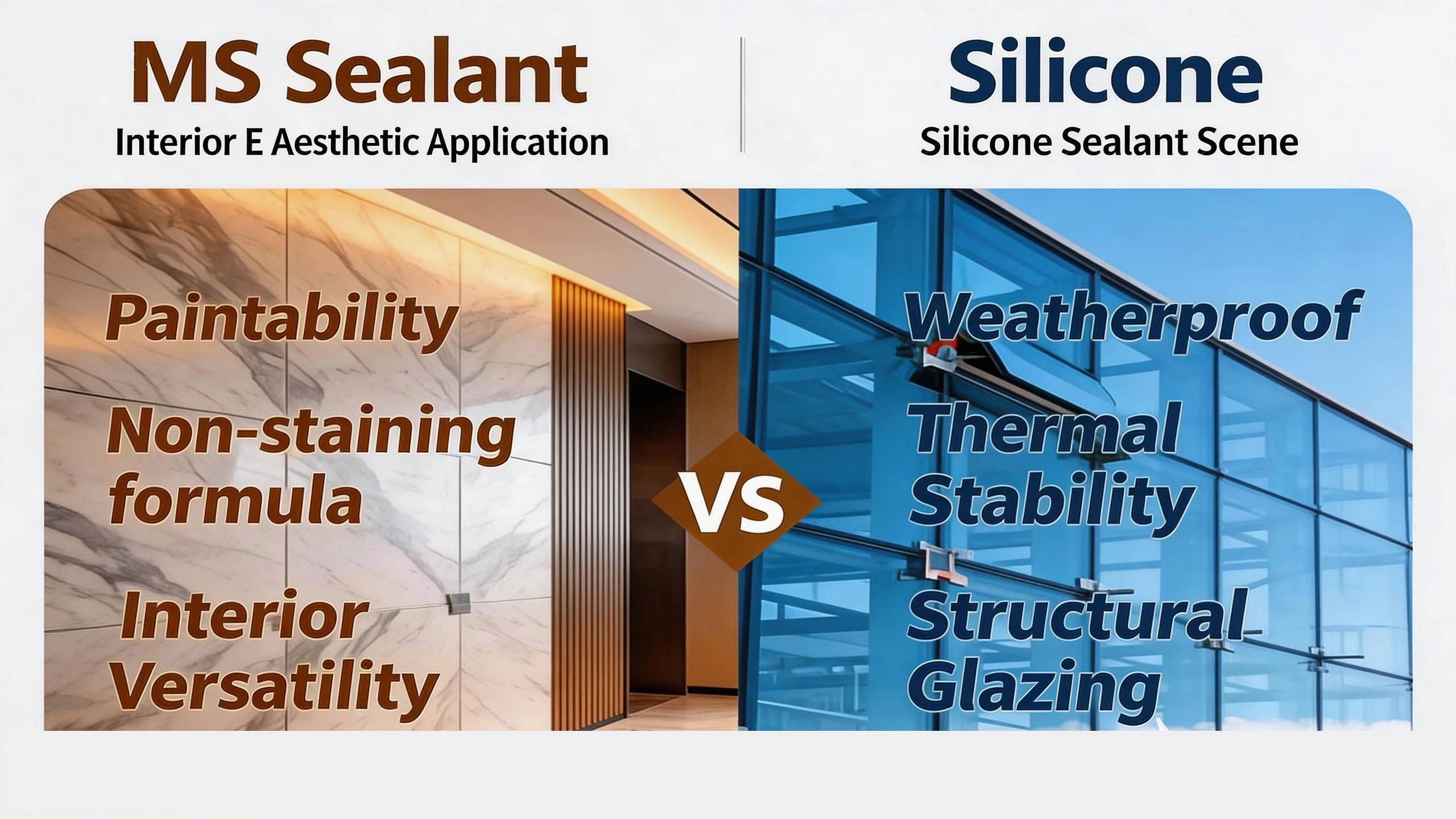
MS Sealant vs. Silicone: Which is Right for Your Construction Project?
HY-976
How should the adhesive be applied?
Apply in spots, wave-shaped beads, or straight strands depending on surface size and required initial tack, then press firmly with a twisting motion.
HY995
Is this product safe and environmentally friendly?
Yes. HY995 is formulated without isocyanates and solvents, making it low VOC, non-toxic, and low odor. It is suitable for use in indoor environments.
HY997
Where can this sealant be used?
HY997 is mainly designed for indoor sanitary and moisture-prone areas, including:
-
Kitchens – sinks, countertops, cabinets, and cooktops
-
Bathrooms – bathtubs, wash basins, shower enclosures, and toilets
-
Laboratories and cold storage areas
-
Other areas requiring waterproof and mildew-resistant sealing
HY723
What is the primary application of HY-723?
It is primarily used to control the spread of fire, smoke, and toxic fumes within areas surrounded by firewalls, such as construction joints and partitions.
HY925
What is the shelf life?
Aluminum cartridge: 12 months
Aluminum foil: 12 months
Store in a cool, dry place below 25°C for optimal performance.
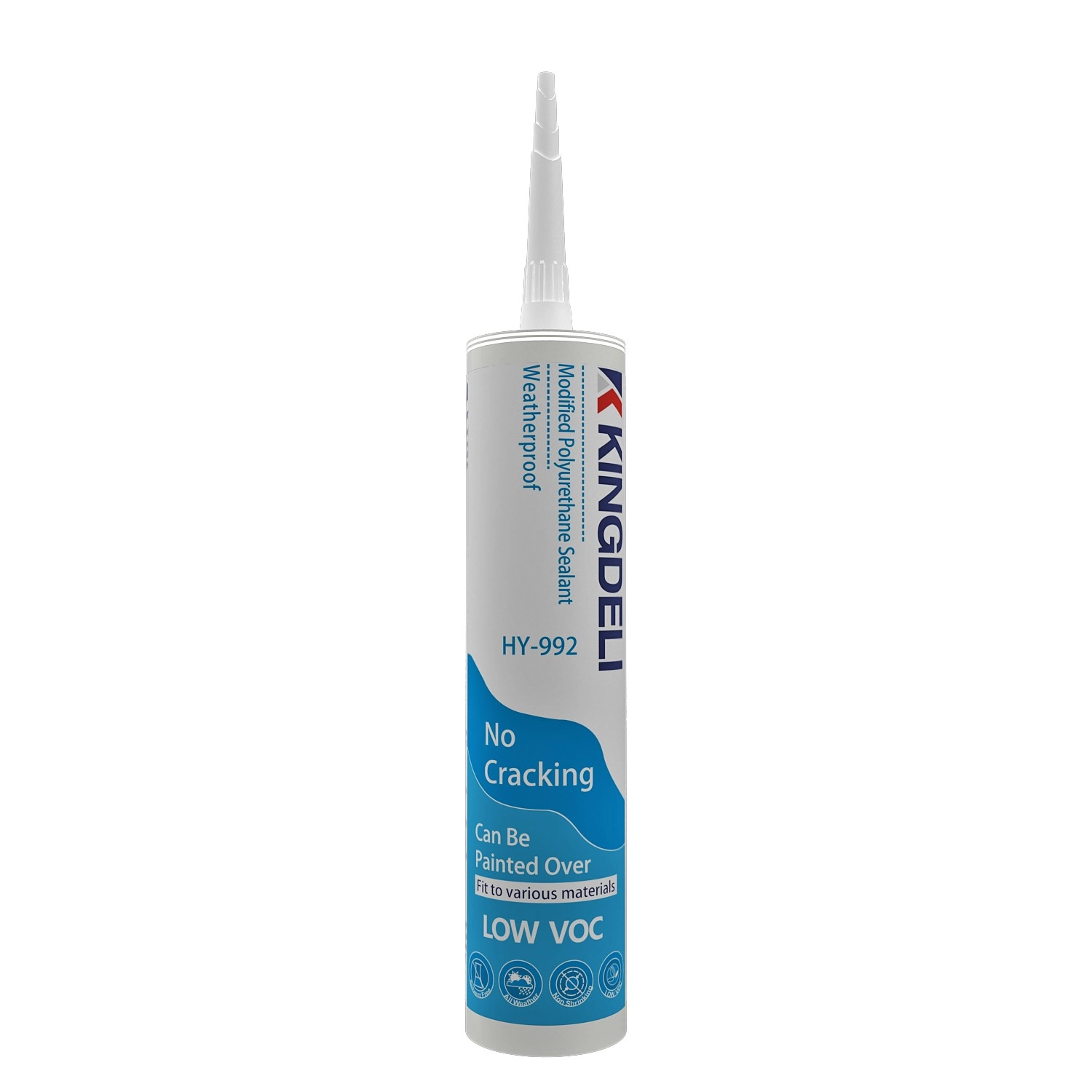
HY992 Modified Polyurethane Construction Sealant
HY992 Modified Polyurethane Sealant is a one-component, moisture-curing construction sealant designed for professional building and structural sealing applications. It provides excellent adhesion, weather resistance, and durable elasticity, making it suitable for a wide range of construction materials.
The formulation delivers strong bonding performance without corrosion or substrate contamination, while maintaining low VOC content for environmentally responsible construction projects.

HY995 Crystal Clear Ms Polymer Adhesive/Sealant
HY995 Crystal Clear Ms Polymer Adhesive/Sealant is a new generation MS Polymer adhesive / sealant formulated for all bonding and sealing applications where long term reliability is required. It has excellent bonding strength on various materials. It will cure to form a durable, flexible, waterproof seal.

HY997 High-Performance Anti-Microbial MS Polymer Sealant
HY997 MS polymer sealant for is is a premium one-component, neutral-curing modified silane sealant engineered for demanding interior applications. It offers a Class 20 movement capability, ensuring long-lasting flexibility and reliable performance under dynamic joint conditions. Curing at room temperature, HY997 delivers superior anti-microbial and mildew-resistant properties, maintaining hygienic and clean environments over time.
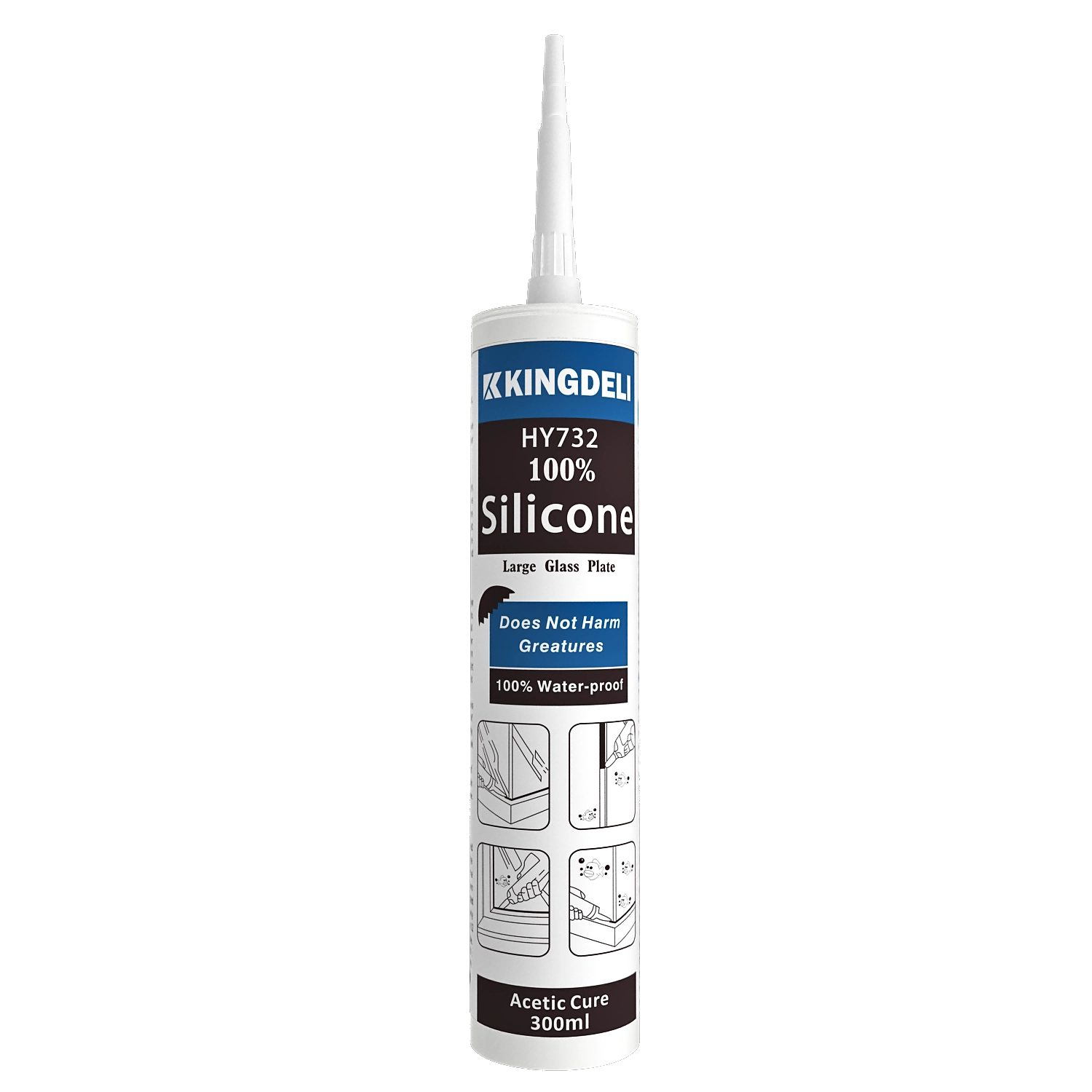
KINGDELI HY732 Professional Acetoxy Cure Silicone Sealant
KINGDELI HY732 is a professional-grade, one-component acetoxy cure silicone sealant designed for fast curing, strong adhesion, and long-lasting flexibility. Ideal for aquariums, glass applications, aluminum doors and windows, kitchens, and bathrooms, it provides reliable sealing performance with excellent anti-fungal protection in high-humidity environments.
Let’s Build Stronger Bonds with Quality Adhesives and Sealants
Have questions about the topic or need tailored sealant solutions for your project?
Our team is ready to provide expert guidance, product recommendations, and application support.
Innovating with Integrity, Bonding the World
Since 1998, KINGDELI has delivered trusted, sustainable sealant solutions that connect industries and inspire progress worldwide.
Whatsapp: +8618825946249
Kingdeli
Kingdeli
Kingdeli
Kingdeli
Kingdeli