











How does temperature affect ms silicone sealant performance?
1. How does low ambient and substrate temperature (below 5°C) change bonding, cure rate, and what procedures ensure reliable adhesion of MS silicone sealant in winter installations?
Short answer: cold slows cure, reduces moisture-driven crosslinking, lowers immediate adhesion and increases risk of cohesive failure unless you adapt prep and technique.
Details: Most silane-modified polymers (MS polymer sealants, often marketed as MS silicone or hybrid silicone) cure by reaction with atmospheric moisture. Typical cure rates cited on many datasheets are ~2–4 mm/24 h at 23°C/50% RH; at temperatures below 5°C cure rate can drop to a fraction of that (often <0.5–1 mm/24 h) because both reaction kinetics and ambient moisture availability fall.
- Immediate effects: tack-free time increases (from 10–60 minutes at 20–23°C to several hours at near-freezing). Early-age tensile strength and adhesion measured by lap-shear decrease.
- Field fixes: increase substrate temperature to 5–25°C using infrared or gas heaters for at least 30–60 minutes (avoid >50°C), increase RH if possible (humidifiers) to accelerate crosslinking, use a compatible primer specified for low-temperature application to improve initial adhesion, and increase tooling time allowance.
- Joint design: increase joint width-to-depth ratio slightly and avoid very shallow joints (minimum practical depth often 6–8 mm depending on product) to prevent skinning without full cure. Use an open-cell polyurethane backer rod sized to avoid three-sided adhesion and to maintain movement capacity.
- Verification: perform a small mock-up and allow 7–14 days (or longer at low temp) before subjecting the joint to full movement. Use manufacturer cold-weather datasheets where available.
2. At high ambient or substrate temperatures (above 40°C), how do accelerated cure and thermal expansion affect joint performance and what on-site controls avoid bubbling, loss of elasticity, or adhesion failure?
Short answer: heat speeds cure and skin formation, may trap volatiles (bubbles), reduces working time, and can increase thermal stress—manage timing, substrate prep, and cooling to avoid defects.
Details: Elevated temperatures increase crosslinking rates and lower viscosity, so skin/tack-free time can drop from tens of minutes to just a few minutes; full cure can also be faster but may produce internal stresses if the sealant loses the ability to flow and relieve strain. If cartridges/tubs are overheated or applied to hot substrates (>50°C), trapped moisture or residual solvent can expand and create blisters or pinholes.
- Controls: apply during cooler parts of the day (morning/evening), shade joints, avoid direct sun on stored product and substrates, and respect maximum substrate temperatures in the product datasheet (many MS products specify an application range of +5°C to +40°C; specialized formulations expand that).
- Technique: work in smaller sections, tool immediately, and avoid over-thinning the bead. If a faster cure is desired without overheating, use a product explicitly formulated for fast cure rather than applying heat.
- Long-term effects: thermal expansion mismatch (especially aluminum-to-concrete joints) increases cyclical stress. Select an MS polymer with a high elongation at break (>300–500%) and low elastic modulus (check shore A and modulus data) to maintain adhesion through cycles.
3. How do repeated thermal cycles (freeze–thaw and daily temperature swings) affect long-term tensile strength and movement capacity of MS silicone sealants on concrete-to-aluminum joints over 10+ years?
Short answer: well-formulated MS polymers are designed for long-term movement; however, thermal cycling exposes weak formulations or poor detailing to fatigue, adhesive creep and micro-cracking—design and testing are key.
Details: Accelerated weathering and thermal cycling test data from manufacturers and independent labs typically show that MS polymers retain a large fraction of initial elongation and adhesion after 1,000–5,000 cycles if the product is chosen for movement capability. Key measurable parameters are tensile strength, elongation at break and residual adhesion after cycles (tests per ASTM C1135 or relevant ISO methods).
- Design guidance: choose sealants with high elongation at break (300–700% typical for many MS polymers) and tensile strength compatible with expected joint movement (1–3 MPa typical). Avoid low-elongation, high-modulus products on joints that see thermal strain.
- Detailing: use continuous bond lines, correct joint width-depth ratio (commonly 2:1 width:depth for movement joints), and compatible backer rod to control bond geometry and relieve stress.
- Testing: specify mock-ups and accelerated thermal cycling tests where long service life is required. Reference industry standards (ASTM, ISO) in specifications and request manufacturer long-term performance data covering UV, ozone and thermal cycling.
4. For cold-applied MS sealants, what are the measurable cure rate, tack-free time, and minimum joint depth required to reach specified tensile strength at 0°C?
Short answer: cure at 0°C is product-dependent; expect markedly slower cure (often <1 mm/day) and plan for greater joint depth or longer cure times. Verify with manufacturer datasheets and site mock-ups.
Details: Typical reference cure figures (23°C/50% RH) are 2–4 mm/24 h with tack-free time 10–60 min. At 0°C, these rates are commonly reduced by 60–90% depending on humidity—so you might see 0.2–1.5 mm/24 h. That means thin joints or shallow beads will skin over externally but remain uncured internally for days or weeks, risking cohesive failure.
- Minimum joint depth: while the exact minimum depends on product, a conservative approach in cold conditions is a minimum 8–10 mm depth (or as recommended on the product datasheet) to ensure sufficient cross-section for target tensile strength when cure completes.
- Specification approach: require manufacturer-provided low-temperature cure curves or third-party lab data. Insist on field cure verification (e.g., durometer readings, tensile tests on test strips after 7/28/90 days at site temperatures).
- Workarounds: use primers formulated to accelerate adhesion at low temperatures; use warm storage and conditional heating of substrate and product within safe limits; or select fast-curing low-temperature MS formulations explicitly tested to cure at 0°C.
5. Can MS silicone sealant be used on low-energy plastics (HDPE/PP) in variable-temperature climates without primer, and what surface prep and primer choices mitigate temperature-related adhesion loss?
Short answer: generally no—low-energy plastics usually require surface treatment or primer for durable adhesion, especially when temperature fluctuates. Relying on primerless adhesion risks de-bonding under thermal cycling.
Details: HDPE and PP have surfaces that resist wetting and bonding. At high or low temperatures, stresses from thermal expansion amplify any weak interfacial adhesion. MS polymers offer good adhesion to many substrates (aluminum, glass, concrete, painted metal) but low-energy plastics are an exception. Practical options:
- Surface prep: flame treatment, corona, or grit abrasion (where applicable) increases surface energy and adhesion. Clean with isopropyl alcohol or manufacturer-specified cleaner before priming.
- Primers: use a silane-based primer or the specific primer recommended by the sealant manufacturer. Primers chemically couple the MS polymer to low-energy plastics and maintain adhesion across temperature swings.
- Testing and qualification: require adhesion tests (peel or lap-shear per ASTM/ISO) at temperature extremes expected in service. For critical joints, mechanical fastenings or gasket solutions may be preferable.
6. How should storage, preheating, or on-site heating be managed to maintain shelf-life and avoid temperature-induced crosslinking or premature curing in cartridges/tubs?
Short answer: observe manufacturer storage temperature limits, avoid prolonged high-temperature exposure, and warm cold cartridges cautiously to application temperature—do not heat above recommended limits.
Details: Most MS polymer sealants are stable when stored unopened at 5–25°C for 9–18 months (check product label). Extremes cause problems:
- Cold storage (<0°C): cartridges can become viscous and difficult to extrude; condensation can form when moved to warm conditions—allow products to equilibrate to recommended application temperature (often >5°C) in their sealed packaging.
- Hot storage (>40–50°C): accelerates pre-curing, shortens shelf life, and can cause cartridges to pressurize or split. Never store above manufacturer maximums.
- Warming technique: for cold cartridges, store in a heated room (not direct heat) or submerge sealed cartridges in warm water (max temp per datasheet, typically <40°C) for 30–60 minutes. Avoid open flame, ovens, microwave, or heat guns on cartridges as they can initiate curing or cause rupture.
- On-site tubs: when using product tubs, reseal and store in cool shade; prolonged exposure to high heat during application accelerates surface cure in the tub and wastes product.
Operational tip: keep a small temperature log for stored sealants on long projects and rotate stock (FIFO). Expect changes in extrusion force with temperature; plan for larger static mixers or pneumatic dispensing for cold, viscous product.
Concluding summary: Advantages of MS silicone (silane-modified) sealants and final procurement recommendations
Silane-modified (MS) polymer sealants marketed as MS silicone or hybrid silicone combine many advantages: neutral cure (no acetic acid), good adhesion to a wide range of substrates (concrete, metal, glass, many painted surfaces), low VOC, paintability, low shrinkage and strong movement capability when specified correctly. They deliver UV and weather resistance similar to silicones while offering easier paintability and lower odor. For temperature-sensitive projects, select formulations with documented low- and high-temperature performance, require manufacturer cure-rate data for the expected climate, specify primers where substrate energy is low, and build in mock-ups and accelerated thermal-cycle testing into procurement specs.
Data basis and standards: performance ranges and field practices above are aligned with typical manufacturer datasheets and industry test standards (for example ASTM C920, ASTM C1135 and relevant ISO test methods). Always verify specific numerical values (cure rate, shore A, tensile strength, elongation, service temperature range) against the product technical datasheet and request third-party test reports when long-term durability is required.
If you need product selection, mock-up testing or a quotation tailored to your climate and substrates, contact us for a quote. Website: www.kingdelisealant.com • Email: info@kingdeliadhesive.com
OEM vs. Branded Acetic Silicone Sealant: What’s Best for Your Distribution Business?
The Future of Sealants: 5 Emerging Trends in Wholesale Neutral Silicone Sealant Technology for 2026
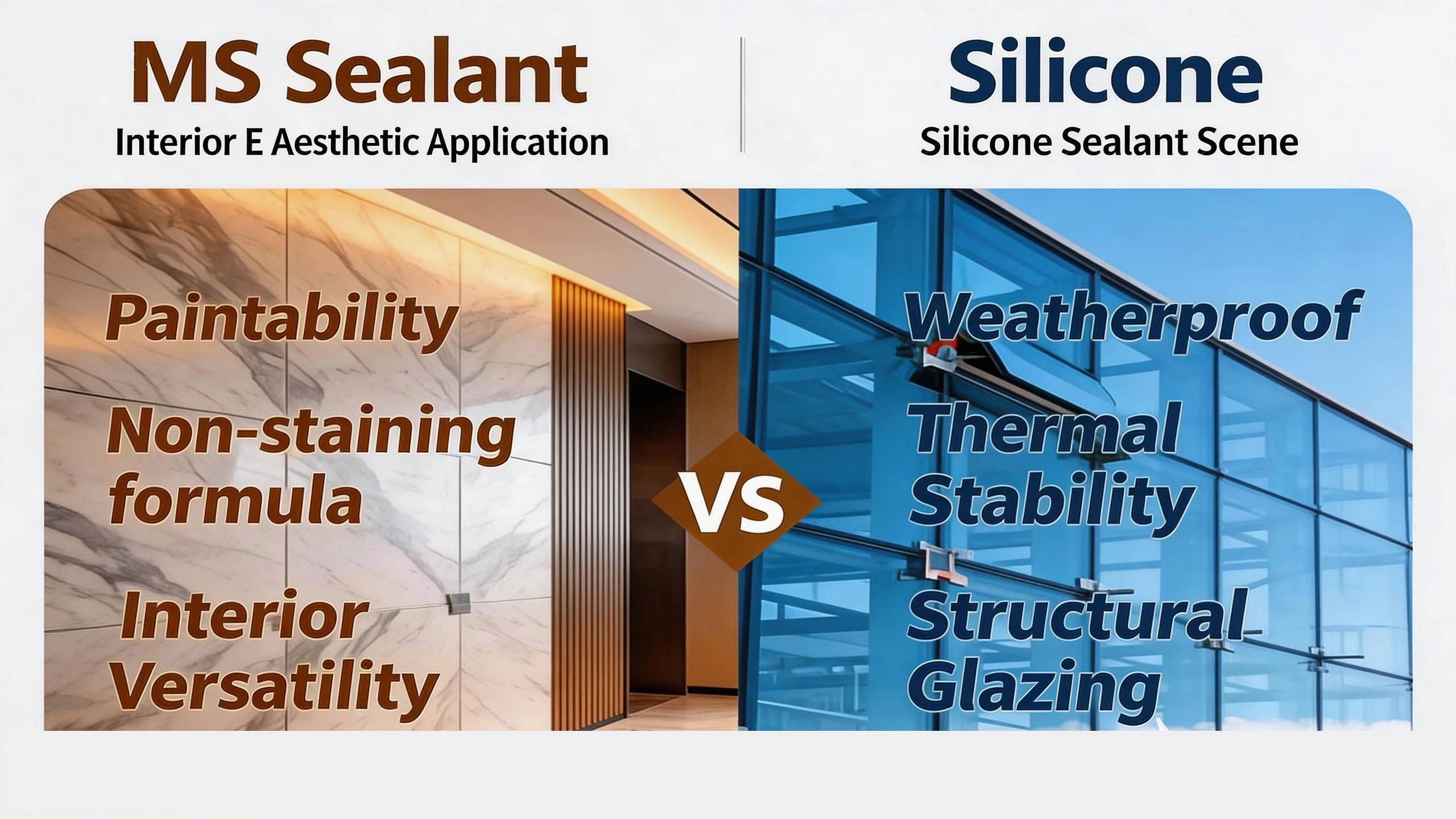
MS Sealant vs. Silicone: Which is Right for Your Construction Project?
The Ultimate Guide to Choosing a Silicone Sealant Manufacturer in 2026: 10 Critical Factors Often Overlooked
HY739
Can it be used outdoors?
Yes. It has excellent weather and UV resistance, suitable for external applications.
HY995
Is this product safe and environmentally friendly?
Yes. HY995 is formulated without isocyanates and solvents, making it low VOC, non-toxic, and low odor. It is suitable for use in indoor environments.
HY924
How long does HY924 take to cure?
Curing starts as soon as the material contacts moisture. Tack-free time is typically 30–60 minutes, with full curing depending on humidity, temperature, and bead thickness.
HY939A
What is the recommended application temperature range?
The sealant offers smooth extrusion and optimal workability within an application temperature range of 4°C to 40°C.
HY993
Is HY993 suitable for gap-filling?
Yes. Its high bonding strength and elastomeric properties make it suitable for sealing and filling various construction gaps and joints.
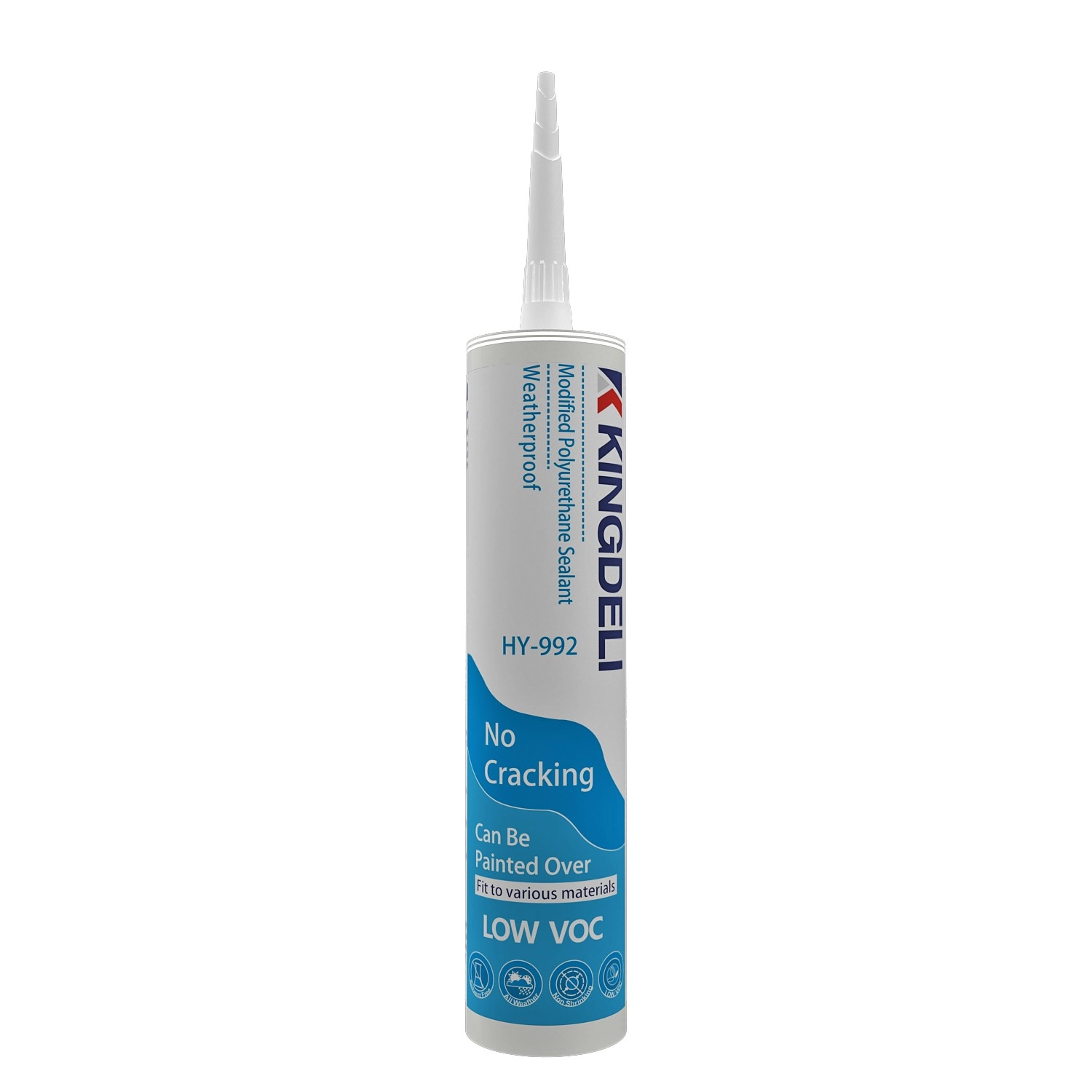
HY992 Modified Polyurethane Construction Sealant
HY992 Modified Polyurethane Sealant is a one-component, moisture-curing construction sealant designed for professional building and structural sealing applications. It provides excellent adhesion, weather resistance, and durable elasticity, making it suitable for a wide range of construction materials.
The formulation delivers strong bonding performance without corrosion or substrate contamination, while maintaining low VOC content for environmentally responsible construction projects.

HY995 Crystal Clear Ms Polymer Adhesive/Sealant
HY995 Crystal Clear Ms Polymer Adhesive/Sealant is a new generation MS Polymer adhesive / sealant formulated for all bonding and sealing applications where long term reliability is required. It has excellent bonding strength on various materials. It will cure to form a durable, flexible, waterproof seal.

HY997 High-Performance Anti-Microbial MS Polymer Sealant
HY997 MS polymer sealant for is is a premium one-component, neutral-curing modified silane sealant engineered for demanding interior applications. It offers a Class 20 movement capability, ensuring long-lasting flexibility and reliable performance under dynamic joint conditions. Curing at room temperature, HY997 delivers superior anti-microbial and mildew-resistant properties, maintaining hygienic and clean environments over time.
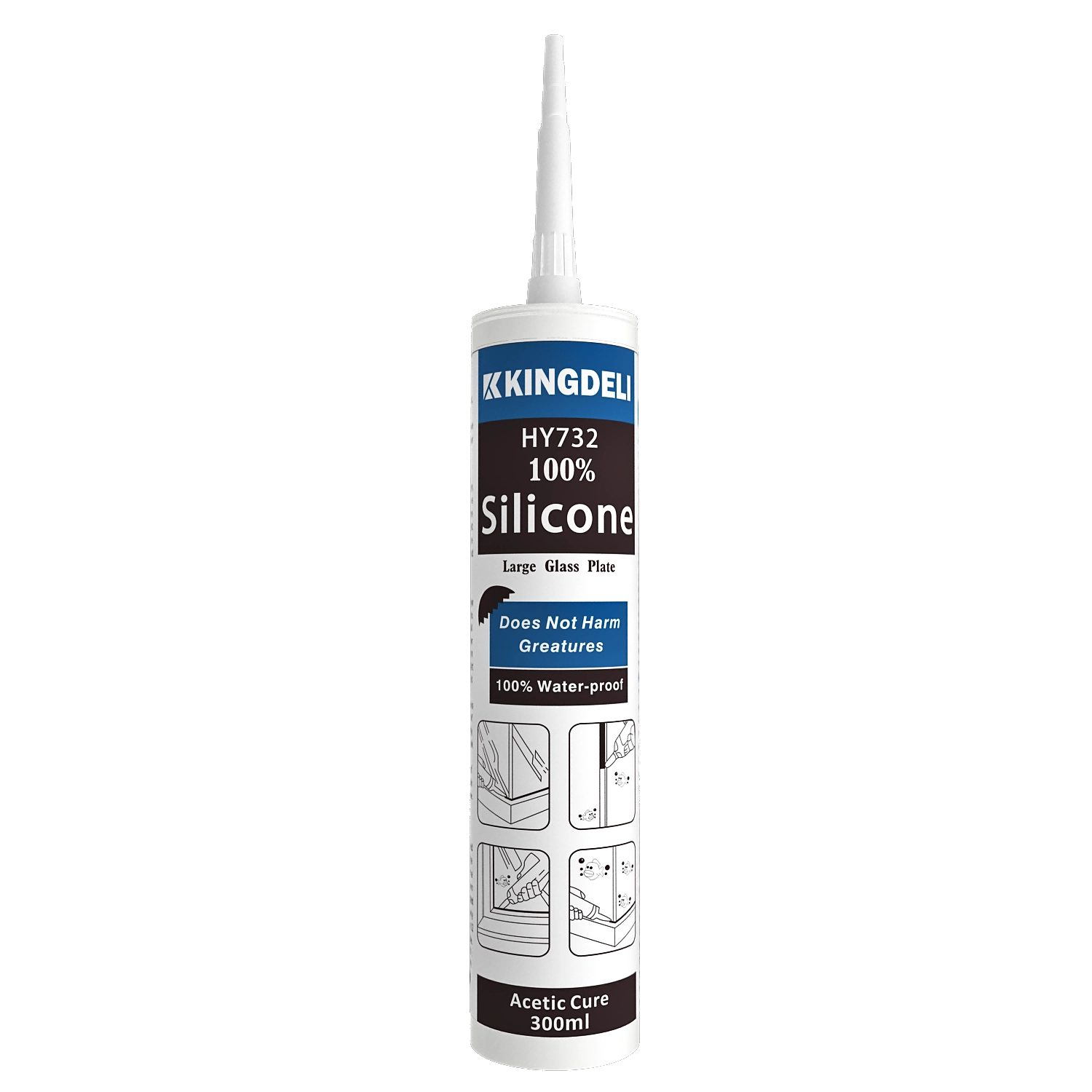
KINGDELI HY732 Professional Acetoxy Cure Silicone Sealant
KINGDELI HY732 is a professional-grade, one-component acetoxy cure silicone sealant designed for fast curing, strong adhesion, and long-lasting flexibility. Ideal for aquariums, glass applications, aluminum doors and windows, kitchens, and bathrooms, it provides reliable sealing performance with excellent anti-fungal protection in high-humidity environments.
Let’s Build Stronger Bonds with Quality Adhesives and Sealants
Have questions about the topic or need tailored sealant solutions for your project?
Our team is ready to provide expert guidance, product recommendations, and application support.
Innovating with Integrity, Bonding the World
Since 1998, KINGDELI has delivered trusted, sustainable sealant solutions that connect industries and inspire progress worldwide.
Whatsapp: +8618825946249
Kingdeli
Kingdeli
Kingdeli
Kingdeli
Kingdeli