











What are VOC and environmental rules for ms silicone sealant?
MS Silicone Sealant: VOC Rules, Selection & Practical Installation Answers
As manufacturers and specifiers increasingly ask for low-VOC, neutral-cure, paintable sealants with wide-substrate adhesion, MS (silane-modified) silicone sealants — often called MS polymer sealants — are a common choice. Below are six long-tail, beginner-focused questions that are often poorly answered online, followed by robust, standards-based answers you can use when purchasing or specifying sealants for construction, glazing, façades, or general maintenance.
1) How do I choose an MS silicone sealant for vertical façade joints in a coastal environment to resist salt spray, wind-driven water and thermal movement?
Key selection factors: material chemistry (silane-modified polymer / MS polymer), movement capability, adhesion to substrates (anodized aluminium, concrete, treated timber, glass), UV and salt-spray resistance, and verified test reports.
- Specify a product tested to relevant standards: EN 15651-1 (façade sealants) or ASTM C920 (classification for elastomeric joint sealants) shows the manufacturer has run movement, aging and adhesion tests.
- Movement capability: For façade joints, select a sealant with at least +/-25% movement capability for normal expansion joints; for higher thermal ranges specify +/-50% when large thermal cycles are expected. Movement capability must match joint design and thermal calculations.
- Salt-spray & UV: Request accelerated weathering test data (neutral salt spray per ISO 9227 or equivalent) and artificial UV aging (e.g., QUV) from the supplier. MS polymers perform well vs. hydrolysis; ensure the technical data sheet (TDS) includes adhesion retention after UV and salt-fog exposure.
- Adhesion: For coastal conditions, prefer primers on anodized aluminum or low-roughness substrates. Ask for adhesion-after-aging data (peel/tensile tests) rather than just “good adhesion” claims.
- System approach: Use closed-cell backer rod and a bond-breaker tape; ensure the joint geometry follows the 2:1 width-to-depth rule (see Q5 below). This reduces three-sided adhesion and prevents substrate stress.
Actionable procurement checklist: request EN 15651/ASTM C920 classification, salt-spray & UV test reports, movement capability, recommended primers, and a site application guide for coastal installation.
2) Can MS silicone sealant be painted over with water-based paints after 24 hours, and what prep prevents paint failure?
Short answer: Possibly, but painting over MS polymer sealant varies by product and paint chemistry. Rushing paint applied before full cure or without compatibility testing is a common source of failure.
- Full cure vs skin time: MS polymers form a skin quickly (often 10–30 minutes) but cure inward by moisture. Typical cure rate is ~2–4 mm per 24 hours at 23°C/50% RH; thicker beads cure slower. Painting before full cure can trap solvents or interfere with polymer crosslinking.
- Manufacturer guidelines: Always consult the product TDS. Many MS sealants are labelled “paintable” but the recommended paint type and minimum cure time (24–72 hours or longer) will vary. For guaranteed adhesion, wait until the sealant reaches its full cure as defined by the supplier.
- Paint compatibility tests: Conduct a simple adhesion test on-site: apply paint to a cured sample, then after 7 days perform an adhesion tape test. For sensitive projects, provide the paint manufacturer with a cured sealant sample for lab compatibility testing.
- Surface prep: Remove surface contamination (salts, oils), use recommended cleaners or a mild solvent when compatible, and ensure the sealant surface is fully cured and dry. For silicone-like surfaces, light abrasion or a dedicated adhesion promoter may be required before painting.
Best practice: Specify a paintable MS polymer with manufacturer-backed paint compatibility and define a minimum on-site cure time (often 48–72 hours, longer in cold/dry conditions) and a field adhesion test requirement in contract documents.
3) What are VOC and environmental rules for ms silicone sealant? How do I verify compliance for EU vs US markets?
Regulatory frameworks differ by region. MS polymer sealants are typically solvent-free and low-VOC by formulation, but compliance and labeling vary — you must verify the product’s documented VOC content and regulatory declarations.
- How to check VOC content: Ask for the Safety Data Sheet (SDS) and Technical Data Sheet (TDS). The SDS will list volatile organic components; manufacturers often publish total VOC in g/L on the TDS. Use the listed g/L to compare against local limits or client specifications.
- European checks: In the EU, check conformity with EN 15651 for façade/sanitary sealants and look for any relevant Product Type classification and Declaration of Performance (DoP). Also consider the EU Directive 2004/42/EC (the “Paints & Varnishes” Directive) framework when applicable. Verify the REACH SVHC status on the supplier’s compliance statement and ensure no restricted substances are present.
- United States checks: State and local VOC regulations (e.g., California Air Resources Board (CARB) and SCAQMD Rule 1168 in Southern California) set VOC limits for adhesives and sealants; check the local jurisdiction list or ask the supplier for CARB/SCAQMD compliance statements. For public projects require products listed on relevant low-emitting product lists when needed.
- Green-building and health programs: For LEED or WELL credits, request product emissions testing (e.g., CDPH v1.2 / CA specification) and manufacturer declarations showing low emissions and VOC values. Many manufacturers provide third-party certification or emissions testing reports.
- Disposal & waste: Cured MS polymer is effectively inert and may be disposed of as construction waste per local rules; uncured sealant is polymerizing and should be handled per SDS hazardous-waste recommendations. Confirm local disposal requirements with the supplier.
Actionable steps to verify compliance: obtain SDS/TDS and DoP, check g/L VOC numbers, request REACH/CARB/SCAQMD statements as applicable, and ask for third-party emissions testing if needed for green-building credits.
4) How can I ensure reliable adhesion of MS polymer sealant to low-surface-energy plastics (PE, PP, some PVC) without a long trial-and-error process?
Adhesion to low-surface-energy (LSE) plastics is a routine challenge. MS polymers often need surface treatment or primers for durable bonding.
- Identify the plastic: Confirm polymer type (PE, PP, PTFE vs PVC). PVC (rigid PVC) is generally easier to bond than polyethylene or polypropylene.
- Surface activation: For PE/PP, high-pressure flame, corona, or plasma treatment raises surface energy and enables adhesion. These processes are used in factory settings, not typically on-site.
- Use manufacturer-approved primers: Many MS sealant manufacturers offer adhesion promoters formulated for LSE plastics. Follow their primer application instructions (e.g., solvent wiping, primer coat, flash-off time).
- Mechanical preparation: For rigid plastics, light abrasion followed by solvent cleaning can help; however abrasion alone on PE/PP is rarely sufficient without primer or activation.
- Mock-up test: Always run a small-scale peel/tensile test after primer and cure, including aged samples (e.g., heat/UV or water immersion) to confirm long-term adhesion before large-scale application.
Tip: Ask suppliers for adhesion data to the exact plastic type and if possible request field trial coupons. This removes guesswork and prevents costly rework.
5) What are the correct joint geometry and installation rules for MS silicone sealant to avoid three-sided adhesion and premature failure?
Proper joint design and installation are the simplest ways to prevent joint failure. MS polymers follow standard elastomeric sealant practices.
- Width-to-depth ratio: Use a width-to-depth ratio of 2:1 (W:D = 2:1) for most joints. Common guidance: Depth = width/2, with a minimum depth of about 6 mm for small joints. For example, a 12 mm joint width should have ~6 mm depth. For very narrow or very wide joints consult the sealant manufacturer and structural calculations.
- Backer rod & bond-breakers: Install a closed-cell foam backer rod sized ~25% larger than the joint width to ensure compression, and use a bond-breaker tape on narrow joints if a backer rod won’t fit. Never allow the sealant to adhere to the backer rod (three-sided adhesion).
- Surface prep: Remove dust, laitance, oils, and form release agents. Use manufacturer recommended cleaners or solvents and allow full evaporation before priming/sealing. For porous substrates (concrete, masonry), ensure they are dry and properly prepared (primers or diluted wash primers when recommended).
- Application technique: Tool the sealant to make full contact with each substrate face (two-sided adhesion only) and to compact the bead against the substrate, eliminating voids. Apply continuous, uniform bead and avoid over-thinning.
Include joint design details, primer requirements, and backer rod specifications in contract documents and construction drawings to ensure consistent results across trades.
6) What are the cold-weather installation and cure considerations for MS silicone sealants to reach full adhesion and elastic recovery?
Cold temperatures (below ~5°C) and low humidity slow MS polymer cure and can affect adhesion and skin formation. Plan for slower cure rates and modified application procedures.
- Temperature and humidity: MS polymers cure by reaction with atmospheric moisture. At low temperatures and humidity, expect significantly slower cure rates. Typical cure rates cited by manufacturers are ~2–4 mm/24 hrs at 23°C/50% RH; at 5–10°C and low RH cure can be <1 mm/24 hrs.
- Substrate temperature: Ensure substrate temperature is within manufacturer's recommended application range. Cold substrates can cause condensation; do not apply to frozen or wet surfaces. If the substrate is near freezing, heat the substrate or use temporary shelters to raise temperature and humidity.
- Primer & adhesion: In cold weather use primers designed for low-temperature application if the manufacturer provides them. Some primers dry slower in cold conditions — allow extended flash-off times per the primer TDS.
- Storage & conditioning: Store cartridges/buckets per manufacturer recommendations; bring materials to ambient temperature before application (e.g., 15–25°C for several hours). Cold sealant is harder to extrude and can lead to underfill or voids.
- Allow extended cure: For painted or load-critical applications, extend the wait time before painting, movement testing, or exposure to heavy cyclic loads. Document extended cure times in site procedures and acceptance criteria.
When specifying or purchasing, request a cold-weather application data sheet and on-site mock-up to validate cure and adhesion in the expected ambient ranges.
Concluding summary: advantages of MS silicone sealant and procurement guidance
MS silicone (silane-modified) sealants combine many advantages: neutral-cure chemistry (no acetic odor), solvent-free/low-VOC formulations, broad adhesion to common building substrates, paintability (when specified), good UV and weather resistance, and engineered elasticity for movement joints. For best outcomes, specify products with explicit EN/ASTM classifications, request VOC and emissions documentation (SDS/TDS/DoP), verify primer and paint compatibility, and ensure correct joint geometry and backer-rod practice. Conduct realistic mock-ups—especially for coastal exposure, LSE plastics, or cold-weather work—and require manufacturer-backed technical support where needed.
For project quotes, technical datasheets, test reports (EN 15651, ASTM C920, adhesion & UV/salt-spray data) or on-site support, contact us for a tailored recommendation and pricing at www.kingdelisealant.com or email info@kingdeliadhesive.com.
OEM vs. Branded Acetic Silicone Sealant: What’s Best for Your Distribution Business?
The Future of Sealants: 5 Emerging Trends in Wholesale Neutral Silicone Sealant Technology for 2026
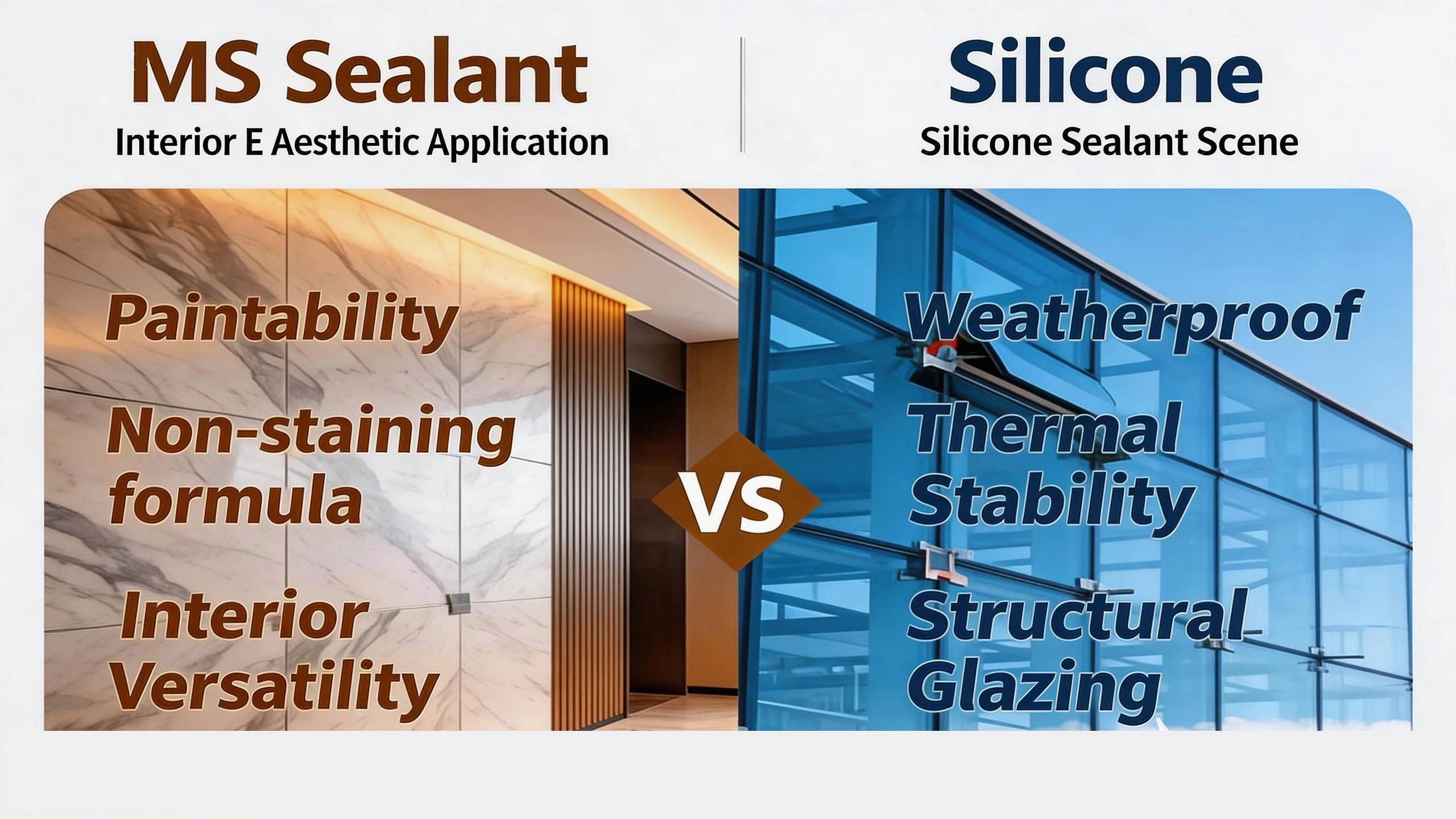
MS Sealant vs. Silicone: Which is Right for Your Construction Project?
The Ultimate Guide to Choosing a Silicone Sealant Manufacturer in 2026: 10 Critical Factors Often Overlooked
HY924
Is the product environmentally friendly?
Yes. HY924 is formulated without harmful solvents and does not corrode or pollute base materials.
HY-2300
What is the temperature resistance after curing?
After full cure, it performs reliably in -50℃ to +150℃, maintaining elasticity and adhesion.
What is HY-2300 mainly used for?
HY-2300 is designed for outdoor glazing and weatherproof sealing, especially suitable for curtain wall joints, window & door frames, ACP panel seams, and general building decoration sealing.
HY638
What are the main features of HY-638?
Key performance features include:
- Non-sag consistency for vertical and overhead applications
- Fast tack-free time
- Good adhesion to glass and many common construction materials
- Flexible, durable cured seal
- Wide service temperature range after curing
HY726
What surfaces and applications is HY-726 NOT recommended for?
While HY-726 is highly versatile, it is generally not recommended for the following:
Structural glazing applications where high-modulus, load-bearing sealants are required.
Surfaces that require paint application over the sealant, as silicone does not accept paint.
Porous natural stones such as marble or granite without proper testing, as silicone may cause staining.
Submerged or continuously immersed surfaces such as aquariums or swimming pools, unless specifically tested for such conditions.
Always conduct a compatibility test on a small, inconspicuous area before full application on any new or sensitive surface.
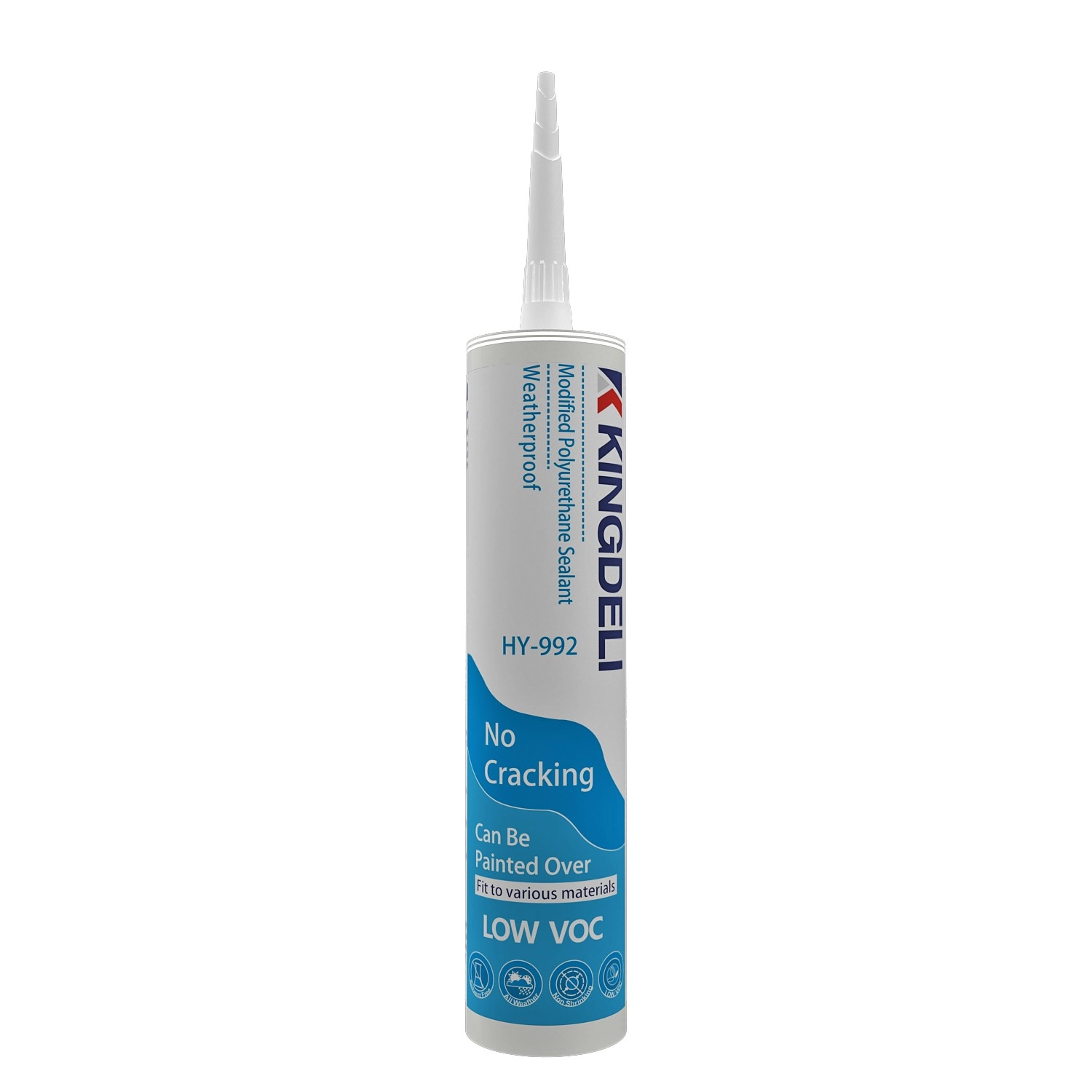
HY992 Modified Polyurethane Construction Sealant
HY992 Modified Polyurethane Sealant is a one-component, moisture-curing construction sealant designed for professional building and structural sealing applications. It provides excellent adhesion, weather resistance, and durable elasticity, making it suitable for a wide range of construction materials.
The formulation delivers strong bonding performance without corrosion or substrate contamination, while maintaining low VOC content for environmentally responsible construction projects.

HY995 Crystal Clear Ms Polymer Adhesive/Sealant
HY995 Crystal Clear Ms Polymer Adhesive/Sealant is a new generation MS Polymer adhesive / sealant formulated for all bonding and sealing applications where long term reliability is required. It has excellent bonding strength on various materials. It will cure to form a durable, flexible, waterproof seal.

HY997 High-Performance Anti-Microbial MS Polymer Sealant
HY997 MS polymer sealant for is is a premium one-component, neutral-curing modified silane sealant engineered for demanding interior applications. It offers a Class 20 movement capability, ensuring long-lasting flexibility and reliable performance under dynamic joint conditions. Curing at room temperature, HY997 delivers superior anti-microbial and mildew-resistant properties, maintaining hygienic and clean environments over time.
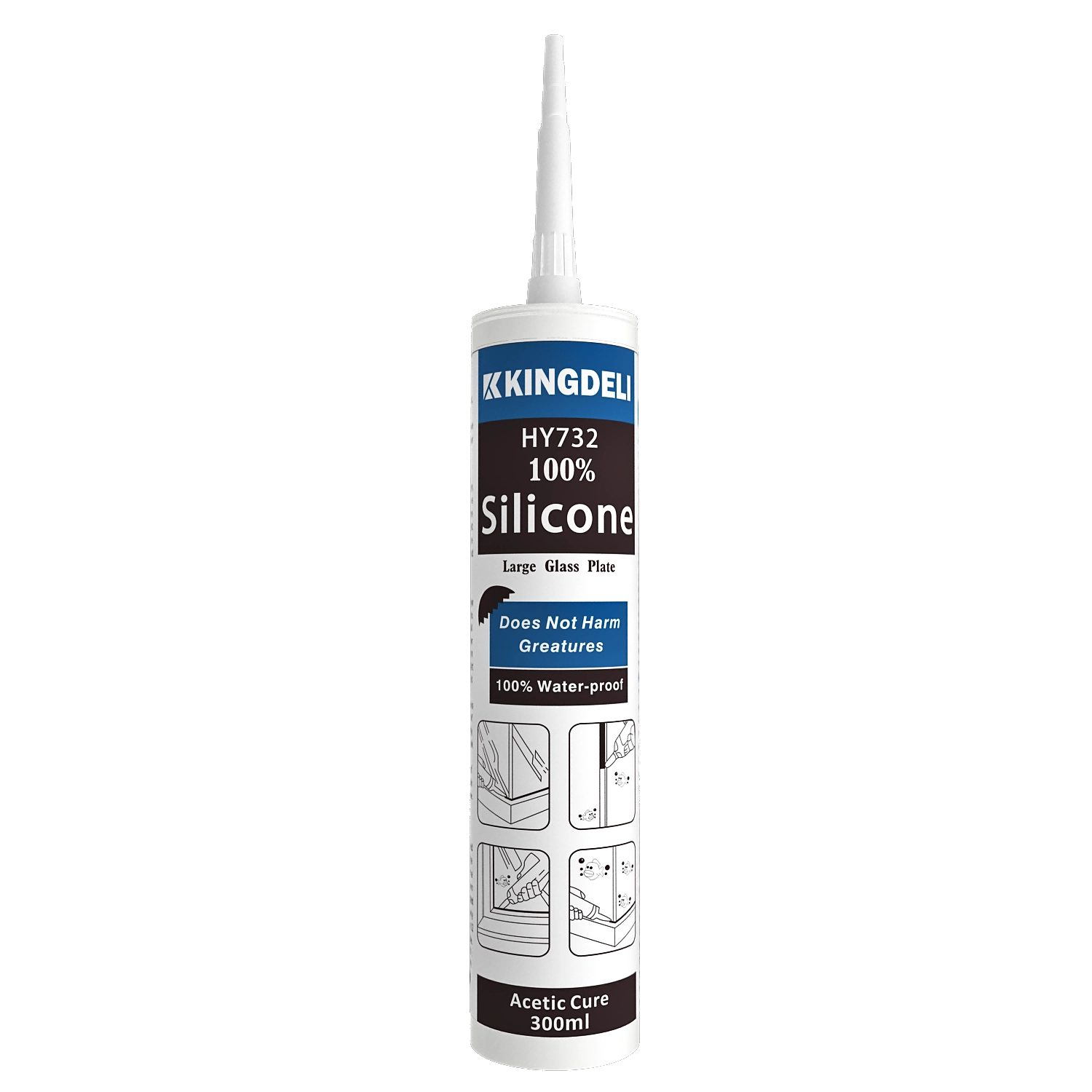
KINGDELI HY732 Professional Acetoxy Cure Silicone Sealant
KINGDELI HY732 is a professional-grade, one-component acetoxy cure silicone sealant designed for fast curing, strong adhesion, and long-lasting flexibility. Ideal for aquariums, glass applications, aluminum doors and windows, kitchens, and bathrooms, it provides reliable sealing performance with excellent anti-fungal protection in high-humidity environments.
Let’s Build Stronger Bonds with Quality Adhesives and Sealants
Have questions about the topic or need tailored sealant solutions for your project?
Our team is ready to provide expert guidance, product recommendations, and application support.
Innovating with Integrity, Bonding the World
Since 1998, KINGDELI has delivered trusted, sustainable sealant solutions that connect industries and inspire progress worldwide.
Whatsapp: +8618825946249
Kingdeli
Kingdeli
Kingdeli
Kingdeli
Kingdeli