











Can ms silicone sealant meet marine and automotive OEM standards?
Can MS Silicone Sealant Meet Marine and Automotive OEM Standards?
As manufacturers and specifiers increasingly consider hybrid or silyl-modified polymers—often searched as ms silicone sealant—they need evidence-based answers about performance vs. classic silicones and polyurethanes. Below are six specific, practitioner-focused questions that are commonly asked by procurement and engineering teams but are poorly answered online. Each question is followed by an in-depth, actionable answer that points you to the tests, data and verification steps you should require before purchasing OEM-grade adhesive sealants.
1) Can an MS silicone sealant withstand prolonged salt-spray and immersion on marine hull seams without adhesion loss or accelerated corrosion?
Pain point: Owners and yards need a sealant that won't delaminate or accelerate corrosion in a high-salinity environment.
Answer: Silyl-modified polymer (MS/hybrid) sealants are formulated as neutral-cure, chloride-free systems and are widely used in marine applications because they reduce acid-induced metal corrosion associated with acetoxy silicones. However, not all formulations are equal for continuous immersion or splash-zone use.
- What to check: Require manufacturer test reports for ASTM B117 (salt spray) and ISO equivalent tests (ISO 9227/ISO 2812) showing adhesion retention to the specific substrate (aluminum, stainless, painted steel, and GRP). Look for adhesive failure mode vs. cohesive failure: cohesive failure (internal break) is preferable to adhesive failure (debonding).
- Typical performance: Marine-grade MS polymers with anti-corrosion additives and filler packages can retain adhesion and appearance after accelerated salt-spray exposure. For critical hull seams, verify lab data demonstrates no loss of more than 20–30% in lap-shear or peel after the stated hours of salt-spray exposure.
- Field note: For long-term immersion or below-waterline repairs, many yards still specify specialist polyurethane or polysulfide systems or require a primer and an MS product explicitly rated by classification bodies (e.g., DNV/Lloyd's) because continuous immersion presents harsher chemical and mechanical stresses.
- Actionable step: Request batch-level test data showing ASTM B117 exposure on the exact coated metal, composite, or gelcoat you'll use. If OEM/marine-class approval is required, ask for that certificate.
2) Can MS silicone sealant meet automotive OEM structural bonding and crash-safety tests (lap shear, dynamic fatigue)?
Pain point: Automotive engineers want assurance the hybrid adhesive-sealant will survive dynamic loads, thermal cycling and remain compatible with paint and NVH requirements.
Answer: Hybrid MS sealants can serve as adhesive–sealant hybrids in many automotive applications—panel bonding, trim attachment, and flexible joints—when formulated for higher modulus and enhanced adhesion. But to meet OEM standards for structural or energy-absorbing joints, the product must have documented mechanical test data and approved processes.
- Key tests to require: lap-shear (ASTM D1002 or ISO 4587), tensile-elongation (ASTM D412), dynamic fatigue/endurance (custom cyclic tests or OEM-specific protocols), thermal cycling, and environmental aging (salt spray/ASTM B117, UV/ASTM G154 or ISO 4892).
- Typical material properties: OEM-grade MS polymers are tuned across a wide range—Shore A hardness from ~20 to 70, tensile strength commonly 1–5 MPa, and elongation from 150% to 600% depending on formulation. Higher-modulus grades and primer systems are used for structural bonding.
- Process controls: Automotive OEMs require supplier quality systems (ISO/TS or IATF 16949), traceable batch testing, and paint and pretreatment compatibility. Many OEMs also mandate primer use on certain substrates (galvanized steel, aluminum, plastics) or pre-treatment processes.
- Actionable step: For OEM acceptance, request the supplier’s mechanical test matrix, dynamic fatigue data, and evidence of supplier quality (IATF/ISO 9001) plus any OEM-specific approvals or validation reports.
3) Is MS silicone sealant reliably paintable and color-stable for exterior marine and automotive finishes?
Pain point: Bodyshops and boatbuilders need a sealant that accepts primer and topcoat without fish-eying, discoloration, or excessive shrinkage.
Answer: One of the key advantages of silyl-modified (MS/hybrid) formulations over common neutral-cure silicones is paintability. Most MS polymers are paintable with common automotive and marine paints after a recommended waiting period, but compatibility and long-term color stability depend on the sealant formulation and the paint system.
- Paintability checklist: Obtain manufacturer’s paint guide, including recommended primer/topcoat systems and required surface preparation (cleaning, abrasion, primer). Conduct a cross-hatch adhesion test and an accelerated weathering (ASTM G154/ISO 4892) followed by color and gloss checks.
- Discoloration and UV: MS polymers are often UV-stable, but pigmented topcoats and UV-absorbing additives should be validated. Some formulations show slight yellowing over many years—verify accelerated QUV and outdoor exposure data for your climate.
- Outgassing and curing: Because MS systems cure by moisture, early painting risks solvent trapping—follow the vendor’s recommended open time/paint window (usually several hours to days depending on temperature and thickness).
- Actionable step: Always run your paint supplier’s compatibility test on real assemblies (joint geometry, panel coating) and require the sealant maker’s paint-compatibility certificate if painting is part of the production flow.
4) Will MS silicone sealant reliably bond dissimilar substrates (composite to metal, coated surfaces, plastics) without primers or surface treatments?
Pain point: Assemblers want to avoid costly primers or plasma treatments if the sealant can self-bond to multiple substrates.
Answer: One of the selling points of MS/hybrid sealants is broad substrate adhesion: metals, anodized aluminum, painted/coated steels, glass, and many fiber-reinforced composites. That said, low surface energy plastics (PP, PE, PTFE), certain powder coats and oily or poorly prepared surfaces still require primers or specialized adhesion promoters.
- How to qualify: Ask for substrate-specific adhesion data (peel and lap-shear) and failure-mode analysis. Good data will state whether failure is cohesive within the sealant or adhesive (preferred) vs. adhesive (debonding).
- Primer guidance: For galvanic-sensitive or high-stress joints, a recommended primer often improves long-term durability. For PP/PE or treated plastics, surface activation (flame, plasma) or primer is usually necessary.
- Compatibility traps: Painted surfaces and powder coatings may have release agents or outgassing that reduce adhesion—confirm adhesion after full cure and after accelerated aging.
- Actionable step: Insist the supplier provides validated adhesion data for each substrate and recommends primers only where necessary; perform a production-level mock-up test under expected service conditions.
5) What cure rates and gap-fill performance can I expect from MS silicone sealant during cold and wet on-site marine repairs?
Pain point: Field repairs in cold/wet climates often see slow cure, tackiness, or poor adhesion—contractors need realistic cure-time windows.
Answer: MS polymers cure by moisture diffusion (neutral moisture cure). Cure speed depends strongly on ambient temperature, relative humidity, substrate temperature and sealant thickness (depth). In warm, humid conditions, surface tack can skin quickly; in cold, dry conditions cure can be slow.
- Practical guide: Skin formation (tack-free surface) in typical MS formulations often occurs within 10–60 minutes in warm/humid environments, but in cold (near 0–5°C) and low-humidity conditions skin time can extend to hours. Full cure for thicker beads (several mm) will require days; manufacturers typically state cure rates in mm per 24 hours—confirm the TDS for that grade.
- Wet surfaces and adhesion: Although neutral-cure MS sealants adhere well to slightly damp substrates, standing water or continuous flowing water will prevent proper cure. For marine on-site repairs, remove free water and use rapid-curing, marine-rated formulations or consider surface drying and primers.
- Gap-fill: MS hybrids have good gap-filling and low-sag for vertical joints; however, for deep gaps (>10–15 mm) use backer rods or layered application to ensure full cure through the joint depth.
- Actionable step: For on-site marine repairs in cold/wet weather, select an MS grade optimized for low-temperature cure, perform a small mock repair to validate tack and cure, and always follow manufacturer's guidance on substrate dryness and maximum joint depth per application layer.
6) How do I verify VOC, REACH, and OEM regulatory compliance for MS silicone sealants before procurement?
Pain point: Purchasing teams need reliable documentation to meet environmental and OEM procurement rules; web claims are often vague or outdated.
Answer: You must request traceable, document-backed declarations rather than relying on marketing labels. Key documentation includes SDS (Safety Data Sheet), Declaration of Conformity (DoC), test reports and CoAs.
- Regulatory checklist: SDS for chemical hazards; VOC data (mg/L or g/L) per ISO or local methods; REACH SVHC compliance statement if selling in EU; RoHS is rarely applicable to pure sealants but may be required for electrically conductive adhesives; and an MSDS/CoA indicating no chloride (important for corrosion-sensitive applications).
- OEM and quality certifications: Request supplier quality evidence (ISO 9001, IATF 16949 if automotive supplier), traceability (batch numbers), and OEM-specific approval letters if the sealant is to be used on certified production lines.
- Third-party lab tests: For procurement, require independent lab testing for critical parameters (VOC, salt spray, adhesion, lap-shear, thermal aging). Ensure reports specify test standards and specimen details.
- Actionable step: Include in your purchase order/qualification checklist: SDS, VOC certificate, REACH statement, batch-level test reports for required standards (e.g., ASTM B117, ASTM D1002) and evidence of supplier QA system and OEM approvals when necessary.
Final verification best practice: For both marine and automotive OEM use, treat the sealant as a qualified component: specify required tests in procurement documents, demand batch traceability and independent lab validation for the exact substrate/paint system and service conditions.
Conclusion: Advantages of MS Silicone Sealant (Silyl-Modified/Hybrid Sealants)
MS (silyl-modified or hybrid) sealants combine the best attributes of silicone, polyurethane and polymer chemistries: neutral cure (non-corrosive), broad substrate adhesion, low VOC options, paintability, good UV and weather resistance, and flexible mechanical properties tunable from soft gasketing to higher-modulus adhesive grades. For both marine and automotive applications, selecting the correct OEM-grade formulation—validated by ASTM/ISO test reports, OEM approvals and supplier quality systems—lets you exploit these advantages while meeting durability and regulatory requirements.
If you need certified test data, OEM approval support, or a quote for ms silicone sealant optimized for marine or automotive applications, contact us for a quote: www.kingdelisealant.com or email info@kingdeliadhesive.com.
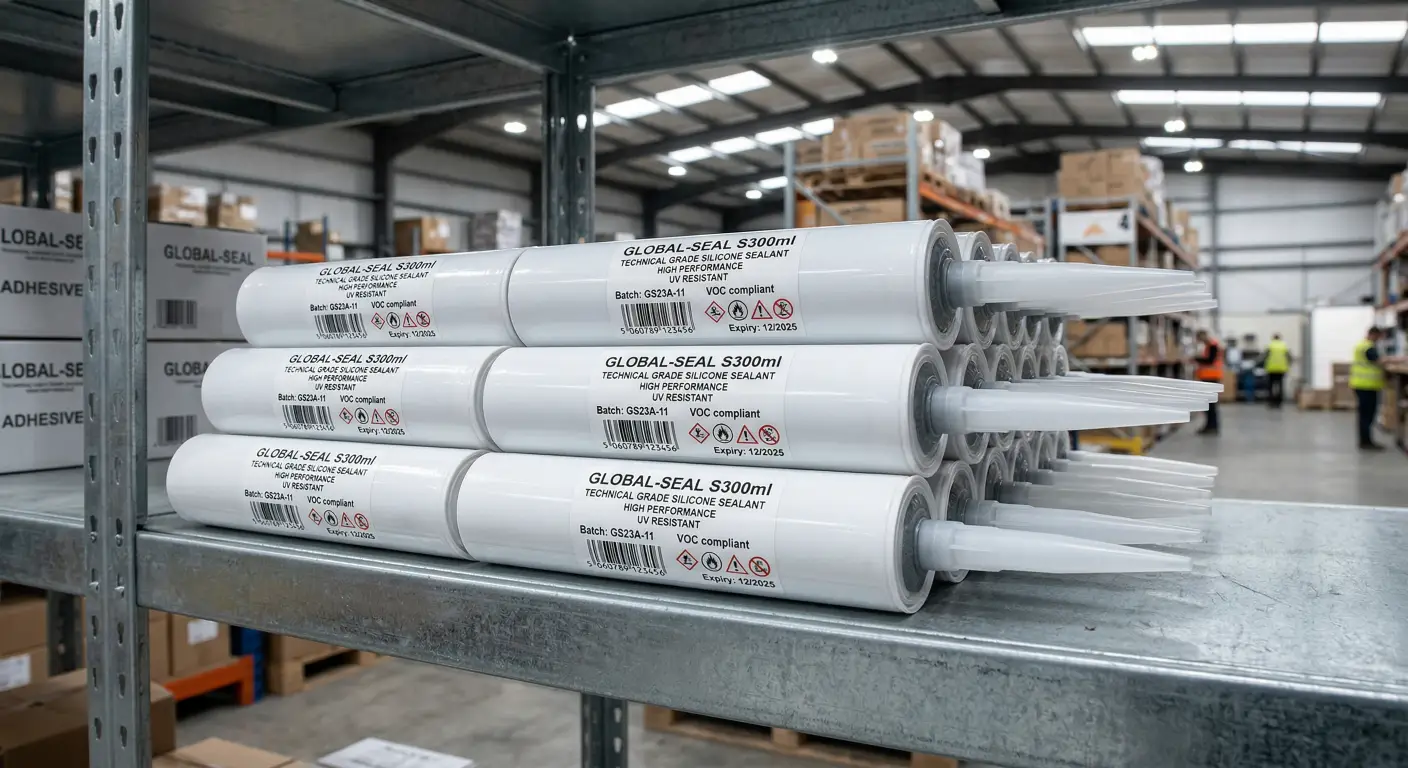
OEM vs. Branded Acetic Silicone Sealant: What’s Best for Your Distribution Business?
The Future of Sealants: 5 Emerging Trends in Wholesale Neutral Silicone Sealant Technology for 2026
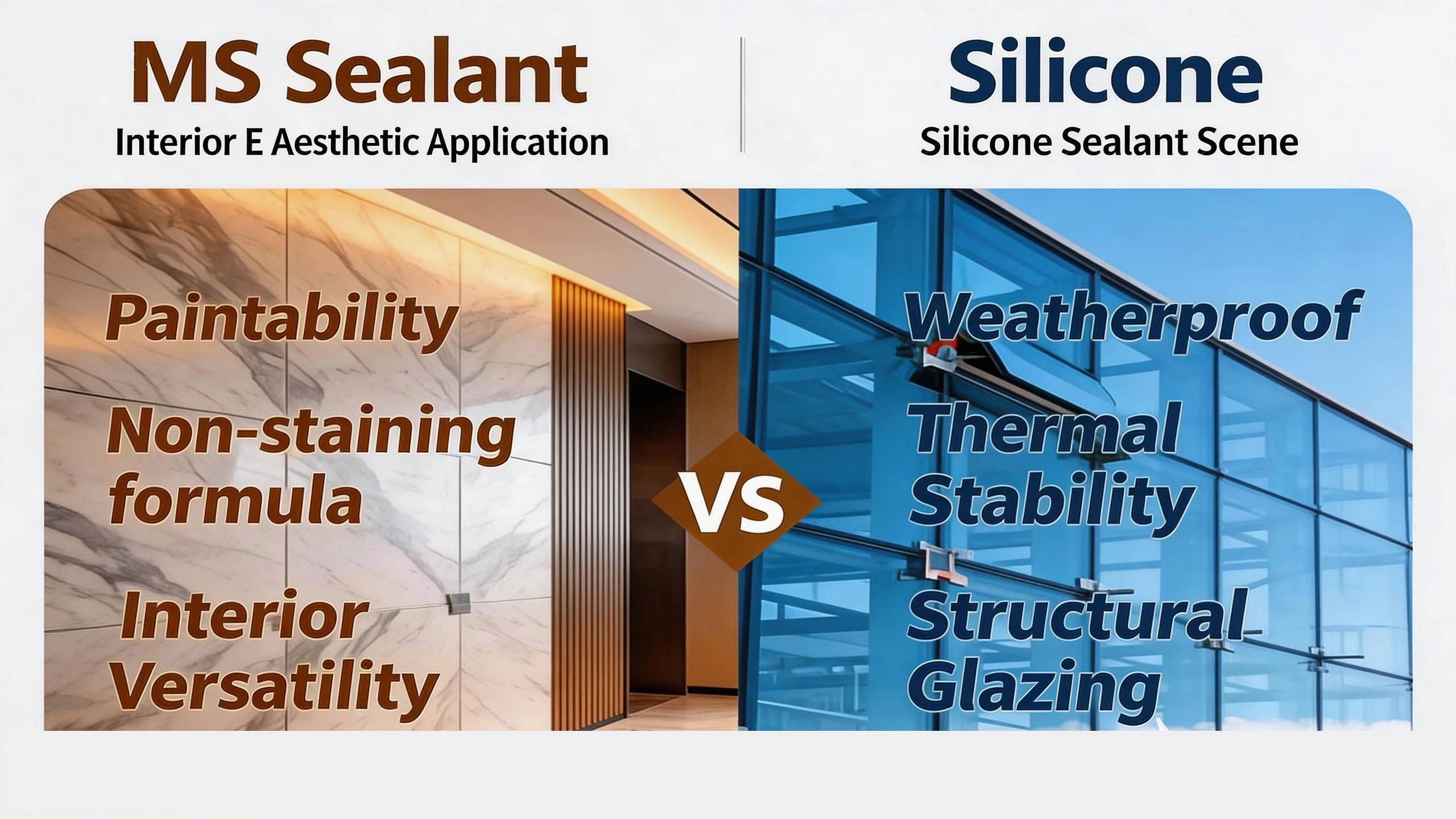
MS Sealant vs. Silicone: Which is Right for Your Construction Project?
The Ultimate Guide to Choosing a Silicone Sealant Manufacturer in 2026: 10 Critical Factors Often Overlooked
HY994
What is the shelf life of HY994?
When stored in its original, unopened packaging in a dry, ventilated location below 27°C, HY994 has a shelf life of 12months from the manufacturing date.
HY638
How does HY-638 cure?
HY-638 is a moisture-curing acetoxy silicone sealant. When exposed to humidity in the air, it reacts and cures from the surface inward. During curing, it releases a vinegar-like odor, which is characteristic of acetoxy silicone systems.
HY993
Is HY993 suitable for automotive applications?
Yes. It can be used for bonding and sealing in automotive body building and general vehicle applications.
HY997
Is the product environmentally friendly?
Yes. The sealant is solvent-free, ultra-low VOC, non-toxic, and odorless, making it safe for indoor applications and environmentally friendly.
HY-682
Is the product environmentally friendly and safe?
Yes. It is free from isocyanates, solvents, halogens, and acidic components. It is non-toxic, low-odor, and safe for both users and the environment.
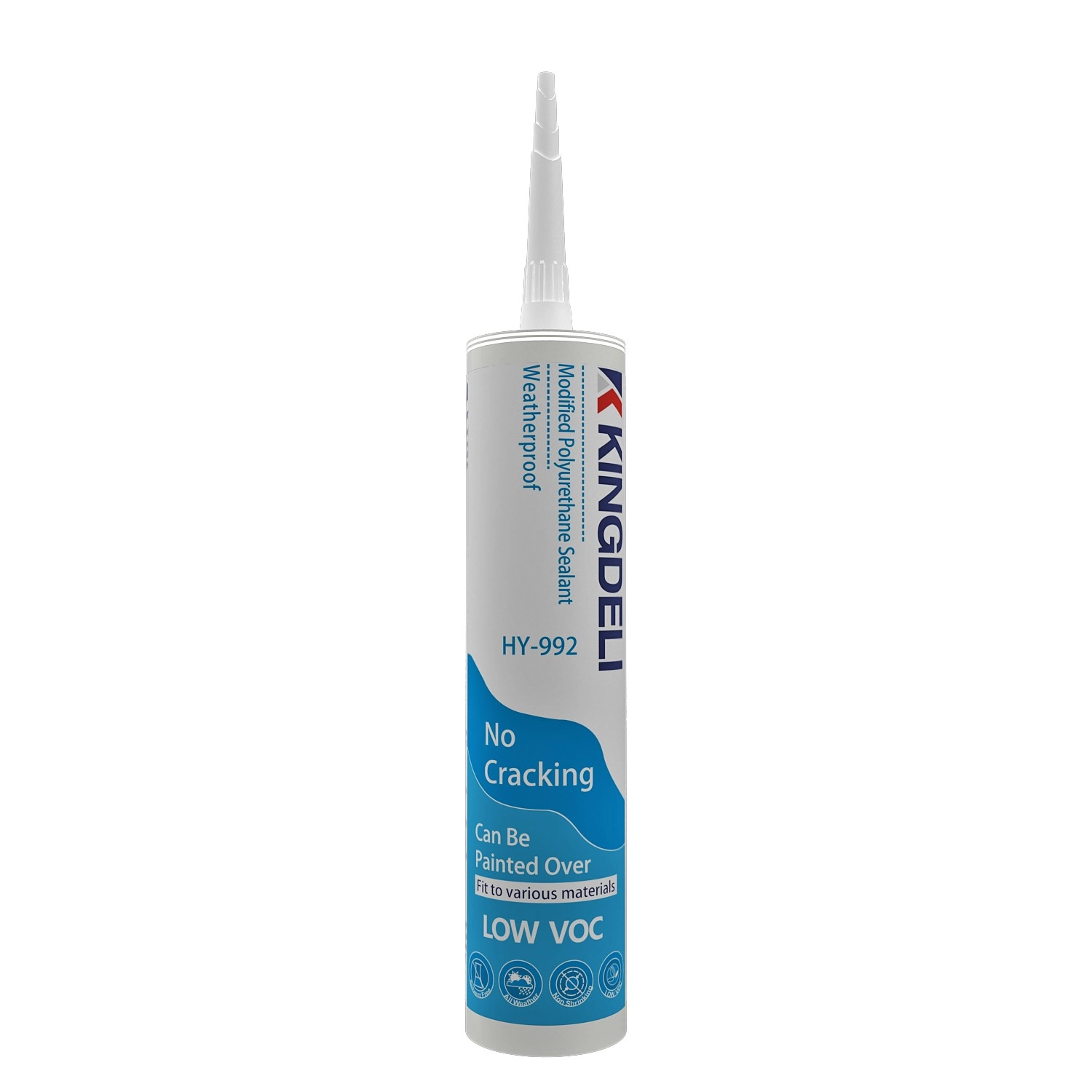
HY992 Modified Polyurethane Construction Sealant
HY992 Modified Polyurethane Sealant is a one-component, moisture-curing construction sealant designed for professional building and structural sealing applications. It provides excellent adhesion, weather resistance, and durable elasticity, making it suitable for a wide range of construction materials.
The formulation delivers strong bonding performance without corrosion or substrate contamination, while maintaining low VOC content for environmentally responsible construction projects.

HY995 Crystal Clear Ms Polymer Adhesive/Sealant
HY995 Crystal Clear Ms Polymer Adhesive/Sealant is a new generation MS Polymer adhesive / sealant formulated for all bonding and sealing applications where long term reliability is required. It has excellent bonding strength on various materials. It will cure to form a durable, flexible, waterproof seal.

HY997 High-Performance Anti-Microbial MS Polymer Sealant
HY997 MS polymer sealant for is is a premium one-component, neutral-curing modified silane sealant engineered for demanding interior applications. It offers a Class 20 movement capability, ensuring long-lasting flexibility and reliable performance under dynamic joint conditions. Curing at room temperature, HY997 delivers superior anti-microbial and mildew-resistant properties, maintaining hygienic and clean environments over time.
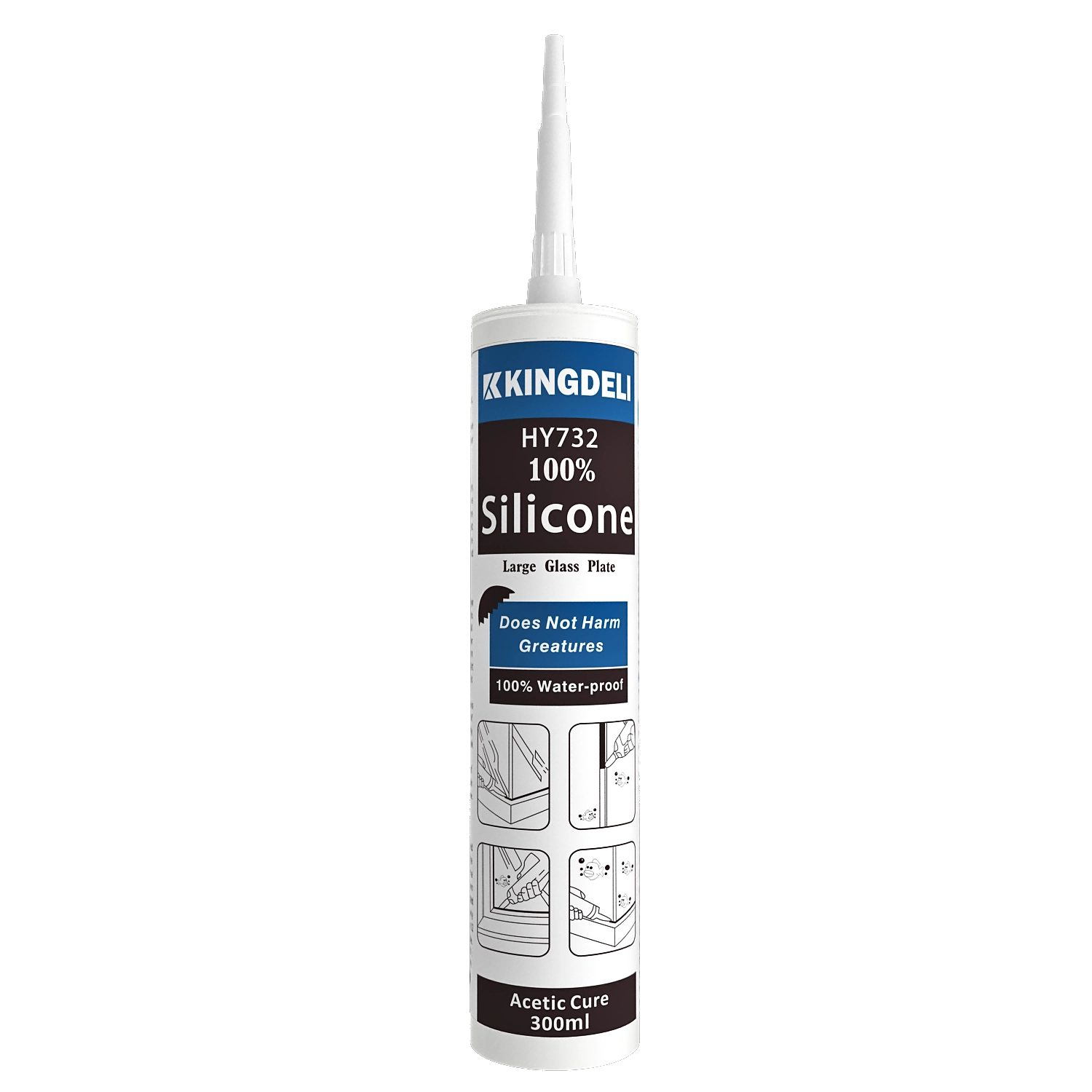
KINGDELI HY732 Professional Acetoxy Cure Silicone Sealant
KINGDELI HY732 is a professional-grade, one-component acetoxy cure silicone sealant designed for fast curing, strong adhesion, and long-lasting flexibility. Ideal for aquariums, glass applications, aluminum doors and windows, kitchens, and bathrooms, it provides reliable sealing performance with excellent anti-fungal protection in high-humidity environments.
Let’s Build Stronger Bonds with Quality Adhesives and Sealants
Have questions about the topic or need tailored sealant solutions for your project?
Our team is ready to provide expert guidance, product recommendations, and application support.
Innovating with Integrity, Bonding the World
Since 1998, KINGDELI has delivered trusted, sustainable sealant solutions that connect industries and inspire progress worldwide.
Whatsapp: +8618825946249
Kingdeli
Kingdeli
Kingdeli
Kingdeli
Kingdeli