











What are curing time factors for ms silicone sealant in factories?
1) How much does bead depth really change cure rate for MS silicone sealant on aluminium extrusion lines, and how do I plan assembly time?
Bead depth (cross-sectional thickness of the extruded sealant) is one of the single largest drivers of cure time for moisture-curing MS polymer (ms silicone sealant) systems. These sealants cure from the outside in as moisture diffuses into the material, so a thicker bead slows the depth-wise cure rate. In practical factory terms:
- Typical industry benchmarks: skin (tack-free) time is often 10–40 minutes at 23°C and 50% RH, but this refers to surface skin formation — not full cure. Depth cure is commonly reported as roughly 1.5–4 mm per 24 hours depending on formulation and conditions. Always ask your supplier for the cure rate (mm/24 h) at 23°C/50% RH for the exact grade you buy.
- Planning assembly/handling time: use the supplier’s indicated ‘handling time’ or ‘assembly time’ (sometimes separate from skin time). If unavailable, conservative planning is: do not perform mechanical loading, machining, or tight assembly on beads thicker than 3 mm until at least 48–72 hours under controlled 20–25°C and 40–60% RH conditions. For thinner beads (<2 mm) under optimal conditions you may be able to position or tape within 12–24 hours.
- Practical factory control: reduce bead cross-section where possible, or design joint geometry to allow faster moisture ingress (e.g., multiple thin beads vs one thick bead). If thick fill is unavoidable, schedule a staged process (extrude → primary assembly after surface set → final curing in a controlled cure zone).
Why this matters: assuming skin time equals strength is risky. For aluminium curtain wall or window lines, insufficient cure depth is a leading cause of bond failure and downstream rejects.
2) How do temperature and relative humidity interact to change cure curves—can I use heat or humidification to accelerate curing without damaging properties?
MS polymer sealants are moisture-curing; cure speed increases with both temperature and available moisture. However, the interaction is not linear and requires caution:
- Temperature: increasing temperature (within reasonable limits) raises molecular mobility and increases reaction rate. In practice, raising ambient temperature from 10°C to 30°C can significantly shorten tack-free times and increase mm/day cure depth. Typical factory target is 20–25°C for predictable cure; moderate heating (up to ~40–50°C) in controlled ovens can accelerate cure, but exceeding supplier-recommended limits may change final mechanical properties (modulus, elongation) or introduce stress.
- Relative humidity (RH): higher RH increases the moisture available at the sealant surface and speeds surface cure. A controlled boost to 60–70% RH often halves skin time compared with dry conditions. Beware: very rapid surface cure (very high RH + heat) can trap internal unreacted core moisture gradients and, in extreme cases, lead to internal porosity or poor through-cure in thick beads.
- Practical approach: for accelerated curing, use combined mild heat (e.g., 30–40°C) and controlled humidified air (50–70% RH) in a cure tunnel or chamber. Monitor product-specific endpoints (durometer, tack, or lap-shear tests) to confirm no adverse effects. Always get supplier guidance on recommended maximum cure temperature and humidity profiles for the specific ms silicone sealant grade.
3) My factory has oily aluminium and PVC profiles—what effect do contaminants and substrate porosity have on curing and adhesion, and how should I specify primers?
Contaminants and substrate surface energy directly affect adhesion and perceived cure. MS polymer sealants are often sold as primerless for many substrates, but “primerless” assumes proper surface preparation.
- Contaminants: oils, release agents, and machining lubricants reduce wetting and can prevent chemical bonding. They do not usually change intrinsic cure chemistry, but they block adhesion. Use solvent wipe (isopropanol or manufacturer-approved cleaner) or industrial alkaline cleaners, then a clean water rinse if required. Validate cleaning by water break test or contact angle measurement where critical.
- Substrate porosity and moisture: porous substrates (raw timber, concrete) can draw moisture away or act as moisture reservoirs. Very dry, porous substrates can slow surface cure locally, while wet porous substrates may drive accelerated local cure but also produce adhesion issues due to migrating moisture or salts.
- Primers and activators: primers are still needed for challenging substrates (e.g., powder-coated aluminium, certain plastics, glass treated with low-surface-energy coatings). Ask suppliers for recommended primer types and performance data (peel/adhesion after X hours). For factory spec: require adhesion data (initial and after ageing) on the exact substrate finish and process condition.
Buyer checklist: include specified cleaning method, acceptable surface contaminants (ppm of oil if measured), and primer use-case in purchase documents. Require supplier adhesion test certificates on your actual substrate batch.
4) Which in-line QA tests and metrics best predict when a production lot is safe to ship (vs waiting full cure)?
Relying on visual skin time is insufficient. For production QA, combine quick in-line checks with destructive or semi-destructive sampling:
- Quick in-line checks: tactile tack test (pressure with gloved finger using a defined load/time), visual inspection for bubbles/voids, and measurement of surface hardness with a Shore A durometer at fixed locations and times. Record as pass/fail against supplier-provided target values (e.g., Shore A after 24 h).
- Destructive/physical tests: peel adhesion, lap-shear tests, and elongation/adhesion tests on a sample batch cured under the same production conditions. Standardize test geometry and require batch-wise sampling frequency (e.g., every shift for new lots, otherwise per 1,000 units).
- Process control charts: record skin time, ambient T and RH, and durometer values in a SPC chart. Trending deviations often predicts issues before final failure.
- Acceptance criteria to specify in procurement: tack-free time, mm/day cure rate at 23°C/50%RH, Shore A hardness after 7 and 28 days, adhesion after 7 days, and accelerated ageing adhesion (e.g., 7 days at elevated temp/humidity) if required.
This mix balances speed and reliable prediction of final performance.
5) Can I safely accelerate MS sealant cure using ozone, UV, or chemical accelerators on my production line?
MS polymer (silyl-modified polymer) sealants are moisture-activated polymers and do not cure via free-radical UV chemistry. Therefore:
- UV: UV lamps do not accelerate the base moisture cure. They may warm the surface (indirect heating), which can accelerate cure, but UV will not replace moisture.
- Ozone/oxidizers: these are not standard accelerators for MS systems and can degrade organic components or pigments, affecting adhesion and color. Avoid unless the supplier specifically recommends an oxidizing treatment.
- Chemical accelerators/primers: certain activator sprays or primers (supplied by sealant manufacturers) can promote faster adhesion and cure on difficult substrates. These are the preferred method when verified by the sealant maker. They are typically single-component primers applied to the substrate surface, not mixed into the sealant.
Recommendation: use heat and humidity control or manufacturer-approved primers/activators. Always validate accelerated processes with mechanical tests and ageing simulations.
6) For procurement: what exact cure-related data and on-site trials should I require from a ms silicone sealant supplier to avoid surprises?
When buying for factory use, specify measurable cure performance data and require on-site validation:
- Required datasheet items: skin (tack-free) time at 23°C/50%RH; mm/24h depth cure at 23°C/50%RH; Shore A hardness at 7 and 28 days; tensile strength and elongation at break after 28 days; recommended maximum service temperature and continuous temperature limits; VOC and odour metrics if relevant.
- Substrate-specific test reports: provide the supplier with the exact profile finishes/paints/primers used, and require adhesion test reports (peel/lap) on those exact substrates, including conditioned and aged tests (thermal cycling, humidity soak per agreed protocols).
- On-site trial: require a production trial batch with the proposed material run under real production parameters (extrusion head, bead geometry, line speed, ambient T/RH). The trial should include in-line QA (durometer, tack test) and destructive tests at pre-agreed timepoints (24 h, 7 days, 28 days). Define acceptance criteria ahead of the trial.
- Shelf life and storage: require documented shelf life at specified storage temperature, plus recommended FIFO procedures and handling notes for opened cartridges or bulk packs.
This documentation reduces the risk of late-stage failures and warranty disputes.
Concluding summary — advantages of MS silicone sealant for factories
MS silicone (silyl-modified polymer) sealants combine neutral moisture-curing chemistry, low-VOC/solvent-free formulations, primerless adhesion on many substrates, paintability and low shrinkage. For production environments they offer flexibility (wide temperature range), good UV and weather resistance, and easier regulatory compliance compared with solvent-based or isocyanate systems. When you control bead geometry, ambient temperature and humidity, and follow supplier-recommended primers and QA, MS polymers deliver reliable assembly times and long-term performance.
Contact us for a tailored quote and on-site trial planning: www.kingdelisealant.com or info@kingdeliadhesive.com.
The Future of Sealants: 5 Emerging Trends in Wholesale Neutral Silicone Sealant Technology for 2026
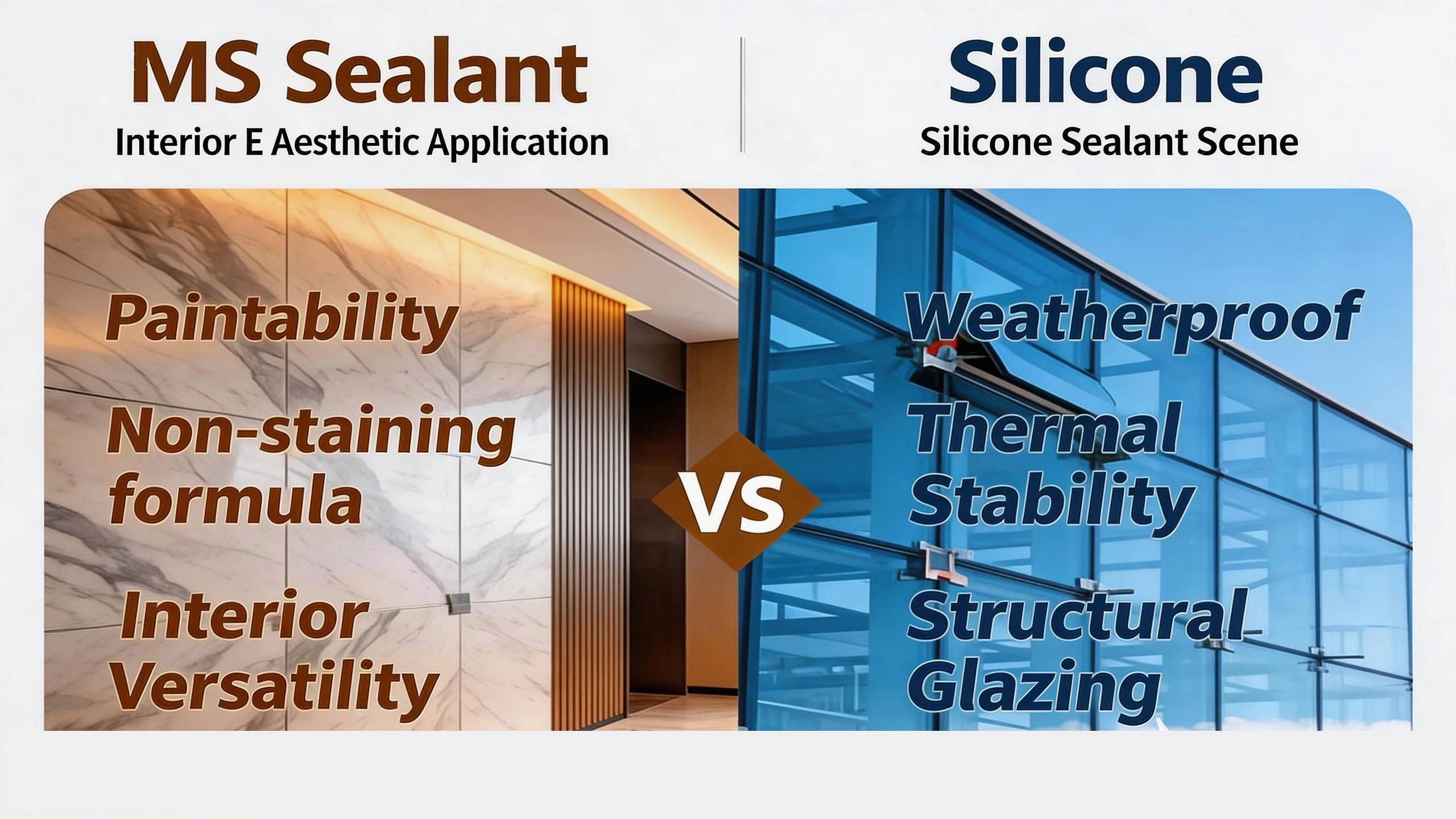
MS Sealant vs. Silicone: Which is Right for Your Construction Project?
The Ultimate Guide to Choosing a Silicone Sealant Manufacturer in 2026: 10 Critical Factors Often Overlooked
Industrial Applications of Acetic Silicone Sealant: Beyond Basic Glass Sealing
HY722B
What is the service temperature range after curing?
Once cured, HY-722B maintains stable performance between -50°C and +100°C.
HY-3300
Is HY-3300 environmentally friendly?
Yes. HY-3300 is a low VOC, solvent-free, and non-toxic sealant that meets international environmental standards.
HY-939
Can parts sealed with HY939 be disassembled later?
Yes. The cured sealant allows for relatively easy disassembly during maintenance without damaging mating surfaces.
Does the sealant shrink after curing?
No. HY939 does not shrink after curing and maintains long-term elasticity.
HY992
Does HY992 require a primer?
In most standard construction substrates such as concrete, cement, metal, and tile, primer is usually not required. However, for porous or difficult surfaces, using a primer may improve adhesion.
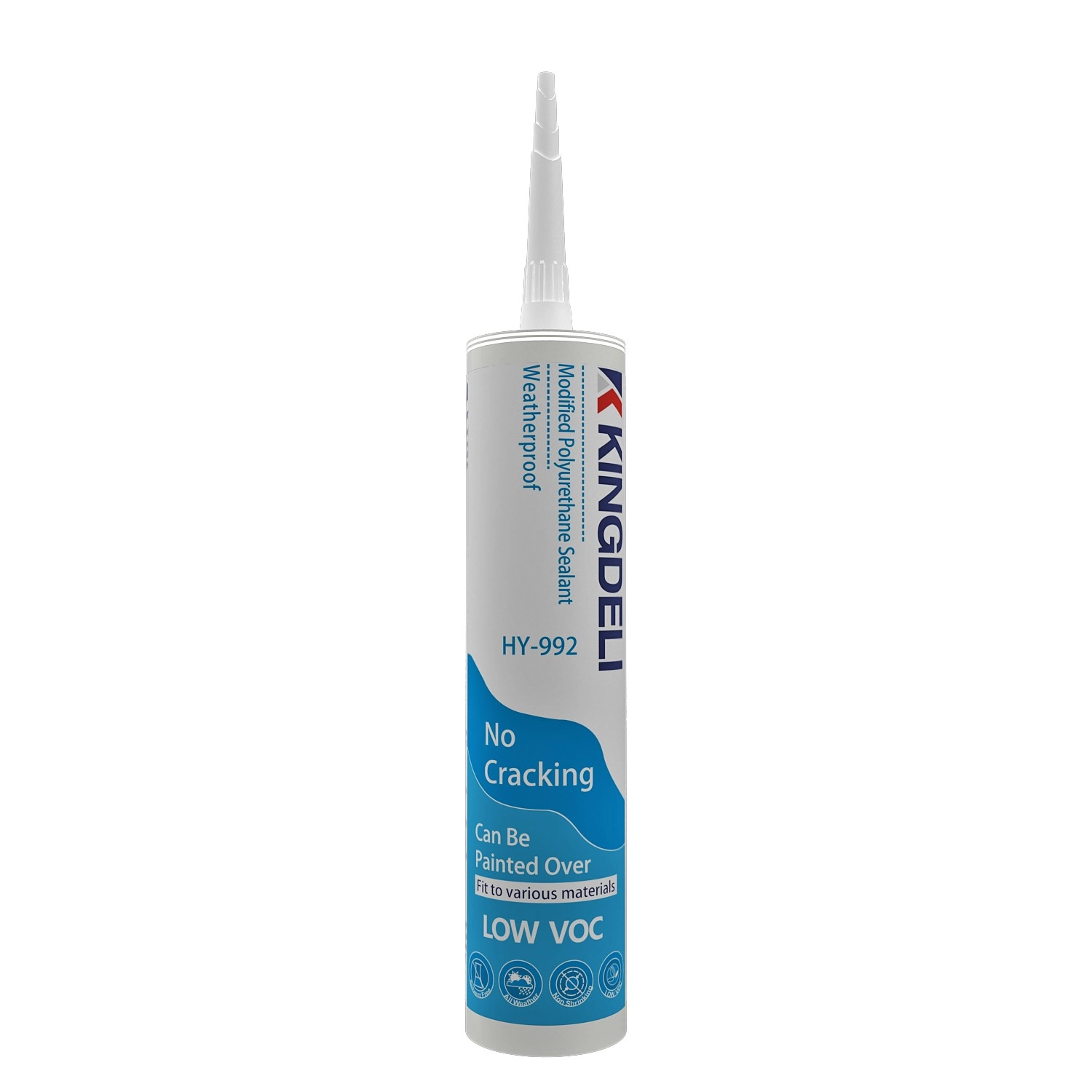
HY992 Modified Polyurethane Construction Sealant
HY992 Modified Polyurethane Sealant is a one-component, moisture-curing construction sealant designed for professional building and structural sealing applications. It provides excellent adhesion, weather resistance, and durable elasticity, making it suitable for a wide range of construction materials.
The formulation delivers strong bonding performance without corrosion or substrate contamination, while maintaining low VOC content for environmentally responsible construction projects.

HY995 Crystal Clear Ms Polymer Adhesive/Sealant
HY995 Crystal Clear Ms Polymer Adhesive/Sealant is a new generation MS Polymer adhesive / sealant formulated for all bonding and sealing applications where long term reliability is required. It has excellent bonding strength on various materials. It will cure to form a durable, flexible, waterproof seal.

HY997 High-Performance Anti-Microbial MS Polymer Sealant
HY997 MS polymer sealant for is is a premium one-component, neutral-curing modified silane sealant engineered for demanding interior applications. It offers a Class 20 movement capability, ensuring long-lasting flexibility and reliable performance under dynamic joint conditions. Curing at room temperature, HY997 delivers superior anti-microbial and mildew-resistant properties, maintaining hygienic and clean environments over time.
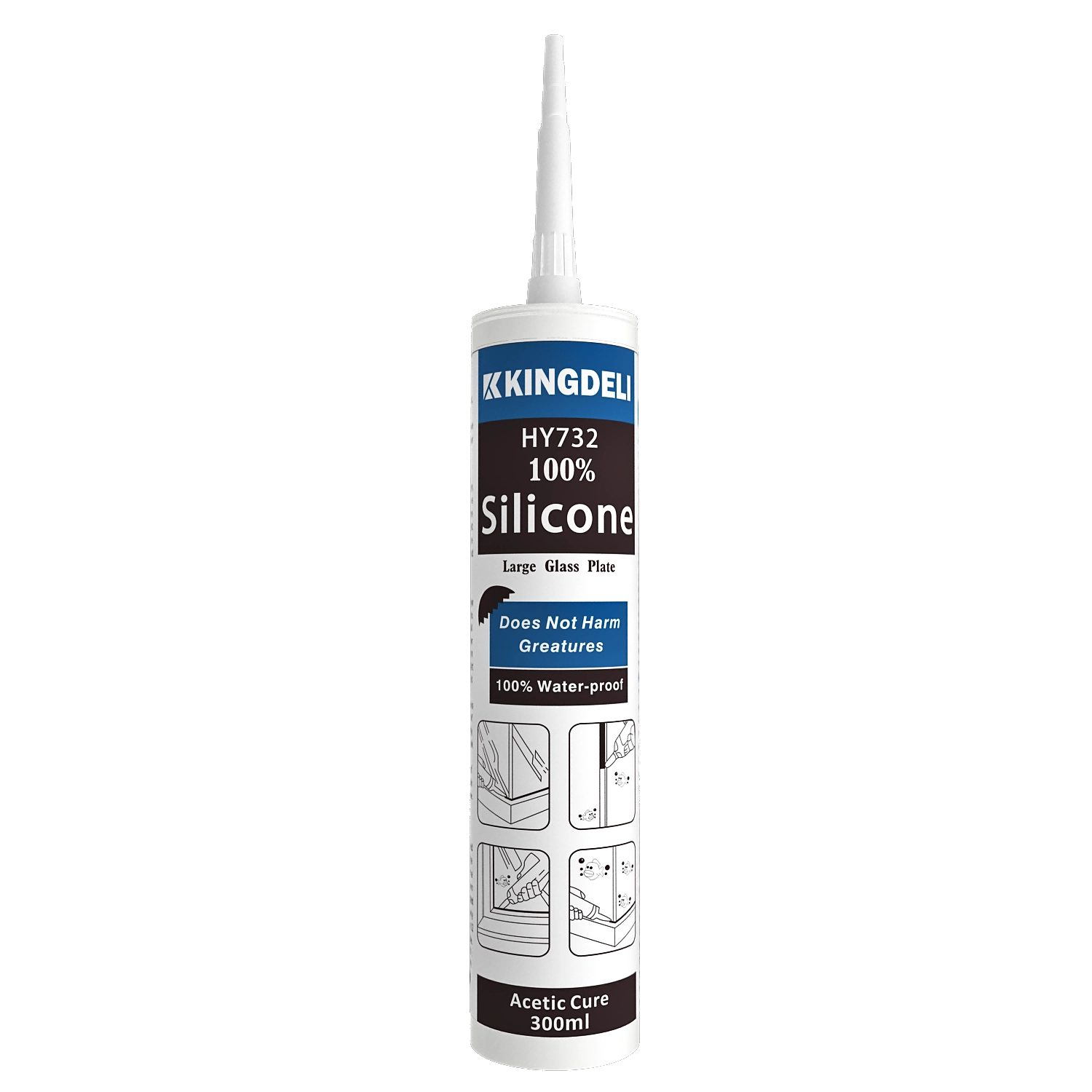
KINGDELI HY732 Professional Acetoxy Cure Silicone Sealant
KINGDELI HY732 is a professional-grade, one-component acetoxy cure silicone sealant designed for fast curing, strong adhesion, and long-lasting flexibility. Ideal for aquariums, glass applications, aluminum doors and windows, kitchens, and bathrooms, it provides reliable sealing performance with excellent anti-fungal protection in high-humidity environments.
Let’s Build Stronger Bonds with Quality Adhesives and Sealants
Have questions about the topic or need tailored sealant solutions for your project?
Our team is ready to provide expert guidance, product recommendations, and application support.
Innovating with Integrity, Bonding the World
Since 1998, KINGDELI has delivered trusted, sustainable sealant solutions that connect industries and inspire progress worldwide.
Whatsapp: +8618825946249
Kingdeli
Kingdeli
Kingdeli
Kingdeli
Kingdeli