











How to evaluate neutral cure silicone sealant technical datasheets?
How to Evaluate Neutral Cure Silicone Sealant Technical Datasheets: 6 Deep Questions Answered
Buying the right neutral cure silicone sealant demands more than skimming marketing copy. Below are six specific, technical long‑tail questions beginners routinely ask — with detailed, practical answers that show which datasheet numbers to trust, which tests to request, and how to translate lab values into on-site performance for glazing, metal, and polymer joints. Semantic topics covered: neutral cure silicone, oxime/alkoxy cure chemistry, non-corrosive silicone sealant, primerless adhesion, movement capability, skin-over time, cure rate, Shore A hardness, tensile strength, lap shear, and VOC/halide limits.
1) How do I interpret the 'cure profile' on a neutral cure silicone sealant technical datasheet for a deep joint (≥10 mm) in cold, low‑humidity conditions?
What to look for on the datasheet: skin‑over time, tack‑free time, cure rate (mm/24h), recommended substrate temperature and relative humidity, and full‑cure estimate (often given for 3–10 mm depth).
Key points and practical checklists:- Cure mechanism: neutral cure silicones cure by moisture‑condensation; oxime or alkoxy by‑products are released (not acetic acid). Cure is surface‑initiated and proceeds inward; therefore cure rate is highly dependent on relative humidity and temperature.- Typical cure rates stated: 1–4 mm/24h at 23°C/50%RH (many datasheets list ~2–3 mm/24h). Use the manufacturer’s stated mm/24h as the baseline, and adjust for site conditions.- Low temperature/low humidity: every 10°C drop or significant RH drop will slow cure non‑linearly. For example, at 5–10°C and 30% RH, cure rate can be <1 mm/24h. If the datasheet provides only a 23°C/50%RH value, assume ~30–70% slower cure under colder/drier jobs.- Deep joints: because cure is from the surface inward, a 10 mm bead can take several days to weeks to reach full cure. If a datasheet lists 2 mm/24h, expect ~5 days to reach 10 mm, plus extra time for crosslink density to reach design tensile properties.
Practical actions:- Specify the datasheet cure rate and require manufacturer guidance for your minimum site temperature/RH. Ask for measured cure rate data at project conditions or for accelerated curing recommendations (e.g., temporary heaters or increased RH).- If rapid handling is required, choose a product with faster mm/24h or use thinner bead designs, or plan for protective covers until full cure.- For glazing or structural sealant use, never assume full mechanical properties until full cure is reached; request manufacturer’s time to achieve specified tensile strength at the intended joint depth and environment.
2) Which datasheet adhesion values reliably predict primerless adhesion to EPDM, PVC, anodized aluminum, and glass?
Datasheets often claim 'primerless adhesion' without consistent numbers. Reliable indicators you should demand are specific adhesion test results (peel or lap) on the actual substrate finish, not just marketing claims.
What to request and how to read it:- Adhesion test type: ask for ASTM C794 adhesion‑in‑peel or ASTM D1876 peel data on the specific substrate. For lap shear on metals, ASTM D1002 or equivalent is useful.- Reported values: look for initial adhesion (N/cm or N/mm) and adhesion after conditioning (heat, cold, water immersion, humidity cycles). Primerless adhesion that survives 21 days water immersion, 7 cycles thermal shock, or 28 days salt fog is credible.- Substrate surface energy: if the datasheet states the silicone bonds without primer to substrates with surface energy ≥30–38 mN/m, that helps. Low surface energy plastics (PE, PP, some fluorinated plastics) typically have <30–32 mN/m and usually require primer or surface treatment.
Practical steps:- Require manufacturer-supplied adhesion test reports on your exact material (EPDM formulation, PVC grade, specific anodized finish). Generic 'glass' or 'aluminium' tests are not enough because coatings, anodizing thickness and inhibitors vary.- If the datasheet lacks conditioned adhesion data, schedule an on-site mock-up and peel test (ASTM C794) before final selection.- When primer is recommended, identify the precise primer part number and application window; primerless claims with caveats (e.g., 'cleaned, abrasion‑treated anodized aluminium only') must be followed exactly.
3) How do I convert a datasheet '±25% movement capability' into a real joint width and verify it's sufficient for thermal cycling on a building façade?
'±25%' is often quoted, but you must translate that into absolute joint movement expected in service and compare it to the sealant's elastic and fatigue properties.
Steps and calculations:- Determine expected substrate relative movement: calculate linear thermal expansion for the substrate pair using ΔL = α × L × ΔT (α = linear coefficient of thermal expansion). Example: aluminium α ≈ 23×10‑6/°C, glass ≈ 9×10‑6/°C. For a 1 m aluminium panel with ΔT = 60°C: ΔL ≈ 23×10‑6 × 1 × 60 = 1.38 mm.- Convert to percent movement relative to joint width: Movement % = (relative movement / joint width) × 100. With 1.38 mm relative movement and 10 mm joint width, Movement ≈ 13.8% (within ±25%).- Consider cumulative and differential movement across multiple panels, wind loads, and cyclic fatigue. The datasheet’s movement capability usually references static ± movement per ASTM C920 or EN classification; it does not guarantee infinite cycle life at that amplitude.
What to verify on the datasheet:- Whether the ± percentage is static or dynamic (fatigue tested). Good manufacturers indicate cyclic test protocols (e.g., 25% extension for 2,000 cycles at room temperature).- Modulus at 100% or 25% elongation (secant modulus) and elongation at break. Sealants with higher elongation (>300–600%) and lower modulus handle movement better even if tensile strength is moderate.
Practical recommendations:- Use the thermal expansion formula to size joint width so that expected movement stays comfortably below the product’s dynamic movement capability.- For critical façades, require cyclic movement test data from the manufacturer or third‑party labs (e.g., 2,000–10,000 cycles) and conduct on-site mock-ups replicating thermal swings.
4) How can I evaluate corrosion risk to metal substrates from a neutral cure silicone datasheet — what specific extractables/ion limits should I check?
Neutral cure silicones are marketed as 'non‑corrosive', but corrosion risk depends on volatile by‑products and ionic contaminants (chlorides, fluorides, acidic species). Datasheets rarely list everything; you should ask for measurable data.
Key parameters to request and interpret:- Halide/ionic content: ask for measured chloride and bromide content (ppm) from ion chromatography of an extract. Low corrosivity silicones typically report very low halide levels; many projects specify <10–50 ppm chloride for sensitive metal finishes.- pH and conductivity of aqueous extract: neutral cure silicones should produce near‑neutral pH extracts (≈6–8) and low conductivity; ask for the test method and values.- Volatile by‑products: oxime or alkoxy by‑products (e.g., methyl ethyl ketoxime historically) can be a concern. Request VOC/volatile compound data and whether the formulation is MEKO‑free. If MEKO or other known harmful volatiles are used, document mitigation or choose MEKO‑free.- Corrosion testing: for critical metal surfaces (copper, brass, decorative stainless), request a corrosion test report (e.g., storage at elevated temperature with the sealant in direct contact, silver mirror test for silvered glass, or ASTM B117 salt spray on assemblies).
Practical steps:- For architectural metalwork and mirrored or silvered glass, require a manufacturer declaration of non‑corrosive performance plus ionic extract test results. Insist on written numeric limits for chloride/bromide.- If the datasheet doesn’t provide these numbers, obtain a third‑party extract analysis or choose a supplier who publishes low‑halide specifications and MEKO‑free formulations.- For critical projects, include a specification clause requiring manufacturer certification of Datasheets provide multiple mechanical properties; understanding which matter for your joint reduces selection errors. Which metrics matter for which failure modes:- Elastic modulus and tensile strength (ASTM D412): tensile strength (MPa) indicates load capacity, while secant modulus at 100% extension indicates stiffness under working movement. Lower modulus sealants move more easily and transfer less stress to bond lines.- Elongation at break (%): indicates how much extension before rupture. For joints expecting large intermittent movement, choose products with higher elongation (commonly 200–700% for silicones).- Shore A hardness (ASTM D2240): correlates with surface stiffness; 20–40 Shore A is common for general sealing, 40–70 for structural silicones. Use lower Shore A for joints requiring softness and accommodation of shear.- Tear strength (ASTM D624): important for joints exposed to cutting, abrasion, or where tooling may nick the sealant; higher tear strength reduces chance of crack propagation. How to compare across brands:- Normalize test conditions (temperature, specimen type). Ensure all figures are measured to the same standards (e.g., ASTM D412 for tensile, ASTM D2240 for Shore A).- Look at both initial and aged properties (after UV, heat, humidity). Some sealants retain tensile and elongation much better after 1,000 hours UV exposure.- Don’t pick solely on tensile strength; choose the combination that meets joint movement, weathering, and expected mechanical abuse. Practical selection rule of thumb:- Dynamic movement joints: choose high elongation (>250–400%), low modulus at 100%.- Load‑bearing or structural silicone joints: require higher tensile and appropriate modulus; consult manufacturer’s structural glazing data and qualification (e.g., EN 15434 or project structural engineer).- For very wide joints, check tear strength and sag resistance values on the datasheet to ensure the product maintains profile after tooling. Standards are the most objective evidence of performance. Ask for the exact parts and class numbers, not just standard names. Primary standards to request and verify:- ASTM C920: elastomeric sealants — confirms Type (S, NS) and Class (25, 50 etc.) and movement capability; useful for North American projects.- ISO 11600: classification of sealants for facade and interior joints (e.g., F/G 20 LM) — gives movement class and usage type.- EN 15651 (parts 1–4): performance requirements and classification for sealants used in façade elements, glazing, sanitary applications, etc. For façade application, EN 15651‑1 or EN 15651‑4 are relevant (look for the correct subpart and performance grade).- For structural glazing adhesives, check EN 15434 or ETAG guidance and verify if the product is approved for structural use with the necessary tests.- Fire performance: where required, check for EN 13501 classification or local fire testing of joints. Environmental and regulatory data:- VOC content (g/L) and compliance with local VOC regulations (e.g., EU VOC limits, local building codes).- Declaration of hazardous substances — MEKO‑free statements and compliance with REACH or other local chemical regulations if applicable. Practical checklist:- Require copies of conformity certificates and test reports, listing standard part numbers, test dates and labs.- For critical façade systems, insist on third‑party lab test reports for the specific system configuration, not just generic product certifications.- Include performance retention after accelerated aging (UV, heat‑cold cycles, water immersion) on the datasheet or in supplied test reports. Neutral cure silicone sealants offer low‑odor, non‑acidic curing chemistry (oxime/alkoxy variants), good UV resistance, wide service temperature ranges (typically −50°C to +150°C), and generally low corrosivity compared with acetoxy silicones. They are often primerless on many construction substrates and excel in weather sealing, glazing, and many metal/plastic interfaces when properly specified. Final checklist before purchasing:- Verify cure rate (mm/24h) at your site temperature/RH and plan for full cure before stressing joints.- Request conditioned adhesion data (ASTM C794, D1002) on your exact substrates and confirm primer requirements.- Ask for halide/ionic extract data and MEKO status to assess corrosion and VOC risk.- Confirm movement capability and request cyclic fatigue data if the joint is critical.- Compare tensile/elongation, modulus at 100%, Shore A and tear strength with the joint design requirements.- Require copies of applicable standards/certificates (ASTM C920, ISO 11600, EN 15651) and aging test reports. If you would like an evaluation of a specific product datasheet or a site‑specific recommendation, contact us for a quote. Visit www.kingdelisealant.com or email info@kingdeliadhesive.com.5) How do I compare mechanical metrics (tensile strength, elongation, Shore A hardness, tear strength) across datasheets to match a joint design?
6) What specific standards and environmental certifications on a neutral cure silicone datasheet should I require for exterior façade and glazing applications?
Concluding summary: Advantages of neutral cure silicone sealant and final selection checklist
The 2026 Ultimate Guide to Glass Silicone Sealant: Everything You Need for a Perfect Finish
OEM vs. Branded Acetic Silicone Sealant: What’s Best for Your Distribution Business?
The Future of Sealants: 5 Emerging Trends in Wholesale Neutral Silicone Sealant Technology for 2026
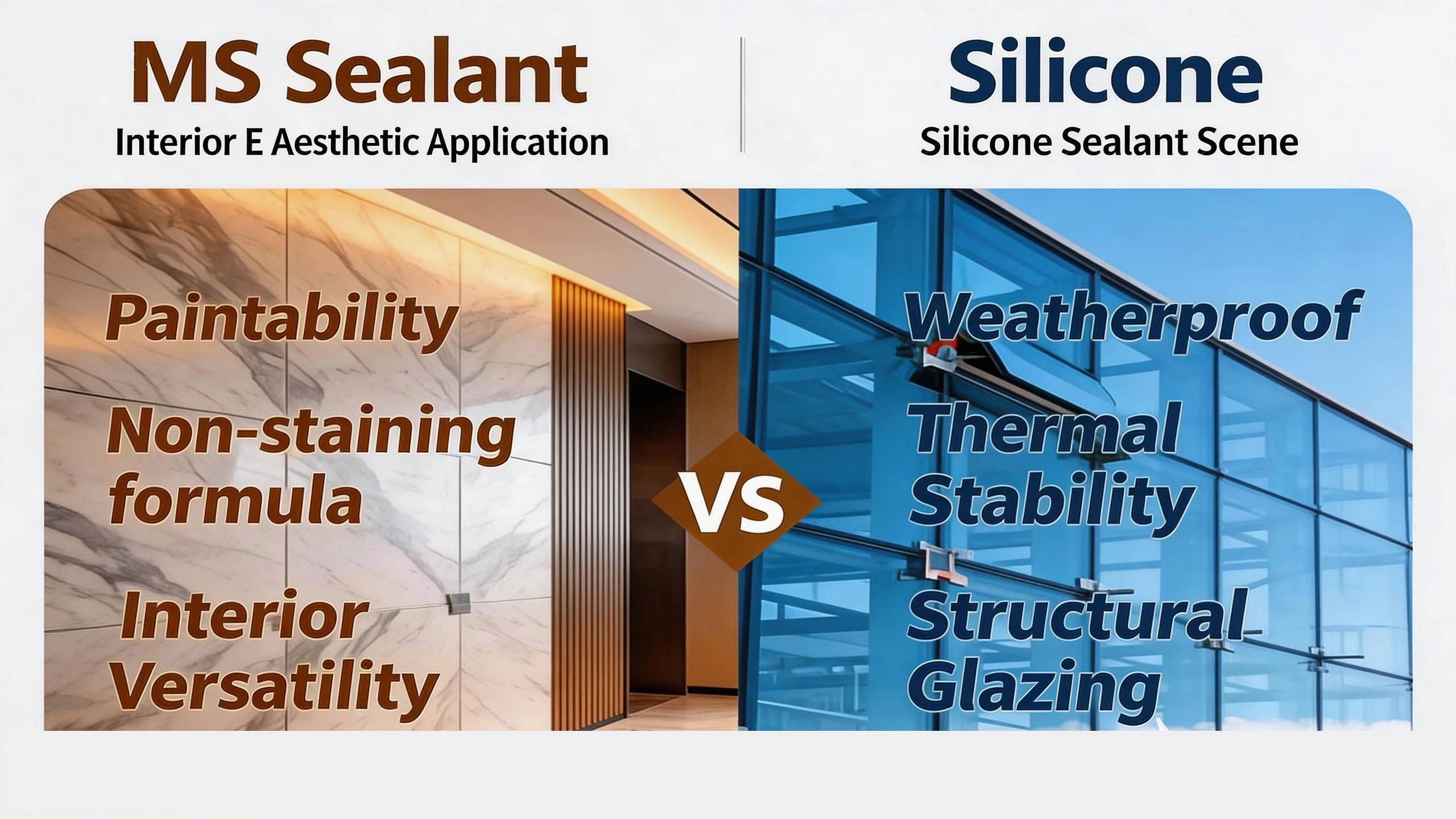
MS Sealant vs. Silicone: Which is Right for Your Construction Project?
HY982
What materials can HY982 bond?
HY982 provides excellent adhesion to a wide range of substrates, including wood, stainless steel, aluminum, stone, sintered slab, glass, ceramics, PVC, and most common building panels.
HY-3300
Do you offer technical support or application guidance?
Yes. Our technical team provides professional guidance on product selection, application methods, and troubleshooting to ensure optimal performance.
HY925
What are the primary applications of HY925?
HY925 is recommended for:
✓Low-movement joints requiring strong resistance to penetration and pressure
✓Waterproofing in bridges, tunnels, and drainage systems
✓Sealing and bonding precast panels, concrete walls, and stone
✓Sealing and laying roof tiles
HY995
Do you provide OEM or private label service?
Yes. We provide OEM & private label services, including:
-
Custom brand label design
-
Cartridge printing
-
Custom packaging
-
Distributor branding
HY-951
What surface finish does HY951 provide after curing?
After curing, HY951 forms a smooth, glossy surface similar to ceramic, enhancing both cleanliness and decorative appearance.
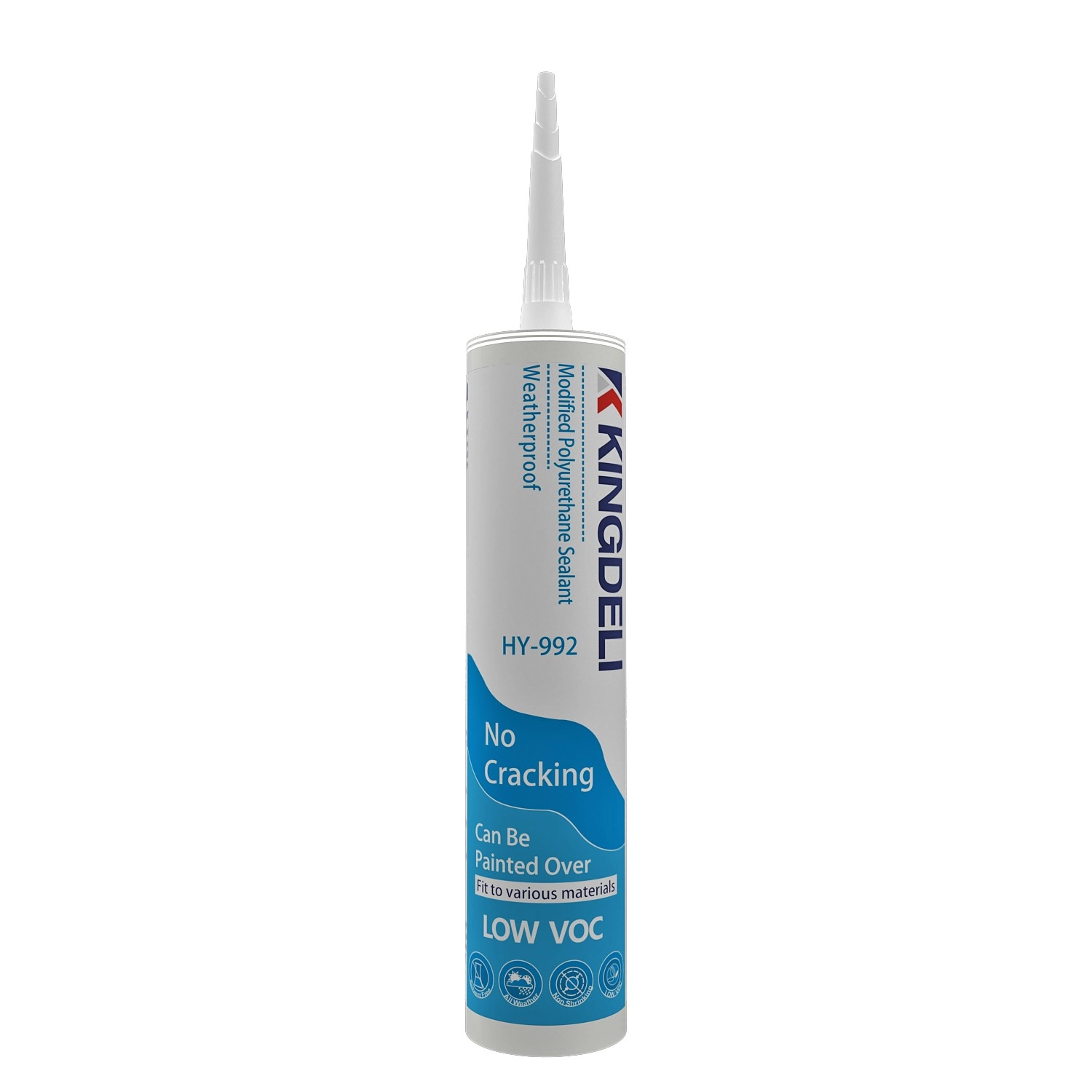
HY992 Modified Polyurethane Construction Sealant
HY992 Modified Polyurethane Sealant is a one-component, moisture-curing construction sealant designed for professional building and structural sealing applications. It provides excellent adhesion, weather resistance, and durable elasticity, making it suitable for a wide range of construction materials.
The formulation delivers strong bonding performance without corrosion or substrate contamination, while maintaining low VOC content for environmentally responsible construction projects.

HY995 Crystal Clear Ms Polymer Adhesive/Sealant
HY995 Crystal Clear Ms Polymer Adhesive/Sealant is a new generation MS Polymer adhesive / sealant formulated for all bonding and sealing applications where long term reliability is required. It has excellent bonding strength on various materials. It will cure to form a durable, flexible, waterproof seal.

HY997 High-Performance Anti-Microbial MS Polymer Sealant
HY997 MS polymer sealant for is is a premium one-component, neutral-curing modified silane sealant engineered for demanding interior applications. It offers a Class 20 movement capability, ensuring long-lasting flexibility and reliable performance under dynamic joint conditions. Curing at room temperature, HY997 delivers superior anti-microbial and mildew-resistant properties, maintaining hygienic and clean environments over time.
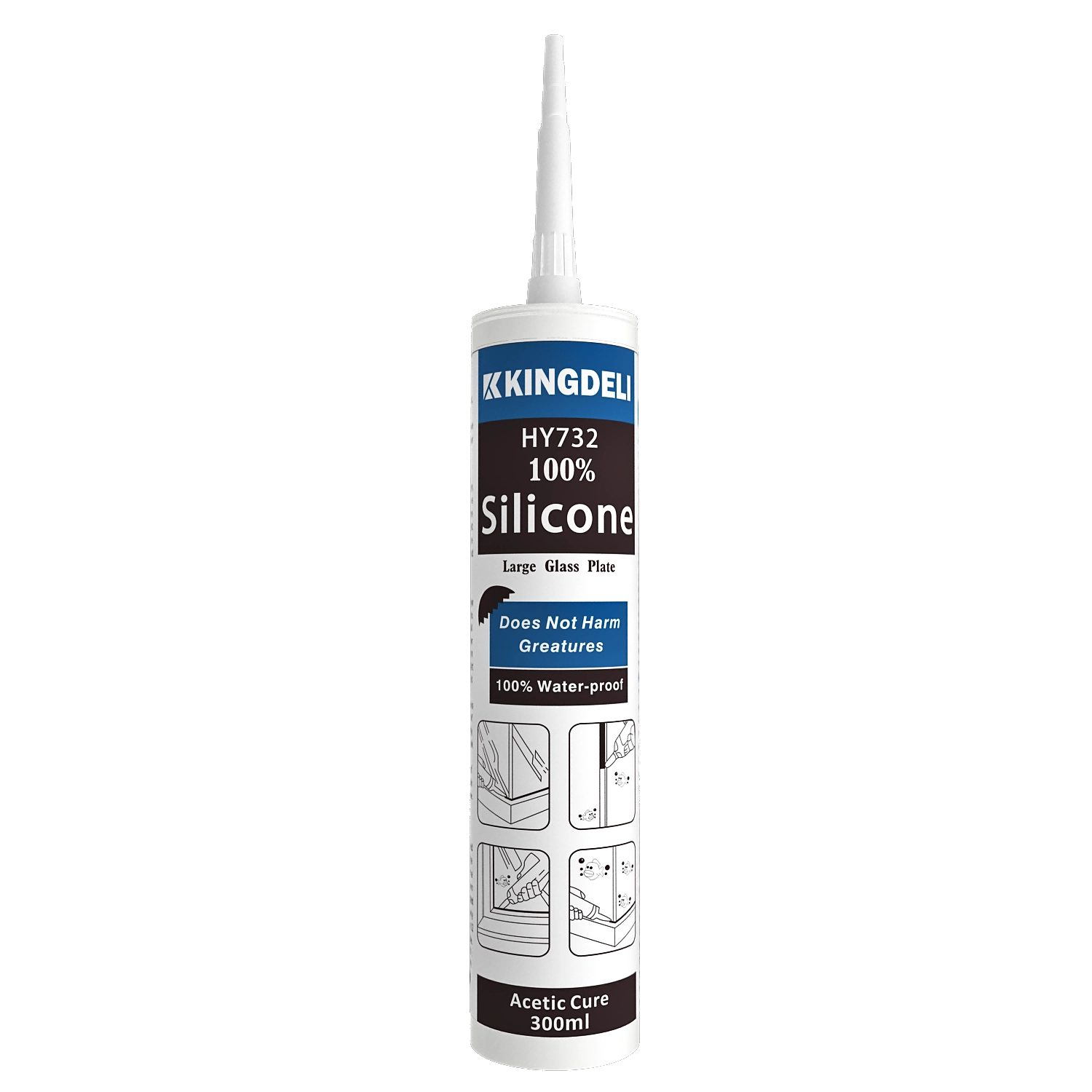
KINGDELI HY732 Professional Acetoxy Cure Silicone Sealant
KINGDELI HY732 is a professional-grade, one-component acetoxy cure silicone sealant designed for fast curing, strong adhesion, and long-lasting flexibility. Ideal for aquariums, glass applications, aluminum doors and windows, kitchens, and bathrooms, it provides reliable sealing performance with excellent anti-fungal protection in high-humidity environments.
Let’s Build Stronger Bonds with Quality Adhesives and Sealants
Have questions about the topic or need tailored sealant solutions for your project?
Our team is ready to provide expert guidance, product recommendations, and application support.
Innovating with Integrity, Bonding the World
Since 1998, KINGDELI has delivered trusted, sustainable sealant solutions that connect industries and inspire progress worldwide.
Whatsapp: +8618825946249
Kingdeli
Kingdeli
Kingdeli
Kingdeli
Kingdeli