











How to evaluate ms silicone sealant suppliers for bulk orders?
How to Evaluate MS Silicone Sealant Suppliers for Bulk Orders: 6 Essential Buyer Questions
Buying MS silicone sealant (MS polymer / modified silane hybrid) in bulk requires more than price checks — you must validate chemistry, production controls, testing, packaging and supply resilience. Below are six long-tail, beginner-focused questions that often have incomplete online answers, followed by step-by-step, standards-based responses you can use in purchase contracts and supplier audits. The guidance embeds critical terms such as neutral cure, hybrid polymer, elastic modulus, Shore A hardness, VOC, SGS test reports, ASTM C920 and EN 15651 so you can ask suppliers the right technical evidence.
1) How can I verify a supplier's claim that their 'neutral cure' ms silicone sealant will not corrode metals or cause staining on bulk installations?
Why this matters: Many MS silicone sealants advertise neutral cure but formulations vary. On large projects a reactive by-product or halide contamination can cause corrosion on stainless steel, aluminum or zinc flashings and produce staining on porous substrates.
Step-by-step verification you must request and verify:
- Request a chemical analysis and MSDS that lists by-products, chloride/halide content and pH change during cure. Insist on quantitative chloride (Cl-) and halogen results — typical buyer requirement is <50 ppm total halides; if your project is highly corrosion-sensitive demand supplier-specific limits.
- Ask for an independent SGS/third‑party corrosion test or certificate showing no accelerated corrosion on common metals (304/316 stainless steel, aluminum alloy) after salt-spray exposure (ISO 9227) and after 28 days of cure. A statement without a test report is insufficient.
- Require non-staining proof: standardized staining tests on porous substrates or masonry. Suppliers should provide dye-transfer or color-fastness results compared against untreated reference samples after weathering (UV + moisture cycling, e.g., ASTM G154 for UV).
- Run a pre-production field compatibility test: receive 2–5L sample, apply to representative metal and substrate coupons, cure under site-like conditions, then inspect for corrosion or staining at 7, 28 and 90 days. Include painted and unpainted metal samples.
- Contract clause: specify acceptable failure criteria (e.g., no visible corrosion, delta E <2 for color change on matching substrates) and withhold acceptance of bulk shipments unless sample panels pass independent lab verification.
Notes: “Neutral cure” indicates the sealant does not release acetic acid; however impurities (chlorides, amines) and raw material chemistry in hybrid polymer systems can still cause issues. Insisting on test data and small-scale acceptance panels eliminates ambiguity.
2) What exact batch-level QC checkpoints should I require to avoid adhesion failures across different substrates (concrete, aluminum, treated wood, plastics)?
Why this matters: Adhesion failures are often due to inconsistent raw materials, improper neutralization, cure-rate variation or incorrect extrusion consistency rather than an inherently bad formula.
Minimum QC checkpoints for each batch (request Certificate of Analysis and independent verification):
- Raw material traceability: supplier must list polymer base, silane type, fillers and pigment batch numbers (traceability to raw materials helps diagnose failures).
- Physical properties measured per batch: viscosity (mPa·s or Pa·s) at defined temp, extrusion force, density (g/cm3), and skin-over time at 23°C/50% RH.
- Cure profile: depth of cure per 24h at 23°C/50% RH (typical MS polymers cure 2–4 mm/24h depending on humidity). Ask for measured cure rate for the specific batch.
- Mechanical properties: Shore A hardness (ASTM D2240), tensile strength and elongation at break (ASTM D412). Require those values and acceptable tolerances (for example, elongation >150% for many joint sealants; define your project’s minimums).
- Adhesion tests to your substrates: provide suppliers with 2–3 representative substrate coupons and request peel/shear adhesion data (ASTM D903 or similar) after 7 and 28 days cure, plus after accelerated aging (salt spray ISO 9227 and UV per ASTM G154).
- Volatile Organic Compounds (VOC): measured and reported with method used — low VOC is a common requirement on indoor projects. Ask for specific mg/L or g/L numbers and method (e.g., ISO or ASTM).
- Appearance and color: batch color listing with Delta E or visual tolerance class; note presence of streaks or pigment settling.
- Packing integrity: vacuum/pressure test for sealed cartridges/sausages and weight check per container (300 ml cartridges, 600 ml sausages, 20 kg pails, 200 kg drums). Include drop-test procedure for cartridges to verify no premature leakage.
Contract language tip: require the supplier’s batch COA be submitted 48–72 hours prior to shipment and reserve the right to perform random incoming inspection, on-site adhesion testing or third-party lab sampling.
3) How do I audit and validate supplier production capacity and supply resilience for a year of JIT bulk deliveries of ms silicone sealant?
Why this matters: Many failures in supply chains are caused by single-line production, spotty raw material sourcing and inadequate storage. For large projects you need verifiable resilience.
Audit checklist and validation steps:
- Factory tour items: number of production lines, batch mixer sizes, continuous vs. batch mixers, number of filling machines for cartridges/sausages, and maximum monthly output (tonnes) by packaging type. Validate uptime and maintenance logs.
- Raw material supply: ask for names of critical raw material suppliers (silane, polymer base, key pigments) and whether the supplier keeps verified secondary sources. Verify supply contracts or lead times for critical inputs.
- Inventory and lead time metrics: minimum finished-goods safety stock days, raw material safety stock days, average lead time from PO to shipment, and historical on-time delivery rate last 12 months (ask for data or ERP screenshots).
- Quality and capacity stress tests: request a pilot-run schedule, sample production runs timed to your forecast, and a written contingency plan for 20–30% sudden volume increase or port/logistics delays.
- Third-party audits: insist on recent ISO 9001 and preferably ISO 14001 certificates. If you require, commission a supplier audit via SGS/Bureau Veritas and request corrective action plans for any non-conformities.
- Logistics and packaging: verify standard bulk formats (cartridge 300 ml, sausage 600 ml, pail, drum), palletization standards, labelling and export documentation. Check cold-chain or temperature storage needs (most MS polymers are stable at room temp, typical shelf life 9–18 months depending on formula; request supplier’s shelf-life statement and storage temp recommendations).
Practical test: place a small initial contract for steady monthly deliveries and require a ramp test (e.g., ability to deliver 2x monthly quantity within agreed timeframe) before committing to a year-long JIT contract.
4) Which test reports and standards should I insist on to prove ms silicone sealant performance for high-movement expansion joints (±25% dynamic movement)?
Why this matters: Large expansion joints require sealants that tolerate cyclic movement without adhesive failure, tear, or loss of elasticity.
Standards and test reports to request:
- ASTM C920 classification (where applicable): this standard describes elastomeric joint sealants with specified movement capability classes (e.g., 25%, 50%). Suppliers tested to ASTM C920 provide a recognized baseline for movement and durability.
- EN 15651 (Façade/Structural): for Europe, EN 15651 reports (parts for facades, cold seals, and interior) show performance under standardized conditions. Ask suppliers for the relevant EN 15651 class certificate that matches your application (e.g., F-EXT-INT).
- Dynamic movement cycling tests: require independent lab data showing cyclic movement performance to your project amplitude and number of cycles (e.g., ±25% movement for 25,000 cycles). Ask for testing conditions (temperature, cycle frequency) and failure criteria used.
- Mechanical property reports: elongation at break (ASTM D412), recovery after elongation, tensile strength, and modulus at 100% — these establish the elastomeric reserve allowing ±25% joint movement without cohesive failure.
- Aging/weathering reports: UV exposure (ASTM G154), thermal cycling, and salt spray (ISO 9227) reports with adhesion retention data (adhesion after aging). For exterior joints in coastal zones demand low chloride content plus salt-spray adhesion retention evidence.
Acceptance criteria suggestion: require adhesion retention >80% of original adhesion after 28 days of accelerated aging and no cohesive failure in dynamic movement cycling. Specify independent-lab testing (e.g., SGS or similar) rather than supplier self-declarations.
5) How can I ensure batch-to-batch color and cure consistency when I need painted and pigmented ms silicone sealant for 10,000+ linear meters?
Why this matters: Visible color differences or cure inconsistency across long runs create rework and aesthetic rejection on facades and interior joints.
Controls and acceptance tests to demand:
- Color control: require supplier to provide a master color recipe and Delta E measurements (spectrophotometer readings). Define acceptable Delta E tolerance (commonly <2 for near-perfect match; <3 for acceptable match). Require documentation of pigment supplier lot numbers and a pigment change notification policy.
- Sample approval: before full production, require a production color run of the first full pallet for your order and an approved sample that you sign off. All subsequent pallets must match the approved sample within your defined Delta E tolerance.
- Paintability and topcoat compatibility: if you plan to paint over the sealant, insist on paint adhesion tests (cross-hatch, pull-off) with your specified coating system after full cure and after accelerated aging. Ask for paint manufacturer approval or joint tests showing no cracking, lifting or discoloration.
- Cure consistency: request batch records of cure profile (skin time, tack, full cure time at specified temp/RH), and demand that batch-to-batch variance fall within specific windows (e.g., skin-over 10–20 min at 23°C/50% RH, cure depth 2–3 mm/24 h). Include penalty clauses if batches fall outside tolerance and cause project delays.
- Storage and transport impact: instruct supplier to provide storage and transport recommendations. Temperature swings can alter pigment dispersion; require sealed, clearly dated pallets, and use first-in-first-out (FIFO) receiving to minimize mixing old and new batches on site.
Operational note: specify acceptance sampling procedures at delivery (visual and spectrophotometer check on 3% of cartons per pallet) to catch mismatches before distribution to site crews.
6) What are reasonable warranty terms, failure liabilities and acceptable rejection rates when importing bulk MS silicone sealant?
Why this matters: Contracts without clear quality, warranty and liability language expose buyers to replacement costs, warranty disputes, and project delays.
Typical, defensible commercial terms to negotiate:
- Shelf-life warranty: supplier to guarantee stated shelf life (commonly 9–18 months depending on formula) when stored under recommended conditions. If batches fail within shelf life under correct storage, supplier replaces material.
- Performance warranty: for functional properties (adhesion, movement, elongation) specify a minimum warranty period (12–24 months after installation commissioning) with clearly defined failure modes covered (cohesive failure, loss of elasticity, corrosion due to product chemistry).
- Acceptance and rejection rates: set an incoming defect/packaging rejection threshold (e.g., <1–2% for packaging damage) and a functional failure threshold after pre-installation testing (require 0% tolerance for failed adhesion on test coupons; for large long-term failures negotiate independent arbitration). Stipulate the remedy: replacement, refund or repair plus cover reasonable labor costs if failure is product-related.
- Holdback and payment terms: use staged payments with final payment released after sample panels pass long-term cure and adhesion tests (e.g., 28–90 days). This creates leverage and reduces risk of mass non-conforming batches arriving.
- Third-party testing and dispute resolution: require disputed batches be tested by an agreed independent lab (e.g., SGS, Intertek), with costs borne by failing party. Define arbitration jurisdiction and limit liabilities to reasonable replacement and installation costs, excluding consequential damages unless fraud or gross negligence is proven.
Pro tip: include a mandatory pre-shipment sample batch and acceptance window in the contract (e.g., 10% of monthly volume) so you can verify every shipment period without stopping the main supply chain.
Concluding notes: Why MS silicone sealant (MS polymer) is often the right choice for bulk procurement
MS silicone sealant (modified silane / hybrid polymer) offers neutral cure chemistry, broad substrate adhesion (metal, concrete, plastics), paintability, low odor and generally lower VOC than older solvent-based systems — making it well-suited for interior and exterior bulk applications. Its elastomeric properties (high elongation, good recovery and adjustable Shore A hardness) support dynamic joints when you verify movement ratings with ASTM C920 or EN 15651 reports. When you pair those material advantages with rigorous supplier audits, batch-level QC, independent SGS testing and clear contract warranty language, you minimize risk on large-scale purchases.
If you need a supplier that provides EN/ASTM test reports, ISO 9001 traceability, laboratory support for site-specific tests and reliable bulk packaging (cartridges, sausages, 20 kg pails and drums), contact us for a commercial quote and technical sample program.
Contact: www.kingdelisealant.com | info@kingdeliadhesive.com
The Future of Sealants: 5 Emerging Trends in Wholesale Neutral Silicone Sealant Technology for 2026
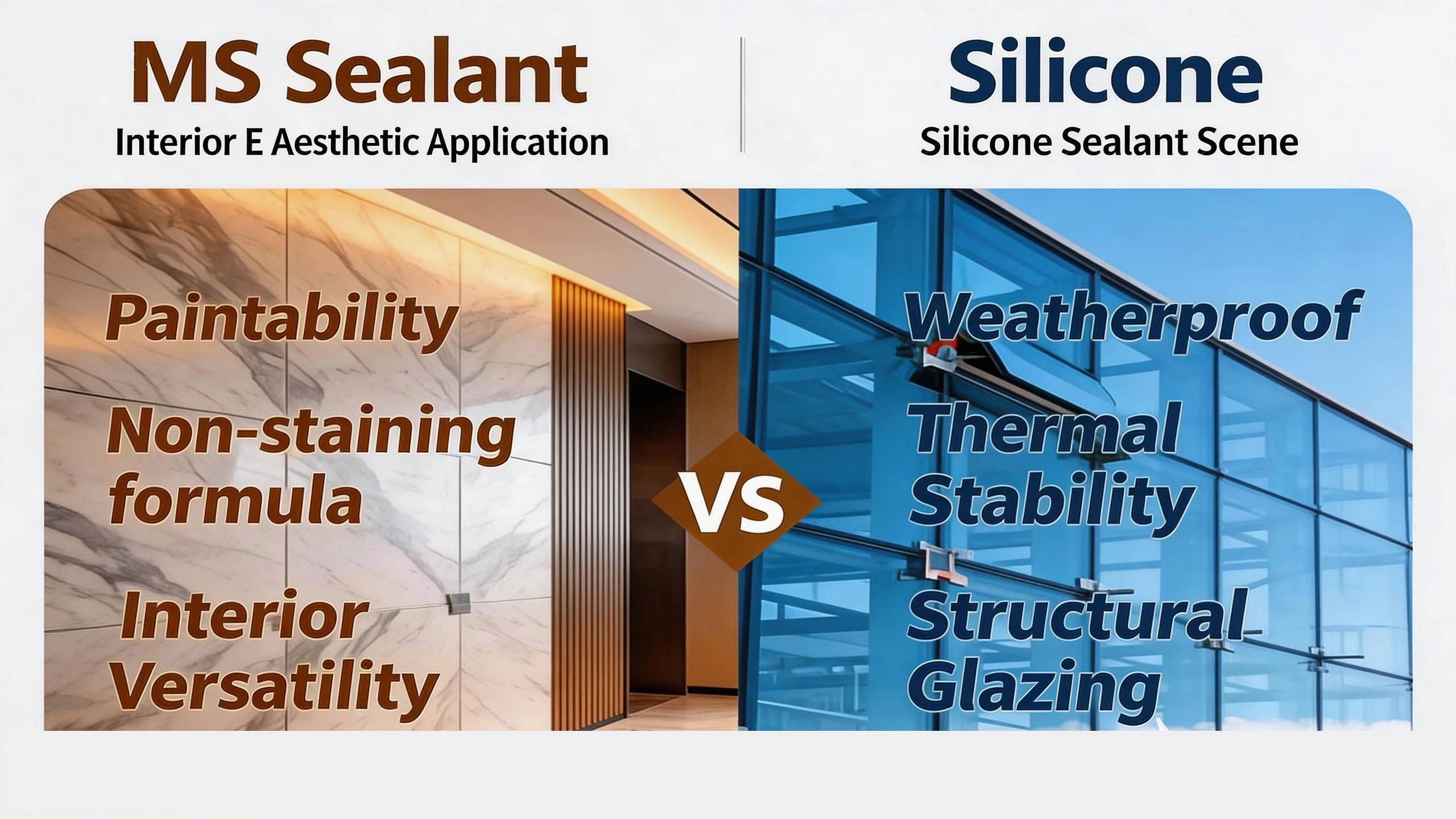
MS Sealant vs. Silicone: Which is Right for Your Construction Project?
The Ultimate Guide to Choosing a Silicone Sealant Manufacturer in 2026: 10 Critical Factors Often Overlooked
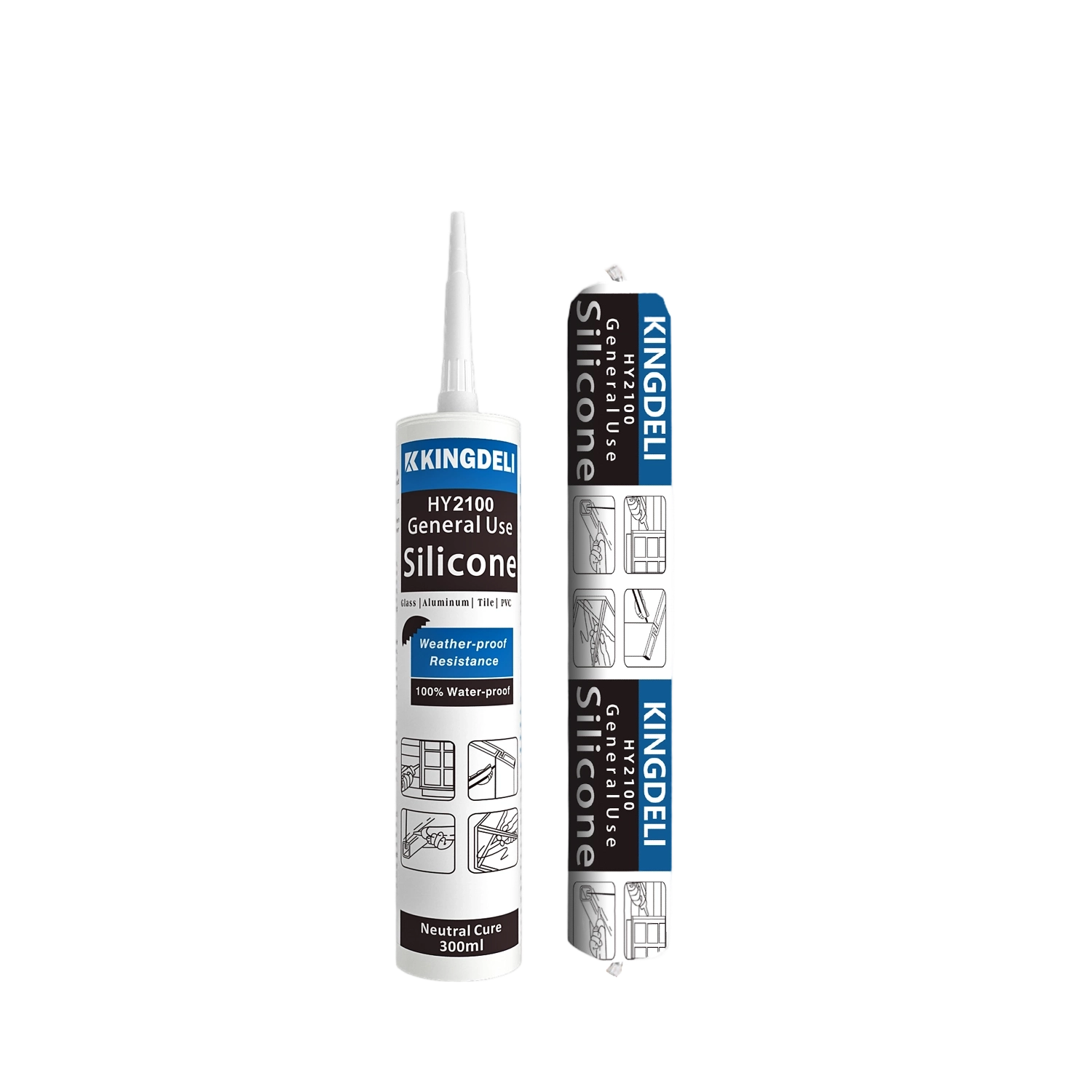
Industrial Applications of Acetic Silicone Sealant: Beyond Basic Glass Sealing
HY- 972
How do I clean tools and excess sealant?
Uncured sealant can be easily cleaned with water. Cured material must be removed mechanically.
HY-966
Can HY-966 cure in humid or damp conditions?
Yes. HY-966 is moisture-curing and performs reliably in humid environments.
Is HY-966 suitable for flooring applications?
Yes. It is suitable for wooden flooring, paneling, and structural flooring panels when used according to application guidelines.
HY993
What substrates does HY993 adhere to?
HY993 bonds strongly to most common construction and industrial materials, including glass, stainless steel, PVC, PC, ABS, wood flooring, galvanized sheet, aluminum, hardware, siding, brick, concrete, and ceramic. It also adheres well to many automotive substrates.
HY-2300
Does HY-2300 contain strong odor or high VOC?
No. It features low VOC and low odour, making it safer for construction environments.
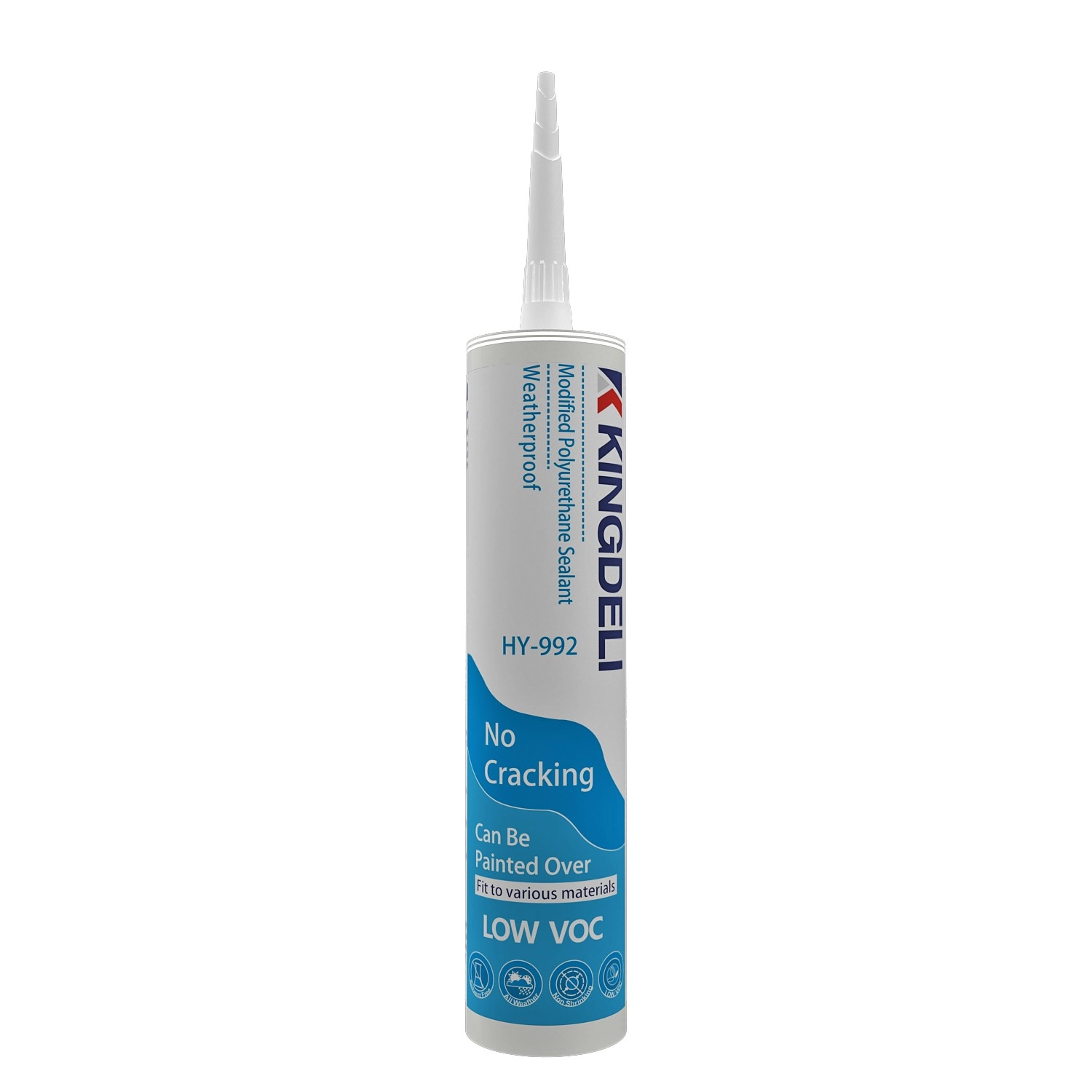
HY992 Modified Polyurethane Construction Sealant
HY992 Modified Polyurethane Sealant is a one-component, moisture-curing construction sealant designed for professional building and structural sealing applications. It provides excellent adhesion, weather resistance, and durable elasticity, making it suitable for a wide range of construction materials.
The formulation delivers strong bonding performance without corrosion or substrate contamination, while maintaining low VOC content for environmentally responsible construction projects.

HY995 Crystal Clear Ms Polymer Adhesive/Sealant
HY995 Crystal Clear Ms Polymer Adhesive/Sealant is a new generation MS Polymer adhesive / sealant formulated for all bonding and sealing applications where long term reliability is required. It has excellent bonding strength on various materials. It will cure to form a durable, flexible, waterproof seal.

HY997 High-Performance Anti-Microbial MS Polymer Sealant
HY997 MS polymer sealant for is is a premium one-component, neutral-curing modified silane sealant engineered for demanding interior applications. It offers a Class 20 movement capability, ensuring long-lasting flexibility and reliable performance under dynamic joint conditions. Curing at room temperature, HY997 delivers superior anti-microbial and mildew-resistant properties, maintaining hygienic and clean environments over time.
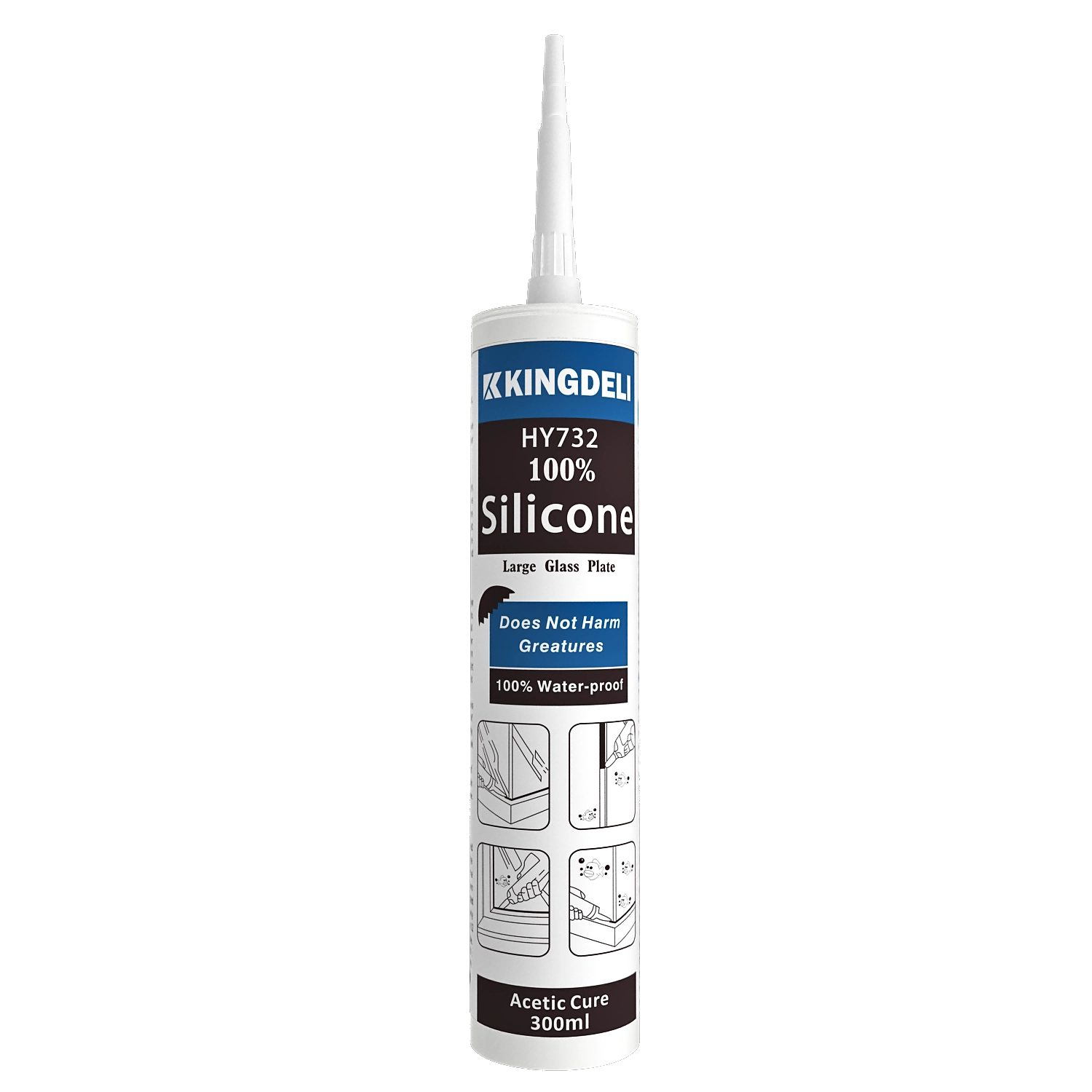
KINGDELI HY732 Professional Acetoxy Cure Silicone Sealant
KINGDELI HY732 is a professional-grade, one-component acetoxy cure silicone sealant designed for fast curing, strong adhesion, and long-lasting flexibility. Ideal for aquariums, glass applications, aluminum doors and windows, kitchens, and bathrooms, it provides reliable sealing performance with excellent anti-fungal protection in high-humidity environments.
Let’s Build Stronger Bonds with Quality Adhesives and Sealants
Have questions about the topic or need tailored sealant solutions for your project?
Our team is ready to provide expert guidance, product recommendations, and application support.
Innovating with Integrity, Bonding the World
Since 1998, KINGDELI has delivered trusted, sustainable sealant solutions that connect industries and inspire progress worldwide.
Whatsapp: +8618825946249
Kingdeli
Kingdeli
Kingdeli
Kingdeli
Kingdeli