











How to request custom ms silicone sealant formulations from suppliers?
How to Request Custom MS Silicone Sealant Formulations from Suppliers: 6 Pain-Point Questions Answered
MS silicone sealant (silane-modified polymer, often called MS polymer or hybrid silicone) combines neutral cure chemistry, paintability and strong adhesion. Below are six detailed questions beginners frequently ask—and in-depth, actionable answers you can use when writing specifications or negotiating custom formulations with suppliers.
1) How should I specify movement capability and elastic recovery for a custom MS silicone sealant used on façade and window joints?
Pain point: Buyers often write vague requirements like “high movement” without defining how the sealant will perform over repeated thermal cycles or wind loads. To avoid premature failure, specify measurable movement and recovery criteria.
What to request from suppliers:
- Movement accommodation: state a numeric percentage, e.g., ±25% or ±50%, based on joint design. Many façade systems require ±25% (common for MS polymers) while silicone architectures may reach ±50%. Use ISO 11600 classification (e.g., F25 HM) or a clearly stated percent movement.
- Elastic recovery: request a minimum elastic recovery (percent) measured after elongation cycling—typical acceptance is ≥70–80% for high-performance elastomers. Ask the supplier to report the test method used.
- Cyclic durability: require cyclic movement testing (hundreds to thousands of cycles) at the specified amplitude and temperature range. Define cycles-to-failure acceptance (for example, no adhesion loss or cohesive failure after 1000 cycles at ±25%).
- Modulus and strain data: specify maximum secant modulus at 100% elongation or modulus at the specified movement to control stiffness and stress transfer to substrates.
Why this matters: Movement capability and elastic recovery data translate design intention into measurable performance. Without these numbers, suppliers may deliver a softer or stiffer product that either extrudes or debonds under real conditions.
2) What substrate adhesion details must I demand to avoid bond failure on concrete, anodized aluminum, EPDM, and painted steel?
Pain point: Generic adhesion claims (“bonds to most substrates”) are unreliable—substrate chemistry, surface energy, and contaminants drive failures.
Specify the following in your RFQ:
- Target substrates list: e.g., precast concrete, fair-faced concrete, anodized aluminum, powder-coated steel, hot-dip galvanized steel, EPDM, painted wood, PVC-U. Don’t assume “aluminum” covers anodized or mill-finish variants.
- Adhesion test types and acceptance: request adhesion-in-peel (ASTM C794) or equivalent peel tests and lap-shear/tensile tests. Specify minimum peel/tensile retention after defined aging (e.g., ≥80% of initial strength after 1000 thermal cycles or 1000 hours accelerated weathering).
- Primer requirement and compatibility matrix: ask whether the sealant is primerless on each listed substrate; if primer recommended, request primer product code, application method, and pot life. Demand compatibility tests with common primers (silane-based or proprietary) and request primerless adhesion certificates where applicable.
- Surface prep protocols: require supplier-provided, substrate-specific surface preparation (e.g., solvent wipe with isopropanol, blast-cleaning for steel, alkaline wash for concrete) and state that adherence to these protocols is part of acceptance criteria.
Practical acceptance: For critical joints, require supplier-supplied adhesion coupons (e.g., bonded 100x25 mm strips) that you or a third party can pull or peel to validate adhesion before full batch release.
3) How do I ask suppliers to tailor curing speed and skin-over time for cold or high-humidity installation environments?
Pain point: On-site constraints—cold weather, high humidity, or tight turnaround—mean the standard cure profile may be unusable, leading to dust pickup, sagging or long waits.
How to specify curing behavior:
- Skin-over time (initial tack-free): specify a desired range, e.g., 10–30 minutes at 23°C/50% RH. For cold climates demand formulations with <60 min skin-over at 5–10°C if possible.
- Through-cure rate: request cure depth per 24 h (mm/24h) at defined conditions, e.g., 2–4 mm/24 h at 23°C/50% RH as a baseline. If you need faster or slower cure, ask for data at the installation temperature/humidity range.
- Sensitivity to humidity/temperature: ask for published cure rate curves or data points (e.g., cure rate at 5°C/30% RH, 23°C/50% RH, 35°C/80% RH) since moisture-driven neutral cure chemistries vary with RH and temperature.
- Open time and tooling window: define the acceptable tooling window (minutes) and request data on how surface tack and tooling change over that window.
Testing and verification: request lab cure data and at least two on-site mock-ups under realistic environmental conditions prior to approval. This prevents surprises when the product meets lab specs at 23°C but underperforms on a cold façade in winter.
4) Which test reports and certifications should I demand (ASTM C920, EN 15651, ISO 11600, REACH, MSDS) when ordering custom MS silicone sealant batches?
Pain point: Many online product pages list standards without delivering full, batch-traceable reports. For procurement, require documents that prove conformity and batch traceability.
pWhat to require:
- Standards & test reports: full test reports or Certificates of Conformity to relevant standards: ASTM C920 (classifications and physical requirements), EN 15651 (for façade, windows and pedestrian joints), ISO 11600 (movement classification). Ask for the specific clauses tested and test dates.
- Performance test proofs: include adhesion (ASTM C794 or equivalent), tensile/elongation, Shore A hardness, UV/accelerated weathering (ISO 4892 or equivalent), thermal ageing, and cyclic movement tests. Require both initial and aged test results.
- Regulatory compliance: supply Safety Data Sheet (SDS/MSDS), Declaration of Conformity for REACH and RoHS if applicable, VOC data (g/L) and any low-VOC certifications. For export markets request local regulatory documentation (e.g., CE marking for EU where required by product category).
- Traceability: require batch numbers printed on packaging, a Certificate of Analysis (CoA) for each batch with key parameters (viscosity, density, cure rate, color batch code), and production dates.
Procurement template tip: include an explicit clause that the supplier must produce the CoA and SDS for first shipment and every subsequent batch. Without this, you may receive non-conforming batches.
5) How do I ask suppliers to tailor chemical resistance and service temperature for industrial environments exposed to fuels, solvents, steam and UV?
Pain point: Off-the-shelf datasheets often list “good chemical resistance” without specifying which chemicals or temperature ranges were tested. In industrial use, this ambiguity causes failures.
How to define your needs:
- Chemical list: provide a prioritized list of chemicals the sealant will face (e.g., diesel, hydraulic oils, mineral spirits, ethanol, 10% NaOH, dilute acids) and request immersion and splash-testing data for each chemical with exposure time and temperature.
- Exposure conditions: define continuous vs intermittent exposure, expected concentrations, maximum exposure temperature, and whether the joint will be submerged or only splashed.
- Service temperature range: specify the lowest and highest service temperatures expected (e.g., -40°C to +90°C). Request data for mechanical property retention (tensile, elongation, adhesion) after thermal ageing at upper and lower bounds.
- UV and weathering: ask for accelerated weathering results (ISO 4892) with change-in-color (Delta E) and loss of tensile/elongation and adhesion after defined hours (e.g., 1000, 2000 hours). For critical external joints require in-field reference projects where the formulation was used for multiple years.
Example acceptance criteria (to adapt to your project): no cohesive failure after 1000 hours immersion in hydrocarbon; ≤20% loss of tensile strength after 1000 hours UV exposure; adhesion maintained with no adhesive failure after thermal cycling from -30°C to +70°C. Always confirm thresholds with your engineering team and supplier lab data.
6) What minimum sample, pilot run procedures, testing protocols, and acceptance criteria should I require before scaling to commercial production?
Pain point: Companies often accept small lab samples and assume full production will match—this is risky. Scale-up commonly changes shear mixing, filler dispersion, color and cure behavior.
Recommended procurement roadmap:
- Prototype samples: request 3–5 different prototype samples with minor formulation variants (e.g., varying plasticizer or filler load) in 300–500 g cartridges or sausages for handheld evaluation (toolability, color, extrudability, skin-over).
- Pilot batch: require a pilot batch that uses the same production equipment, mixing parameters and raw-material suppliers intended for commercial batches (quantity: 50–200 kg). Test this for all key properties (adhesion, tensile, cure rate, weathering).
- Test matrix & acceptance criteria: create a pass/fail matrix covering viscosity/extrudability, skin-over, cure rate (mm/24h), Shore A hardness, tensile strength & elongation, adhesion on each target substrate, UV/weathering, and paintability. Define numeric acceptance thresholds and allowable variance (e.g., viscosity ±15% of prototype; adhesion loss ≤10% vs prototype after aging).
- Third-party verification: for mission-critical applications, require testing by an independent laboratory and acceptance of their report prior to commercial release.
- Packaging & shelf-life validation: request finished-product shelf-life data under recommended storage (e.g., 12 months at 5–25°C) and require packaging verification (cartridges, sausages, pails, drums) with batch coding and barrier properties for color stability.
- Change-control clause: include contractual language that any formulation change after agreement must be requalified via pilot batch and agreed test matrix.
Logistics and MOQ: clarify minimum order quantities, lead times (typical lead times vary—ask supplier for realistic production and shipping times), and expedite options. Ask for spare sample sets from the production batch to be retained for future dispute resolution.
Concluding summary: advantages of specifying custom MS silicone sealant formulations precisely
Customizing MS silicone sealant formulations to specific movement, substrate, cure and chemical-resistance needs reduces field failures, lowers lifecycle costs, and speeds installation. By demanding numeric movement capability, adhesion test data (with primer compatibility), cure-rate curves for your climate, traceable certificates (ASTM C920, EN 15651, ISO 11600 where applicable), and a pilot-run qualification process, you transform vague claims into verifiable performance. This approach minimizes rework, warranty claims and safety risks while delivering a paintable, neutral-cure, low-VOC, solvent-free hybrid sealant matched to your application.
For a custom formulation quote, pilot-run plan or to request sample test plates, contact us at www.kingdelisealant.com or email info@kingdeliadhesive.com. We can prepare an RFQ checklist and specification template tailored to your substrates and exposure conditions.
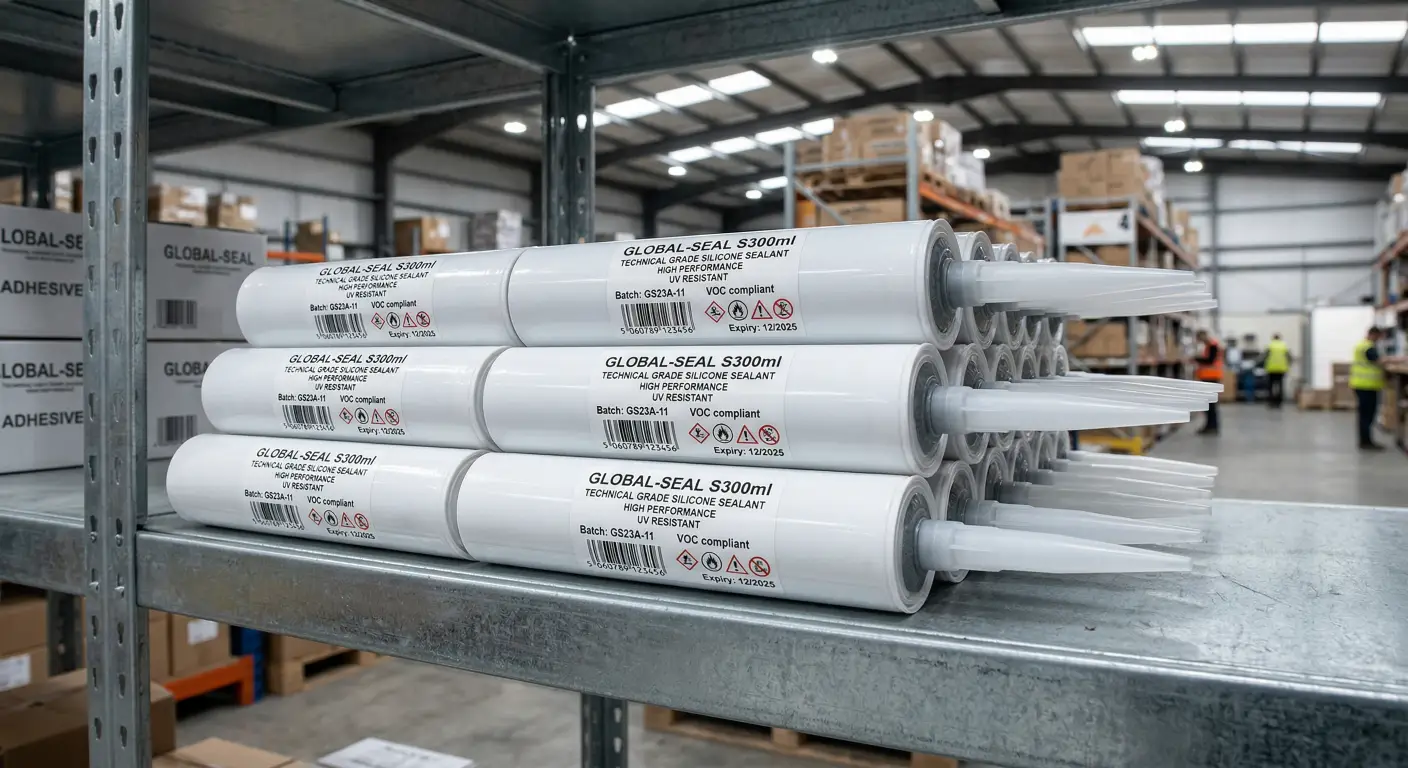
OEM vs. Branded Acetic Silicone Sealant: What’s Best for Your Distribution Business?
The Future of Sealants: 5 Emerging Trends in Wholesale Neutral Silicone Sealant Technology for 2026
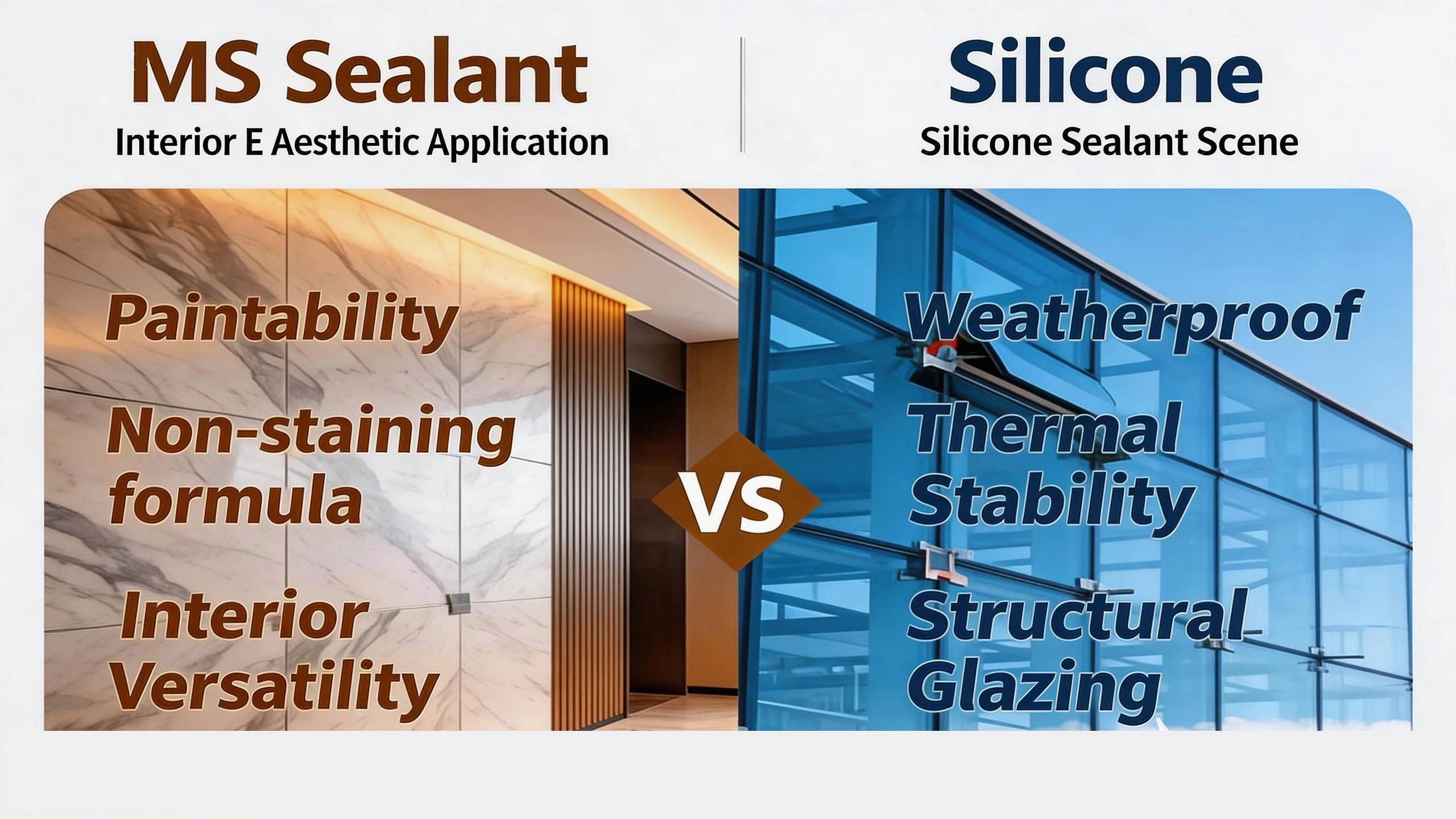
MS Sealant vs. Silicone: Which is Right for Your Construction Project?
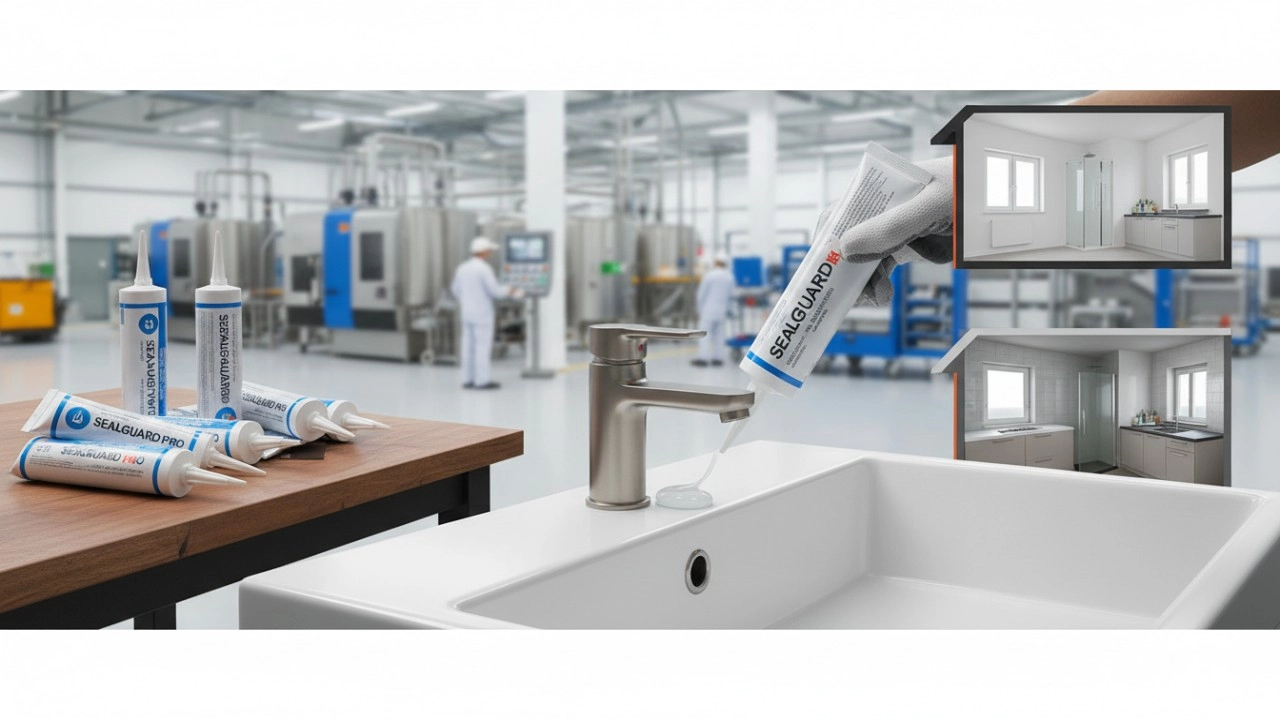
The Ultimate Guide to Choosing a Silicone Sealant Manufacturer in 2026: 10 Critical Factors Often Overlooked
HY982
What type of adhesive is HY982?
HY982 is a one-component, neutral, silane-modified polymer (SMP) adhesive. It is solvent-free, paintable, and designed for high-performance flooring and panel bonding applications.
HY723
Is the sealant safe during a fire event?
Yes, it is excellent flame retardant; it self-extinguishes within 30 seconds and produces no smoke or harmful gases when burning.
HY- 972
How do I clean tools and excess sealant?
Uncured sealant can be easily cleaned with water. Cured material must be removed mechanically.
HY638
Can HY-638 be used in areas exposed to water?
HY-638 is not recommended for total or continuous water immersion. It should also not be applied to wet, damp, or frosted surfaces, as these conditions can negatively affect adhesion and curing.
HY924
How long does HY924 take to cure?
Curing starts as soon as the material contacts moisture. Tack-free time is typically 30–60 minutes, with full curing depending on humidity, temperature, and bead thickness.
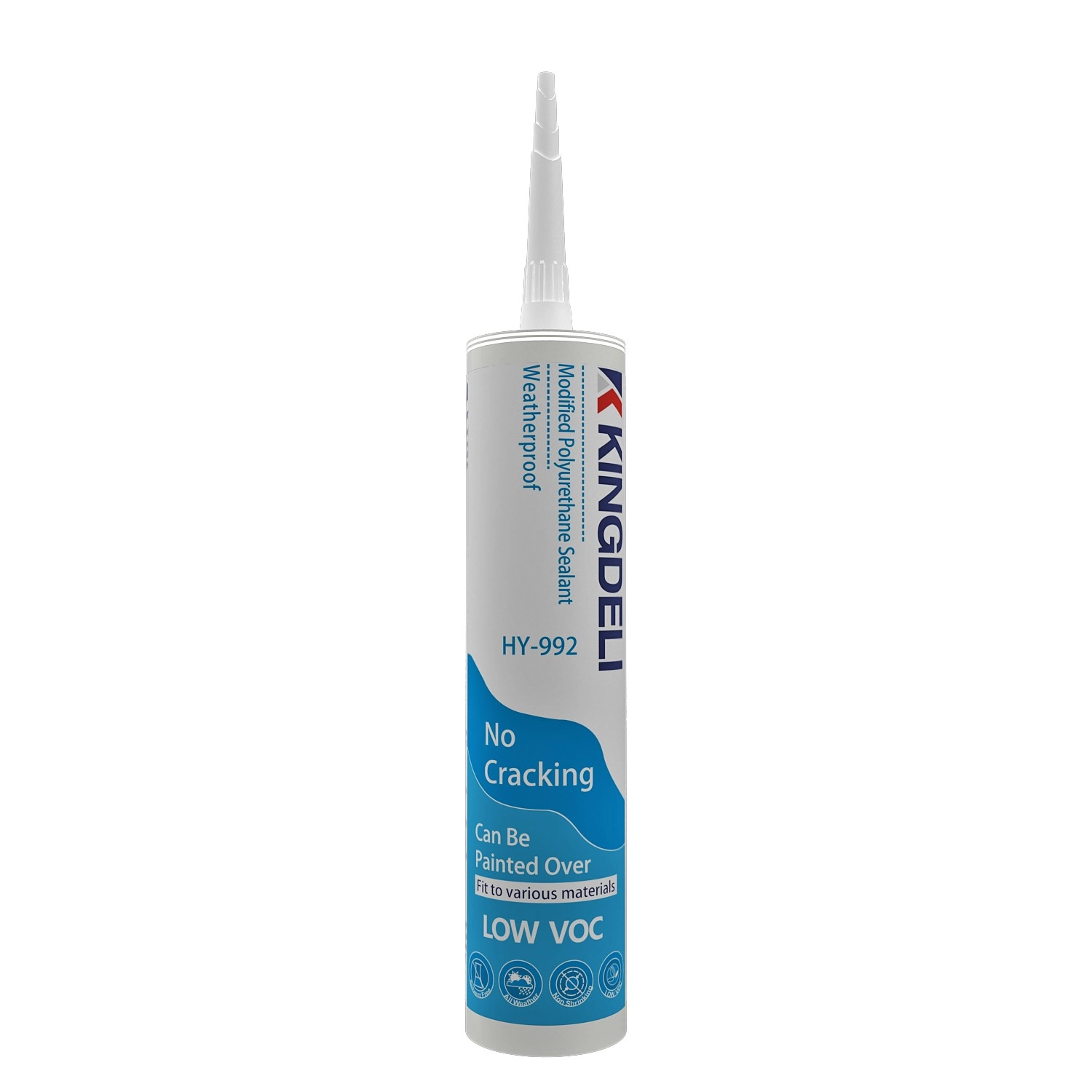
HY992 Modified Polyurethane Construction Sealant
HY992 Modified Polyurethane Sealant is a one-component, moisture-curing construction sealant designed for professional building and structural sealing applications. It provides excellent adhesion, weather resistance, and durable elasticity, making it suitable for a wide range of construction materials.
The formulation delivers strong bonding performance without corrosion or substrate contamination, while maintaining low VOC content for environmentally responsible construction projects.

HY995 Crystal Clear Ms Polymer Adhesive/Sealant
HY995 Crystal Clear Ms Polymer Adhesive/Sealant is a new generation MS Polymer adhesive / sealant formulated for all bonding and sealing applications where long term reliability is required. It has excellent bonding strength on various materials. It will cure to form a durable, flexible, waterproof seal.

HY997 High-Performance Anti-Microbial MS Polymer Sealant
HY997 MS polymer sealant for is is a premium one-component, neutral-curing modified silane sealant engineered for demanding interior applications. It offers a Class 20 movement capability, ensuring long-lasting flexibility and reliable performance under dynamic joint conditions. Curing at room temperature, HY997 delivers superior anti-microbial and mildew-resistant properties, maintaining hygienic and clean environments over time.
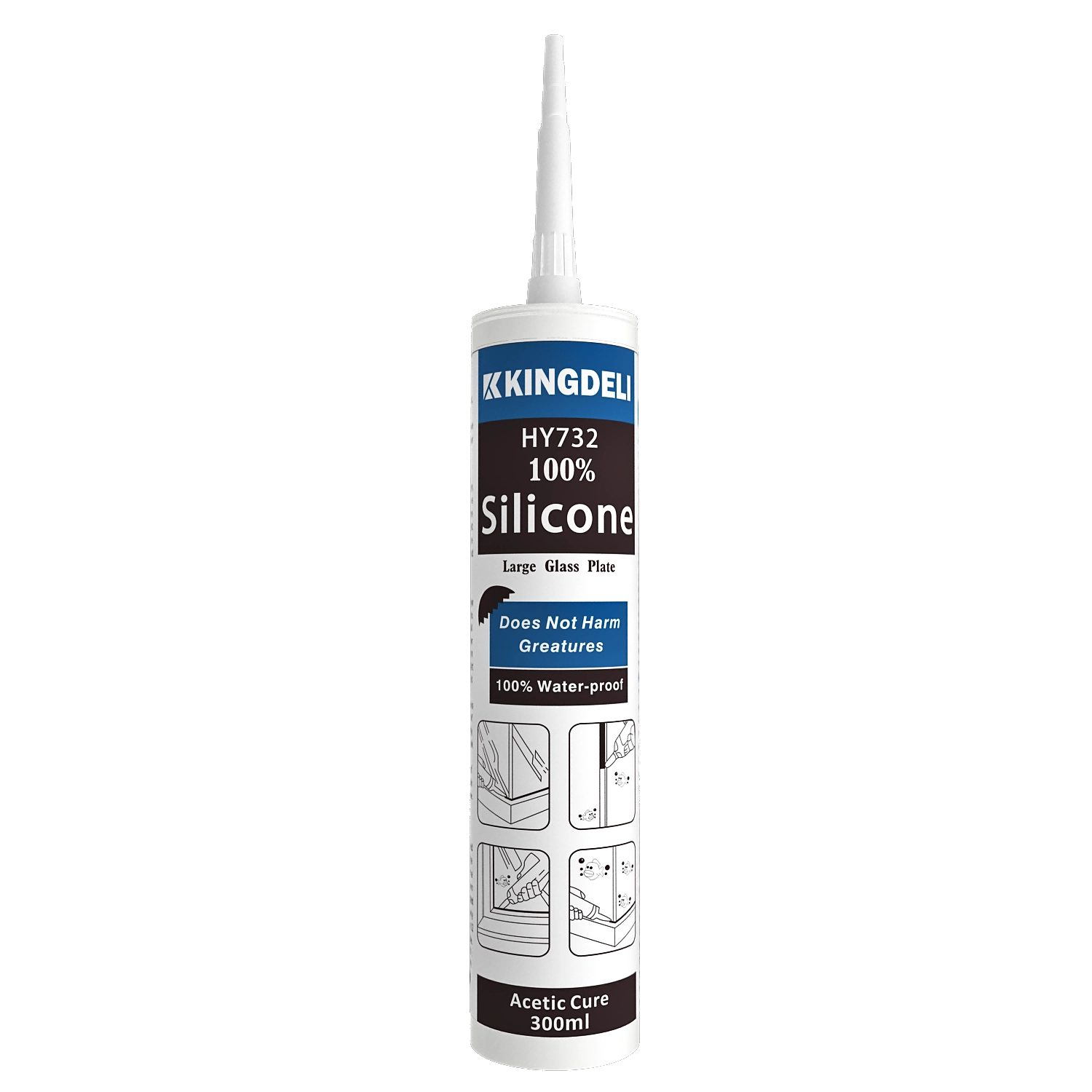
KINGDELI HY732 Professional Acetoxy Cure Silicone Sealant
KINGDELI HY732 is a professional-grade, one-component acetoxy cure silicone sealant designed for fast curing, strong adhesion, and long-lasting flexibility. Ideal for aquariums, glass applications, aluminum doors and windows, kitchens, and bathrooms, it provides reliable sealing performance with excellent anti-fungal protection in high-humidity environments.
Let’s Build Stronger Bonds with Quality Adhesives and Sealants
Have questions about the topic or need tailored sealant solutions for your project?
Our team is ready to provide expert guidance, product recommendations, and application support.
Innovating with Integrity, Bonding the World
Since 1998, KINGDELI has delivered trusted, sustainable sealant solutions that connect industries and inspire progress worldwide.
Whatsapp: +8618825946249
Kingdeli
Kingdeli
Kingdeli
Kingdeli
Kingdeli