











OEM/ODM acetic cure silicone sealant Manufacturers and Suppliers

- Understanding Acetic Cure Silicone Sealants
- What is acetic cure (RTV) silicone?
- Typical applications and advantages
- Limitations and compatibility concerns
- Why Choose OEM/ODM Acetic Cure Silicone Sealant Manufacturers and Suppliers
- When to select OEM/ODM vs. off-the-shelf
- Key supplier capabilities to evaluate
- Supply-chain and lead-time considerations
- Technical Specifications, Standards and Quality Control
- Relevant standards and testing
- Common technical parameters buyers should request
- Comparison table: Acetic cure vs Neutral cure silicone
- Selecting the Right OEM/ODM Partner: KINGDELI Case Study
- KINGDELI’s manufacturing & certification profile
- OEM/ODM services and formulation capabilities
- Practical supplier checklist and negotiation tips
- Practical Guidance: Formulation Choices, Testing and On-site Use
- Choosing the right formulation
- Quality assurance and batch testing
- On-site best practices and troubleshooting
- Conclusion
- Common Questions (FAQ)
- Q: Is acetic cure silicone suitable for natural stone and metals?
- Q: Can acetic cure silicone be painted?
- Q: What is the typical shelf life and storage for acetic cure sealants?
- Q: How fast do acetic cure silicones cure?
- References & Further Reading
Acetic cure silicone sealant—an RTV, one-component silicone that cures by releasing acetic acid—remains a top choice for glazing, sanitary, and general-purpose sealing due to excellent adhesion to glass and many substrates. For buyers searching for OEM/ODM acetic cure silicone sealant manufacturers and suppliers, key purchasing drivers include product compatibility, standardized test compliance (ISO/ASTM/EN), consistent large-scale supply, low-VOC options, and technical support. This guide explains material chemistry, performance differences, quality benchmarks, and practical selection steps to help procurement, R&D, and specification teams source the right partner.
Understanding Acetic Cure Silicone Sealants
What is acetic cure (RTV) silicone?
Acetic cure silicone sealant is a single-component, room-temperature vulcanizing (RTV) silicone that cures by moisture in the air and releases acetic acid (vinegar smell) as a byproduct. The formulation typically uses alkoxy or acetoxy silanes that hydrolyze and condense to form an elastomeric silicone polymer network, producing durable, flexible joints with good weather resistance. For a general overview of silicone chemistry and uses, see Wikipedia: Silicone.
Typical applications and advantages
Common uses include structural glazing, window sealing, sanitary joints (bathtubs, showers), HVAC penetration seals, and many industrial sealing tasks. Advantages of acetic cure silicone include:
- Fast tack-free time and rapid development of properties in many formulations;
- Excellent adhesion to glass, glazed tiles, and many non-porous substrates without primer;
- Wide service temperature range (typically -60°C to +180°C for cured silicone);
- Outstanding UV and weathering resistance compared with many organic sealants.
Limitations and compatibility concerns
Because acetic cure materials release acetic acid, they can corrode some metals (e.g., copper, lead, some plated surfaces) and are often not recommended on sensitive electronics or certain natural stones. For applications requiring neutral byproducts (no acidic odor or corrosion risk), neutral cure silicones or MS polymers may be preferred. Understanding substrate compatibility and paintability is essential during OEM/ODM development.
Why Choose OEM/ODM Acetic Cure Silicone Sealant Manufacturers and Suppliers
When to select OEM/ODM vs. off-the-shelf
Companies choose OEM/ODM providers when they need tailored formulations (adhesion profile, cure speed, viscosity), private labeling, or packaging and logistics integration. OEM/ODM is especially valuable for:
- Architectural façade systems requiring custom color and modulus;
- Sanitary products requiring fungicidal additives and sanitary grades;
- Industrial users needing hot-cure or accelerated cure options for production lines.
Key supplier capabilities to evaluate
Essential capabilities for an OEM/ODM partner include:
- Large, stable production capacity and automated lines to avoid supply disruptions;
- R&D and formulation labs capable of rapid prototyping and compliance testing;
- Certifications and standards alignment (ISO 9001, ISO 14001, CE, ASTM compliance);
- Low-VOC and sustainable formulation options; technical support and field troubleshooting.
Supply-chain and lead-time considerations
Because acetic cure silicones are one-component and shelflife-sensitive, manufacturers must ensure raw material quality and controlled environments. Buyers should confirm minimum order quantities, lead times for custom colors or packaged SKUs, and logistics expertise for global export—particularly for temperature-sensitive shipments. Large manufacturers with annual capacities >100,000 tons can offer both economies of scale and reliable stock buffers.
Technical Specifications, Standards and Quality Control
Relevant standards and testing
Sealant performance is validated by multiple international and regional standards. Important standards include ISO quality systems (ISO 9001) and industry test methods such as ASTM C920 (specification for elastomeric joint sealants). For industry guidance and best practices, organizations like the Adhesive and Sealant Council (ASC) publish application recommendations and material guidance.
Common technical parameters buyers should request
When specifying an acetic cure silicone for OEM/ODM production, request the following certified data:
- Shore A hardness (typical: 10–40 for general silicones);
- Tensile strength and elongation at break;
- Cure profile: tack-free time and full cure (mm depth per 24h at 23°C/50% RH);
- Service temperature range and aging/UV resistance test results;
- Adhesion test reports on your substrates (glass, aluminum, painted surfaces) with/without primer;
- VOC content and any environmental declarations (e.g., low-VOC formulations).
- Provide exact substrate list and end-use environment (indoor/outdoor, bath, facade);
- Request sample kits with technical datasheets and adhesion test results on your substrates;
- Confirm VOC levels, shelf life, recommended storage conditions, and MSDS;
- Ask for production lead times for standard and custom SKUs, minimum order quantities, and capability for packaging variations (cartridge, sausage, bulk);
- Validate certifications and ask for recent factory audit reports or third-party inspections if needed.
- Silicone — Wikipedia
- ISO 9001 — Quality management systems
- ASTM C920 — Standard Specification for Elastomeric Joint Sealants
- Adhesive and Sealant Council (ASC)
Comparison table: Acetic cure vs Neutral cure silicone
| Property | Acetic Cure Silicone | Neutral Cure Silicone |
|---|---|---|
| Byproduct | Acetic acid (vinegar smell) | Alcohol, oxime or alkoxy (less corrosive) |
| Substrate compatibility | Excellent on glass, glazed tiles; may corrode copper/lead | Better for metals and sensitive substrates |
| Paintability | Poor to non-paintable in many cases | Some formulations can be painted |
| Cost | Generally lower | Typically higher |
| Typical Uses | Glazing, sanitary, general sealing | Metal, stone, electronics where corrosion is concern |
Selecting the Right OEM/ODM Partner: KINGDELI Case Study
KINGDELI’s manufacturing & certification profile
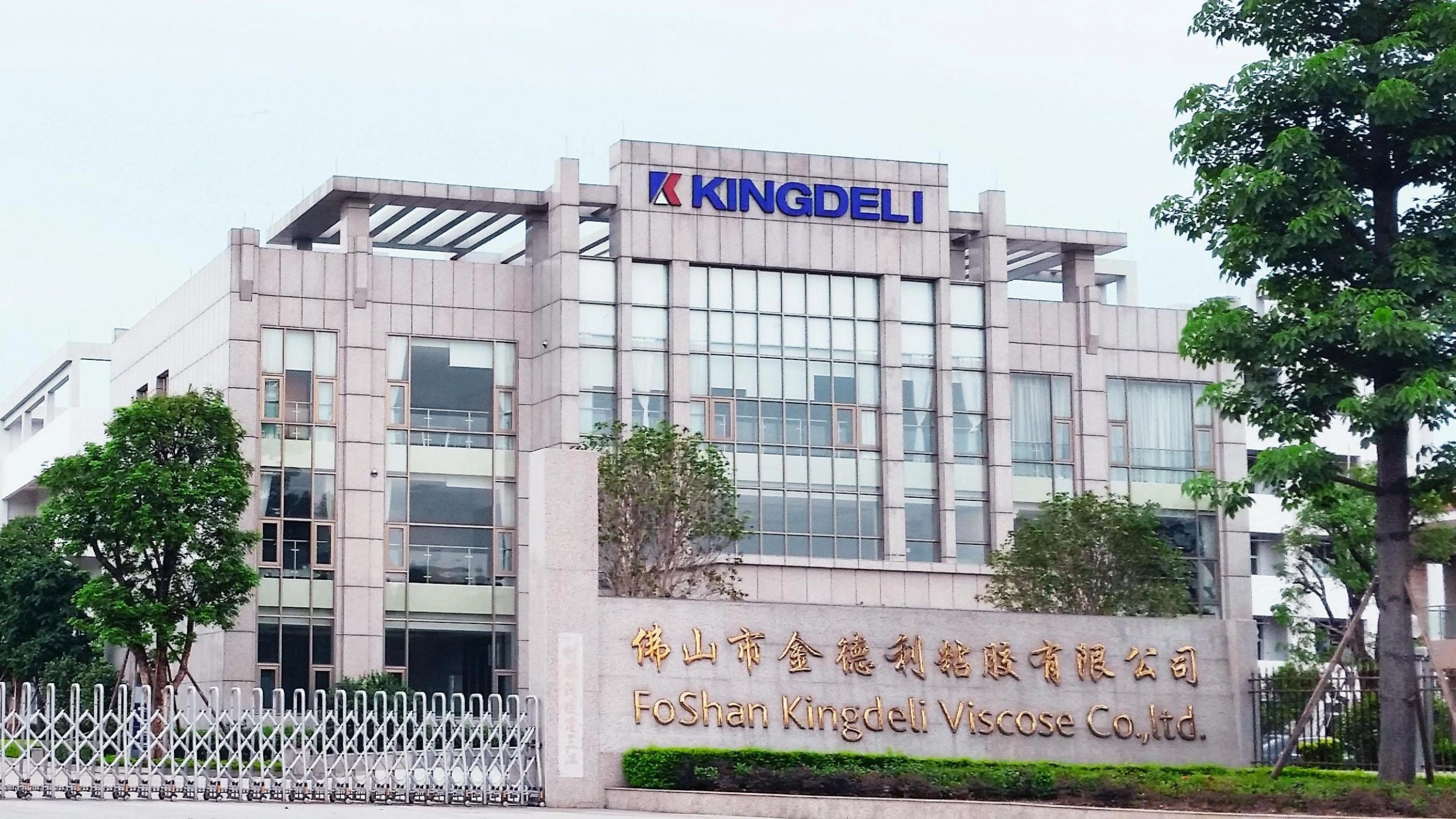
Since 1998, KINGDELI has built an advanced manufacturing platform focused on sealants, adhesives and coatings. Headquartered in Foshan, China, KINGDELI’s 66,000 m² facility runs fully automated production lines with an annual capacity exceeding 100,000 tons, ensuring supply continuity for global partners. The company is recognized as a National High-Tech Enterprise and contributed to the formulation of the Chinese national standard GB/T 29755-2013, reinforcing its technical credibility.
Certifications include ISO 9001 (quality management), ISO 14001 (environmental management), CE marks where applicable, and adherence to international testing regimes such as ASTM and EN methods for sealants. These credentials matter for OEM/ODM because they demonstrate systematic quality control and regulatory compliance across export markets.
OEM/ODM services and formulation capabilities
KINGDELI offers full-service OEM/ODM support: customized formulation development (e.g., low-VOC acetic cure silicones), color matching, private label packaging, and factory testing. In practice, KINGDELI’s R&D center can run rapid prototyping and send small batches for client trials, then scale to automated production runs—shortening time-to-market for brand owners and manufacturers.
Practical supplier checklist and negotiation tips
When you contact a supplier like KINGDELI for acetic cure RTV silicone, use this checklist:
Practical Guidance: Formulation Choices, Testing and On-site Use
Choosing the right formulation
Decide whether standard acetic cure silicone meets your needs or if you need enhanced properties such as anti-mold additives for sanitary applications, primerless adhesion for certain substrates, or accelerated cure for high-throughput assembly. For projects sensitive to odors or corrosion, discuss neutral cure alternatives or custom low-acid acetic blends with your OEM/ODM supplier.
Quality assurance and batch testing
Require a QA plan with each delivery: certificate of analysis (COA), batch number, aging test results, and adhesion verifications. For critical applications, perform accelerated weathering (UV) and thermal cycling tests and ask the supplier for ASTM/EN test reports demonstrating long-term performance. Third-party laboratory validation can be requested for contract-critical specifications.
On-site best practices and troubleshooting
Ensure joint surfaces are clean, dry, and free of oil or release agents. For best adhesion, follow manufacturer’s instructions about primer use on porous or problematic substrates. Typical cure rates vary with humidity and bead depth—measure cure depth (mm/24h) for your conditions and allow full cure before subjecting joints to mechanical stress. If adhesion loss, chalking or mold appear, gather batch data and consult the supplier’s technical team for root-cause analysis and corrective action.
Conclusion
Acetic cure silicone sealants remain an economical and high-performance choice for glazing, sanitary, and many general sealing applications. When procuring OEM/ODM acetic cure silicone sealant manufacturers and suppliers, evaluate production capacity, R&D support, certifications, and on-site technical service. KINGDELI’s 27+ years of industry experience, automated 66,000 m² facility and 100,000+ ton annual capacity, plus ISO and national-standard participation, position it as a reliable partner for global OEM/ODM needs. Demand detailed test data, confirm substrate compatibility, and request pilot batches to validate performance before large-scale adoption.
Common Questions (FAQ)
Q: Is acetic cure silicone suitable for natural stone and metals?
A: Use caution. Acetic cure silicones can react with certain metals (copper, brass) and may discolor some natural stones. For these substrates, run adhesion and staining tests or consider neutral cure silicone formulations.
Q: Can acetic cure silicone be painted?
A: Most acetic cure silicones are not paintable. If paintability is required, request a paintable silicone or a different chemistry (e.g., some neutral silicones or specialty hybrid sealants).
Q: What is the typical shelf life and storage for acetic cure sealants?
A: Typical shelf life is 12–18 months when stored in original unopened packaging at 5–25°C, away from direct sunlight. Confirm shelf-life data on the COA for each batch.
Q: How fast do acetic cure silicones cure?
A: Cure speed depends on humidity, temperature and bead depth. Many general-purpose acetic silicones achieve tack-free surface within 10–30 minutes and cure 2–3 mm per 24 hours under 23°C/50% RH; exact rates should be supplied by your manufacturer for specific formulations.
References & Further Reading
Ready to develop a custom acetic cure silicone or scale supply with a trusted OEM/ODM partner? Contact KINGDELI’s technical team to discuss formulations, sampling and production timelines.
Top glass glazing sealant Manufacturers and Suppliers
MS Silicone Sealant vs RTV Silicone: A B2B Comparison
MS Silicone Sealant Cure Times and Workability on Projects
Top silicone sealant Manufacturers and Suppliers
HY-3300
Do you offer technical support or application guidance?
Yes. Our technical team provides professional guidance on product selection, application methods, and troubleshooting to ensure optimal performance.
HY722B
Is this sealant suitable for sanitary applications?
Yes. It is specifically formulated with excellent anti-fungus properties, making it ideal for bathrooms, kitchens, and other humid environments.
HY-951
What packaging options are available?
HY951 is supplied in 400 ml cartridges for convenient application.
Distributor Partnership
What is the minimum order quantity (MOQ)?
MOQ depends on the product type, packaging, and whether OEM/ODM is required.
We offer flexible solutions for new distributors.
HY-4300
What is the service temperature range after curing?
After full curing, HY-4300 maintains excellent adhesion and elasticity between -50°C and +250°C.
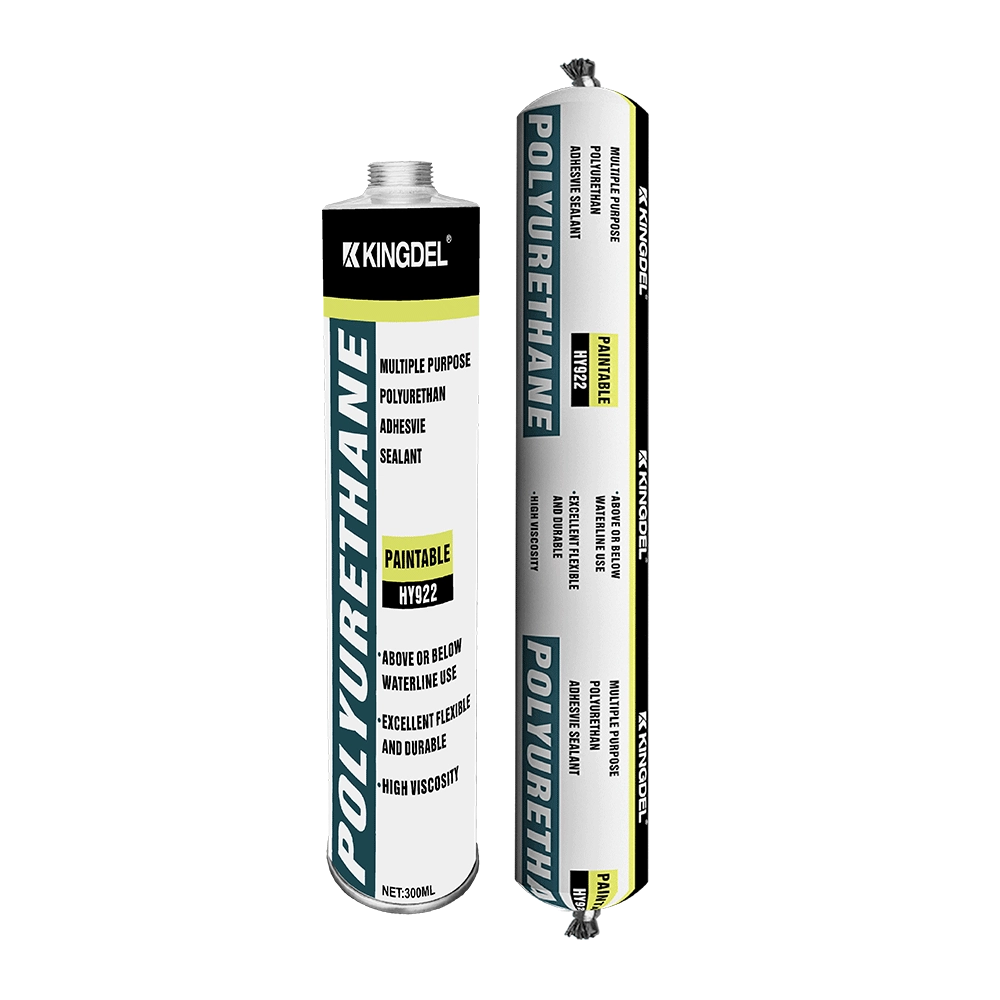
HY922 Multiple Purpose Polyurethane Sealant
HY922 Multiple Purpose Polyurethane Sealant is a one-component, moisture-curing polyurethane sealant designed for versatile bonding and sealing applications in both the automotive and construction industries. It cures to form a flexible yet tough elastomeric joint with excellent adhesion to a wide range of substrates. The formulation is non-corrosive, solvent-free, and produces a smooth, bubble-free finish during application.
HY922 delivers fast surface drying and quick positioning, improving installation efficiency while maintaining long-term durability. With strong weather resistance and good creep resistance, it performs reliably in demanding indoor and outdoor environments, including moist and partially submerged conditions.
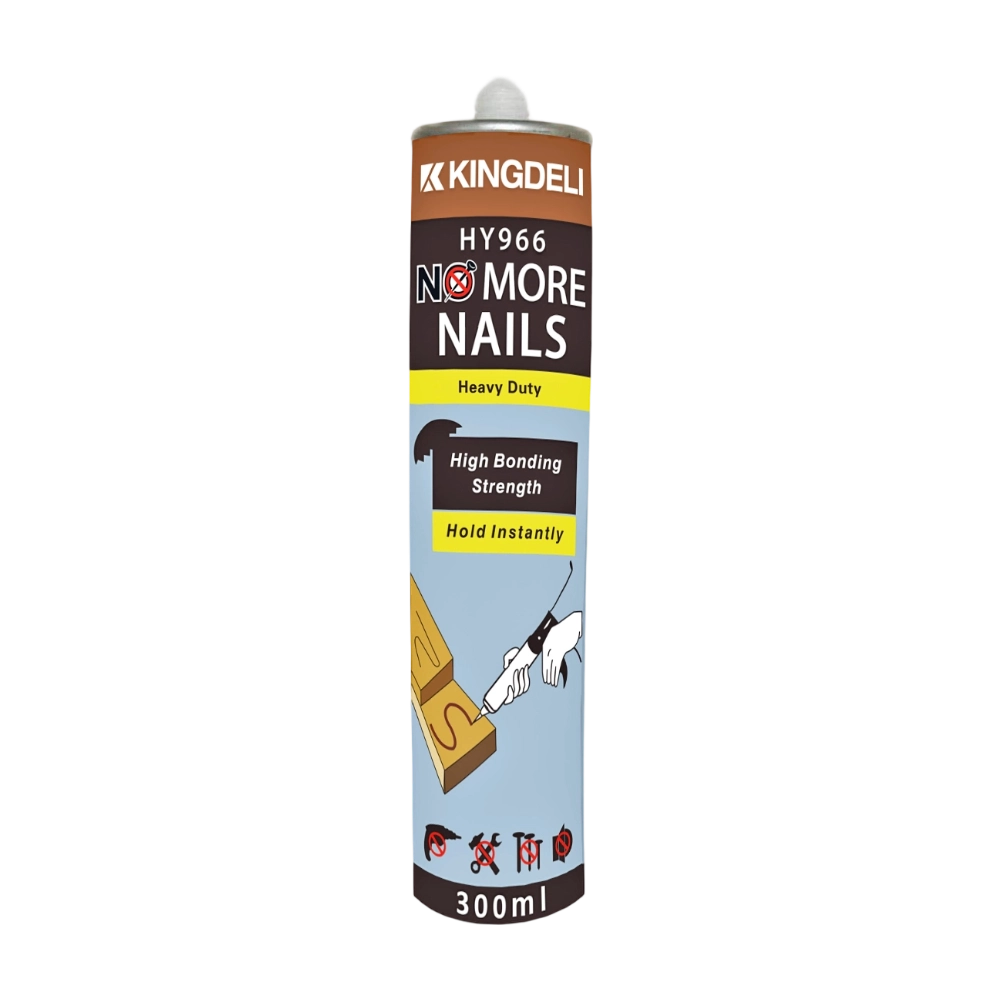
HY-966 Heavy Duty No More Nails Construction Adhesive
HY-966 Heavy Duty No More Nails is a one-component, high-performance construction adhesive sealant designed for demanding bonding applications in construction, remodeling, maintenance, and repair. Its instant grab formulation secures materials immediately, significantly reducing the need for bracing or mechanical fixing during installation.
HY-966 cures reliably in moist environments and delivers durable adhesion across a wide range of substrates. It provides excellent resistance to water, temperature variation, and aging, ensuring long-term performance in interior construction applications.
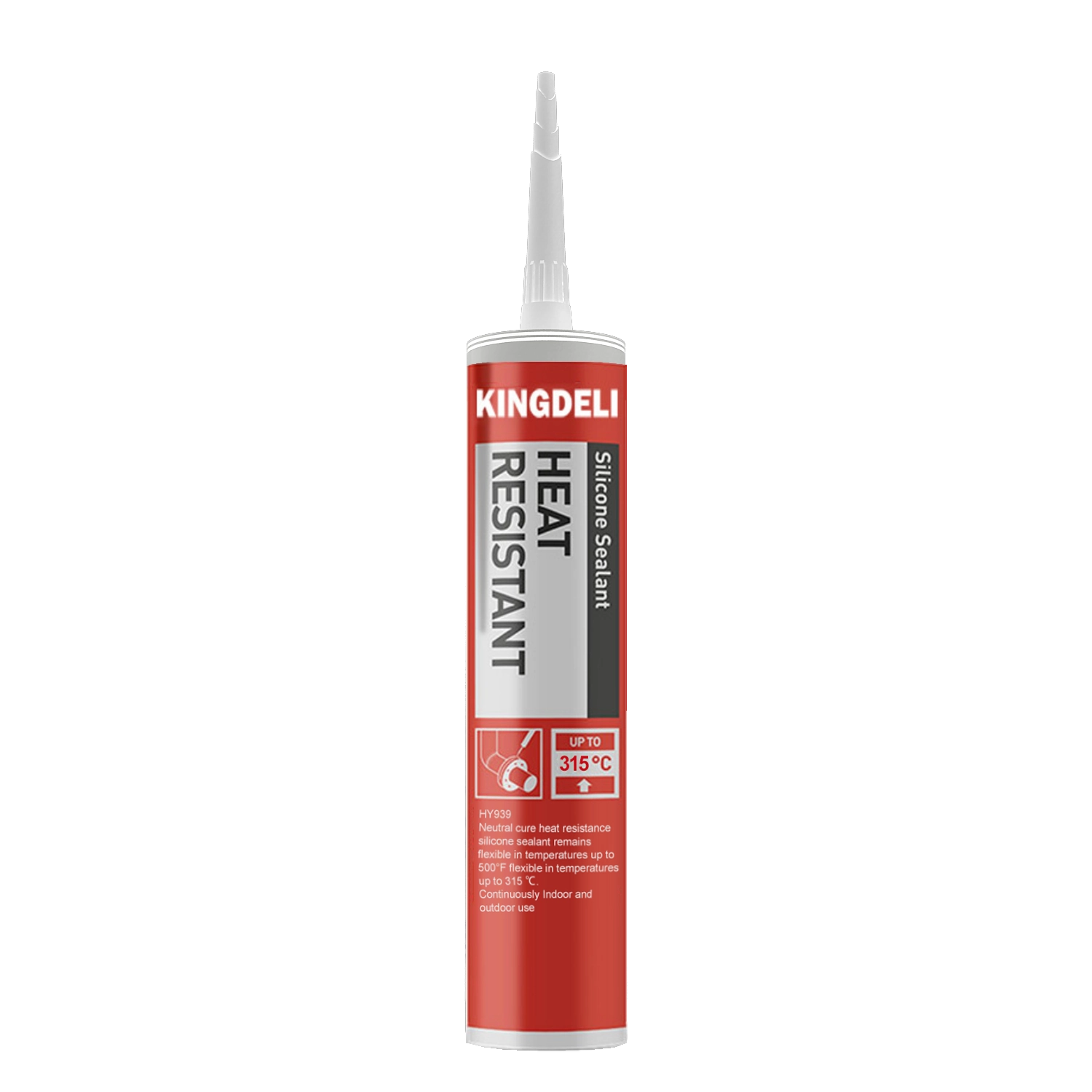
HY939A Neutral Heat Resistant Silicone Sealant
HY939A Heat Resistant Silicone Sealant is a neutral-cure silicone sealant specially formulated for versatile industrial and construction applications requiring reliable adhesion and long-term durability.
The sealant provides strong, non-corrosive adhesion to a variety of substrates, including glass, metal, gypsum board, marble, and certain plastics, making it ideal for both structural and sealing purposes.
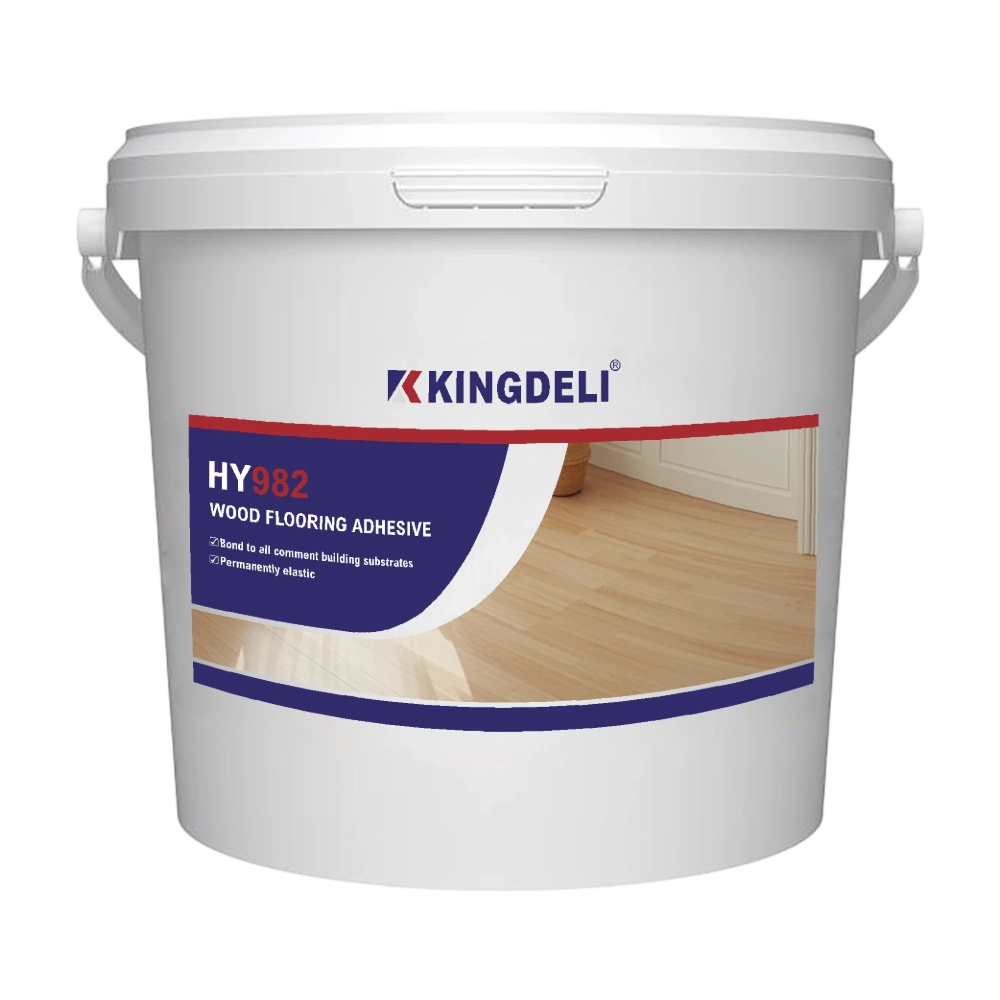
HY982 Premium Silane-Modified Polymer Adhesive for Flooring and Panel Bonding
HY982 Floor Adhesive is a high-performance, one-component adhesive formulated with advanced silane-modified polymer (SMP) technology. It is paintable, non-staining, and environmentally friendly, offering exceptional bonding strength without the need for a primer.
Designed for modern interior installations, HY982 Floor Adhesive provides excellent adhesion to wood, metal, stone, sintered slabs, glass, ceramics, and many other common building materials—making it the ideal choice for flooring installation and panel bonding applications crystal clear formulation.
Let’s Build Stronger Bonds with Quality Adhesives and Sealants
Have questions about the topic or need tailored sealant solutions for your project?
Our team is ready to provide expert guidance, product recommendations, and application support.
Innovating with Integrity, Bonding the World
Since 1998, KINGDELI has delivered trusted, sustainable sealant solutions that connect industries and inspire progress worldwide.
Whatsapp: +8618825946249
Kingdeli
Kingdeli
Kingdeli
Kingdeli
Kingdeli