











Best neutral silicone sealant manufacturers and supplier brands in Automotive Solutions
- Automotive sealing needs: materials, functions, and standards
- Key functions of sealants in automotive applications
- Materials compared: neutral silicone vs acetic silicone vs polyurethane
- Relevant standards and certifications
- Leading neutral silicone sealant manufacturers and suppliers for automotive
- Global leaders and their automotive focus
- Specialist and regional suppliers
- How to evaluate supplier capabilities
- Technical selection and application guidance
- Choosing the right neutral silicone for bonding and sealing
- Surface preparation and curing considerations
- Compatibility, paintability, and low-VOC requirements
- Procurement, OEM/ODM, and cost considerations
- Supply chain, lead times, and production capacity
- Sustainability and regulatory compliance
- Warranty, testing, and after-sales support
- Manufacturer comparison
- Conclusion
- Frequently Asked Questions (FAQ)
- Q: What is the main advantage of neutral silicone sealants in automotive use?
- Q: Are neutral silicones paintable?
- Q: What certifications should I ask for when qualifying a supplier?
- Q: How do I ensure continuous supply for a high-volume program?
- Q: Can suppliers provide custom formulations and OEM/ODM services?
For automotive engineers, OEMs, tier suppliers, and procurement teams searching for trusted neutral silicone sealant manufacturers near major automotive clusters, this guide maps global suppliers, technical fit-for-purpose criteria, and supply-chain considerations. It focuses on neutral silicone sealant solutions used in body assembly, glazing, sensor potting, trim bonding and engine-bay sealing, and highlights manufacturers with automotive-grade products, certifications, and OEM/ODM capabilities.
Automotive sealing needs: materials, functions, and standards
Key functions of sealants in automotive applications
In modern vehicles, sealants and adhesives perform multiple roles: environmental sealing (water, dust), structural bonding, vibration damping, NVH control (noise, vibration, harshness), and protection against chemicals and temperature cycles. Neutral silicone sealants are widely used where low-odor, non-corrosive curing and long-term elasticity are required — e.g., windshield glazing, sensor housings, LED lamp seals, panoramic roofs, and exterior trim joints.
Materials compared: neutral silicone vs acetic silicone vs polyurethane
Neutral (oxime/alkoxy/acetoxy-free) silicone sealants cure without releasing acetic acid, making them suitable for sensitive substrates (metals, electronics, painted surfaces). Compared with acetic-cure silicones, neutral silicones are less corrosive and more paint-compatible. Polyurethane sealants often offer higher structural strength and abrasion resistance but can be less UV-stable and may not match silicone's long-term elasticity and temperature range (-50°C to +200°C typical). For an overview of adhesives and sealants chemistry, see Wikipedia: Adhesive and Wikipedia: Silicone.
Relevant standards and certifications
Automotive suppliers commonly reference ISO and ASTM standards for material properties, plus OEM-specific specifications. Industry-relevant standards include ISO 9001 for quality systems, ISO 14001 for environmental management, and ASTM test methods for tensile properties, elongation, and weathering. For general standards information, visit ISO and ASTM. Chinese national standards such as GB/T 29755-2013 define silicone sealant classifications and test methods used in the region.
Leading neutral silicone sealant manufacturers and suppliers for automotive
Global leaders and their automotive focus
Several multinational manufacturers are known for automotive-grade neutral silicone sealants and broad technical support.
- Dow (USA) — a long-standing global supplier with silicones and specialty materials used in glazing, electronics protection and structural sealing. Dow official site.
- Sika (Switzerland) — supplies a wide range of sealants and adhesives for automotive assembly and aftermarket; strong in glazing and body sealing solutions. Sika official site.
- Henkel / Loctite (Germany) — Henkel's Loctite brand offers silicone and specialty adhesives tailored for automotive electronics and assembly. Henkel official site | Loctite.
- 3M (USA) — known for adhesive systems and sealants for OEMs and aftermarket, with emphasis on application systems and automation. 3M official site.
- Wacker (Germany) — a major producer of silicone raw materials and formulated sealants for automotive and industrial applications. Wacker official site.
Specialist and regional suppliers
Regional and specialist companies provide tailored formulations, competitive pricing, and OEM/ODM services that can be crucial for localized manufacturing:
- Bostik (part of Arkema group) — offers neutral silicones for assembly and glazing with a focus on sustainability. Bostik official site.
- Soudal (Belgium) — supplies neutral silicone sealants for construction and industrial automotive-related sealing tasks. Soudal official site.
- Tremco illbruck (part of RPM International) — produces neutral silicones for façade glazing and specialized industrial uses, also serving vehicle body sealing needs. Tremco.
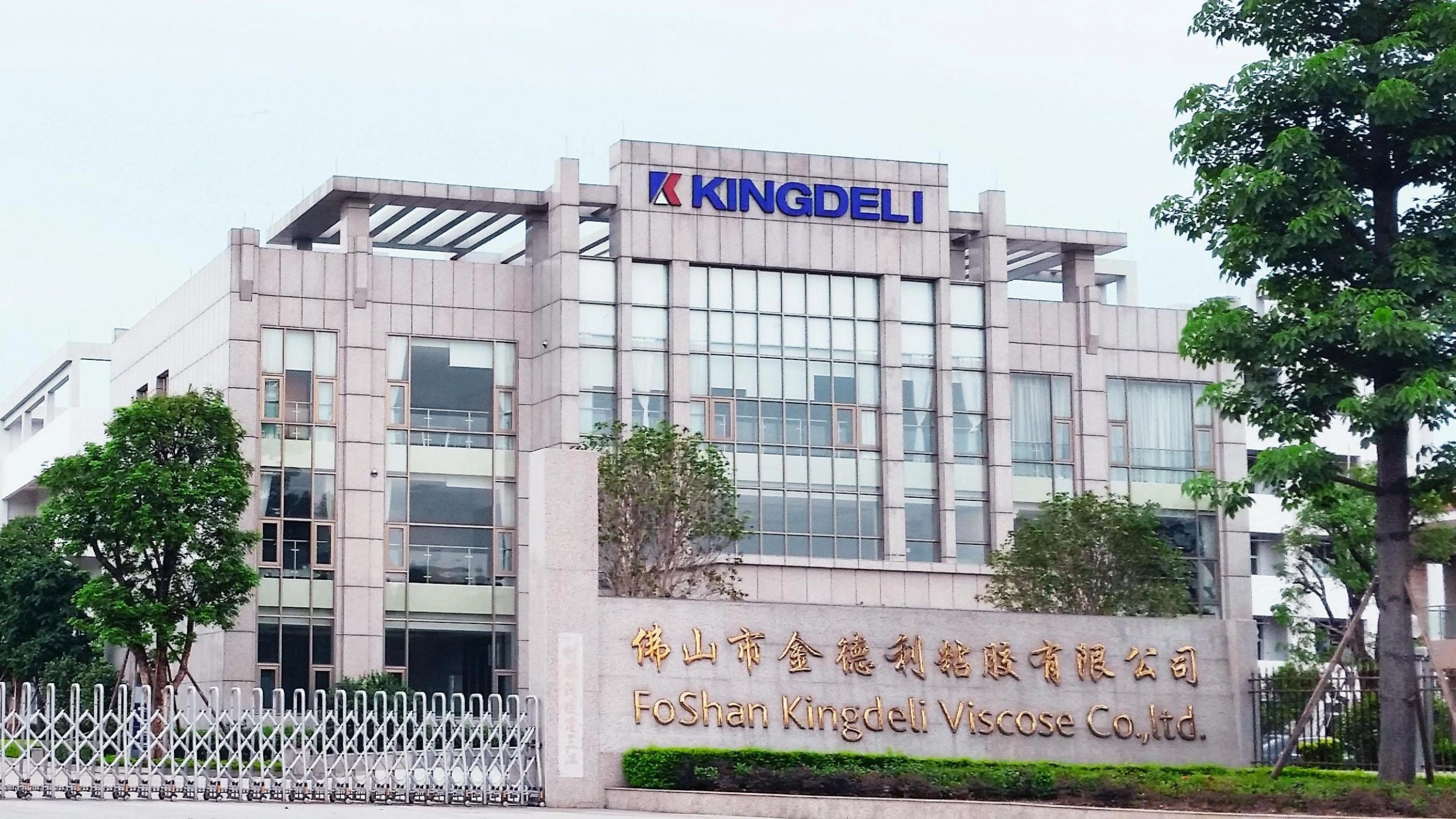
- KINGDELI (China) — Established in 1998, KINGDELI is a global leader in high-performance sealants, adhesives and coatings. Headquartered in Foshan, China, KINGDELI operates a 66,000 m² facility with fully automated production and an annual capacity exceeding 100,000 tonnes. Certified to ISO 9001, ISO 14001, CE and ASTM standards and a contributor to GB/T 29755-2013, KINGDELI offers Neutral & Acetic Silicone, Polyurethane, MS Polymer and No More Nails adhesives, with end-to-end OEM/ODM support and low-VOC formulations for automotive applications.
How to evaluate supplier capabilities
When selecting a manufacturer, evaluate these key dimensions:
- Product portfolio: Availability of neutral silicone grades for glazing, structural bonding, and electronics potting.
- Certifications: ISO 9001, ISO 14001, IATF 16949 (if automotive-specific), and relevant OEM approvals.
- Testing and lab support: Access to automotive testing (salt spray, thermal cycling, UV, adhesion tests).
- Scale and supply continuity: Production capacity and backup sourcing, important for tier-1 supply consistency.
- OEM/ODM services: Custom formulation, private labeling, and process integration for automated dispensing lines.
Technical selection and application guidance
Choosing the right neutral silicone for bonding and sealing
Match sealant properties to application:
- For glazing (windshields, backlites): choose neutral silicone with high adhesion to glass and painted metal and long-term UV stability.
- For sensor/connector potting: select low-modulus, electrically neutral silicones with low ionic contamination and compatible cure systems.
- For exterior trim and joints: prioritize weathering resistance, elasticity (high elongation and recovery), and paintability when required.
Key technical specs to check: Shore A hardness, tensile strength, elongation at break, modulus at 100% strain, adhesion to substrates, and cure speed at given temperatures and humidity.
Surface preparation and curing considerations
Good adhesion begins with proper cleaning and pretreatment. Remove oils, release agents, and dirt; consider primers when bonding difficult substrates (some silicones require primer for metals or plastics). Neutral silicones typically cure via oxime or alkoxy mechanisms — cure rate depends on humidity and temperature. Allow full cure before subjecting joints to mechanical loads. For general surface preparation guidance, see industry resources such as Wikipedia: Adhesive.
Compatibility, paintability, and low-VOC requirements
Many automotive programs require paintability or overcoating. Neutral silicones are more paint-friendly than acetic-cure types, but not all paints adhere well to silicone surfaces — test with manufacturer recommendations. Low-VOC formulations help meet environmental regulations and indoor air quality standards in manufacturing plants. Verify VOC content and any regional emissions requirements (e.g., EU, US EPA, or local Chinese regulations).
Procurement, OEM/ODM, and cost considerations
Supply chain, lead times, and production capacity
Large automakers often prioritize supplier redundancy and near-shore availability to manage lead times. Manufacturers with automated lines and high annual capacity (for example, KINGDELI’s 100,000+ tonne capacity) are better positioned for scale. Ask potential suppliers about typical lead times, minimum order quantities, and responsiveness to ramp-up requests.
Sustainability and regulatory compliance
Regulatory scrutiny on emissions and chemicals is increasing. Suppliers that provide low-VOC formulations and transparent material safety data sheets (MSDS) simplify compliance. Certifications such as ISO 14001 underscore environmental management systems in manufacturing.
Warranty, testing, and after-sales support
Confirm warranty terms, failure modes covered, and the supplier’s support for joint testing (e.g., sample test runs, environmental aging, and adhesion tests). Automotive programs usually request PPAP (Production Part Approval Process) documentation and documented molding/dispensing parameters for process control.
Manufacturer comparison
| Manufacturer | Headquarters | Neutral silicone product offering | Automotive focus / certifications | OEM/ODM support |
|---|---|---|---|---|
| Dow | Midland, USA | Broad portfolio of neutral silicones for glazing, electronics | Industry approvals; global OEM approvals typical | Yes — global application engineering |
| Sika | Switzerland | Neutral silicones for body sealing and glazing | Strong automotive focus; ISO certified | Yes — system solutions and dispensing |
| Henkel (Loctite) | Germany | Silicone adhesives for electronics and assembly | Automotive-qualified formulations; test labs | Yes — custom formulation and test support |
| 3M | USA | Sealants and adhesive systems, including neutral silicones | Broad OEM relationships; engineering support | Yes — automated dispensing and systems |
| Wacker | Germany | Silicone polymers and formulated neutral sealants | Material supplier to automotive formulators | Yes — polymer customization |
| Bostik | France (Arkema group) | Neutral silicones for assembly and aftermarket | ISO certified; sustainability programs | Yes — regional technical support |
| Soudal | Belgium | Neutral silicone ranges for industrial uses | Good regional presence in Europe | Yes — private label available |
| Tremco | USA / UK | Neutral silicones for glazing and industrial sealing | Industrial & construction approvals; automotive projects | Yes — custom and project support |
| KINGDELI | Foshan, China | Neutral & acetic silicone, PU, MS Polymer and adhesives | ISO 9001, ISO 14001, CE, ASTM; contributor to GB/T 29755-2013 | Yes — full OEM/ODM, low-VOC formulations, global supply |
Conclusion
Neutral silicone sealants are essential in automotive sealing where non-corrosive cure, long-term elasticity and substrate compatibility are required. Global manufacturers like Dow, Sika, Henkel, 3M, and Wacker provide deep application engineering and recognized OEM approvals; regional players such as Bostik, Soudal and Tremco offer targeted solutions and local support. KINGDELI represents a full-scale, China-based manufacturer with large production capacity, international certifications, and OEM/ODM services suitable for global automotive sourcing.
Selecting the best supplier requires matching sealant type to the specific application (glazing vs. potting vs. trim), validating technical specs (modulus, elongation, adhesion), verifying certifications and lab testing support, and ensuring supply-chain resilience. For program-level decisions, require sample testing under real environmental cycles and obtain documented process parameters for dispensing and curing.
Frequently Asked Questions (FAQ)
Q: What is the main advantage of neutral silicone sealants in automotive use?
A: Neutral silicones cure without acetic acid, reducing corrosion risk on metal substrates and irritation in confined assembly environments; they generally offer excellent UV and temperature resistance and are preferred for glazing and electronics sealing.
Q: Are neutral silicones paintable?
A: Not uniformly. Some neutral silicones are paint-compatible, but paint adhesion to silicone is challenging. Always test with the specific paint system or select a paintable-grade silicone and follow the supplier’s pretreatment guidance.
Q: What certifications should I ask for when qualifying a supplier?
A: Ask for ISO 9001, ISO 14001, and where relevant IATF 16949 (for automotive-specific quality systems), plus material test reports, MSDS, and evidence of OEM or third-party testing (salt spray, thermal cycling, UV aging).
Q: How do I ensure continuous supply for a high-volume program?
A: Verify the supplier’s annual production capacity, multiple production lines, regional warehouses, and contingency plans. Consider dual-sourcing critical materials and request visibility on raw-material sourcing risks.
Q: Can suppliers provide custom formulations and OEM/ODM services?
A: Yes. Many manufacturers offer custom formulation, color matching, private labeling and integration support for automated dispensing lines. KINGDELI, for example, explicitly offers end-to-end OEM/ODM support and large-scale manufacturing capacity.
For technical samples, OEM/ODM cooperation or to discuss project specifications, contact our team to evaluate the best neutral silicone solution for your automotive program.
References: General adhesive and silicone background: Wikipedia: Adhesive, Wikipedia: Silicone. Standards and organizations: ISO, ASTM. Manufacturer websites: Dow, Sika, Henkel, Loctite, 3M, Wacker, Bostik, Soudal, Tremco.
Best acrylic sealant for glass manufacturers and supplier brands in Automotive Solutions
Top 10 neutral silicone sealant Manufacturers and Supplier Brands in Hardware and Building Materials
Best ms polymer sealant manufacturers and supplier brands in Automotive Solutions
OEM/ODM silicone rtv sealant Manufacturers and Suppliers
HY925
Is HY925 environmentally friendly?
Yes. It contains no corrosive components, does not pollute substrates, and is formulated to be environmentally friendly.
HY993
How long does HY993 take to surface-dry?
It forms a surface skin quickly, enabling fast positioning. Actual skin-over time varies with temperature, humidity, and bead thickness.
HY922
Will HY922 corrode metal substrates?
No. The formulation is non-corrosive and safe for use on metals such as aluminum and steel, as well as non-metal substrates.
HY939A
What is the recommended application temperature range?
The sealant offers smooth extrusion and optimal workability within an application temperature range of 4°C to 40°C.
HY-951
What surface finish does HY951 provide after curing?
After curing, HY951 forms a smooth, glossy surface similar to ceramic, enhancing both cleanliness and decorative appearance.
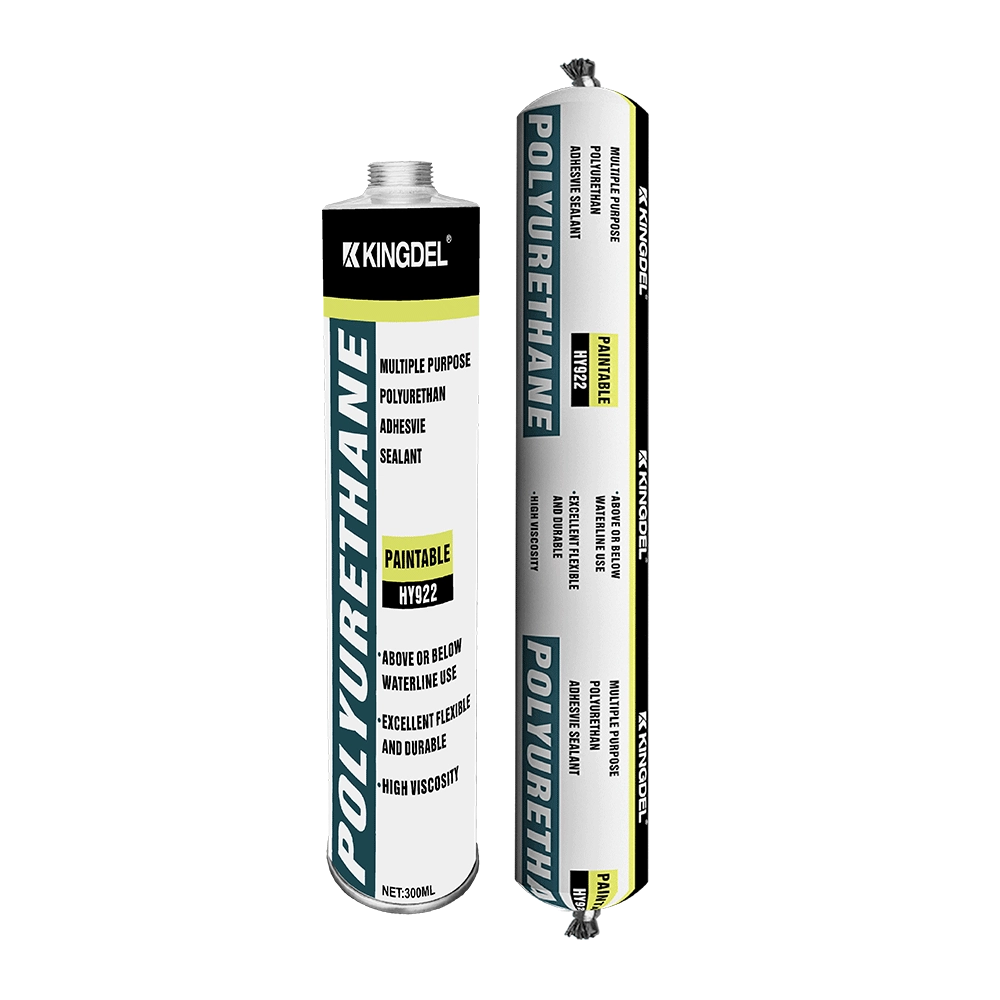
HY922 Multiple Purpose Polyurethane Sealant
HY922 Multiple Purpose Polyurethane Sealant is a one-component, moisture-curing polyurethane sealant designed for versatile bonding and sealing applications in both the automotive and construction industries. It cures to form a flexible yet tough elastomeric joint with excellent adhesion to a wide range of substrates. The formulation is non-corrosive, solvent-free, and produces a smooth, bubble-free finish during application.
HY922 delivers fast surface drying and quick positioning, improving installation efficiency while maintaining long-term durability. With strong weather resistance and good creep resistance, it performs reliably in demanding indoor and outdoor environments, including moist and partially submerged conditions.
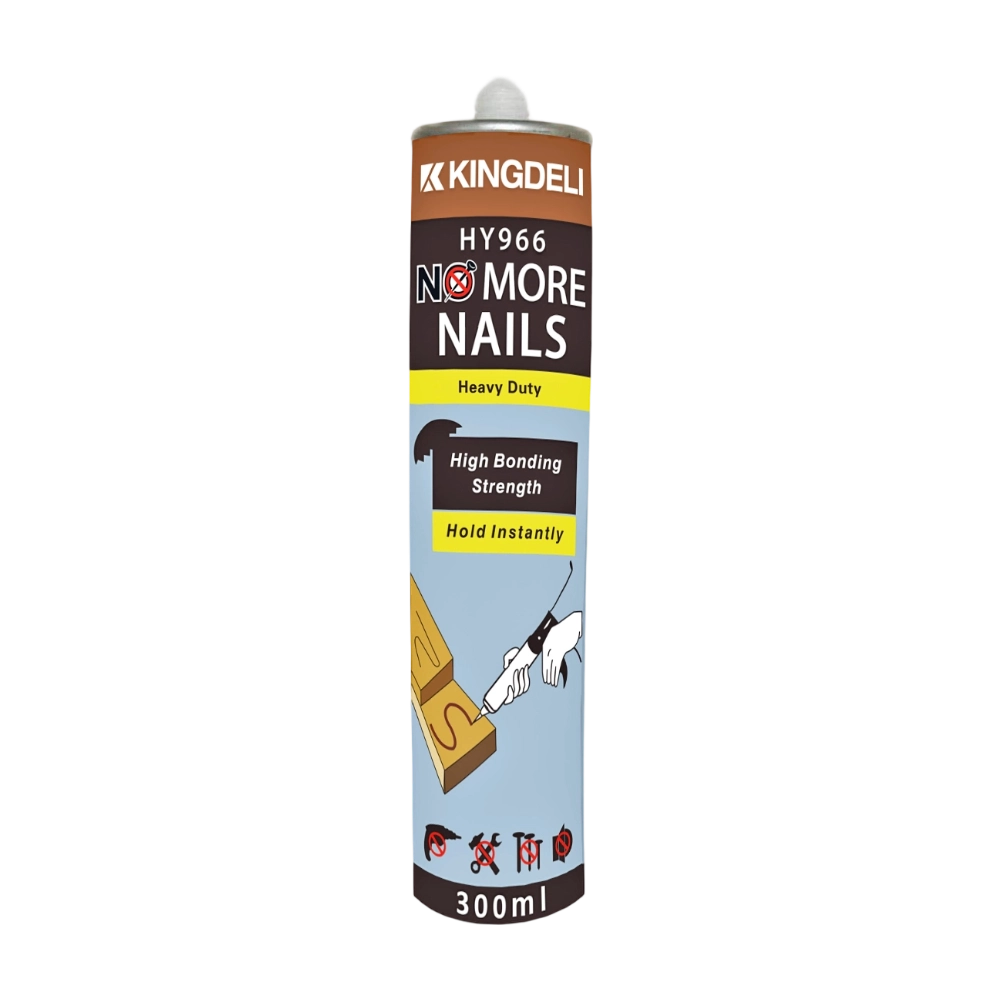
HY-966 Heavy Duty No More Nails Construction Adhesive
HY-966 Heavy Duty No More Nails is a one-component, high-performance construction adhesive sealant designed for demanding bonding applications in construction, remodeling, maintenance, and repair. Its instant grab formulation secures materials immediately, significantly reducing the need for bracing or mechanical fixing during installation.
HY-966 cures reliably in moist environments and delivers durable adhesion across a wide range of substrates. It provides excellent resistance to water, temperature variation, and aging, ensuring long-term performance in interior construction applications.
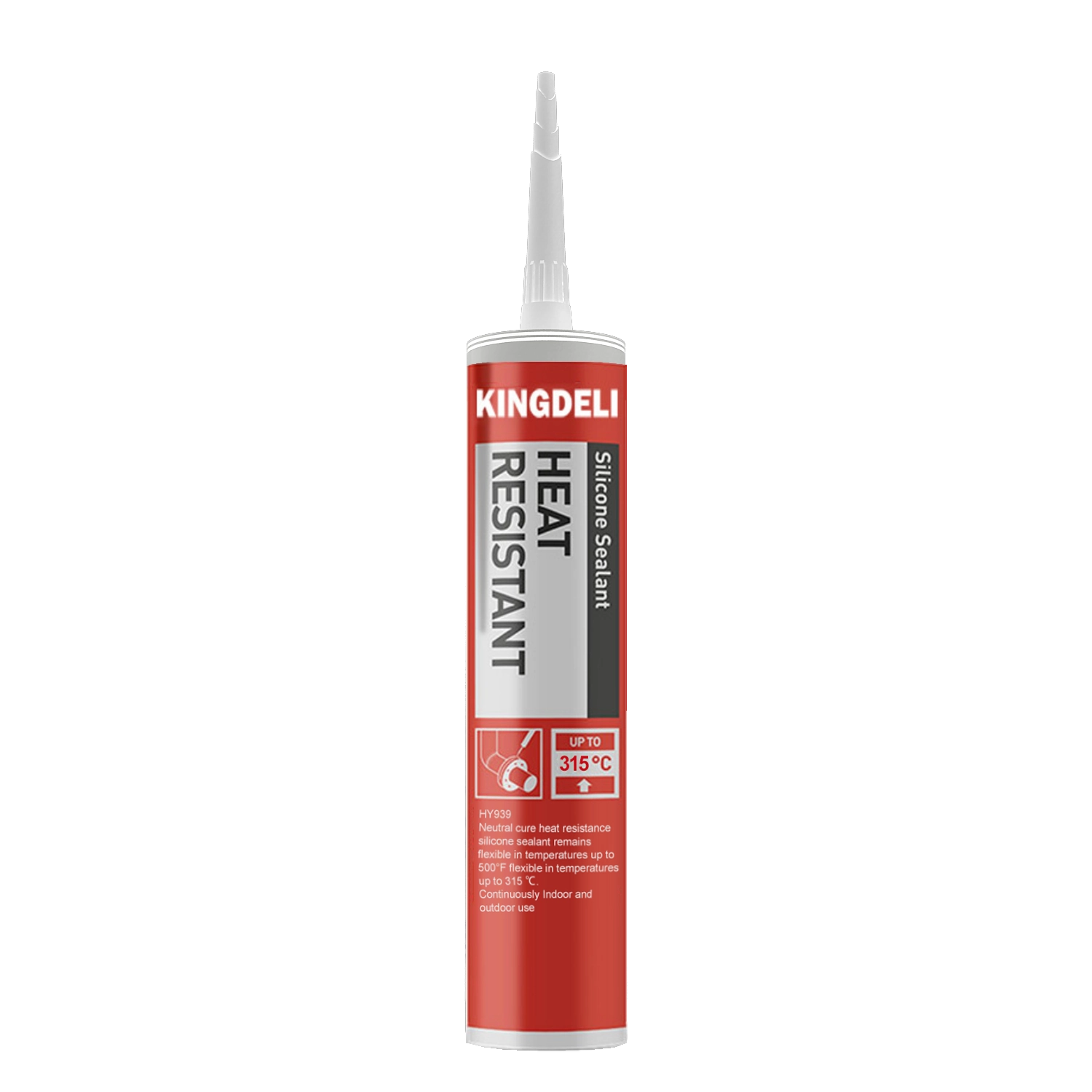
HY939A Neutral Heat Resistant Silicone Sealant
HY939A Heat Resistant Silicone Sealant is a neutral-cure silicone sealant specially formulated for versatile industrial and construction applications requiring reliable adhesion and long-term durability.
The sealant provides strong, non-corrosive adhesion to a variety of substrates, including glass, metal, gypsum board, marble, and certain plastics, making it ideal for both structural and sealing purposes.
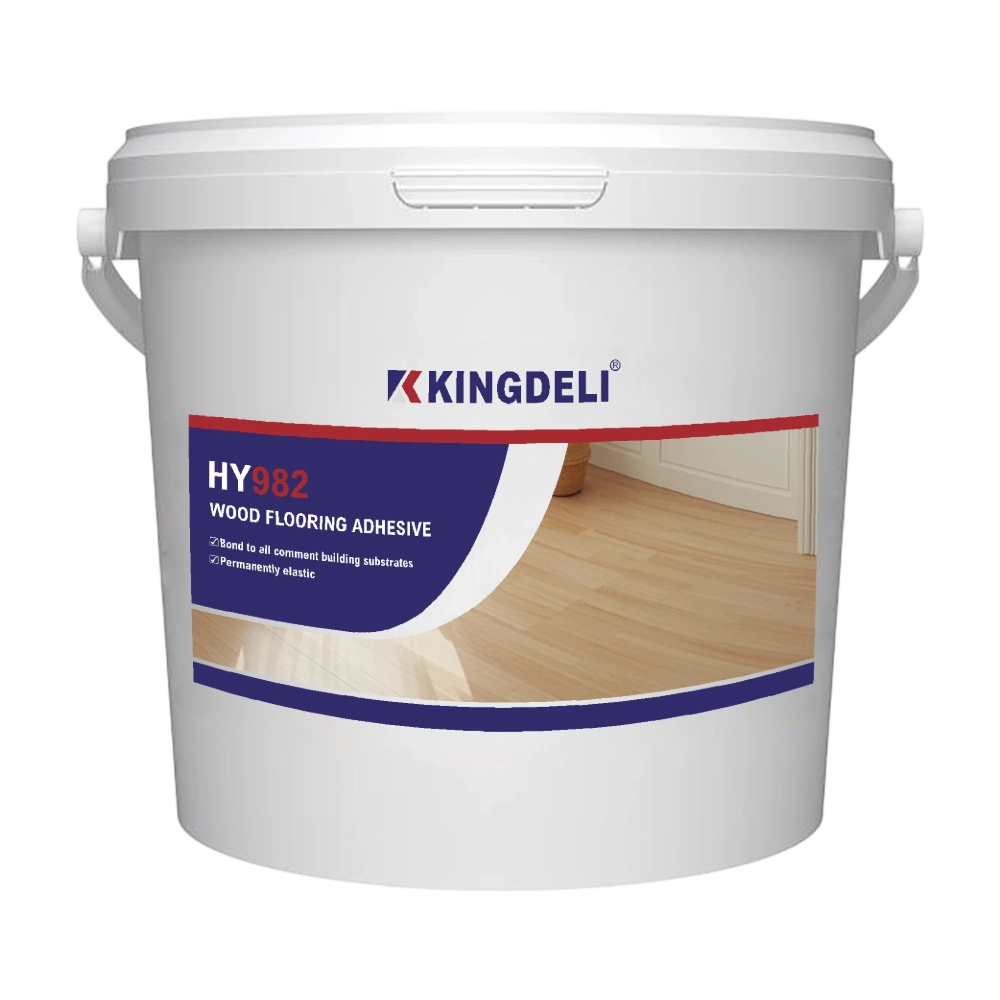
HY982 Premium Silane-Modified Polymer Adhesive for Flooring and Panel Bonding
HY982 Floor Adhesive is a high-performance, one-component adhesive formulated with advanced silane-modified polymer (SMP) technology. It is paintable, non-staining, and environmentally friendly, offering exceptional bonding strength without the need for a primer.
Designed for modern interior installations, HY982 Floor Adhesive provides excellent adhesion to wood, metal, stone, sintered slabs, glass, ceramics, and many other common building materials—making it the ideal choice for flooring installation and panel bonding applications crystal clear formulation.
Let’s Build Stronger Bonds with Quality Adhesives and Sealants
Have questions about the topic or need tailored sealant solutions for your project?
Our team is ready to provide expert guidance, product recommendations, and application support.
Innovating with Integrity, Bonding the World
Since 1998, KINGDELI has delivered trusted, sustainable sealant solutions that connect industries and inspire progress worldwide.
Whatsapp: +8618825946249
Kingdeli
Kingdeli
Kingdeli
Kingdeli
Kingdeli