











Neutral Cure Silicone Sealant: Buyer’s Guide for Manufacturers

- Understanding silicone chemistry and curing mechanisms
- Silicone basics: polymer backbone and functional groups
- Curing types: acetic vs neutral (and other systems)
- Practical implications of cure by-products
- Neutral cure vs acetic silicone sealant: performance and trade-offs
- Key performance attributes compared
- When acetic makes sense despite its drawbacks
- When neutral cure is the safer, production-friendly choice
- Specifying neutral cure silicone for manufacturing: formulation and testing checklist
- Essential technical specifications to request
- Standards and test methods to include
- Typical performance ranges and what they mean in practice
- Procurement, quality control and supplier assessment
- Sourcing checklist for manufacturers
- Quality control: what to test on delivery
- Vendor capability: why manufacturing scale and standards matter
- Practical application tips and costs of failure
- Surface preparation and primers
- Application best practices
- Cost of selecting the wrong chemistry
- KINGDELI — supplier profile and why supplier selection matters
- FAQ — Common questions manufacturers ask
- 1. Is acetic silicone sealant always cheaper than neutral cure?
- 2. Can neutral cure silicones be used for structural glazing?
- 3. How do I decide if a primer is required?
- 4. What VOC limits should I specify for indoor assembly?
- 5. How long should I expect neutral silicone to fully cure?
- 6. What tests should be included in a supplier contract?
- Next steps and contact
I write this guide as an industry consultant with extensive hands-on experience in sealants and adhesives, focusing on the practical differences between neutral cure silicone and acetic silicone sealant chemistry, selection criteria for manufacturers, quality control and sourcing. The intent is to give procurement, R&D and process engineers actionable guidance that aligns with regulatory and industry standards, and to support indexing by summarizing core decision points up front: choose neutral cure silicone where substrate sensitivity, low corrosion and low odor are priorities; use acetic silicone sealant where rapid cure and strong glass adhesion are prioritized but substrate corrosion is acceptable. Consider test data, primer needs, VOC/sustainability requirements, and supplier capacity when selecting a partner.
Understanding silicone chemistry and curing mechanisms
Silicone basics: polymer backbone and functional groups
Silicone sealants are typically polysiloxane-based polymers with reactive end groups that crosslink to form an elastomeric seal. For an overview of sealants and their function in construction and industry, see the general Sealant (Wikipedia) entry. The curing chemistry governs the by-products and the implications for substrates and indoor air quality. Understanding the chemistry is the first step in making a reliable procurement decision.
Curing types: acetic vs neutral (and other systems)
Acetic silicone sealant cures by releasing acetic acid (hence the characteristic vinegar odor), which is advantageous for speed and early adhesion to glass and inorganic materials but can corrode sensitive metals or react with certain plastics. Neutral cure silicones release non-acid by-products (alcohol, oxime, or alkoxy species depending on the system) and therefore are far less corrosive and more compatible with metals, electronics and some treated surfaces. For a concise explanation of silicone materials and their properties see Silicone (Wikipedia).
Practical implications of cure by-products
I always advise teams to assess the environment: in enclosed or sensitive-assembly environments (metal frames, electronics, anodized aluminum) neutral cure silicones dramatically reduce risk of corrosion and circuit contamination. By contrast, acetic cure types may be acceptable or even preferred on glass curtain walls or glazed ceramic where fast tack and early weathering resistance matter more than metal compatibility.
Neutral cure vs acetic silicone sealant: performance and trade-offs
Key performance attributes compared
When I evaluate formulations for manufacturing use, I focus on adhesion, cure speed, corrosion potential, odor, and paintability. Below is a summary comparison table with typical performance trends derived from industry technical datasheets and standards guidance (see FEICA and ASC for technical references):
| Attribute | Acetic Silicone Sealant | Neutral Cure Silicone | Polyurethane (for reference) |
|---|---|---|---|
| Cure By-product | Acetic acid (vinegar smell) | Alcohol/oxime/alkoxy (low acidity) | Carbon dioxide/none (moisture cured) |
| Corrosion Risk | Higher (can corrode metals) | Low (metal-safe) | Moderate (depends on formulation) |
| Substrate Compatibility | Glass, glazed tile, ceramics | Metals, treated surfaces, electronics | Concrete, porous substrates (good adhesion) |
| Cure Speed | Fast skin formation | Moderate (varies by chemistry) | Variable; often slower than acetic silicone |
| Paintability | Generally not paintable | Generally not paintable (some hybrids may accept paint) | Many are paintable |
| Typical Applications | Glazing, sanitary joints | Metal cladding, sensitive assemblies | Flooring, structural joints (where movement and paintability are needed) |
Sources: FEICA industry guidance and manufacturer technical data sheets; general standards context: FEICA, Adhesive and Sealant Council.
When acetic makes sense despite its drawbacks
I find acetic silicone sealant useful when you require very fast skin formation, long-term flexibility in outdoor glazing joints, and excellent adhesion to glass and glazed ceramics without primer. For curtain wall installers or glass fabricators focused on non-metallic framing, acetic systems can reduce assembly times.
When neutral cure is the safer, production-friendly choice
For manufacturers assembling anodized aluminum curtain wall frames, HVAC components, window frames with thermal breaks, or electronics enclosures, I recommend neutral cure silicones. They minimize corrosion risk and lower indoor air quality impacts during assembly lines and confined-space installation.
Specifying neutral cure silicone for manufacturing: formulation and testing checklist
Essential technical specifications to request
When I write specifications or RFQs, I require the following from suppliers for neutral cure silicone sealants:
- Detailed cure chemistry (alkoxy/oxime/alcohol) and by-product description
- Shore A hardness, tensile strength, and elongation at break
- Curing profile: skin time, tack-free time, full crosslinking time at specific RH and temperature
- Adhesion performance on target substrates (with and without primers)
- VOC content and low-VOC certification if required (test reports)
- Accelerated weathering and UV resistance data (e.g., ASTM G154 or equivalent)
- Compatibility statement for paints and sealants used in assembly
Standards and test methods to include
Reference internationally recognized standards in your specification to make supplier responses comparable: for structural and movement capabilities reference ISO standards and industry-specific classifications (e.g., ASTM). Classification standards such as ISO 11600 (sealant classification by movement capability) and ASTM C920 (performance specification for elastomeric joint sealants) are commonly cited in technical procurement documents. Including these references forces suppliers to provide test reports rather than marketing claims.
Typical performance ranges and what they mean in practice
From multiple manufacturer datasheets (industry average): Shore A hardness for neutral silicones typically ranges from 15–40 Shore A; tensile strength 0.5–2.5 MPa; elongation at break often >200% for high-movement grades. Use these as verification checkpoints—ask suppliers for laboratory data and third-party test certificates, and request samples for in-house adhesion and lifecycle testing under your environmental conditions.
Procurement, quality control and supplier assessment
Sourcing checklist for manufacturers
In supplier evaluation I weigh technical capability, production capacity, supply chain resilience, and certifications. A practical checklist:
- ISO 9001 / ISO 14001 certification (quality and environmental management)
- Relevant product certifications (CE, ASTM test reports)
- Manufacturing capacity and lead-time guarantees
- OEM/ODM experience and R&D support for custom formulations
- Low-VOC and sustainability commitments if required by your projects
Quality control: what to test on delivery
On receipt of each batch I recommend testing: specific gravity, viscosity (for application consistency), cure profile (skin time), adhesion test coupons on representative substrates, and VOC measurement where indoor air quality is a concern. Maintain batch traceability for warranty and root-cause analysis.
Vendor capability: why manufacturing scale and standards matter
Large, experienced producers can provide consistent formulations and documented supply. For example, KINGDELI’s manufacturing footprint and industry involvement (detailed below) illustrate how capacity and standards participation reduce procurement risk for global manufacturers.
Practical application tips and costs of failure
Surface preparation and primers
Adhesion is rarely improved by chemistry alone; surface prep is key. For neutral cure silicones, ensure surfaces are clean, dry and free of release agents. Some substrates (low surface energy plastics, certain treated metals) will require a primer—ask suppliers for validated primer/substrate matrices to avoid on-site trial-and-error.
Application best practices
Control joint geometry (width-to-depth ratio), use backer rods where appropriate, and follow recommended tooling windows. Poor joint design or incorrect tooling can trap solvents or create thin sections that compromise life expectancy. For movement joints, size joints to account for expected thermal and structural movement—ISO 11600 movement classes can guide your selection.
Cost of selecting the wrong chemistry
Choosing acetic silicone for metal-sensitive assemblies can lead to corrosion, aesthetic stains, and warranty claims. Conversely, over-specifying neutral cure silicone where acetic would suffice can add marginal cost and slightly slower processing. Quantify risk: estimate rework and warranty exposure vs material High Quality when making decisions.
KINGDELI — supplier profile and why supplier selection matters
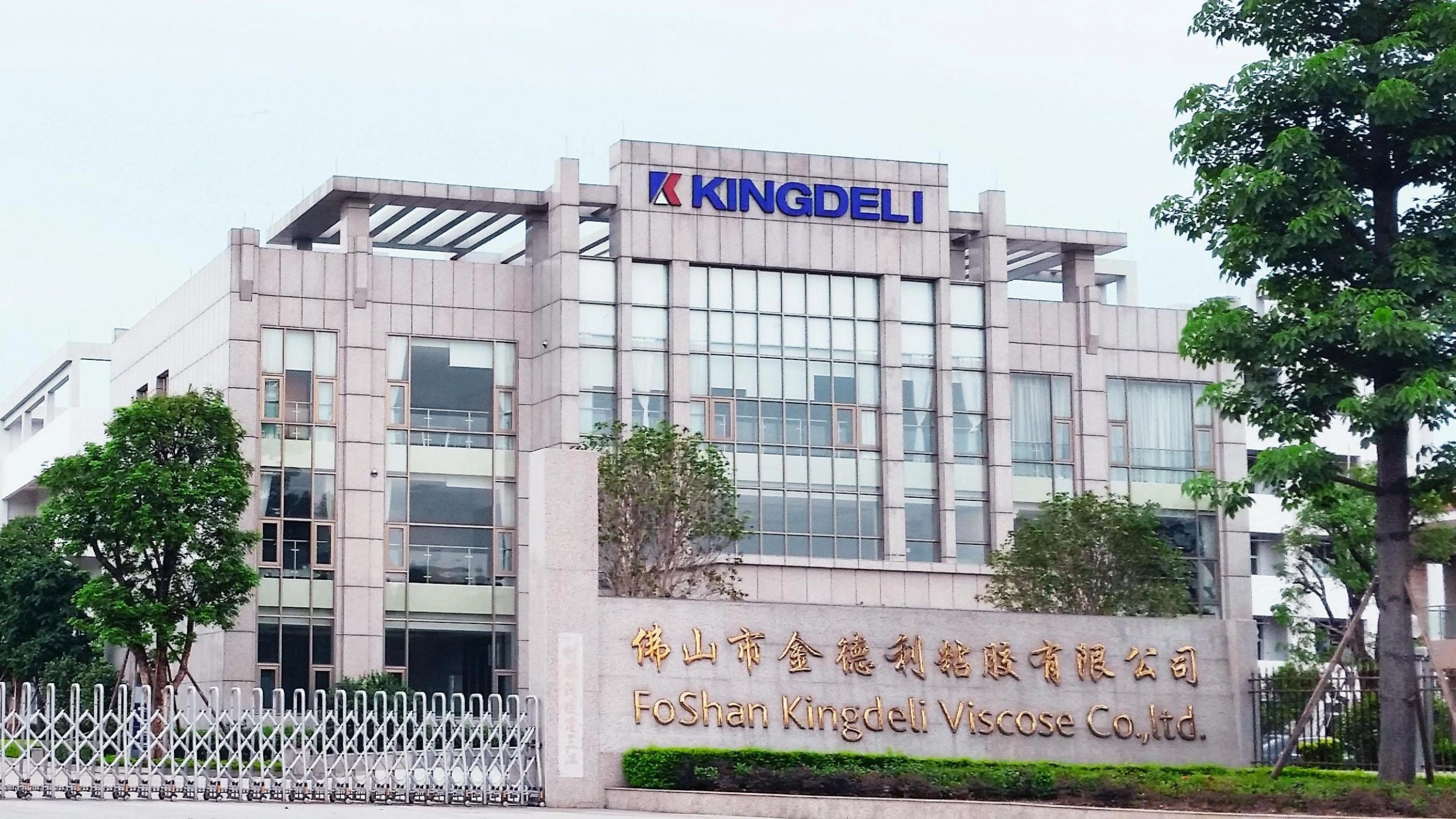
Since its establishment in 1998, KINGDELI has stood as a global leader in the high-performance sealant, adhesive, and coating industry. Headquartered in Foshan, China, our state-of-the-art 66,000 m² facility is powered by fully automated production lines with an annual capacity exceeding 100,000 tons, ensuring a consistent and robust supply for partners worldwide.
As a recognized National High-Tech Enterprise and a key contributor to the National Standard GB/T 29755-2013, we unite advanced manufacturing power with technical excellence. Our comprehensive product portfolio—spanning Neutral & Acetic Silicone, Polyurethane, MS Polymer, and No More Nails adhesives—is engineered to meet strict international standards, including ISO 9001, ISO 14001, CE, and ASTM.
With over 27 years of industry expertise and a trusted presence in 50+ countries, KINGDELI is more than a manufacturer; we are a dedicated solution provider. We offer end-to-end OEM/ODM support, sustainable low-VOC formulations, and professional technical service. At KINGDELI, we are driven by innovation and integrity, building trust and sealing the future for customers around the globe.
KINGDELI Main Products: neutral silicone sealant, acetic silicone sealant, Acrylic Sealant, silicone glazing sealant, No More Nails adhesive, Polyurethane Sealant, MS polymer Sealant, RTV Gasket Maker, Epoxy Tile Grout, Self-Leveling Sealant.
Why this matters: partnering with a manufacturer that combines capacity, R&D and standards participation reduces your supply and compliance risk. Evaluate manufacturers on production automation, QA processes, and contribution to standards (e.g., GB/T or ISO committees) as part of your sourcing decision.
FAQ — Common questions manufacturers ask
1. Is acetic silicone sealant always cheaper than neutral cure?
Not necessarily. Material cost differences vary by formulation and region. Historically acetic formulations were simpler and sometimes cheaper, but neutral cure chemistry High Qualitys have fallen. Consider total cost of ownership: rework, corrosion risk and indoor air quality impacts can make neutral cure more economical for sensitive assemblies.
2. Can neutral cure silicones be used for structural glazing?
Structural glazing requires certified structural silicone adhesives designed for load-bearing joint use and typically conforms to stringent standards and structural tests. Neutral cure silicones can be formulated for high-performance glazing but ensure the product is specifically qualified for structural glazing and supplied with the necessary test evidence (e.g., ASTM or equivalent structural tests).
3. How do I decide if a primer is required?
Request validated adhesion matrices from suppliers. If the substrate is porous, coated, or low surface energy (e.g., polyolefins, PTFE, some powder coatings), a primer is usually required. Pilot adhesion tests under expected environmental conditions are the definitive method.
4. What VOC limits should I specify for indoor assembly?
VOC limits depend on regional regulations (e.g., EU, California CARB) and project requirements. Specify a maximum TVOC (total volatile organic compounds) and request third-party lab reports. For strict indoor air quality projects, request low-VOC or zero-VOC formulations and evidence of testing.
5. How long should I expect neutral silicone to fully cure?
Typical cure proceeds from the skin inward; skin time may be minutes to an hour, but full cure depends on joint depth, humidity and temperature. Many neutral silicones achieve full cure in 7–14 days for typical joint cross-sections. For exact timelines, use supplier cure profile data measured at your environmental conditions.
6. What tests should be included in a supplier contract?
Include: adhesion tests on your substrates, ASTM or ISO movement and aging tests (e.g., ASTM C920, ISO 11600 references), UV/weathering (ASTM G154 or equivalent), VOC measurements, and batch traceability. Require corrective action clauses if performance fails initial qualification testing.
Next steps and contact
If you need support specifying neutral cure silicone for production, qualifying suppliers, or running adhesion and environmental tests, I can help you build technical specifications and RFQs that protect your assembly processes and warranty exposure. For product samples, technical data sheets, OEM/ODM support or to discuss low-VOC formulations, contact KINGDELI or request a technical consultation.
Contact / Request Product Information: Visit KINGDELI or request samples to evaluate neutral silicone sealant and acetic silicone sealant options. Our technical team can provide datasheets, application guides, and customized formulation support.
References and standards context: FEICA (European Adhesive & Sealant Association) — https://www.feica.eu/; Adhesive and Sealant Council (ASC) — https://www.ascouncil.org/; general technology overview — https://en.wikipedia.org/wiki/Silicone and https://en.wikipedia.org/wiki/Sealant; ISO and ASTM organizations — https://www.iso.org/, https://www.astm.org/.
OEM/ODM double glazing glass sealant Manufacturers and Suppliers
MS Silicone Sealant Cure Times and Workability on Projects
Top 10 neutral silicone sealant Manufacturers and Supplier Brands in Hardware and Building Materials
Best acrylic sealant for glass manufacturers and supplier brands in Automotive Solutions
HY732
Is the sealant flexible after curing?
Yes, after curing, HY732 remains flexible, helping it maintain a long-lasting seal even with normal movement or expansion.
HY-3300
What standards does HY-3300 comply with?
HY-3300 is tested and complies with JC/T882-2001 (125HM) and ASTM C920-18 standards.
HY-976
Which surfaces does this adhesive bond to?
It bonds well to most porous indoor surfaces, including plaster, concrete, plasterboard, gypsum boards, wood-based materials (e.g. chipboard), and polyurethane rigid foams.
HY924
What colors are available?
Standard colors include Black, White, and Grey. Customized colors are available upon request.
HY-951
Is HY951 easy to clean and maintain?
Yes. The smooth, non-porous surface resists stains and dirt, making routine cleaning quick and simple.
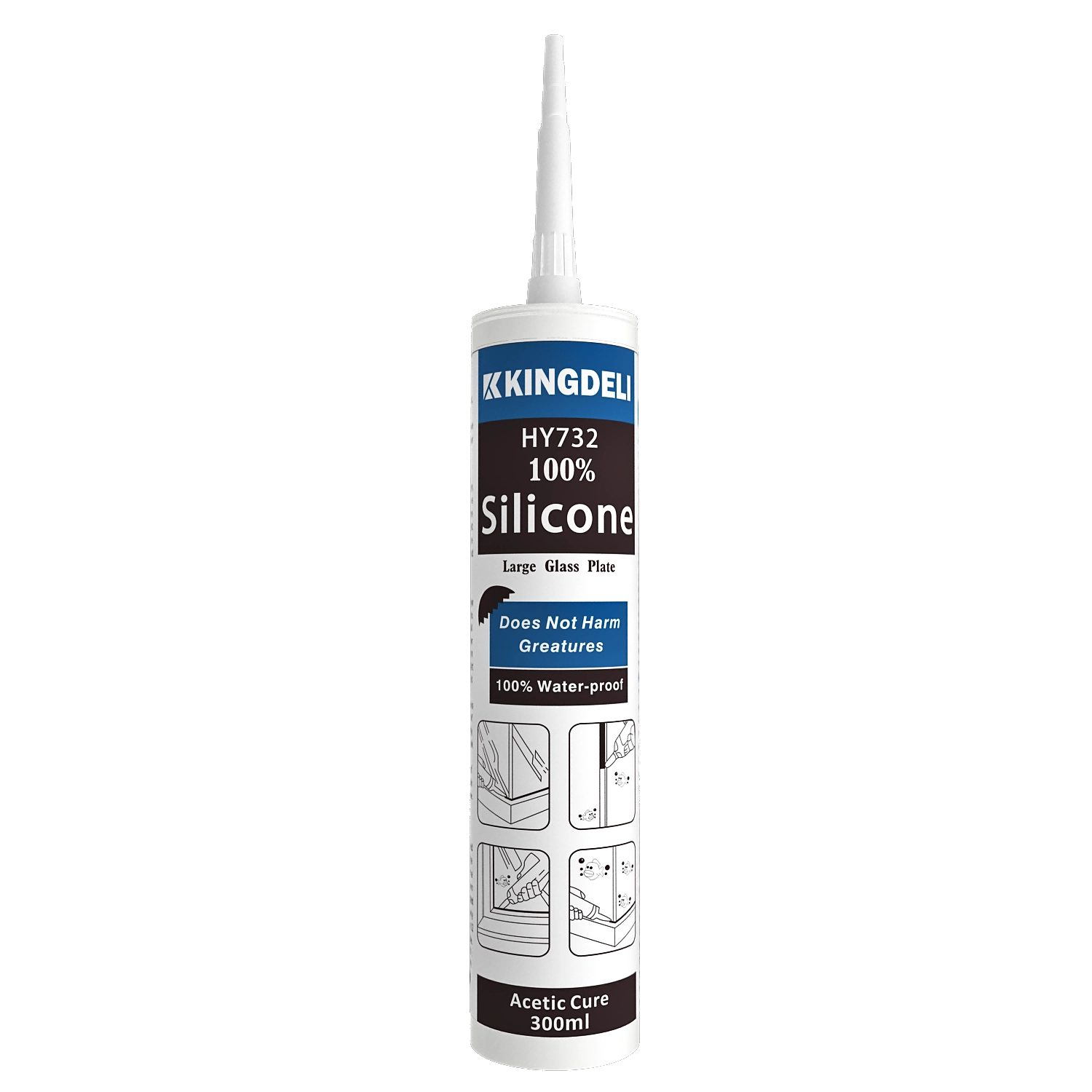
KINGDELI HY732 Professional Acetoxy Cure Silicone Sealant
KINGDELI HY732 is a professional-grade, one-component acetoxy cure silicone sealant designed for fast curing, strong adhesion, and long-lasting flexibility. Ideal for aquariums, glass applications, aluminum doors and windows, kitchens, and bathrooms, it provides reliable sealing performance with excellent anti-fungal protection in high-humidity environments.
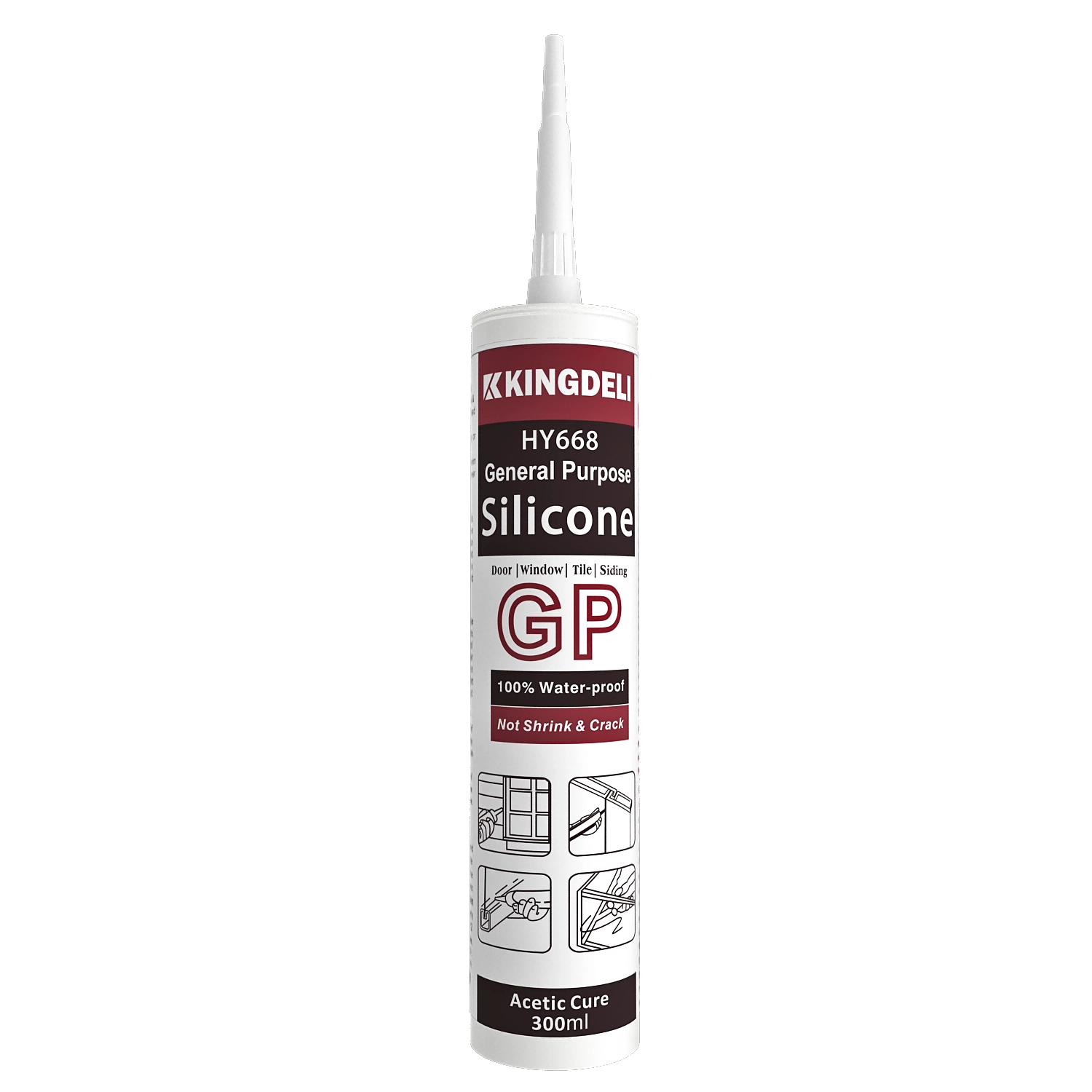
HY668 General Purpose Acetic Silicone Sealant
HY-668 General-Purpose Acetic Silicone Sealant is a easy-to-use sealant for everyday sealing and glazing applications. It offers good adhesion, fast curing, and a durable flexible seal, making it ideal for windows, doors, interior joints, and general construction use
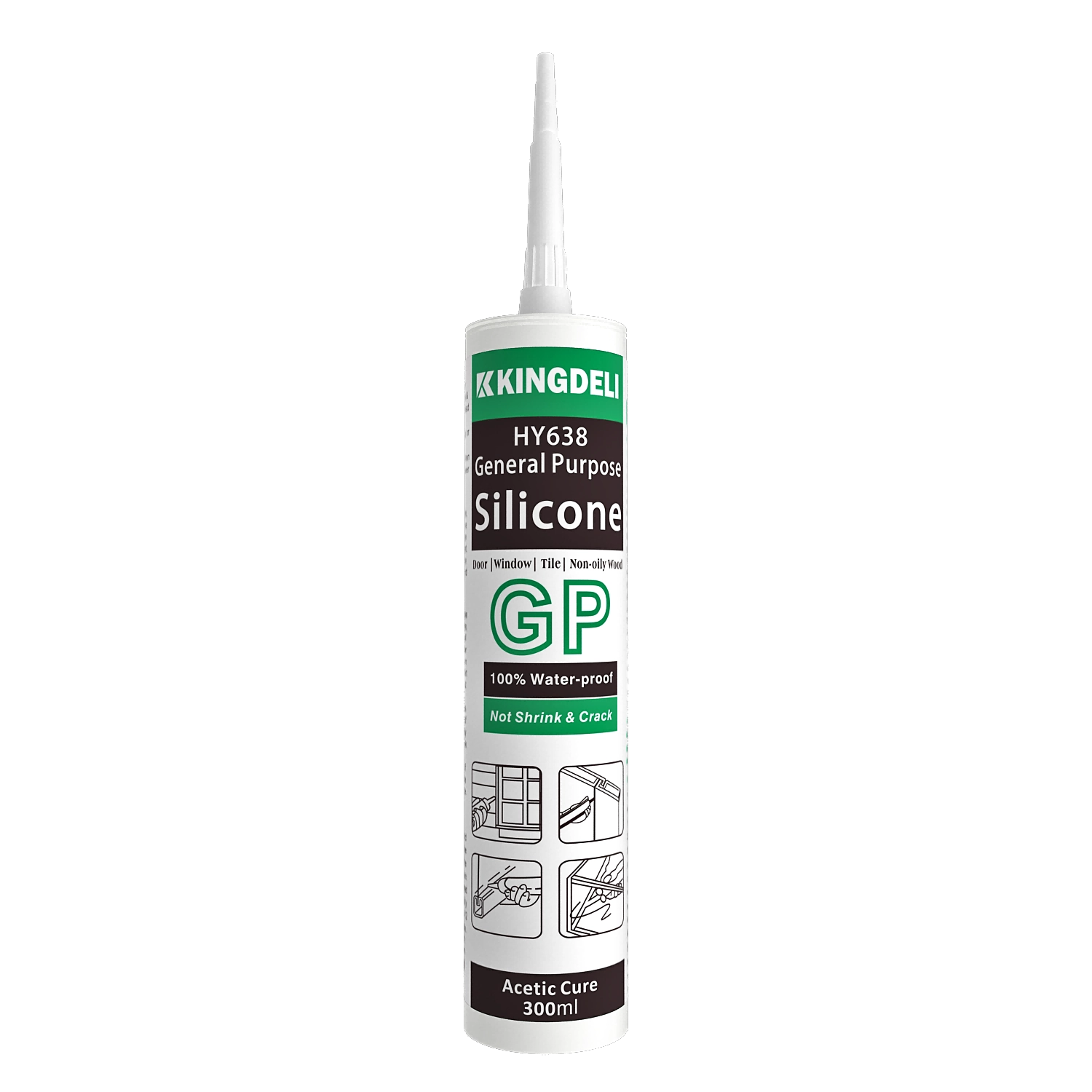
HY638 Economic General Purpose Acetic Silicone Sealant
HY-638 Economic General-Purpose Acetic Silicone Sealant is a cost-effective, one-component, shelf-stable, acetoxy-curing silicone sealant designed for general-purpose sealing and bonding applications. After curing, it forms a durable, elastomeric seal with the following characteristics:
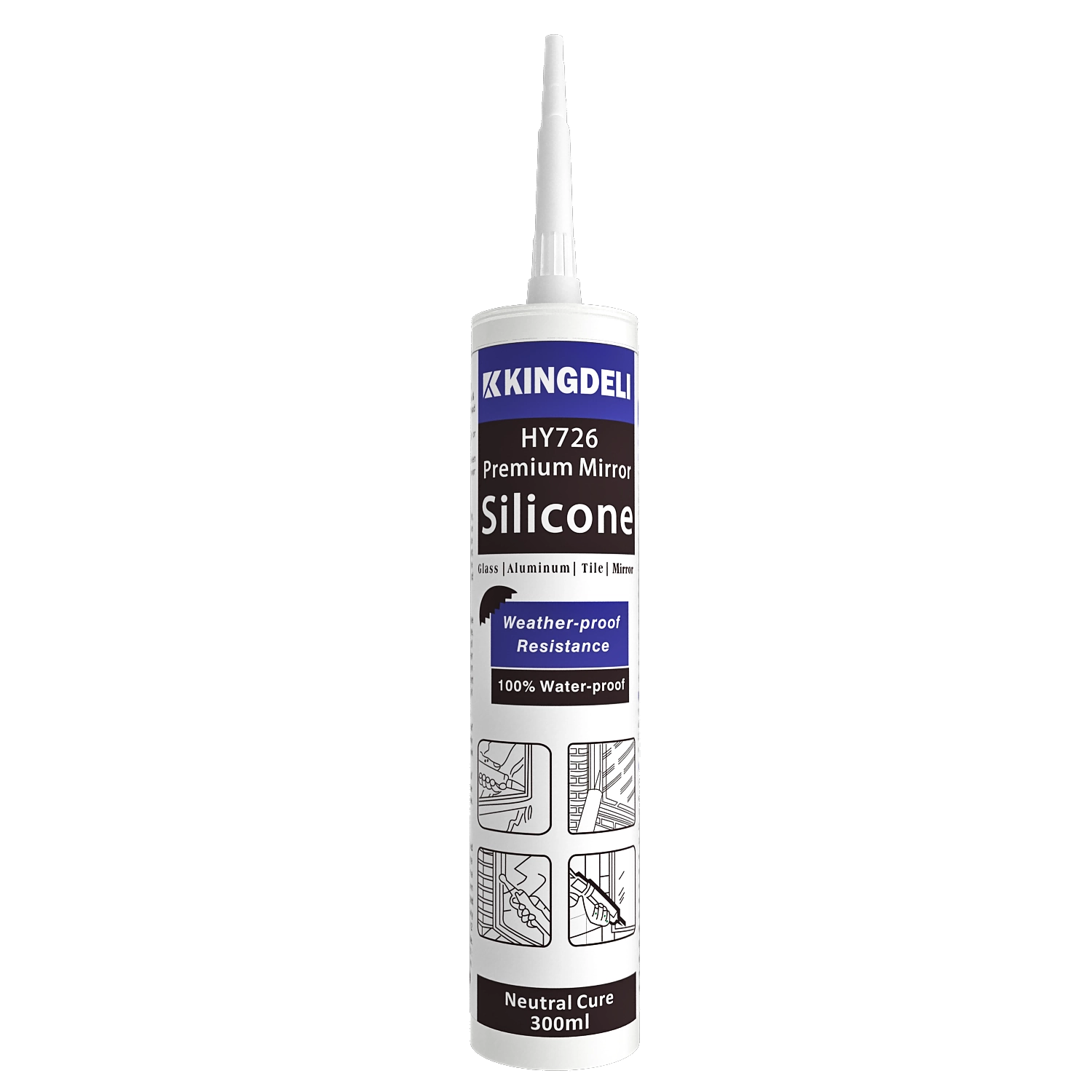
HY-726 Premium Clear Neutral Silicone Sealant
HY726 one-component, shelf-stable, 100% silicone elastomeric adhesive using alkoxy technology. It is specifically designed for sealing sensitive surfaces such as copper, gold, and metal-coated mirrors.
Let’s Build Stronger Bonds with Quality Adhesives and Sealants
Have questions about the topic or need tailored sealant solutions for your project?
Our team is ready to provide expert guidance, product recommendations, and application support.
Innovating with Integrity, Bonding the World
Since 1998, KINGDELI has delivered trusted, sustainable sealant solutions that connect industries and inspire progress worldwide.
Whatsapp: +8618825946249
Kingdeli
Kingdeli
Kingdeli
Kingdeli
Kingdeli