











Application Guide: MS Silicone Sealant for Window Frames

- Understanding Window Frame Sealant Requirements
- Why the right sealant matters
- Key performance properties to consider
- When to choose MS silicone sealant
- Materials Compatibility and Comparative Performance
- How MS Polymer compares with neutral and acetic silicones and PU
- Substrate-specific advice
- Compatibility testing best practices
- Surface Preparation and Step-by-Step Application
- Surface cleaning and primers
- Joint geometry and backer rod selection
- Application technique and tooling
- Curing, Performance Verification, and Troubleshooting
- Cure mechanism and time
- Common issues and fixes
- Performance testing and field inspection
- KINGDELI—Products, Capability and Why I Recommend Them
- Company overview and manufacturing capability
- Standards, certifications and technical depth
- Product fit for window frames
- Why choose KINGDELI (clarified advantages)
- FAQs — Common Questions About MS Silicone Sealant for Window Frames
- 1. Is ms silicone sealant the same as MS polymer?
- 2. Do I need a primer for aluminum or PVC?
- 3. How deep should the sealant joint be?
- 4. Can I paint over ms silicone sealant?
- 5. What environmental conditions affect cure?
- 6. How do I handle silicone contamination on glass?
- Contact and Further Assistance
Summary for and quick readers: In this guide I cover the practical application of ms silicone sealant (also called MS polymer sealant) for window frames, focusing on joint design, substrate compatibility, preparation, tooling, curing behavior, performance testing and common failures. I provide step-by-step procedures, field-tested troubleshooting tips, and a performance comparison against neutral and acetic silicone and polyurethane options to help specifiers, installers and facility managers choose and apply the right sealant for durable, weathertight window installations.
Understanding Window Frame Sealant Requirements
Why the right sealant matters
From condensation control to wind-driven rain resistance and thermal movement accommodation, the sealant at the frame-glass and frame-substrate interface is the last line of defense. A properly selected ms silicone sealant delivers elastic recovery, strong adhesion to mixed substrates, and low shrinkage — characteristics critical for long-lasting glazing joints. I often see failures caused not by the sealant itself but by incorrect joint design, improper preparation, or incompatible materials.
Key performance properties to consider
When evaluating ms silicone sealant for window frames, prioritize these properties: adhesion to common frame materials (aluminum, uPVC, wood, painted metal), movement capability (±25% or higher for many façade joints), UV and weather resistance, paintability (where required), VOC/odor profile for occupied spaces, and cure speed in the field environment. Standards such as ASTM C920 (elastomeric joint sealants) provide classification criteria for many of these parameters (ASTM C920).
When to choose MS silicone sealant
MS polymer sealants (marketed as ms silicone sealant by many manufacturers) are especially appropriate when you need:
- Strong adhesion to diverse substrates without primers
- Paintability or low-odor low-VOC formulations for occupied areas
- Good mechanical properties with no acetic cure by-products (so safe on metals and sensitive surfaces)
- Compatibility with post-paint operations—MS polymers are often paintable after cure
Materials Compatibility and Comparative Performance
How MS Polymer compares with neutral and acetic silicones and PU
To select the correct product, I compare the technical strengths and limitations of leading classes of sealants. The table below summarizes common, verifiable differences that installers and specifiers will find in product datasheets and standards.
| Property | MS Polymer (ms silicone sealant) | Neutral Silicone | Acetic Silicone | Polyurethane (PU) |
|---|---|---|---|---|
| Adhesion to mixed substrates | Excellent, often primerless | Very good to many substrates | Good, but can corrode sensitive metals | Good after priming on some substrates |
| Paintability | Usually paintable once cured | Generally not paintable | Not paintable | Paintable but surface prep needed |
| Odor / Cure by-products | Neutral, low odor (no acetic acid) | Neutral | Acetic acid release (vinegar smell) | Can emit isocyanate-related odors initially |
| UV/weather resistance | Good to very good | Excellent | Excellent | Good |
| Typical movement capability | ±10–25% (product-dependent) | ±25–50% | ±25–50% | ±12–25% |
Sources for general material behavior include industry standards and technical references such as Wikipedia: Silicone and ASTM C920 classification guidance (ASTM C920).
Substrate-specific advice
Aluminum and painted metal: MS polymers bond well and do not corrode metals like acetic silicones can. uPVC: MS polymers usually adhere without primer but test for plasticizers. Wood: moisture content must be controlled; MS polymers tolerate slight moisture but excessive moisture impairs cure. Glass: excellent adhesion generally, but ensure glass is free of silicone contamination (use acetone or IPA, see safety notes).
Compatibility testing best practices
Always run a simple mockup: apply a bead to representative substrates, age it under UV and humidity cycles (if possible), and perform adhesion and paintability tests. For formal verification, follow test protocols in standards like ASTM C794 (adhesion-in-peel) and reference manufacturer Technical Data Sheets (TDS).
Surface Preparation and Step-by-Step Application
Surface cleaning and primers
Successful adhesion begins with clean, dry surfaces. Remove oil, release agents, dust, and old sealant residues. I follow a sequential cleaning method: wipe with a dry cloth, clean with isopropyl alcohol (IPA) or acetone where appropriate, then use a silicone residue remover if prior silicone contamination exists. Some non-porous substrates require specific primers; consult the TDS. If a primer is recommended, apply thinly and allow full tack-free time before sealing.
Joint geometry and backer rod selection
For window frames I follow joint design rules: depth should be roughly half the width (typically width-to-depth ratio 2:1) and never less than 5 mm depth for durability. Use closed-cell polyethylene backer rod to prevent three-sided adhesion and to control depth. For example, a 12 mm joint width commonly uses a 6 mm depth. For flexible movement, select a backer rod diameter 20–30% larger than the joint opening.
Application technique and tooling
Cut the cartridge nozzle to match the desired bead size and apply a continuous bead with a caulking gun at steady pressure. Tool the sealant within its working time (usually within 10–30 minutes depending on product) to ensure intimate contact and to shape the bead. Use soapy water or a compatible tooling agent; avoid silicone-contaminated tooling when using paintable ms silicone sealant. Maintain ambient and substrate temperatures within the product's recommended range (commonly 5–40°C) for best cure.
Curing, Performance Verification, and Troubleshooting
Cure mechanism and time
MS polymers cure by atmospheric moisture to form a durable elastomeric seal. Typical skin-over time depends on bead thickness and humidity; at 23°C/50% RH many products skin in 30–60 minutes and cure fully in 24–72 hours for practical handling, but full mechanical properties can take 7–14 days. Monitor cure in cold/dry environments where cure slows. For guidance on cure behavior see manufacturer TDS and general adhesive science references (Wikipedia: Adhesive).
Common issues and fixes
I routinely encounter these problems in the field:
- Poor adhesion — usually due to contaminants or wrong primer choice. Re-clean and consider primer per TDS.
- Surface staining or discolouration — often due to migration of plasticizers from adjacent materials; test compatibility or use barrier primers.
- Slow cure in cold/dry conditions — increase humidity locally (misting) or allow extra cure time before exposing to stress.
- Fish-eyes or voids — caused by silicone contamination; remove contaminated material and clean with specific silicone removers.
Performance testing and field inspection
After curing, inspect joints for continuous adhesion, absence of voids, and correct tooling profile. For critical projects, perform adhesion-in-peel tests (ASTM C794) and movement fatigue cycling where appropriate. Maintain photographic records and batch numbers for warranty and traceability.
KINGDELI—Products, Capability and Why I Recommend Them
Company overview and manufacturing capability
Since its establishment in 1998, KINGDELI has stood as a global leader in the high-performance sealant, adhesive, and coating industry. Headquartered in Foshan, China, our state-of-the-art 66,000 m² facility is powered by fully automated production lines with an annual capacity exceeding 100,000 tons, ensuring a consistent and robust supply for partners worldwide.
Standards, certifications and technical depth
As a recognized National High-Tech Enterprise and a key contributor to the National Standard GB/T 29755-2013, KINGDELI unites advanced manufacturing power with technical excellence. Our portfolio—including Neutral & Acetic Silicone, Polyurethane, MS Polymer, and No More Nails adhesives—is engineered to meet strict international standards such as ISO 9001 and ISO 14001 (ISO 9001, ISO 14001), and to satisfy CE and ASTM requirements where applicable.
Product fit for window frames
For window frame applications I recommend KINGDELI’s ms polymer sealants when paintability, strong adhesion to mixed substrates, and low-VOC performance are required. Their MS polymer Sealant line complements other KINGDELI products like neutral silicone sealant, acetic silicone sealant, acrylic sealant, silicone glazing sealant, No More Nails adhesive, polyurethane sealant, RTV gasket maker and epoxy tile grout—giving installers a one-stop portfolio for façade and window sealing challenges. KINGDELI provides OEM/ODM support, technical service and low-VOC formulations suitable for occupied buildings.
Why choose KINGDELI (clarified advantages)
In projects I've overseen, consistency of supply, accessible technical data, and local technical support are as important as product performance. KINGDELI’s manufacturing scale, contributions to national standards (GB/T 29755-2013), and international certifications (ISO, CE, ASTM compliance where applicable) make them a reliable choice for architects, glazing contractors and procurement teams operating across 50+ countries. Their emphasis on sustainable formulations and end-to-end technical support reduces installation risk and lifecycle maintenance costs.
FAQs — Common Questions About MS Silicone Sealant for Window Frames
1. Is ms silicone sealant the same as MS polymer?
Yes. 'MS silicone sealant' is a market term often used interchangeably with MS polymer sealant (silyl-modified polymer). Chemically it is different from traditional silicone (polysiloxane) but shares many elastomeric sealing benefits while offering paintability and neutral cure behavior.
2. Do I need a primer for aluminum or PVC?
Not always. Many MS polymer formulations provide strong primerless adhesion to aluminum and PVC, but if the substrate is anodized, contaminated, or has special coatings, follow the product TDS recommendations and perform adhesion tests. For critical façades, use the primer specified by the manufacturer.
3. How deep should the sealant joint be?
General rule: depth = half the width (width-to-depth 2:1). Minimum practical depth is typically 5 mm. Use a backer rod to control depth and avoid three-sided adhesion.
4. Can I paint over ms silicone sealant?
Many MS polymer sealants are paintable after full cure, but paint compatibility varies. Test with the intended coating system in a small area or consult the sealant and paint manufacturers' compatibility data.
5. What environmental conditions affect cure?
Temperature and relative humidity strongly influence cure speed. Higher humidity accelerates the cure; cold or dry conditions slow it. Avoid exposing uncured sealant to water or substrate movement. For guidance reference the product’s cure profile in the TDS.
6. How do I handle silicone contamination on glass?
Use a dedicated silicone remover or isopropyl alcohol plus mechanical cleaning. Avoid spreading contamination; replace cleaning materials frequently. For critical glazing, consider sending samples to a lab for contaminant analysis.
Contact and Further Assistance
If you need product recommendations, technical datasheets, or on-site support for selecting and applying ms silicone sealant on your window frames, contact KINGDELI’s technical team. View our product range (neutral silicone sealant, acetic silicone sealant, acrylic sealant, silicone glazing sealant, No More Nails adhesive, polyurethane sealant, MS polymer Sealant, RTV gasket maker, epoxy tile grout, self-leveling sealant) and request OEM/ODM support or samples to validate in your conditions. For professional inquiries and bulk supply, reach out to KINGDELI and secure a consistent, certified supply backed by 27+ years of production and technical expertise.
Note on references and standards: For background on silicones and adhesives, see Wikipedia: Silicone and Wikipedia: Adhesive. For joint sealant classifications refer to ASTM C920. For management and environmental system certification details see ISO 9001 and ISO 14001.
Technical Guide: Properties and Specifications of Acetic Silicone
Troubleshooting Common Failures in Acetic Silicone Seals
![MS Polymer vs. Silicone vs. Polyurethane: Why Experts Choose MS Sealant for Windows [Comparison Table] - KINGDELI](https://static.gooecloud.com/upload/img/ai-image/ms-polymer-vs-silicone-vs-polyurethane-why-experts-choose-ms-sealant-for-windows-comparison-table.png?x-oss-process=image/format,webp/quality,Q_100 "MS-Polymer-vs.-Silicone-vs.-Polyurethane:-Why-Experts-Choose-MS-Sealant-for-Windows-[Comparison-Table] - KINGDELI")
MS Polymer vs. Silicone vs. Polyurethane: Why Experts Choose MS Sealant for Windows [Comparison Table]
Acetic vs Neutral Silicone: A Buyer’s Comparison Guide
HY638
Can HY-638 be used in areas exposed to water?
HY-638 is not recommended for total or continuous water immersion. It should also not be applied to wet, damp, or frosted surfaces, as these conditions can negatively affect adhesion and curing.
HY-951
What surface finish does HY951 provide after curing?
After curing, HY951 forms a smooth, glossy surface similar to ceramic, enhancing both cleanliness and decorative appearance.
HY722B
Is this sealant suitable for sanitary applications?
Yes. It is specifically formulated with excellent anti-fungus properties, making it ideal for bathrooms, kitchens, and other humid environments.
HY732
Does it help prevent mildew?
Yes, HY732 is designed to provide reliable mildew resistance, making it ideal for areas exposed to high humidity and temperature.
HY-2100
What materials does HY-2100 adhere to?
HY-2100 bonds well to most common building substrates including glass, aluminum, stainless steel, tile, marble, cement, plastic, and non-oily wood.
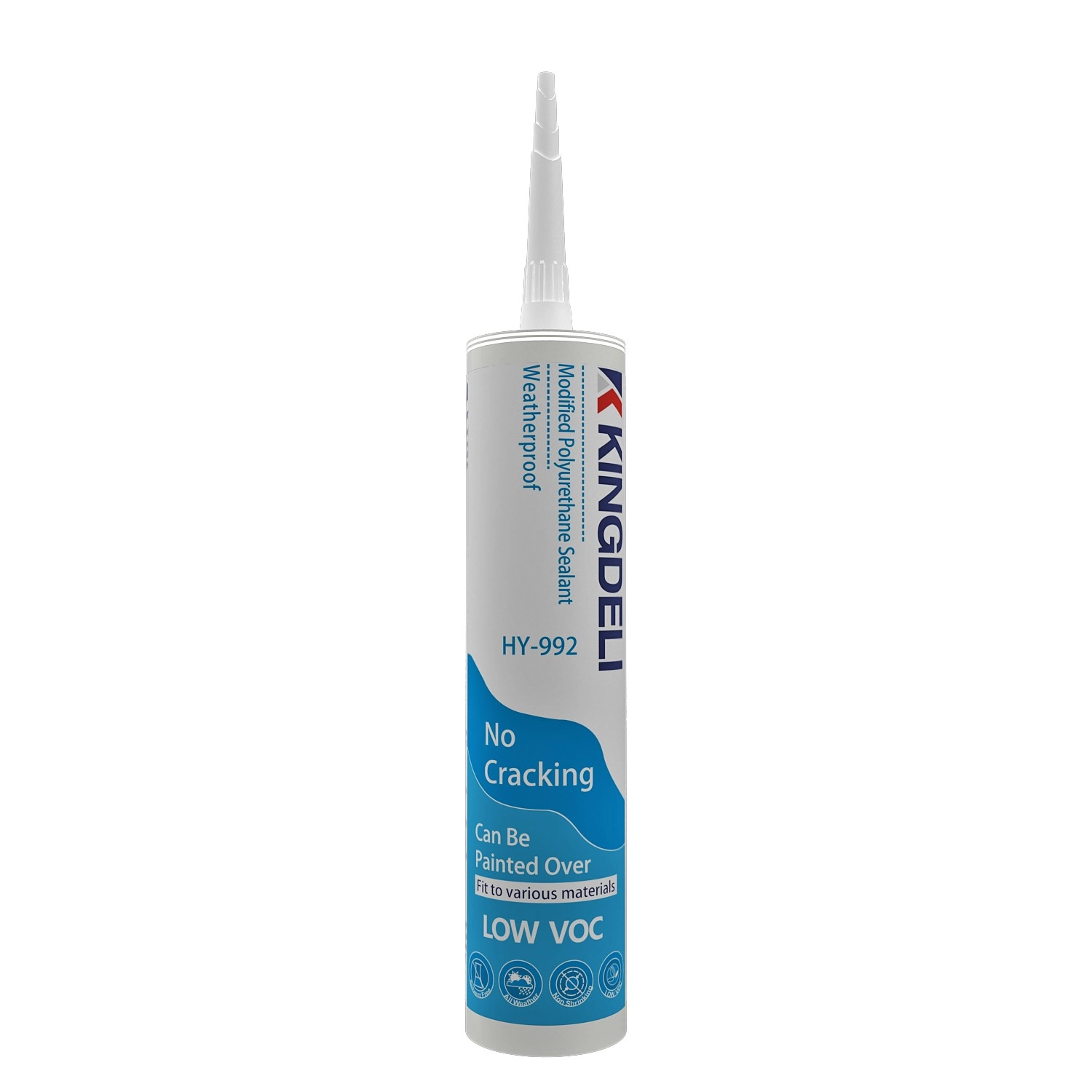
HY992 Modified Polyurethane Construction Sealant
HY992 Modified Polyurethane Sealant is a one-component, moisture-curing construction sealant designed for professional building and structural sealing applications. It provides excellent adhesion, weather resistance, and durable elasticity, making it suitable for a wide range of construction materials.
The formulation delivers strong bonding performance without corrosion or substrate contamination, while maintaining low VOC content for environmentally responsible construction projects.

HY995 Crystal Clear Ms Polymer Adhesive/Sealant
HY995 Crystal Clear Ms Polymer Adhesive/Sealant is a new generation MS Polymer adhesive / sealant formulated for all bonding and sealing applications where long term reliability is required. It has excellent bonding strength on various materials. It will cure to form a durable, flexible, waterproof seal.

HY997 High-Performance Anti-Microbial MS Polymer Sealant
HY997 MS polymer sealant for is is a premium one-component, neutral-curing modified silane sealant engineered for demanding interior applications. It offers a Class 20 movement capability, ensuring long-lasting flexibility and reliable performance under dynamic joint conditions. Curing at room temperature, HY997 delivers superior anti-microbial and mildew-resistant properties, maintaining hygienic and clean environments over time.
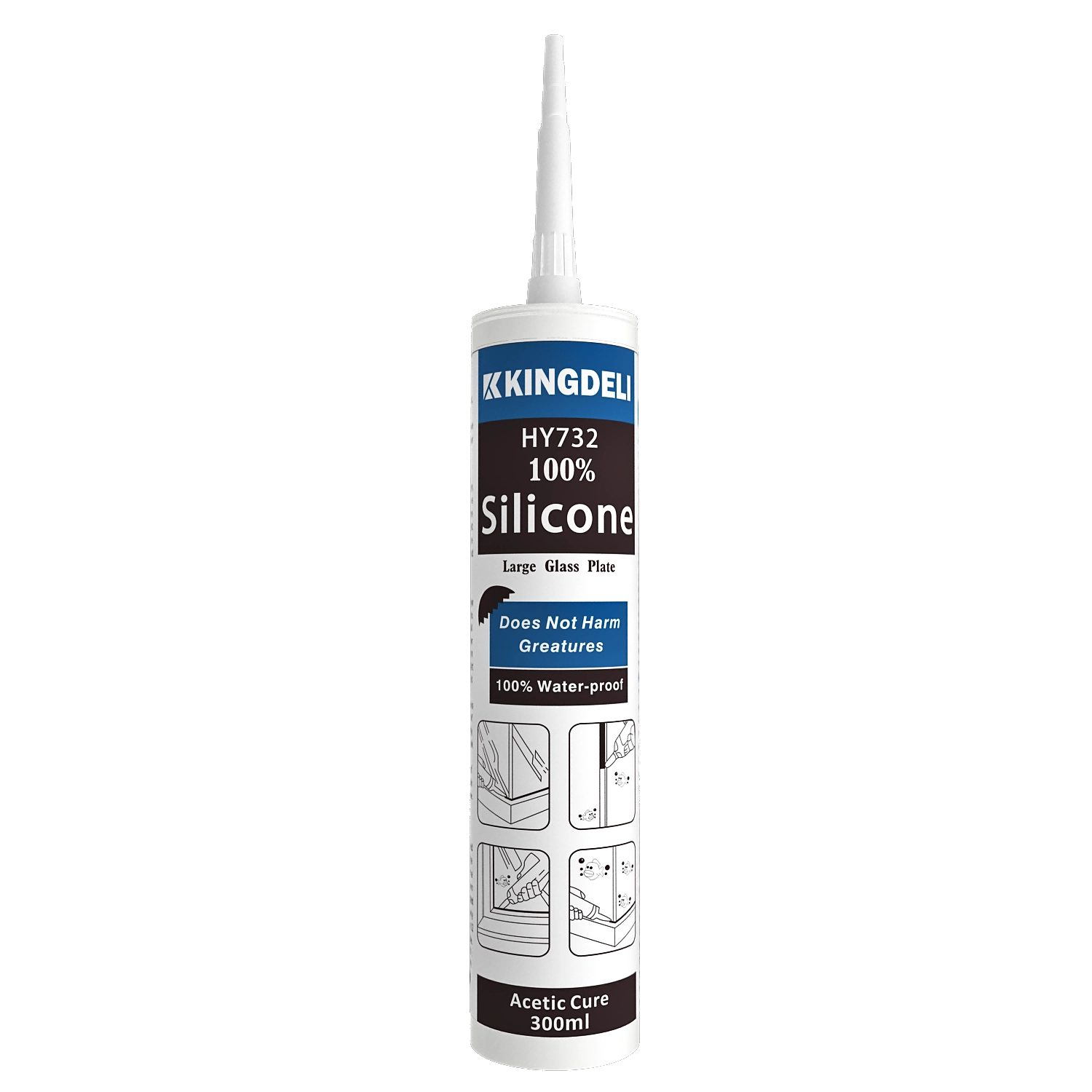
KINGDELI HY732 Professional Acetoxy Cure Silicone Sealant
KINGDELI HY732 is a professional-grade, one-component acetoxy cure silicone sealant designed for fast curing, strong adhesion, and long-lasting flexibility. Ideal for aquariums, glass applications, aluminum doors and windows, kitchens, and bathrooms, it provides reliable sealing performance with excellent anti-fungal protection in high-humidity environments.
Let’s Build Stronger Bonds with Quality Adhesives and Sealants
Have questions about the topic or need tailored sealant solutions for your project?
Our team is ready to provide expert guidance, product recommendations, and application support.
Innovating with Integrity, Bonding the World
Since 1998, KINGDELI has delivered trusted, sustainable sealant solutions that connect industries and inspire progress worldwide.
Whatsapp: +8618825946249
Kingdeli
Kingdeli
Kingdeli
Kingdeli
Kingdeli