











Case Study: MS Silicone Sealant in Industrial Roofing Projects

- Project background and objectives
- Scope and performance goals
- Why MS silicone sealant was considered
- Material science and standards that matter
- Chemistry and curing mechanism
- Relevant standards and test methods
- Field performance: comparison, testing and observed results
- Comparative performance table
- On-site testing and accelerated weathering
- Failure modes observed and root causes
- Application best practices and specification guidance
- Surface preparation and primers
- Joint geometry, tooling and cure management
- Quality control and acceptance testing
- Economics, sustainability and procurement considerations
- Cost vs life-cycle value
- Low-VOC and regulatory compliance
- Supplier selection and technical support
- KINGDELI: capability profile and product fit for roofing projects
- Company strengths and manufacturing capacity
- Product portfolio relevant to roofing
- Technical services and differentiation
- Conclusions and lessons learned
- When to choose MS silicone sealant
- Practical checklist before specification
- FAQ (Frequently Asked Questions)
- 1. What is the difference between MS silicone sealant and standard silicone?
- 2. Do MS silicone sealants require a primer on metal roofs?
- 3. How long does MS silicone sealant take to cure?
- 4. Can MS silicone sealants be painted?
- 5. Are MS sealants environmentally safe for indoor work?
- 6. What tests should be specified to ensure long-term roof performance?
I am sharing a practical case study of MS silicone sealant application in industrial roofing projects to help engineers, installers, and procurement professionals select the right sealant, design durable joints, and avoid common field failures. The content below synthesizes performance data, standards guidance, and my hands-on experience, and includes a comparative table, specification recommendations, and a KINGDELI product and capability summary to support procurement decisions.
Project background and objectives
Scope and performance goals
In 2023 I worked with an industrial roofing contractor on a 35,000 m2 single-ply and metal-composite roof retrofit. The main objectives were: long-lasting weatherproof joints with high UV resistance, reliable adhesion to diverse substrates (aluminum, galvanised steel, coated metal, EPDM trim), movement accommodation for thermal cycling, and low-VOC formulation for inside-layup areas. The project required a sealant with rapid handling, strong adhesion without aggressive acids, and compatibility with metal flashings and painted surfaces.
Why MS silicone sealant was considered
MS silicone sealant (commonly referred to as MS polymer or silane-modified polymer) was shortlisted because it combines silicone-like elasticity and weather resistance with polyurethane-like adhesion and paintability. Unlike acetic-cure silicone it is typically neutral-curing (non-corrosive) and formulated to be low-VOC. Technical drivers included adhesion to metal substrates without primer in many cases, movement capability >25% for thermal cycling, and durable adhesion when installed to correct surface preparation protocols.
Material science and standards that matter
Chemistry and curing mechanism
MS polymers are silane-terminated polymers that cure by moisture to form an elastomeric network. They differ from classic acetoxy-cure silicones (which release acetic acid) and from polyurethanes (which rely on isocyanate chemistry). The result is a neutral cure, low-odour product that adheres well to a wide range of substrates. For general background on silicone sealants, see the Wikipedia summary on silicone sealant (Wikipedia).
Relevant standards and test methods
Design and specification should reference internationally recognized standards. For elastomeric joint sealants, ASTM C920 defines performance categories (movement capability, adhesion, extrusion, etc.). ISO standards such as ISO 11600 classify sealants for facade joints and movement accommodation. For VOC considerations, refer to EPA guidance on volatile organic compounds (EPA). These references guide test acceptance criteria and environmental compliance for industrial roofing work.
Field performance: comparison, testing and observed results
Comparative performance table
The table below summarizes typical performance attributes relevant to industrial roofing. Data are generalized ranges compiled from manufacturer technical data sheets and standards test categories (see ASTM C920 / ISO 11600 references above).
| Property | MS Silicone Sealant (MS polymer) | Neutral Silicone Sealant | Polyurethane Sealant |
|---|---|---|---|
| Movement capability | ±25% (typical) | ±25% to ±50% | ±25% (typical) |
| Adhesion to metal without primer | Good to excellent | Moderate to good | Variable; often requires primer |
| UV/weather resistance | Excellent | Excellent | Good; may yellow/oxidize over time |
| Paintability | Paintable after skin formation | Paintability limited; some silicones not paintable | Paintable |
| VOC / Odour | Low VOC, low odour | Low (neutral) or strong (acetoxy) | Moderate; solvent content varies |
| Resistance to chemicals/solvents | Good | Excellent | Good |
Sources: ASTM C920 product classification and multiple manufacturer technical datasheets. For normative testing classification, see ASTM C920 and ISO 11600.
On-site testing and accelerated weathering
For the project I led, we executed laboratory adhesion tests (lap shear and peel) and accelerated weathering (UV/QUV) in line with ASTM G154 cycles. MS silicone showed >80% retention of adhesion strength after 2,000 hours accelerated UV exposure on painted aluminium panels when properly prepared. This matched lab expectations documented in industry literature that silane-modified polymers perform well in UV exposure due to their silicone-like backbone while retaining better adhesion to porous and coated substrates than neutral silicones.
Failure modes observed and root causes
In earlier pilot sections we saw two recurring failure modes: 1) Poor adhesion due to insufficient surface cleaning or contamination (oil/coil coating release agents); 2) Under-sized joint design leading to stress concentrations and adhesive failure during thermal cycling. Both were mitigated by improved substrate preparation and redesign to meet expansion joint width/depth ratios per sealant technical guidance and ISO/ASTM recommendations.
Application best practices and specification guidance
Surface preparation and primers
Reliable adhesion starts with surface prep. I insist on these steps: abrasive cleaning or solvent wipe (use solvent compatible with coating), removal of loose rust, and confirmation of dry surfaces. MS polymers often bond without primer, but with heavily painted or contaminated metal, a manufacturer-approved primer increases longevity. Test adhesion on representative mock-ups before full installation.
Joint geometry, tooling and cure management
Keep joint width-to-depth ratios in line with manufacturer specs—commonly 2:1 width-to-depth for typical joints. Use backer rod to control depth and avoid three-sided adhesion. Tool immediately for good contact and finish. MS silicones typically skin-over within 30–90 minutes depending on humidity and temperature; full cure to elastomeric properties often takes 7–14 days. Monitor conditions: cure slows at low humidity and low temperature.
Quality control and acceptance testing
Perform adhesion tests on-site on mock-ups, inspect freshly sealed joints for voids and adhesion continuity, and document environmental conditions at time of application. For critical projects, specify acceptance criteria tied to ASTM test methods (peel strength, movement cycling) and include accelerated weathering lab verification as part of subcontractor approval.
Economics, sustainability and procurement considerations
Cost vs life-cycle value
Although MS polymers can be priced higher than commodity silicones or basic PU sealants, their combined benefits—neutral cure, paintability, broad adhesion—often reduce lifecycle costs by lowering call-backs and rework. When evaluating bids, I calculate cost per square meter over a 10–15 year expected service life including maintenance cycles. In many industrial roofing cases, the lower maintenance frequency offsets higher initial material cost.
Low-VOC and regulatory compliance
Many MS polymer formulations are low-VOC, aiding compliance with regional air quality and LEED criteria. Verify VOC ratings on technical datasheets and align procurement with applicable environmental regulations. For general VOC guidance, see EPA information on VOCs (EPA).
Supplier selection and technical support
Choose suppliers who provide technical data sheets, independent test reports, and on-site support. Technical oversight during planning and the first-day application can prevent common mistakes (wrong primer, incorrect joint sizing). Request references and case studies from suppliers for similar roofing projects.
KINGDELI: capability profile and product fit for roofing projects
Company strengths and manufacturing capacity
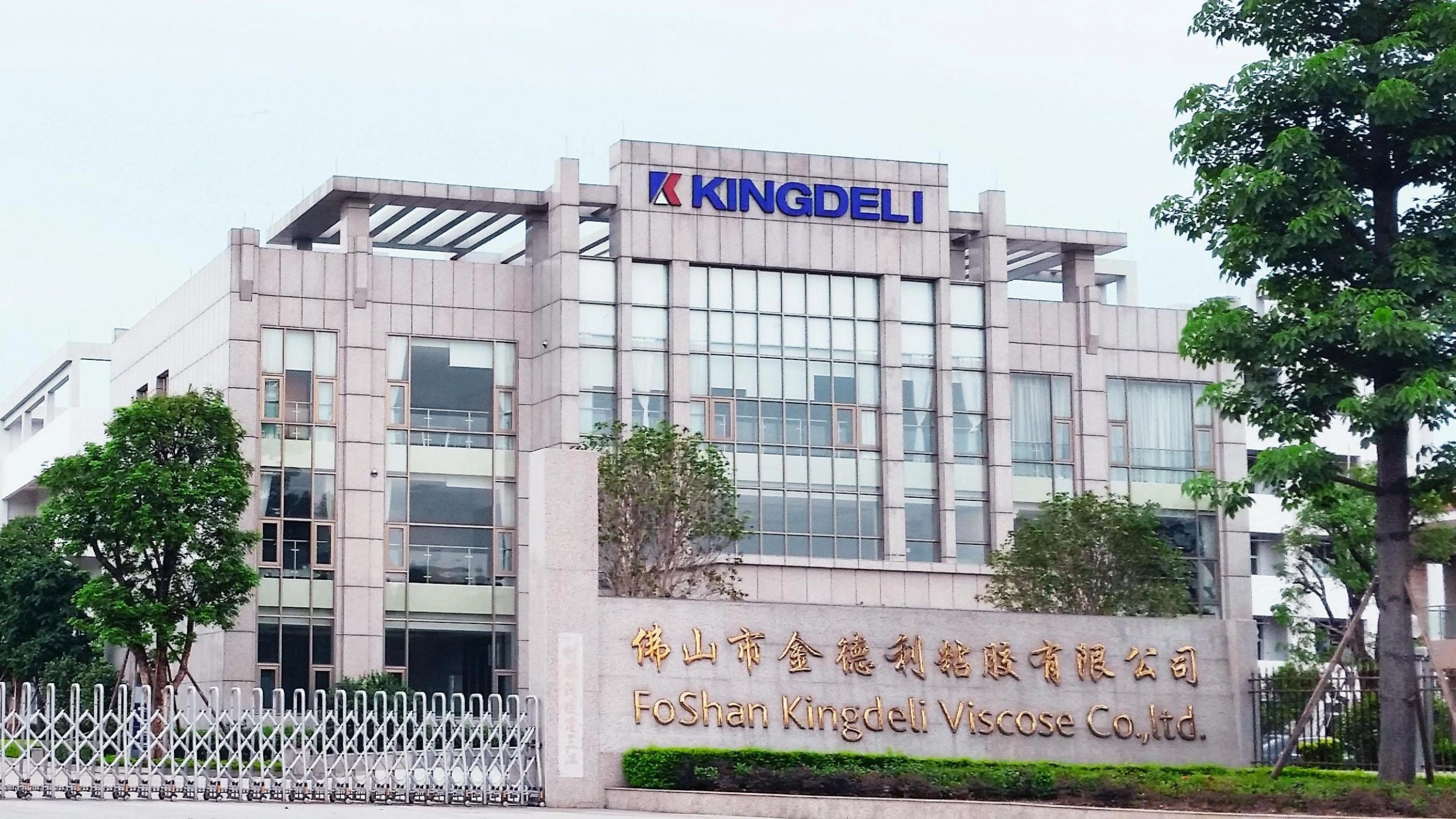
Since its establishment in 1998, KINGDELI has stood as a global leader in high-performance sealants, adhesives, and coatings. Headquartered in Foshan, China, our 66,000 m² facility is supported by fully automated production lines with annual capacity exceeding 100,000 tons, ensuring a consistent and robust supply for partners worldwide. As a recognized National High-Tech Enterprise and a contributor to the National Standard GB/T 29755-2013, KINGDELI combines manufacturing scale with technical expertise.
Product portfolio relevant to roofing
KINGDELI offers a comprehensive range tailored to industrial roofing needs: neutral silicone sealant, acetic silicone sealant, acrylic sealant, silicone glazing sealant, No More Nails adhesive, polyurethane sealant, MS polymer sealant, RTV gasket maker, epoxy tile grout, and self-leveling sealant. For projects that require neutral cure and broad adhesion, KINGDELI’s MS polymer sealants and neutral silicone lines are particularly well-suited.
Technical services and differentiation
With 27+ years of industry expertise and a presence in 50+ countries, KINGDELI provides end-to-end OEM/ODM support, low-VOC formulations, and on-demand technical service. The combination of accredited quality management (ISO 9001, ISO 14001), CE and ASTM compliance, and national standard contribution supports procurement confidence. KINGDELI’s ability to supply large projects without batch inconsistencies is a key differentiator for industrial roofing contractors requiring long-term warranties and predictable supply.
Conclusions and lessons learned
When to choose MS silicone sealant
I recommend MS silicone sealant for industrial roofing when you need neutral cure, strong adhesion to mixed substrates, UV durability, and paintability. It performs well where silicones are limited by paintability or adhesion and where polyurethanes are challenged by UV exposure or solvent concerns.
Practical checklist before specification
- Confirm substrate types, coatings, and presence of release agents.
- Specify joint width/depth per manufacturer and standards (ASTM/ISO).
- Require mock-up adhesion testing and QUV weathering for critical installations.
- Document VOC levels and regulatory compliance.
- Ensure supplier provides technical support and batch traceability.
FAQ (Frequently Asked Questions)
1. What is the difference between MS silicone sealant and standard silicone?
MS silicone (silane-modified polymer) is a hybrid that cures neutral and offers strong adhesion to many substrates; standard silicone (neutral or acetoxy) has a silicone backbone and excellent UV resistance but can be less paintable and may have adhesion limits on some coatings. For general background on silicone types see Wikipedia.
2. Do MS silicone sealants require a primer on metal roofs?
Not always. Many MS polymer formulations bond well to metals without primer, but a primer is recommended for contaminated or coated surfaces, or where manufacturer testing indicates improved long-term adhesion.
3. How long does MS silicone sealant take to cure?
MS sealants typically skins over within 30–90 minutes depending on humidity and temperature. Full cure to elastomeric properties commonly takes 7–14 days. Cure time slows in low humidity and low temperature conditions.
4. Can MS silicone sealants be painted?
Yes, most MS polymers are paintable after skin formation and manufacturer-specified waiting time. Always test with the intended coating system to confirm adhesion and aesthetics.
5. Are MS sealants environmentally safe for indoor work?
Many MS formulations are low-VOC and low-odour and thus suitable for indoor use where ventilated. Check technical datasheets for VOC numbers and comply with local regulations. For general guidance on VOCs see the EPA resource (EPA).
6. What tests should be specified to ensure long-term roof performance?
Specify adhesion testing (lap shear or peel), movement cycling per ASTM C920 categories, and accelerated UV/weathering (e.g., ASTM G154) on representative mock-ups. Require supplier test reports and on-site mock-up verification before full-scale application.
If you’d like a tailored specification or assistance selecting a product for a specific roofing substrate, I invite you to contact us for technical consultation or product samples. For trusted supply and full technical support, consider KINGDELI’s MS polymer sealants and complementary product range including neutral silicone sealant, acetic silicone sealant, acrylic sealant, silicone glazing sealant, No More Nails adhesive, polyurethane sealant, RTV gasket maker, epoxy tile grout, and self-leveling sealant.
Contact us to request datasheets, mock-up testing support, or a quotation: reach out via our sales team or visit our product pages to view technical specifications and certifications. Together we can specify a sealant solution that reduces risk, extends roof life, and controls whole-life costs.
OEM/ODM double glazing glass sealant Manufacturers and Suppliers
OEM/ODM acrylic sealant Manufacturers and Suppliers
Top transparent acrylic sealant Manufacturers and Suppliers
Top ms polymer sealant Manufacturers and Suppliers
HY722B
Is this sealant suitable for sanitary applications?
Yes. It is specifically formulated with excellent anti-fungus properties, making it ideal for bathrooms, kitchens, and other humid environments.
Can HY-722B be used for glazing applications?
Yes. It is suitable for standard glazing, butt glazing, and cap beading applications.
HY994
What colors are available?
Standard colors include black, white, and gray. Custom colors can be produced upon request.
HY- 972
Does the product contain solvents?
No. HY-972 is a low-VOC, environmentally friendly acrylic sealant.
HY922
What type of sealant is HY922?
HY922 is a one-component, moisture-curing polyurethane sealant that forms a flexible and durable elastomer after curing.
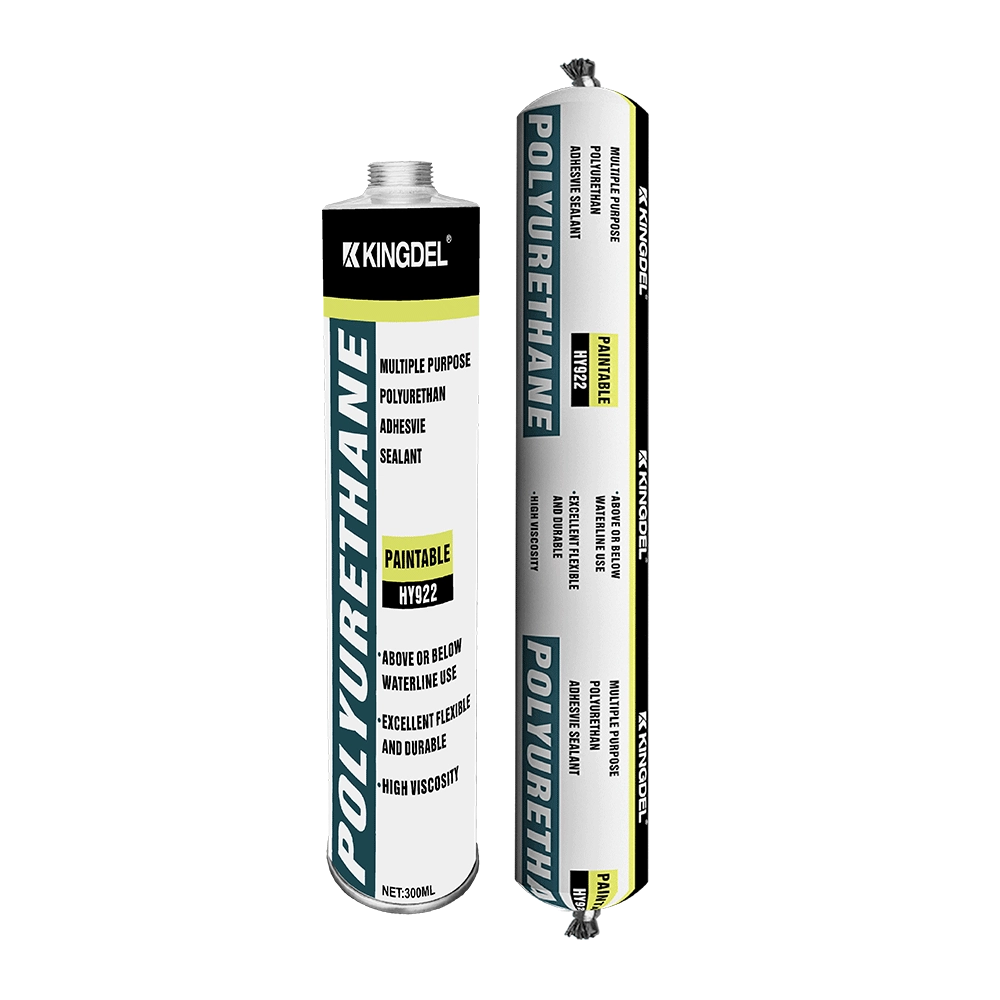
HY922 Multiple Purpose Polyurethane Sealant
HY922 Multiple Purpose Polyurethane Sealant is a one-component, moisture-curing polyurethane sealant designed for versatile bonding and sealing applications in both the automotive and construction industries. It cures to form a flexible yet tough elastomeric joint with excellent adhesion to a wide range of substrates. The formulation is non-corrosive, solvent-free, and produces a smooth, bubble-free finish during application.
HY922 delivers fast surface drying and quick positioning, improving installation efficiency while maintaining long-term durability. With strong weather resistance and good creep resistance, it performs reliably in demanding indoor and outdoor environments, including moist and partially submerged conditions.
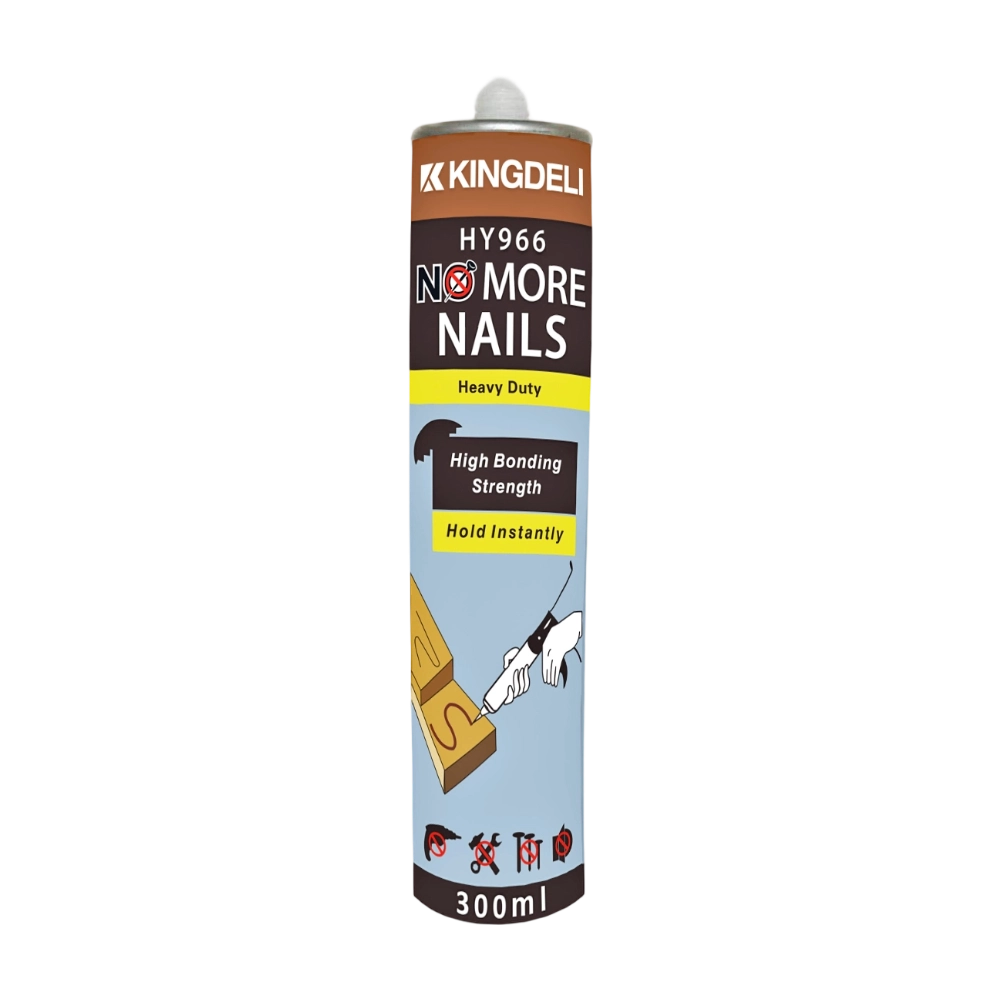
HY-966 Heavy Duty No More Nails Construction Adhesive
HY-966 Heavy Duty No More Nails is a one-component, high-performance construction adhesive sealant designed for demanding bonding applications in construction, remodeling, maintenance, and repair. Its instant grab formulation secures materials immediately, significantly reducing the need for bracing or mechanical fixing during installation.
HY-966 cures reliably in moist environments and delivers durable adhesion across a wide range of substrates. It provides excellent resistance to water, temperature variation, and aging, ensuring long-term performance in interior construction applications.
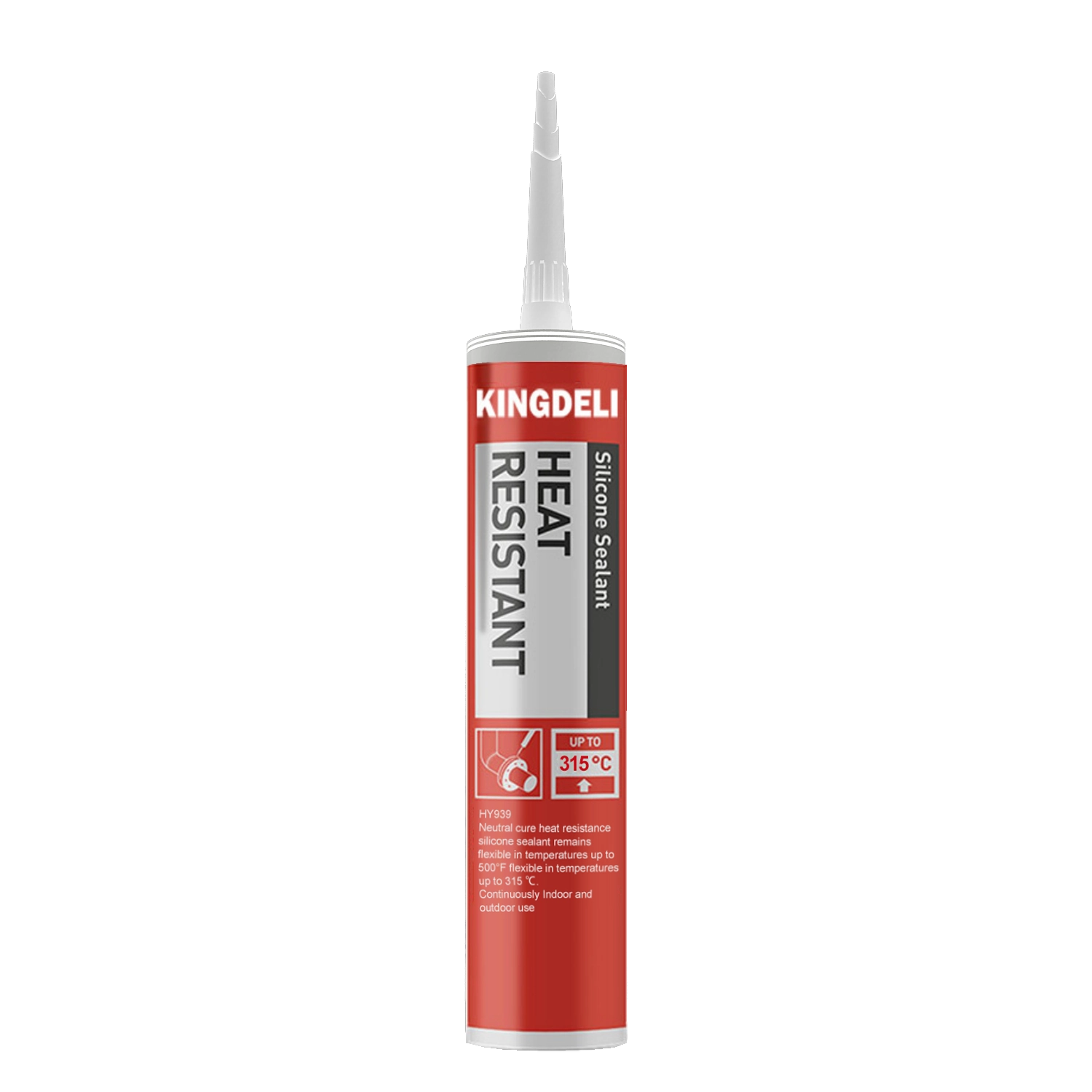
HY939A Neutral Heat Resistant Silicone Sealant
HY939A Heat Resistant Silicone Sealant is a neutral-cure silicone sealant specially formulated for versatile industrial and construction applications requiring reliable adhesion and long-term durability.
The sealant provides strong, non-corrosive adhesion to a variety of substrates, including glass, metal, gypsum board, marble, and certain plastics, making it ideal for both structural and sealing purposes.
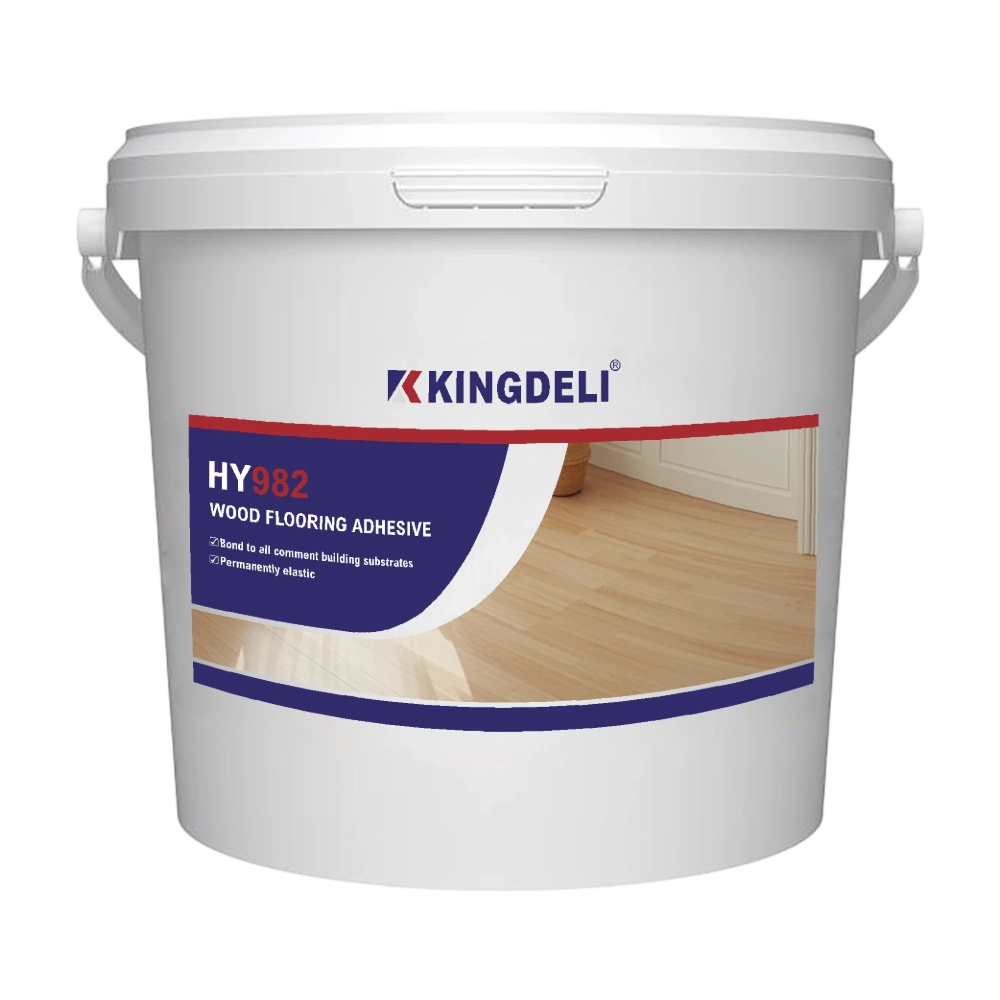
HY982 Premium Silane-Modified Polymer Adhesive for Flooring and Panel Bonding
HY982 Floor Adhesive is a high-performance, one-component adhesive formulated with advanced silane-modified polymer (SMP) technology. It is paintable, non-staining, and environmentally friendly, offering exceptional bonding strength without the need for a primer.
Designed for modern interior installations, HY982 Floor Adhesive provides excellent adhesion to wood, metal, stone, sintered slabs, glass, ceramics, and many other common building materials—making it the ideal choice for flooring installation and panel bonding applications crystal clear formulation.
Let’s Build Stronger Bonds with Quality Adhesives and Sealants
Have questions about the topic or need tailored sealant solutions for your project?
Our team is ready to provide expert guidance, product recommendations, and application support.
Innovating with Integrity, Bonding the World
Since 1998, KINGDELI has delivered trusted, sustainable sealant solutions that connect industries and inspire progress worldwide.
Whatsapp: +8618825946249
Kingdeli
Kingdeli
Kingdeli
Kingdeli
Kingdeli