











Choosing MS Silicone Sealant for Facade and Curtain Walls

- Why material choice matters for building envelopes
- Performance requirements for façade and curtain wall sealants
- Typical failure modes and how sealant choice affects them
- Understanding MS Silicone Sealant: chemistry and properties
- What is MS silicone (MS polymer) and how it cures?
- Key physical properties relevant to façades
- Choosing MS Silicone Sealant for Facades and Curtain Walls
- Selection criteria I use on projects
- Standards and tests I request from suppliers
- Comparing MS silicone with other common sealants
- Installation, QA/QC and long-term maintenance
- Surface preparation and primer strategy
- Joint design, backer rods and tooling
- Site quality control and acceptance testing
- KINGDELI: supplier capabilities and how we fit into façade projects
- When to choose MS silicone—and when to consider alternatives
- Good use-cases for MS silicone
- When to prefer neutral silicone or polyurethane
- Final practical checklist before approval
- FAQ
- 1. Is MS silicone sealant the same as silicone or MS polymer?
- 2. Can MS silicone be used on anodised aluminium curtain wall frames without primer?
- 3. How do I verify movement capability in the lab and on site?
- 4. Are MS silicones paintable, and what primers are required for painting?
- 5. What maintenance schedule do you recommend for façade sealants?
- 6. How do environmental regulations (VOC) affect sealant choice?
- Contact & next steps
I often get asked by architects, façade engineers and contractors whether ms silicone sealant is a good choice for façades and curtain walls. In this article I summarize the technical rationale and practical checks I use on projects: what MS silicone (MS polymer) really is, how its mechanical and adhesion behavior compares with neutral and acetic silicones and polyurethanes, which standards and lab tests to request, how to design joints and control site quality, and when to prefer or avoid MS silicone. I reference authoritative standards and manufacturer technical guidance where appropriate so you can verify recommendations.
Why material choice matters for building envelopes
Performance requirements for façade and curtain wall sealants
Façade and curtain wall joints must accommodate thermal and structural movement, exclude water and air, resist UV and pollution, and remain durable for decades. Typical requirements include high movement capability (±25% or more for primary joints), permanent elasticity, strong adhesion to varied substrates (aluminum, glass, stone, anodized surfaces, painted metals, concrete), low shrinkage, and UV/weather resistance. Standards such as ASTM C920 for elastomeric joint sealants and AAMA guidelines for façade sealing (see AAMA standards) are commonly requested in specifications.
Typical failure modes and how sealant choice affects them
Common field failures are adhesive failures (detachment), cohesive failures (internal tearing), staining or corrosion from by-products, and loss of elasticity leading to cracking. Material chemistry affects these outcomes: acetic silicones can corrode or stain some substrates; some polyurethanes have excellent adhesion but age differently under UV; MS polymer sealants usually combine strong adhesion and low shrinkage without acidic by-products. Knowing the failure mode you fear most helps narrow material choice.
Understanding MS Silicone Sealant: chemistry and properties
What is MS silicone (MS polymer) and how it cures?
MS silicone sealant—often marketed as MS polymer sealant or MS hybrid—is a silane-modified polymer. It couples properties of silicone and polyurethane chemistries: it cures by moisture to form an elastomeric polymer without releasing acetic acid (non-acidic) and typically requires no primer on many substrates. For an overview of sealant types and chemistry, see the Silicone sealant entry on Wikipedia and manufacturer technical pages such as Soudal on MS polymers.
Key physical properties relevant to façades
Important properties for façade use include movement capability (expressed as % elongation before failure and permitted joint movement range), tensile strength, elongation at break, Shore A hardness, elastic recovery, adhesion to specific substrates, resistance to UV/ozone, and low VOC emission. Typical comparative tendencies are: MS polymers combine good adhesion to metals and glass, good elastic recovery and paintability; neutral silicones offer excellent UV resistance and elasticity but sometimes need primers on porous substrates; acetic silicones cure faster but release acetic acid which can corrode metals or cause staining.
Choosing MS Silicone Sealant for Facades and Curtain Walls
Selection criteria I use on projects
When I evaluate an MS silicone sealant for a specific façade or curtain wall application I check:
- Movement capability: Does the product meet the required ±% movement for the joint? Aim for a product rated for at least ±25% for primary façade joints where thermal loads are substantial.
- Adhesion profile: Verify adhesion to anodised aluminium, stainless steel, glass, stone, painted surfaces and any sealant backer materials. Request adhesion tests or approvals and consider primer requirements.
- Durability and UV resistance: Ask for field exposure data and accelerated weathering tests (e.g., ISO 11507 or ASTM G154/154 cycles for UV/AATCC tests for colorfastness where relevant).
- Compatibility: Confirm there are no plasticizers or solvents that could react with or stain adjacent materials (e.g., bituminous membranes).
- Regulatory and environmental credentials: VOC content, low-odor formulations for occupied buildings, and relevant quality certifications (ISO 9001, ISO 14001 if sustainability is prioritized).
Standards and tests I request from suppliers
Contractors and specifiers should request objective test data. Typical tests and references include:
- ASTM C920 classification and performance data for joint sealants: ASTM C920.
- Adhesion testing to substrates (peel/tensile) and primer evaluation.
- Accelerated weathering/UV resistance (e.g., ISO accelerated weathering tests or ASTM G154).
- Movement capability and cyclic movement testing (per product datasheet and independent labs).
Comparing MS silicone with other common sealants
Below I provide a practical comparison table I use during material selection. Data are generalized tendencies—always verify against the specific product datasheet and lab reports provided by the manufacturer.
| Property | MS Silicone (MS Polymer) | Neutral Silicone | Acetic Silicone | Polyurethane (PU) |
|---|---|---|---|---|
| Adhesion to metals/glass | Excellent to very good; often primerless on many substrates (see manufacturer data) | Very good to metals and glass; often primerless on many non-porous substrates | Good but may corrode some metals due to acetic by-product | Good to many substrates but may require primer on glass/metal |
| UV/weather resistance | Very good (formulations vary) | Excellent | Excellent | Good; can degrade faster under UV without additives |
| Movement capability | High (often ±25% or higher) | Very high (silicones excel at elasticity) | High | Moderate to high depending on formulation |
| Paintability | Generally paintable | Typically not paintable without special primers | Not paintable | Paintable |
| VOC / environmental | Low-VOC options available | Low-VOC (neutral silicones) | Low-VOC but acidic | Varies; some high VOC |
| Typical concerns | Formulation variability between brands—verify datasheet and tests | Silicone film may limit paint adhesion | Acetic acid release can corrode metals | Sensitivity to moisture during cure and potential UV degradation |
Sources used to generalize these characteristics include manufacturer technical pages (e.g., Soudal on MS polymers), industry overviews such as the silicone sealant Wikipedia article, and standards references such as ASTM C920.
Installation, QA/QC and long-term maintenance
Surface preparation and primer strategy
Even the best MS silicone sealant cannot perform with poor surface preparation. I insist on the following steps on façade projects:
- Remove old sealant, contaminants, oils, and release agents. Use compatible cleaners—avoid solvents that leave residues.
- Verify substrate compatibility: request adhesion test reports for each substrate and finish present on the façade (e.g., anodized aluminium, PVFK-coated panels).
- Use primer where manufacturer specifically recommends it—many MS polymer formulations are primerless on metals and glass but require primers on porous stone or some paints.
Joint design, backer rods and tooling
Correct joint width-to-depth ratio and use of closed-cell backer rods are critical to ensure a proper hourglass profile and allow free movement. Typical guidance is a depth to width ratio of 1:2 for one-sided adhesion situations (e.g., depth = width/2). For wide joints or heavy movement joints, specify bond-breaker tape or appropriate backer rod. Tool the bead to ensure full contact with joint sides and avoid air entrapment.
Site quality control and acceptance testing
QA measures reduce long-term liability. Insist on:
- Product batch certificates and manufacturer installation guides onsite.
- Mock-ups and adhesion tests on representative substrates before mass application.
- Cure and adhesion verification on a sample schedule (e.g., 7, 14, 28 days checks depending on cure rate).
- Visual inspection protocols and periodic maintenance plans incorporated into façade maintenance manuals.
KINGDELI: supplier capabilities and how we fit into façade projects
Since its establishment in 1998, KINGDELI has stood as a global leader in the high-performance sealant, adhesive, and coating industry. Headquartered in Foshan, China, our state-of-the-art 66,000 m² facility is powered by fully automated production lines with an annual capacity exceeding 100,000 tons, ensuring a consistent and robust supply for partners worldwide.
As a recognized National High-Tech Enterprise and a key contributor to the National Standard GB/T 29755-2013, we unite advanced manufacturing power with technical excellence. Our comprehensive product portfolio—spanning Neutral & Acetic Silicone, Polyurethane, MS Polymer, and No More Nails adhesives—is engineered to meet strict international standards, including ISO 9001, ISO 14001, CE, and ASTM.
With over 27 years of industry expertise and a trusted presence in 50+ countries, KINGDELI is more than a manufacturer; we are a dedicated solution provider. We offer end-to-end OEM/ODM support, sustainable low-VOC formulations, and professional technical service. At KINGDELI, we are driven by innovation and integrity, building trust and sealing the future for customers around the globe.
KINGDELI’s key façade and curtain wall portfolio includes: neutral silicone sealant, acetic silicone sealant, acrylic sealant, silicone glazing sealant, No More Nails adhesive, polyurethane sealant, MS polymer sealant, RTV gasket maker, epoxy tile grout and self-leveling sealant. Our competitive advantages include automated large-scale production (ensuring supply stability), contribution to national standards (technical credibility), multi-standard certifications and a global service network for technical support and custom formulations.
When to choose MS silicone—and when to consider alternatives
Good use-cases for MS silicone
I typically specify MS silicone when I need a combination of strong adhesion to varied substrates without acidic by-products, good elastic recovery, paintability and low odor for occupied buildings. Typical project scenarios include metal-to-metal or metal-to-glass joints where paintability and long-term adhesion are priorities.
When to prefer neutral silicone or polyurethane
Neutral silicones are still preferred where maximum UV/ozone resistance and long-term elasticity are paramount and where paintability is not required (e.g., exposed glazing seals). Polyurethanes are selected in cases requiring high mechanical load capacity and paintability where UV exposure is moderate and strict moisture controls during cure can be maintained.
Final practical checklist before approval
Before you approve an MS silicone product for façade use, ensure you have:
- Reviewed product datasheet and movement rating.
- Received substrate-specific adhesion test reports (signed by an independent lab if necessary).
- Agreed installation method, primer list and mock-up acceptance criteria.
- Confirmed environmental credentials (VOC) and certifications requested by the project client.
FAQ
1. Is MS silicone sealant the same as silicone or MS polymer?
Terminology varies by region and manufacturer. MS silicone usually refers to MS polymer (silane-modified polymer) which is a hybrid technology combining features of silicone and polyurethane. It is not identical to classic silicones; check chemistry on the product datasheet. For general background on silicone sealants see Wikipedia.
2. Can MS silicone be used on anodised aluminium curtain wall frames without primer?
Many MS polymer formulations adhere well to anodized aluminium without primer, but adhesion varies by product and surface finish. Always require supplier-provided adhesion test certificates on the exact anodized sample used in the project.
3. How do I verify movement capability in the lab and on site?
Movement capability is tested in controlled lab conditions (often the product datasheet states a movement capability percentage). For site verification, use cyclic movement mock-ups and inspect after specified cycles. Independent lab reports are recommended for high-risk projects (see ASTM C920).
4. Are MS silicones paintable, and what primers are required for painting?
Many MS silicones are paintable, but paint adhesion depends on the paint system and substrate. Conduct compatibility tests (paint adhesion tape tests or cross-cut tests) and follow manufacturer guidance for primers or surface treatments.
5. What maintenance schedule do you recommend for façade sealants?
I recommend visual inspections annually and full functional checks every 5–10 years depending on façade exposure. Replace sealant that shows adhesion loss, cracks, excessive shrinkage, or contamination. Keep a maintenance log and as-built product datasheets to ease future repairs.
6. How do environmental regulations (VOC) affect sealant choice?
Low-VOC formulations are increasingly specified for interior zones, urban projects and regions with strict emissions rules. Request VOC data sheets and ensure compliance with local regulations; many MS polymer products are available in low-VOC formulations.
Contact & next steps
If you need help specifying or testing an MS silicone sealant for a specific façade or curtain wall project, I recommend starting with a small mock-up and asking suppliers to provide substrate-specific adhesion tests and full datasheets. For reliable supply and technical support, consider partners with large automated production capacity and international certifications.
To discuss product options or request samples and technical documentation, contact KINGDELI for OEM/ODM support and project consulting. View our façade-focused products including MS polymer sealants, neutral silicone sealants and polyurethane options—our technical team can provide test reports and mock-up support to validate performance on your façade system.
Storage, Handling and Shelf Life for Acetic Silicone Sealants
Adhesion Tests and Certifications for MS Silicone Sealant
OEM/ODM double glazing glass sealant Manufacturers and Suppliers
OEM/ODM rtv silicone gasket maker Manufacturers and Suppliers
HY939A
What substrates does this sealant adhere to?
It provides excellent adhesion to a wide range of materials, including glass, metal, aluminum, gypsum board, marble, and certain engineering plastics, without causing corrosion.
Is this product suitable for outdoor use?
Yes. It features outstanding resistance to weathering, UV radiation, ozone, and aging, making it suitable for long-term outdoor applications.
HY-976
Can the adhesive fill gaps?
Yes. It has gap-filling capability of up to 10 mm, making it suitable for uneven surfaces.
HY924
What is the shelf life?
Aluminum cartridge: 9 months
Aluminum foil sausage: 12 months
Store in a cool, dry place for best shelf performance.
HY982
Can the cured surface be painted?
Yes. After surface curing, HY982 can be painted or coated, allowing it to blend seamlessly with surrounding finishes.
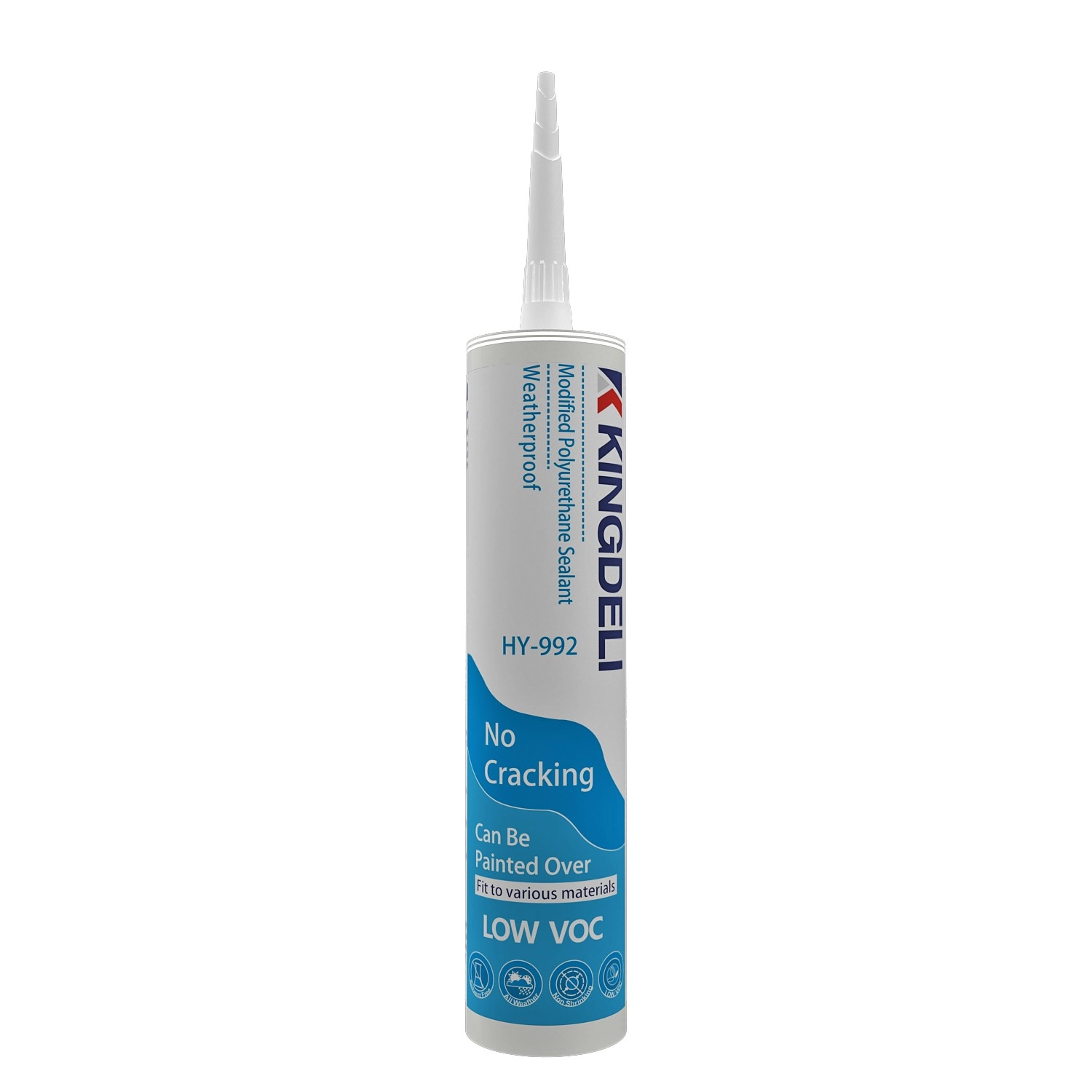
HY992 Modified Polyurethane Construction Sealant
HY992 Modified Polyurethane Sealant is a one-component, moisture-curing construction sealant designed for professional building and structural sealing applications. It provides excellent adhesion, weather resistance, and durable elasticity, making it suitable for a wide range of construction materials.
The formulation delivers strong bonding performance without corrosion or substrate contamination, while maintaining low VOC content for environmentally responsible construction projects.

HY995 Crystal Clear Ms Polymer Adhesive/Sealant
HY995 Crystal Clear Ms Polymer Adhesive/Sealant is a new generation MS Polymer adhesive / sealant formulated for all bonding and sealing applications where long term reliability is required. It has excellent bonding strength on various materials. It will cure to form a durable, flexible, waterproof seal.

HY997 High-Performance Anti-Microbial MS Polymer Sealant
HY997 MS polymer sealant for is is a premium one-component, neutral-curing modified silane sealant engineered for demanding interior applications. It offers a Class 20 movement capability, ensuring long-lasting flexibility and reliable performance under dynamic joint conditions. Curing at room temperature, HY997 delivers superior anti-microbial and mildew-resistant properties, maintaining hygienic and clean environments over time.
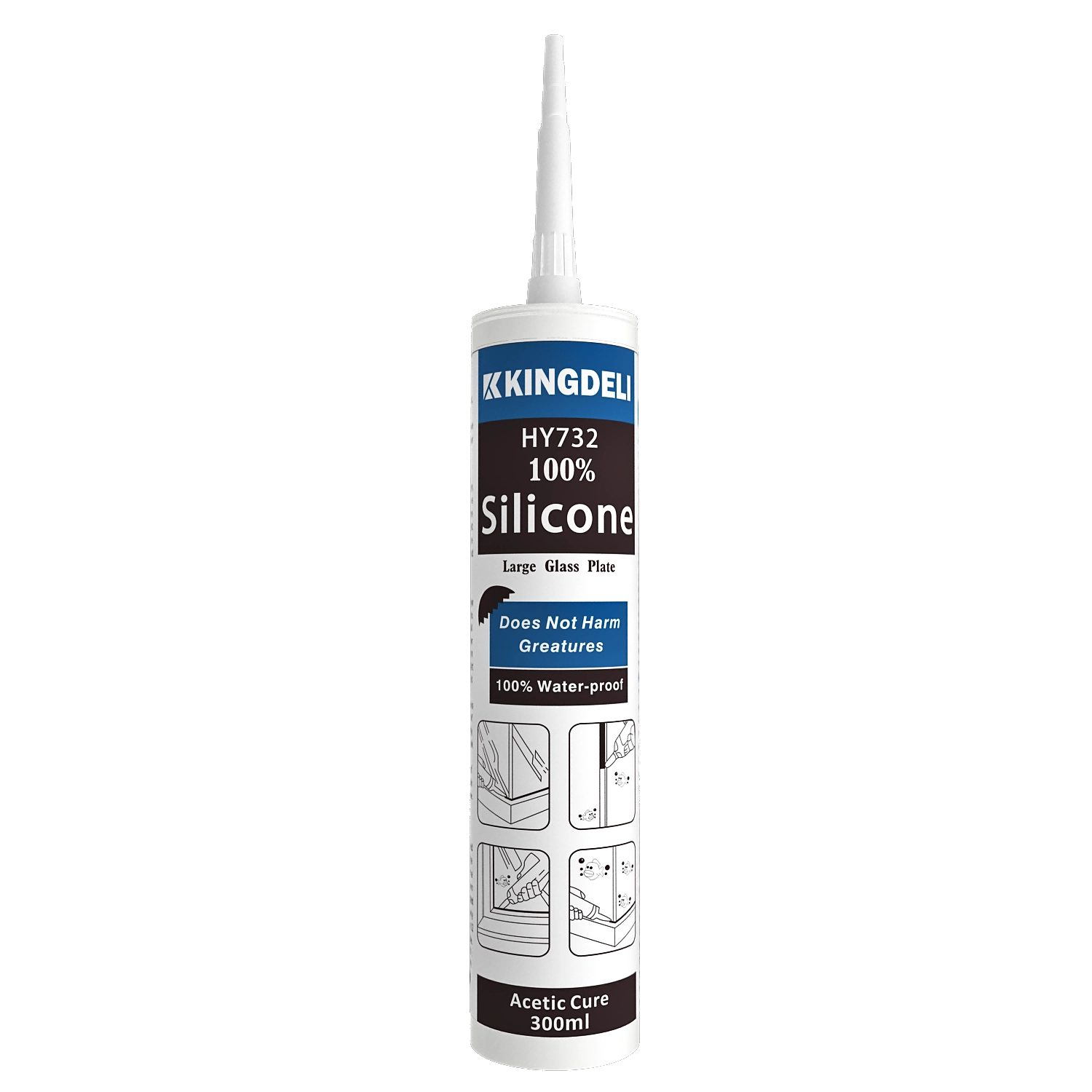
KINGDELI HY732 Professional Acetoxy Cure Silicone Sealant
KINGDELI HY732 is a professional-grade, one-component acetoxy cure silicone sealant designed for fast curing, strong adhesion, and long-lasting flexibility. Ideal for aquariums, glass applications, aluminum doors and windows, kitchens, and bathrooms, it provides reliable sealing performance with excellent anti-fungal protection in high-humidity environments.
Let’s Build Stronger Bonds with Quality Adhesives and Sealants
Have questions about the topic or need tailored sealant solutions for your project?
Our team is ready to provide expert guidance, product recommendations, and application support.
Innovating with Integrity, Bonding the World
Since 1998, KINGDELI has delivered trusted, sustainable sealant solutions that connect industries and inspire progress worldwide.
Whatsapp: +8618825946249
Kingdeli
Kingdeli
Kingdeli
Kingdeli
Kingdeli