











MS Polymers vs. Traditional Sealants: The Definitive Comparison for Durability and Cost-Efficiency (2026 Guide)

- What Are MS Polymer Sealants and Why Do They Matter?
- How Hybrid Chemistry Works
- Why They Are Transforming the Industry
- Key Takeaways: MS Polymers at a Glance
- The Strategic Advantages
- MS Polymers vs. Silicone: A Head-to-Head Comparison
- Why Professionals Are Seeking Silicone Sealant Alternatives
- MS Polymers vs. Polyurethane (PU) Sealants
- The Health and Safety Paradigm Shift
- Performance Under Pressure
- Analyzing the Cost-Efficiency: ROI of Switching to Hybrid Sealants
- Breaking Down the Real-World Costs
- Future Trends 2026+: The Evolution of the MS Sealant Supplier Market
- What to Expect in the Near Future
- Expert Tips: Common Mistakes When Buying from an MS Sealant Supplier
- Sourcing Strategically
- Conclusion
- FAQ
- What is the difference between MS polymer and silicone sealant?
- Are MS polymer sealants waterproof?
- How long does MS polymer sealant take to cure?
- Can you paint over an MS polymer sealant?
- Is MS polymer the same as polyurethane?
- What are the disadvantages of MS polymer sealants?
- How do I choose a reliable MS sealant supplier?
- How long do MS polymer sealants last?
In the rapidly evolving landscape of commercial construction and industrial manufacturing, selecting the right joint sealant is no longer a minor detail—it is a critical decision that impacts structural integrity, aesthetic longevity, and project compliance. As we navigate the regulatory and technological shifts of 2026, silyl-modified polymer sealants have emerged as the premier choice for professionals demanding uncompromising durability and cost-efficiency.
Historically, contractors and engineers were forced to choose between the high mechanical strength of polyurethane and the superior UV resistance of silicone. Today, hybrid sealant technology bridges that gap, offering the best of both worlds without the inherent drawbacks of legacy materials. This definitive guide will explore the precise mechanisms, long-term ROI, and critical comparisons needed to make informed procurement decisions for your next high-stakes project.
What Are MS Polymer Sealants and Why Do They Matter?
MS (Modified Silicone or Silyl-Modified) polymer sealants are advanced hybrid formulations that combine the strength and paintability of polyurethane with the weathering resistance of silicone. They matter because their solvent-free, isocyanate-free chemistry ensures superior environmental safety, eliminating bubbling during curing and providing exceptional adhesion even on wet substrates.
How Hybrid Chemistry Works
To understand why MS polymers matter, we must look at their molecular structure. These sealants are formulated from a polyether backbone terminated with highly reactive silyl groups. When exposed to ambient moisture, these silyl groups cross-link, transforming the liquid or paste into a highly resilient, solid elastomer. This unique neutral-curing process creates a waterproof, flexible bond that can endure severe environmental stressors.
Why They Are Transforming the Industry
The construction industry relies on predictability and safety. MS polymers deliver on both fronts by offering:
- Primerless Adhesion: They bond aggressively to a vast array of porous and non-porous substrates, including concrete, metal, PVC, and glass, significantly reducing surface preparation time.
- Environmental and Worker Safety: Because they are free of volatile organic compounds (VOCs) and toxic isocyanates, they are highly regarded as safe, eco-friendly industrial sealants.
- Weather Flexibility: They maintain their elastomeric properties across extreme temperature fluctuations without shrinking or cracking.
Key Takeaways: MS Polymers at a Glance
MS polymers offer a broader adhesion profile without the need for primers, reducing overall installation time. Unlike silicone, MS sealants are highly paintable and resist dirt pick-up, maintaining aesthetic integrity. They provide a safer, eco-friendly alternative to traditional polyurethane by eliminating harmful VOCs and isocyanates.
The Strategic Advantages
If you are evaluating sealant options for large-scale application, consider these core operational benefits:
- Accelerated Project Timelines: By eliminating the need for primer application and waiting times, crews can complete joint sealing phases much faster.
- Aesthetic Longevity: Architects heavily favor MS polymers for visible facade joints because they do not attract airborne dirt or streak oil down adjacent masonry.
- Simplified Procurement: As true "all-rounders," MS polymers can consolidate your inventory. A single hybrid formulation can often replace multiple specialized tubes of silicone, acrylic, and polyurethane.
MS Polymers vs. Silicone: A Head-to-Head Comparison
In the battle of MS polymers vs. silicone, MS polymers can be painted over immediately after skinning, whereas silicone strictly repels paint. Silicone is prone to oil bleeding and dirt accumulation, while MS polymers maintain a clean surface over time. MS polymers adhere seamlessly to porous substrates (like concrete and brick) without primer, outperforming silicone in diverse structural applications.
Why Professionals Are Seeking Silicone Sealant Alternatives
While silicone has been the gold standard for high-temperature applications and basic waterproofing for decades, it possesses inherent flaws that complicate modern architectural projects.
- Paintability: Silicone sealants have an extremely low surface energy, meaning paint will physically bead up and peel off. For interior decorators and exterior facade specialists, this is a massive limitation. MS polymers, conversely, exhibit excellent compatibility with water-based and synthetic paints, allowing for "wet-on-wet" painting shortly after application.
- Aesthetic Degradation: Traditional silicones contain unreacted silicone oils (plasticizers) that can leach into porous materials like natural stone, granite, and marble. This "bleeding" causes permanent, dark staining. Furthermore, silicone's static charge attracts airborne dust, turning white joints gray over time. MS polymers are non-staining and dirt-resistant.
- Adhesive Versatility: When searching for viable silicone sealant alternatives, adhesion is key. Silicone often requires specialized primers to bond to damp surfaces or specific metals. MS polymers form tenacious, primerless bonds even in sub-optimal, high-humidity environments.
MS Polymers vs. Polyurethane (PU) Sealants
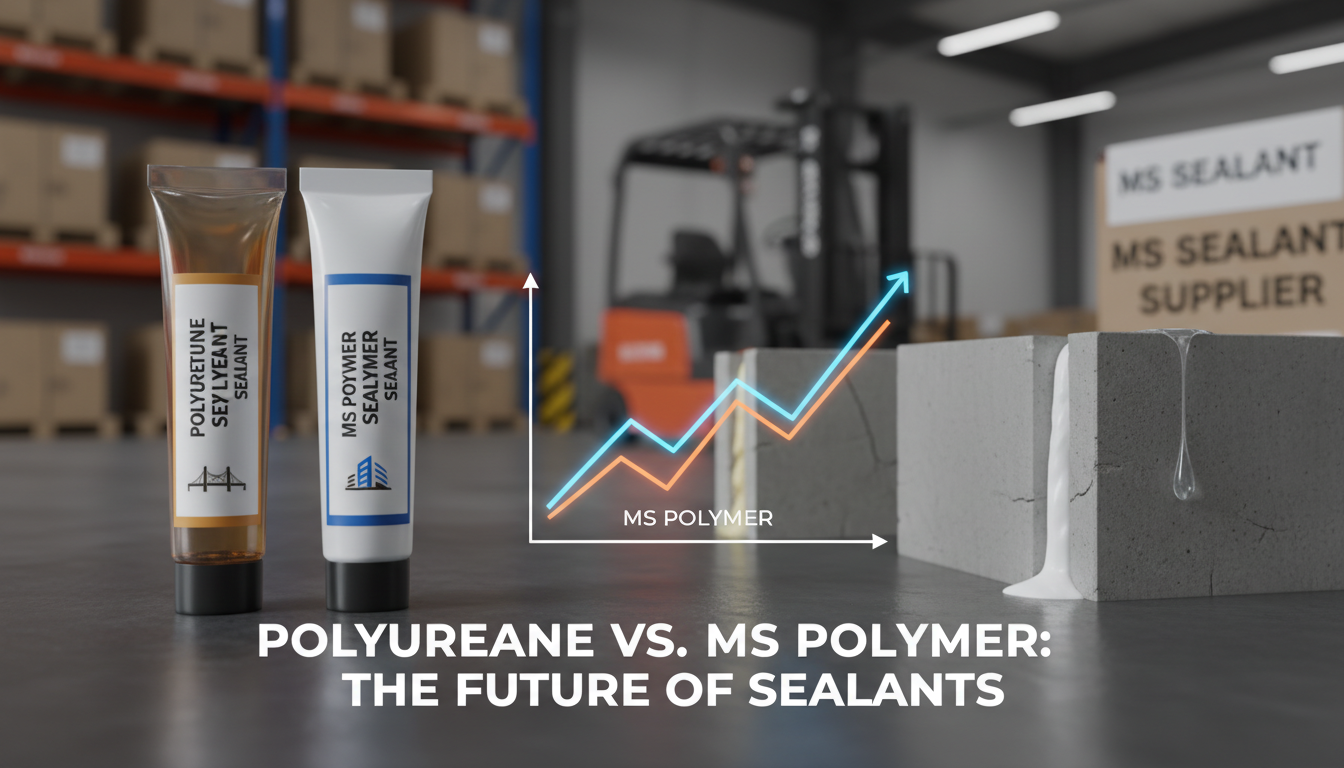
When evaluating polyurethane vs ms polymer, polyurethane can bubble and foam in high-humidity environments, whereas MS polymers cure consistently without off-gassing. MS polymers are completely free of toxic isocyanates, making them safer for indoor applications and compliant with strict environmental standards. Traditional PU sealants often chalk or degrade under UV exposure, while hybrid MS formulations offer superior long-term weathering.
The Health and Safety Paradigm Shift
The most significant driver behind the transition from polyurethane to MS polymers is occupational health. As reported by the Occupational Safety and Health Administration (OSHA), health effects of isocyanate exposure—the core raw material in polyurethane products—include irritation of skin and mucous membranes, chest tightness, difficult breathing, and severe occupational asthma.
To combat this, modern formulations prioritize safety. As reported by Wikipedia, silyl-modified polymers are the main components in solvent-free and isocyanate-free sealant and adhesive products, delivering the desirable properties of polyurethane without the health hazards.
Performance Under Pressure
Beyond safety, the physical performance of MS polymers outclasses legacy polyurethane in several distinct ways:
- Curing Reliability: Polyurethanes react strongly with moisture during the curing phase, releasing carbon dioxide gas. In humid environments, this off-gassing becomes trapped, causing unsightly bubbles and structural voids within the joint. MS polymers cure via a different chemical pathway, ensuring solid, void-free joints regardless of ambient humidity.
- UV Stability: Unprotected polyurethane is notoriously sensitive to ultraviolet radiation. Over time, it will discolor, chalk, and lose its elasticity. MS polymers inherit the outstanding UV resistance of silicone, ensuring the seal remains flexible and structurally sound for decades.
Analyzing the Cost-Efficiency: ROI of Switching to Hybrid Sealants
While the upfront purchasing cost per cartridge from an MS sealant supplier may be slightly higher, the long-term ROI is significantly greater. Cost savings are realized through the elimination of surface primers, reduced labor time during preparation, and a drastic decrease in call-backs for joint failures. The extended lifecycle (20+ years) of MS polymers means fewer replacement cycles compared to standard acrylics or cheap PU.
Breaking Down the Real-World Costs
Procurement managers often fixate on the unit price per tube, but evaluating sealants requires a holistic view of the total applied cost.
- Labor and Preparation Costs: Applying traditional sealants to porous substrates often requires mechanically cleaning the joint, applying a specialized primer, and waiting for it to flash off before the sealant can be gunned. MS polymers bond directly to most unprimed surfaces. By eliminating the primer step, contractors save thousands of dollars in man-hours on large commercial projects.
- Mitigating Call-Backs: A failed joint leads to water ingress, structural damage, and costly remediation work. Because MS polymers cure without bubbling, accommodate dynamic joint movement (high elasticity), and resist UV degradation, the failure rate is exceptionally low.
- Extended Lifecycle Valuation: Standard polyurethane joints may require complete replacement every 7 to 10 years due to weathering and hardening. High-quality MS polymers boast lifespans exceeding 20 years, effectively halving maintenance and replacement budgets over the lifespan of a building.
Future Trends 2026+: The Evolution of the MS Sealant Supplier Market
Global shifts toward ultra-low VOC building materials are positioning MS polymers as the default specification for green building certifications (LEED/BREEAM) by 2026. Innovations in high-tack, rapid-cure MS formulations are reducing structural clamping times from hours to mere minutes. Suppliers are increasingly offering customized modulus formulas (both low and high Shore A) to target highly specific industrial bonding tasks.
What to Expect in the Near Future
The next generation of hybrid sealants is pushing the boundaries of chemical engineering:
- Green Building Dominance: With stringent indoor air quality regulations tightening globally, the demand for eco-friendly industrial sealants is at an all-time high. MS polymers naturally comply with the strictest VOC emission standards, ensuring architects secure crucial LEED v5 credits for low-emitting materials.
- Rapid-Cure and High-Tack Formulations: Modular construction and automated manufacturing require adhesives that offer immediate initial grab. New high-tack MS polymers can hold heavy panels in place instantly, eliminating the need for temporary mechanical fasteners or prolonged clamping.
- Customized Modulus: The market is diversifying. You can now specify low-modulus MS sealants for expansion joints that require massive movement accommodation, or high-modulus MS adhesives for structural bonding that demands rigid shear strength.
Expert Tips: Common Mistakes When Buying from an MS Sealant Supplier
Failing to verify batch consistency is a major error: always ask your MS sealant supplier for ISO certification and batch testing data. Ignoring Shore A Hardness leads to selecting a high-modulus adhesive when a low-modulus, highly elastic expansion joint sealant was needed. Overlooking shelf life causes material waste, as MS polymers generally have a 12-18 month shelf life; buying in bulk without a usage plan is risky.
Sourcing Strategically
To ensure your project succeeds, keep these procurement best practices in mind:
- Verify Batch Consistency: The chemical stability of hybrid polymers requires precise manufacturing. Always partner with a reputable hybrid construction sealant manufacturer that provides comprehensive Technical Data Sheets (TDS) and ISO 9001 compliance documentation.
- Match the Modulus to the Application: Do not treat all MS polymers as interchangeable. A high Shore A hardness (e.g., Shore A 60) is excellent for bonding metal panels, but it will fail if used in an active concrete expansion joint that requires a soft, low-modulus formulation (e.g., Shore A 25) to accommodate thermal expansion.
- Monitor Shelf Life: Moisture-curing technologies are sensitive to storage conditions. Ensure your supplier rotates stock efficiently, and only order what you can reasonably consume within the product's 12-to-18-month viability window to prevent tubes from curing inside the packaging.
Conclusion
MS polymers represent the pinnacle of hybrid sealant technology, outperforming traditional silicone and polyurethane in durability, paintability, safety, and long-term cost-efficiency. Whether you are upgrading a construction project or seeking reliable industrial bonding, transitioning to MS polymers is a future-proof investment that protects both your bottom line and your workforce.
Contact us today to speak with a leading hybrid construction sealant manufacturer and find the perfect high-performance formulation for your specific application needs.
FAQ
What is the difference between MS polymer and silicone sealant?
The main difference lies in paintability and surface aesthetics. MS polymers can be easily painted and do not attract dirt or bleed oils into porous substrates, unlike traditional silicone. Silicone generally offers higher extreme-temperature resistance, while MS polymers provide superior mechanical bonding strength and primerless adhesion.
Are MS polymer sealants waterproof?
Yes, MS polymer sealants are fully waterproof once cured and offer excellent resistance to harsh weathering, making them ideal for exterior construction and marine applications. Remarkably, they can even be applied to damp or wet substrates without losing their adhesive properties.
How long does MS polymer sealant take to cure?
MS polymers are moisture-curing, drawing humidity from the air. Skin formation typically occurs within 10 to 30 minutes. The full curing rate is generally 2 to 3 millimeters per 24 hours, depending on the ambient temperature and humidity levels.
Can you paint over an MS polymer sealant?
Yes. One of the most significant advantages of MS polymer sealants is their excellent compatibility with most water-based and synthetic paints. Painting can usually be done 'wet-on-wet' shortly after skin formation, speeding up project completion times.
Is MS polymer the same as polyurethane?
No. While MS polymers share the high mechanical strength of polyurethane, they are a hybrid technology based on silyl-modified polyethers. Crucially, MS polymers contain no isocyanates or solvents, meaning they do not bubble in humid conditions and are much safer for user health.
What are the disadvantages of MS polymer sealants?
The primary disadvantage is a slightly higher initial cost per tube compared to basic acrylics or standard silicones. Additionally, they generally have lower continuous heat resistance (usually capping at around 90-100°C) compared to specialized high-temp silicones.
How do I choose a reliable MS sealant supplier?
Look for suppliers that provide comprehensive Technical Data Sheets (TDS), Safety Data Sheets (SDS), and proof of strict quality control (like ISO 9001 certification). A reputable ms sealant supplier will also offer strong technical support to help you match the correct modulus and formulation to your project.
How long do MS polymer sealants last?
When properly applied, high-quality MS polymer sealants can last 20 years or more without shrinking, cracking, or losing adhesion. Their excellent UV stability ensures they maintain flexibility and structural integrity over the long term, even in harsh outdoor environments.
OEM/ODM ms polymer adhesive sealant Manufacturers and Suppliers
Top 10 silicone sealant Manufacturers and Supplier Brands in Hardware and Building Materials
OEM/ODM acrylic sealant Manufacturers and Suppliers
Top neutral cure silicone sealant Manufacturers and Suppliers
HY-976
How long does it take to fully cure?
Curing time depends on surface porosity and environmental conditions. Full strength is typically achieved within 48 hours.
HY993
Is HY993 suitable for automotive applications?
Yes. It can be used for bonding and sealing in automotive body building and general vehicle applications.
HY997
What type of sealant is HY997 Anti-Mildew Sealant?
HY997 is a one-component, neutral-curing modified silane sealant based on silyl-modified polyether technology. It offers excellent anti-mildew, anti-bacterial, and stain-resistant performance, making it ideal for humid indoor environments.
HY732
Is the sealant flexible after curing?
Yes, after curing, HY732 remains flexible, helping it maintain a long-lasting seal even with normal movement or expansion.
HY-3300
Can I get a sample before placing an order?
Yes, free samples are available for testing and evaluation. Please contact our sales team for details.
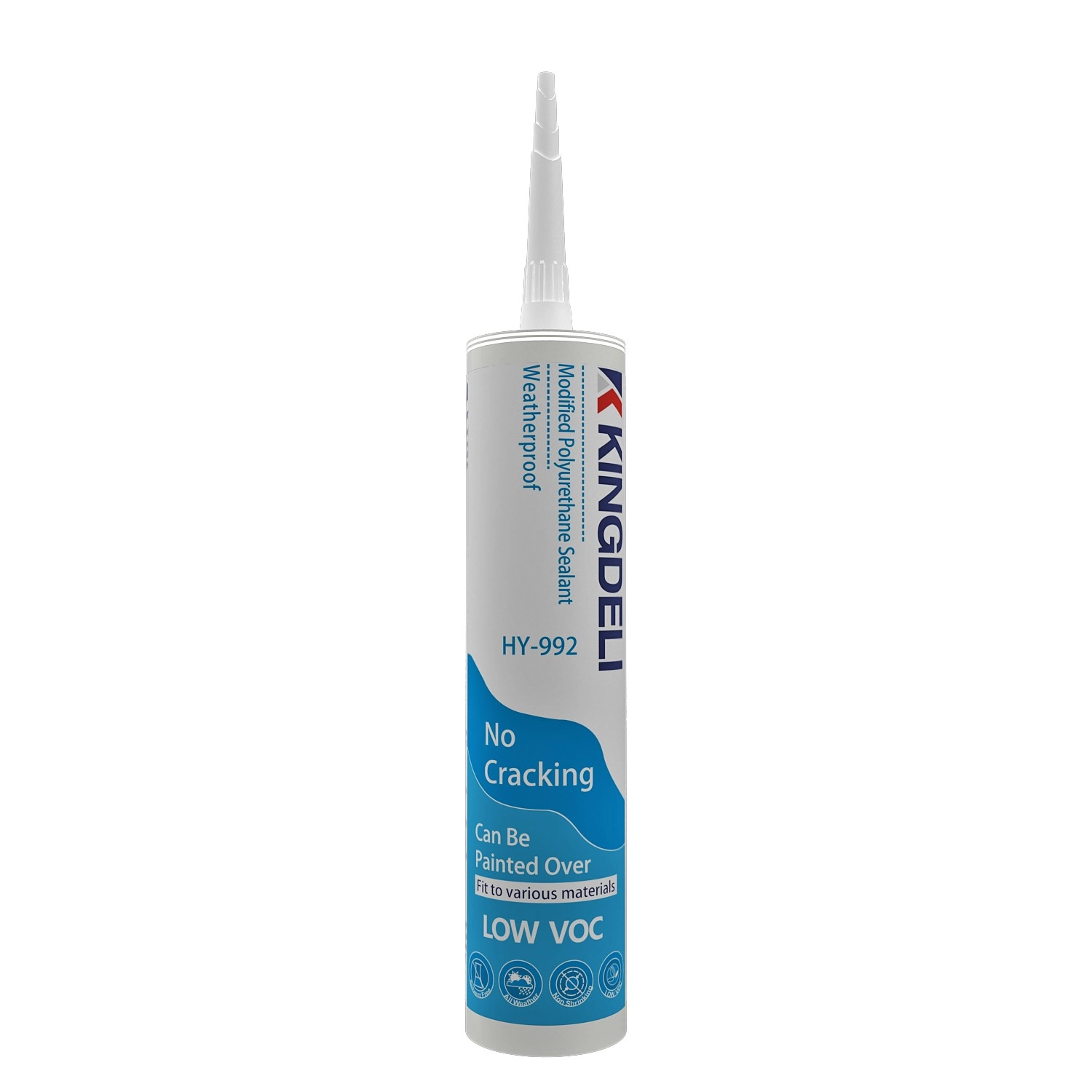
HY992 Modified Polyurethane Construction Sealant
HY992 Modified Polyurethane Sealant is a one-component, moisture-curing construction sealant designed for professional building and structural sealing applications. It provides excellent adhesion, weather resistance, and durable elasticity, making it suitable for a wide range of construction materials.
The formulation delivers strong bonding performance without corrosion or substrate contamination, while maintaining low VOC content for environmentally responsible construction projects.

HY995 Crystal Clear Ms Polymer Adhesive/Sealant
HY995 Crystal Clear Ms Polymer Adhesive/Sealant is a new generation MS Polymer adhesive / sealant formulated for all bonding and sealing applications where long term reliability is required. It has excellent bonding strength on various materials. It will cure to form a durable, flexible, waterproof seal.

HY997 High-Performance Anti-Microbial MS Polymer Sealant
HY997 MS polymer sealant for is is a premium one-component, neutral-curing modified silane sealant engineered for demanding interior applications. It offers a Class 20 movement capability, ensuring long-lasting flexibility and reliable performance under dynamic joint conditions. Curing at room temperature, HY997 delivers superior anti-microbial and mildew-resistant properties, maintaining hygienic and clean environments over time.
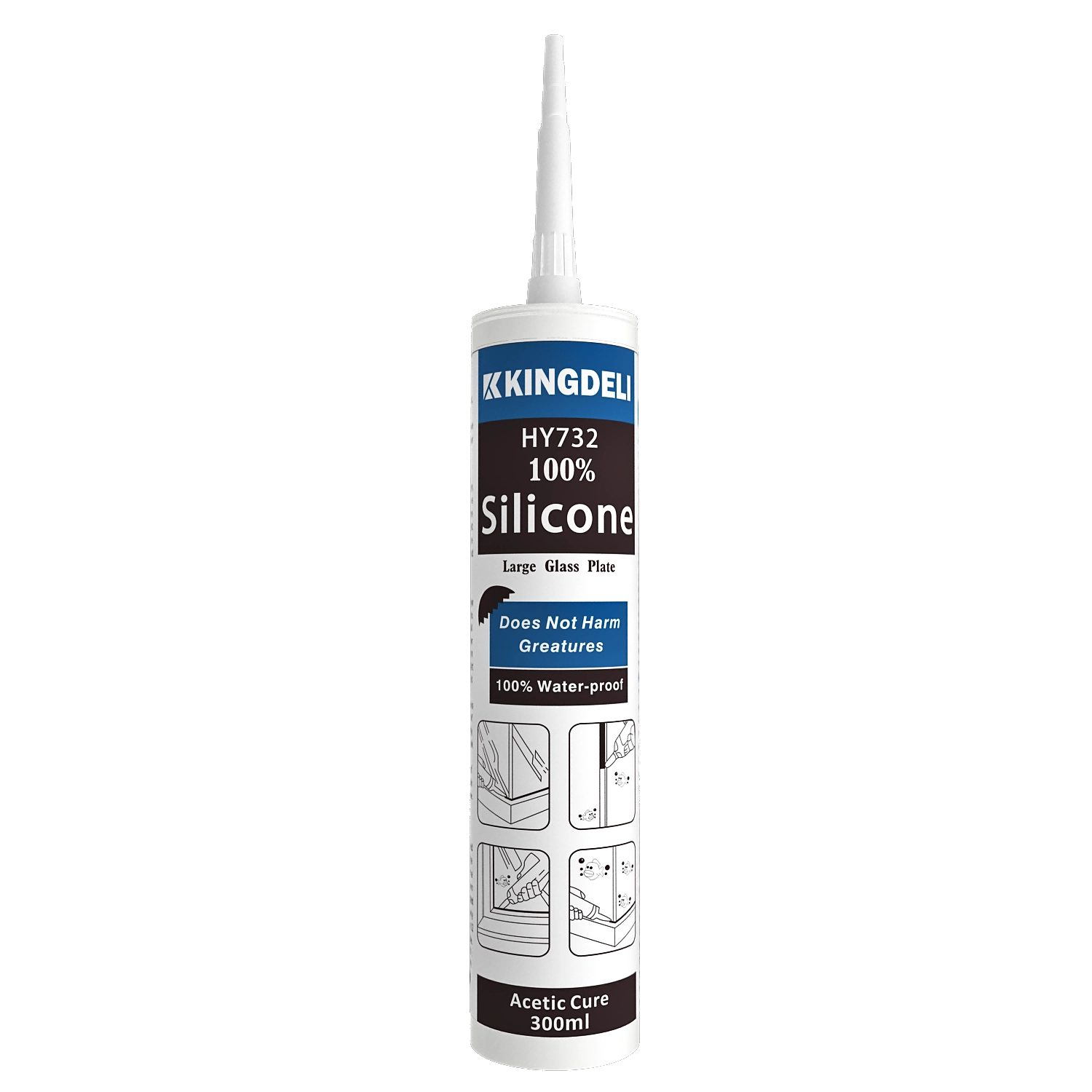
KINGDELI HY732 Professional Acetoxy Cure Silicone Sealant
KINGDELI HY732 is a professional-grade, one-component acetoxy cure silicone sealant designed for fast curing, strong adhesion, and long-lasting flexibility. Ideal for aquariums, glass applications, aluminum doors and windows, kitchens, and bathrooms, it provides reliable sealing performance with excellent anti-fungal protection in high-humidity environments.
Let’s Build Stronger Bonds with Quality Adhesives and Sealants
Have questions about the topic or need tailored sealant solutions for your project?
Our team is ready to provide expert guidance, product recommendations, and application support.
Innovating with Integrity, Bonding the World
Since 1998, KINGDELI has delivered trusted, sustainable sealant solutions that connect industries and inspire progress worldwide.
Whatsapp: +8618825946249
Kingdeli
Kingdeli
Kingdeli
Kingdeli
Kingdeli