











Low-VOC and Environmental Compliance for Acetic Silicone

- Understanding VOCs, Health Concerns, and Regulatory Drivers
- What counts as a VOC for sealants?
- Why manufacturers and specifiers care
- Relevant regulatory references
- Formulation and Testing: Making Acetic Silicone Low-VOC
- How acetic (acetoxy) silicone works and its VOC challenges
- Analytical methods and certification
- Practical formulation strategies
- Performance Trade-offs: Acetic vs Neutral Silicone
- Comparative properties
- Interpreting the trade-offs
- Sources and standards supporting performance claims
- Regulatory Pathways, Labelling, and Market Expectations
- Regional VOC limits and certification
- Green building and IAQ labels
- Practical compliance checklist I use
- Implementing Low-VOC Acetic Silicone in Projects
- Selecting the right product
- Installation best practices to minimize emissions and risk
- Monitoring and post-installation assurance
- KINGDELI: Capabilities, Low-VOC Solutions, and Why It Matters
- How KINGDELI supports low-VOC acetic silicone applications
- FAQ — Common Questions About Low-VOC Acetic Silicone
- 1. Can acetic silicone sealant be formulated to meet CARB or EU low-VOC limits?
- 2. Will low-VOC acetic silicones sacrifice performance?
- 3. Are there situations where neutral-cure silicones are preferable?
- 4. What documentation should I request from a manufacturer to prove low-VOC compliance?
- 5. How quickly does acetic silicone emit acetic acid and VOCs during cure?
- 6. Can KINGDELI provide samples and testing support for project qualification?
I have worked with architects, manufacturers, and specification writers worldwide on selecting and formulating sealants that meet increasingly strict environmental and indoor air quality requirements. In this article I summarize practical, verifiable guidance for ensuring acetic (acetoxy) silicone sealant complies with low-VOC targets and regulatory frameworks while still delivering the adhesion, flexibility, and durability clients expect.
Understanding VOCs, Health Concerns, and Regulatory Drivers
What counts as a VOC for sealants?
Volatile organic compounds (VOCs) are organic chemicals that easily evaporate at room temperature and can contribute to outdoor ozone formation and indoor air quality issues. Regulatory definitions vary, but authoritative descriptions are provided by the U.S. EPA and the European ECHA. For adhesives and sealants, VOC content is typically reported in grams per liter (g/L) of product and measured via standardized test methods.
Why manufacturers and specifiers care
Design teams, building owners, and regulators aim to reduce emissions for worker safety, occupant health, and compliance with green building programs (LEED, WELL). Low-VOC formulations also help projects meet jurisdictional limits such as California's Air Resources Board (CARB) Adhesives & Sealants Rule and EU/REACH expectations.
Relevant regulatory references
Key standards and references I rely on include CARB's Adhesives and Sealants regulation (CARB), the EPA VOC guidance (EPA VOC), and international standards for sealant performance such as ASTM C920. For corporate management systems, ISO 9001 and ISO 14001 are relevant (ISO 9001, ISO 14001).
Formulation and Testing: Making Acetic Silicone Low-VOC
How acetic (acetoxy) silicone works and its VOC challenges
Acetic silicone sealant (often called acetoxy silicone) cures by releasing acetic acid, which gives it a characteristic vinegar odor during cure. The base polymer (polysiloxane) is not itself a high-VOC source, but solvents, plasticizers, or co-solvents used in some formulations can raise VOC content. My work shows that careful raw-material selection and optimization of fillers and crosslinkers allow low-VOC acetic silicones without sacrificing adhesion to common substrates (glass, aluminum, ceramics).
Analytical methods and certification
VOC content is measured according to standardized methods such as EPA Method 24 or equivalent regional test methods. For project specification, I recommend independent third-party testing and product declarations (VOC g/L) on technical data sheets. For indoor health claims, consider emissions testing (chamber testing) that follows ISO or ASTM protocols to support LEED IEQ credits.
Practical formulation strategies
To achieve low-VOC acetic silicone sealants I recommend:
- Eliminating volatile solvents and selecting high-solid, solvent-free silanes and crosslinkers.
- Using reactive diluents with low volatility or migrating to solvent-free carriers.
- Optimizing filler loading and rheology modifiers to maintain extrusion force without volatile components.
- Stabilizing acetic cure packages to reduce byproduct volatility and odor over time.
Performance Trade-offs: Acetic vs Neutral Silicone
Comparative properties
I regularly guide teams to balance environmental targets against performance expectations. The table below summarizes key differences I consider when recommending acetic silicone sealants versus neutral-cure silicones for low-VOC projects.
| Property | Acetic (Acetoxy) Silicone | Neutral Cure Silicone |
|---|---|---|
| Cure by-product | Acetic acid (vinegar odor) | Alcohol, oxime, or alkoxy (lower odor, often less corrosive) |
| Substrate compatibility | Excellent on glass and many metals; can corrode sensitive metals | Better for sensitive metals, stone, and some coated surfaces |
| Typical VOC risk | Low if formulated solvent-free; risk comes from added solvents | Generally similar; low-VOC neutral silicones are common |
| Use in food contact / sanitary | Limited—acetic cure may not be suitable for some sanitary applications | Many neutral formulations are designed for sanitary/food contact |
Interpreting the trade-offs
When clients demand low cost and rapid adhesion to glass or non-ferrous metals, I often recommend acetic silicones formulated to low-VOC levels. When corrosion risk, low odor during cure, or direct food contact are priorities, neutral-cure low-VOC silicones are usually preferable.
Sources and standards supporting performance claims
For joint performance and movement capability, ASTM standards (for example ASTM C920) provide benchmarks. For chemical resistance and corrosion testing, I use corrosion guidelines from materials institutes and follow manufacturer-substrate compatibility lists.
Regulatory Pathways, Labelling, and Market Expectations
Regional VOC limits and certification
Different jurisdictions set different permissible VOC contents for adhesives and sealants. Below is a concise comparison I use when advising global product launches. Data are drawn from regulatory agencies and public notices.
| Region / Rule | Typical VOC Limit (g/L) | Notes / Source |
|---|---|---|
| California (CARB Adhesives & Sealants) | Varies by category; many sealants ≤ 70–250 g/L | CARB — specific limits by product class |
| European Union / ECHA | No single g/L cut-off for all sealants; REACH limits for specific substances | ECHA — REACH and SVHC controls |
| United States (EPA guidance) | Guidance varies by program; state-level rules common | EPA and state programs |
Green building and IAQ labels
To support LEED or WELL credits, manufacturers should provide documented VOC content and chamber/emissions test data. Programs typically accept certified product data or third-party ecolabels that verify low emissions.
Practical compliance checklist I use
When preparing a product for market, I follow this checklist:
- Independent VOC testing (EPA Method 24 or equivalent).
- Chamber emissions testing for TVOC or specific compounds when required.
- Review of raw-material disclosures for restricted substances under REACH or local rules.
- Clear labeling of VOC g/L on technical data sheets and safety data sheets (SDS).
- Options for low-odor or low-acid cure packages where project requirements demand.
Implementing Low-VOC Acetic Silicone in Projects
Selecting the right product
I advise specifiers to request the product's VOC statement, SDS, shelf life, cure profile, and substrate compatibility. For glazed assemblies, tempered glass, and facade joints where acetic silicones excel, ask for independent test reports showing adhesion and weathering performance.
Installation best practices to minimize emissions and risk
Even low-VOC products require good practice: ensure ventilation during application and curing, avoid trapping uncured sealant in enclosed cavities, and coordinate sequencing so occupants are not present during peak cure odors. For sensitive indoor environments (hospitals, schools), consider neutral-cure alternatives if odors or acid release are a concern.
Monitoring and post-installation assurance
For critical projects I recommend post-installation spot checks or emission monitoring. Where LEED IEQ credits are sought, provide the required documentation and third-party test results to the certifying body.
KINGDELI: Capabilities, Low-VOC Solutions, and Why It Matters
Since its establishment in 1998, KINGDELI has stood as a global leader in the high-performance sealant, adhesive, and coating industry. Headquartered in Foshan, China, our state-of-the-art 66,000 m² facility is powered by fully automated production lines with an annual capacity exceeding 100,000 tons, ensuring a consistent and robust supply for partners worldwide.
As a recognized National High-Tech Enterprise and a key contributor to the National Standard GB/T 29755-2013, KINGDELI unites advanced manufacturing power with technical excellence. Our comprehensive product portfolio—spanning Neutral & Acetic Silicone, Polyurethane, MS Polymer, and No More Nails adhesives—is engineered to meet strict international standards, including ISO 9001, ISO 14001, CE, and ASTM.
With over 27 years of industry expertise and a trusted presence in 50+ countries, KINGDELI is more than a manufacturer; we are a dedicated solution provider. We offer end-to-end OEM/ODM support, sustainable low-VOC formulations, and professional technical service. At KINGDELI, we are driven by innovation and integrity, building trust and sealing the future for customers around the globe.
KINGDELI's main products include neutral silicone sealant, acetic silicone sealant, acrylic sealant, silicone glazing sealant, No More Nails adhesive, polyurethane sealant, MS polymer sealant, RTV gasket maker, epoxy tile grout, and self-leveling sealant. Our competitive edge lies in: precise quality control, R&D-backed low-VOC formulations, automated consistent production, and extensive testing to support global regulatory compliance.
How KINGDELI supports low-VOC acetic silicone applications
- Custom formulation services to meet regional VOC limits and project specifications.
- Third-party VOC and emissions testing to support LEED/WELL documentation.
- OEM/ODM capacity and supply reliability backed by automated production.
FAQ — Common Questions About Low-VOC Acetic Silicone
1. Can acetic silicone sealant be formulated to meet CARB or EU low-VOC limits?
Yes. Acetic silicone sealants can be formulated solvent-free or with very low-volatility additives to meet CARB and other regional limits. Manufacturers should provide EPA Method 24 or equivalent test reports and third-party verification.
2. Will low-VOC acetic silicones sacrifice performance?
Not necessarily. With proper formulation—optimized fillers, crosslinkers, and rheology—low-VOC acetic silicones can retain adhesion, elasticity, and weathering resistance comparable to traditional products. Performance testing to ASTM standards is essential.
3. Are there situations where neutral-cure silicones are preferable?
Yes. Neutral-cure products are generally recommended when substrate corrosion risk (sensitive metals), low odor during cure, or sanitary/food-contact approvals are required.
4. What documentation should I request from a manufacturer to prove low-VOC compliance?
Ask for VOC g/L test reports (EPA Method 24 or equivalent), SDS, technical data sheets, emissions/chamber test reports if claiming low emissions, and third-party certifications or lab reports supporting any environmental claims.
5. How quickly does acetic silicone emit acetic acid and VOCs during cure?
The majority of volatile by-products are released during the cure window (first 24–72 hours depending on bead thickness and ventilation). Using low-VOC formulations reduces solvent-related emissions; acetic acid release is inherent to the cure chemistry but typically diminishes to background levels after full cure.
6. Can KINGDELI provide samples and testing support for project qualification?
Yes. KINGDELI offers sample programs, OEM/ODM development, and support for third-party testing. Contact our technical team for formulation customization and documentation requests.
If you would like assistance specifying a low-VOC acetic silicone sealant, validating product documentation, or exploring KINGDELI's product range, please contact our technical sales team or view our product catalog. We're happy to provide samples, VOC test reports, and formulation support to help you meet project and regulatory requirements.
Contact & Product Inquiry: For product details, OEM/ODM support, or technical consultation, please reach out to KINGDELI through our website or sales channels. Let us help you select the right low-VOC acetic silicone sealant for your application.
Best rtv gasket maker manufacturers and supplier brands in Automotive Solutions
Curing Times and Environmental Factors Affecting Acetic Silicone
Neutral Cure Silicone Sealants: Advantages for OEM Applications
Choosing MS Silicone Sealant for Facade and Curtain Walls
HY925
What is the curing mechanism?
HY925 cures by reacting with moisture in the air, forming a tough and flexible elastomeric seal.
HY638
Can HY-638 be used for structural glazing or heavy-duty architectural joints?
No. HY-638 is a general-purpose sealant and is not recommended for structural glazing, architectural joints, joints subject to heavy abrasion or wear, or tuck-pointing applications. For such applications, a specialized high-performance sealant should be selected.
HY-939
What temperature range can HY939 withstand?
HY939 performs reliably in a wide temperature range from -60 °C to 350 °C, making it suitable for both high-temperature and low-temperature environments.
HY982
How is the product applied?
HY982 is supplied in bucket packaging and should be applied using a trowel, spatula, or serrated spreader. Stir well before use and spread evenly to ensure full surface contact.
HY922
Is HY922 suitable for outdoor applications?
Yes. HY922 offers excellent weather resistance and performs well in outdoor environments, including exposure to moisture, frost, and temperature variations.
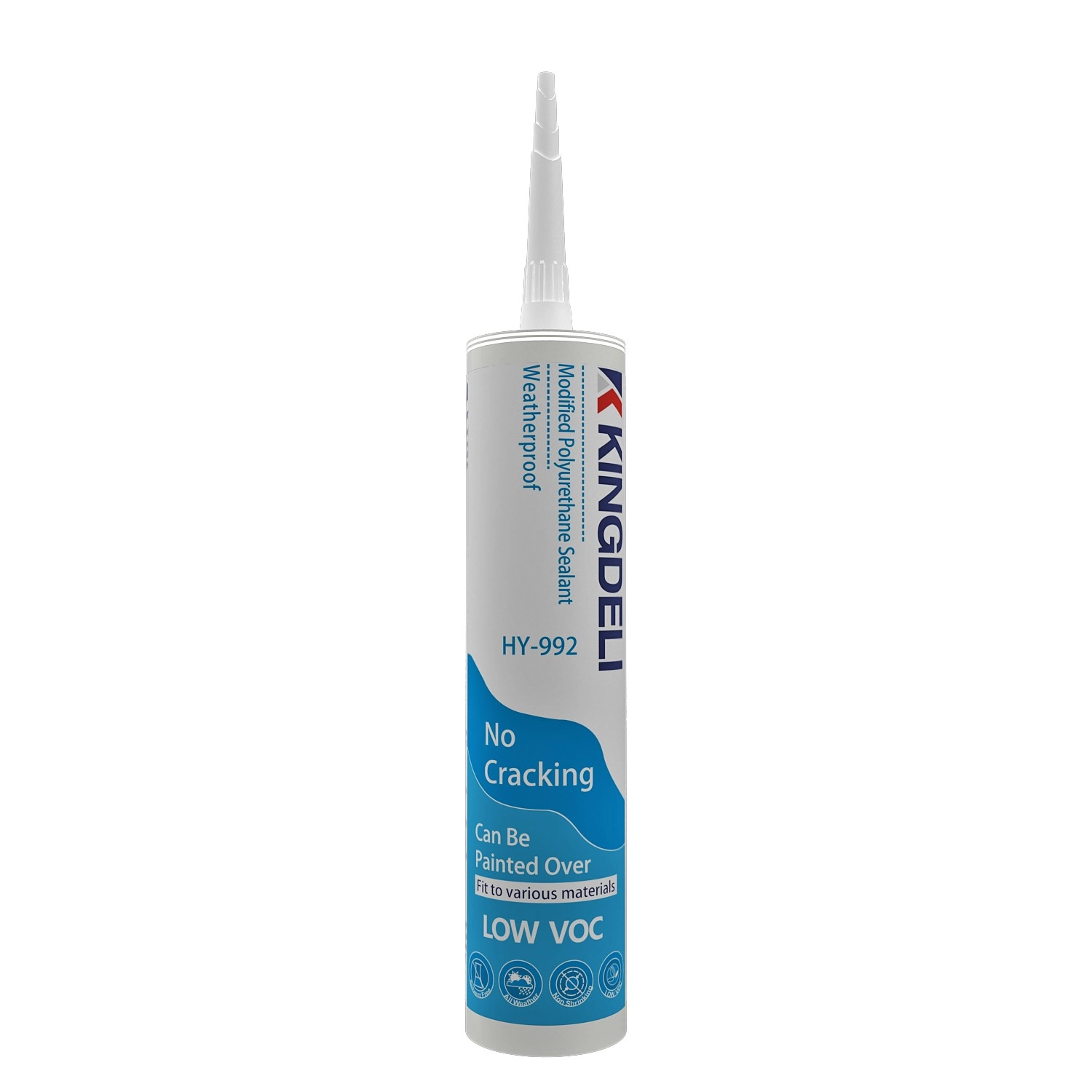
HY992 Modified Polyurethane Construction Sealant
HY992 Modified Polyurethane Sealant is a one-component, moisture-curing construction sealant designed for professional building and structural sealing applications. It provides excellent adhesion, weather resistance, and durable elasticity, making it suitable for a wide range of construction materials.
The formulation delivers strong bonding performance without corrosion or substrate contamination, while maintaining low VOC content for environmentally responsible construction projects.

HY995 Crystal Clear Ms Polymer Adhesive/Sealant
HY995 Crystal Clear Ms Polymer Adhesive/Sealant is a new generation MS Polymer adhesive / sealant formulated for all bonding and sealing applications where long term reliability is required. It has excellent bonding strength on various materials. It will cure to form a durable, flexible, waterproof seal.

HY997 High-Performance Anti-Microbial MS Polymer Sealant
HY997 MS polymer sealant for is is a premium one-component, neutral-curing modified silane sealant engineered for demanding interior applications. It offers a Class 20 movement capability, ensuring long-lasting flexibility and reliable performance under dynamic joint conditions. Curing at room temperature, HY997 delivers superior anti-microbial and mildew-resistant properties, maintaining hygienic and clean environments over time.
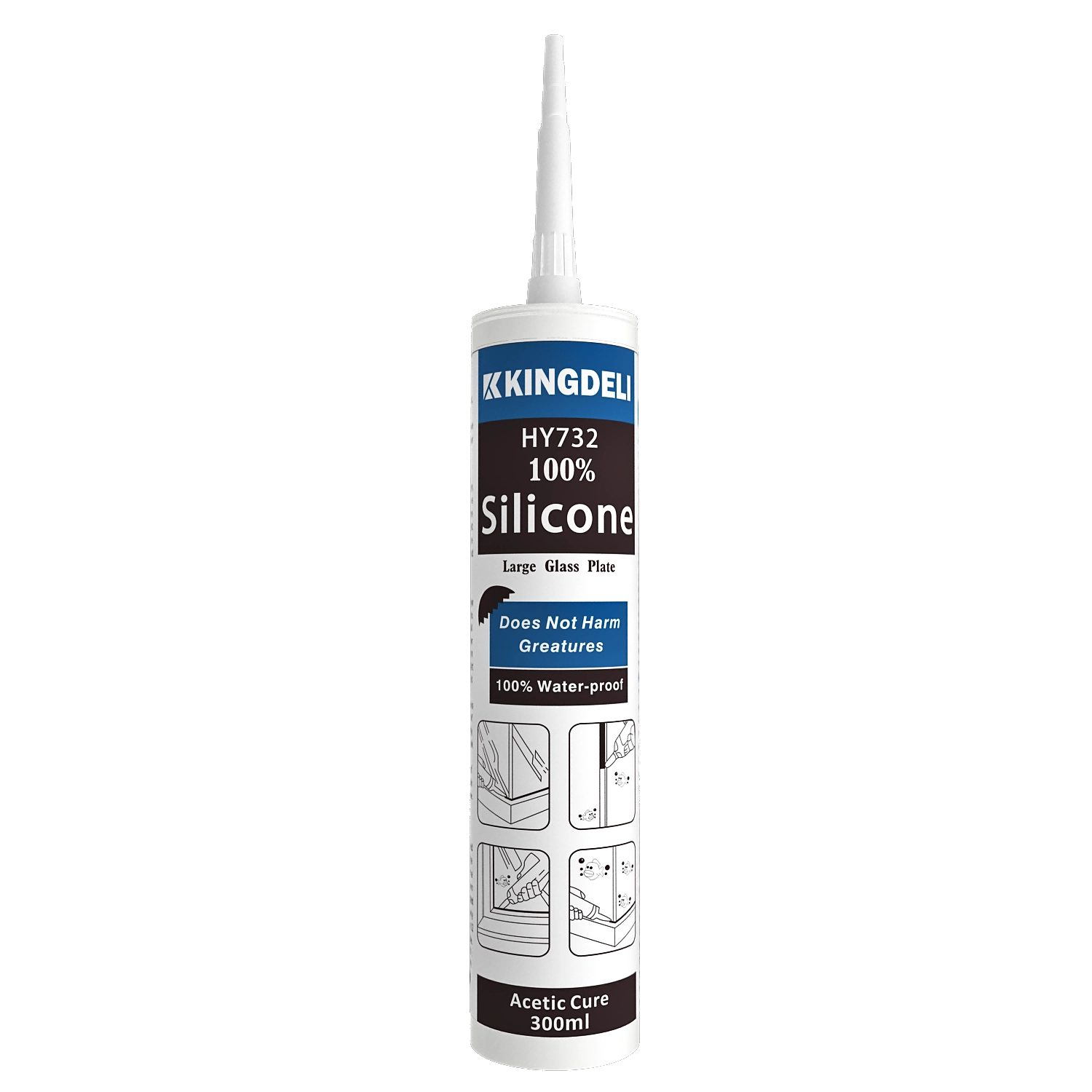
KINGDELI HY732 Professional Acetoxy Cure Silicone Sealant
KINGDELI HY732 is a professional-grade, one-component acetoxy cure silicone sealant designed for fast curing, strong adhesion, and long-lasting flexibility. Ideal for aquariums, glass applications, aluminum doors and windows, kitchens, and bathrooms, it provides reliable sealing performance with excellent anti-fungal protection in high-humidity environments.
Let’s Build Stronger Bonds with Quality Adhesives and Sealants
Have questions about the topic or need tailored sealant solutions for your project?
Our team is ready to provide expert guidance, product recommendations, and application support.
Innovating with Integrity, Bonding the World
Since 1998, KINGDELI has delivered trusted, sustainable sealant solutions that connect industries and inspire progress worldwide.
Whatsapp: +8618825946249
Kingdeli
Kingdeli
Kingdeli
Kingdeli
Kingdeli