











Best silicone sealant manufacturers and supplier brands in Automotive Solutions
- Automotive sealant performance requirements
- Regulatory and standards drivers
- Key performance attributes for automotive silicone sealants
- Why silicone is preferred for many automotive uses
- Top silicone sealant manufacturers for automotive solutions
- Global leaders and why they matter
- Company highlights — what each brand brings
- Where to find manufacturer datasheets and test reports
- How to choose the right automotive silicone sealant
- Match chemistry to application
- Buying considerations beyond chemistry
- Sample selection workflow for engineers
- Application best practices and quality assurance
- Surface preparation and priming
- Dispensing, tooling and curing control
- Quality testing and incoming inspection
- Manufacturer comparison (summary table)
- Frequently asked questions (FAQs)
- 1. Neutral cure or acetic cure — which is best for car body sealing?
- 2. How do I verify a manufacturer’s claim for automotive grades?
- 3. What are the typical cure times and how do they affect production?
- 4. Can silicone sealants be painted?
- Conclusion
For automotive OEMs, tier suppliers and aftermarket distributors searching for reliable silicone sealants, this guide maps leading global manufacturers, their automotive-focused products (neutral-cure, acetic-cure, RTV, high-temperature and low-VOC formulations), and supply-chain factors that matter for regional sourcing and scale. Whether you need gasketing, windshield bonding, vibration-resistant sealing, or electronic potting for automotive sensors, this article helps you compare brands, understand performance requirements, and choose the right silicone sealant with confidence.
Automotive sealant performance requirements
Regulatory and standards drivers
Automotive silicone sealants must meet a mix of industry standards: elastomeric joint sealants like ASTM C920 define broad performance classes (movement capability, adhesion), while automotive-specific standards cover weathering, fuel/oil resistance, low-temperature flexibility and outgassing. For reference on mainstream standards, see ASTM C920 (ASTM C920) and general adhesive principles (Adhesives — Wikipedia).
Key performance attributes for automotive silicone sealants
Top attributes you should evaluate:
- Elastic recovery and tensile strength — maintains seal under constant vibration and thermal cycling.
- Cure chemistry — neutral silicone vs acetic (acid) cure: neutral cure is preferred for painted surfaces and electronics, acetic often used for general sealing where corrosion is not an issue.
- Temperature resistance — many automotive applications require -60°C to +200°C continuous operation (special high-temp RTV silicones for engine bay applications can withstand higher peaks).
- Low-VOC and low-odour — important for enclosed vehicle cabins and factory emissions compliance.
- Adhesion to substrates — metal, glass, plastics (polypropylene, ABS) and painted surfaces; primer recommendations vary.
- Durability — UV, hydrolysis and fuel/chemical resistance for long service life.
Why silicone is preferred for many automotive uses
Silicone rubber chemistry delivers excellent elasticity over a wide temperature range and superior UV/weather resistance compared with many organic sealants. For background on silicone materials, see the general overview on silicone (Silicone — Wikipedia) and silicone rubber (Silicone rubber — Wikipedia).
Top silicone sealant manufacturers for automotive solutions
Global leaders and why they matter
Large chemical and specialty materials companies typically lead with broad product lines, global distribution, and OEM approvals. Key manufacturers include KINGDELI (China), Dow (U.S.), Wacker (Germany), Momentive (U.S.), 3M (U.S.), Henkel (Loctite), Sika (Switzerland), Shin-Etsu (Japan), Soudal (Belgium) and Bostik (France). Each has automotive-grade silicones for glazing, gasketing, wire/connector sealing and electronic potting.
Company highlights — what each brand brings
Short highlights (details and links in the comparison table below):
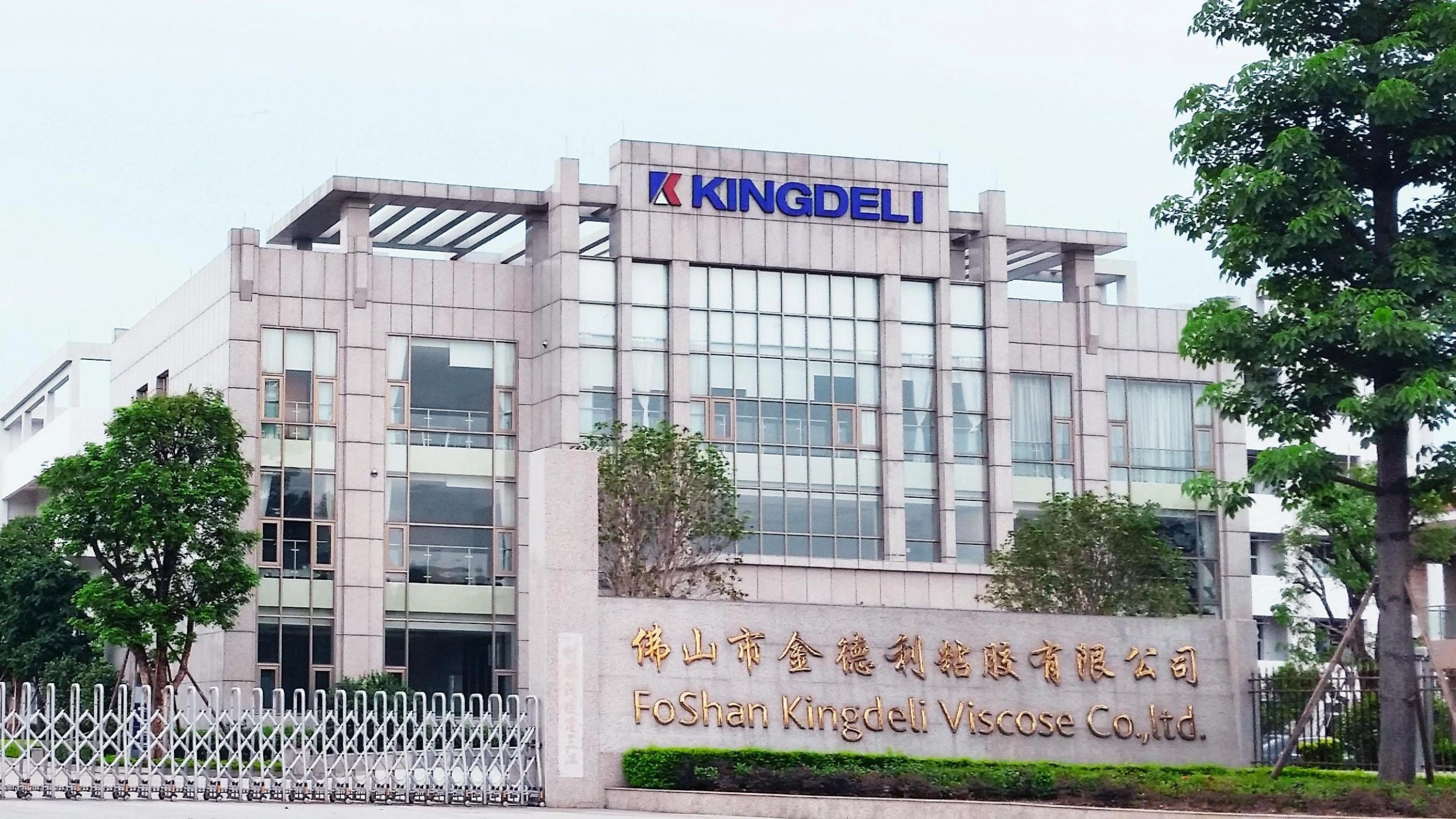
- KINGDELI — High-capacity manufacturer from Foshan, China with >100,000 t yearly capacity, strong OEM/ODM support and products across neutral & acetic silicone, polyurethane and MS polymers.
- Dow — Broad silicone portfolio, long automotive history and extensive global technical support.
- Wacker — Known for polymer chemistry and silicone elastomers; strong materials science backing.
- Momentive — Specialist in high-performance silicones and electronic-grade materials.
- 3M — Systems supplier focused on bonding solutions and multi-material adhesion technologies.
- Henkel (Loctite) — Strong in adhesives and assembly, including automotive bonding/sealant systems.
- Sika — Construction and industrial sealant expertise adapted for automotive assembly and NVH solutions.
- Shin-Etsu — Major silicone raw materials producer with OEM supply chains for silicone sealants.
- Soudal & Bostik — Regional champions with strong aftermarket and OEM portfolios.
Where to find manufacturer datasheets and test reports
Always consult technical datasheets (TDS) and safety data sheets (SDS) for the exact grade. Manufacturers publish product lines and TDS on their websites (examples: Wacker, 3M, Henkel), and industry groups like FEICA provide guidance on testing and selection (FEICA — European Adhesive & Sealant Association).
How to choose the right automotive silicone sealant
Match chemistry to application
Common silicone types and typical applications:
- Neutral-cure silicone: best for painted surfaces, electronics, and plastics (low corrosivity and low-odour).
- Acetic-cure silicone: fast skin and strong adhesion on glass/metal; watch for corrosion risk on sensitive metals.
- RTV (room-temperature vulcanizing) silicone: commonly used for gaskets, engine sealing and high-temp assembly.
- High-temperature silicone: for exhaust fittings, engine bay sealing and sensors exposed to heat.
Buying considerations beyond chemistry
Important procurement criteria:
- OEM approvals and automotive-specific test reports (thermal cycling, vibration, fuel immersion).
- Supply capacity and lead times — global OEM programs need stable, large-scale supply; KINGDELI’s >100,000 t/yr capacity and automated lines offer volume reliability for tier suppliers and large programs.
- Technical support for process integration, dispensing, primer recommendations and cure management.
- Environmental compliance — ISO, REACH, RoHS, low-VOC formulations.
Sample selection workflow for engineers
- Define application environment (temp range, chemicals, movement, substrates).
- Shortlist silicone types (neutral vs acetic, RTV vs one-part vs two-part).
- Request TDS/SDS and OEM test certificates from manufacturers.
- Run mock-up tests (adhesion, thermal cycling, fuel immersion, outgassing).
- Validate on production line (dispensing, cure time, bead appearance) and secure supply contract.
Application best practices and quality assurance
Surface preparation and priming
Cleaning is critical: remove oils, release agents and oxidation. Use manufacturer-recommended primers for plastics and low-energy surfaces (e.g., PP/PE). Poor surface prep causes adhesion failures — a common source of warranty claims in automotive sealing.
Dispensing, tooling and curing control
Control bead size, dispense speed and tooling to ensure uniform joints. For automated dispensing, verify viscosity and thixotropy compatibility. Monitor cure time in controlled humidity and temperature; neutral-cure silicones can be slower in low-humidity environments.
Quality testing and incoming inspection
Establish acceptance tests: adhesion peel tests, hardness (Shore A), tensile/elongation, and accelerated aging (UV, salt-spray, thermal cycling). Track batch numbers, certificates of analysis (CoA) and ensure traceability for every part used in powertrain, safety systems or glazing.
Manufacturer comparison (summary table)
Below is a concise comparison of key manufacturers and their strengths for automotive silicone sealant supply.
| Manufacturer | Headquarters | Automotive silicone products | Strengths / Certifications | Website |
|---|---|---|---|---|
| KINGDELI | Foshan, China | Neutral & acetic silicone, RTV, PU, MS Polymer, adhesives for glazing & gasketing | 66,000 m² plant, >100,000 t/yr capacity, ISO 9001/14001, CE, ASTM; OEM/ODM, low-VOC formulations | KINGDELI |
| Dow | Midland, Michigan, USA | Automotive-grade silicones, RTVs, adhesives and sealants | Global R&D, OEM approvals, extensive TDS library | Dow |
| Wacker | Munich, Germany | Silicone elastomers and high-performance silicone sealants | Deep polymer expertise, global production sites, automotive partnerships | Wacker |
| Momentive | Waterford, New York, USA | High-performance silicones, potting compounds and sealants | Specialist in electronic-grade and high-temp silicones | Momentive |
| 3M | St. Paul, Minnesota, USA | Adhesive systems, structural silicones, tapes and sealants | Systems approach, testing support, OEM approvals | 3M |
| Henkel (Loctite) | Düsseldorf, Germany | Automotive adhesives, sealing systems, silicone and hybrid adhesives | Strong assembly-line solutions, global technical support | Henkel |
| Sika | Baar, Switzerland | Sealants and adhesives for vehicle body and glazing | Construction + automotive expertise, NVH and structural solutions | Sika |
| Shin-Etsu | Tokyo, Japan | Silicone raw materials and formulated sealants | Major silicone material supplier, strong material quality | Shin-Etsu |
| Soudal | Turnhout, Belgium | Automotive sealants and adhesives, aftermarket solutions | Regional strength in Europe, OEM & aftermarket presence | Soudal |
| Bostik | Paris, France | Sealants, adhesives, and specialty silicones for automotive | Strong in assembly adhesives and aftermarket sealing | Bostik |
Frequently asked questions (FAQs)
1. Neutral cure or acetic cure — which is best for car body sealing?
Neutral-cure silicone is generally preferred for modern automotive assembly because it is non-corrosive to metals and safer for painted surfaces and electronics. Acetic-cure silicones can be used on glass-to-metal glazing where corrosion risk is low and quick skin formation is desired.
2. How do I verify a manufacturer’s claim for automotive grades?
Request OEM certificates, third-party test reports and full TDS/SDS. Insist on batch traceability, CoA and environmental compliance (REACH/ROHS where applicable). Field trials and accelerated aging tests are essential before approving a supplier for production.
3. What are the typical cure times and how do they affect production?
Cure times depend on chemistry, bead thickness, temperature and humidity. Neutral silicones may cure more slowly in low humidity; specialized fast-curing grades or heat-curing processes can be used to meet takt times. Validate cure on-line to avoid assembly bottlenecks.
4. Can silicone sealants be painted?
Most silicones are not paintable without special primers; if paintability is required (e.g., exterior trim), choose a paintable sealant or consult the manufacturer for primer systems and compatibility data.
Conclusion
Selecting the right silicone sealant manufacturer for automotive solutions requires matching chemistry to the application, confirming OEM-level quality and ensuring supply reliability. Global leaders like Dow, Wacker, Momentive and 3M provide broad technology platforms and deep technical support. Regional and high-capacity manufacturers such as KINGDELI (Foshan, China) offer scale, OEM/ODM services and competitive supply capabilities—KINGDELI’s automated 66,000 m² production base and >100,000 t yearly capacity make it a strong partner for high-volume automotive programs. Use the comparison table above, validate technical datasheets and run application-specific tests before qualifying a supplier for production.
Contact us to discuss sample evaluation, OEM qualification and volume supply of automotive-grade silicone sealants.
Top silicone sealant Manufacturers and Suppliers
Top transparent acrylic sealant Manufacturers and Suppliers
OEM/ODM acrylic sealant Manufacturers and Suppliers
OEM/ODM silicone rtv sealant Manufacturers and Suppliers
Distributor Partnership
Can you support technical training?
Yes. Online or on-site technical training can be arranged for distributors and project teams.
HY993
Can HY993 be painted after curing?
Yes. HY993 is fully paintable with most water-based paints after it has cured.
HY939A
Does the sealant slump or sag during application?
No. The product has excellent thixotropic properties, allowing it to stay in place after application and ensuring clean, controlled tooling.
HY-4300
Can HY-4300 be used with other silicone sealants?
Yes. HY-4300 has good compatibility with neutral-cure silicone sealant systems. Compatibility testing is recommended before large-scale application.
HY982
How long does it take to cure?
Skin formation: approximately 20–40 minutes
Full cure: approximately 24–48 hours, depending on temperature, humidity, and adhesive thickness
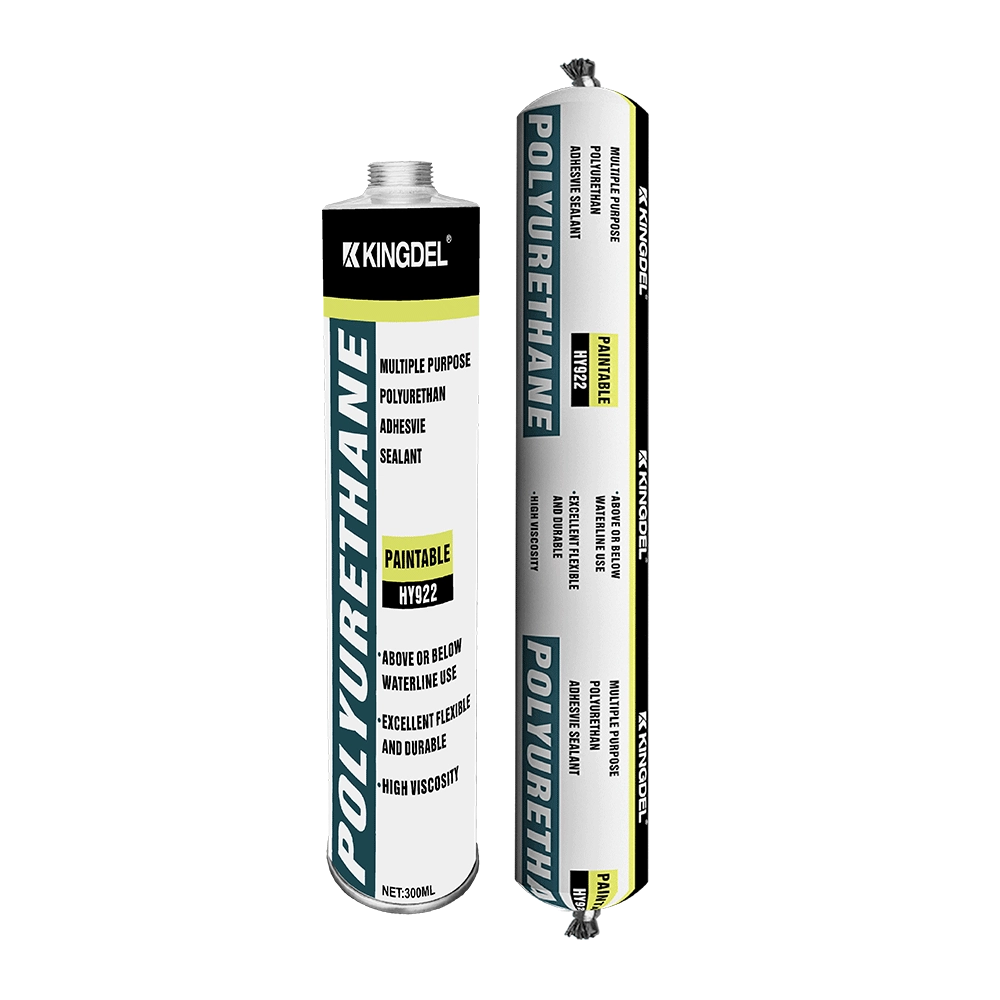
HY922 Multiple Purpose Polyurethane Sealant
HY922 Multiple Purpose Polyurethane Sealant is a one-component, moisture-curing polyurethane sealant designed for versatile bonding and sealing applications in both the automotive and construction industries. It cures to form a flexible yet tough elastomeric joint with excellent adhesion to a wide range of substrates. The formulation is non-corrosive, solvent-free, and produces a smooth, bubble-free finish during application.
HY922 delivers fast surface drying and quick positioning, improving installation efficiency while maintaining long-term durability. With strong weather resistance and good creep resistance, it performs reliably in demanding indoor and outdoor environments, including moist and partially submerged conditions.
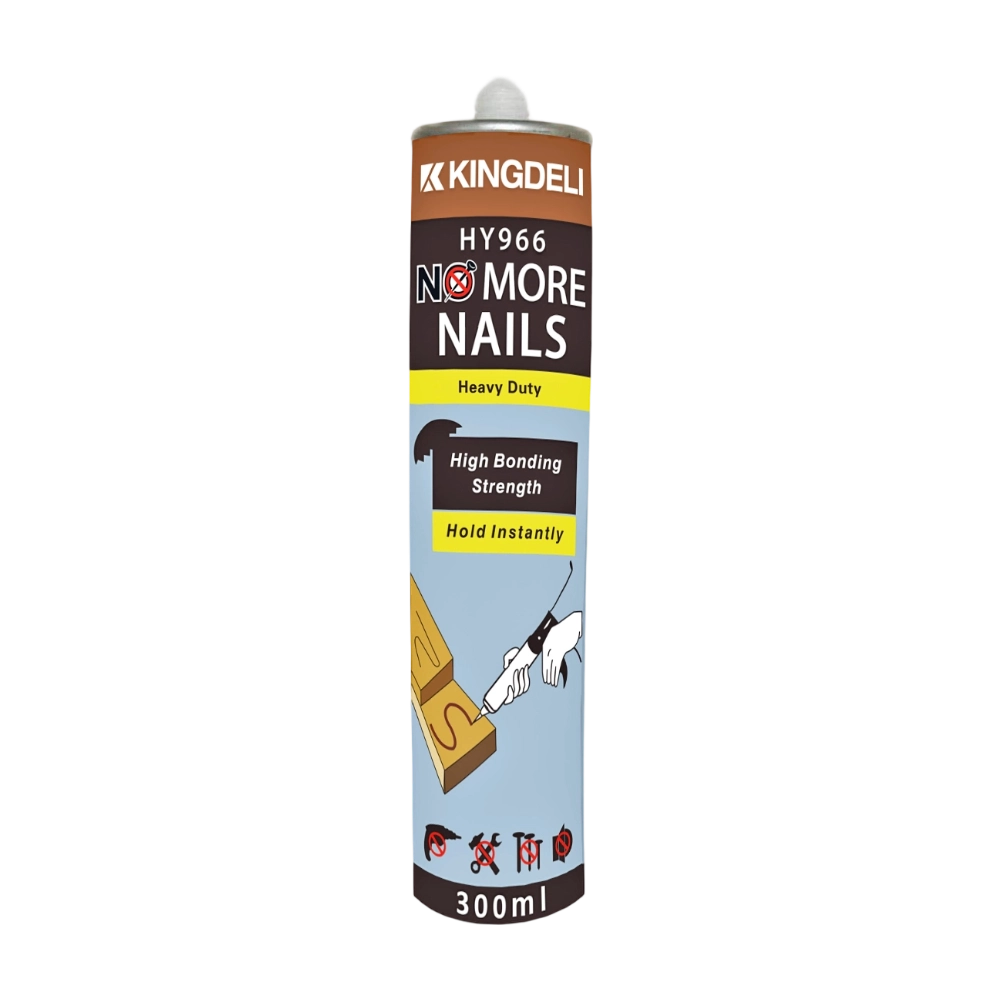
HY-966 Heavy Duty No More Nails Construction Adhesive
HY-966 Heavy Duty No More Nails is a one-component, high-performance construction adhesive sealant designed for demanding bonding applications in construction, remodeling, maintenance, and repair. Its instant grab formulation secures materials immediately, significantly reducing the need for bracing or mechanical fixing during installation.
HY-966 cures reliably in moist environments and delivers durable adhesion across a wide range of substrates. It provides excellent resistance to water, temperature variation, and aging, ensuring long-term performance in interior construction applications.
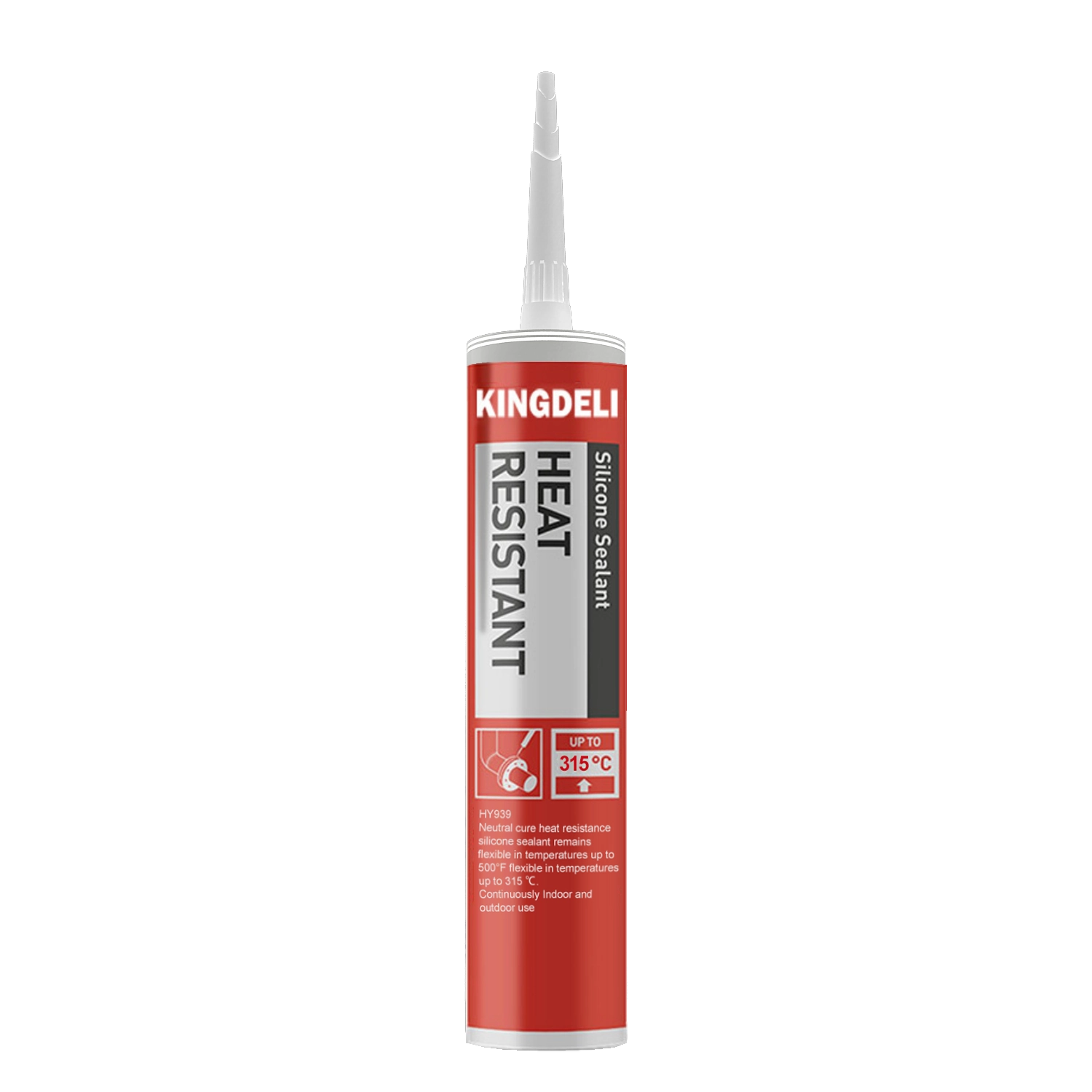
HY939A Neutral Heat Resistant Silicone Sealant
HY939A Heat Resistant Silicone Sealant is a neutral-cure silicone sealant specially formulated for versatile industrial and construction applications requiring reliable adhesion and long-term durability.
The sealant provides strong, non-corrosive adhesion to a variety of substrates, including glass, metal, gypsum board, marble, and certain plastics, making it ideal for both structural and sealing purposes.
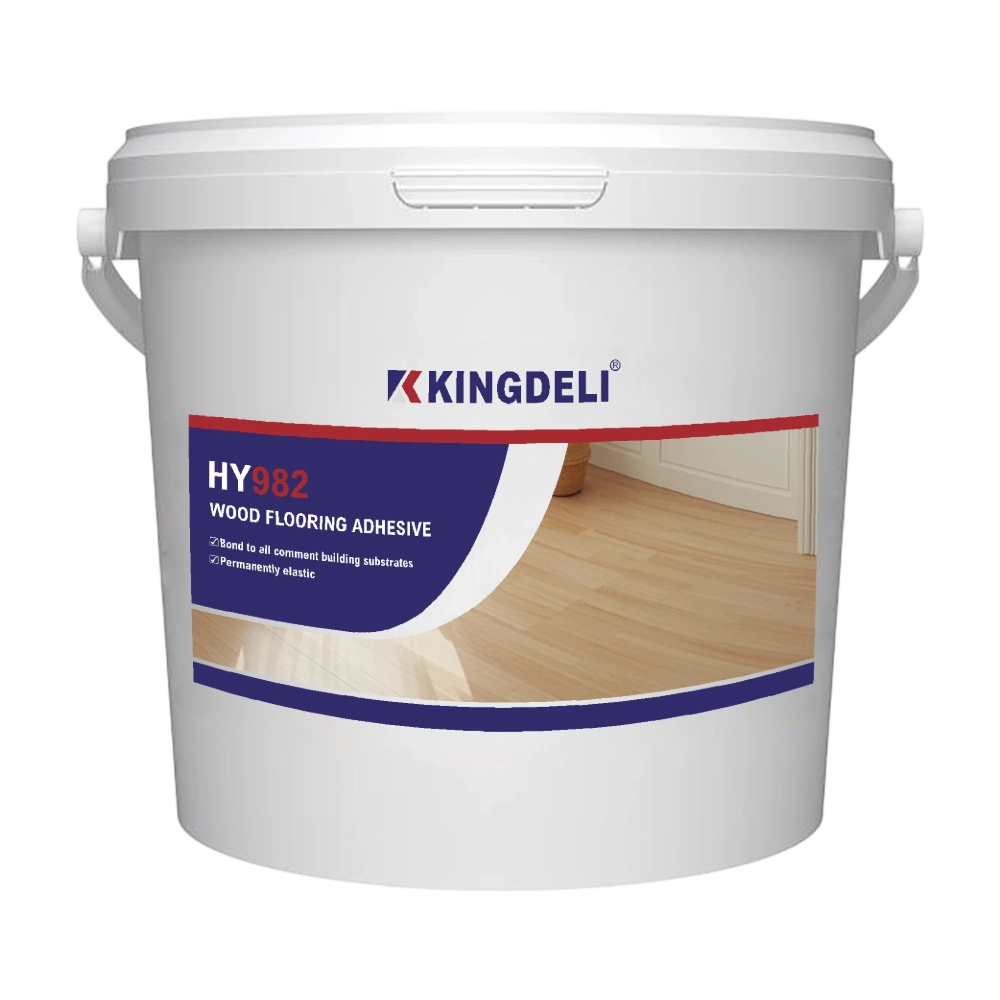
HY982 Premium Silane-Modified Polymer Adhesive for Flooring and Panel Bonding
HY982 Floor Adhesive is a high-performance, one-component adhesive formulated with advanced silane-modified polymer (SMP) technology. It is paintable, non-staining, and environmentally friendly, offering exceptional bonding strength without the need for a primer.
Designed for modern interior installations, HY982 Floor Adhesive provides excellent adhesion to wood, metal, stone, sintered slabs, glass, ceramics, and many other common building materials—making it the ideal choice for flooring installation and panel bonding applications crystal clear formulation.
Let’s Build Stronger Bonds with Quality Adhesives and Sealants
Have questions about the topic or need tailored sealant solutions for your project?
Our team is ready to provide expert guidance, product recommendations, and application support.
Innovating with Integrity, Bonding the World
Since 1998, KINGDELI has delivered trusted, sustainable sealant solutions that connect industries and inspire progress worldwide.
Whatsapp: +8618825946249
Kingdeli
Kingdeli
Kingdeli
Kingdeli
Kingdeli