











Acoustic and Thermal Benefits of Silicone Glazing Sealants

- Why sealing matters for building performance
- Thermal bridges, air leakage and measurable energy loss
- Noise infiltration and occupant comfort
- Regulatory drivers and long-term risk mitigation
- Acoustic benefits delivered by silicone glazing sealants
- How silicone sealing reduces airborne sound
- Laboratory and field metrics: STC, Rw and insertion loss
- Material properties that matter for acoustic sealing
- Thermal advantages and energy implications
- Air tightness, U-value impact and moisture control
- Durability, thermal cycling and sealant selection
- Quantifying benefit: a simple example
- Comparing silicone glazing sealants to other systems
- Performance comparison table
- When a silicone glazing sealant is the right choice
- Potential limitations and mitigation
- Specifying and applying glass glazing silicone sealant: best practices
- Specifying the right formulation and standards compliance
- Joint design, surface prep and tooling
- Quality assurance and post-install testing
- KINGDELI: capability and product relevance
- Practical checklist for project teams
- Design and specification
- Procurement and installation
- Operations and maintenance
- Frequently Asked Questions (FAQ)
- 1. How much noise reduction can silicone glazing sealants provide?
- 2. Will a silicone glazing sealant improve my window’s U-value?
- 3. Should I use neutral cure or acetoxy silicone for glazing?
- 4. How long will a silicone glazing sealant last?
- 5. Can silicone sealants be used with acoustic gasketing to improve performance?
- 6. Are there environmental or VOC concerns?
- Contact and next steps
As a consultant and long-time practitioner in sealants and adhesives, I frequently evaluate how a well-specified glass glazing silicone sealant can deliver both acoustic and thermal benefits for façades, windows and curtainwall systems. This article synthesizes standards-based evidence, field experience and practical guidance to help architects, façade engineers and glazing contractors choose and apply sealants that reduce sound transmission, limit heat loss, control air leakage, and sustain performance over decades.
Why sealing matters for building performance
Thermal bridges, air leakage and measurable energy loss
Thermal performance of a glazed opening is never just about the glass. Gaps, poorly sized joints, or failing sealant create thermal bridges and uncontrolled air leakage that increase heating and cooling loads. The US Department of Energy explains how air sealing complements glazing upgrades to reduce energy use and improve comfort (energy.gov - windows).
Noise infiltration and occupant comfort
Noise control in buildings depends heavily on continuity of the acoustic envelope. A continuous, well-adhered glass glazing silicone sealant limits flanking paths and airborne sound leaks that otherwise degrade a window assembly’s rated performance (see STC / Sound Transmission Class basics).
Regulatory drivers and long-term risk mitigation
Local energy codes, green-building programs and occupant health guidance are increasingly strict on airtightness, VOCs and acoustic comfort. Using the correct sealant that meets standards such as ASTM C920 (sealant performance categories) and bankable ISO measures helps owners ensure compliance and reduce retrofit risk (ASTM C920 overview).
Acoustic benefits delivered by silicone glazing sealants
How silicone sealing reduces airborne sound
Sound leaks follow the path of least resistance. Even small gaps (on the order of millimeters) around glazing frames can allow significant airborne noise to penetrate. A properly tooled glass glazing silicone sealant creates a continuous, flexible barrier that decouples vibrational paths and seals air cavities—reducing the energy that couples from external noise sources into interior spaces.
Laboratory and field metrics: STC, Rw and insertion loss
In laboratory testing, sealed joints improve the effective sound transmission rating of a glazing assembly by reducing leakage. While glazing glass and frame dominate STC/Rw values, sealing can yield measurable insertion loss in the 2–6 dB range for assemblies with otherwise good performance; for poor or leaky installations the improvement can be larger. For design work I always specify acoustic verification after installation to confirm performance to expectations (see general STF concepts at Sound insulation).
Material properties that matter for acoustic sealing
Key silicone properties for acoustic performance are low modulus (to maintain adhesion and resiliency under vibration), good tear resistance and long-term elasticity to sustain compression/relief cycles. Neutral-cure silicone glazing sealants are commonly used because they adhere well to glass and metals without the corrosive acetic off-gassing of acetoxy types—this adhesion continuity improves long-term acoustic sealing.
Thermal advantages and energy implications
Air tightness, U-value impact and moisture control
Sealing gaps around glazing reduces convective heat transfers driven by pressure differentials. While the glass U-value still controls conductive heat loss, uncontrolled air leakage can add significant heat loss and occupant discomfort. The US DOE notes that sealing and insulating gaps complement window upgrades to lower energy use. In many retrofit projects, improving air tightness alone produced energy savings in the single-digit to double-digit percentages for heating/cooling bills (energy.gov - air sealing).
Durability, thermal cycling and sealant selection
Repeated thermal cycling causes joint movement and material fatigue. A dedicated glass glazing silicone sealant formulated for glazing joints must accommodate movement (±25% or more movement capability for many façade joints) without adhesion failure or cohesive breakdown. Silicone’s wide service temperature range and low modulus make it well suited to retain both thermal and acoustic integrity through seasonal cycles.
Quantifying benefit: a simple example
Consider a mid-rise office façade: sealing uncontrolled window perimeter leakage that equates to an air change reduction of only 0.1 ACH can translate into notable heating energy savings in cold climates. Exact savings depend on climate, glazing area and HVAC system but the principle is proven—continuous sealing reduces both heat loss and the HVAC load required to offset infiltration.
Comparing silicone glazing sealants to other systems
Performance comparison table
| Property / Metric | Glass glazing silicone sealant | Polyurethane sealant | Acrylic sealant |
|---|---|---|---|
| Acoustic sealing effectiveness | High — maintains flexible adhesion; good insertion loss (typically 2–6 dB) | Moderate — good adhesion but can harden over time | Low–Moderate — limited movement capacity |
| Thermal/air sealing | High — excellent long-term elasticity and airtightness | High initially; depends on formulation for longevity | Moderate — less suitable for large movement joints |
| Durability (UV, weathering) | Very high — excellent UV/weather resistance | Good — may degrade UV without pigmenting | Poor to moderate — susceptible to weathering |
| VOC & environmental | Low-VOC formulations available | Varies; solvent-based types higher VOC | Typically low VOC |
Sources: general performance attributes for materials summarized from industry standards and technical resources such as the sealant overview and ASTM/ISO guidance on joint design (ASTM C920).
When a silicone glazing sealant is the right choice
I recommend specifying a purpose-built glass glazing silicone sealant when joints are exposed to UV, when movement capability is required, and when both airtightness and long-term adhesion to glass and metal substrates are priorities. Neutral cure silicones avoid corrosion risk on metals and provide consistent adhesion on coated glass surfaces.
Potential limitations and mitigation
Silicone is not always paintable and some formulations can show poor adhesion to contaminated substrates. Mitigate by selecting the right primer where required, ensuring rigorous substrate cleaning, and confirming compatibility with adjacent finishes.
Specifying and applying glass glazing silicone sealant: best practices
Specifying the right formulation and standards compliance
When I write specifications I require manufacturers to provide test data for adhesion, movement capability and longevity, and to demonstrate compliance with relevant standards such as ASTM C920. For acoustic-sensitive projects, I ask for joint-level acoustic test data or verified field measurements post-installation.
Joint design, surface prep and tooling
Correct joint geometry (typically width-to-depth ratios per standards), priming where required, and careful tooling to avoid voids are critical. A continuous, fully-adhered bead with correct backer rod depth is more effective acoustically than an overfilled or irregular joint.
Quality assurance and post-install testing
Field verification—visual inspection, adhesion testing and acoustic measurements—reduces risk. I typically require mock-ups that are tested for watertightness, adhesion and, if needed, acoustics before accepting production installation.
KINGDELI: capability and product relevance
Since its establishment in 1998, KINGDELI has stood as a global leader in the high-performance sealant, adhesive, and coating industry. Headquartered in Foshan, China, our state-of-the-art 66,000 m² facility is powered by fully automated production lines with an annual capacity exceeding 100,000 tons, ensuring a consistent and robust supply for partners worldwide.
As a recognized National High-Tech Enterprise and a key contributor to the National Standard GB/T 29755-2013, we unite advanced manufacturing power with technical excellence. Our comprehensive product portfolio—spanning Neutral & Acetic Silicone, Polyurethane, MS Polymer, and No More Nails adhesives—is engineered to meet strict international standards, including ISO 9001, ISO 14001, CE, and ASTM.
With over 27 years of industry expertise and a trusted presence in 50+ countries, KINGDELI is more than a manufacturer; we are a dedicated solution provider. We offer end-to-end OEM/ODM support, sustainable low-VOC formulations, and professional technical service. At KINGDELI, we are driven by innovation and integrity, building trust and sealing the future for customers around the globe.
For glazing projects, KINGDELI’s silicone glazing sealant lines (including neutral silicone sealant and specialized silicone glazing sealant formulations) are developed to deliver the elasticity, UV resistance and adhesion needed for long-term acoustic and thermal performance. Our product set also includes acetic silicone sealant, Acrylic Sealant, No More Nails adhesive, Polyurethane Sealant, MS polymer Sealant, RTV Gasket Maker, Epoxy Tile Grout and Self-Leveling Sealant—giving façade teams integrated choices for perimeter sealing, structural bonding and interior finishing.
Practical checklist for project teams
Design and specification
- Specify movement capability and adhesion performance in contract documents (e.g., ±25% movement).
- Require test data and references for glass substrate adhesion and compatibility.
Procurement and installation
- Use manufacturer-recommended primers and backer rod sizes.
- Implement mock-ups and acceptance testing (water, adhesion, acoustic if required).
Operations and maintenance
- Schedule inspections at 5–10 year intervals and plan for targeted re-sealing where UV/weathering is severe.
- Track product batch and cure data to tie performance back to supply batches.
Frequently Asked Questions (FAQ)
1. How much noise reduction can silicone glazing sealants provide?
Sealing joints can improve effective sound transmission loss by a few dB in well-performing systems and more in leaky systems. Exact benefit depends on the glazing assembly, frame, and extent of leakage. For context on metrics, see STC/Rw.
2. Will a silicone glazing sealant improve my window’s U-value?
A sealant itself does not change the glass conductive U-value, but by reducing air leakage and thermal bridging at the perimeter, it reduces overall heat loss. Energy.gov discusses the value of air sealing alongside upgrades (energy.gov - air sealing).
3. Should I use neutral cure or acetoxy silicone for glazing?
I generally recommend neutral cure silicone for glass and metal perimeters because it avoids corrosive acetic by-products and typically offers better adhesion to coated glasses and metals.
4. How long will a silicone glazing sealant last?
High-quality silicone sealants commonly last 20+ years in façade applications when specified and installed correctly. Longevity depends on UV exposure, movement cycles and correct joint design.
5. Can silicone sealants be used with acoustic gasketing to improve performance?
Yes. Combining elastomeric acoustic gaskets with a continuous glass glazing silicone sealant at perimeters and penetrations provides a layered approach—mechanical isolation plus airtight sealing—often delivering superior acoustic results.
6. Are there environmental or VOC concerns?
Many manufacturers offer low-VOC neutral silicone glazing sealant formulations. For projects with strict indoor air quality requirements, request VOC test data and third-party certifications.
Contact and next steps
If you are specifying or testing façade systems, I recommend early engagement with the sealant supplier to confirm formulation compatibility, provide mock-ups, and secure test evidence. To discuss product selection, obtain technical datasheets, or request samples and mock-up support, contact KINGDELI for professional assistance and product availability. Our technical team can help match the right glass glazing silicone sealant to your acoustic and thermal requirements.
Contact KINGDELI to request specifications, test data or a quote: sales@kingdeli.com or visit our product pages to view silicone glazing sealant options and technical resources.
Choosing Neutral Cure Silicone for Structural Glazing Projects
Neutral Cure Silicone Sealants: Advantages for OEM Applications
Benefits of MS Silicone Sealant for Commercial Construction
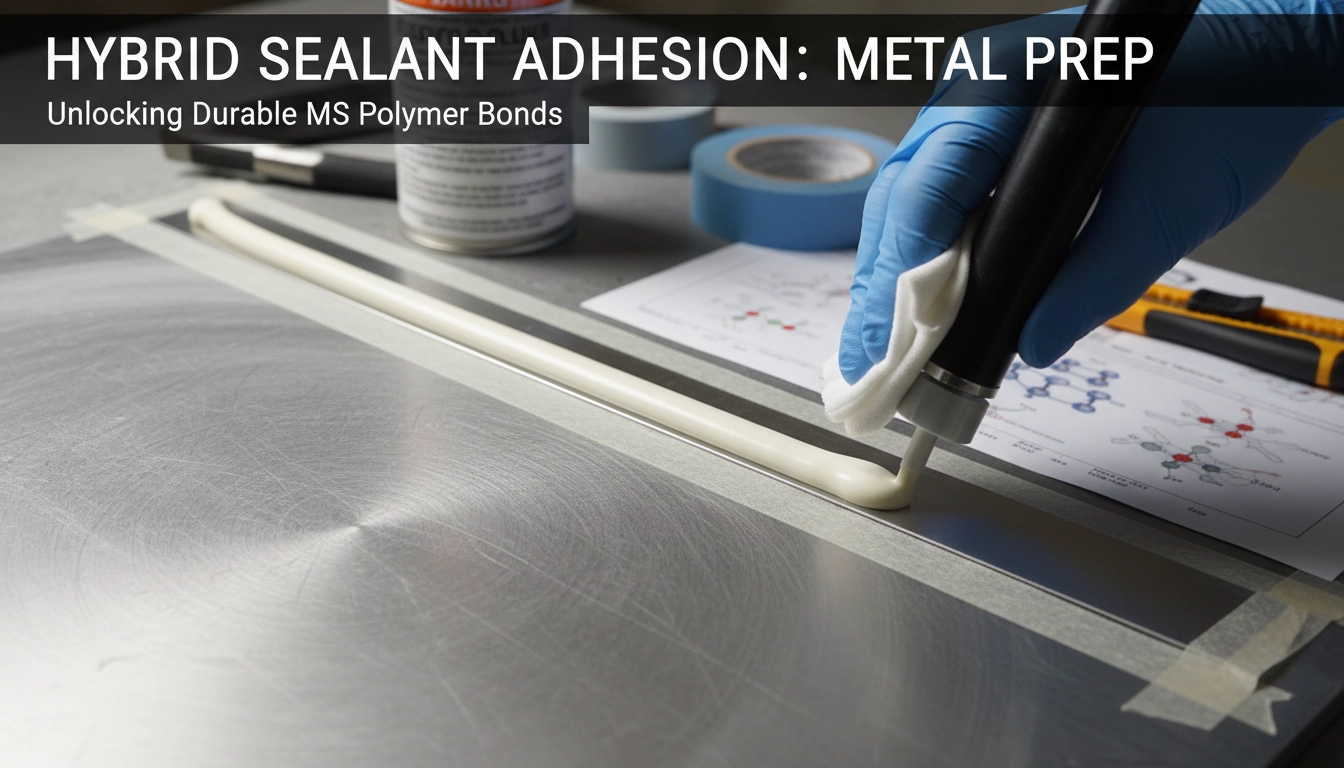
The Ultimate Guide to MS Sealant Adhesion to Metal: Unlocking Maximum Bond Strength
HY925
Does HY925 produce bubbles during application?
No. The formula is designed to remain smooth and consistent, minimizing bubble formation during application.
HY997
Does the sealant resist mold and mildew?
Yes. HY997 offers Grade 0 long-lasting mildew resistance, effectively inhibiting mold growth in high-humidity environments such as kitchens and bathrooms.
HY994
What colors are available?
Standard colors include black, white, and gray. Custom colors can be produced upon request.
HY922
What surfaces does HY922 adhere to?
HY922 adheres well to metal, glass, cement-based materials, brick, ceramic, marble, wood, aluminum, PVC, and many other common construction substrates.
HY739
How fast does it cure?
It becomes tack-free quickly at room temperature. Full cure typically occurs within 24–48 hours depending on joint depth and humidity.
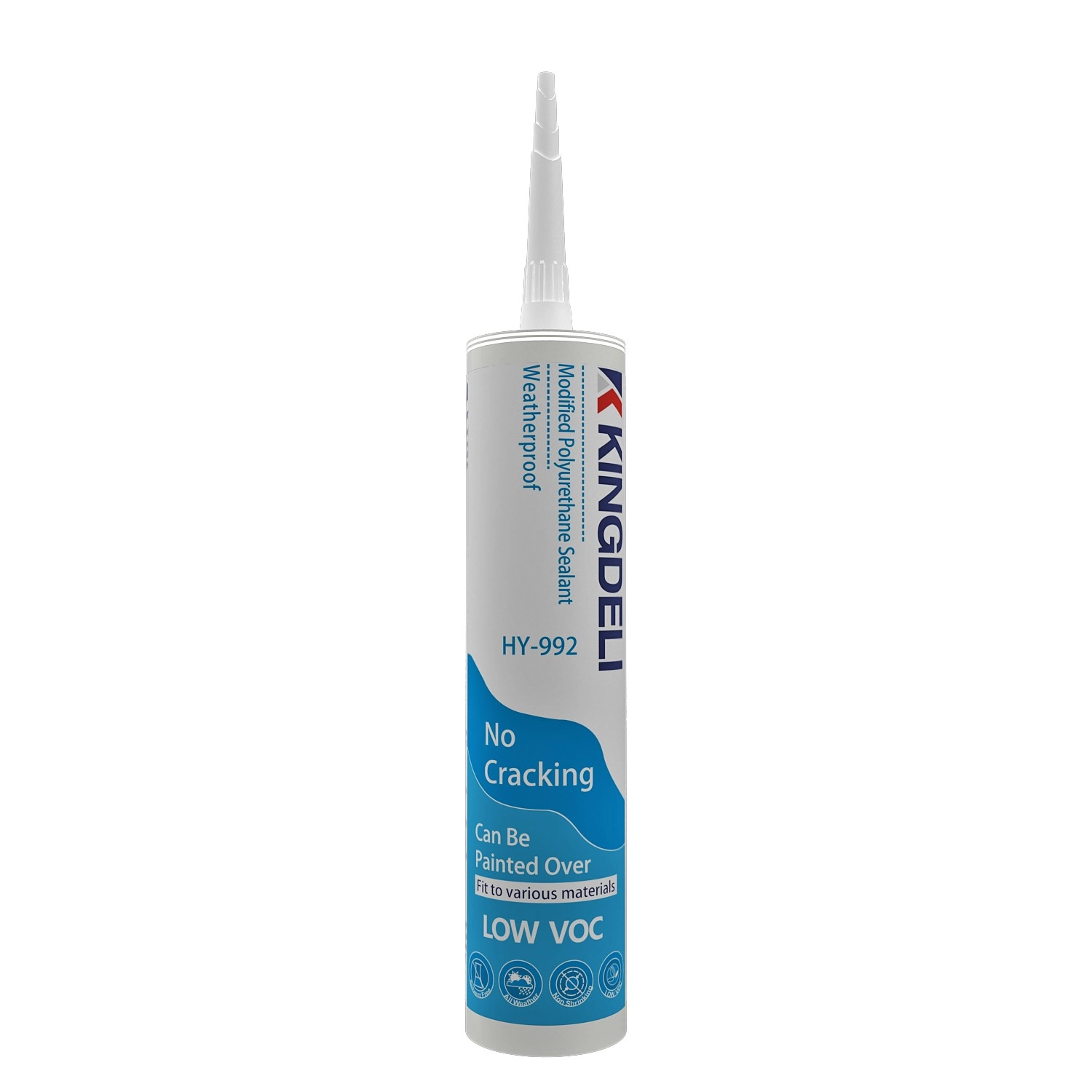
HY992 Modified Polyurethane Construction Sealant
HY992 Modified Polyurethane Sealant is a one-component, moisture-curing construction sealant designed for professional building and structural sealing applications. It provides excellent adhesion, weather resistance, and durable elasticity, making it suitable for a wide range of construction materials.
The formulation delivers strong bonding performance without corrosion or substrate contamination, while maintaining low VOC content for environmentally responsible construction projects.

HY995 Crystal Clear Ms Polymer Adhesive/Sealant
HY995 Crystal Clear Ms Polymer Adhesive/Sealant is a new generation MS Polymer adhesive / sealant formulated for all bonding and sealing applications where long term reliability is required. It has excellent bonding strength on various materials. It will cure to form a durable, flexible, waterproof seal.

HY997 High-Performance Anti-Microbial MS Polymer Sealant
HY997 MS polymer sealant for is is a premium one-component, neutral-curing modified silane sealant engineered for demanding interior applications. It offers a Class 20 movement capability, ensuring long-lasting flexibility and reliable performance under dynamic joint conditions. Curing at room temperature, HY997 delivers superior anti-microbial and mildew-resistant properties, maintaining hygienic and clean environments over time.
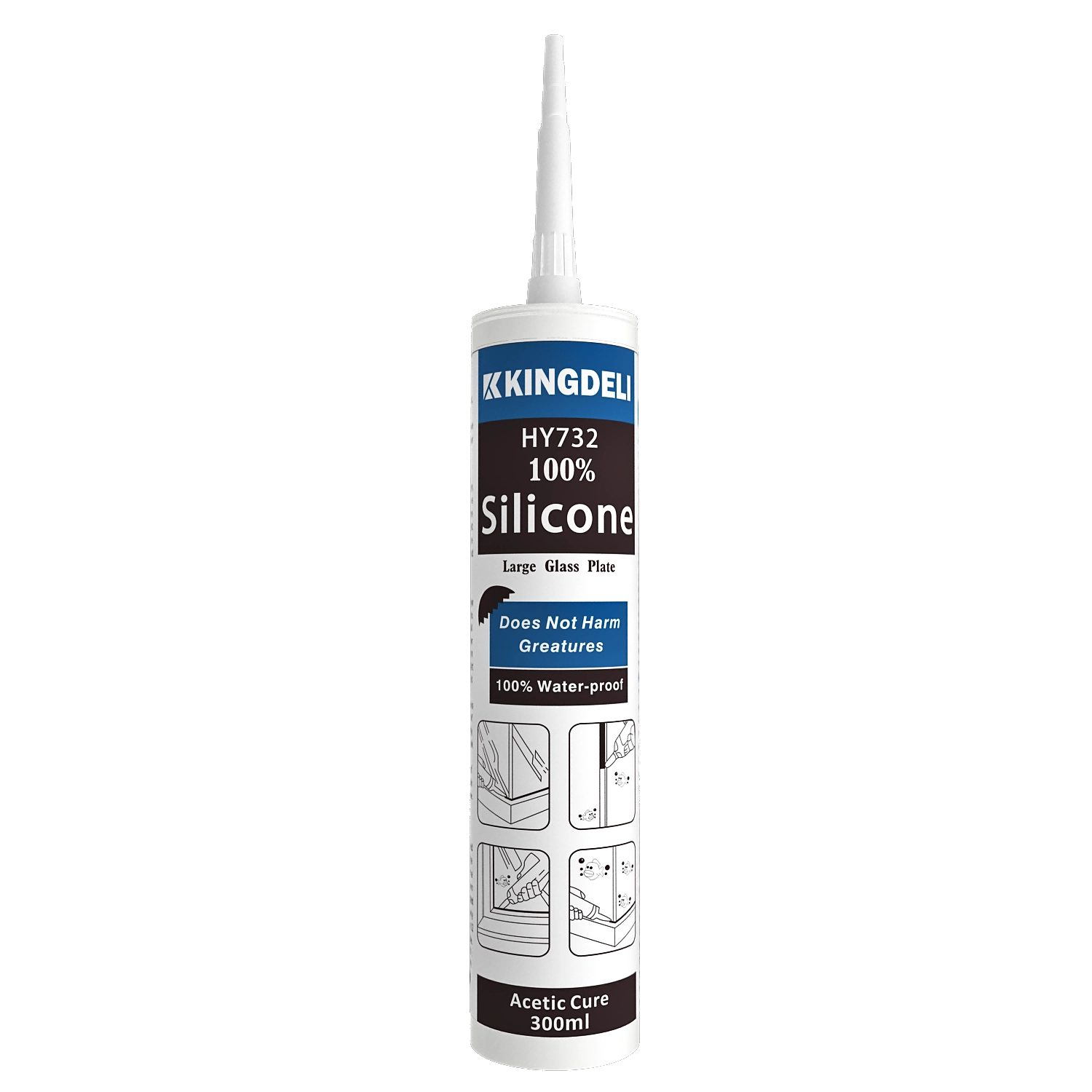
KINGDELI HY732 Professional Acetoxy Cure Silicone Sealant
KINGDELI HY732 is a professional-grade, one-component acetoxy cure silicone sealant designed for fast curing, strong adhesion, and long-lasting flexibility. Ideal for aquariums, glass applications, aluminum doors and windows, kitchens, and bathrooms, it provides reliable sealing performance with excellent anti-fungal protection in high-humidity environments.
Let’s Build Stronger Bonds with Quality Adhesives and Sealants
Have questions about the topic or need tailored sealant solutions for your project?
Our team is ready to provide expert guidance, product recommendations, and application support.
Innovating with Integrity, Bonding the World
Since 1998, KINGDELI has delivered trusted, sustainable sealant solutions that connect industries and inspire progress worldwide.
Whatsapp: +8618825946249
Kingdeli
Kingdeli
Kingdeli
Kingdeli
Kingdeli