











7 Critical RTV Gasket Maker Mistakes Most Mechanics Make (and How to Avoid Them) [2026 Update]

- Quick Summary: The RTV Application Cheat Sheet
- What is RTV Gasket Maker and Why is it Critical?
- Mistake #1: Using the Wrong RTV Color or Formula
- Mistake #2: The 'Oozing' Overkill (Applying Too Much Sealant)
- Mistake #3: Ignoring 'Sensor-Safe' Requirements
- Mistake #4: Combining RTV with Solid Gaskets Incorrectly
- Mistake #5: Torquing Down Immediately (Skipping the Finger-Tight Step)
- Mistake #6: Re-Torquing After the Cure
- Mistake #7: Rushing the Fluid Fill
- Future-Proofing: RTV Standards for 2026 and Modern Alloys
- Conclusion
- FAQ
- How long does RTV gasket maker take to cure fully?
- Can I use RTV instead of a head gasket?
- What removes old RTV gasket maker best?
- What is the difference between Grey and Black RTV?
- Why does my RTV smell like vinegar?
- Can I use RTV on a gas tank?
- Does RTV expire?
- What happens if I don't clean the surface before applying RTV?
Quick Summary: The RTV Application Cheat Sheet
RTV application requires precision, not volume. To ensure a leak-free seal immediately, follow these core rules:
- Select the right color: Grey for high-torque/vibration (imports), Black for oil resistance, and Red for high heat.
- Less is more: Excess sealant causes internal engine damage (oil starvation).
- Patience pays: Allow full cure times (24 hours) before adding fluids.
- Cleanliness is critical: Surfaces must be pristine and oil-free.
What is RTV Gasket Maker and Why is it Critical?
RTV (Room Temperature Vulcanizing) silicone is a chemical sealant that cures from a liquid paste into a flexible rubber gasket upon exposure to atmospheric moisture. It is the primary defense against fluid leaks in modern engines where mating surfaces are not perfectly flat.
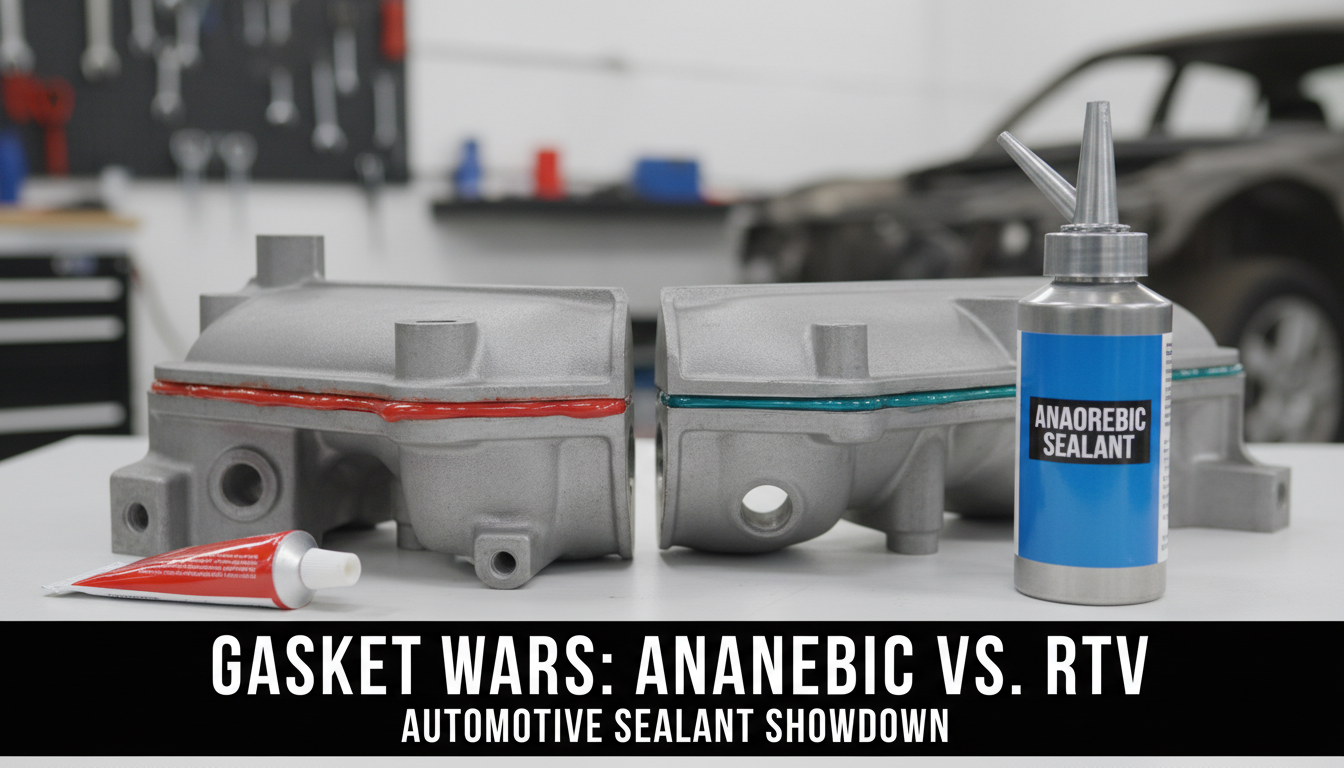
Unlike traditional solid gaskets, RTV is a Form-in-Place Gasket (FIPG). It fills microscopic imperfections between metal surfaces—such as oil pans, valve covers, and differential housings—to prevent oil, coolant, and transmission fluid leaks under high thermal stress. Understanding the chemistry of anaerobic gasket maker vs rtv is vital for modern repairs; while RTV fills large gaps with flexibility, anaerobic sealants cure only in the absence of air between tight metal-to-metal fittings.
Mistake #1: Using the Wrong RTV Color or Formula
Never assume all silicone sealants are the same; utilizing a generic 'clear' or household silicone will lead to rapid seal failure. Automotive fluids dissolve non-rated silicones, causing leaks within days.
Manufacturers color-code their formulas to indicate specific heat and chemical resistances. Using a low-temp sealant on an exhaust header will result in the gasket burning and crumbling.
- Grey RTV: Rigid cure for high-torque/high-vibration areas (Water pumps, intake manifolds).
- Black RTV: Maximum oil resistance and flexibility (Oil pans, differential covers).
- High Temperature Red RTV: Designed specifically for extreme heat applications up to 650°F (Exhaust manifolds, header flanges).
Mistake #2: The 'Oozing' Overkill (Applying Too Much Sealant)
Applying a bead thicker than 1/4 inch is the most common cause of catastrophic engine failure after a gasket repair. Excess sealant does not improve the seal; it squeezes out internally.
When you torque the bolts, the 'squeeze-out' on the inside of the engine breaks off into the oil pan. These rubber fragments are sucked into the oil pickup screen, blocking oil flow and starving the bearings. This serves as a critical warning for any oil pan gasket leak repair.
Proper Application Steps:
- Cut the nozzle to create a 1/8 to 1/4 inch bead.
- Circle every bolt hole completely.
- Ensure the bead is continuous with no breaks.
Mistake #3: Ignoring 'Sensor-Safe' Requirements
Using an acetoxy-cure silicone (identifiable by its strong vinegar smell) on modern vehicles can permanently damage oxygen sensors and ECU electronics. You must strictly use sensor safe silicone sealant for any engine built after 1980.
Acetoxy silicones release acetic acid as they cure. This acid outgassing coats the sensing element of O2 sensors, leading to false readings, Check Engine Lights, and poor fuel economy. Always look for "Oxime" cure or the "Sensor Safe" label on the package.
Mistake #4: Combining RTV with Solid Gaskets Incorrectly
Do not apply RTV to the face of a solid rubber or cork gasket unless explicitly directed by the manufacturer. This practice, often called "double-gasketing," actually causes leaks rather than preventing them.
According to technical bulletins from Fel-Pro, uncured RTV acts as a lubricant. When the gasket is compressed, this lubrication causes the solid gasket to slip out of place or split, destroying the seal. As reported by Fel-Pro, gaskets should generally be installed "Clean and Dry."
The Only Exceptions:
- Corners: Apply a dab of RTV where the gasket meets a sharp corner (e.g., intake manifold to engine block).
- T-Joints: Where three metal surfaces meet.
Mistake #5: Torquing Down Immediately (Skipping the Finger-Tight Step)
Tightening bolts to their final torque specification immediately after applying RTV squeezes out all the sealant, leaving no rubber cushion to bridge the gap. This results in metal-to-metal contact with no sealing material in between.
For a proper seal, you must create a silicone "gasket" of a specific thickness. If you rush this step, the RTV cannot vulcanize into a functional shape.
The Correct Procedure:
- Assemble parts and tighten bolts finger-tight only.
- Wait 60 minutes for the RTV to form a skin (tack-free).
- Torque to manufacturer specifications after this hour.
Mistake #6: Re-Torquing After the Cure
Never retighten or "check" the bolts after the RTV has fully cured (usually 24 hours). Doing so breaks the chemical bond formed between the silicone and the metal.
Once RTV cures, it is a static rubber seal bonded to the metal. Rotating the bolt applies shear force that tears this bond, creating an immediate leak path. If you suspect a bolt is loose after curing, you must disassemble, clean, and re-seal the entire component.
Mistake #7: Rushing the Fluid Fill
Adding oil, coolant, or gasoline before the 24-hour cure window allows fluids to wash away the uncured silicone. Most mechanics fail here by attempting to return the vehicle to service immediately.
While some "quick-cure" formulas exist, standard RTV requires moisture from the air to vulcanize depth-wise. A standard rtv curing time chart indicates that RTV cures at a rate of approximately 3mm per 24 hours.
- 1 Hour: Skin forms (Tack-free).
- 24 Hours: Functional cure (Safe for fluids).
- 7 Days: Maximum physical strength.
Future-Proofing: RTV Standards for 2026 and Modern Alloys
As of 2026, the shift toward aluminum and magnesium engine blocks requires high-elongation sealants that can handle rapid thermal expansion. Older "Iron-block" formulations are often too rigid for modern EVs and hybrids.
- Thermal Expansion: Aluminum expands twice as fast as iron; 2026-compliant RTVs possess higher flexibility (elongation) ratings.
- EV Compatibility: Battery coolant circuits require specialized non-conductive sealants to prevent electrolysis.
- Anaerobic Shift: Manufacturers are moving toward anaerobic gasket makers for machined flanges to reduce cure times, as noted in industry comparisons by Permatex.
Conclusion
Avoiding these 7 mistakes ensures leak-free repairs and prevents costly engine damage. Success lies in patience and precision: choosing the correct sensor safe silicone sealant, applying the correct bead size, and respecting the cure time. Whether you are performing a simple oil pan gasket leak repair or sealing a high-performance differential, following these protocols is mandatory for a lasting seal.
Contact us today to optimize your fleet maintenance and sealant strategy.
FAQ
How long does RTV gasket maker take to cure fully?
Generally, RTV takes 24 hours to fully cure to a functional state where it can resist fluid pressure. However, it sets to a tack-free skin in 30-60 minutes. The cure time depends heavily on temperature and humidity, as RTV requires atmospheric moisture to vulcanize; lower humidity will extend the curing process.
Can I use RTV instead of a head gasket?
No, never use RTV as a head gasket replacement. Head gaskets must withstand extreme combustion pressures and temperatures that RTV silicone cannot handle. RTV is strictly designed for fluid sealing (oil, coolant, transmission fluid) and will blow out immediately if exposed to cylinder compression.
What removes old RTV gasket maker best?
Plastic scrapers are the safest tool for aluminum surfaces to avoid gouging the soft metal, which causes leaks. Chemical gasket removers can soften hardened silicone effectively. You must avoid steel wool or abrasive pads (like cookies), as they leave metal particles and abrasive dust inside the engine, which can destroy bearings.
What is the difference between Grey and Black RTV?
Black RTV is typically formulated for maximum oil resistance and flexibility, making it ideal for oil pans and valve covers. Grey RTV is designed for high-torque applications with high vibration, curing to a more rigid state; it is often the OEM choice for import vehicles and water pumps.
Why does my RTV smell like vinegar?
The vinegar smell indicates an Acetoxy-cure silicone, which releases acetic acid while curing. These are generally not sensor-safe and can corrode copper wiring or damage sensitive electronic sensors (like O2 sensors) in modern vehicles. Always choose an Oxime-cure (odorless or low-odor) sealant for automotive work.
Can I use RTV on a gas tank?
Standard RTV silicone is NOT gasoline resistant. Gasoline will degrade the silicone chemically, turning it into a jelly-like substance that crumbles and causes leaks. For fuel systems, you must use specialized fuel-resistant sealants (like Hylomar or specific anaerobic sealers) designed to withstand hydrocarbon immersion.
Does RTV expire?
Yes, RTV has a shelf life, typically 12-24 months from the date of manufacture. If the tube is hard to squeeze or the liquid has separated into oil and solids, discard it. Expired RTV will fail to cure properly, often remaining tacky indefinitely and failing to seal.
What happens if I don't clean the surface before applying RTV?
If the surface is not clean, the sealant will bond to the oil, grease, or dirt layer rather than the metal itself. This creates a weak path for fluids to bypass the seal immediately under pressure. You must use brake cleaner or isopropyl alcohol to ensure a pristine, dry surface before application.
Best acrylic sealant for glass manufacturers and supplier brands in Automotive Solutions
OEM/ODM rtv silicone gasket maker Manufacturers and Suppliers
Specifying Low-VOC MS Silicone Sealant for Regulatory Compliance
Top rtv gasket maker Manufacturers and Suppliers
HY-682
How should the product be stored?
Store in a cool, dry, and well-ventilated area. Avoid direct sunlight and high temperatures. Keep the container tightly sealed when not in use.
HY-3300
What is HY-3300 Weatherproof Neutral Silicone Sealant used for?
HY-3300 is designed for general building and construction applications, including curtain wall glazing, window and door perimeter sealing, roofing, kitchen, bathroom, and plumbing joints. It adheres well to materials such as glass, aluminum, concrete, brick, ceramic, and marble.
Is HY-3300 suitable for outdoor applications?
Yes. Its outstanding weatherproof and UV-resistant properties make it ideal for long-term outdoor sealing and bonding applications.
Can I get a sample before placing an order?
Yes, free samples are available for testing and evaluation. Please contact our sales team for details.
HY-2100
How long does it take to fully cure?
Initial surface curing typically occurs within a few hours, depending on temperature and humidity. Full cure generally takes 24–48 hours, with thicker joints requiring longer.
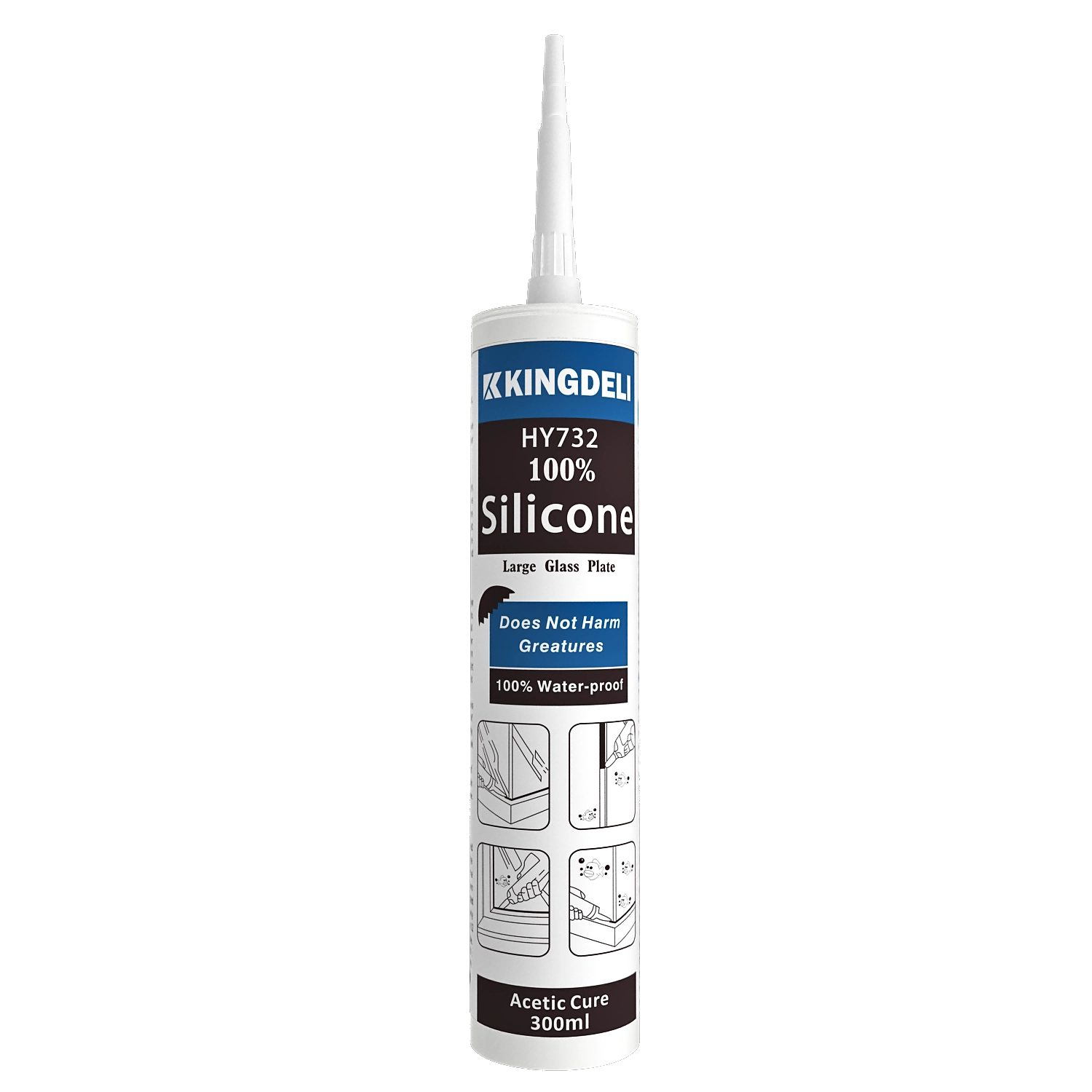
KINGDELI HY732 Professional Acetoxy Cure Silicone Sealant
KINGDELI HY732 is a professional-grade, one-component acetoxy cure silicone sealant designed for fast curing, strong adhesion, and long-lasting flexibility. Ideal for aquariums, glass applications, aluminum doors and windows, kitchens, and bathrooms, it provides reliable sealing performance with excellent anti-fungal protection in high-humidity environments.
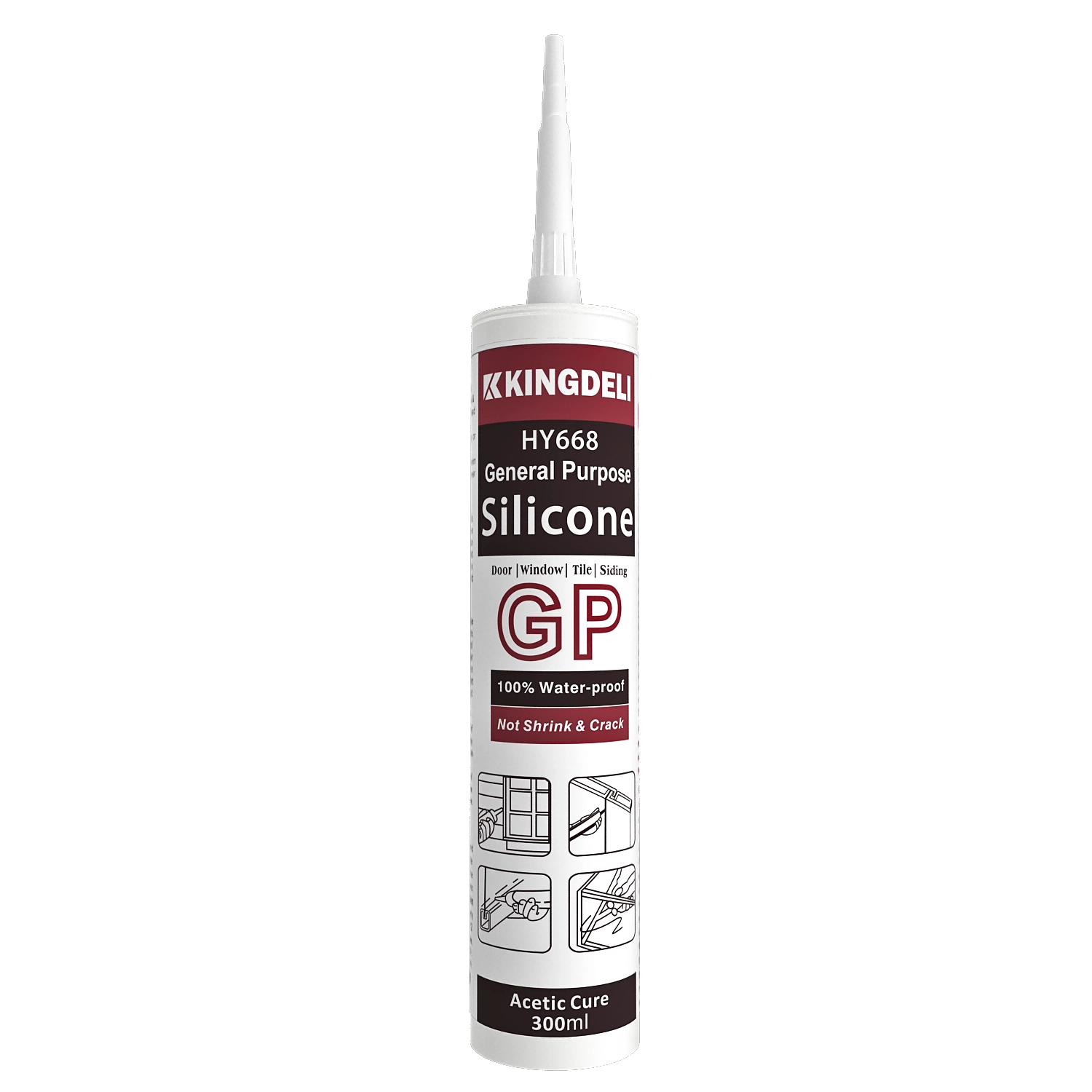
HY668 General Purpose Acetic Silicone Sealant
HY-668 General-Purpose Acetic Silicone Sealant is a easy-to-use sealant for everyday sealing and glazing applications. It offers good adhesion, fast curing, and a durable flexible seal, making it ideal for windows, doors, interior joints, and general construction use
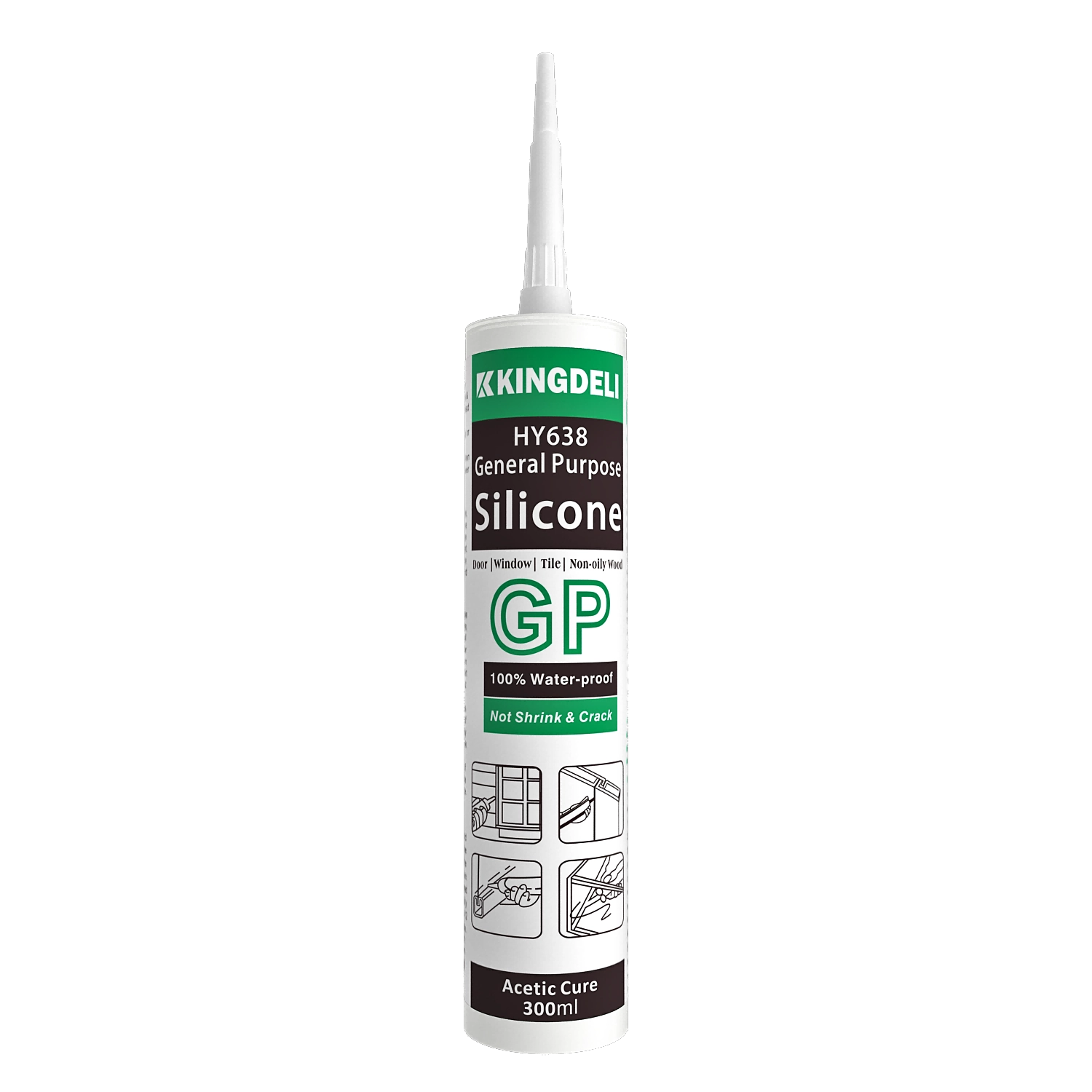
HY638 Economic General Purpose Acetic Silicone Sealant
HY-638 Economic General-Purpose Acetic Silicone Sealant is a cost-effective, one-component, shelf-stable, acetoxy-curing silicone sealant designed for general-purpose sealing and bonding applications. After curing, it forms a durable, elastomeric seal with the following characteristics:
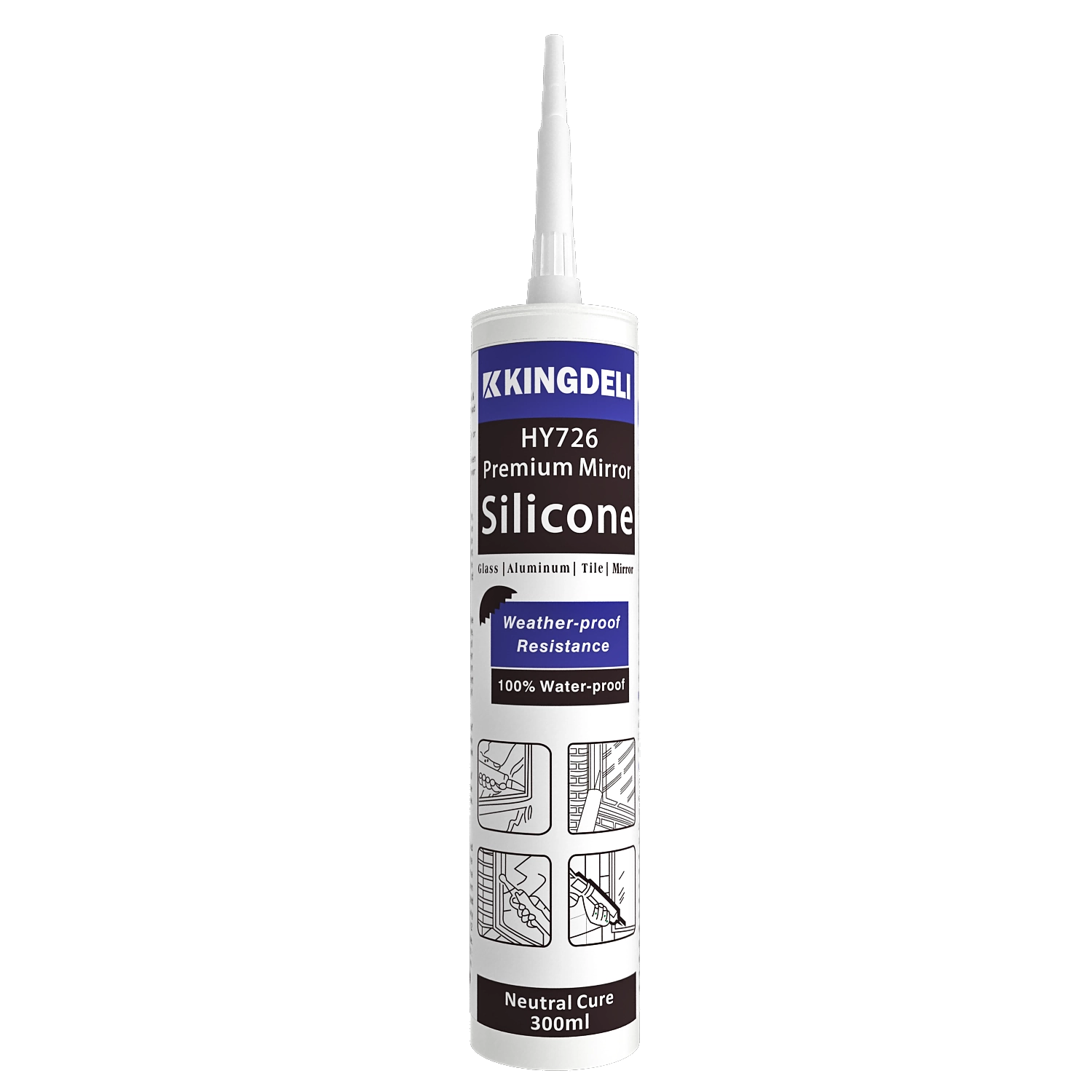
HY-726 Premium Clear Neutral Silicone Sealant
HY726 one-component, shelf-stable, 100% silicone elastomeric adhesive using alkoxy technology. It is specifically designed for sealing sensitive surfaces such as copper, gold, and metal-coated mirrors.
Let’s Build Stronger Bonds with Quality Adhesives and Sealants
Have questions about the topic or need tailored sealant solutions for your project?
Our team is ready to provide expert guidance, product recommendations, and application support.
Innovating with Integrity, Bonding the World
Since 1998, KINGDELI has delivered trusted, sustainable sealant solutions that connect industries and inspire progress worldwide.
Whatsapp: +8618825946249
Kingdeli
Kingdeli
Kingdeli
Kingdeli
Kingdeli