











5 Critical Mistakes to Avoid When Applying MS Polymer Sealants in Extreme Heat or Cold (2026 Guide)

- What Is the Ideal MS Sealant Application Temperature?
- Key Takeaways: Quick Summary of Temperature Thresholds
- Mistake 1: Confusing Ambient Air Temperature with Substrate Temperature
- Mistake 2: Ignoring Dew Point and Invisible Frost in Freezing Conditions
- Mistake 3: Applying Sealant in Direct Sunlight During Peak Heat
- Mistake 4: Neglecting Viscosity Changes and Pre-Warming Best Practices
- Mistake 5: Overlooking the Impact of Humidity on the Chemical Reaction
- Expert Tips for 2026: Future-Proofing Your Sealant Projects
- Conclusion
- Frequently Asked Questions
- How cold can it be to apply MS polymer sealant?
- What happens if sealant is applied in extreme heat?
- Is service temperature the same as application temperature?
- Does humidity affect MS polymer sealant curing in hot weather?
- How long does MS sealant take to cure in the winter?
- Can you apply MS hybrid sealants to wet surfaces?
- Why is my sealant bubbling in the summer?
- Should I pre-warm my sealant cartridges before use?
Navigating the complexities of modern construction often means battling unpredictable weather conditions. While MS (Modified Silane) polymers are widely regarded as the most versatile and durable hybrid sealants on the market, applying them in extreme environmental conditions requires a deep understanding of thermal dynamics and moisture-cure chemistry.
Achieving the perfect ms sealant application temperature is the foundation of a successful weather-tight seal. Pushing the boundaries of these materials without adjusting your methodology can lead to catastrophic adhesion failures, severe bubbling, or incomplete curing. As we move into 2026, contractor guidelines are becoming stricter, and the margin for error is shrinking.
This comprehensive guide explores the ideal temperature ranges for hybrid sealants and breaks down the five critical mistakes you must avoid when applying MS polymer sealants in scorching heat or freezing cold.
What Is the Ideal MS Sealant Application Temperature?
The ideal ms sealant application temperature generally falls between 40°F (5°C) and 100°F (38°C). Applying within this optimal window ensures proper gunnability, correct viscosity, and reliable moisture-cure cross-linking for maximum long-term elasticity and weather-tight sealing performance.
While modern MS polymers are incredibly resilient and capable of performing in harsh climates, adhering strictly to these manufacturer parameters is critical. When you apply sealants within this 40°F to 100°F sweet spot, the chemical reaction occurs at a predictable rate.
- Optimal Viscosity: The sealant flows easily from the caulking gun, allowing the contractor to tool the joint smoothly.
- Controlled Curing: The surface skins over at a manageable pace, giving workers adequate tooling time before the polymer sets.
- Maximum Adhesion: The hybrid formula bonds intimately with the substrate, preventing premature bonding failures and safeguarding the building envelope against future water intrusion.
Key Takeaways: Quick Summary of Temperature Thresholds
Temperature and moisture dictate the success of any sealant application. Before diving into the specific mistakes, here is a quick summary of the fundamental rules for applying MS polymers in extreme conditions:
- Ambient vs. Substrate: Always measure the surface you are bonding to, not just the ambient air temperature. Substrates can be drastically hotter or colder than the surrounding air.
- Cold Weather Mechanics: Cold temperatures slow the chemical reaction rate and significantly increase sealant viscosity, making it harder to extrude.
- High Heat Risks: Excessive heat accelerates curing but introduces a high risk of bubbling, outgassing, and thermal expansion issues within the joint.
- The Role of Humidity: Humidity acts as the primary catalyst. MS sealants require moisture to cure, an element that varies wildly between dry winter freezes and humid summer heatwaves.
Mistake 1: Confusing Ambient Air Temperature with Substrate Temperature
Confusing ambient air temperature with the minimum substrate temperature is a critical error. The substrate is the actual material receiving the sealant, and its temperature often drastically differs from the surrounding air due to solar heat absorption or freezing winds.
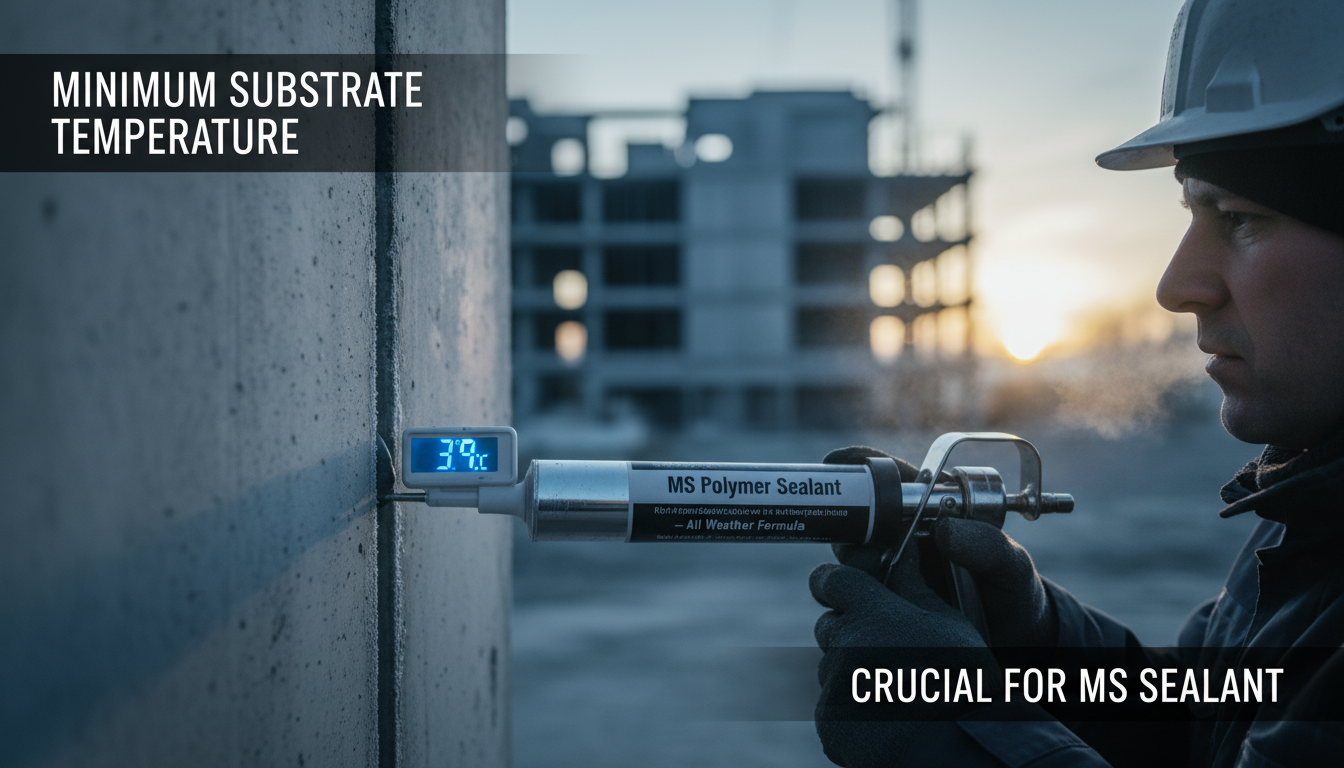
Relying on a smartphone weather app instead of an infrared surface thermometer is a fast track to application failure. The air temperature might read a comfortable 85°F (29°C), but a dark metal panel exposed to direct summer sunlight can easily reach surface temperatures exceeding 140°F (60°C).
Applying MS polymer sealants to substrates exceeding 120°F (50°C) is highly dangerous.
- Immediate Adhesion Failure: The extreme heat causes the sealant to flash-cure at the interface, preventing the polymer from wetting out and bonding to the pores of the substrate.
- Material Variations: Understand that highly conductive materials like aluminum, steel, and dark-tinted concrete retain and radiate heat far differently than ambient air.
- Best Practice: Always use an infrared surface thermometer to verify the minimum substrate temperature and maximum surface limits before pulling the trigger on your caulking gun.
Mistake 2: Ignoring Dew Point and Invisible Frost in Freezing Conditions
Ignoring the dew point during a cold weather sealant application creates microscopic moisture barriers. When surface temperatures drop below the dew point, invisible frost forms, acting as a direct bond-breaker for even the highest-quality MS hybrid polymer sealants.
Contractors often assume that if it isn't actively raining or snowing, the surface is dry enough for caulking. This is a fatal assumption in winter months. The dew point is the temperature at which the air becomes saturated and water vapor condenses into liquid. If the substrate temperature drops below this point in freezing weather, condensation immediately freezes into a microscopic layer of ice known as invisible frost.
- The Bond-Breaker Effect: Applying sealant over frost means you are bonding to ice, not the building material. When the ice melts, the sealant simply peels away.
- Joint Preparation: To prevent this, contractors must implement rigorous cold weather best practices.
- Solvent Wiping: Use a solvent wipe (like isopropyl alcohol) to clean and simultaneously dry the cold joints. The solvent evaporates rapidly, taking residual surface moisture with it and ensuring the joint is genuinely prepared for application.
Mistake 3: Applying Sealant in Direct Sunlight During Peak Heat
Applying sealant in direct sunlight during peak heat causes severe outgassing and bubble formation. The intense UV radiation causes rapid surface-level skinning, which traps expanding moisture and gases beneath the surface, completely ruining the internal cure of the joint.
Heat forces materials to expand, and porous substrates like concrete, brick, and cinderblock hold trapped air and moisture. When the summer sun bakes these materials, the trapped air expands and forcefully pushes its way out of the substrate—a phenomenon known as outgassing.
If you apply MS sealant during this outgassing phase, the intense heat will cause the top layer of the sealant to "skin over" almost immediately.
- Trapped Bubbles: The escaping gases from the substrate hit the cured outer skin of the sealant and become trapped, forming large, unsightly bubbles and blisters in the joint.
- Scheduling Strategies: To avoid this mistake, contractors must become strategic with their scheduling. Shift application times to early mornings or late afternoons when the building materials are cooling down, effectively drawing the sealant into the pores rather than pushing it out.
- Shading Zones: If daytime application is unavoidable, utilize heavy tarps to create shaded zones, allowing the substrate temperature to drop before applying the sealant.
Mistake 4: Neglecting Viscosity Changes and Pre-Warming Best Practices
Neglecting viscosity changes in extreme cold leads to physical applicator fatigue and improper joint extrusion. MS sealants do not flow the same at 10°F as they do at 70°F, making the unheated polymer incredibly stiff and difficult to gun.
As temperatures plummet, the physical consistency of hybrid polymers changes. While MS sealants boast superior cold-weather extrudability compared to traditional polyurethanes, they are not immune to the laws of physics. Attempting to force a frozen, high-viscosity cartridge through a standard caulking gun takes a massive physical toll on contractors and often results in an uneven, poorly tooled bead.
- Safe Pre-Warming Techniques: To maintain peak gunnability in winter, cartridges should be kept at room temperature prior to use.
- Heated Storage: Utilize insulated, thermostatically controlled heated boxes on the job site.
- Vehicle Cabs: Keep the bulk of your inventory in the warm cab of the work truck, bringing out only what you need for the immediate hour.
- Strict Warnings: Never use an open flame, blowtorch, or extreme direct heat source to warm a sealant cartridge, as this can degrade the polymer and pose a severe safety hazard.
Mistake 5: Overlooking the Impact of Humidity on the Chemical Reaction
Overlooking humidity severely miscalculates your expected hybrid sealant curing time. MS sealants are advanced moisture-cure systems, meaning that ambient temperature alone does not dictate curing speed; they absolutely require atmospheric moisture to trigger the necessary cross-linking chemical reactions.
A critical mistake made by seasoned professionals is forgetting the chemical nature of the product they are using. As detailed by Wikipedia, Silyl-modified polymers (SMPs) cure from a liquid or gel state to a solid elastomer via the hydrolysis of silyl ethers. In plain terms: without water vapor in the air, the sealant cannot cure.
- The Winter Drought: Cold winter air is notoriously dry. The dual threat of low temperatures and low humidity can exponentially extend your hybrid sealant curing time, leaving the joint vulnerable to dirt pickup and physical damage for days or even weeks.
- The Arrhenius Factor: Furthermore, as described by the Arrhenius equation found on Wikipedia, chemical reaction rates are heavily dependent on absolute temperature. Cold temperatures mathematically retard the curing speed, compounding the issue of low humidity.
- The Summer Flash-Cure: Conversely, extreme heat combined with high summer humidity acts as a super-catalyst. The sealant will cure incredibly fast, severely limiting your tooling window and forcing you to work in smaller, more rapid sections.
Expert Tips for 2026: Future-Proofing Your Sealant Projects
Future-proofing your sealant projects requires adopting the latest 2026 generation of MS polymer formulations. These advanced hybrids offer enhanced sub-freezing gunnability without isocyanates, ensuring high performance regardless of harsh environmental conditions.
The sealant industry is evolving rapidly. As highlighted by industry leaders producing Silyl Modified Polymer technologies like Bostik, reducing preparation steps while maintaining a robust application process is key to modern construction efficiency.
- Next-Gen Formulations: Leverage 2026 MS polymer blends that feature custom viscosity grades specifically engineered for specialized industrial climates, eliminating the need for toxic primers.
- Smart Thermal Probes: Integrate Bluetooth-enabled smart thermal probes into your site assessment toolkit. These devices instantly calculate ambient air, substrate temperature, and dew point, alerting you to invisible frost conditions before you waste a single tube of sealant.
- Custom Viscosity: Work closely with manufacturers to specify the exact viscosity grade tailored for your regional extremes, ensuring maximum worker efficiency and joint durability.
Conclusion
Applying MS polymer sealants in extreme temperatures is entirely possible when you understand the environmental variables at play. By avoiding these five critical mistakes—confusing ambient and substrate temperatures, ignoring the dew point, applying in direct sunlight, neglecting viscosity management, and overlooking humidity—contractors can guarantee durable, weather-tight seals year-round. Respecting the unique moisture-cure chemistry of hybrid sealants ensures that your building envelope remains protected against the harshest elements.
Contact us today to speak with our technical application specialists and optimize your extreme-weather sealant strategy.
Frequently Asked Questions
How cold can it be to apply MS polymer sealant?
Most manufacturers recommend a minimum application temperature of 40°F (5°C). However, premium MS polymers can be applied in colder sub-freezing conditions provided the substrate is clean, dry, and completely free of invisible frost.
What happens if sealant is applied in extreme heat?
Applying sealant to a substrate that is too hot (often above 120°F) can cause the sealant to blister or bubble. It also accelerates the curing process dramatically, leaving contractors with almost no time to properly tool or smooth the joint.
Is service temperature the same as application temperature?
No. Application temperature refers to the environmental conditions required during installation and curing. The service vs application temperature distinction is vital: service temperature is the extreme temperature range the fully cured sealant can withstand over its lifespan (often -40°F to 200°F+).
Does humidity affect MS polymer sealant curing in hot weather?
Yes, MS polymers rely on ambient moisture to cross-link and cure. In hot, highly humid environments, the sealant will cure incredibly fast. In hot, dry desert conditions, curing can surprisingly stall despite the high heat.
How long does MS sealant take to cure in the winter?
According to Arrhenius's Law, chemical reactions slow down in the cold. A sealant that skins over in 30 minutes at 75°F might take 2 to 3 hours at 35°F, with full depth curing taking several days to weeks depending on humidity.
Can you apply MS hybrid sealants to wet surfaces?
One of the major advantages of MS polymers is their ability to bond to damp surfaces. However, 'damp' does not mean submerged or actively raining. Standing water must be wiped away, and frost in winter must be eliminated.
Why is my sealant bubbling in the summer?
Bubbling is usually caused by outgassing from porous substrates like concrete when they heat up in direct sunlight. Applying sealants in the late afternoon when the substrate is cooling down prevents the air from expanding and pushing through the curing sealant.
Should I pre-warm my sealant cartridges before use?
Yes, if working in extreme cold, storing cartridges at room temperature (around 70°F) before use ensures smooth gunnability. Never use direct heat like a torch to warm them; use an insulated warm box or keep them in the cab of your work truck.
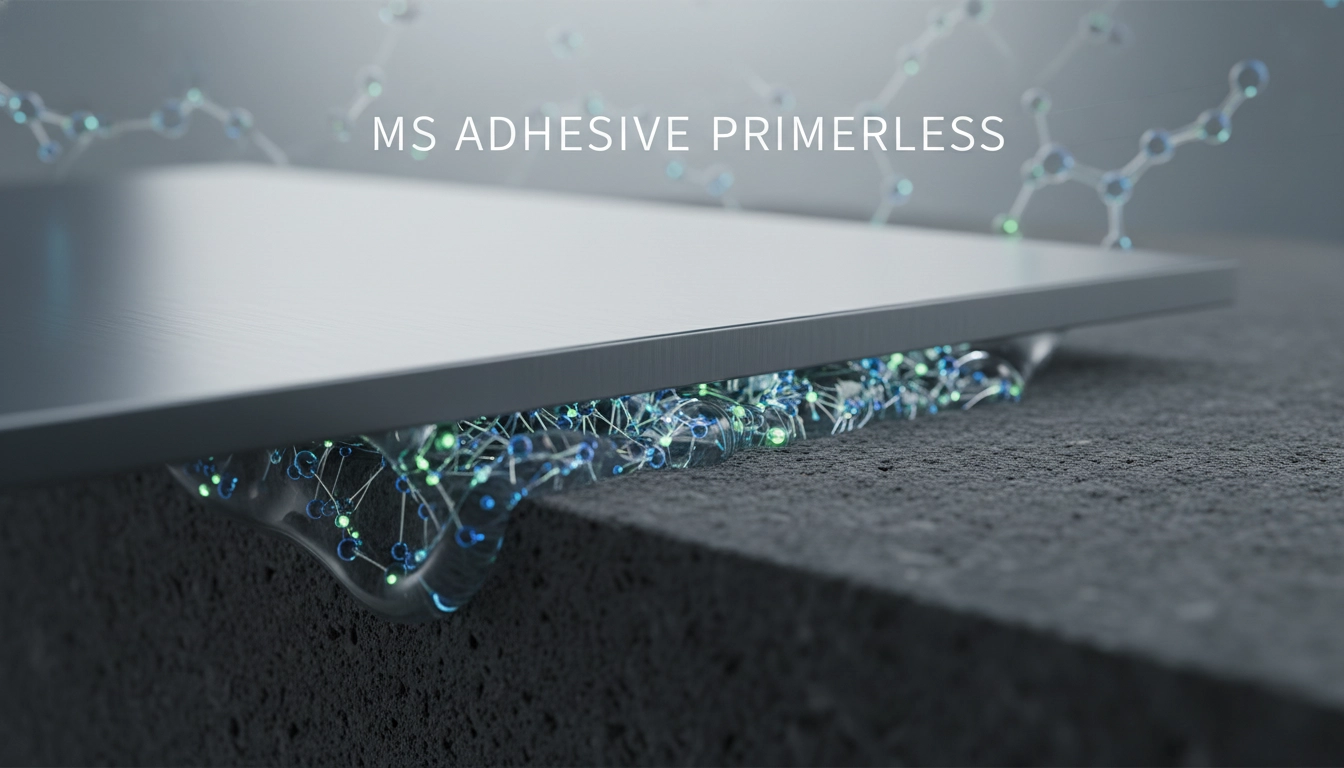
The Science of Speed: How MS Adhesive Primerless Technology Eliminates Prep Work in 2026
MS Silicone Sealant Compatibility with Paints and Coatings
Benefits of MS Silicone Sealant for Commercial Construction
MS Silicone Sealant Joint Design and Movement Capabilities
HY723
Is the sealant safe during a fire event?
Yes, it is excellent flame retardant; it self-extinguishes within 30 seconds and produces no smoke or harmful gases when burning.
HY993
How should HY993 be stored?
Keep in a dry, shaded environment at moderate temperatures. Avoid exposure to freezing or high heat for prolonged periods.
HY-3300
What colors are available?
Standard colors include clear, black, grey, and white, and custom colors can be produced upon request.
HY994
Can HY994 be used as a structural sealant?
No. HY994 is not intended for structural glazing or curtain wall structural applications.
HY982
How should the product be stored?
Store HY982 in its original, tightly sealed bucket in a cool, dry place below 25°C, away from direct sunlight and frost.
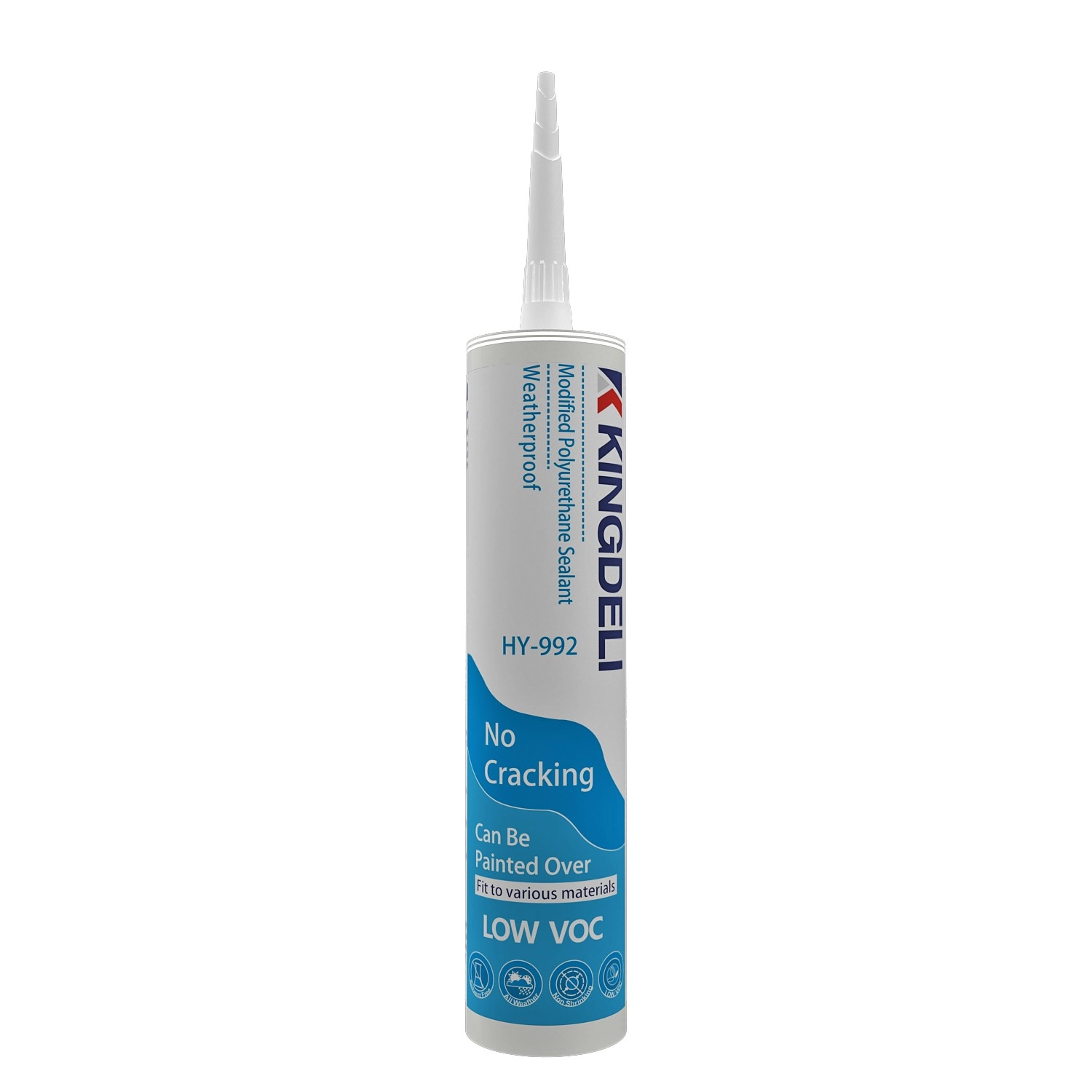
HY992 Modified Polyurethane Construction Sealant
HY992 Modified Polyurethane Sealant is a one-component, moisture-curing construction sealant designed for professional building and structural sealing applications. It provides excellent adhesion, weather resistance, and durable elasticity, making it suitable for a wide range of construction materials.
The formulation delivers strong bonding performance without corrosion or substrate contamination, while maintaining low VOC content for environmentally responsible construction projects.

HY995 Crystal Clear Ms Polymer Adhesive/Sealant
HY995 Crystal Clear Ms Polymer Adhesive/Sealant is a new generation MS Polymer adhesive / sealant formulated for all bonding and sealing applications where long term reliability is required. It has excellent bonding strength on various materials. It will cure to form a durable, flexible, waterproof seal.

HY997 High-Performance Anti-Microbial MS Polymer Sealant
HY997 MS polymer sealant for is is a premium one-component, neutral-curing modified silane sealant engineered for demanding interior applications. It offers a Class 20 movement capability, ensuring long-lasting flexibility and reliable performance under dynamic joint conditions. Curing at room temperature, HY997 delivers superior anti-microbial and mildew-resistant properties, maintaining hygienic and clean environments over time.
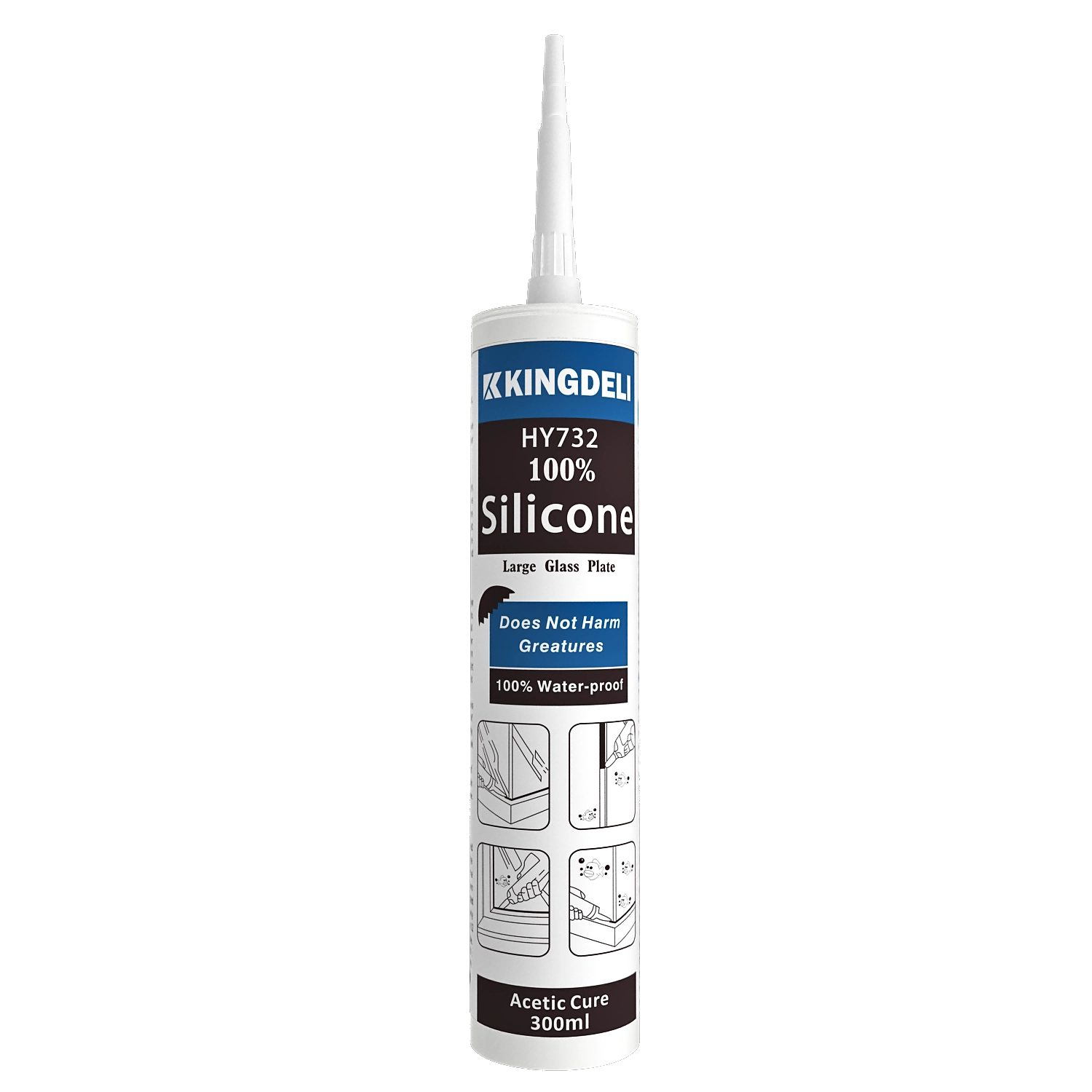
KINGDELI HY732 Professional Acetoxy Cure Silicone Sealant
KINGDELI HY732 is a professional-grade, one-component acetoxy cure silicone sealant designed for fast curing, strong adhesion, and long-lasting flexibility. Ideal for aquariums, glass applications, aluminum doors and windows, kitchens, and bathrooms, it provides reliable sealing performance with excellent anti-fungal protection in high-humidity environments.
Let’s Build Stronger Bonds with Quality Adhesives and Sealants
Have questions about the topic or need tailored sealant solutions for your project?
Our team is ready to provide expert guidance, product recommendations, and application support.
Innovating with Integrity, Bonding the World
Since 1998, KINGDELI has delivered trusted, sustainable sealant solutions that connect industries and inspire progress worldwide.
Whatsapp: +8618825946249
Kingdeli
Kingdeli
Kingdeli
Kingdeli
Kingdeli