











10 Reasons Why Top Glaziers are Switching to MS Polymer Sealants for High-Rise Projects (2026 Guide)

- What is MS Sealant for Glazing?
- Key Takeaways: Quick Summary of High-Rise Glazing Trends
- 10 Reasons Why Top Glaziers are Switching to MS Polymer Sealants
- Glazing Sealant Cost and Pricing Analysis for 2026+
- Expert Tips & Common Mistakes in Perimeter Glazing
- Conclusion
- Are MS polymer sealants better than silicone for glazing?
- Can you apply MS sealant on wet glass or damp frames?
- What is the lifespan of MS polymer sealants in high-rise buildings?
- Do MS sealants require a primer on aluminum window frames?
- Are MS polymer sealants paintable?
- What does SMP stand for in glazing sealants?
- Why do polyurethane sealants bubble but MS polymers do not?
- Is MS sealant safe for natural stone facades in hybrid high-rises?
What is MS Sealant for Glazing?
MS (Modified Silane) polymer sealants are advanced hybrid adhesives engineered to create flexible, weather-tight perimeter glazing joint sealants in modern commercial window installations. They combine the exceptional UV resistance of traditional silicone with the sheer strength and paintability of polyurethane.
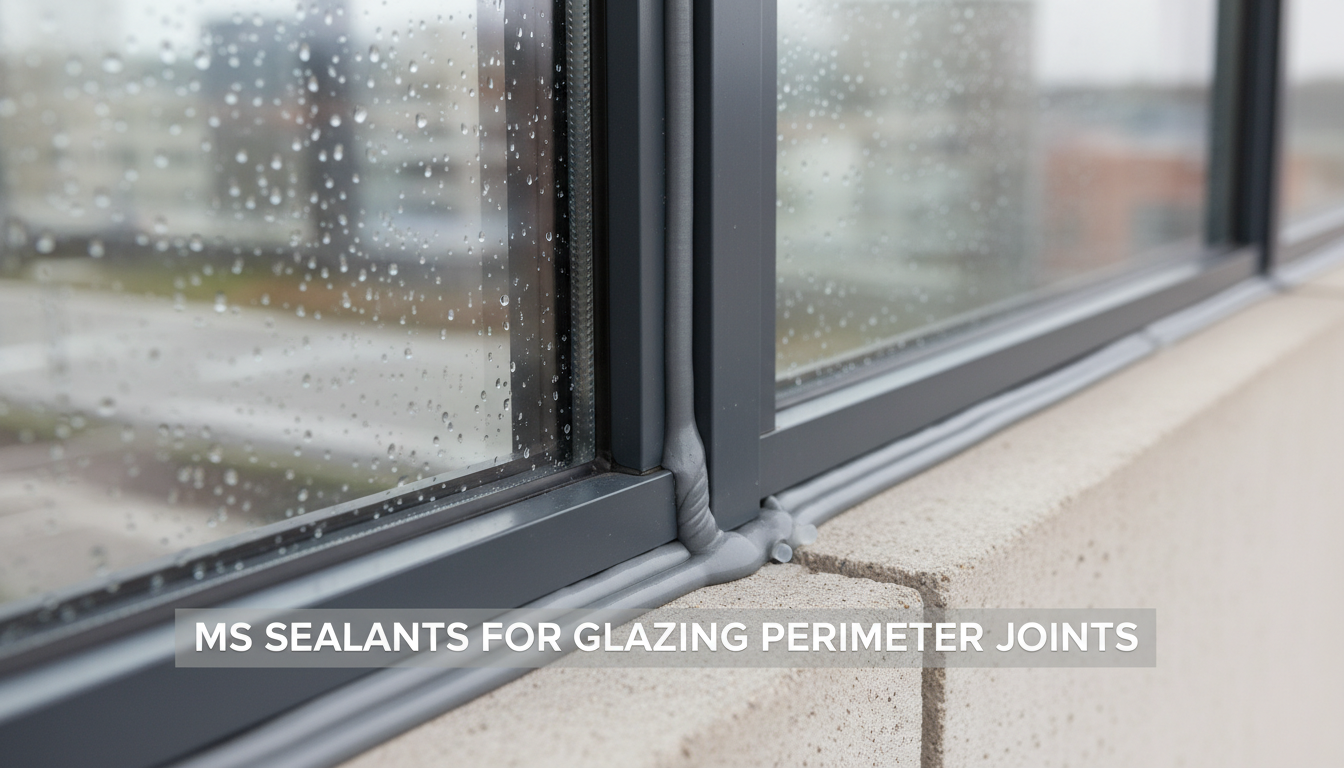
When evaluating the physical demands of high-rise construction, architects and engineers constantly look for materials that can withstand dynamic stresses. MS polymer sealants bridge the gap between organic and inorganic chemistries. The term "MS" refers to Modified Silane, meaning the backbone of the polymer is polyether, but the terminal ends are silyl groups. To understand why this is revolutionary, one must look at the historical options available to commercial contractors. Historically, polyurethane offered incredible strength but suffered from UV degradation and bubbling. Conversely, silicone offered perfect UV stability but could not be painted and required harsh chemical primers to stick to certain modern metals. MS polymers eliminate these compromises.
How and why this technology dominates the modern glazing industry:
- Unmatched Versatility: These hybrid formulations can bond to almost any building material, making them incredibly adaptable for mixed-material commercial facades.
- Bubble-Free Curing Mechanism: Because they do not release carbon dioxide during the curing phase, they prevent outgassing and maintain absolute structural integrity.
- Long-Term Elasticity: The silyl-modified polymers (SMP) base ensures that the sealant remains highly elastic and resilient over decades of exposure.
As explained by Wikipedia, silyl-modified polymers (SMP) are the primary active components in solvent-free and isocyanate-free adhesive products. They boast most of the desirable properties of polyurethane—such as high opacity and short drying times—while adopting key silicone properties like higher temperature resistance, higher elasticity, and greater defense against fungi.
Key Takeaways: Quick Summary of High-Rise Glazing Trends
High-rise glazing projects for 2026 demand advanced sealants featuring extreme weatherability, high-movement capabilities, and eco-friendly chemical profiles to combat intense wind loads. Top commercial glaziers are rapidly adopting these hybrid MS sealants to reduce labor costs and guarantee environmental compliance.
The construction industry is experiencing a massive shift toward sustainable, high-efficiency building materials. In high-rise projects, the stakes are exponentially higher due to the physical realities of altitude. Extreme wind loads, rapid temperature fluctuations, and intense UV exposure constantly test the limits of building envelopes. As skyscrapers climb higher into the atmosphere, the building materials face harsher microclimates, requiring a completely new tier of performance from construction sealants.
Key trends driving the adoption of hybrid sealants:
- Combating Structural Sway: Skyscrapers are designed to move and sway with the wind. Sealants must offer exceptional elongation to absorb this kinetic energy without tearing or losing substrate grip.
- Reducing Labor Overhead: By eliminating multi-step surface preparation and wait times, hybrid sealants significantly cut down total man-hours on the scaffold.
- Stricter Environmental Standards: The transition away from traditional organic solvents is accelerating. Hybrid sealants are replacing older, toxic formulas to become the undisputed 2026 standard for green building codes.
10 Reasons Why Top Glaziers are Switching to MS Polymer Sealants
Top glaziers are switching to MS polymer sealants because they deliver unparalleled primerless adhesion, accommodate extreme building sway, and ensure strict compliance with modern green building codes. These distinct advantages dramatically lower overall installation costs and prevent weather-related project delays.
High-rise projects operate on strict timelines and massive budgets, leaving no room for material failure. The transition from legacy materials to advanced SMP technology is driven by tangible, field-proven benefits. When analyzing silicone vs ms polymer sealant applications, the advantages of hybrid technology become overwhelmingly clear for weatherproofing applications.
Here are the 10 critical reasons why commercial glaziers are making the switch in 2026:
- Primerless Adhesion for Modern Substrates: The sealant bonds flawlessly to challenging architectural materials, achieving outstanding primerless adhesion for aluminum, uPVC, and specialized coated glass. Avoiding chemical primers saves immense labor time.
- Reliable Bubble-Free Curing: Unlike standard polyurethane, which reacts with atmospheric moisture to produce CO2 gas, MS polymers cure without outgassing. This guarantees a dense, bubble-free bead even in highly humid tropical environments.
- Damp Surface Application: Weather delays cost thousands of dollars per day. MS sealants can be successfully applied to damp surfaces, allowing installation crews to keep working during inclement weather without risking adhesion failure.
- Extreme UV & Temperature Resistance: At 50 stories up, UV radiation is relentless. These sealants withstand brutal high-altitude solar exposure without chalking, shrinking, or surface cracking.
- Non-Staining Properties: The formulation contains no migrating plasticizers or volatile solvents. This makes it completely safe for hybrid luxury facades featuring porous natural stone, preventing ugly oil halos from ruining the building's aesthetic.
- High Movement Capability: Skyscrapers undergo extreme thermal expansion and sway. The internal chemistry easily accommodates these massive dynamic shifts without losing structural adhesion at the joint edges.
- Superior Paintability: MS polymers can be painted immediately after curing without causing solvent damage, "fish-eyes," or paint rejection—a massive aesthetic advantage over silicone.
- Eco-Friendly and VOC Compliant: As green building standards become law, the need for VOC compliant construction sealants is mandatory. Modern skyscrapers aim for premium environmental certifications. As reported by Elixir Environmental, modern projects must utilize low-emitting materials to earn LEED v5 credits, severely restricting the use of traditional high-VOC adhesives.
- Excellent Storage Stability: Massive construction sites require bulk material staging. MS polymers boast a much longer shelf life and better temperature stability in the tube, reducing expensive material waste.
- Non-Sag Formulation: Applying sealants vertically or overhead on a high-rise exterior is incredibly difficult. The advanced rheology of MS polymers provides excellent tooling properties, ensuring the bead stays exactly where it is placed.
Glazing Sealant Cost and Pricing Analysis for 2026+
Glazing sealant cost analysis for 2026 reveals that while MS polymer sealants have a slightly higher upfront material cost, they ultimately reduce total project expenses. Eliminating the primer application phase and accelerating installation times makes them highly cost-effective for large-scale facades.
Budgeting for high-rise commercial glazing requires a holistic view of the total installed cost, rather than just the price per tube. Procurement managers and project estimators must factor in labor rates, equipment rentals, scaffold times, and the costly risk of rework.
A detailed look at the financial impact of hybrid sealants:
- Cost-per-Linear-Foot: Traditional structural silicones may appear cheaper initially. However, when you factor in the required chemical primers, the labor to mask and apply them, and the necessary flash-off wait times, the true cost-per-linear-foot of MS polymer applications is consistently lower.
- Risk Mitigation: The high moisture tolerance of hybrid sealants prevents weather-related downtime. This means expensive crane, lift, and scaffolding rentals aren't wasted while waiting for a building facade to completely dry out after a morning rainstorm.
- Future Innovations: The continuous evolution of automated high-rise facade assembly relies on reliable chemistry. As noted by CAPLINQ, the unique properties of silyl-modified polymer adhesives offer unmatched versatility and mechanical strength, positioning them as the next-generation standard for mass transit and commercial construction.
Expert Tips & Common Mistakes in Perimeter Glazing
Successful perimeter glazing requires rigorous field adhesion testing and precise joint design to maximize the movement capabilities of the sealant. Failing to follow these structural best practices can lead to compromised elasticity, joint failure, and catastrophic water intrusion in high-rise buildings.
Even the most advanced hybrid polymer in the world will fail if the application technique is flawed. Quality assurance on a high-rise facade is an ongoing, daily necessity.
Key steps and pitfalls to watch out for:
- Expert Tip: Always verify substrate compatibility. Perform and document comprehensive field adhesion peel-tests before mass application begins on any commercial project, especially if the window extrusions feature new powder-coatings.
- Common Mistake: Skimping on joint design. Applicators must maintain proper width-to-depth ratios (typically 2:1 for moving joints) using correctly sized backer rods. Failing to do so restricts the sealant's natural elongation properties and causes premature tearing.
- Expert Tip: Utilize proper tooling techniques. Tool the joint immediately after application with appropriate spatulas to ensure full wetting of the sealant against the window frame and glass substrate.
Conclusion
The shift towards advanced adhesives in commercial construction is undeniable. MS polymer sealants offer the ultimate best-of-both-worlds solution for high-rise glazing, seamlessly blending heavy-duty strength, joint flexibility, and unmatched weather resistance. By adopting SMP technology, commercial glaziers can future-proof their massive installations against both harsh climates and strict 2026 green building codes. Whether it is solving the issue of primerless adhesion, enhancing eco-friendliness, or offering superior paintability, the benefits of hybrid technology far outweigh traditional alternatives.
Contact us today to consult with our experts and find the perfect MS polymer sealant chemistry for your next commercial high-rise project.
Are MS polymer sealants better than silicone for glazing?
MS polymers offer comparable UV resistance to silicone but provide superior paintability and primerless adhesion. While silicone remains the standard for direct structural glazing, MS polymers are the preferred choice for perimeter weathersealing.
Can you apply MS sealant on wet glass or damp frames?
Yes, one of the biggest advantages of MS polymers is their ability to securely bond and cure on damp surfaces. This highly moisture-tolerant curing process prevents costly weather delays on unpredictable high-rise construction sites.
What is the lifespan of MS polymer sealants in high-rise buildings?
Premium MS polymer sealants have an expected service life of 20 to 30 years when applied correctly. They are formulated to resist hardening, shrinking, and cracking despite intense high-altitude wind and sun exposure.
Do MS sealants require a primer on aluminum window frames?
Generally, no. MS polymers exhibit outstanding primerless adhesion to both anodized and powder-coated aluminum substrates. However, a standard field peel-test is always recommended for highly specialized or newly developed architectural coatings.
Are MS polymer sealants paintable?
Yes, a major benefit over traditional silicones is that MS polymer sealants are fully paintable. They are compatible with most water-based and synthetic paints without causing "fish-eyes" or substrate rejection.
What does SMP stand for in glazing sealants?
SMP stands for Silyl-Modified Polymers. It refers to the underlying hybrid chemical technology that gives MS sealants their unique balance of flexibility and strength.
Why do polyurethane sealants bubble but MS polymers do not?
Polyurethanes rely on a curing mechanism that releases carbon dioxide gas when exposed to moisture, which can cause bubbling. MS polymers cure via a completely different, moisture-triggered mechanism that is entirely bubble-free.
Is MS sealant safe for natural stone facades in hybrid high-rises?
Yes, high-quality MS polymer sealants are non-staining because they contain no volatile solvents or migrating plasticizers. This ensures they will not discolor or leave unappealing halos on porous natural stone borders surrounding the glazing.
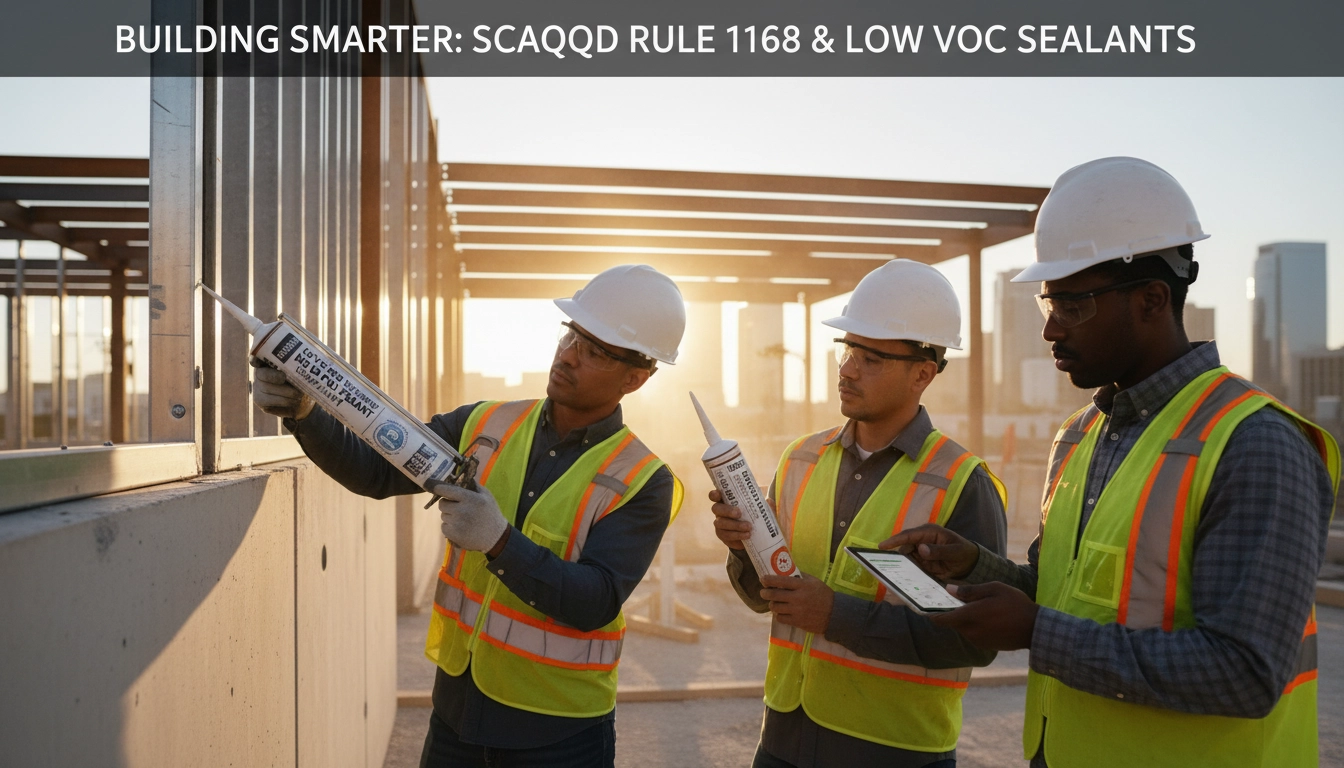
The 2026 Master Guide to MS Sealant: Why Low VOC is Now the Industry Standard
OEM/ODM double glazing glass sealant Manufacturers and Suppliers
OEM/ODM neutral cure clear silicone sealant Manufacturers and Suppliers
MS Silicone Sealant vs RTV Silicone: A B2B Comparison
HY-2300
Will it corrode metal or cement surfaces?
No. HY-2300 is a neutral curing silicone sealant, ensuring no corrosion to metal and cement substrates.
HY638
Can HY-638 be used for structural glazing or heavy-duty architectural joints?
No. HY-638 is a general-purpose sealant and is not recommended for structural glazing, architectural joints, joints subject to heavy abrasion or wear, or tuck-pointing applications. For such applications, a specialized high-performance sealant should be selected.
HY922
Does HY922 contain solvents or emit strong odors?
No. HY922 is solvent-free, low VOC, and non-toxic, making it safer for applicators and environmentally friendly.
HY723
Is the sealant safe during a fire event?
Yes, it is excellent flame retardant; it self-extinguishes within 30 seconds and produces no smoke or harmful gases when burning.
HY994
What is HY994 sealant?
HY994 is a one-component, neutral-cure, silane-modified polyether (MS polymer) sealant. It is paintable, solvent-free, low VOC, and provides excellent adhesion to a wide range of construction materials without a primer.
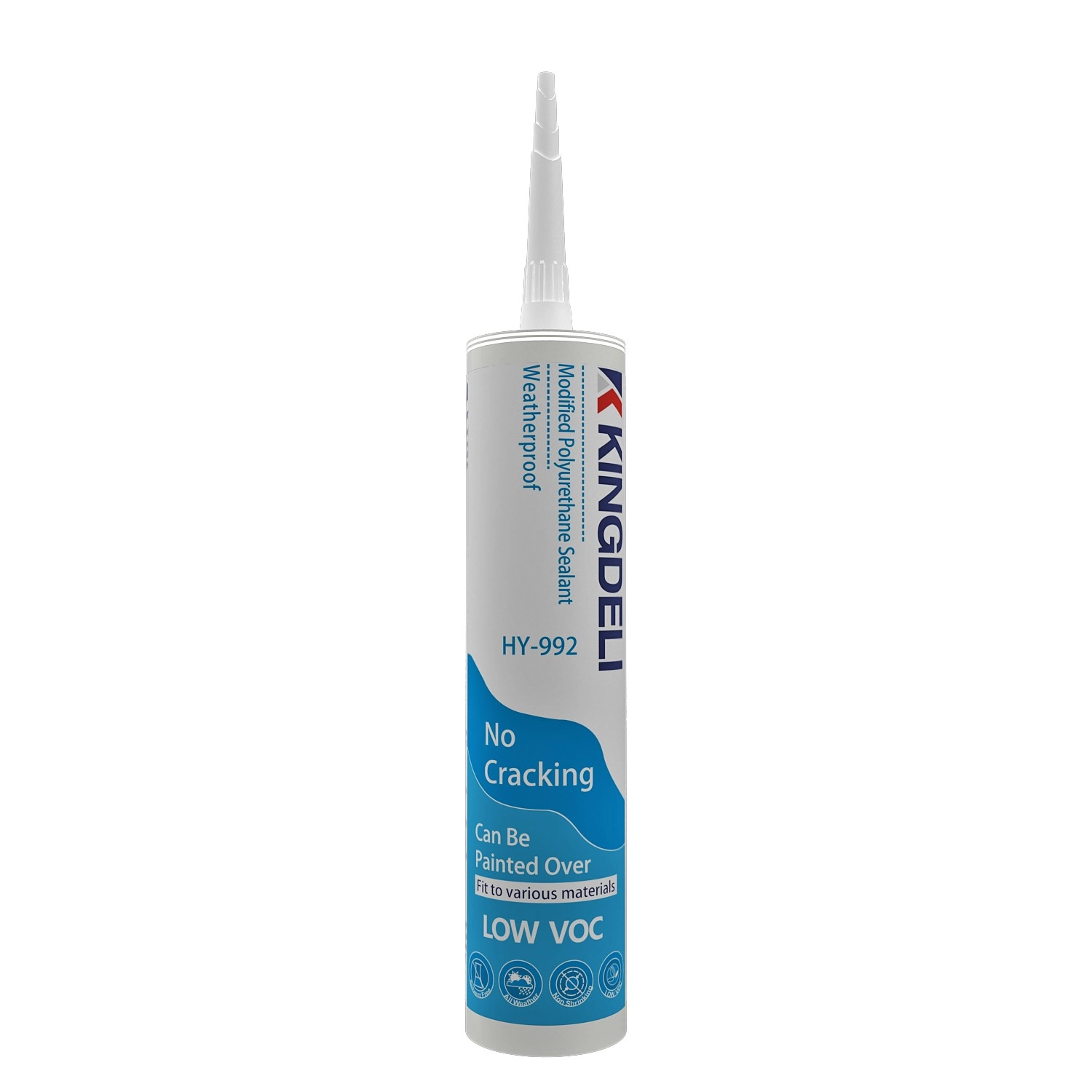
HY992 Modified Polyurethane Construction Sealant
HY992 Modified Polyurethane Sealant is a one-component, moisture-curing construction sealant designed for professional building and structural sealing applications. It provides excellent adhesion, weather resistance, and durable elasticity, making it suitable for a wide range of construction materials.
The formulation delivers strong bonding performance without corrosion or substrate contamination, while maintaining low VOC content for environmentally responsible construction projects.

HY995 Crystal Clear Ms Polymer Adhesive/Sealant
HY995 Crystal Clear Ms Polymer Adhesive/Sealant is a new generation MS Polymer adhesive / sealant formulated for all bonding and sealing applications where long term reliability is required. It has excellent bonding strength on various materials. It will cure to form a durable, flexible, waterproof seal.

HY997 High-Performance Anti-Microbial MS Polymer Sealant
HY997 MS polymer sealant for is is a premium one-component, neutral-curing modified silane sealant engineered for demanding interior applications. It offers a Class 20 movement capability, ensuring long-lasting flexibility and reliable performance under dynamic joint conditions. Curing at room temperature, HY997 delivers superior anti-microbial and mildew-resistant properties, maintaining hygienic and clean environments over time.
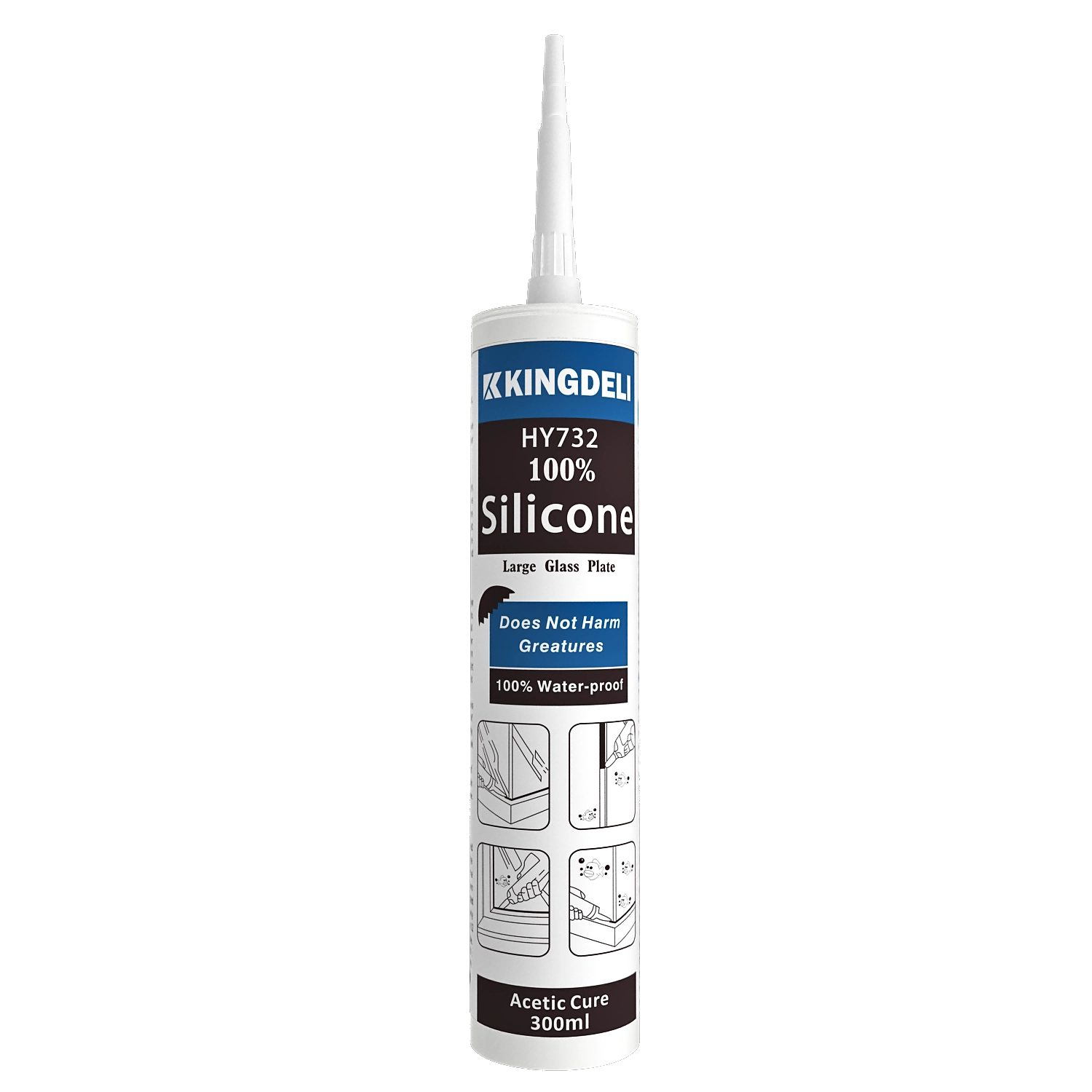
KINGDELI HY732 Professional Acetoxy Cure Silicone Sealant
KINGDELI HY732 is a professional-grade, one-component acetoxy cure silicone sealant designed for fast curing, strong adhesion, and long-lasting flexibility. Ideal for aquariums, glass applications, aluminum doors and windows, kitchens, and bathrooms, it provides reliable sealing performance with excellent anti-fungal protection in high-humidity environments.
Let’s Build Stronger Bonds with Quality Adhesives and Sealants
Have questions about the topic or need tailored sealant solutions for your project?
Our team is ready to provide expert guidance, product recommendations, and application support.
Innovating with Integrity, Bonding the World
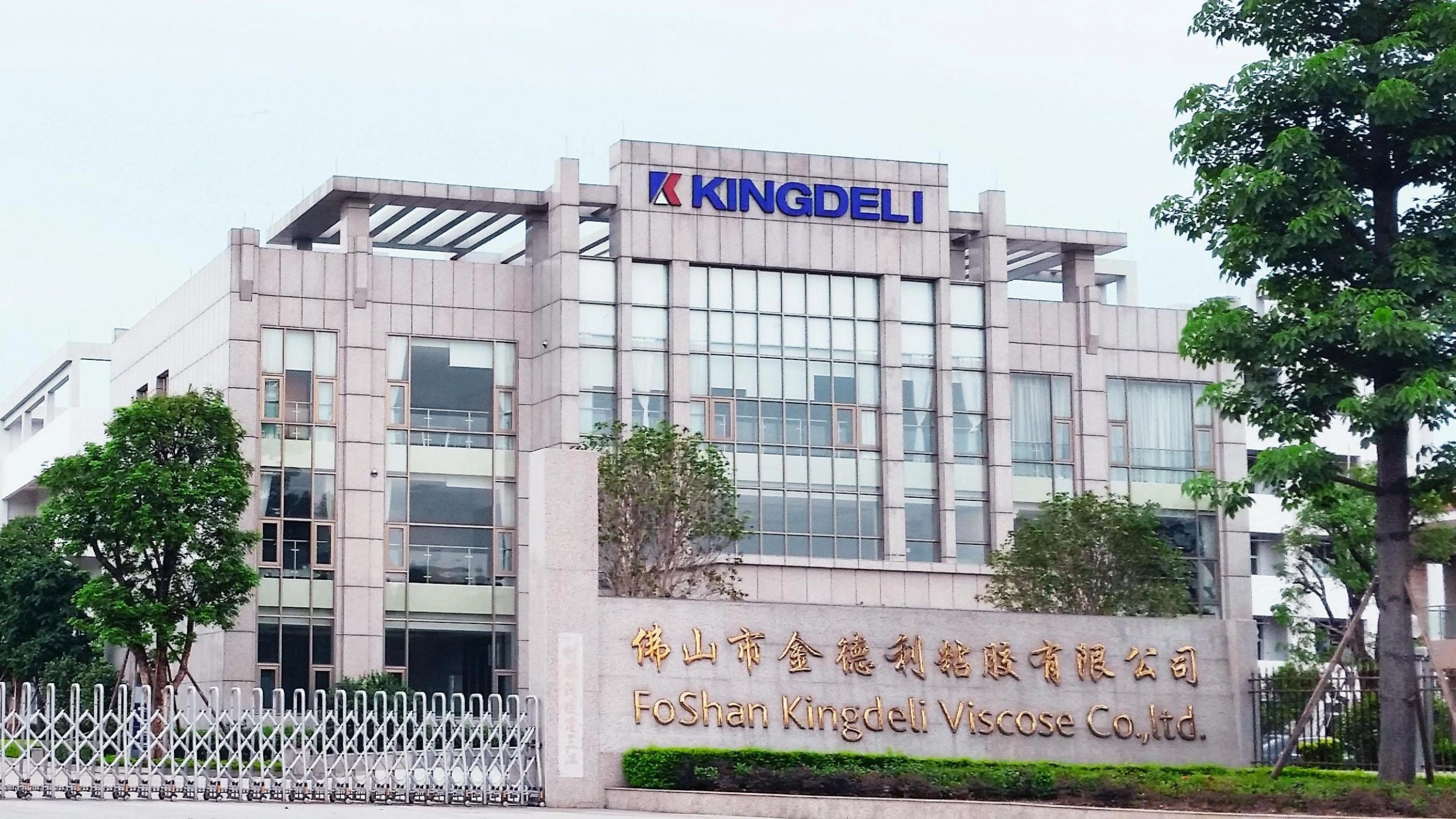
Since 1998, KINGDELI has delivered trusted, sustainable sealant solutions that connect industries and inspire progress worldwide.
Whatsapp: +8618825946249
Kingdeli
Kingdeli
Kingdeli
Kingdeli
Kingdeli