











What substrates are compatible with neutral cure silicone sealant?
As experienced sealant manufacturers and technical advisors, we answer six high-value, often-misunderstood beginner questions about neutral cure silicone sealant (oxime/alkoxy/silane-modified types). This guide references industry guidance (ASTM C920, EN 15651) and encourages checking the product Technical Data Sheet (TDS) and Safety Data Sheet (MSDS) before specifying or installing.
1) What substrates are compatible with neutral cure silicone sealant on glazing and metal frames, and when is a primer required?
Neutral cure silicone sealant reliably bonds to clean, non-porous surfaces such as float glass, tempered glass, glazed ceramic, anodized aluminum, stainless steel and many painted or powder-coated metal finishes. Because neutral cure chemistries (alkoxy, oxime, or silane-modified polymers) do not emit acetic acid, they are preferred for metal and stone where acetoxy silicones can cause corrosion or staining.
Primer is required when any of the following apply:
- Surface is contaminated, has release agents, or has a deteriorated coating — primer increases long-term adhesion.
- Manufacturer’s TDS calls for one to meet structural glazing or curtain-wall performance (many structural neutral cure silicones require primer to meet ASTM C1184/ASTM C920 performance values).
- Aluminum or metal has unusual coatings (galvanized, mill-scale, or factory-applied films) — primer ensures consistent adhesion.
Best practice: perform an adhesion test (thumb/pull test or laboratory peel test) following manufacturer guidance. If primer is recommended by the TDS, use the specified silane or metal primer; do not substitute generic primers. Proper surface prep (degrease, abrade lightly if specified, solvent wipe with isopropyl alcohol or manufacturer-recommended cleaner) is essential for primerless adhesion claims to be valid.
2) Will neutral cure silicone adhere to low surface energy plastics (PE, PP, PTFE, polycarbonate) — how should I prepare these plastics?
Low surface energy (LSE) plastics — polyethylene (PE), polypropylene (PP), polytetrafluoroethylene (PTFE), and often some impact-modified polycarbonate and silicone-containing plastics — are challenging for any silicone or polymeric adhesive. Standard neutral cure silicone typically will not bond reliably to these without surface treatment.
Accepted options to achieve durable adhesion:
- Use a manufacturer-specified silane-based adhesion promoter or specialty primer formulated for the specific plastic. These primers chemically increase surface energy and create a durable bond.
- Use surface activation — corona, plasma, or flame treatment — followed immediately by primerless application or primer application (treated surfaces revert over time; work quickly).
- Mechanical fastening or design changes (flanges, gaskets) if chemical bonding is unacceptable.
Note: PTFE generally requires specialized primers and may still be unreliable. Polycarbonate sometimes bonds but can craze under stress; always run a test coupon under representative environmental and thermal cycling conditions. Document the test per project QA protocols before approving production use.
3) Can neutral cure silicone be used on concrete and masonry without primer, and how do alkalinity and moisture affect cure and adhesion?
Neutral cure silicones are widely used on concrete and masonry because they do not emit acetic acid and are less likely to cause staining or corrosion. However, porous and alkaline substrates like concrete present two challenges: substrate moisture and surface porosity/carbonate salts.
Guidance:
- Surface must be dry, free of loose dust, laitance, curing compounds and salts. New concrete should be cured and allowed to outgas and dry; high residual moisture slows or prevents proper cure.
- High alkalinity itself is not generally destructive for neutral silicones, but surface contaminants (soluble salts) can prevent adhesion. Where efflorescence or salts are present, clean and neutralize per the manufacturer’s recommendations and, if necessary, apply a primer formulated for concrete.
- Use a backer rod sized to achieve the correct joint geometry (see next question) and avoid three-sided adhesion by installing a compressible polyethylene backer rod. For porous masonry, a primer can improve adhesion and reduce sealant absorption into the substrate.
Concrete example: typical cure rate for a neutral silicone is about 2–3 mm/24h at 23°C and 50% RH; that slows significantly in cold or saturated conditions. If joints must be placed in damp or below-freezing conditions, consult the TDS — special low-temperature cure formulations may be required.
4) Is neutral cure silicone safe for copper, galvanized steel and other sensitive metals — will it cause corrosion?
Neutral cure silicones are formulated to avoid acidic byproducts (the primary concern with acetoxy silicones). For most sensitive metals (copper, brass, galvanized steel, stainless steel, aluminum) neutral cure silicones are the preferred choice because they are classified as non-acidic and significantly reduce the risk of metal corrosion and staining.
However, important caveats:
- Not all neutral cure products are identical. Some oxime-cure silicones release keto-oximes (e.g., methyl ethyl ketoxime) during cure; while not acidic like acetic acid, these byproducts can be restricted substances in some jurisdictions and some formulations may interact with plated finishes. Always confirm the product is labelled “non-corrosive to metals” on the TDS.
- Surface contaminants (oils, chlorides) on metals remain the leading cause of post-installation corrosion. Clean metals thoroughly before sealing.
- For electrical or electronic assemblies, use electrically compatible grades and verify by compatibility testing. For architectural exteriors, choose sealants specifically designated non-corrosive and tested to applicable standards (ASTM/EN).
Recommendation: request manufacturer documentation that the specific batch/formulation has been tested for the intended metal substrates, and perform on-site or lab test panels if the project is critical.
5) How do I size joints (width vs depth) and estimate cure time for neutral cure silicone in cold or humid climates?
Correct joint geometry is key to performance. The standard rule for elastomeric silicones is to maintain a width-to-depth relationship that allows free movement: typically, depth = width / 2 (a 2:1 width:depth ratio) up to practical limits specified by the manufacturer. For most joints:
- For a 10 mm wide joint, target a 5 mm depth.
- For joints wider than ~12–25 mm, maintain the 2:1 ratio but check the manufacturer’s maximum recommended depth — some formulations recommend a maximum 12 mm depth without special curing aids.
- Always use a closed-cell polyethylene backer rod to control depth and prevent three-sided adhesion.
Cure rate and weather factors:
- Typical neutral silicones cure 1–3 mm per 24 hours at 23°C (73°F) and 50% RH—skin-over time is commonly 10–30 minutes. Silane-modified polymers may cure faster.
- Higher humidity accelerates cure; low temperatures and low humidity slow it. In cold/wet climates, cure can take several days to reach full elastic properties. Plan construction sequences accordingly.
- For deep joints or critical applications, select a fast-curing grade or accept staged work schedules. Always verify depth-to-cure performance from the TDS and perform field tests if necessary.
6) Can neutral cure silicone sealant be painted or overcoated — if not, what are paintable alternatives?
Most neutral cure silicones (and silicones in general) are non-paintable. Paints, especially solventborne and many waterborne systems, will not form a durable bond to cured silicone. Attempting to paint standard silicone usually results in delamination or unsightly failures.
Solutions:
- Use a paintable silicone or silane-modified polymer (SMP) product that is explicitly labeled paintable; these are engineered to accept coatings or have surface chemistry compatible with certain paints. Read the paint manufacturer’s compatibility statement as well.
- Consider alternative sealants: polyurethane or modified polyurethane/Polyether (MS polymer) sealants are typically paintable and may meet movement and durability requirements if UV exposure and long-term weathering are acceptable for the project.
- If a silicone must be used and appearance is critical, design with color-matched silicone or removable trim. Some specialized coatings and primers claim adhesion to silicone, but their long-term performance is variable; require lab and field verification.
Always check compatibility charts from both sealant and paint suppliers, and document acceptance with adhesion testing under the expected service conditions.
Final install checklist (quick): clean substrate, confirm TDS/MSDS, perform adhesion test, use backer rod to control depth, prime when required, protect joint during cure, and document cure time under site conditions.
Neutral cure silicones deliver UV resistance, wide service temperature range (generally -50°C to +150°C in service for many grades), excellent elastic recovery, and a proven track record for glazing and exterior joints — making them an excellent choice where non-corrosive, long-lasting sealing is required.
For project-specific product selection, primers, and test protocol or to request a quote, contact us at www.kingdelisealant.com or email info@kingdeliadhesive.com.
The 2026 Ultimate Guide to Glass Silicone Sealant: Everything You Need for a Perfect Finish
OEM vs. Branded Acetic Silicone Sealant: What’s Best for Your Distribution Business?
The Future of Sealants: 5 Emerging Trends in Wholesale Neutral Silicone Sealant Technology for 2026
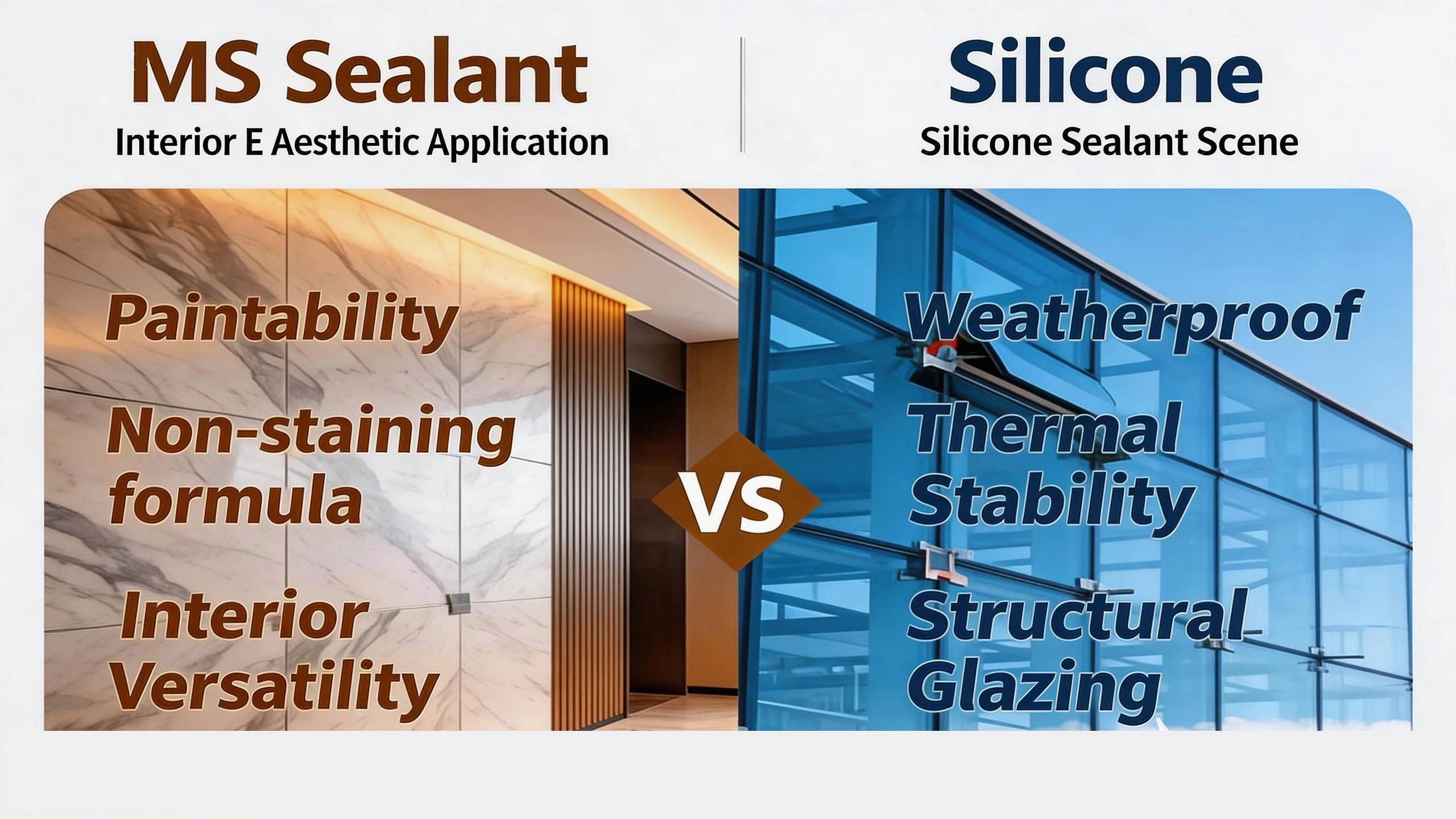
MS Sealant vs. Silicone: Which is Right for Your Construction Project?
HY-2100
How should the sealant be stored?
Store in a cool, dry place below 27℃. Avoid direct sunlight and keep the container sealed before use.
Distributor Partnership
Can you support technical training?
Yes. Online or on-site technical training can be arranged for distributors and project teams.
HY732
Can this sealant be used in bathrooms and kitchens?
Yes, it is an excellent choice for bathrooms, kitchens, lavatories, and other humid environments due to its anti-fungal and mildew-resistant properties.
HY995
What materials can HY995 bond?
HY995 Crystal Clear MS Polymer Adhesive provides excellent adhesion to a wide range of materials including glass, mirror, metal, aluminum, stainless steel, plastic (PVC, ABS, nylon), rubber, wood, leather, ceramic tiles, natural stone, and concrete. It is suitable for both bonding and sealing applications.
HY-939
Does the sealant shrink after curing?
No. HY939 does not shrink after curing and maintains long-term elasticity.
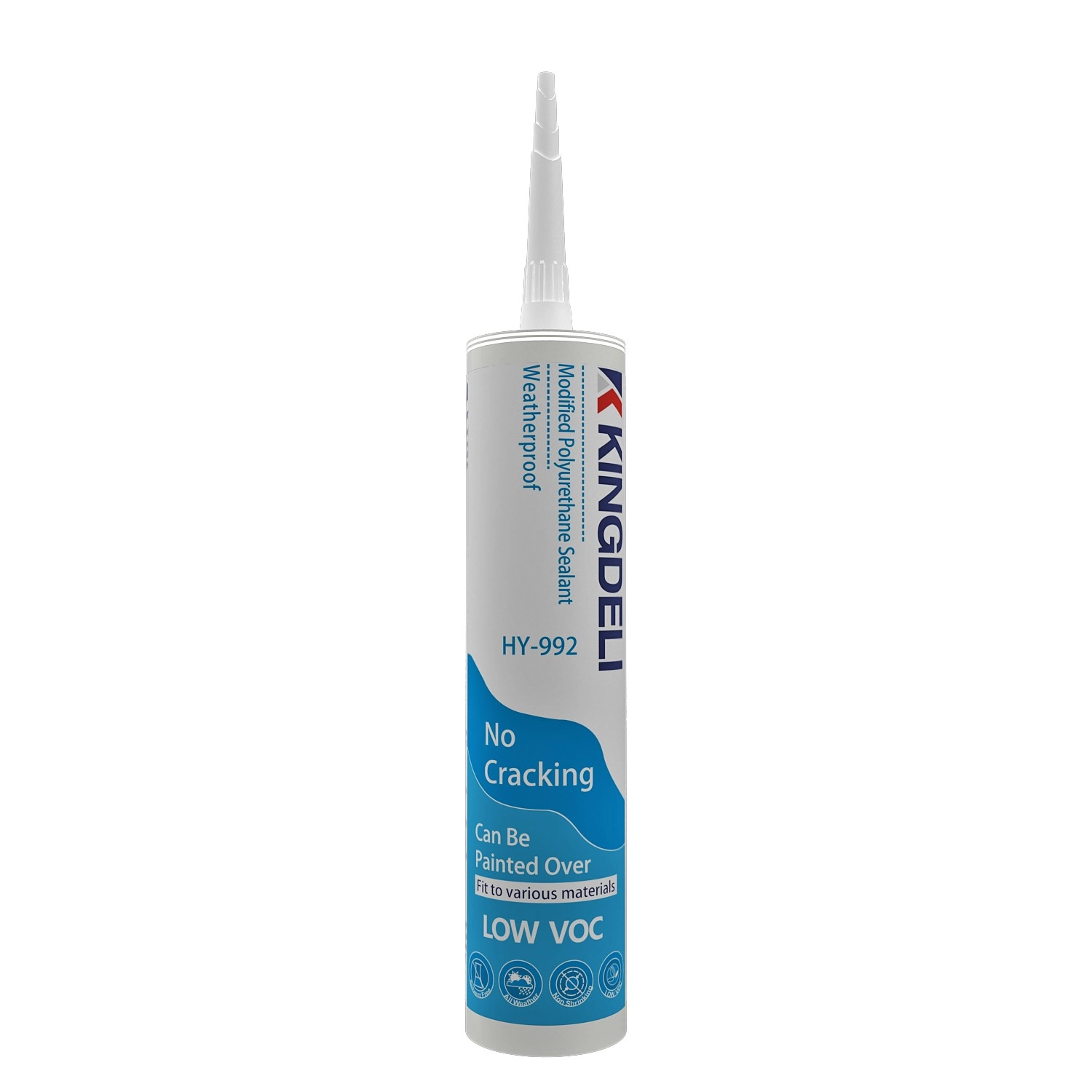
HY992 Modified Polyurethane Construction Sealant
HY992 Modified Polyurethane Sealant is a one-component, moisture-curing construction sealant designed for professional building and structural sealing applications. It provides excellent adhesion, weather resistance, and durable elasticity, making it suitable for a wide range of construction materials.
The formulation delivers strong bonding performance without corrosion or substrate contamination, while maintaining low VOC content for environmentally responsible construction projects.

HY995 Crystal Clear Ms Polymer Adhesive/Sealant
HY995 Crystal Clear Ms Polymer Adhesive/Sealant is a new generation MS Polymer adhesive / sealant formulated for all bonding and sealing applications where long term reliability is required. It has excellent bonding strength on various materials. It will cure to form a durable, flexible, waterproof seal.

HY997 High-Performance Anti-Microbial MS Polymer Sealant
HY997 MS polymer sealant for is is a premium one-component, neutral-curing modified silane sealant engineered for demanding interior applications. It offers a Class 20 movement capability, ensuring long-lasting flexibility and reliable performance under dynamic joint conditions. Curing at room temperature, HY997 delivers superior anti-microbial and mildew-resistant properties, maintaining hygienic and clean environments over time.
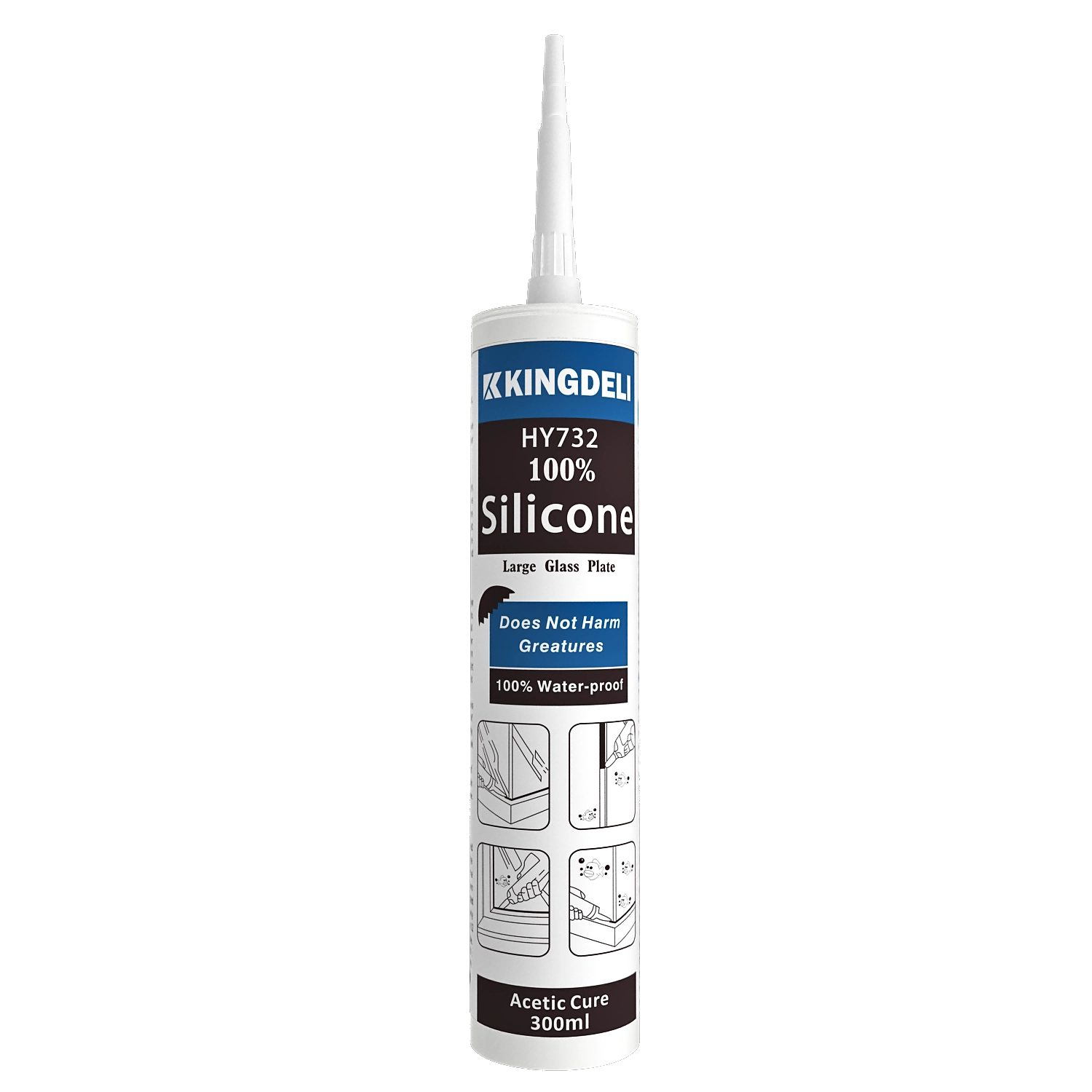
KINGDELI HY732 Professional Acetoxy Cure Silicone Sealant
KINGDELI HY732 is a professional-grade, one-component acetoxy cure silicone sealant designed for fast curing, strong adhesion, and long-lasting flexibility. Ideal for aquariums, glass applications, aluminum doors and windows, kitchens, and bathrooms, it provides reliable sealing performance with excellent anti-fungal protection in high-humidity environments.
Let’s Build Stronger Bonds with Quality Adhesives and Sealants
Have questions about the topic or need tailored sealant solutions for your project?
Our team is ready to provide expert guidance, product recommendations, and application support.
Innovating with Integrity, Bonding the World
Since 1998, KINGDELI has delivered trusted, sustainable sealant solutions that connect industries and inspire progress worldwide.
Whatsapp: +8618825946249
Kingdeli
Kingdeli
Kingdeli
Kingdeli
Kingdeli