











MS Silicone Sealant Storage, Shelf Life and Logistics

- Understanding Sealant Basics
- What is MS Silicone Sealant?
- How MS differs from other common sealants
- Best Practices for Storage and Shelf Life of MS Silicone Sealant
- Ideal storage conditions
- Identifying expired or compromised sealant
- Extending shelf life safely
- Logistics and Transportation Considerations
- Packaging and palletization best practices
- Temperature-controlled transport
- Customs, documentation and international standards
- Quality Control, Traceability and On-Site Handling
- Batch testing and traceability
- On-site storage and installation readiness
- KINGDELI: Supply Reliability and Product Portfolio
- Practical Storage Specs — Typical Recommendations
- Frequently Asked Questions (FAQ)
- 1. What temperature should I store ms silicone sealant at?
- 2. How long is ms silicone sealant good for?
- 3. Can I use sealant after it has been frozen?
- 4. Do I need temperature-controlled shipping for ms polymer sealant?
- 5. How should I store partially used cartridges?
- 6. How can I verify a batch on arrival?
- Contact & Next Steps
I write from 27+ years working with sealants and adhesives manufacturers and end-users. In this article I summarize the storage, shelf-life and logistics practices that materially reduce failures in the field for ms silicone sealant (also called MS polymer sealant). The guidance is practical, tested across multiple supply chains, aligned with common standards such as sealant industry guidance and ASTM/ISO frameworks, and intended to be verifiable against product datasheets and national regulations.
Understanding Sealant Basics
What is MS Silicone Sealant?
When I say ms silicone sealant I refer to MS (modified silane or MS polymer) materials—one-component, moisture-curing hybrid polymers that combine properties of silicones and polyurethanes. They are often marketed as MS polymer sealant because the chemistry is distinct from classic acetoxy or neutral cure silicones. MS polymers cure by reaction with ambient moisture, forming an elastomer with high adhesion and low odor.
How MS differs from other common sealants
Understanding differences informs storage and logistics decisions. Below I summarize typical characteristics for the four most common classes I work with: MS polymer, neutral silicone, acetic silicone and polyurethane.
| Property | MS Polymer Sealant | Neutral Silicone | Acetic Silicone | Polyurethane Sealant |
|---|---|---|---|---|
| Typical shelf life (unopened) | 6–18 months (commonly 12 months) | 12–24 months | 12–24 months | 6–12 months |
| Storage temp | 5–25 °C recommended | 5–25 °C | 5–25 °C | 5–25 °C |
| Odor on cure | Low/none | Low | Vinegar-like (acetic) | Moderate |
| Moisture cure | Yes | Yes | Yes | No (moisture tolerant) |
| Typical packaging | Cartridges, sausages, pails | Cartridges, tubes | Cartridges | Pails, cartridges |
These ranges are typical; always confirm with the manufacturer's technical data sheet (TDS). For general background information on sealants see the project-level overview at Wikipedia.
Best Practices for Storage and Shelf Life of MS Silicone Sealant
Ideal storage conditions
From my audits of production and warehouse operations, the most common failure mode for degraded ms silicone sealant is incorrect storage temperature or moisture exposure before opening. Follow these practical rules:
- Keep unopened cartridges and sausages in their original packaging, stored horizontally or upright as the manufacturer recommends.
- Maintain a stable ambient temperature between 5 °C and 25 °C (41–77 °F). Avoid repeated freeze-thaw cycles—freezing accelerates binder separation and can irreversibly damage product performance.
- Store in a dry place, away from direct sunlight and radiators. High humidity can start surface skinning in partially used containers.
- Practice FIFO (first-in–first-out) and label pallets with production / expiry dates to prevent long-term storage over the stated shelf life.
These recommendations are consistent with industry practice and many manufacturers' TDS documents; for regulatory context see the ASTM standard information page ASTM C920 (elastomeric joint sealants) which guides performance expectations.
Identifying expired or compromised sealant
Before use, I check sealant batches visually and by simple functional tests. Signs of compromised ms silicone sealant include:
- Phase separation or unusual sediment in sausages/cartridges.
- Thickened, stringy or dried appearance when extruded; poor tooling properties.
- Off-odor (not typical for neutral-cure MS polymers) or rapid skin formation in unopened containers.
If in doubt, perform a small cure test: extrude a bead, allow it to cure under expected relative humidity and temperature, then check adhesion and hardness after 24–72 hours. When available, compare to the product's cured performance in the TDS.
Extending shelf life safely
There are no guaranteed hacks to extend shelf life beyond the manufacturer's stated period; however I recommend operational controls that preserve life:
- Order in quantities that match projected consumption to avoid long storage times.
- Keep unopened stock in climate-controlled warehousing; if seasonal temperature swings are unavoidable, insulate pallets or store in cold rooms that maintain a stable non-freezing temperature.
- For partially used cartridges, use airtight plugs, reduce trapped air and store refrigerated (but not frozen) if the manufacturer permits. Note: refrigeration may lengthen open-tube life but can cause condensation when returned to room temperature—allow gradual acclimatization.
Logistics and Transportation Considerations
Packaging and palletization best practices
Appropriate packaging reduces damage and moisture ingress during transport. I advise:
- Using shrink-wrapped pallets with desiccant pouches inside outer cartons if shipping to high-humidity regions.
- Securing cartridges so they are not crushed—use internal dividers or molded trays for boxed cartridges.
- Labeling every pallet with production date, lot number and recommended shelf life so importers and warehouses can rotate correctly.
Temperature-controlled transport
Most MS polymer sealants are not classified as dangerous goods under IATA or IMDG for typical commercial grades, but they are sensitive to temperature extremes. For long sea transit (30+ days) or shipments to very hot climates, I recommend climate-controlled containers or at minimum insulated containers. For air freight, consult IATA Dangerous Goods Regulations to confirm classification—MS polymers typically ship as non-dangerous but some formulations with solvents or special additives may have restrictions.
Customs, documentation and international standards
Ensure technical documentation accompanies shipments: TDS, SDS (safety data sheet), and certificate of analysis (COA). These documents facilitate customs clearance and reassure importers about VOC content, flammability and composition. For quality system credibility, point customers to ISO accreditations (e.g., ISO 9001).
Quality Control, Traceability and On-Site Handling
Batch testing and traceability
I require manufacturers and large installers to retain sample jars from each production batch for at least the guaranteed shelf life. Routine checks I perform on returned samples include viscosity, cure speed, adhesion tests to representative substrates and shore hardness after cure. This approach is in line with standard industry QA practices such as those embedded in ASTM and national standards. For reference on best practice in sealant testing see the industry standards resource: ASTM C920.
On-site storage and installation readiness
Jobsite conditions are often the weak link. My site checklists include:
- Storing unopened material in a shaded, dry area or a jobsite lockbox. Avoid leaving cartridges in direct sunlight or in hot trucks.
- Acclimating product to installation temperature—if stored cool, bring to room temperature slowly before use to avoid condensation inside cartridges.
- Confirming substrate temperature and moisture before application; MS polymers cure with moisture, so very low humidity or very cold substrates slow cure significantly.
KINGDELI: Supply Reliability and Product Portfolio
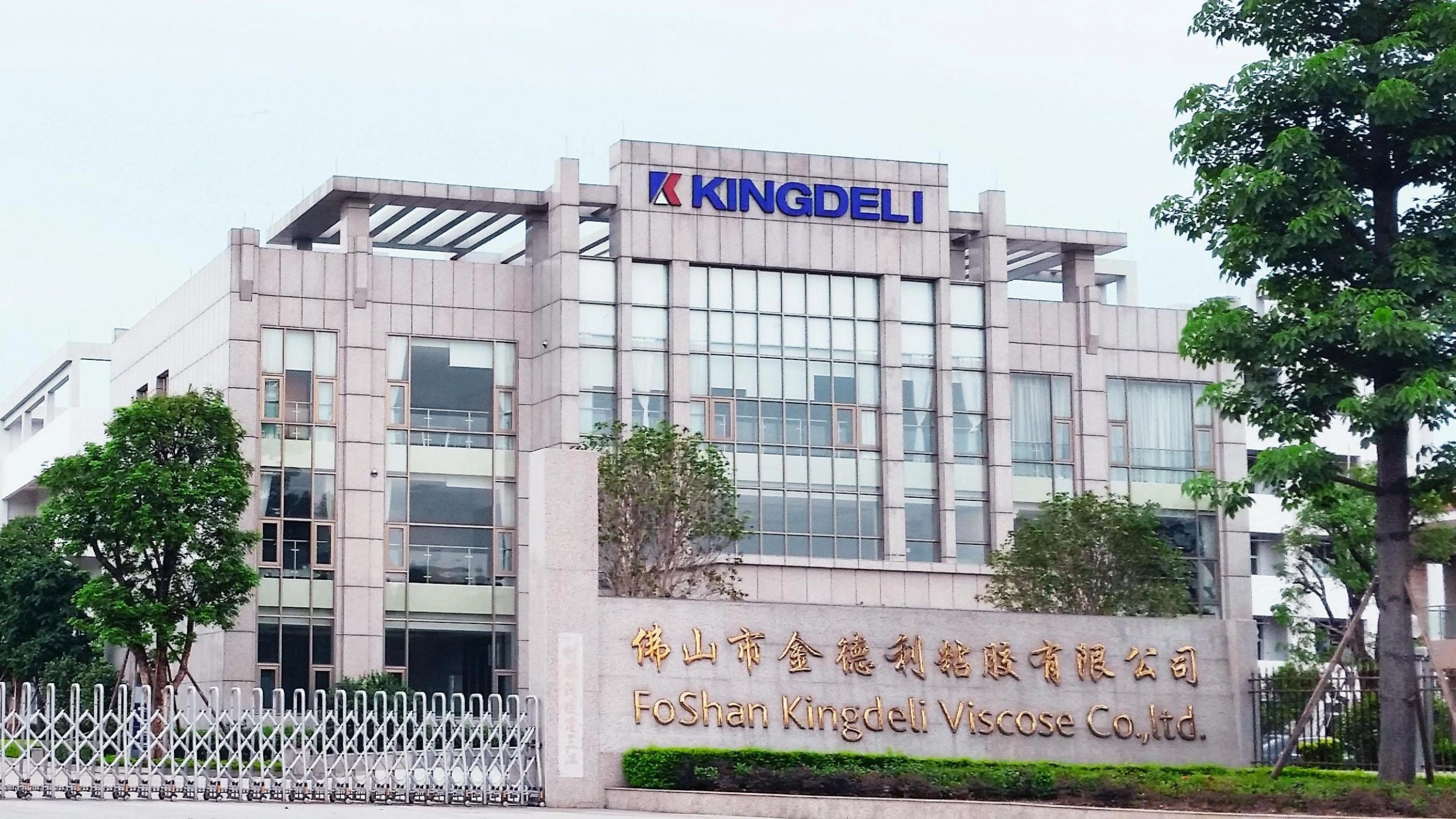
Since its establishment in 1998, KINGDELI has stood as a global leader in the high-performance sealant, adhesive, and coating industry. Headquartered in Foshan, China, our state-of-the-art 66,000 m² facility is powered by fully automated production lines with an annual capacity exceeding 100,000 tons, ensuring a consistent and robust supply for partners worldwide.
As a recognized National High-Tech Enterprise and a key contributor to the National Standard GB/T 29755-2013, we unite advanced manufacturing power with technical excellence. Our comprehensive product portfolio—spanning Neutral & Acetic Silicone, Polyurethane, MS Polymer, and No More Nails adhesives—is engineered to meet strict international standards, including ISO 9001, ISO 14001, CE, and ASTM.
With over 27 years of industry expertise and a trusted presence in 50+ countries, KINGDELI is more than a manufacturer; we are a dedicated solution provider. We offer end-to-end OEM/ODM support, sustainable low-VOC formulations, and professional technical service. At KINGDELI, we are driven by innovation and integrity, building trust and sealing the future for customers around the globe.
Brief summary of KINGDELI advantages and main products: KINGDELI offers strong global logistics capability, deep formulation expertise (neutral silicone sealant, acetic silicone sealant, acrylic sealant, silicone glazing sealant, No More Nails adhesive, polyurethane sealant, MS polymer sealant, RTV gasket maker, epoxy tile grout, self-leveling sealant), rigorous QC and certifications. This means customers gain a reliable supply chain for ms silicone sealant with technical backup on storage, shelf life and jobsite support.
Practical Storage Specs — Typical Recommendations
Below I give commonly accepted storage and shelf-life guidelines you can use to set internal policies. These numbers are typical industry values; always check the product TDS/SDS for the exact specification.
| Product Type | Recommended Storage Temp | Typical Unopened Shelf Life | >
|---|---|---|
| MS Polymer (ms silicone sealant) | 5–25 °C (41–77 °F) | 6–18 months (commonly 12 months) |
| Neutral Silicone | 5–25 °C | 12–24 months |
| Polyurethane | 5–25 °C | 6–12 months |
Sources for the general ranges above include industry technical data practices and product TDSs; for regulatory context and performance requirements see ASTM C920 and the general sealant overview at Wikipedia.
Frequently Asked Questions (FAQ)
1. What temperature should I store ms silicone sealant at?
Store unopened ms silicone sealant between 5 °C and 25 °C (41–77 °F). Avoid freezing and direct heat. This is a practical industry standard; confirm on the product TDS.
2. How long is ms silicone sealant good for?
Typical unopened shelf life is 6–18 months (commonly 12 months). The exact expiry is printed on the cartridge or box; use FIFO to avoid exceeding this time.
3. Can I use sealant after it has been frozen?
Freezing can irreversibly damage polymer structure and lead to poor cure and adhesion. If a product has frozen, perform a physical and cure test before use; generally, discard if freezing occurred.
4. Do I need temperature-controlled shipping for ms polymer sealant?
Not always, but for long transit times, very hot climates, or High Quality formulations, climate-controlled shipping or insulated packaging is advisable to prevent heat degradation and premature skinning.
5. How should I store partially used cartridges?
Use airtight caps or plugs, store upright with the nozzle up to reduce air exposure, and if permitted by the manufacturer, store refrigerated (not frozen) for short periods. Acclimate to room temperature before reuse.
6. How can I verify a batch on arrival?
Check labels and lot numbers, perform a visual inspection and a simple extrude & cure test on a small bead to compare cure time and adhesion to a reference. Keep COA and SDS for customs and QC traceability.
Contact & Next Steps
If you need product-specific storage instructions, COAs, SDS or logistics support for ms silicone sealant, contact KINGDELI's technical sales team. We provide tailored OEM/ODM formulations, low-VOC options and end-to-end supply chain support. Request a consultation or product datasheet to match storage and shipping protocols to your region and application.
Useful references: ASTM C920 (elastomeric joint sealants) — https://www.astm.org/Standards/C920.htm; Sealant overview — https://en.wikipedia.org/wiki/Sealant; IATA Dangerous Goods Regulations — https://www.iata.org/en/programs/cargo/dgr/; ISO 9001 — https://www.iso.org/iso-9001-quality-management..
Top 10 ms polymer sealant Manufacturers and Supplier Brands in Hardware and Building Materials
Top 10 acrylic sealant Manufacturers and Supplier Brands in Hardware and Building Materials
OEM/ODM ms polymer adhesive sealant Manufacturers and Suppliers
Best acrylic sealant for glass manufacturers and supplier brands in Automotive Solutions
HY-966
Is HY-966 waterproof?
Yes. Once cured, HY-966 provides strong water resistance, making it suitable for areas exposed to moisture.
HY722B
What is the shelf life of the product?
The shelf life is 12 months when stored in unopened cartridges under cool, dry conditions.
HY982
How is the product applied?
HY982 is supplied in bucket packaging and should be applied using a trowel, spatula, or serrated spreader. Stir well before use and spread evenly to ensure full surface contact.
HY993
How should HY993 be stored?
Keep in a dry, shaded environment at moderate temperatures. Avoid exposure to freezing or high heat for prolonged periods.
HY739
Is it suitable for use on metal or stone?
It works well on many surfaces, but acetic silicone may corrode sensitive metals and alkaline materials—compatibility testing is recommended.
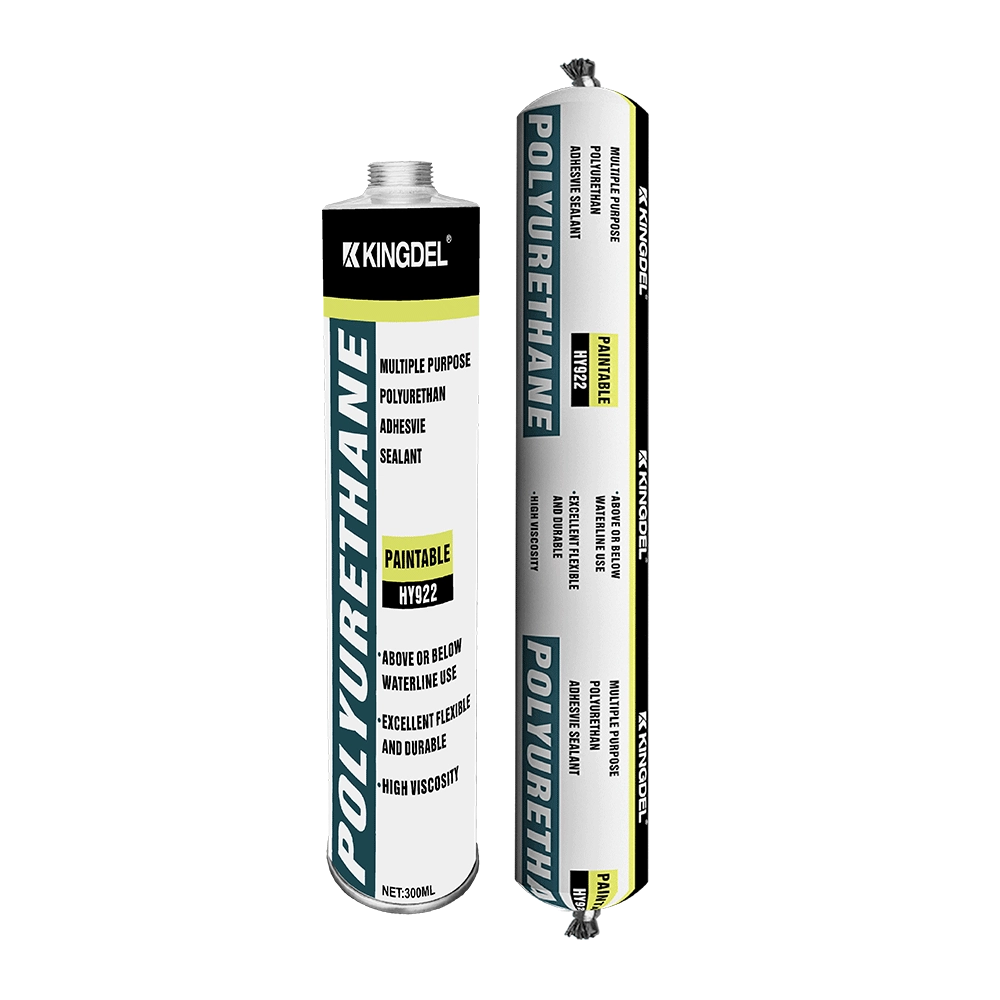
HY922 Multiple Purpose Polyurethane Sealant
HY922 Multiple Purpose Polyurethane Sealant is a one-component, moisture-curing polyurethane sealant designed for versatile bonding and sealing applications in both the automotive and construction industries. It cures to form a flexible yet tough elastomeric joint with excellent adhesion to a wide range of substrates. The formulation is non-corrosive, solvent-free, and produces a smooth, bubble-free finish during application.
HY922 delivers fast surface drying and quick positioning, improving installation efficiency while maintaining long-term durability. With strong weather resistance and good creep resistance, it performs reliably in demanding indoor and outdoor environments, including moist and partially submerged conditions.
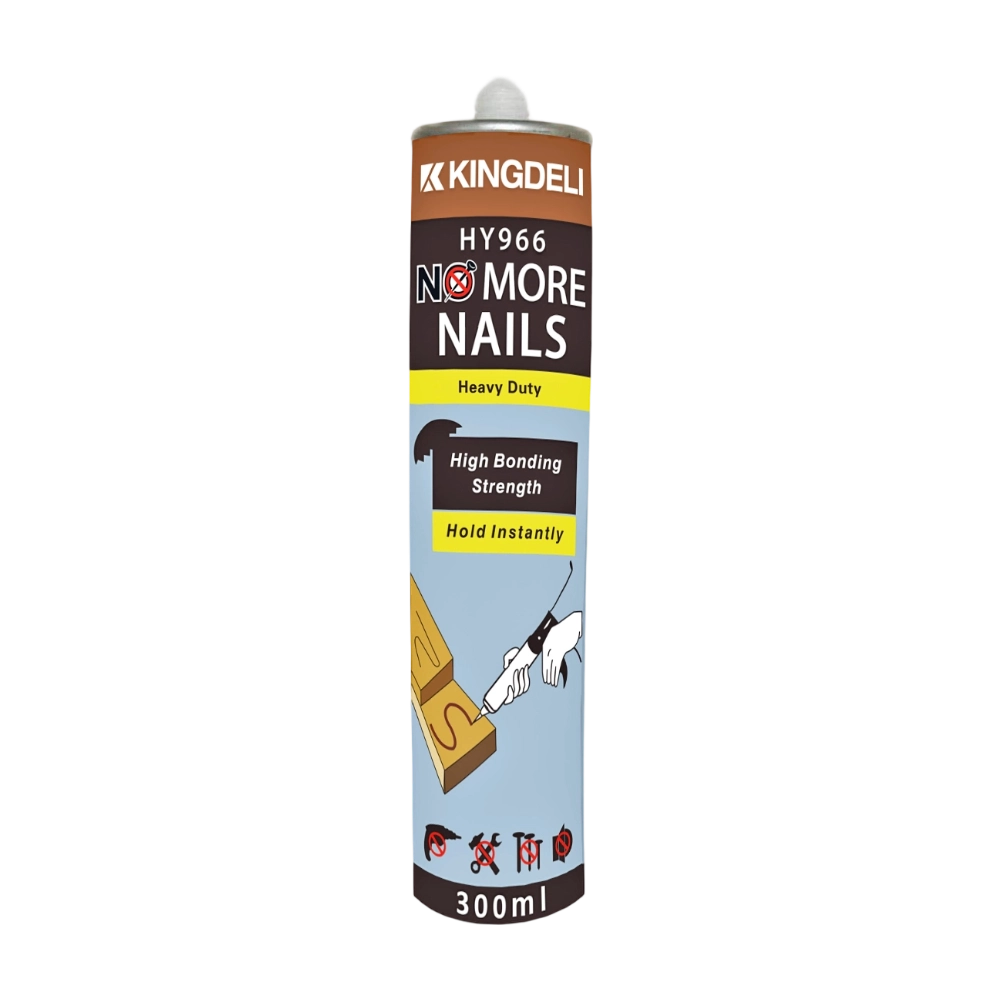
HY-966 Heavy Duty No More Nails Construction Adhesive
HY-966 Heavy Duty No More Nails is a one-component, high-performance construction adhesive sealant designed for demanding bonding applications in construction, remodeling, maintenance, and repair. Its instant grab formulation secures materials immediately, significantly reducing the need for bracing or mechanical fixing during installation.
HY-966 cures reliably in moist environments and delivers durable adhesion across a wide range of substrates. It provides excellent resistance to water, temperature variation, and aging, ensuring long-term performance in interior construction applications.
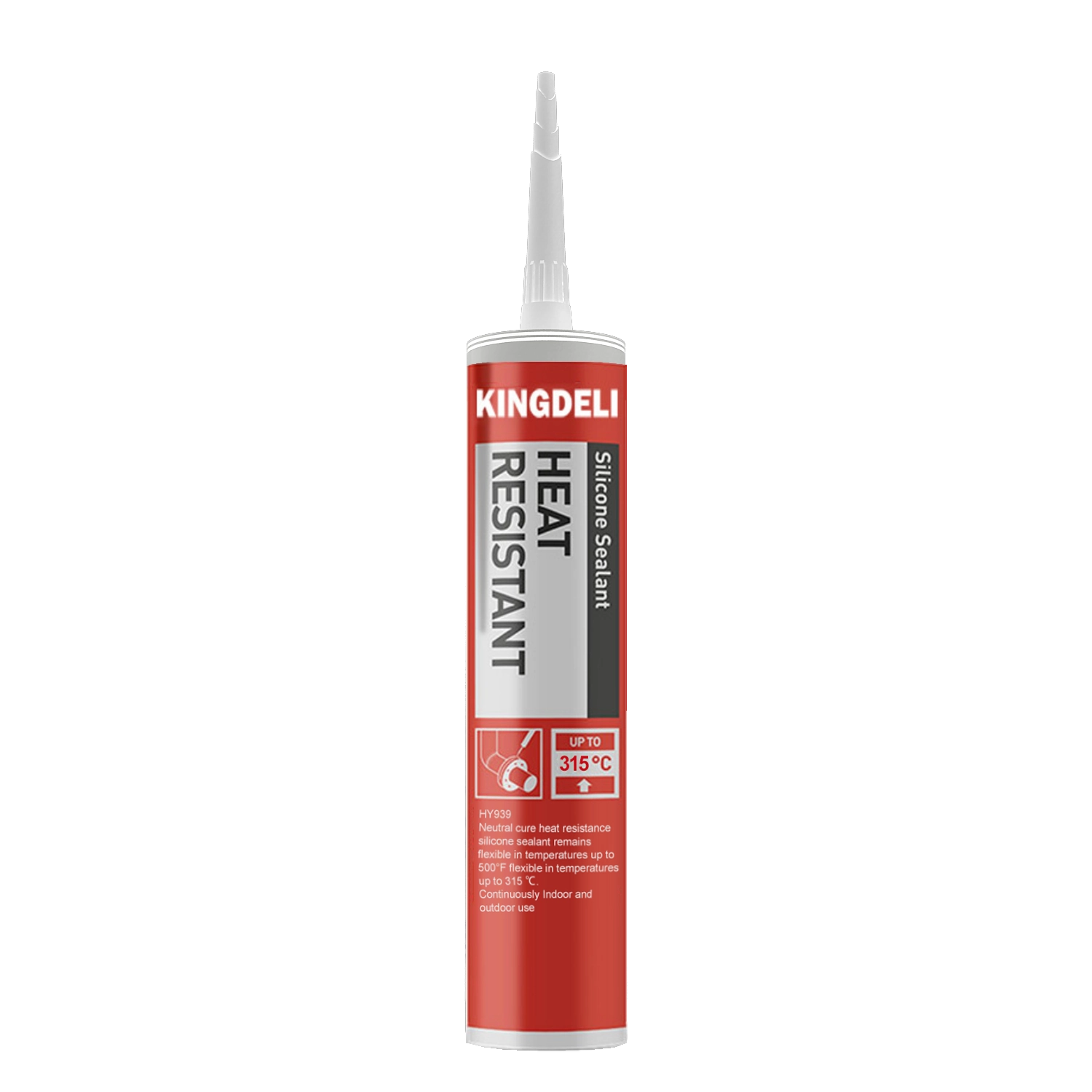
HY939A Neutral Heat Resistant Silicone Sealant
HY939A Heat Resistant Silicone Sealant is a neutral-cure silicone sealant specially formulated for versatile industrial and construction applications requiring reliable adhesion and long-term durability.
The sealant provides strong, non-corrosive adhesion to a variety of substrates, including glass, metal, gypsum board, marble, and certain plastics, making it ideal for both structural and sealing purposes.
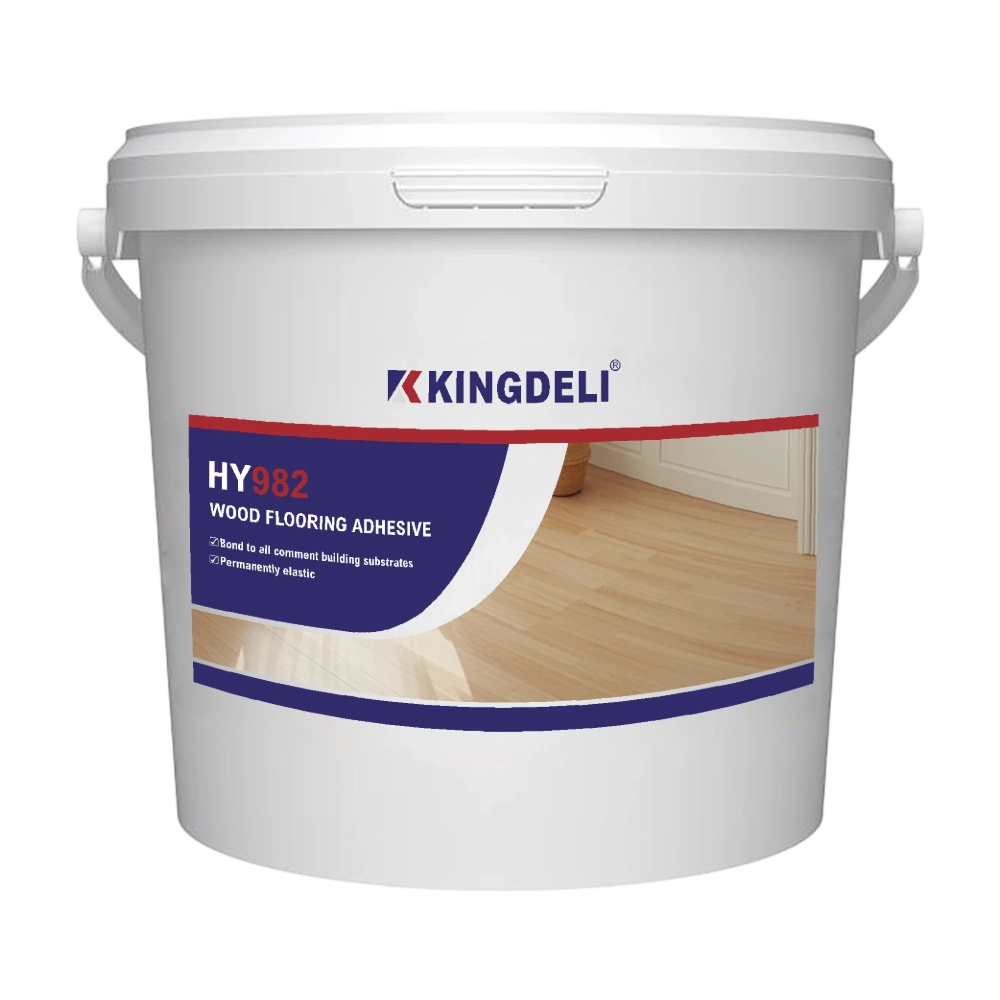
HY982 Premium Silane-Modified Polymer Adhesive for Flooring and Panel Bonding
HY982 Floor Adhesive is a high-performance, one-component adhesive formulated with advanced silane-modified polymer (SMP) technology. It is paintable, non-staining, and environmentally friendly, offering exceptional bonding strength without the need for a primer.
Designed for modern interior installations, HY982 Floor Adhesive provides excellent adhesion to wood, metal, stone, sintered slabs, glass, ceramics, and many other common building materials—making it the ideal choice for flooring installation and panel bonding applications crystal clear formulation.
Let’s Build Stronger Bonds with Quality Adhesives and Sealants
Have questions about the topic or need tailored sealant solutions for your project?
Our team is ready to provide expert guidance, product recommendations, and application support.
Innovating with Integrity, Bonding the World
Since 1998, KINGDELI has delivered trusted, sustainable sealant solutions that connect industries and inspire progress worldwide.
Whatsapp: +8618825946249
Kingdeli
Kingdeli
Kingdeli
Kingdeli
Kingdeli