


What are key specs of professional acetoxy cure silicone sealant?
- 1. How fast will a professional acetoxy cure silicone sealant fully cure in a 10 mm deep joint at 23°C and 50% RH, and how can I safely accelerate cure without risking adhesion issues?
- 2. What realistic mechanical specs (tensile strength, elongation, Shore A hardness) should I expect on datasheets for professional acetoxy cure silicone sealant?
- 3. Which primers or adhesion promoters are required for acetoxy silicone on aluminum, anodized aluminum, painted metal, and concrete to avoid corrosion or failure?
- 4. Can acetoxy cure silicone sealant be used on porous substrates (brick, concrete, natural stone) without staining, and what preparation prevents acid staining?
- 5. How should I design joint width/depth, movement capability and tooling practice to avoid adhesion failure and tearing on façade joints?
- 6. What storage, shelf-life, and on-site handling controls should I enforce to guarantee consistent cure and what simple QA checks verify lot quality before a large install?
- Concluding summary: Advantages of professional acetoxy cure silicone sealant
Professional Acetoxy Cure Silicone Sealant: Key Specs & Buyer Q&A
This technical guide answers six frequently asked, long-tail questions beginners and specifiers face when selecting a professional acetoxy cure silicone sealant for glazing, façades, and general sealing. Answers cite common industry practice, standards such as ASTM C920 and ISO 11600, and measurable specifications found in manufacturer datasheets.
1. How fast will a professional acetoxy cure silicone sealant fully cure in a 10 mm deep joint at 23°C and 50% RH, and how can I safely accelerate cure without risking adhesion issues?
Typical cure behavior for acetoxy (acetic-acid releasing) silicone sealants is strongly dependent on humidity because the cure is a moisture-driven condensation reaction. Manufacturer datasheets commonly report:
- Skin formation (tack-free time): typically 5–30 minutes at 23°C/50% RH.
- Cure rate through the mass: typically 1–3 mm per 24 hours under 23°C and 50% RH; acetoxy silicones often cure slightly faster than some neutral-cure formulations because of the chemistry.
For a 10 mm deep joint you should therefore expect full cure through the center in roughly 3–10 days depending on local relative humidity and temperature. Cooler or drier environments slow cure dramatically; hot humid conditions speed it.
Safe acceleration tactics:
- Increase local relative humidity—use a temporary humidifier or misting (lightly and only on surrounding air, not direct on the uncured bead) to raise RH to 60–80% if ambient is very dry. This increases cure rate without altering chemistry.
- Raise ambient temperature moderately (e.g., from 10°C to 20–25°C) to accelerate reaction kinetics, provided the substrate and stored material are rated for that temperature range.
- Avoid applying infrared heaters directly on the sealant surface or using forced hot air at very high temperatures as this can skin over the surface and trap uncured material below, creating adhesion failures or voids.
- Do not add solvents, catalysts, or other additives on-site. These will alter cure chemistry and can reduce adhesion or mechanical properties.
Always test a small mock-up under the project’s exact environmental conditions and inspect adhesion and cure-through at 24, 72 hours and 7 days before large installs.
2. What realistic mechanical specs (tensile strength, elongation, Shore A hardness) should I expect on datasheets for professional acetoxy cure silicone sealant?
Manufacturer datasheets and independent test reports typically list the following ranges for general-purpose and glazing-grade acetoxy silicone sealants:
- Tensile strength (after full cure): commonly 1.0–3.5 MPa (150–500 psi) depending on formulation.
- Elongation at break: typically 200–700%; many glazing silicones specify >300% elongation.
- Shore A hardness (after full cure): commonly 15–40 Shore A.
- Movement capability: most non-structural silicones are rated for ±25% movement under ISO 11600 or ASTM classification; some specialty silicones are rated up to ±50%.
- Modulus at 100% elongation: expect low modulus values (e.g., 0.2–0.6 MPa) which give flexibility in cyclic service.
When comparing products, require datasheet test conditions and test standards. Key standards are ASTM C920 (elastomeric joint sealants) for performance classes and ISO 11600 for movement capability. Request cured sheet samples or independent lab test reports for tensile testing (ASTM D412 or equivalent) if the project is critical.
3. Which primers or adhesion promoters are required for acetoxy silicone on aluminum, anodized aluminum, painted metal, and concrete to avoid corrosion or failure?
Acetoxy cure releases acetic acid while curing, which is corrosive to certain metals (for example, copper, brass, zinc, and some anodized finishes) and can lead to staining or corrosion on untreated metal surfaces. General guidance:
- Glass, glazed ceramics and many painted surfaces: many acetoxy silicones bond primerless if the substrate is clean, dry, and grease-free. A solvent wipe with isopropyl alcohol or acetone (followed by full evaporation) is common practice.
- Aluminum and anodized aluminum: test first. Some anodized finishes tolerate acetoxy cure, but to prevent corrosion and improve long-term adhesion use a manufacturer-recommended silane-based primer or an adhesion promoter compatible with acetic cure silicones. If the metal is decorative (copper, brass, zinc), avoid acetoxy sealants—use neutral-cure silicone instead.
- Painted or powder-coated metals: adhesion depends on the coating chemistry. Perform a compatibility test; where adhesion is marginal, use a substrate-specific primer recommended by the sealant manufacturer.
- Concrete, natural stone, and porous substrates: acetoxy sealants can stain or etch lime-containing substrates due to acetic acid. To prevent staining, use a barrier (e.g., backer rod + bond-breaker tape) and consider a neutral cure or a specifically formulated acetoxy product labeled as non-staining. When porosity or adhesion is a concern, use a silane primer designed for silicone on masonry.
Always follow the sealant manufacturer’s primer matrix. If you cannot obtain a definitive primer match, perform an adhesion test panel (minimum 72 hours cure) and include accelerated weathering if the joint is critical.
4. Can acetoxy cure silicone sealant be used on porous substrates (brick, concrete, natural stone) without staining, and what preparation prevents acid staining?
Acetic acid released during cure can react with alkaline components in fresh or untreated concrete, lime, and some natural stones, producing white salts or surface etching/staining. To use acetoxy silicone on porous substrates while minimizing staining:
- Prefer a neutral-cure silicone if the substrate contains lime, or on polished stone and metals susceptible to corrosion. Neutral-cure formulations (oxime, alkoxy, or neutral acetoxy alternatives) are less likely to stain.
- If using acetoxy, isolate the joint with non-reactive back-up materials: insert closed-cell polyethylene backer rod and use bond-breaker tape to ensure two-sided adhesion is prevented and to reduce sealant contact with porous face edges.
- Seal or prime the porous surface using a suitable silane or masonry primer specified by the sealant manufacturer. Priming reduces substrate uptake and limits acid migration into the pore structure.
- Run a small test bead on an inconspicuous area and inspect after full cure (7 days) for efflorescence or staining before committing to large-scale installation.
When specifiers require guaranteed non-staining performance on sensitive stone or heritage materials, specify a neutral-cure silicone or seek a product specifically tested and labeled as non-staining on the substrate in question.
5. How should I design joint width/depth, movement capability and tooling practice to avoid adhesion failure and tearing on façade joints?
Correct joint design and tooling are fundamental to long-term performance of any elastomeric sealant. Key practical rules for professional acetoxy silicone sealant:
- Depth-to-width ratio: maintain the recommended depth equal to half the joint width (width:depth = 2:1). For example, a 12 mm wide joint should have a 6 mm depth. This ratio is standard for silicone glazing and façade joints and controls stress distribution.
- Minimum and maximum dimensions: common practice is a minimum joint width of 6–8 mm for movement joints and not to exceed 25 mm unless the sealant and design allow. Very narrow joints (<6 mm) are prone to tooling-induced shrinkage and bond failure.
- Movement capability: specify a sealant rated for the expected differential movement. Most general-purpose acetoxy silicones are rated for ±25% movement (ISO 11600 F/G 25 LM). For joints expected to see larger thermal or dynamic movement, use silicones with higher movement ratings.
- Backing material: use closed-cell polyethylene backer rod sized to compress about 25–30% to provide a firm bond-breaker and correct bonding profile. Never use open-cell foam that will absorb sealant components or moisture.
- Two-sided adhesion vs three-sided adhesion: install a bond-breaker or use tape to prevent three-sided adhesion, which causes premature failure and tearing under movement.
- Tooling: tool the sealant to a smooth concave profile within the sealant’s skin time window to ensure contact and remove voids. Avoid over-agitation after skin forms, and do not disturb joints during the skin formation period.
Design joints per recognized guidance and ask suppliers for product-specific joint dimension tables. For rehabilitation projects, inspect existing joint geometry and adjust width to match movement requirements and new substrate conditions.
6. What storage, shelf-life, and on-site handling controls should I enforce to guarantee consistent cure and what simple QA checks verify lot quality before a large install?
Storage and handling directly affect performance. Standard recommendations:
- Shelf life: most professional acetoxy silicone cartridges have a shelf life of 12 months when stored unopened between about 5–25°C. Always check the lot/batch date on the cartridge or tube.
- Storage: store in original packaging, out of direct sunlight, and avoid freezing or high heat (>30°C) which can change viscosity or cause premature partial cure inside cartridges.
- On-site handling: use first-in/first-out (FIFO) stock rotation and avoid mixing old and new lots in critical joints. Replace damaged or partially cured cartridges.
Quick on-site QA checks before committing to a large installation:
- Batch check bead: extrude a 100–200 mm sample bead on a non-critical substrate and monitor skin time and adhesion at 24, 72 hours, and 7 days. Compare to the datasheet values.
- Cure-through spot check: for joints similar to project depth, inspect cross-section after 7 days to confirm full cure through the section.
- Adhesion sanity test: pull a small cured bead to confirm cohesive failure (preferred) rather than adhesive failure. Adhesive failure indicates substrate or primer issues.
- Document environmental conditions: record temperature and relative humidity during installation; these numbers directly correlate to cure rate and final properties.
- Maintain SDS and technical data sheet (TDS) on-site. Verify VOC and safety provisions before use near sensitive equipment.
For critical projects, request manufacturer traceability, lot test certificates, or arrange independent lab testing to ASTM or ISO standards referenced in the procurement documents.
Concluding summary: Advantages of professional acetoxy cure silicone sealant
Professional acetoxy cure silicone sealants deliver fast skin formation, excellent adhesion to glass and many non-porous substrates without primer, wide service temperature resistance, and durable elasticity with high elongation and low modulus. They are cost-effective for glazing and many general sealing applications, conform well to cyclic movement when specified to the correct movement capability, and meet industry standards such as ASTM C920 and ISO 11600 when appropriately selected. However, acetic cure chemistry requires attention to substrate compatibility (metal corrosion risk and possible staining on porous lime-containing materials), primer selection on certain metals and masonry, and strict joint design and storage controls to ensure long-term performance.
If you need product selection, datasheet comparisons, or a site-specific recommendation and quote, contact us: www.kingdelisealant.com or info@kingdeliadhesive.com.
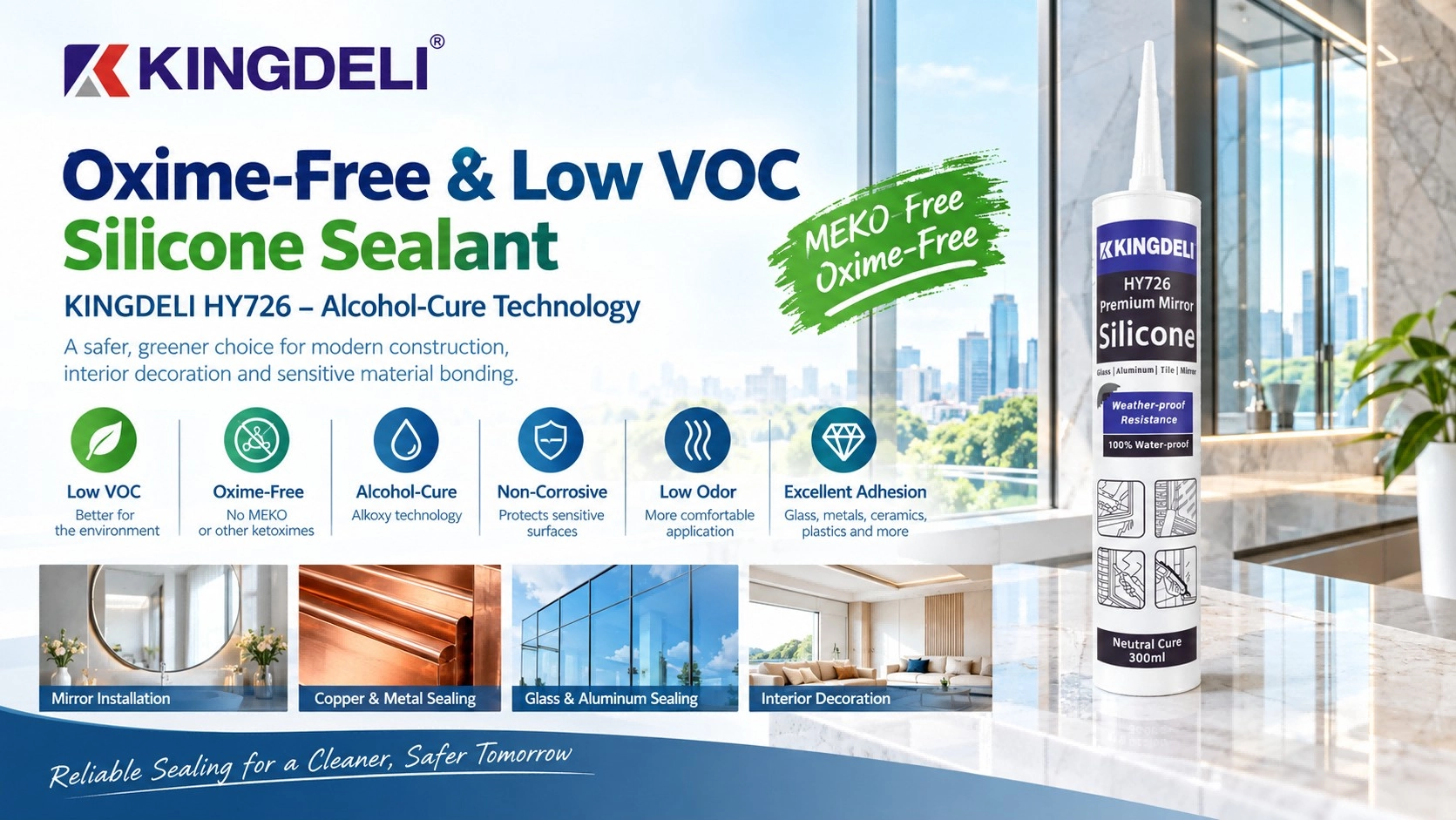
Oxime-Free & Low VOC Silicone Sealant: Discover KINGDELI HY726 Alcohol-Cure Technology
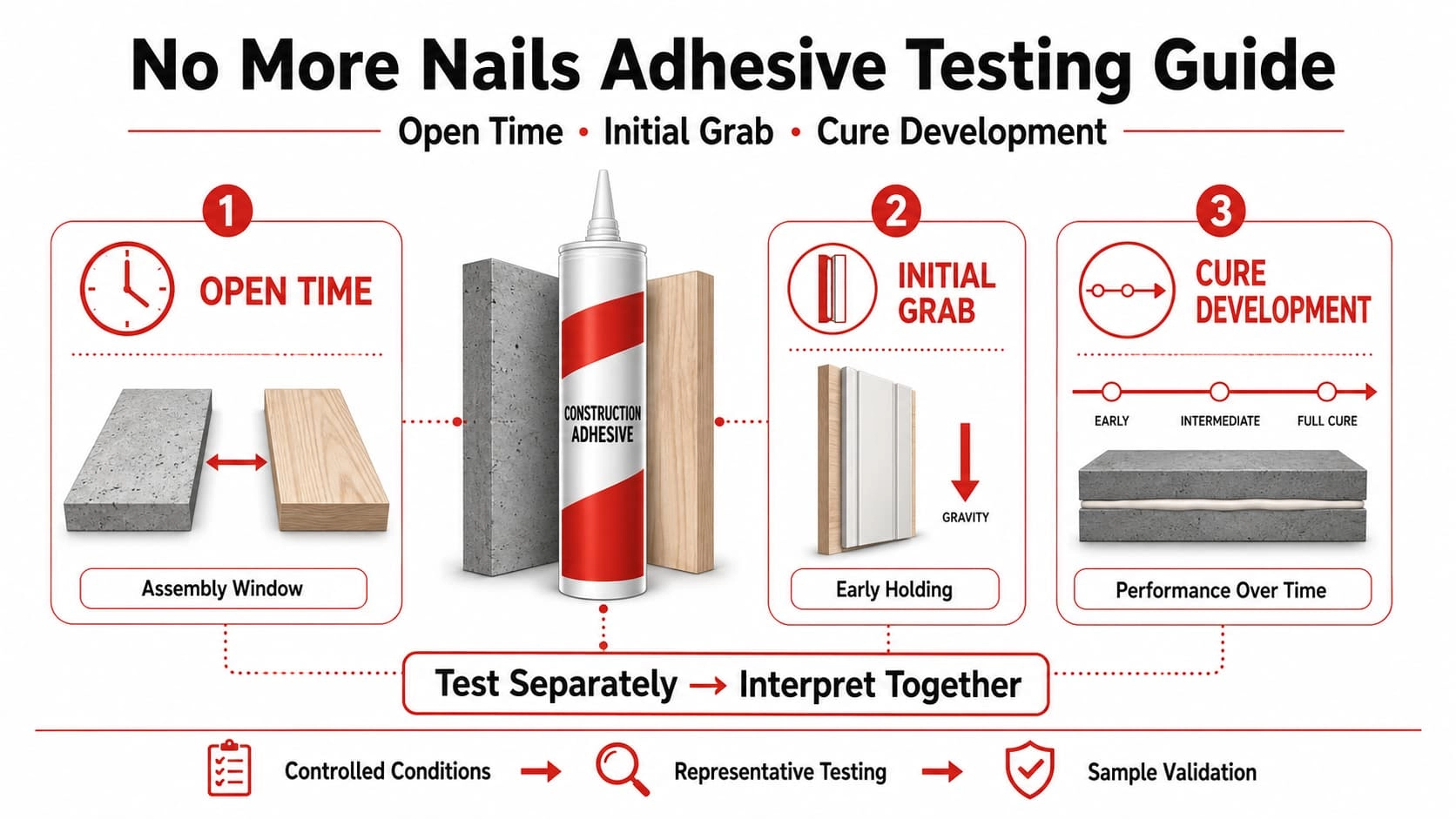
No More Nails Adhesive Open Time, Grab Strength, and Cure Testing Guide
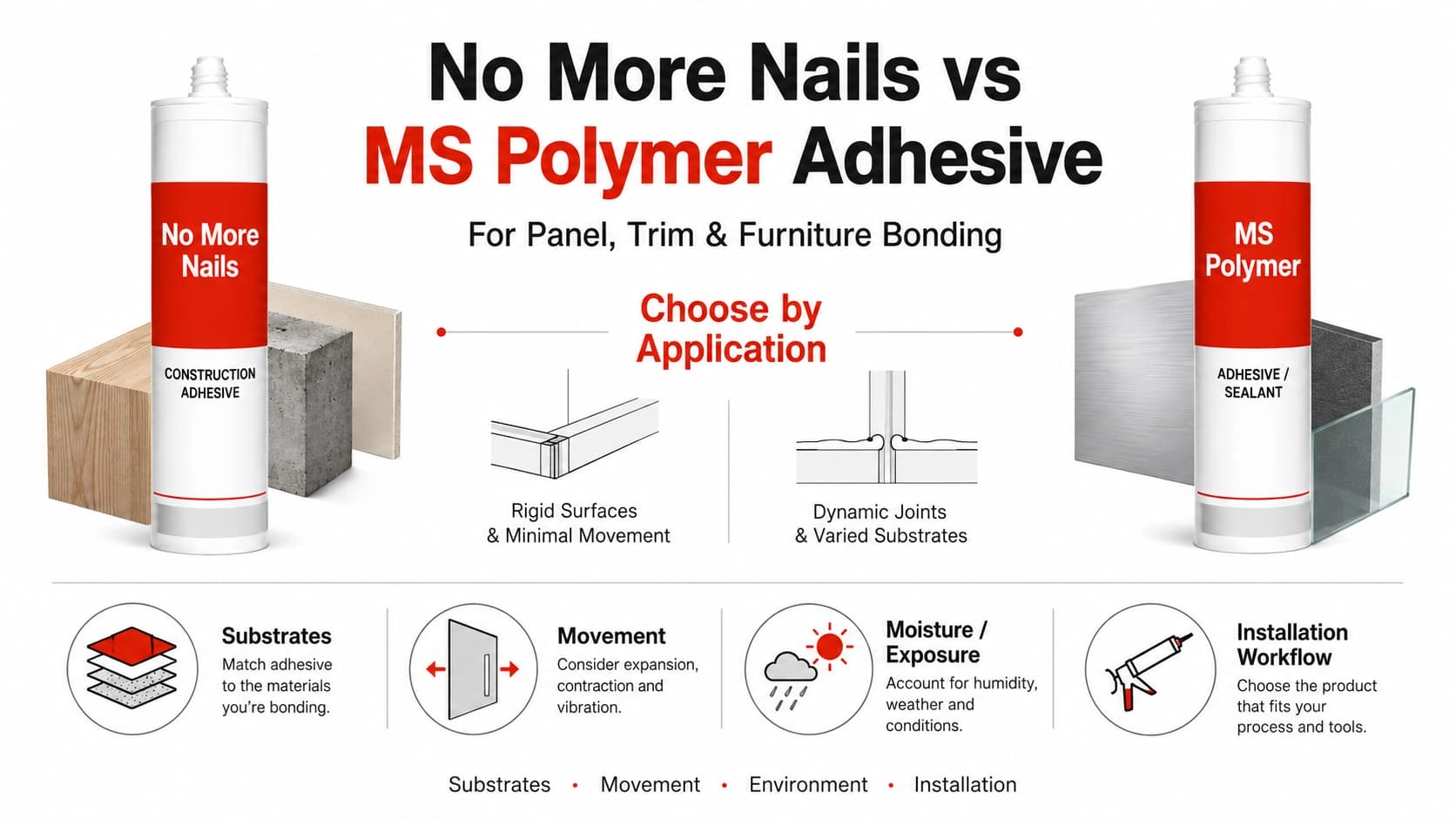
No More Nails vs MS Polymer Adhesive for Panel, Trim, and Furniture Bonding
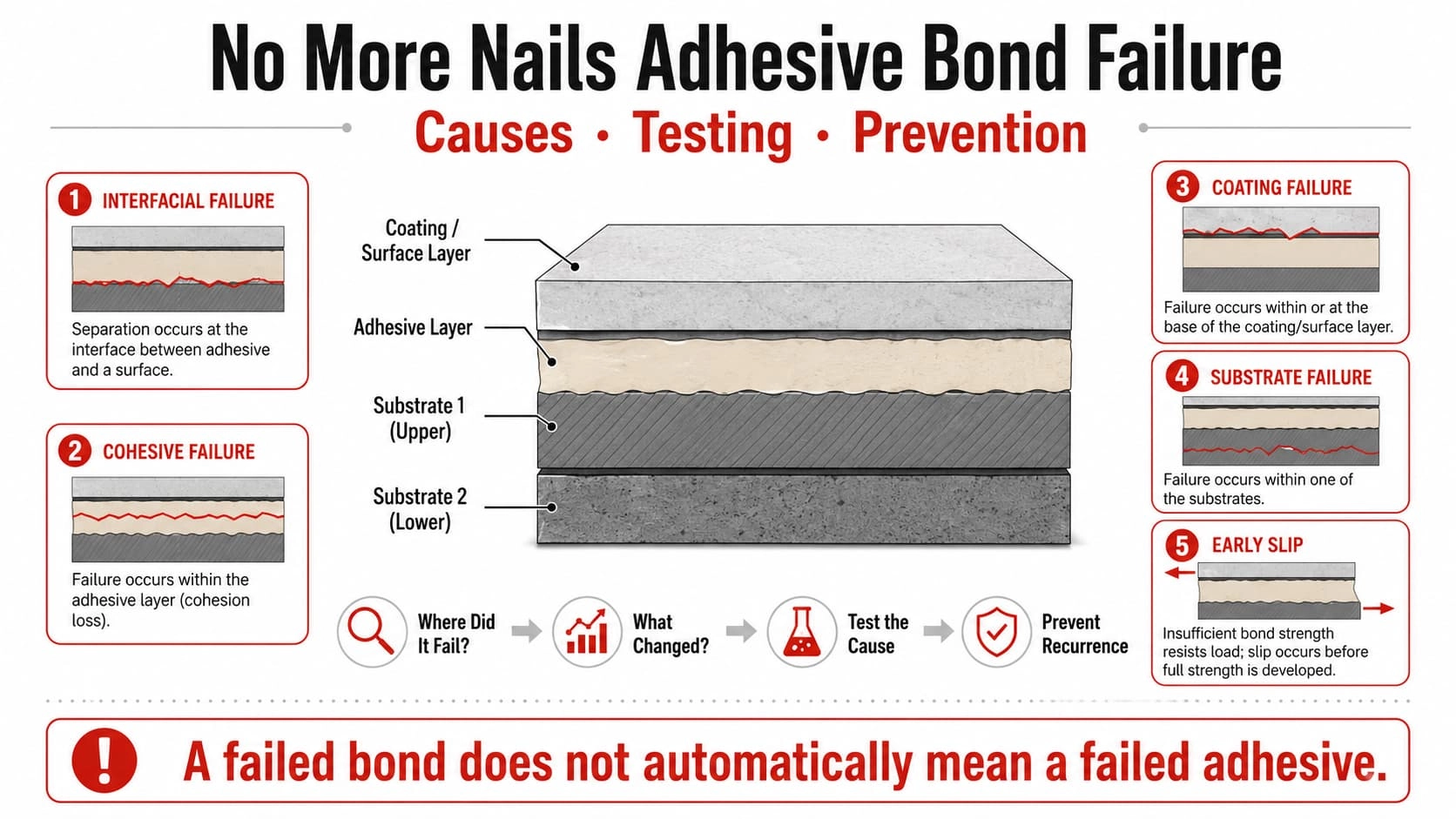
No More Nails Adhesive Bond Failure: Causes, Testing, and Prevention

HY992 Modified Polyurethane Construction Sealant
HY992 Modified Polyurethane Sealant is a one-component, moisture-curing construction sealant designed for professional building and structural sealing applications. It provides excellent adhesion, weather resistance, and durable elasticity, making it suitable for a wide range of construction materials.
The formulation delivers strong bonding performance without corrosion or substrate contamination, while maintaining low VOC content for environmentally responsible construction projects.

HY995 Crystal Clear Ms Polymer Adhesive/Sealant
HY995 Crystal Clear Ms Polymer Adhesive/Sealant is a new generation MS Polymer adhesive / sealant formulated for all bonding and sealing applications where long term reliability is required. It has excellent bonding strength on various materials. It will cure to form a durable, flexible, waterproof seal.

HY997 High-Performance Anti-Microbial MS Polymer Sealant
HY997 MS polymer sealant for is is a premium one-component, neutral-curing modified silane sealant engineered for demanding interior applications. It offers a Class 20 movement capability, ensuring long-lasting flexibility and reliable performance under dynamic joint conditions. Curing at room temperature, HY997 delivers superior anti-microbial and mildew-resistant properties, maintaining hygienic and clean environments over time.

KINGDELI HY732 Professional Acetoxy Cure Silicone Sealant
KINGDELI HY732 is a professional-grade, one-component acetoxy cure silicone sealant designed for fast curing, strong adhesion, and long-lasting flexibility. Ideal for aquariums, glass applications, aluminum doors and windows, kitchens, and bathrooms, it provides reliable sealing performance with excellent anti-fungal protection in high-humidity environments.
Let’s Build Stronger Bonds with Quality Adhesives and Sealants
Have questions about the topic or need tailored sealant solutions for your project?
Our team is ready to provide expert guidance, product recommendations, and application support.
Innovating with Integrity, Bonding the World
Since 1998, KINGDELI has delivered trusted, sustainable sealant solutions that connect industries and inspire progress worldwide.

Whatsapp: +8618825946249
Kingdeli
Kingdeli
Kingdeli
Kingdeli
Kingdeli