


How to source eco-friendly acrylic sealant alternatives?
How to source eco-friendly acrylic sealant alternatives?
Quick Summary
To source credible eco-friendly acrylic sealant alternatives, require documented VOC testing (EPA Method 24), supply-chain chemical compliance (REACH/EPA Safer Choice), third-party environmental claims (EPD, GreenTag), and performance verification (ASTM C920). Use procurement clauses and on-site pilots to validate durability and lifecycle impact.
KINGDELI Advantage and Next Steps
KINGDELI combines manufacturing control, independent lab partnerships, and traceable raw-material sourcing to deliver lower-VOC, water-based and hybrid alternatives that meet project specifications without compromising joint performance. Our technical teams map regulatory requirements, pre-qualify suppliers, and run ASTM and OECD-relevant testing plans so procurement teams reduce risk and accelerate approvals.
Contact us for a quote at www.kingdelisealant.com or info@kingdeliadhesive.com.
FAQ
What certifications prove an acrylic sealant is truly eco-friendly?
Seek third-party verification rather than vendor labels. Relevant certifications and documents include REACH compliance for EU chemical registration, EPA Safer Choice listings where applicable, EPDs (Environmental Product Declarations) for quantified lifecycle data, and recognized eco-labels such as GreenTag or equivalent national schemes. For building projects, require documentation aligned to LEED or BREEAM low-emitting materials credits. Certifications should be current, scope-specific, and accompanied by lab reports—do not accept self-declared claims without third-party evidence.
How to evaluate raw material sourcing for low-VOC acrylic sealants?
Request raw-material declarations and supplier traceability: identify polymer backbone, solvent/water carrier, plasticizers, and additives. Verify VOC content via certified EPA Method 24 or equivalent; ask for batch-level VOC test certificates. Confirm suppliers avoid listed SVHCs under REACH and request MSDS/CLP sheets. For bio-based claims, require mass-balance documentation or certified biobased content (e.g., USDA BioPreferred). Finally, perform supplier audits or require third-party supply-chain attestations to validate consistency and ethical sourcing.
Which lab tests validate biodegradability and safety of acrylic sealants?
Biodegradability claims must reference standard tests such as OECD 301-series for ready biodegradability; otherwise treat biodegradability statements with caution. Safety and leachate concerns can be assessed with TCLP or similar leaching tests where relevant. VOC and emissions measurement should be performed by EPA Method 24 or equivalent laboratory protocols, and performance tests for joint movement, adhesion, and cohesion should reference ASTM C920 or project-specific standards. Always obtain raw test reports with method descriptions, dates, and accredited lab stamps.
How to compare lifecycle carbon footprint for acrylic sealant options?
Request cradle-to-gate or cradle-to-grave EPDs from suppliers; these provide standardized CO2e data based on ISO 14025 and EN 15804/ISO 21930 rules depending on region. If an EPD is not available, ask for a manufacturer-commissioned LCA summary with defined scope and system boundaries. Compare functional unit normalization (for example, CO2e per meter of sealed joint with defined geometry and expected service life). Consider durability—longer-lasting materials often yield lower lifecycle impact despite higher upfront embodied carbon.
Are water-based acrylic sealants reliable for structural joints and expansion?
Water-based acrylics are low-VOC and paintable, making them suitable for many non-structural, low-movement joints. However, for high-movement or load-bearing expansion joints, water-based acrylics typically lack the elastic recovery and adhesion characteristics required; ASTM C920 performance class should guide selection. For structural or high-movement applications consider hybrid MS polymers or polyurethane alternatives that meet movement and adhesion specs; always validate with project-specific mock-ups and adhesion testing on substrate materials.
What procurement clauses ensure suppliers deliver eco-friendly acrylic sealant consistently?
Include mandatory documentation clauses: certified VOC test reports (EPA Method 24), REACH/SVHC declarations, EPD or LCA summaries, and third-party eco-label certificates. Require batch traceability, shelf-life controls, and a change-notice covenant (supplier must notify for formulation changes). Add performance warranties tied to ASTM or project standards and rights to independent verification testing. Finally, include audit rights and corrective action timelines; tie acceptance and payment milestones to successful on-site mock-up testing and certification delivery.
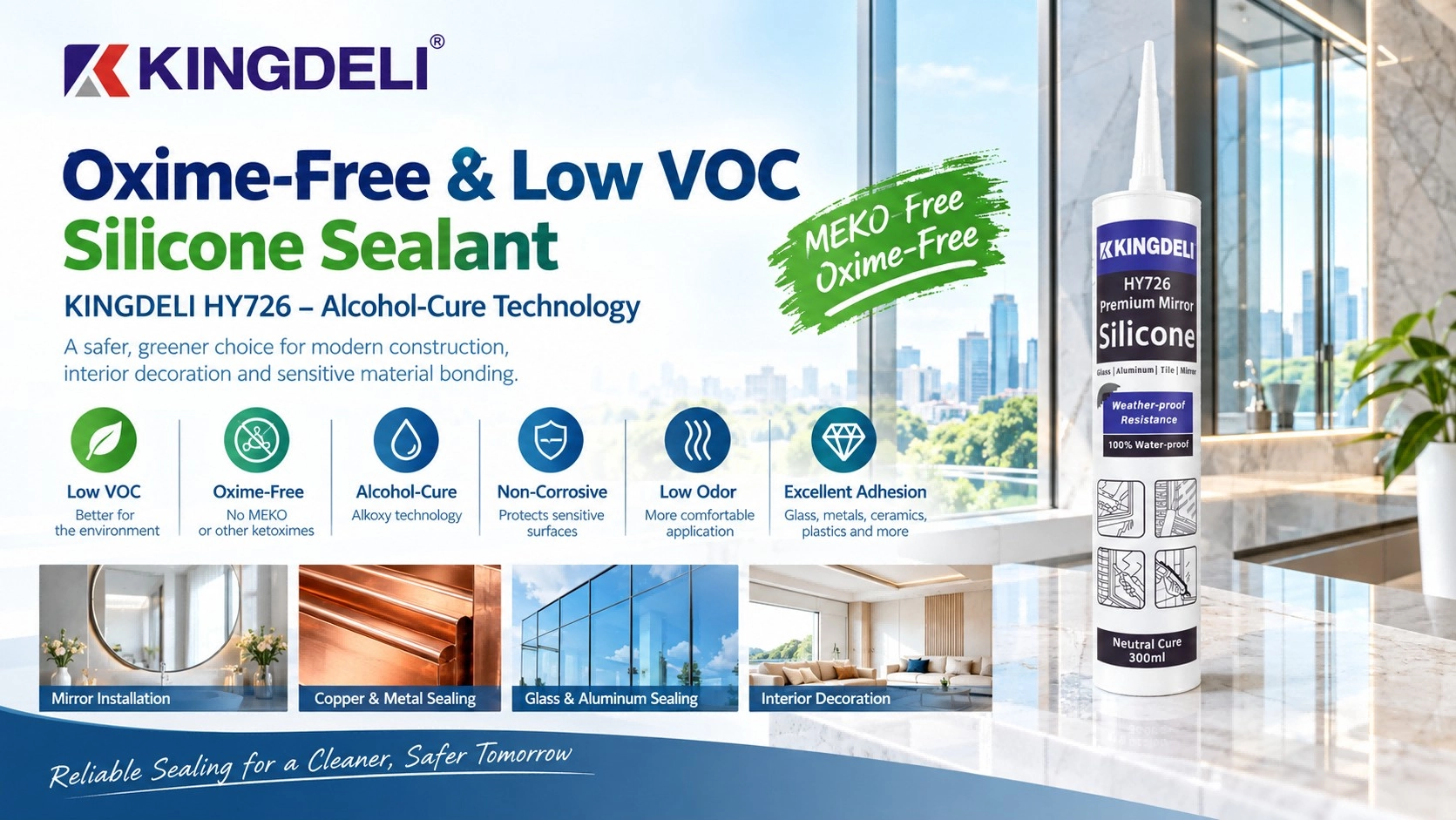
Oxime-Free & Low VOC Silicone Sealant: Discover KINGDELI HY726 Alcohol-Cure Technology
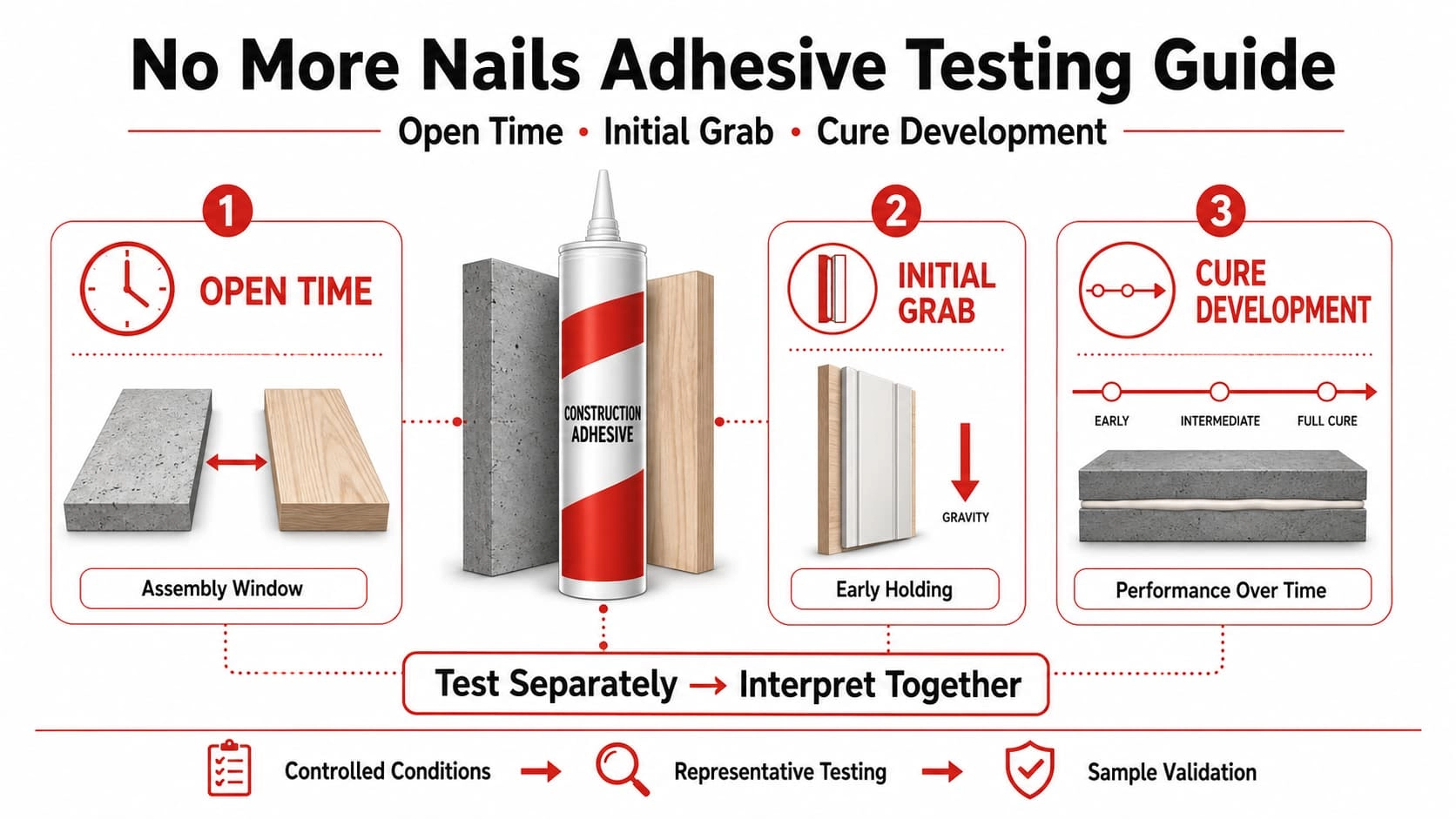
No More Nails Adhesive Open Time, Grab Strength, and Cure Testing Guide
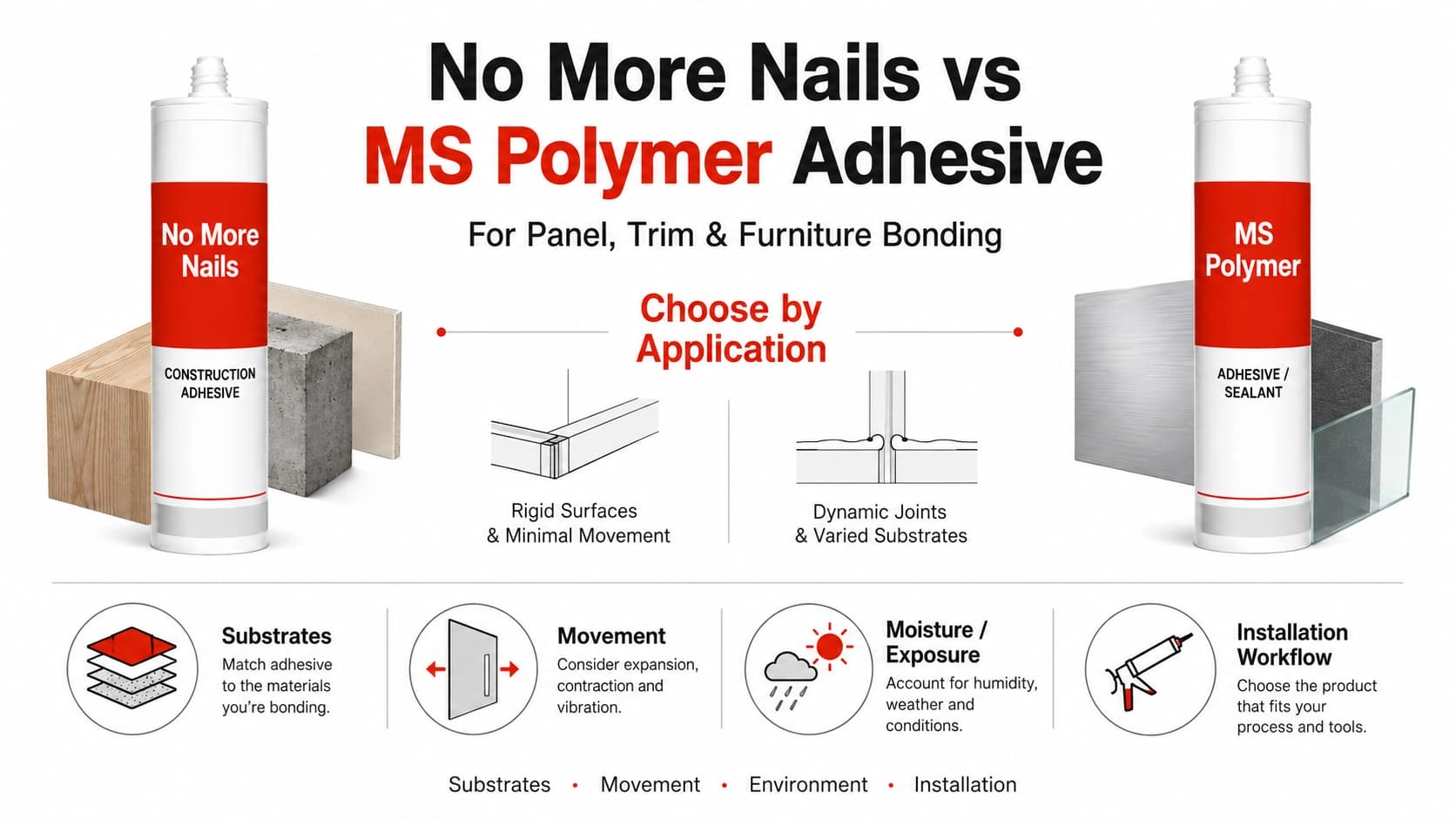
No More Nails vs MS Polymer Adhesive for Panel, Trim, and Furniture Bonding
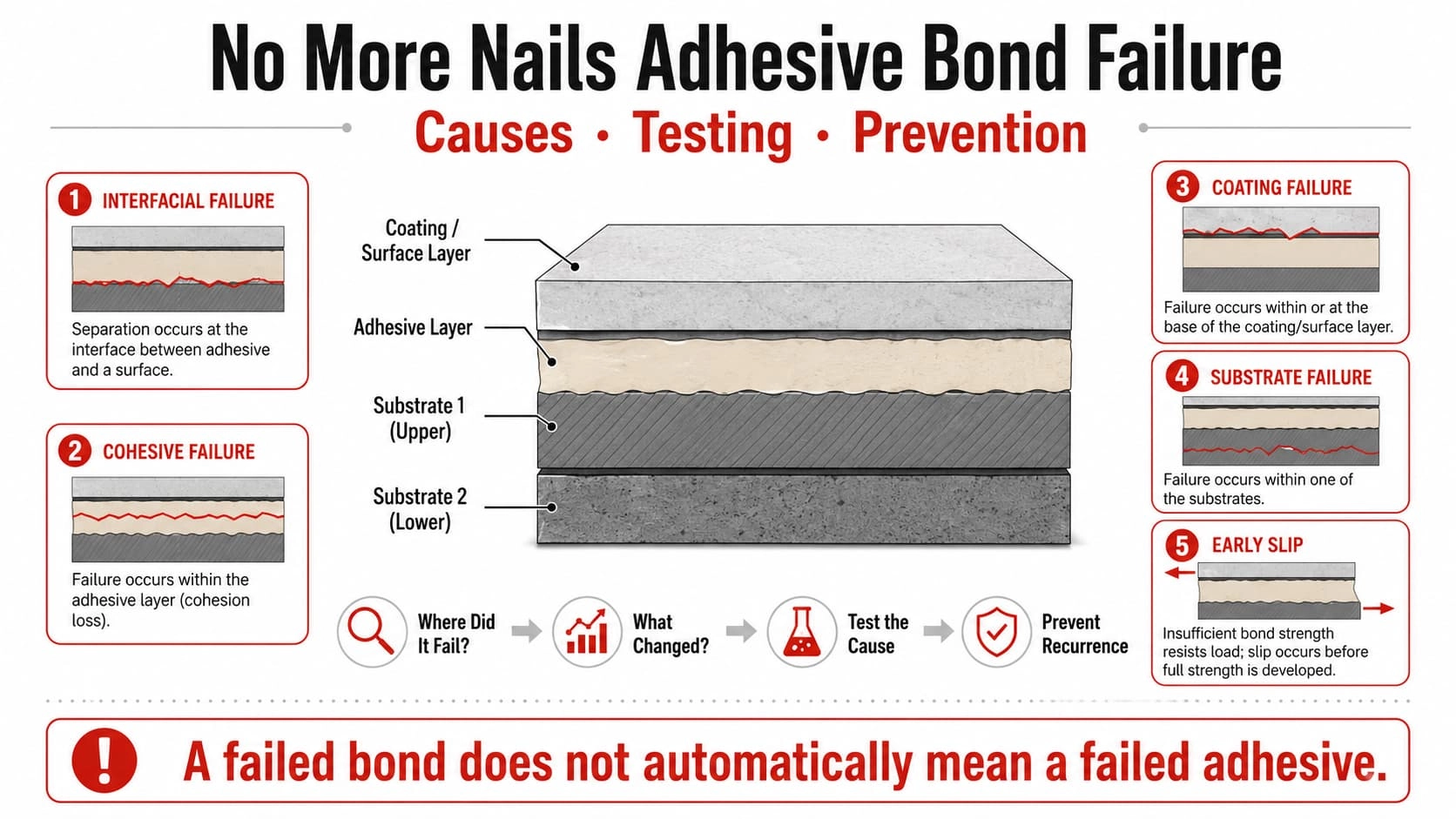
No More Nails Adhesive Bond Failure: Causes, Testing, and Prevention

HY992 Modified Polyurethane Construction Sealant
HY992 Modified Polyurethane Sealant is a one-component, moisture-curing construction sealant designed for professional building and structural sealing applications. It provides excellent adhesion, weather resistance, and durable elasticity, making it suitable for a wide range of construction materials.
The formulation delivers strong bonding performance without corrosion or substrate contamination, while maintaining low VOC content for environmentally responsible construction projects.

HY995 Crystal Clear Ms Polymer Adhesive/Sealant
HY995 Crystal Clear Ms Polymer Adhesive/Sealant is a new generation MS Polymer adhesive / sealant formulated for all bonding and sealing applications where long term reliability is required. It has excellent bonding strength on various materials. It will cure to form a durable, flexible, waterproof seal.

HY997 High-Performance Anti-Microbial MS Polymer Sealant
HY997 MS polymer sealant for is is a premium one-component, neutral-curing modified silane sealant engineered for demanding interior applications. It offers a Class 20 movement capability, ensuring long-lasting flexibility and reliable performance under dynamic joint conditions. Curing at room temperature, HY997 delivers superior anti-microbial and mildew-resistant properties, maintaining hygienic and clean environments over time.

KINGDELI HY732 Professional Acetoxy Cure Silicone Sealant
KINGDELI HY732 is a professional-grade, one-component acetoxy cure silicone sealant designed for fast curing, strong adhesion, and long-lasting flexibility. Ideal for aquariums, glass applications, aluminum doors and windows, kitchens, and bathrooms, it provides reliable sealing performance with excellent anti-fungal protection in high-humidity environments.
Let’s Build Stronger Bonds with Quality Adhesives and Sealants
Have questions about the topic or need tailored sealant solutions for your project?
Our team is ready to provide expert guidance, product recommendations, and application support.
Innovating with Integrity, Bonding the World
Since 1998, KINGDELI has delivered trusted, sustainable sealant solutions that connect industries and inspire progress worldwide.

Whatsapp: +8618825946249
Kingdeli
Kingdeli
Kingdeli
Kingdeli
Kingdeli