


How to calculate joint width and sealant coverage?
Article Title: How to calculate joint width and sealant coverage?
This technical brief delivers engineering-grade methods to size joints and calculate sealant volumes for polyurethane sealant applications—covering movement calculations, width-depth ratios, cartridge-quantity formulas, practical wastage allowances, and jobsite controls to avoid costly underorders or failures.
Read these detailed, manufacturer-aligned procedures and worked examples before specifying joint geometry or placing your material order; they are designed for technicians, project engineers, and procurement teams in the sealants and adhesives industry.
KINGDELI brings 15+ years of sealants and adhesives industry experience to practical project controls: precise joint-sizing, conservative coverage math, and pragmatic waste allowances reduce risk and cost while improving long-term joint performance.
For a precise project quote and technical support, contact KINGDELI at www.kingdelisealant.com or email info@kingdeliadhesive.com.
FAQ
How to determine correct joint width for polyurethane sealant installation
Start from the movement requirement, not guesswork. Practical procedure: 1) Quantify expected movement (ΔL) using substrate length, coefficient of thermal expansion and temperature swing: ΔL = α × L × ΔT (α in mm/mm·°C or 1/°C, L in mm, ΔT in °C). Example: concrete α ≈ 10×10⁻⁶/°C; a 20,000 mm slab across a 40°C swing yields ΔL = 10e-6 × 20,000 × 40 = 8 mm. 2) Determine required sealant total movement capacity to accommodate ΔL. Sealant movement specs are usually given as percent of original joint width (for many one-component polyurethane sealants a typical movement capability is on the order of ±25%—confirm on the Technical Data Sheet). If movement capability is ±25% (i.e., 50% total), then joint width = required total movement ÷ 0.5. Using the example: width = 8 mm ÷ 0.5 = 16 mm. 3) Apply practical limits: most field practice sets a minimum workable width of about 6 mm to allow tooling and adhesion; very wide single joints (>25–30 mm) require specialist formulations or staged joint design and may need bond-breaker strategies. 4) Finalize width with constructability checks: backer rod sizing, tooling access, and substrate tolerances. Always verify the chosen polyurethane sealant’s TDS (movement capability, minimum width, and recommended maximum depth) before specification.
What is optimal joint depth-to-width ratio for polyurethane sealants
Use the industry rule-of-thumb ratio: depth ≈ width ÷ 2 (a 2:1 width-to-depth ratio). Practical implementation: • Formula: depth (d) = width (w) / 2. Example: for a 16 mm width, set depth ≈ 8 mm. • Why: This geometry minimizes adhesive stress at the bond faces, creates a neutral-plane at the mid-depth, and lets the sealant deform in tension/compression rather than shear. Too shallow and the sealant cannot accommodate movement; too deep and the sealant will develop high internal stress and delayed cure at the mid-section. • Minimum and maximum depth: in practice, maintain a minimum depth of about 6 mm for tooling and performance; many projects keep depth in the 6–12 mm range for standard polyurethane formulations. For depths greater than recommended, use a filler or change joint design (e.g., multiple beads, backer rod layers). • Backer rod: use closed-cell polyethylene backer rod sized 25–50% larger than the joint width to control depth and produce the correct bond profile (no bottom adhesion). Backer rod also reduces the sealant volume and improves movement accommodation.
How to calculate sealant coverage per cartridge for mixed joint sizes
Use volumetric math and keep units consistent. Steps and formulas: 1) Cross-sectional area approximation: for a rectangular joint cross-section, A = width × depth (both in meters to give m³ per meter length). Use conservative rectangular area for ordering; for tooled concave beads you may measure a test bead and use that area. 2) Volume per length: V (m³) = A (m²) × length (m). 3) Convert to millilitres: V_ml = V (m³) × 1,000,000 (because 1 m³ = 1,000,000 ml). 4) Cartridge count: cartridges = V_ml ÷ cartridge_volume_ml (common cartridge sizes: 300 ml cartridges, 600 ml sausages). Round up to the next whole cartridge and apply wastage allowance (see wastage rules below). Worked example: a single 10 m run with width = 10 mm and depth = 10 mm. • Convert: w = 0.01 m, d = 0.01 m, A = 0.0001 m². • V = 0.0001 × 10 = 0.001 m³ = 1,000 ml. • Using 300 ml cartridges → 1,000 ÷ 300 = 3.33 → 4 cartridges before wastage allowance. For irregular joints, measure a 0.5–1 m trial bead and determine actual ml used per meter; use that empirical rate for ordering. Conservative estimates (rectangular) avoid underordering; refined measurements lower waste.
How substrate movement and joint width affect polyurethane sealant selection
Joint geometry and movement determine the functional demands placed on the sealant; selection must be data-driven: 1) Compare expected movement to sealant movement capability. Calculate total expected movement (mm) using thermal, moisture, and live-load inputs. Then select a formulation whose movement capability (expressed as % of original width on the TDS) exceeds the expected movement with a margin (manufacturers often note ±X%—choose a product with comfortable headroom). 2) Adhesion and substrate type: polyurethane sealants adhere well to many porous substrates (concrete, masonry). For difficult substrates (polished metals, some plastics) or where long-term exposure to UV and water occurs, check compatibility or consider primers. Follow manufacturer primer tables and adhesion test procedures. 3) Application geometry: if joint width required to accommodate movement exceeds normal limits for a chosen polyurethane (for example, large expansion joints exceeding the manufacturer’s recommended maximum width/depth), redesign the joint or use a high-movement silicone or specialized hybrid product. 4) Durability trade-offs: polyurethanes provide abrasion resistance and paintability that silicones may lack, but silicones typically give higher movement capability and UV resistance. Match service conditions (traffic, UV, chemical exposure) to product performance variables on the TDS. Always document calculations and retain the sealant Technical Data Sheet and adhesion test records as part of your specification file.
How temperature and application conditions change sealant coverage and tooling
Temperature and site conditions influence application efficiency and waste, though the required volumetric coverage is fixed by joint geometry: 1) Volume invariance: the theoretical volume needed (width × depth × length) does not change with temperature; a 10 m × 10 mm × 10 mm joint will always consume ~1,000 ml of sealant. However, practical coverage and productivity change. 2) Viscosity and extrusion: low temperatures increase viscosity, reduce bead flow and may require greater extrusion force or slower tooling; this increases startup waste and may reduce installed linear meters per cartridge per hour—plan additional cartridges or manpower in cold conditions. 3) Cure rate and sag: moisture-curing polyurethanes cure faster in higher humidity and warmer temperatures; colder, drier conditions slow cure, increasing the time the bead remains tacky and prone to contamination and rework (thus increasing waste). For large projects factor in a contingency of 10–25% additional material in adverse temperature/humidity conditions. 4) Practical controls: store materials at manufacturer-recommended temperatures (often 15–25°C where possible), use pneumatic or battery-powered extrusion guns for consistent bead size, pre-condition sausages/cartridges, and run a short trial to measure actual installed ml/m. Use that empirical number for final ordering rather than theoretical alone.
How to estimate wasted sealant and order quantity allowances accurately
Order quantity should include explicit allowances for waste and contingencies—steps to compute realistic quantities: 1) Compute required installed volume (V_required) using geometry and convert to cartridges as shown earlier. 2) Add explicit wastage factors: typical project practice uses 10% for normal jobs (skilled crew, simple joints), 15–25% for complex joints, porous or high-absorption substrates, or difficult access, and 5–10% additional for startup/finish waste when teams are inexperienced or when machines are used. For new crews or severe site conditions, consider 25–40%. 3) Formula: cartridges_to_order = ceil( (V_required_ml ÷ cartridge_ml) × (1 + waste_fraction) ). 4) Additional allowances: include primer volume (if priming is required, typically a separate small container per 5–20 joints depending on substrate), backer rod length (ordered by linear meters and diameters), and tooling consumables. Consolidate orders to carton/sachet minimums (manufacturers often pack cartridges in cartons of 12 or sausages in boxes of 20). 5) Field verification: always run a 1–2 m mock bead under site conditions to measure actual ml/m and adjust the waste fraction before placing the full order. Track usage during the first day and re-order early to prevent downtime. This method minimizes underordering and avoids the common project delays caused by insufficient polyurethane sealant on-site.
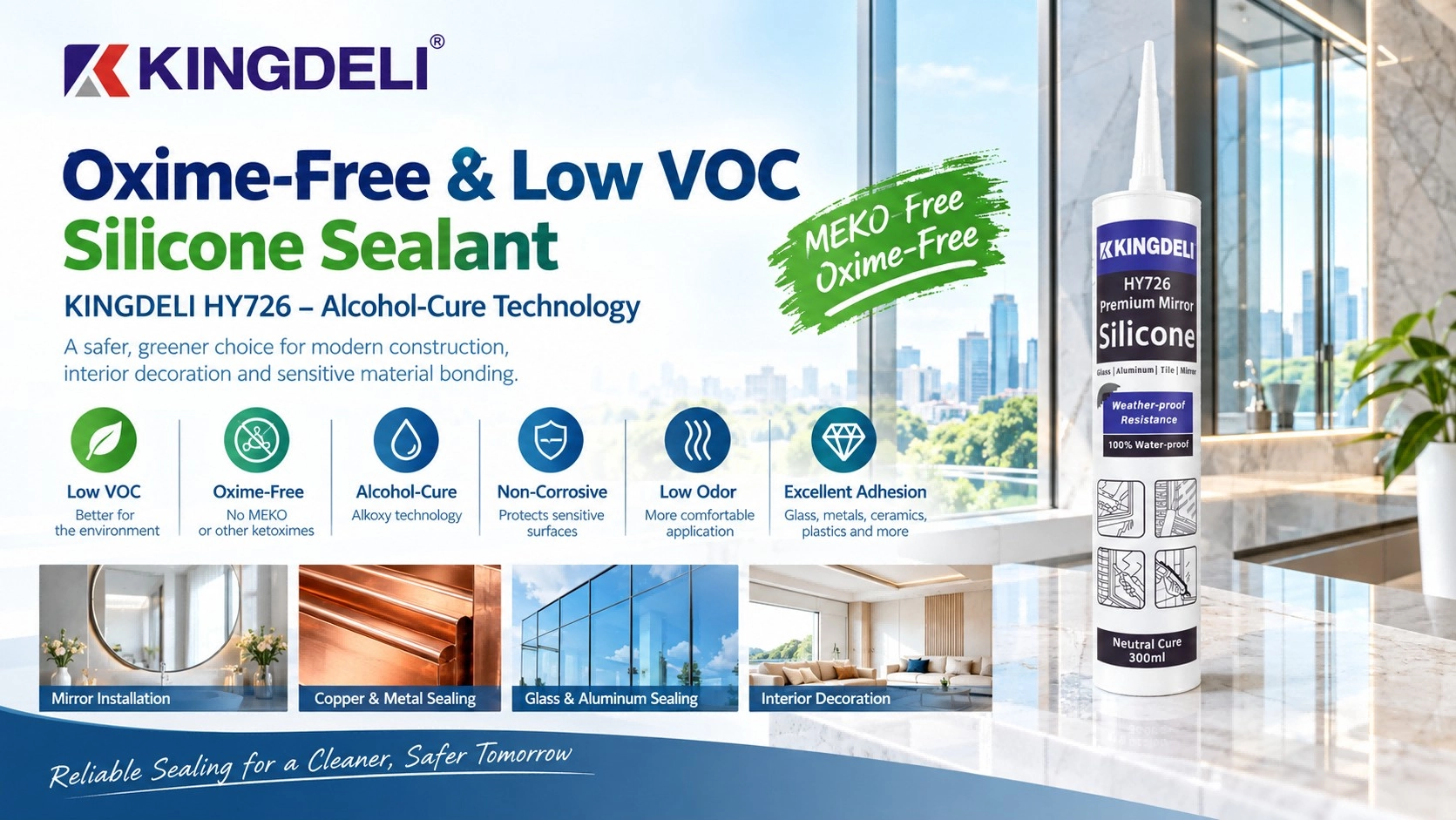
Oxime-Free & Low VOC Silicone Sealant: Discover KINGDELI HY726 Alcohol-Cure Technology
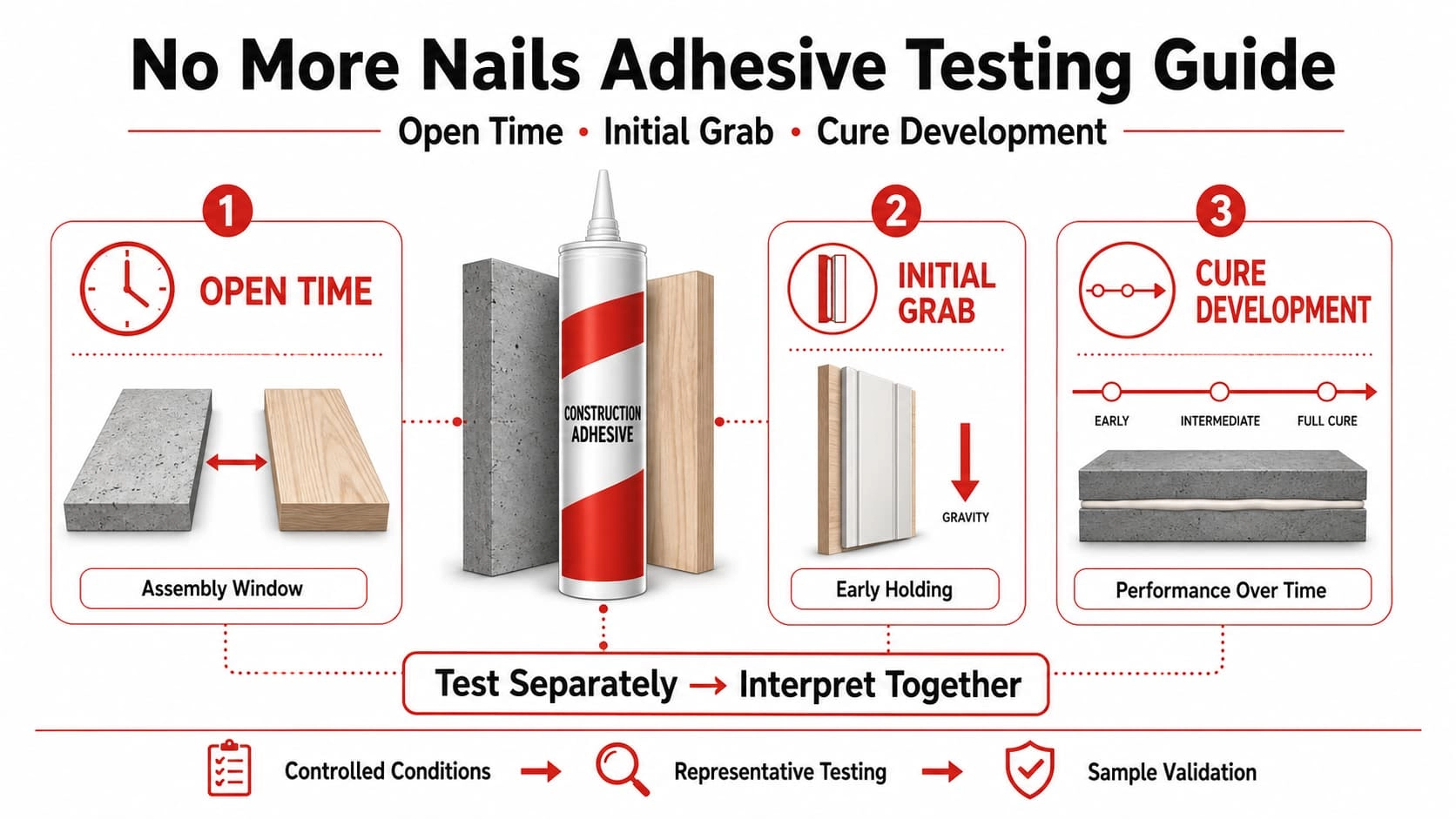
No More Nails Adhesive Open Time, Grab Strength, and Cure Testing Guide
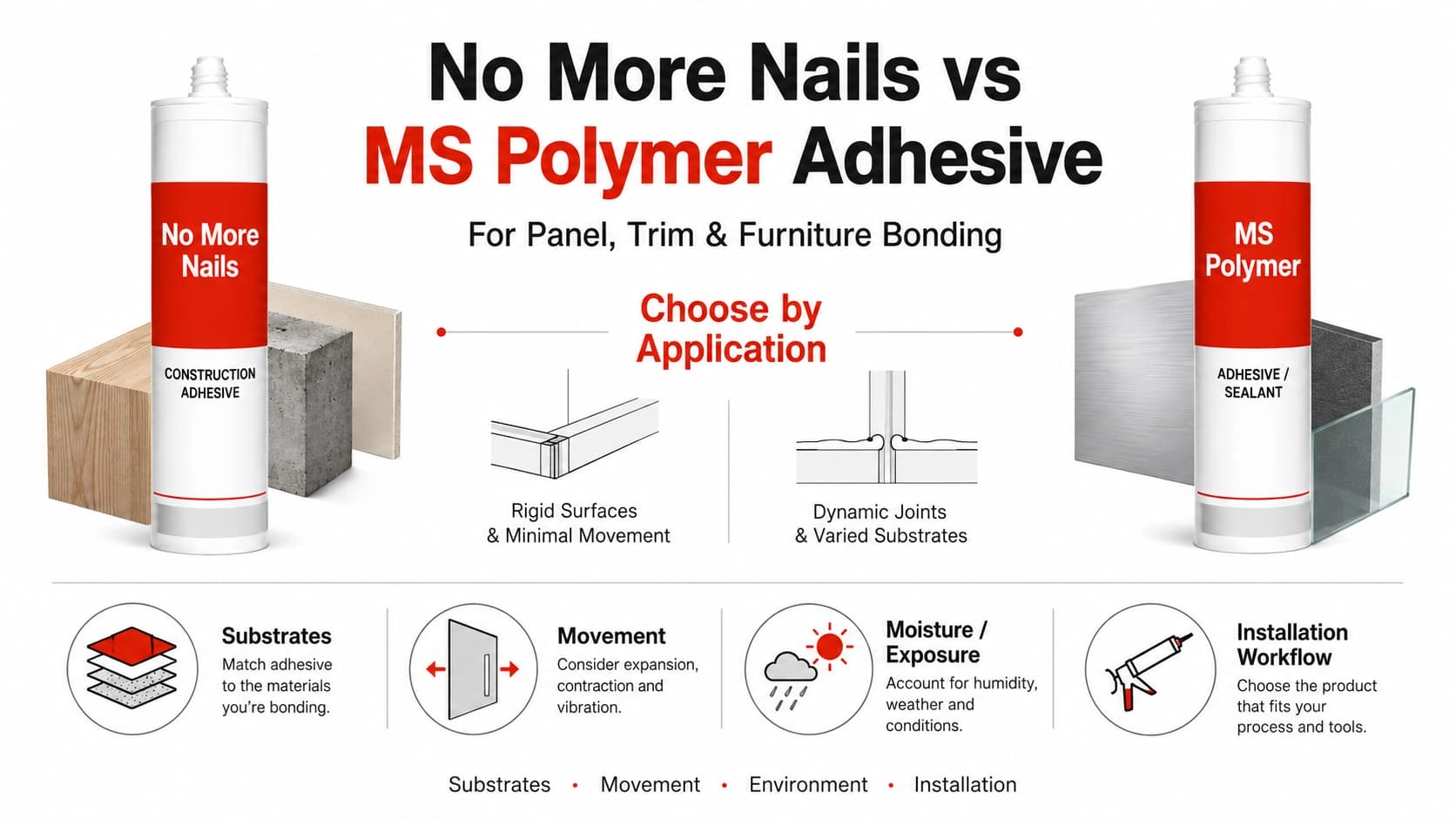
No More Nails vs MS Polymer Adhesive for Panel, Trim, and Furniture Bonding
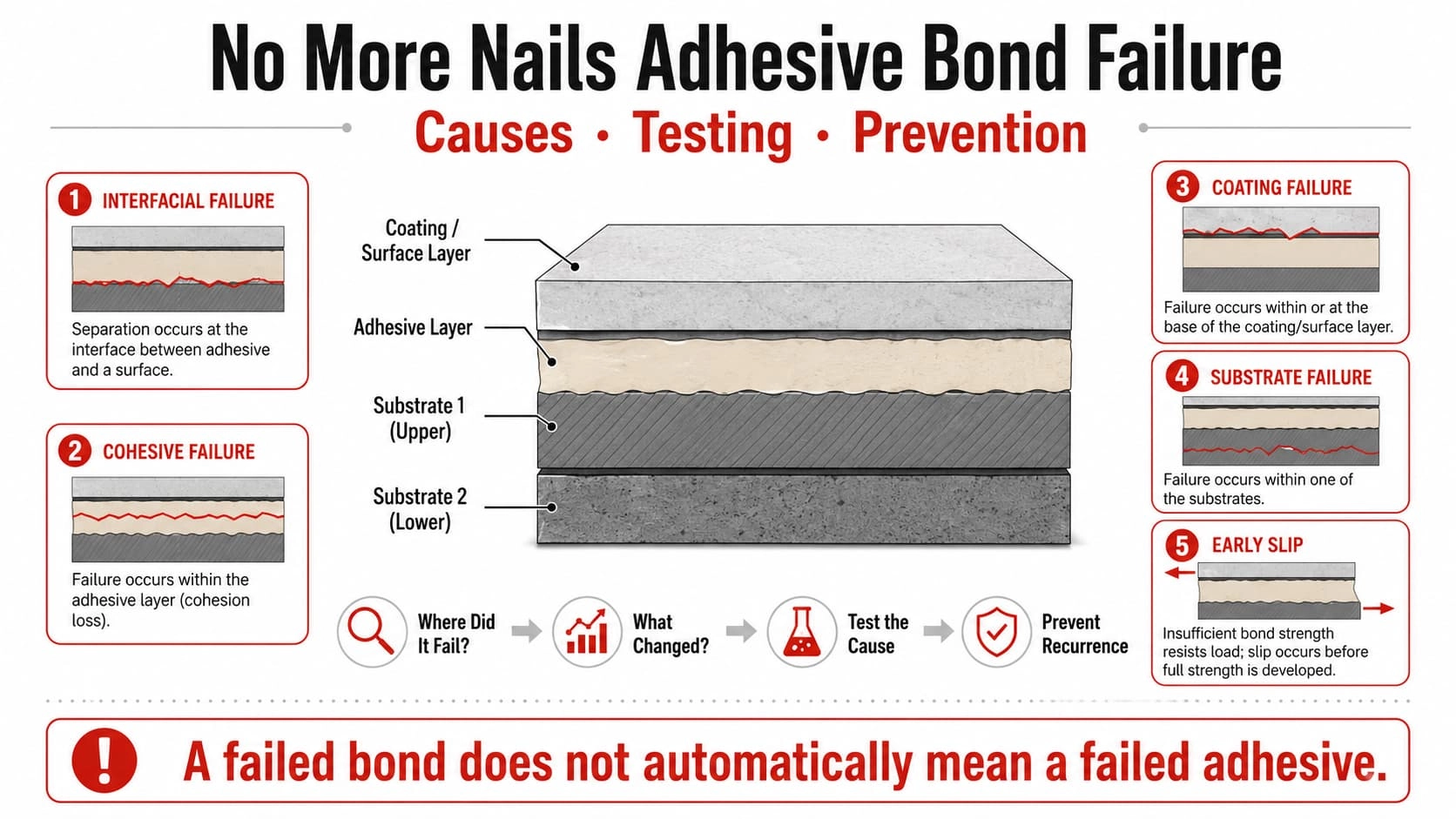
No More Nails Adhesive Bond Failure: Causes, Testing, and Prevention

HY992 Modified Polyurethane Construction Sealant
HY992 Modified Polyurethane Sealant is a one-component, moisture-curing construction sealant designed for professional building and structural sealing applications. It provides excellent adhesion, weather resistance, and durable elasticity, making it suitable for a wide range of construction materials.
The formulation delivers strong bonding performance without corrosion or substrate contamination, while maintaining low VOC content for environmentally responsible construction projects.

HY995 Crystal Clear Ms Polymer Adhesive/Sealant
HY995 Crystal Clear Ms Polymer Adhesive/Sealant is a new generation MS Polymer adhesive / sealant formulated for all bonding and sealing applications where long term reliability is required. It has excellent bonding strength on various materials. It will cure to form a durable, flexible, waterproof seal.

HY997 High-Performance Anti-Microbial MS Polymer Sealant
HY997 MS polymer sealant for is is a premium one-component, neutral-curing modified silane sealant engineered for demanding interior applications. It offers a Class 20 movement capability, ensuring long-lasting flexibility and reliable performance under dynamic joint conditions. Curing at room temperature, HY997 delivers superior anti-microbial and mildew-resistant properties, maintaining hygienic and clean environments over time.

KINGDELI HY732 Professional Acetoxy Cure Silicone Sealant
KINGDELI HY732 is a professional-grade, one-component acetoxy cure silicone sealant designed for fast curing, strong adhesion, and long-lasting flexibility. Ideal for aquariums, glass applications, aluminum doors and windows, kitchens, and bathrooms, it provides reliable sealing performance with excellent anti-fungal protection in high-humidity environments.
Let’s Build Stronger Bonds with Quality Adhesives and Sealants
Have questions about the topic or need tailored sealant solutions for your project?
Our team is ready to provide expert guidance, product recommendations, and application support.
Innovating with Integrity, Bonding the World
Since 1998, KINGDELI has delivered trusted, sustainable sealant solutions that connect industries and inspire progress worldwide.

Whatsapp: +8618825946249
Kingdeli
Kingdeli
Kingdeli
Kingdeli
Kingdeli