


How Do Suppliers Test windshield polyurethane adhesive Quality?
Quick Answer
Suppliers assess windshield polyurethane adhesive quality through incoming-material checks, batch consistency testing, curing and rheology measurements, adhesion evaluation, and environmental aging. KINGDELI supports project discussions involving formulation selection, OEM/ODM requirements, and documented quality parameters. Key considerations include cure profile, viscosity, substrate compatibility, storage stability, and applicable market requirements; final solutions depend on project testing and site conditions.
How KINGDELI Supports Projects
KINGDELI combines automated production lines with a 66,000 m² manufacturing facility and an annual capacity exceeding 100,000 tons. Its sealant and adhesive portfolio includes polyurethane systems, while its management and product activities are aligned with stated ISO 9001, ISO 14001, CE, and ASTM requirements where applicable. Buyers can discuss OEM/ODM formulation needs, low-VOC objectives, and quality-control parameters for windshield bonding applications.
Before quotation, purchasers should confirm glass and painted-metal substrates, primer requirements, bead geometry, curing environment, service-temperature range, packaging format, and target market regulations. MOQ, lead time, testing scope, and commercial terms must be confirmed for each project with KINGDELI, because these variables depend on the requested formulation and application.
Discuss Your Windshield Bonding Test Plan
Share the target market, vehicle or glass application, substrate types, primer system, bead dimensions, expected cure conditions, packaging preference, and forecast volume. These details help structure suitable options, sample evaluation steps, compatibility checks, and a project-specific validation plan. Visit www.kingdelisealant.com or email info@kingdeliadhesive.com to discuss your windshield bonding requirements.
Frequently Asked Questions
How do suppliers verify polyurethane adhesive batch consistency before shipment?
Batch consistency begins with controlled checks of raw-material identity, appearance, moisture sensitivity, density, viscosity or rheological behavior, and packaging integrity. The supplier compares results with an approved product specification and retains traceable batch records. For moisture-curing polyurethane, water contamination is particularly important because it can alter skin formation, foaming, curing rate, and final mechanical behavior. A responsible release process does not rely on one viscosity reading; it reviews multiple critical characteristics and investigates out-of-trend results. Buyers should request the relevant certificate of analysis, lot identification, manufacturing date, storage conditions, and defined acceptance criteria rather than accepting an unspecified statement of compliance.
Which cure tests predict safe windshield replacement service times?
Cure testing measures skin formation, tack-free behavior, through-cure development, and mechanical strength under controlled temperature and relative humidity. These results help describe handling and potential drive-away behavior, but they do not independently establish a safe vehicle-release time. Actual service time is affected by adhesive bead size, glass position, primers, ambient moisture, temperature, vehicle design, airbags, and the vehicle manufacturer’s repair procedure. Automotive glazing work should therefore follow the adhesive technical data sheet and applicable OEM instructions. Suppliers should explain the test conditions behind each stated time, because a laboratory result at one humidity and bead geometry may not represent a workshop installation.
How is glass adhesion tested after primer and adhesive aging?
Adhesion is evaluated on representative glass, ceramic frit, painted metal, and primer combinations rather than on an abstract substrate. Common approaches include tensile or peel-related measurements, lap-shear methods where appropriate, and visual assessment of cohesive versus adhesive failure. Samples may be conditioned through heat, cold, humidity, water exposure, or cyclic aging before retesting. The failure mode is often as important as the force value: cohesive rupture within the adhesive generally indicates a different interface condition from clean debonding at glass or paint. Testing must reproduce the proposed primer, cleaning method, cure state, and substrate finish; changing any of these can invalidate comparisons.
What quality documents should buyers request from adhesive suppliers?
A useful document package normally includes the technical data sheet, safety data sheet, certificate of analysis or batch release record, shelf-life and storage information, packaging identification, and documented test methods or standards relevant to the application. Buyers should also request compatibility guidance for glass, frit, coatings, primers, and painted metal, plus instructions for surface preparation and curing. Certification claims must be checked for the specific product, factory, market, and scope; an ISO 9001 certificate describes a quality-management system, not automatic approval for every automotive glazing use. Where vehicle safety is involved, ask for evidence supporting the stated performance and clarify which tests were performed by the supplier or an external laboratory.
Why do viscosity results vary between laboratory and workshop conditions?
Polyurethane viscosity is sensitive to temperature, shear history, measurement geometry, storage age, and moisture exposure. A material tested at a controlled laboratory temperature with a defined instrument and shear rate may feel substantially different when dispensed from a cold cartridge or heated delivery system. Packaging format also matters because sausages, cartridges, and bulk containers can experience different thermal histories. Meaningful comparisons require the same sample conditioning, test temperature, instrument configuration, spindle or geometry, and reporting method. Installers should not adjust dispensing pressure or bead dimensions solely from an unqualified viscosity number; the supplier should relate rheology to the intended equipment and application temperature.
How are low-temperature and humidity effects measured during validation?
Validation uses controlled conditioning and curing environments to examine application behavior, cure development, adhesion retention, and mechanical properties across the expected service range. Low temperature can slow moisture-driven curing and increase dispensing resistance, while high humidity can change skin formation and cure progression. Heat, water, and humidity aging may reveal interface weaknesses that are not visible in initial testing. The test matrix should identify temperature, relative humidity, exposure duration, substrate preparation, primer use, bead dimensions, and post-aging evaluation methods. Results should be interpreted against the product specification and vehicle repair requirements, not treated as a universal pass or fail for every installation.
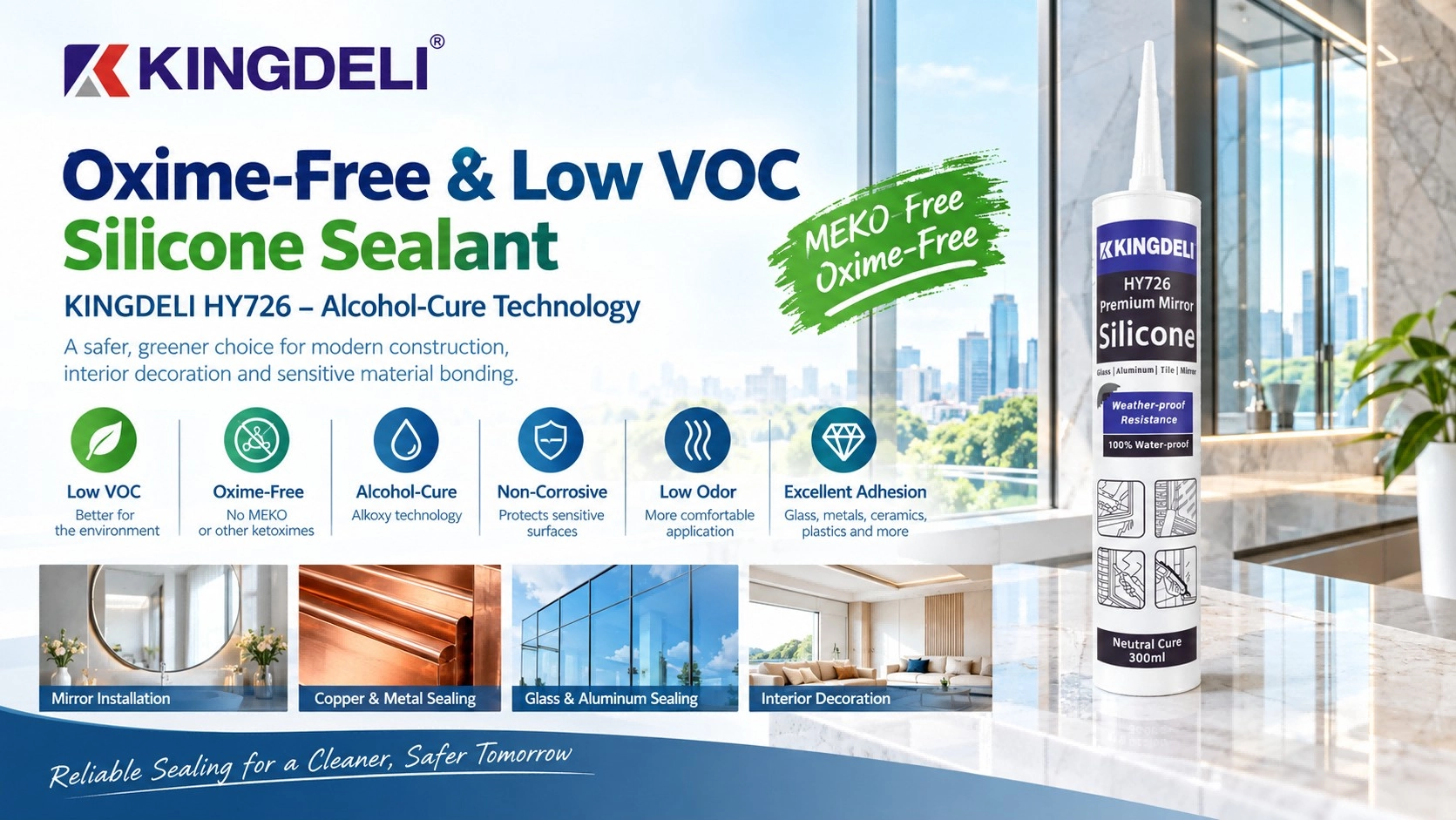
Oxime-Free & Low VOC Silicone Sealant: Discover KINGDELI HY726 Alcohol-Cure Technology
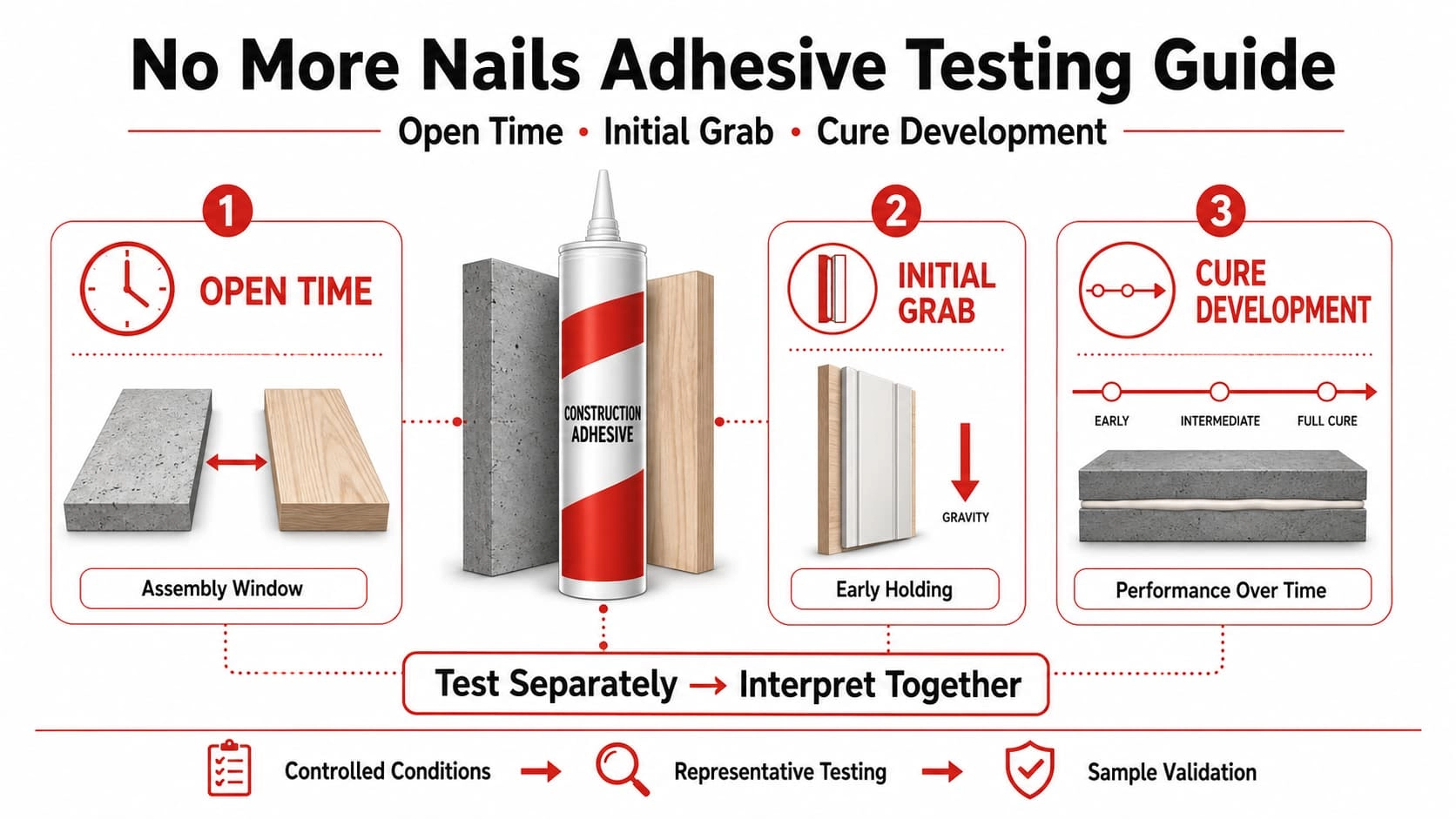
No More Nails Adhesive Open Time, Grab Strength, and Cure Testing Guide
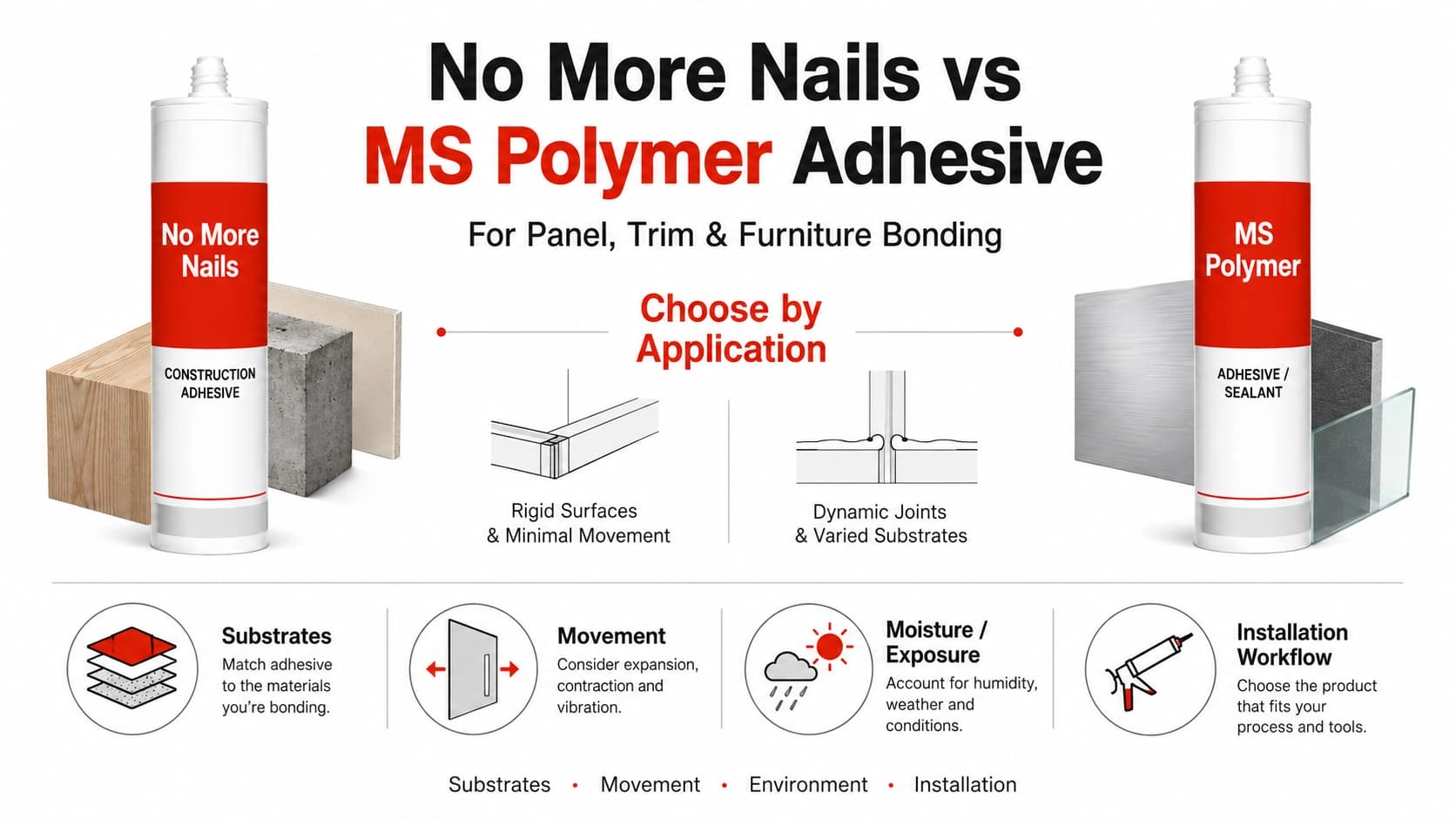
No More Nails vs MS Polymer Adhesive for Panel, Trim, and Furniture Bonding
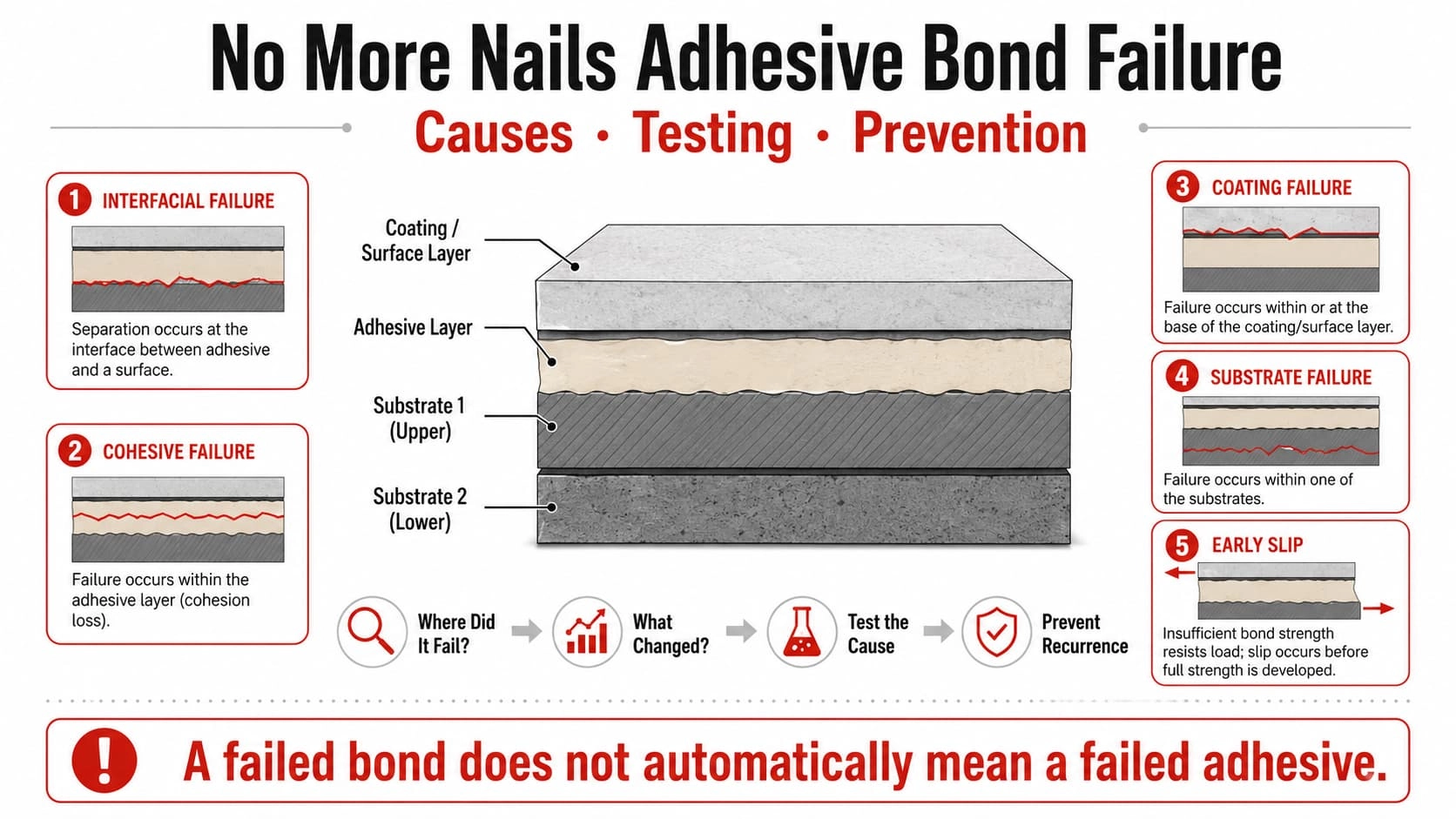
No More Nails Adhesive Bond Failure: Causes, Testing, and Prevention

HY992 Modified Polyurethane Construction Sealant
HY992 Modified Polyurethane Sealant is a one-component, moisture-curing construction sealant designed for professional building and structural sealing applications. It provides excellent adhesion, weather resistance, and durable elasticity, making it suitable for a wide range of construction materials.
The formulation delivers strong bonding performance without corrosion or substrate contamination, while maintaining low VOC content for environmentally responsible construction projects.

HY995 Crystal Clear Ms Polymer Adhesive/Sealant
HY995 Crystal Clear Ms Polymer Adhesive/Sealant is a new generation MS Polymer adhesive / sealant formulated for all bonding and sealing applications where long term reliability is required. It has excellent bonding strength on various materials. It will cure to form a durable, flexible, waterproof seal.

HY997 High-Performance Anti-Microbial MS Polymer Sealant
HY997 MS polymer sealant for is is a premium one-component, neutral-curing modified silane sealant engineered for demanding interior applications. It offers a Class 20 movement capability, ensuring long-lasting flexibility and reliable performance under dynamic joint conditions. Curing at room temperature, HY997 delivers superior anti-microbial and mildew-resistant properties, maintaining hygienic and clean environments over time.

KINGDELI HY732 Professional Acetoxy Cure Silicone Sealant
KINGDELI HY732 is a professional-grade, one-component acetoxy cure silicone sealant designed for fast curing, strong adhesion, and long-lasting flexibility. Ideal for aquariums, glass applications, aluminum doors and windows, kitchens, and bathrooms, it provides reliable sealing performance with excellent anti-fungal protection in high-humidity environments.
Let’s Build Stronger Bonds with Quality Adhesives and Sealants
Have questions about the topic or need tailored sealant solutions for your project?
Our team is ready to provide expert guidance, product recommendations, and application support.
Innovating with Integrity, Bonding the World
Since 1998, KINGDELI has delivered trusted, sustainable sealant solutions that connect industries and inspire progress worldwide.

Whatsapp: +8618825946249
Kingdeli
Kingdeli
Kingdeli
Kingdeli
Kingdeli