


What Should Buyers Look for When Choosing a Private Label Silicone Sealant Supplier?
Quick Answer
Buyers should assess a private label silicone sealant supplier by formulation suitability, documented quality control, substrate adhesion, regulatory documentation, and dependable production capacity. KINGDELI supports OEM and ODM projects across silicone, polyurethane, MS polymer, and adhesive categories, but the appropriate solution still depends on the intended market, packaging, testing requirements, and actual site conditions.
How KINGDELI Supports Projects
KINGDELI operates a 66,000 m² facility in Foshan with automated production lines and annual capacity exceeding 100,000 tons. Its portfolio includes neutral and acetic silicone, polyurethane, MS polymer, and No More Nails adhesives. The company provides OEM/ODM support and manufactures within ISO 9001 and ISO 14001 management systems, with products engineered for applicable international requirements including CE and ASTM.
Before quotation, buyers should confirm cure type, viscosity, color, packaging format, substrate profile, target-market requirements, and intended application. MOQ, lead time, testing scope, artwork approval, and final pricing must be confirmed for each project rather than assumed from a standard product listing.
Discuss Your Private Label Sealant Project
Provide your target country, application, substrates, required cure type, package size, forecast volume, compliance needs, and preferred launch date so suitable options, sample evaluation, artwork coordination, and testing steps can be discussed. Visit www.kingdelisealant.com or email info@kingdeliadhesive.com to begin a project-specific discussion.
Frequently Asked Questions
What supplier evidence validates private label silicone sealant consistency?
A credible evaluation goes beyond a product sample. Request the technical data sheet, safety data sheet, batch identification method, stated storage conditions, curing profile, and quality-control release criteria. Compare samples from more than one production batch where possible, because a single sample cannot establish process consistency. Review whether the supplier can explain controls for raw-material input, mixing, filling, packaging, and retained samples. ISO 9001 certification indicates a quality-management system, not automatic conformity of every cartridge, so buyers should still define acceptance criteria such as appearance, skin time, tack-free time, extrusion behavior, hardness, adhesion, and cure performance. Any change in raw materials or formulation should require documented notification and revalidation.
How should buyers compare neutral and acetic cure formulations?
The cure chemistry should be selected from substrate compatibility and exposure conditions, not from a general assumption that one type is superior. Acetic-cure silicone releases acetic acid during cure and may be unsuitable for acid-sensitive metals, certain cementitious surfaces, or some alkaline substrates. Neutral-cure systems generally have broader compatibility, but the exact formulation still determines adhesion, stain behavior, movement capability, and suitability for porous materials. Ask for substrate-specific application guidance and conduct adhesion testing on the actual surfaces, including coatings, plastics, glass, aluminum finishes, and treated concrete. Cure speed also varies with temperature, humidity, joint geometry, and ventilation, so published laboratory values should not be treated as a site guarantee.
Which tests predict adhesion across changing construction substrates?
Use a test matrix that reflects the intended installation rather than testing only clean glass. Include representative batches of each substrate, surface preparation, primer use if proposed, joint dimensions, and the expected environmental exposure. A practical program can include peel or pull adhesion, cohesive-versus-adhesive failure observation, compatibility checks with adjacent materials, and accelerated exposure relevant to the application. ASTM methods may support certain sealant evaluations, but the selected method must match the product category and project specification. Test cured samples after appropriate conditioning, because early adhesion can look acceptable before moisture, heat, ultraviolet exposure, or substrate movement reveals a failure. Record preparation details so results can be reproduced by the importer or installer.
What private label packaging details affect shelf life and complaints?
Packaging is part of product performance because moisture-curing materials can react prematurely when the package barrier, closure, or storage conditions are inadequate. Confirm cartridge or sausage dimensions, nozzle and cap design, foil or plastic compatibility, label adhesive performance, lot coding, net-content declaration, and language requirements for the destination market. Artwork should clearly distinguish product identity, cure type, application limits, storage instructions, hazard information, and expiration or use-by information where required. Run a filled-package aging review under the intended warehouse conditions and inspect extrusion, skin formation, color, and cure after storage. Many complaints attributed to formulation are actually linked to heat exposure, long inventory dwell time, damaged seals, or incorrect dispensing equipment.
How do MOQ and lead time change landed product cost?
The quoted unit price is only one part of the commercial comparison. MOQ affects the amount of working capital tied to inventory, the risk of obsolete printed packaging, and the feasibility of offering several colors or package sizes. Lead time should be separated into formulation approval, sample testing, artwork confirmation, material procurement, production, inspection, and export documentation. Buyers should also model freight, duties, local compliance work, warehousing, leakage or damage allowances, and the cost of delayed availability. Ask the supplier which elements are fixed and which vary by order volume. A lower ex-factory price can produce a higher landed cost if it requires excessive MOQ, slow replenishment, special packaging, or additional third-party testing.
Which compliance documents should importers request before launch?
Start with documents that identify the formulation and its intended use: a current technical data sheet, safety data sheet, ingredient or regulatory declaration where legally available, certificate of analysis or batch release record, packaging artwork, and applicable test reports. The exact requirements depend on the destination country, product claims, chemical regulations, transport rules, and whether the sealant is used in construction, glazing, sanitary areas, or another controlled application. Verify that certificates and reports refer to the same product name, formulation, factory, and revision level. CE or ASTM references should be checked against the relevant product scope and test standard rather than used as broad marketing claims. Importers remain responsible for local legal review, labeling, and claim substantiation before commercial launch.
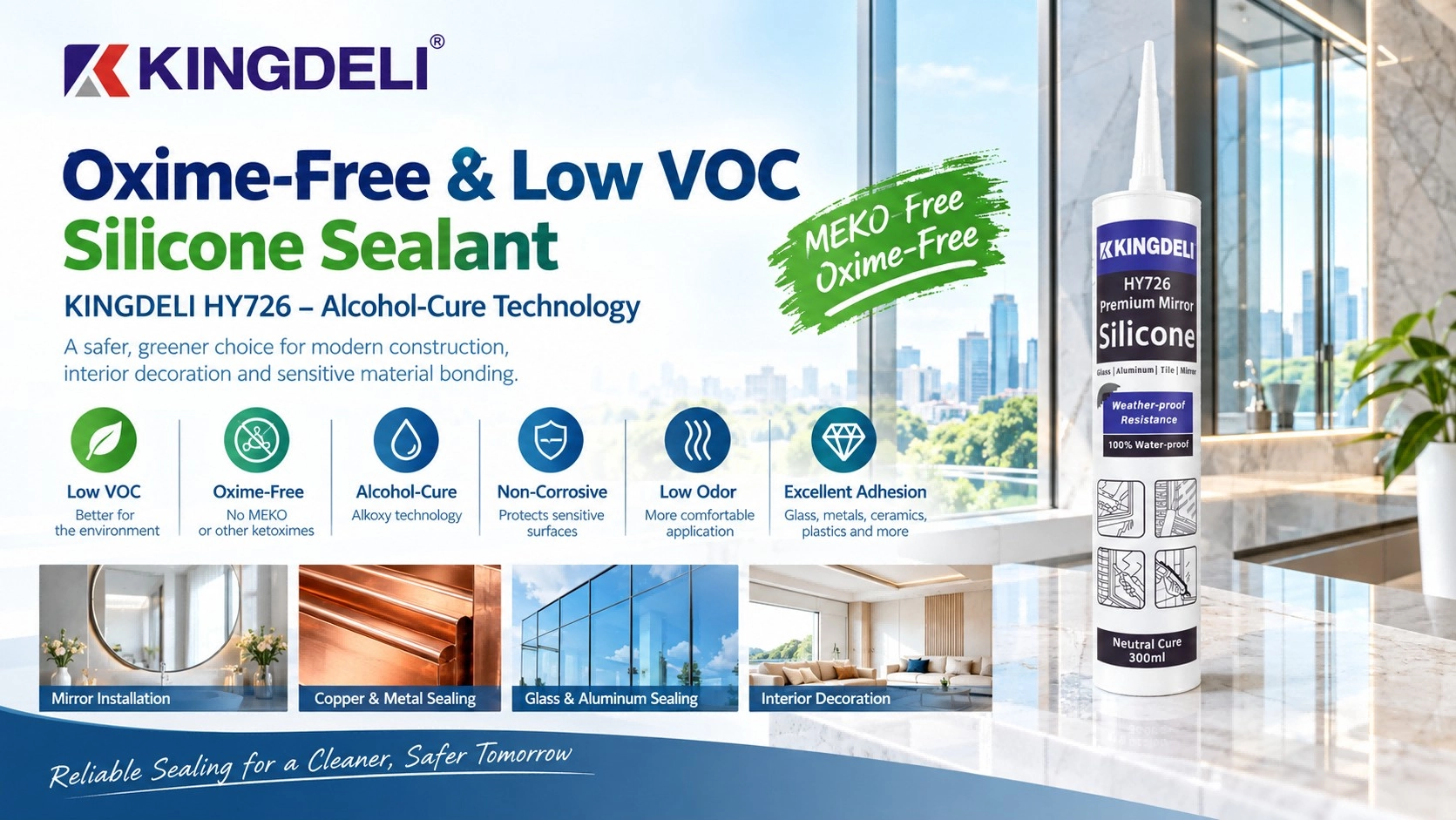
Oxime-Free & Low VOC Silicone Sealant: Discover KINGDELI HY726 Alcohol-Cure Technology
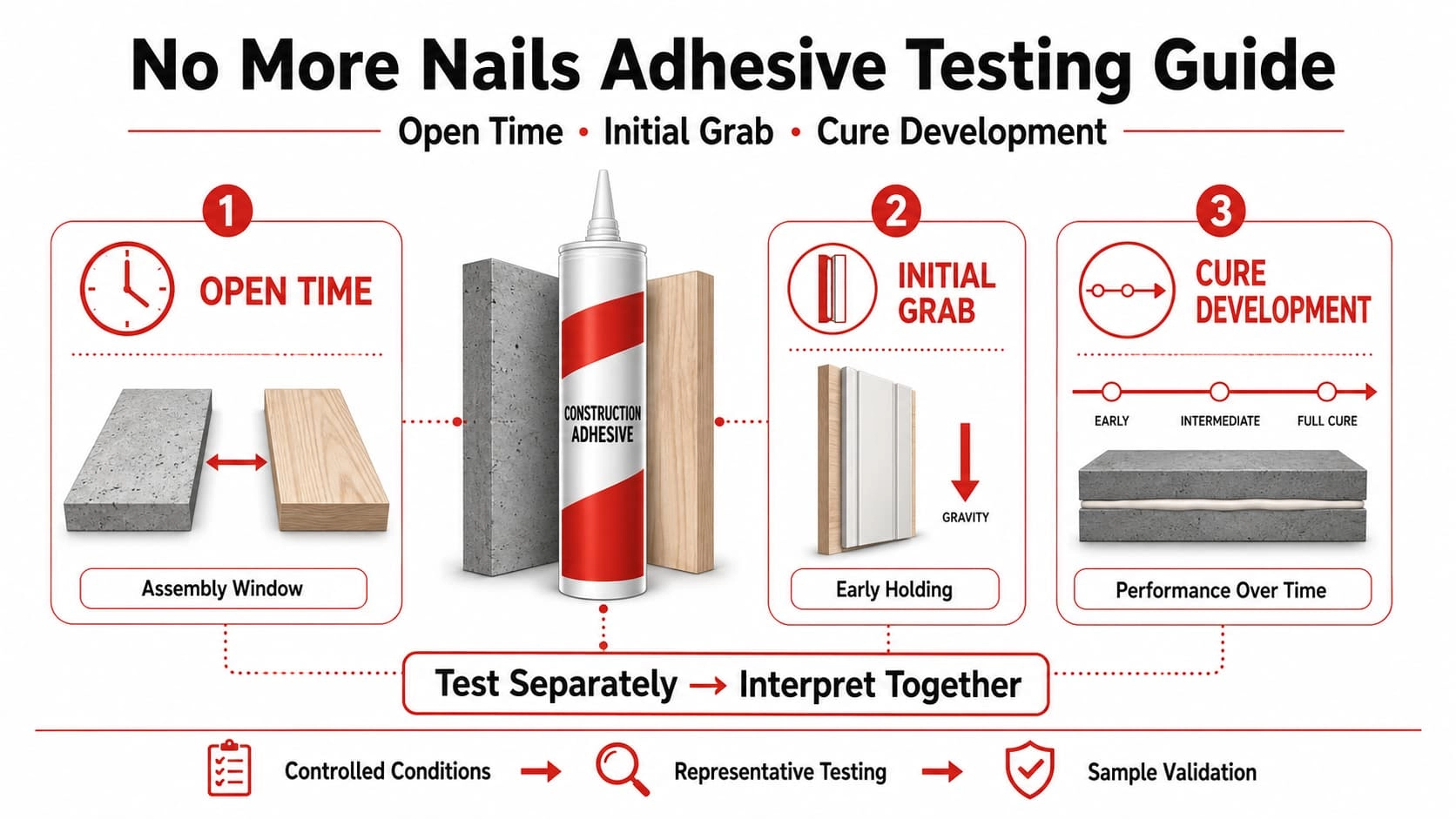
No More Nails Adhesive Open Time, Grab Strength, and Cure Testing Guide
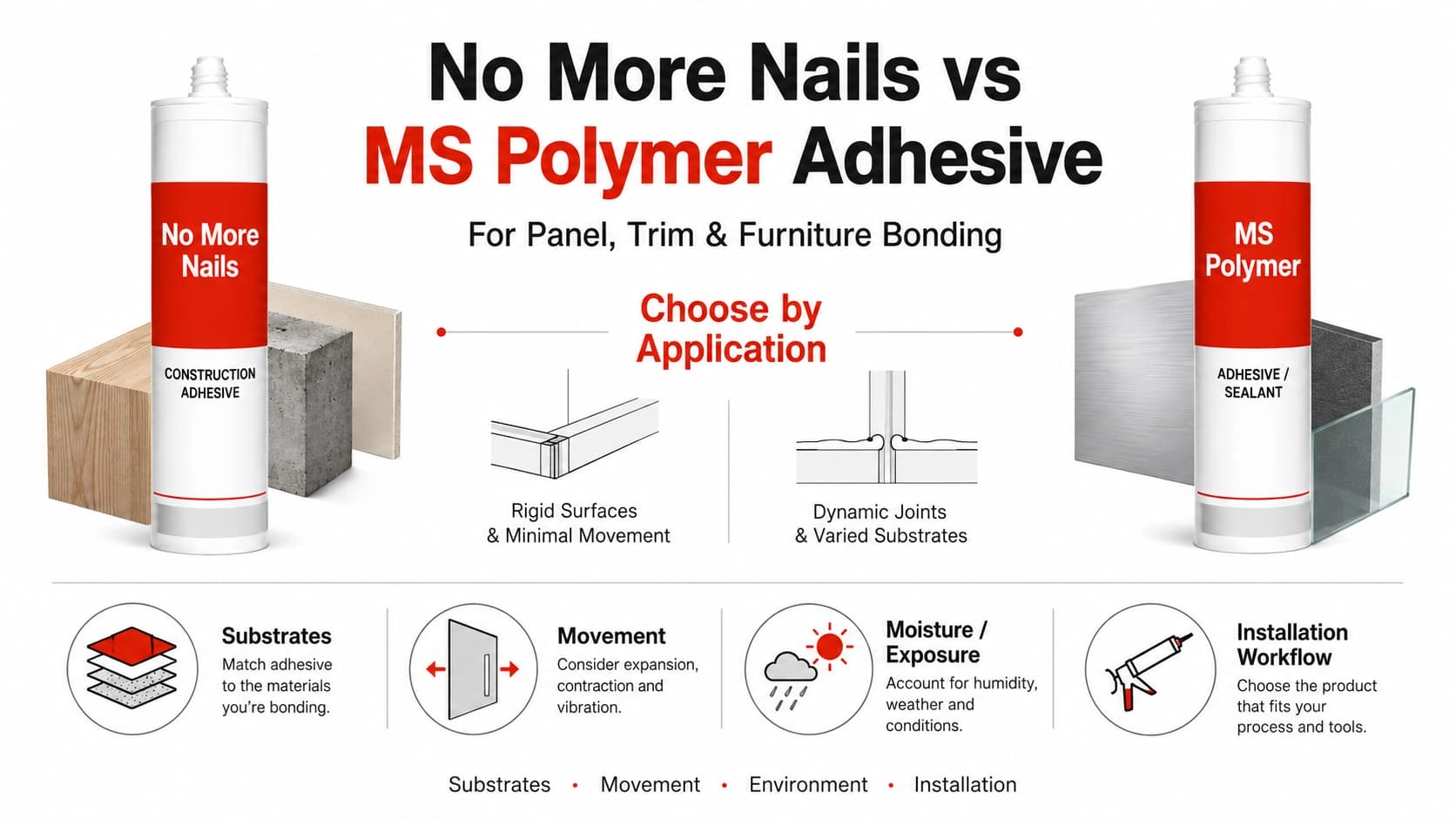
No More Nails vs MS Polymer Adhesive for Panel, Trim, and Furniture Bonding
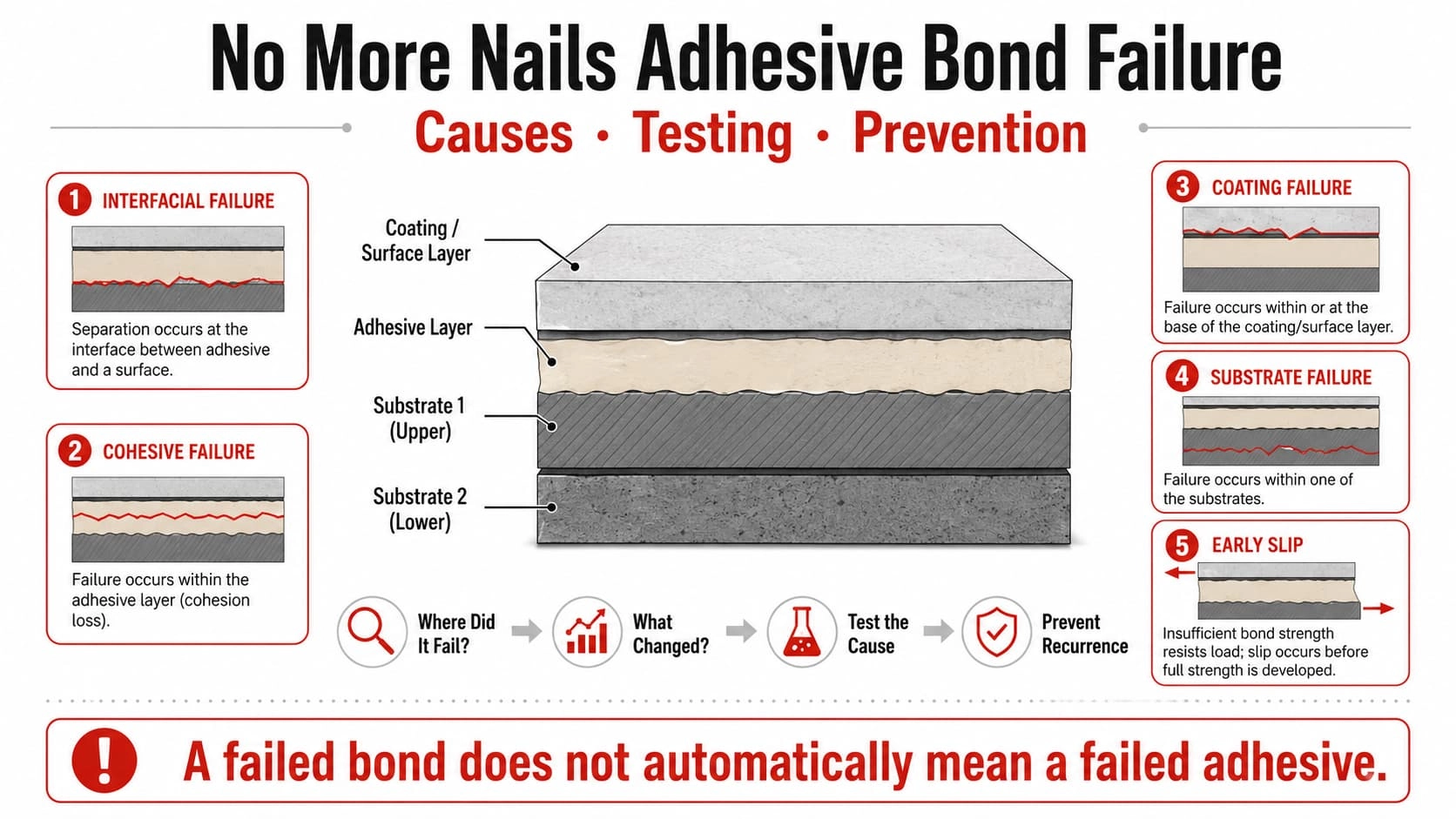
No More Nails Adhesive Bond Failure: Causes, Testing, and Prevention

HY992 Modified Polyurethane Construction Sealant
HY992 Modified Polyurethane Sealant is a one-component, moisture-curing construction sealant designed for professional building and structural sealing applications. It provides excellent adhesion, weather resistance, and durable elasticity, making it suitable for a wide range of construction materials.
The formulation delivers strong bonding performance without corrosion or substrate contamination, while maintaining low VOC content for environmentally responsible construction projects.

HY995 Crystal Clear Ms Polymer Adhesive/Sealant
HY995 Crystal Clear Ms Polymer Adhesive/Sealant is a new generation MS Polymer adhesive / sealant formulated for all bonding and sealing applications where long term reliability is required. It has excellent bonding strength on various materials. It will cure to form a durable, flexible, waterproof seal.

HY997 High-Performance Anti-Microbial MS Polymer Sealant
HY997 MS polymer sealant for is is a premium one-component, neutral-curing modified silane sealant engineered for demanding interior applications. It offers a Class 20 movement capability, ensuring long-lasting flexibility and reliable performance under dynamic joint conditions. Curing at room temperature, HY997 delivers superior anti-microbial and mildew-resistant properties, maintaining hygienic and clean environments over time.

KINGDELI HY732 Professional Acetoxy Cure Silicone Sealant
KINGDELI HY732 is a professional-grade, one-component acetoxy cure silicone sealant designed for fast curing, strong adhesion, and long-lasting flexibility. Ideal for aquariums, glass applications, aluminum doors and windows, kitchens, and bathrooms, it provides reliable sealing performance with excellent anti-fungal protection in high-humidity environments.
Let’s Build Stronger Bonds with Quality Adhesives and Sealants
Have questions about the topic or need tailored sealant solutions for your project?
Our team is ready to provide expert guidance, product recommendations, and application support.
Innovating with Integrity, Bonding the World
Since 1998, KINGDELI has delivered trusted, sustainable sealant solutions that connect industries and inspire progress worldwide.

Whatsapp: +8618825946249
Kingdeli
Kingdeli
Kingdeli
Kingdeli
Kingdeli