


What Certifications Should I Look for When Selecting an Adhesive and Sealant Manufacturer?
Quick Answer
Select an adhesive and sealant manufacturer with independently verified ISO 9001 quality management, ISO 14001 environmental management, and product-specific compliance such as CE or relevant ASTM requirements. KINGDELI supports qualification through OEM/ODM formulation, controlled production, and documented standards coverage. Confirm certification scope, product performance, traceability, and regulatory fit, while recognizing that final solutions depend on project testing and site conditions.
How KINGDELI Supports Projects
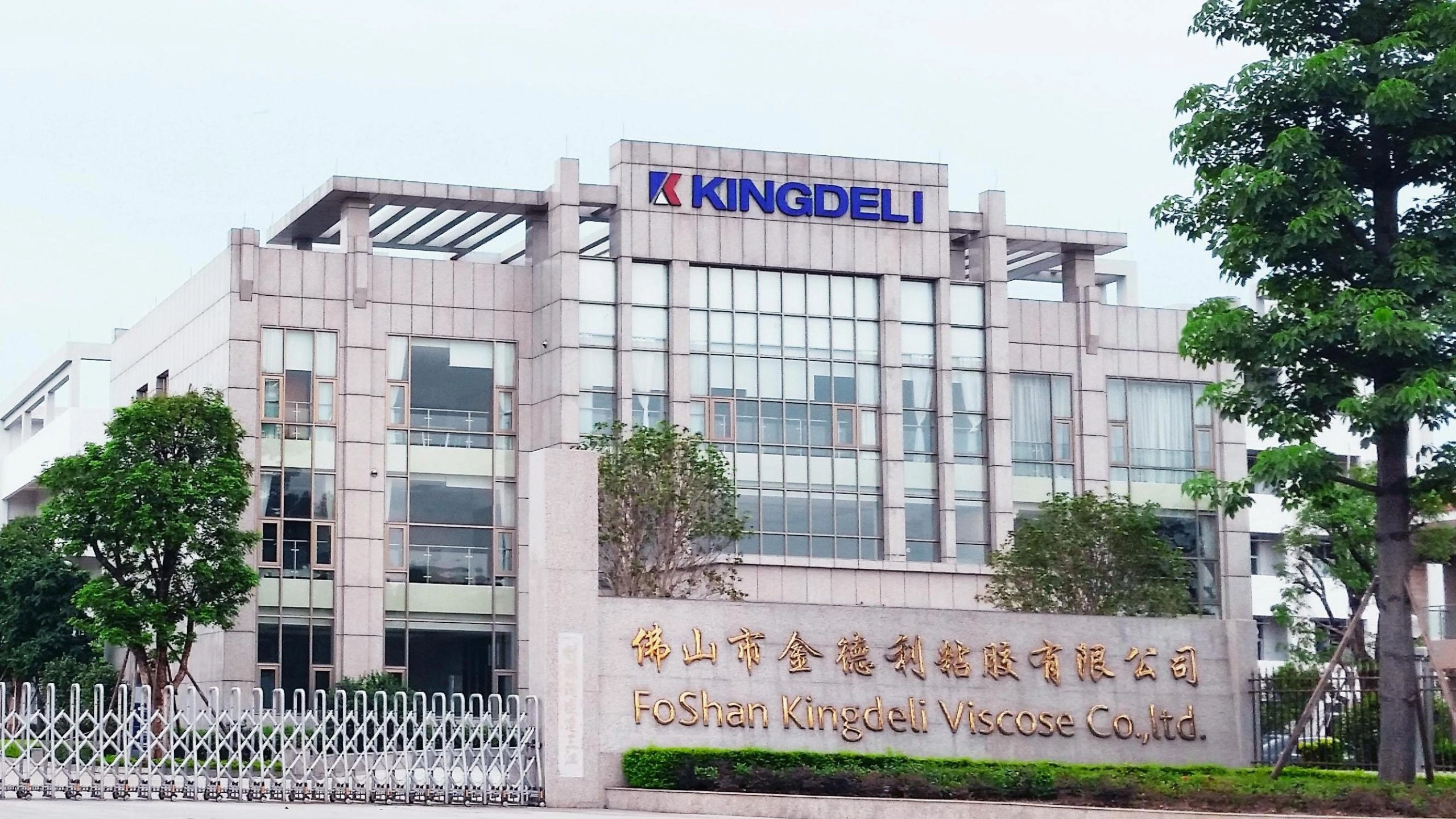
KINGDELI operates a 66,000 m² facility with automated production lines and annual capacity exceeding 100,000 tons. Its documented credentials include ISO 9001, ISO 14001, CE, and ASTM-related product compliance, while its portfolio covers neutral and acetic silicone, polyurethane, MS polymer, and No More Nails adhesives. These credentials should be assessed against the exact product and intended market.
For OEM and ODM projects, KINGDELI can discuss formulation direction, packaging, applicable standards, low-VOC objectives, and technical service requirements. Buyers should confirm certificate scope, product specification, batch controls, MOQ, lead time, testing scope, and quotation for each project rather than treating a corporate certificate as universal product approval.
Discuss Certification Requirements for Your Project
Send the target market, application, substrate types, joint or bond dimensions, expected movement or load, curing conditions, packaging preference, and required standards. Suitable product options, documentation, sample evaluation, and testing steps can then be discussed against the actual use case. Visit www.kingdelisealant.com or email info@kingdeliadhesive.com to begin a project-specific certification review.
Deep-Dive Certification FAQs
Which certifications prove an adhesive manufacturer controls production consistently?
ISO 9001 is the most relevant management-system credential for evaluating consistent manufacturing controls, but it does not certify every adhesive or sealant formulation. Review the certificate’s legal entity, site address, scope, expiry date, and issuing certification body. Then connect the system to practical evidence: incoming-material controls, batch identification, retained samples, corrective-action records, calibration, and release criteria. A certificate covering a headquarters office may not cover the factory making the material. Request a current certificate and ask how the certified scope maps to the specific production site and product family. Consistency still requires lot testing and agreed specifications; ISO registration is evidence of a managed system, not proof that every batch meets a buyer’s performance target.
Is ISO 9001 enough for sealant supplier qualification decisions?
No. ISO 9001 addresses the quality management system, including process control and continual improvement, but it does not establish adhesion, movement capability, weathering resistance, cure behavior, chemical resistance, or service life. Qualification should combine management-system review with product documentation and application testing. Depending on the market, examine the technical data sheet, safety data sheet, declared test methods, batch certificate, substrate compatibility, shelf life, packaging integrity, and change-notification procedure. For construction products, standards such as EN, ASTM, or local specifications may define performance tests. For regulated uses, additional approvals can apply. ISO 14001 may support environmental-management evaluation, while ISO 45001 can be relevant to occupational-health systems, but neither substitutes for product validation.
When does CE marking matter for construction adhesive purchases?
CE marking matters when the product falls within the scope of applicable European Union harmonised legislation, such as a harmonised product standard or an applicable European Technical Assessment route under the Construction Products Regulation. It is not a universal quality mark and does not apply simply because a product is sold for construction. The buyer should identify the intended use, applicable standard, declared performance, assessment and verification system, Declaration of Performance where required, and any notified-body involvement specified by the route. Check that the marking and documentation identify the correct manufacturer, product, and performance characteristics. A CE mark on one formulation or packaging configuration should not be assumed to cover another product, market, or end use.
How should buyers verify a manufacturer’s claimed certifications?
Request the complete certificate rather than relying on a logo, brochure statement, or undated scan. Verify the certificate number, legal manufacturer name, certified site, scope, issue and expiry dates, standard edition, and certification body. Many accredited certification bodies provide public certificate-search tools; where available, use the body’s database and confirm its accreditation through the relevant national accreditation organization. Compare the certificate scope with the factory that will produce the purchase order and with the product category being quoted. For product claims, request the applicable declaration, test report, or conformity document and check its laboratory, test method, sample identity, and date. Independent verification is particularly important when an intermediary, trading company, and actual production site have different names.
Do ASTM standards certify products or the manufacturing company?
Generally, ASTM International publishes voluntary consensus standards, including test methods, classifications, specifications, and guides; ASTM itself does not automatically certify a manufacturer merely because its product is tested to an ASTM method. A specification may define required properties and test procedures, while a test method explains how a property is measured. The purchase specification should therefore state the exact ASTM standard, edition, acceptance limits, conditioning, substrate, and reporting requirements. Ask for a report tied to the production product and relevant batch, not a generic statement that the material is ASTM compliant. Also confirm whether the project owner, code, or authority requires third-party certification, listed-product status, or laboratory accreditation in addition to testing against an ASTM document.
Which environmental certifications support low-VOC adhesive procurement requirements?
Start by identifying the governing jurisdiction and the project’s definition of VOC. Requirements can arise from legislation, building codes, procurement policies, or voluntary programs, and they may use different test methods and limits. ISO 14001 demonstrates an environmental management system; it does not prove that a formulation is low VOC. Product-level evidence may include a formulation statement, SDS, VOC test report, emissions assessment, or a recognized indoor-air or green-building label accepted by the project. Check the test method, reporting units, curing state, applicable limits, and product version. Also review hazardous-substance obligations such as EU REACH and CLP when relevant. A low-odor claim alone is not a reliable substitute for measured or documented emissions information.
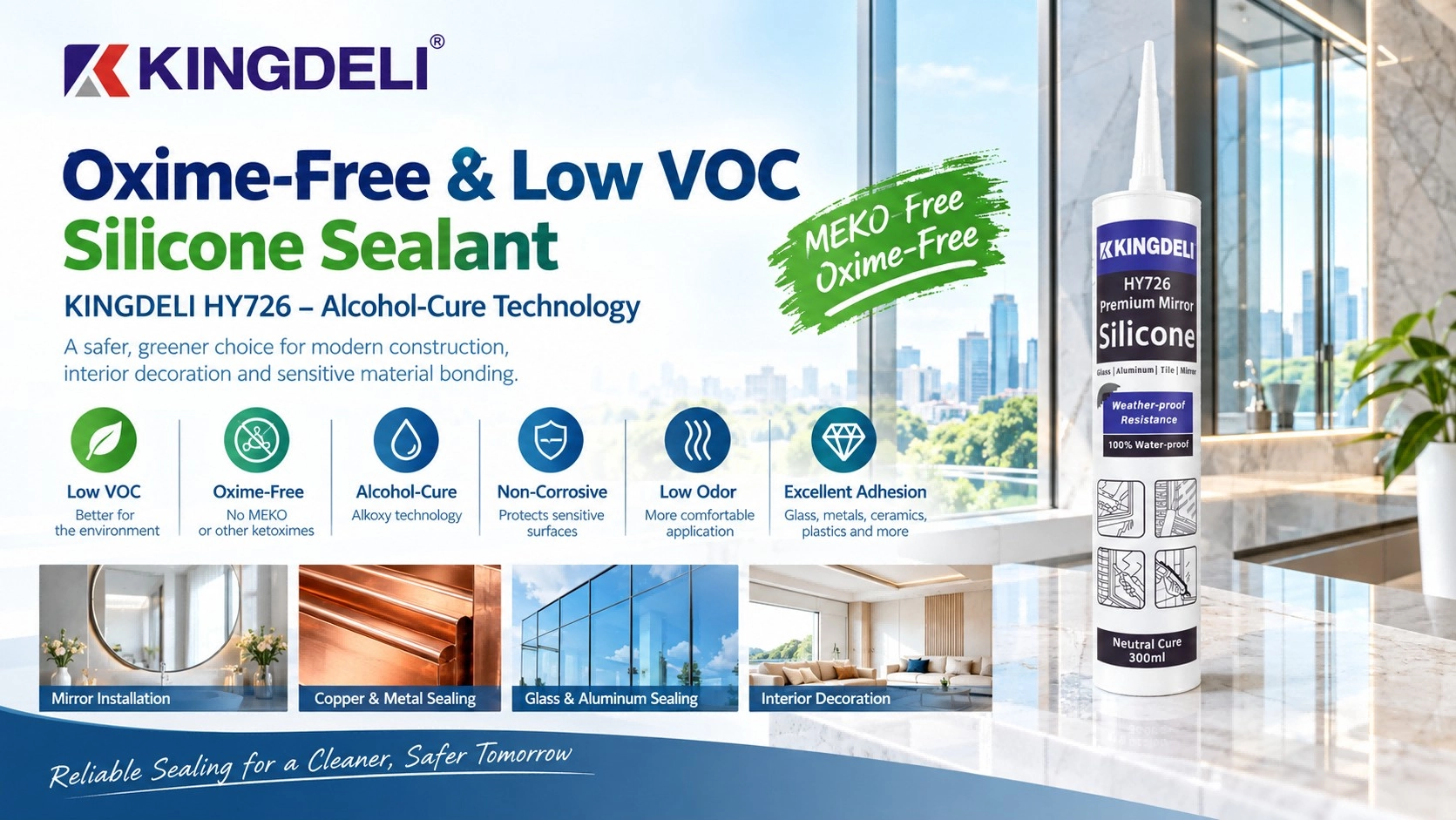
Oxime-Free & Low VOC Silicone Sealant: Discover KINGDELI HY726 Alcohol-Cure Technology
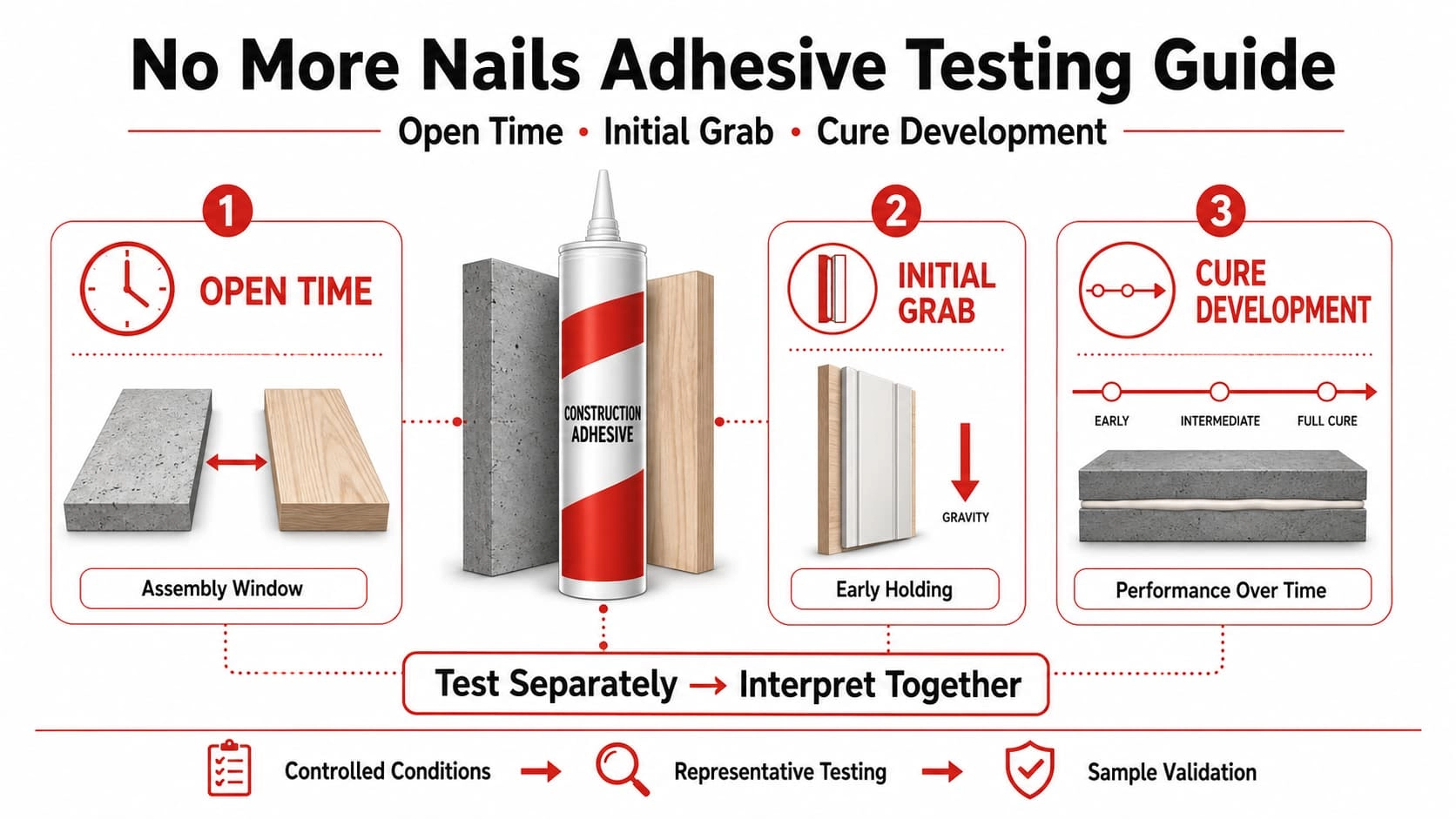
No More Nails Adhesive Open Time, Grab Strength, and Cure Testing Guide
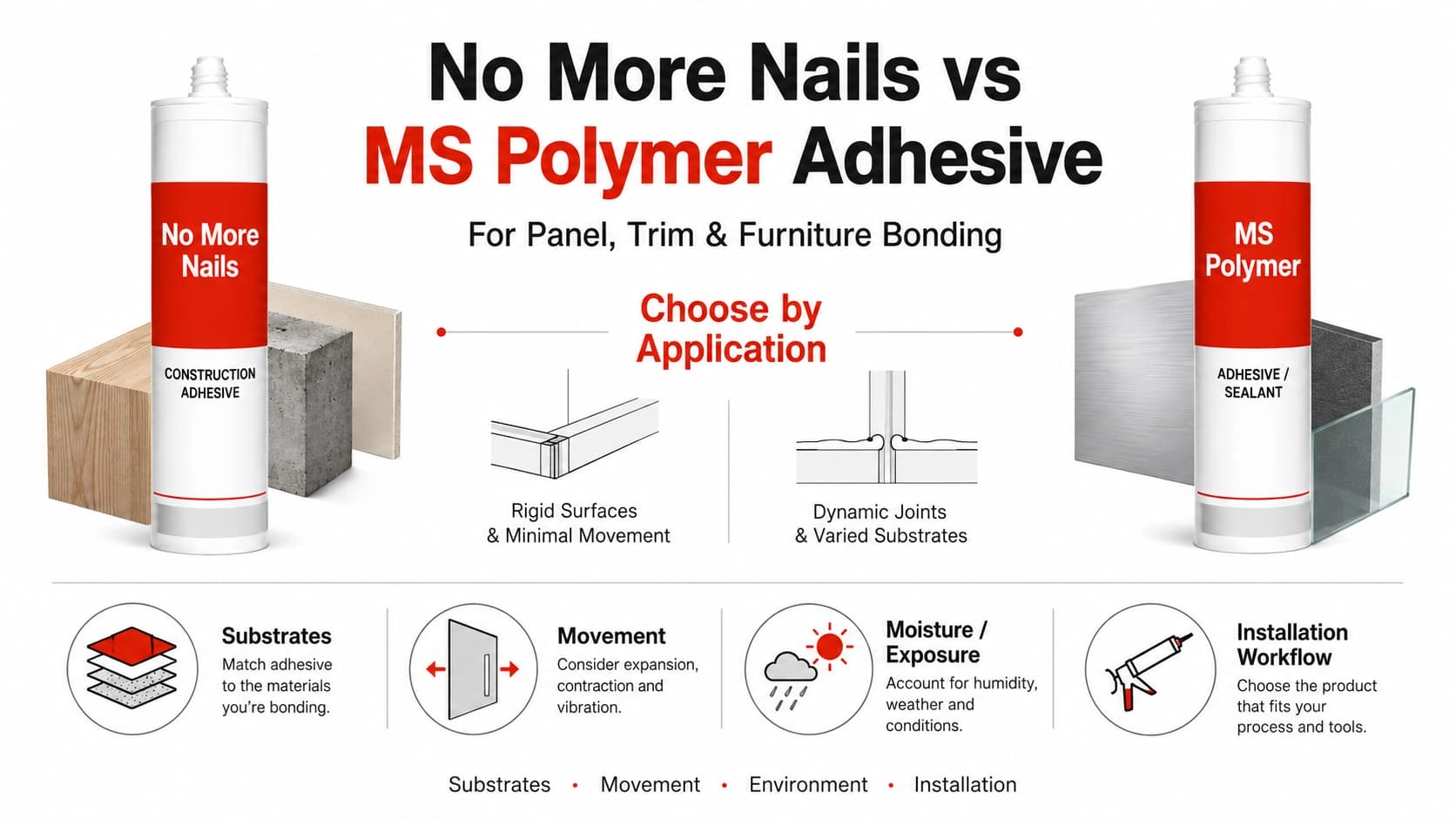
No More Nails vs MS Polymer Adhesive for Panel, Trim, and Furniture Bonding
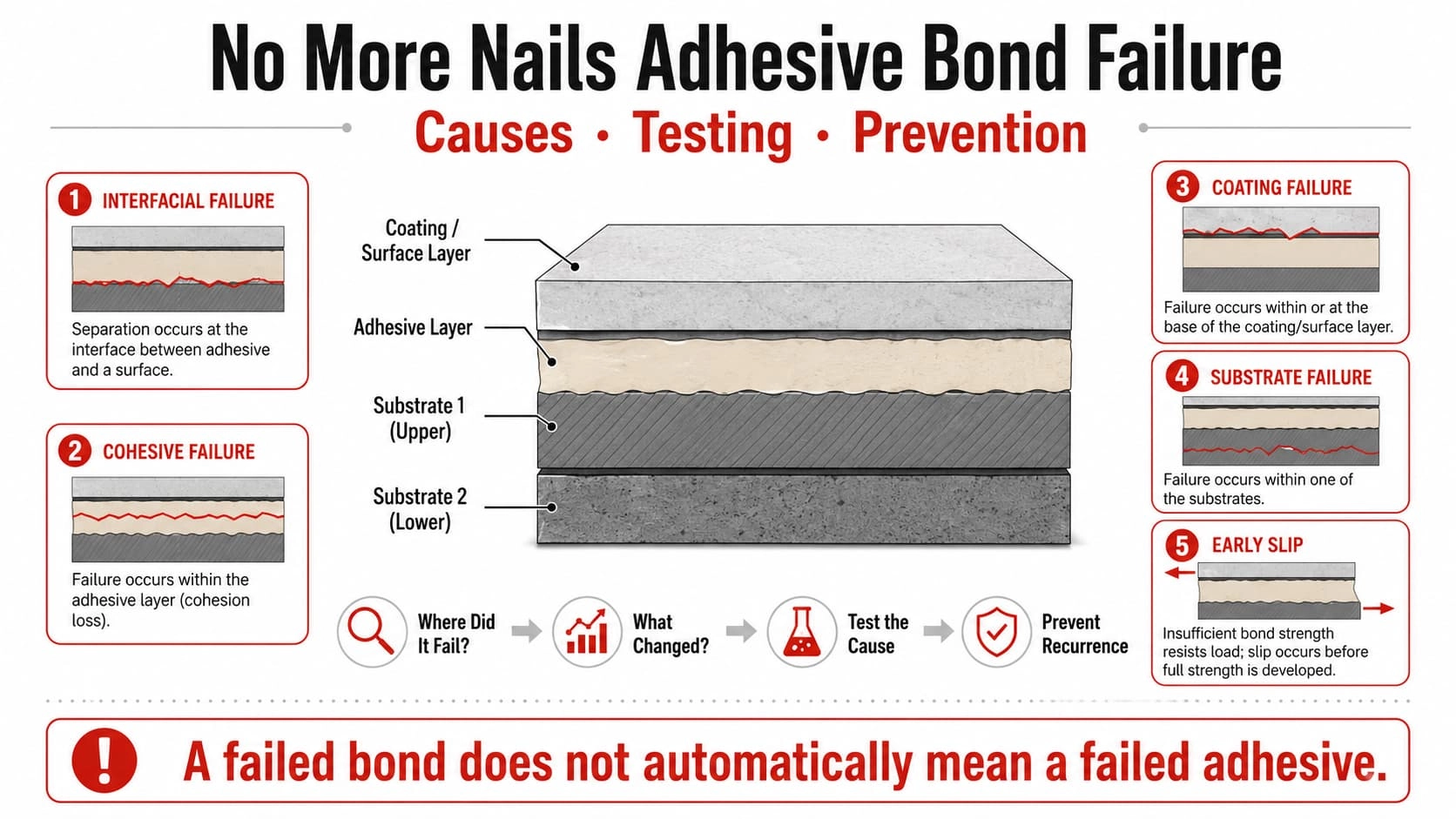
No More Nails Adhesive Bond Failure: Causes, Testing, and Prevention
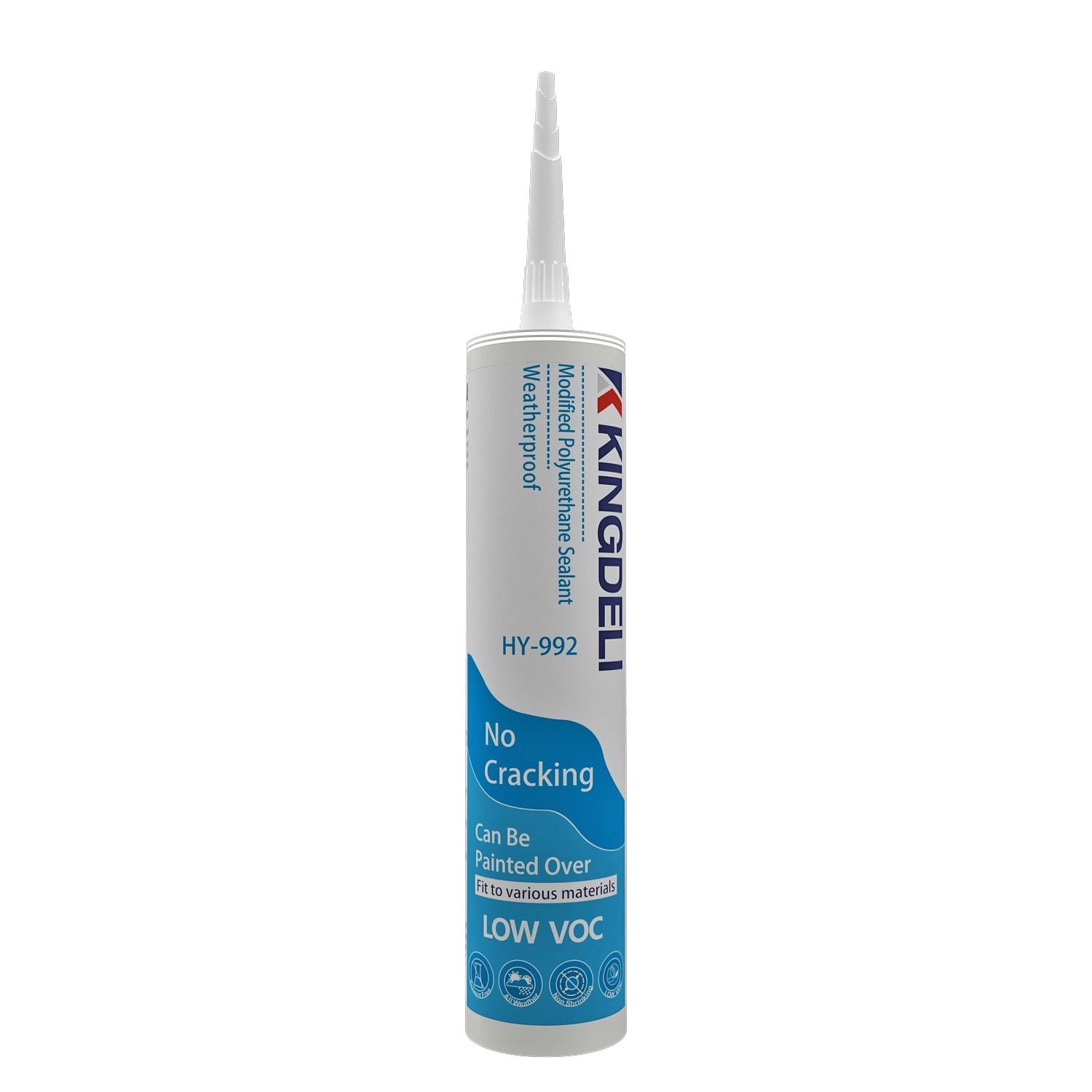
HY992 Modified Polyurethane Construction Sealant
HY992 Modified Polyurethane Sealant is a one-component, moisture-curing construction sealant designed for professional building and structural sealing applications. It provides excellent adhesion, weather resistance, and durable elasticity, making it suitable for a wide range of construction materials.
The formulation delivers strong bonding performance without corrosion or substrate contamination, while maintaining low VOC content for environmentally responsible construction projects.

HY995 Crystal Clear Ms Polymer Adhesive/Sealant
HY995 Crystal Clear Ms Polymer Adhesive/Sealant is a new generation MS Polymer adhesive / sealant formulated for all bonding and sealing applications where long term reliability is required. It has excellent bonding strength on various materials. It will cure to form a durable, flexible, waterproof seal.

HY997 High-Performance Anti-Microbial MS Polymer Sealant
HY997 MS polymer sealant for is is a premium one-component, neutral-curing modified silane sealant engineered for demanding interior applications. It offers a Class 20 movement capability, ensuring long-lasting flexibility and reliable performance under dynamic joint conditions. Curing at room temperature, HY997 delivers superior anti-microbial and mildew-resistant properties, maintaining hygienic and clean environments over time.
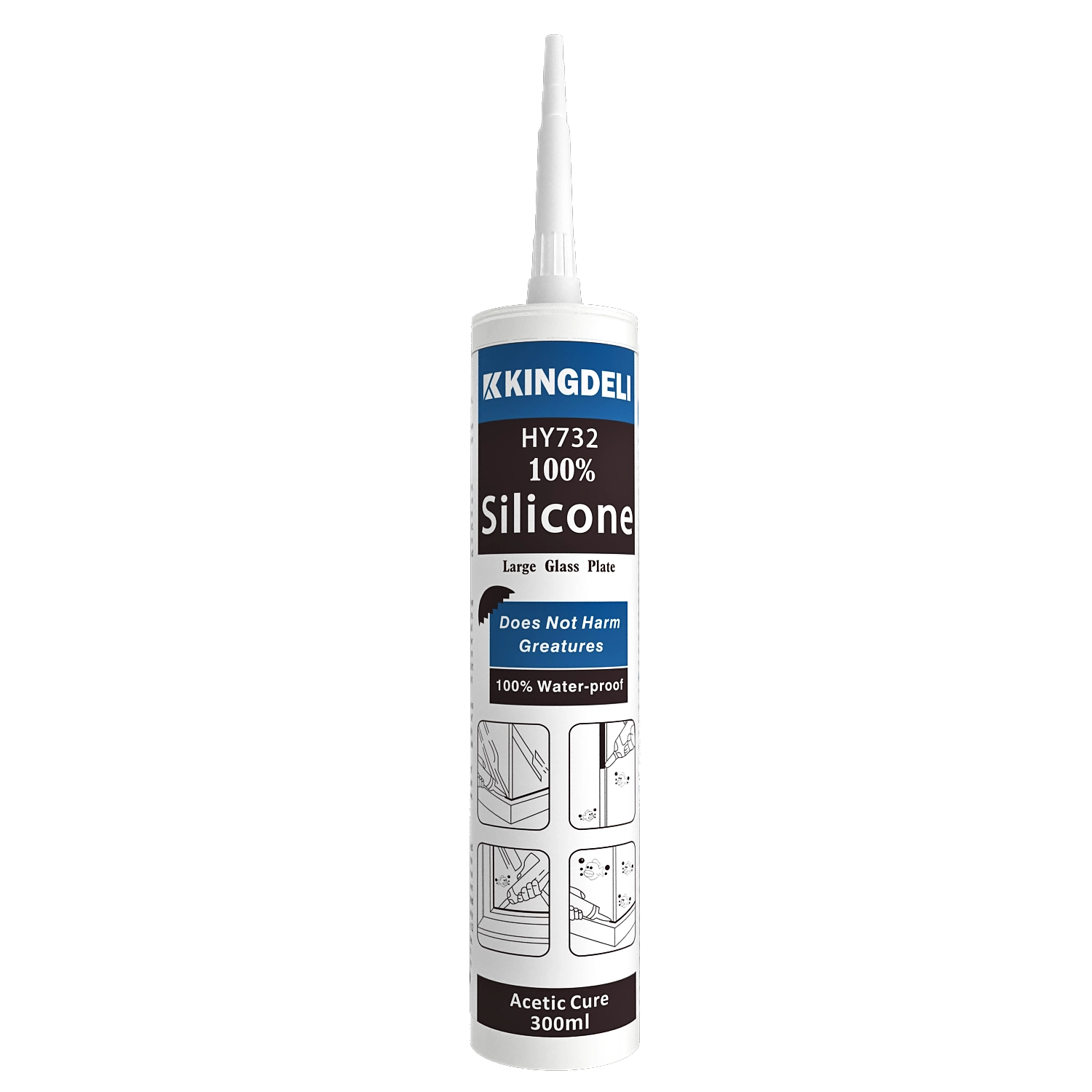
KINGDELI HY732 Professional Acetoxy Cure Silicone Sealant
KINGDELI HY732 is a professional-grade, one-component acetoxy cure silicone sealant designed for fast curing, strong adhesion, and long-lasting flexibility. Ideal for aquariums, glass applications, aluminum doors and windows, kitchens, and bathrooms, it provides reliable sealing performance with excellent anti-fungal protection in high-humidity environments.
Let’s Build Stronger Bonds with Quality Adhesives and Sealants
Have questions about the topic or need tailored sealant solutions for your project?
Our team is ready to provide expert guidance, product recommendations, and application support.
Innovating with Integrity, Bonding the World
Since 1998, KINGDELI has delivered trusted, sustainable sealant solutions that connect industries and inspire progress worldwide.
Whatsapp: +8618825946249
Kingdeli
Kingdeli
Kingdeli
Kingdeli
Kingdeli