


Can epoxy tile grout be used for pools and other wet areas?
- Is epoxy tile grout safe for chlorinated pool environments long-term?
- Can epoxy grout withstand constant immersion and freeze-thaw cycles?
- What surface preparation prevents epoxy grout delamination in pools?
- How to repair stained or discolored epoxy grout in wet areas?
- Does epoxy grout resist pool chemicals and high pH sanitizers?
- Which epoxy grout formulations are certified for submerged aquatic use?
- FAQ
Can epoxy tile grout be used for pools and other wet areas?
Epoxy tile grout can be an excellent choice for pools and continuously wet areas when the right formulation, substrate preparation, joint design, and curing schedule are used. This article explains limits, chemical resistance, installation best practices, repairs, and selection criteria for long-term submerged performance.
Is epoxy tile grout safe for chlorinated pool environments long-term?
Yes—but only when you select a product specifically rated for submerged service and follow manufacturer chemical-resistance guidance. Modern two-component epoxies have very low porosity and are inherently resistant to normal free chlorine and bromine concentrations used in recreational pools. Long-term performance depends on pigment stability, the filler package, and cure state: many manufacturers require 7 days at 20–25°C for full chemical resistance, and accelerated or frequent shock dosing can expose pigments or resins to harsher conditions. Always review the product’s chemical-resistance chart and ANSI/ISO product standards (for example, look for epoxy grout conforming to epoxy grout sections in tile standards such as ANSI A118 series) and choose formulations tested against common pool chemicals. Never assume a generic epoxy intended for interior floors will tolerate continuous chlorinated immersion without validation.
Can epoxy grout withstand constant immersion and freeze-thaw cycles?
Epoxy grout is non-absorbent and can perform well under continuous immersion; however, freeze-thaw durability is a combination of the grout’s intrinsic properties and the tile-substrate system. Epoxies do not tolerate, and will transmit, movement in rigid joints—if the tile system is subject to differential movement from thermal cycling, freeze-thaw, or structural movement, rigid epoxy joints can crack or debond. For outdoor pools in cold climates, select epoxy formulations with documented freeze-thaw cycling data and use proper tile backing, mechanical anchors, or expansion joints to isolate movement. Where freeze-thaw is a concern, designers often combine epoxy grout in field joints with flexible, elastic joint sealants at control/expansion joints to prevent system-wide failure.
What surface preparation prevents epoxy grout delamination in pools?
Surface preparation is the single biggest determinant of success. Substrate must be clean, sound, dry as per product tolerances, and free of bond breakers (laitance, oils, curing compounds). For tile set in pool applications: ensure tile adhesive is fully cured and compatible with epoxy grout; remove grout haze or residue from prior grouts; roughen glossy or glazed surfaces per manufacturer instructions; and prime highly porous substrates where recommended. For new installations allow full cure of setting mortars—typically 7–14 days for cementitious mortars—before grouting. Use mechanical means (wire brushes, diamond grinders) to remove contaminated or weak material rather than relying on solvents. Follow the epoxy grout manufacturer’s substrate preparation checklist—ignoring it is the leading cause of delamination claims.
How to repair stained or discolored epoxy grout in wet areas?
Repair strategy depends on the failure mode. Surface staining from organic soils or metal staining can sometimes be cleared using manufacturer-approved, non-acidic cleaners; avoid strong acids that can attack pigments. For structural failure (cracking, loss of adhesion) the correct procedure is removal and replacement: cut out the failed grout full depth using diamond tooling or carbide blades, clean the joint to sound substrate, and reapply a matching epoxy grout per manufacturer mixing and tooling instructions. Partial repairs or overcoating usually fail because of bond incompatibility. For color touch-ups use factory-matched epoxy grout materials; for large areas remove and replace to restore integrity and warranty compliance.
Does epoxy grout resist pool chemicals and high pH sanitizers?
Generally yes—epoxy chemistries are more chemically resistant than cementitious grouts. They resist common sanitizers (chlorine, bromine) and many oxidizers, but resistance varies by formulation and pigment system. High pH cleaners, calcium hypochlorite shocks, or prolonged exposure to concentrated acids/alkalis require confirmation from the manufacturer’s resistance data. Also be aware that some oxidizing shock treatments can accelerate pigment fade or slight chalking on the surface; this is a cosmetic effect rather than a structural loss but is preventable by selecting UV- and chemical-stable pigment systems. Always consult the technical data sheet (TDS) for permitted chemical exposures and recommended cleaning agents for maintenance.
Which epoxy grout formulations are certified for submerged aquatic use?
Look for epoxies that list submerged service, pool use, or chemical-resistance classifications in their TDS and have laboratory testing to back claims. Certifications and standards to consider include manufacturer test reports for continuous immersion, adhesion after wet/dry cycles, and compliance with regional building or pool codes. Some vendors publish ASTM or ANSI test results relevant to adhesion and chemical resistance; others supply independent lab certificates for immersion testing. When specifying, request the product’s performance data for continuous immersion, accelerated aging, and chemical exposure, and insist on job-site sample panels and a mock-up to validate color stability and bond before full installation.
Conclusion — KINGDELI expertise and reliability
Epoxy systems offer outstanding performance for pools and wet areas when you match product selection, substrate prep, joint design, and cure schedule to the application. With 15+ years servicing commercial and recreational aquatic projects, KINGDELI applies manufacturer-validated products, written specification checklists, and field-qualified installation protocols to avoid common failures—delamination, UV/pigment fade, and improper movement detailing. Our recommendations prioritize long-term durability, ease of maintenance, and compliance with tile industry standards so owners and contractors get predictable, serviceable installations.
Contact KINGDELI for a site-specific quote and product recommendation at www.kingdelisealant.com or info@kingdeliadhesive.com.
FAQ
Is epoxy tile grout safe for chlorinated pool environments long-term?
Yes—but only when you select a product specifically rated for submerged service and follow manufacturer chemical-resistance guidance. Modern two-component epoxies have very low porosity and are inherently resistant to normal free chlorine and bromine concentrations used in recreational pools. Long-term performance depends on pigment stability, filler package, and cure state; many manufacturers require 7 days at 20–25°C for full chemical resistance. Always review the product’s chemical-resistance chart and ensure the formulation is tested for pool chemicals rather than assuming suitability.
Can epoxy grout withstand constant immersion and freeze-thaw cycles?
Epoxy grout is non-absorbent and can perform well under continuous immersion; however, freeze-thaw durability is a system issue. Epoxies are rigid and will transmit movement, so differential thermal cycling or structural movement can cause cracking or debonding. For cold climates select formulations with documented freeze-thaw testing and incorporate expansion/control joints and proper tile anchoring to manage movement.
What surface preparation prevents epoxy grout delamination in pools?
Substrate must be clean, sound, and free of bond breakers. Ensure adhesives and setting mortars are fully cured, remove laitance and contaminants mechanically, and prime porous substrates when recommended. Follow the epoxy grout manufacturer’s substrate preparation checklist exactly—poor prep is the leading cause of delamination.
How to repair stained or discolored epoxy grout in wet areas?
Surface staining may respond to manufacturer-approved non-acidic cleaners, but structural failures require full removal and replacement. Cut out failed grout using diamond tools, clean to sound substrate, and reinstall correct epoxy material per mixing and tooling instructions. Partial overcoating is generally unreliable; color touch-ups should use factory-matched materials or full replacement for large areas.
Does epoxy grout resist pool chemicals and high pH sanitizers?
Generally yes—epoxies outperform cementitious grouts for chemical resistance, but resistance varies by formulation and pigment system. High-pH cleaners, shock treatments, or concentrated acids/alkalis should be checked against the product’s resistance data. Cosmetic pigment fade can occur under aggressive oxidizers even if structural integrity is maintained, so select products with documented chemical stability.
Which epoxy grout formulations are certified for submerged aquatic use?
Select products that explicitly list submerged service or pool use in their technical data sheets and provide laboratory test results for continuous immersion, adhesion after wet/dry cycles, and chemical exposure. Request manufacturer test reports or independent certificate data for immersion and accelerated aging; a job-site mock-up is recommended to validate color and bond before full installation.
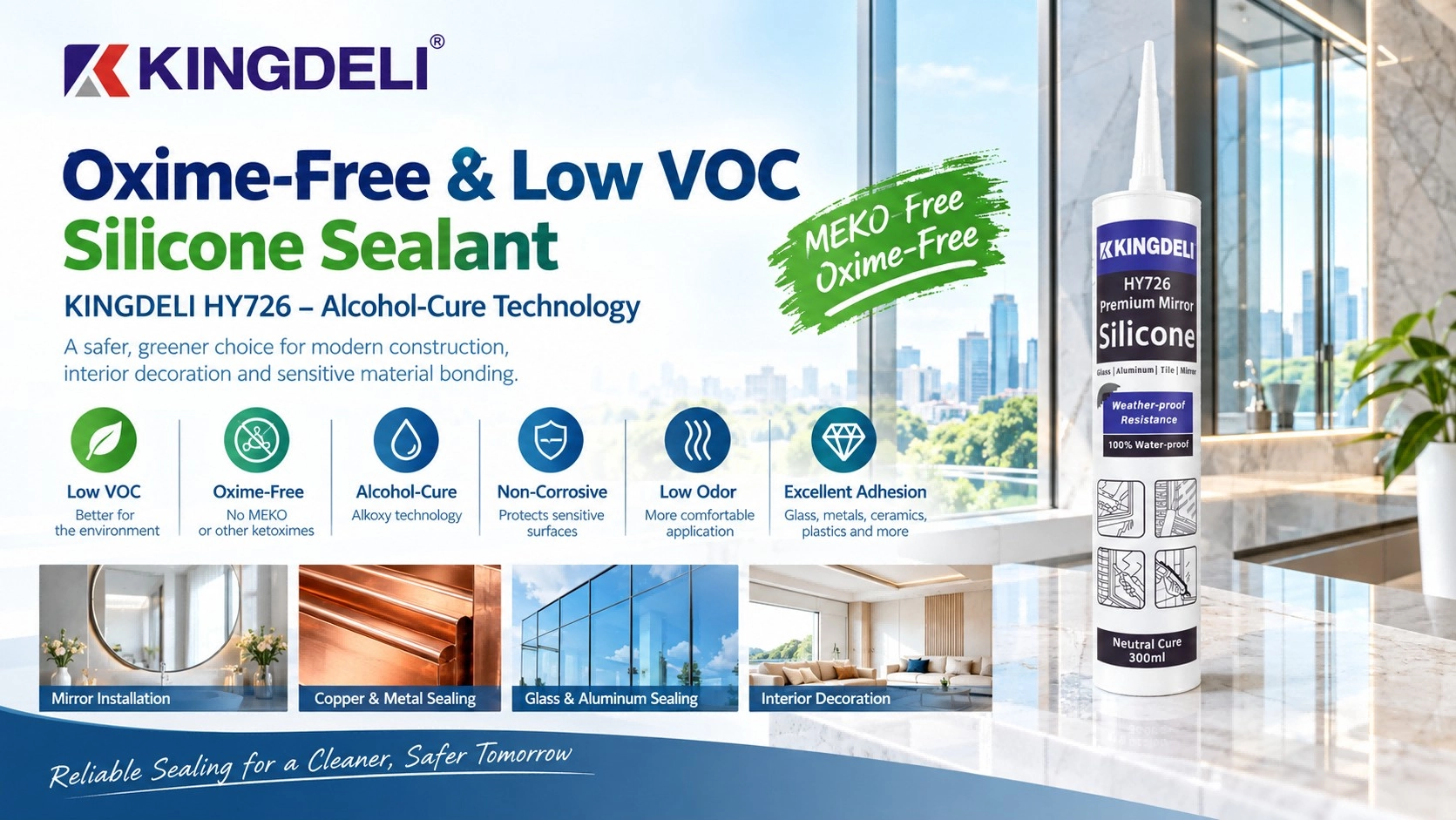
Oxime-Free & Low VOC Silicone Sealant: Discover KINGDELI HY726 Alcohol-Cure Technology
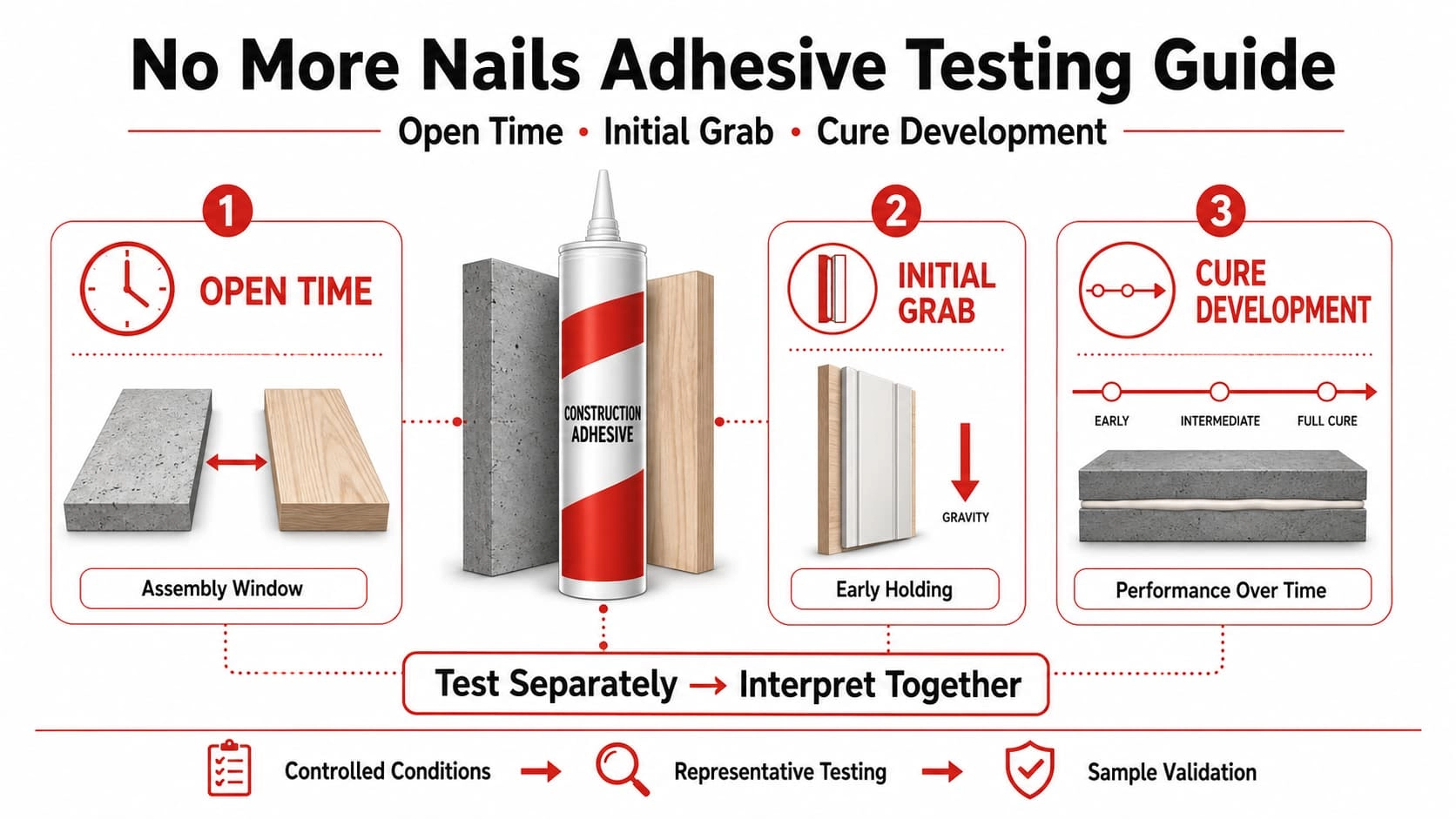
No More Nails Adhesive Open Time, Grab Strength, and Cure Testing Guide
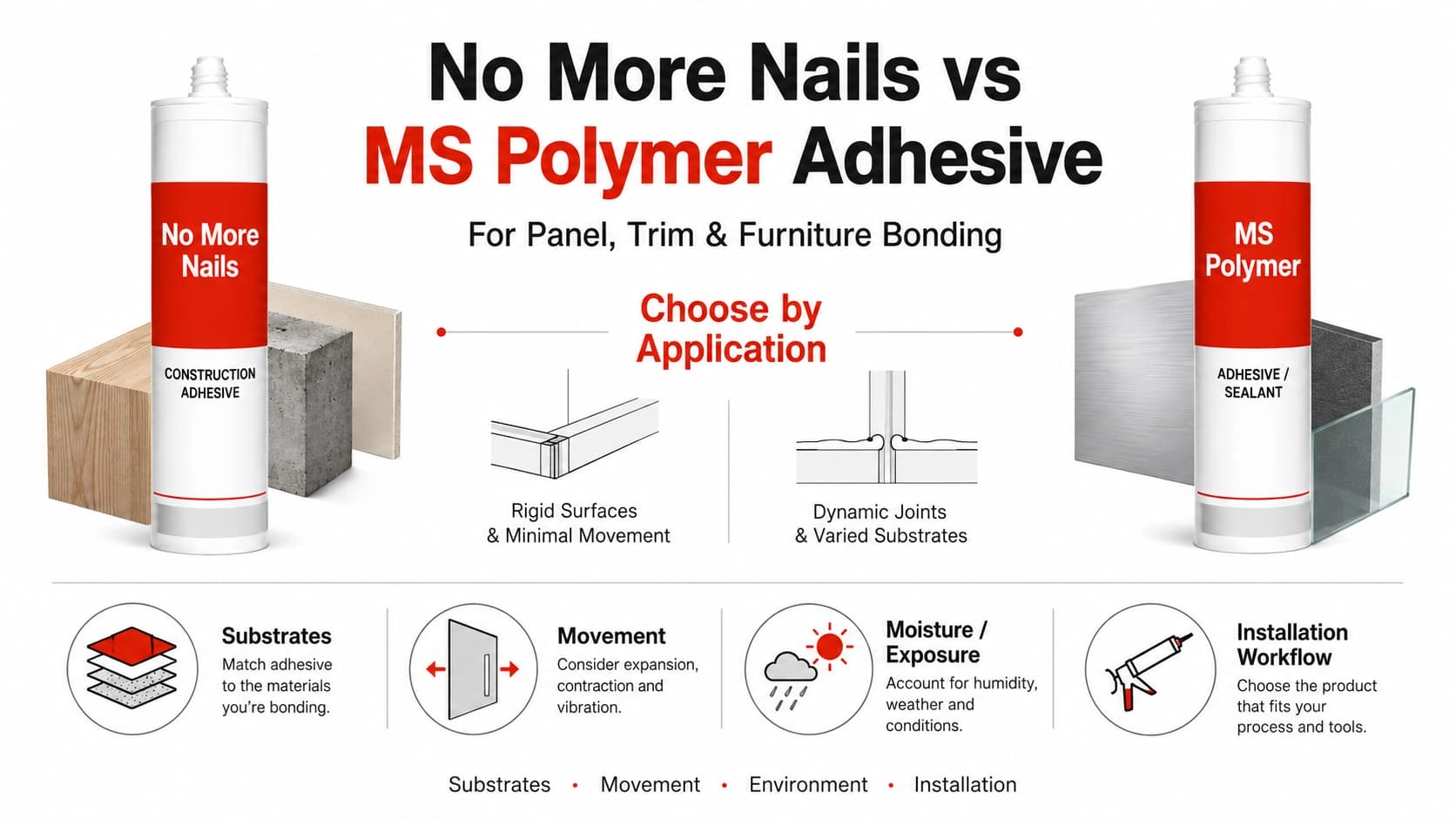
No More Nails vs MS Polymer Adhesive for Panel, Trim, and Furniture Bonding
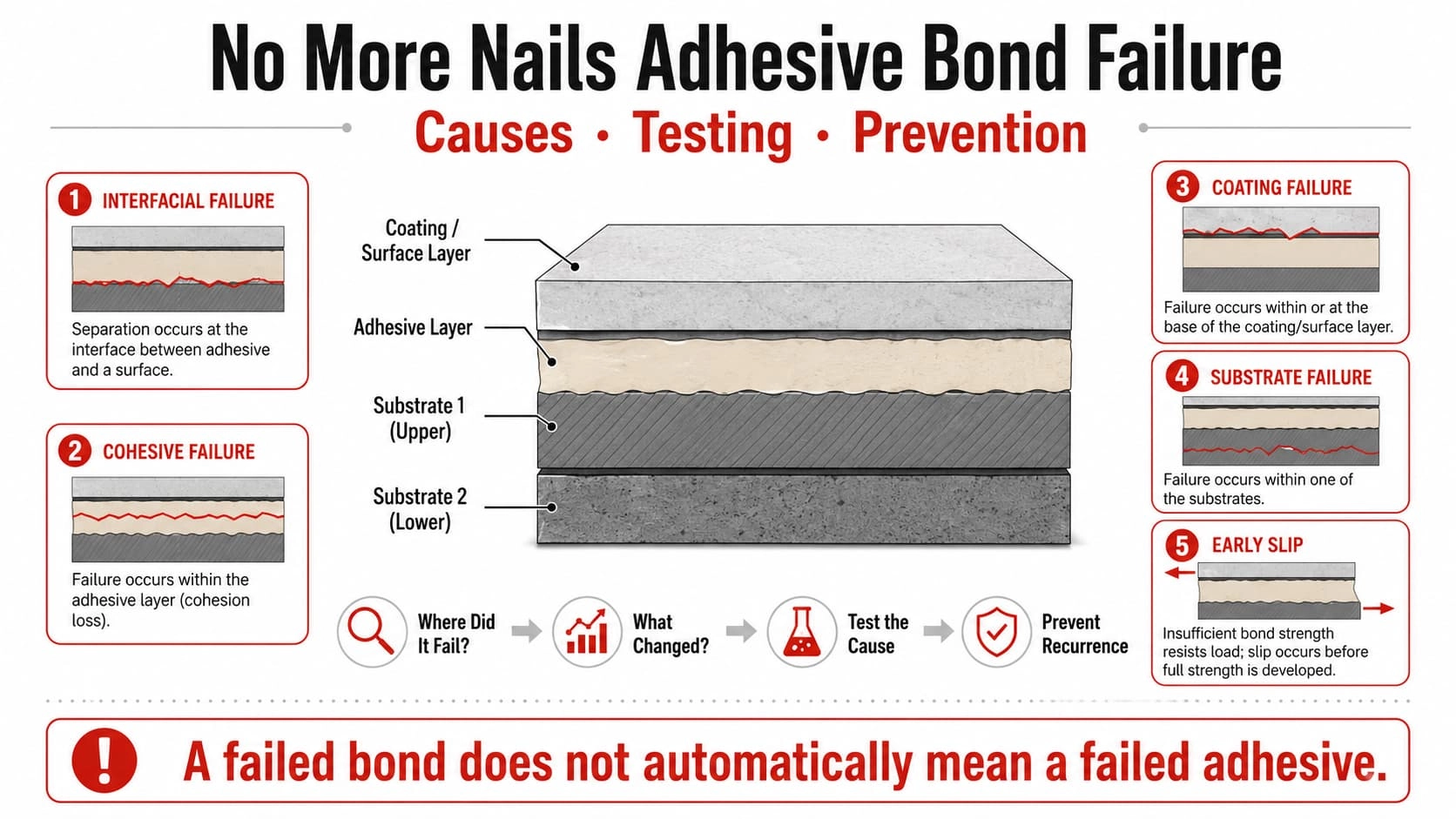
No More Nails Adhesive Bond Failure: Causes, Testing, and Prevention

HY992 Modified Polyurethane Construction Sealant
HY992 Modified Polyurethane Sealant is a one-component, moisture-curing construction sealant designed for professional building and structural sealing applications. It provides excellent adhesion, weather resistance, and durable elasticity, making it suitable for a wide range of construction materials.
The formulation delivers strong bonding performance without corrosion or substrate contamination, while maintaining low VOC content for environmentally responsible construction projects.

HY995 Crystal Clear Ms Polymer Adhesive/Sealant
HY995 Crystal Clear Ms Polymer Adhesive/Sealant is a new generation MS Polymer adhesive / sealant formulated for all bonding and sealing applications where long term reliability is required. It has excellent bonding strength on various materials. It will cure to form a durable, flexible, waterproof seal.

HY997 High-Performance Anti-Microbial MS Polymer Sealant
HY997 MS polymer sealant for is is a premium one-component, neutral-curing modified silane sealant engineered for demanding interior applications. It offers a Class 20 movement capability, ensuring long-lasting flexibility and reliable performance under dynamic joint conditions. Curing at room temperature, HY997 delivers superior anti-microbial and mildew-resistant properties, maintaining hygienic and clean environments over time.

KINGDELI HY732 Professional Acetoxy Cure Silicone Sealant
KINGDELI HY732 is a professional-grade, one-component acetoxy cure silicone sealant designed for fast curing, strong adhesion, and long-lasting flexibility. Ideal for aquariums, glass applications, aluminum doors and windows, kitchens, and bathrooms, it provides reliable sealing performance with excellent anti-fungal protection in high-humidity environments.
Let’s Build Stronger Bonds with Quality Adhesives and Sealants
Have questions about the topic or need tailored sealant solutions for your project?
Our team is ready to provide expert guidance, product recommendations, and application support.
Innovating with Integrity, Bonding the World
Since 1998, KINGDELI has delivered trusted, sustainable sealant solutions that connect industries and inspire progress worldwide.

Whatsapp: +8618825946249
Kingdeli
Kingdeli
Kingdeli
Kingdeli
Kingdeli