


How to Buy Bulk Best Polyurethane Sealant for Contractors?
How to Buy Bulk Best Polyurethane Sealant for Contractors?
Quick Summary
Buy bulk polyurethane sealant by first defining movement capability, substrate compatibility, cure system (1K moisture‑cure vs 2K reactive), packaging and technical evidence. Prioritize ASTM/ISO compliance, lab test data, shelf life, primer needs, dispensing equipment and safety data before quoting volumes.
Brand Advantage & CTA
KINGDELI supplies contractor-grade sealants and offers technical specification support, batch traceability, and factory QC to remove procurement guesswork. Our team helps match service temperature, elongation, and adhesion targets to project joint design and installation logistics so you minimize rework and material loss.
For a competitive bulk quote and technical data sheets, contact KINGDELI at www.kingdelisealant.com or info@kingdeliadhesive.com.
FAQ
How do joint design and width-to-depth ratios affect sealant performance?
Joint geometry directly determines stress distribution and therefore longevity. Industry best practice is a depth equal to half the joint width (1:2 width:depth) with a minimum depth (commonly 6 mm) to allow full elastic movement; shallower joints produce higher tensile strains at the adhesive interface and increase risk of adhesive failure. Use closed-cell backer rod sized to prevent three-sided adhesion and include a bond-breaker tape where needed. For high-movement applications specify a sealant with proven movement capability per ASTM C920 or ISO 11600 (e.g., ±25% or ±50% classifications) and design joint widths to keep expected thermal or dynamic movement within that range.
What specifications verify long-term adhesion to concrete and masonry?
Require documented adhesion tests on representative substrates: 28-day adhesion after cure, adhesion after accelerated weathering, and cyclic movement adhesion tests. Ask vendors for tensile adhesion strength, peel tests, and lab reports showing adhesion to poured and precast concrete, cured mortar and common masonry primers. Verify compatibility with surface treatments (curing agents, form-release oils) and request site-specific mock-ups because porosity and surface salts can alter adhesion. Also request SDS, TDS, and certificate of conformity for relevant standards (e.g., ASTM C920, ISO 11600) and independent lab certifications when available.
When is primer required for polyurethane on porous substrates?
Priming is required when porous substrates draw moisture out of the sealant or when surface contaminants reduce wetting. Concrete with high porosity, dusty masonry, or substrates with high alkalinity often need a primer to ensure consistent adhesion and reduce T-peel failures. Suppliers should provide a primer recommendation tied to the substrate type and show adhesion data with and without primer. In many cases a solvent-based or silane-modified primer is used on masonry and concrete; follow manufacturer guidance and allow recommended drying times before tooling to prevent bond-line contamination.
How to evaluate cure profile, skin time, and full cure?
Request technical data showing skin time (time until non-tacky surface), tack-free time, and full cure rate at specified temperature and relative humidity. Single-component moisture-curing polyurethanes cure from the surface inward and cure rate is humidity- and temperature-dependent; typical tack-free times vary from 30 minutes to several hours and full mechanical properties develop over 7–28 days. For two-component systems check pot life, gel time and demold/handling times governed by mix ratio and temperature. Require supplier test data measured at project‑relevant conditions and run jobsite trials to confirm cure behavior before large placements.
What packaging and logistics reduce waste for large contractor orders?
Choose packaging to match application rate and dispatch cadence: cartridges/sausages for small crews, 20L pails for medium usage, and 200L drums or bulk packs for continuous high-volume application. For 2K systems ensure separate resin/hardener drums sized to match pump metering. Minimize waste by staging deliveries to match installation schedule, ordering long‑lead items with extended shelf‑life considerations, and using appropriate bulk pumps or proportioners to reduce leftover material. Verify storage conditions and shelf life with the supplier; good practice is FIFO inventory and single-batch usage for large joints to maintain consistent cure characteristics.
What quality tests and documents to demand from suppliers?
Demand a complete technical dossier: TDS, SDS, ISO/ASTM compliance statements, batch COA, shelf‑life/storage instructions, and third-party lab results for tensile strength, elongation at break, modulus at 100% (or 200%), Shore A hardness, adhesion tests, movement capability, VOC content (g/L) and accelerated weathering (UV) data. For 2K products require mix-ratio verification and pump calibration instructions. Insist on sample reports for similar projects, factory QC processes, and on-site trial support. These documents let you create objective acceptance criteria and reduce project risk.
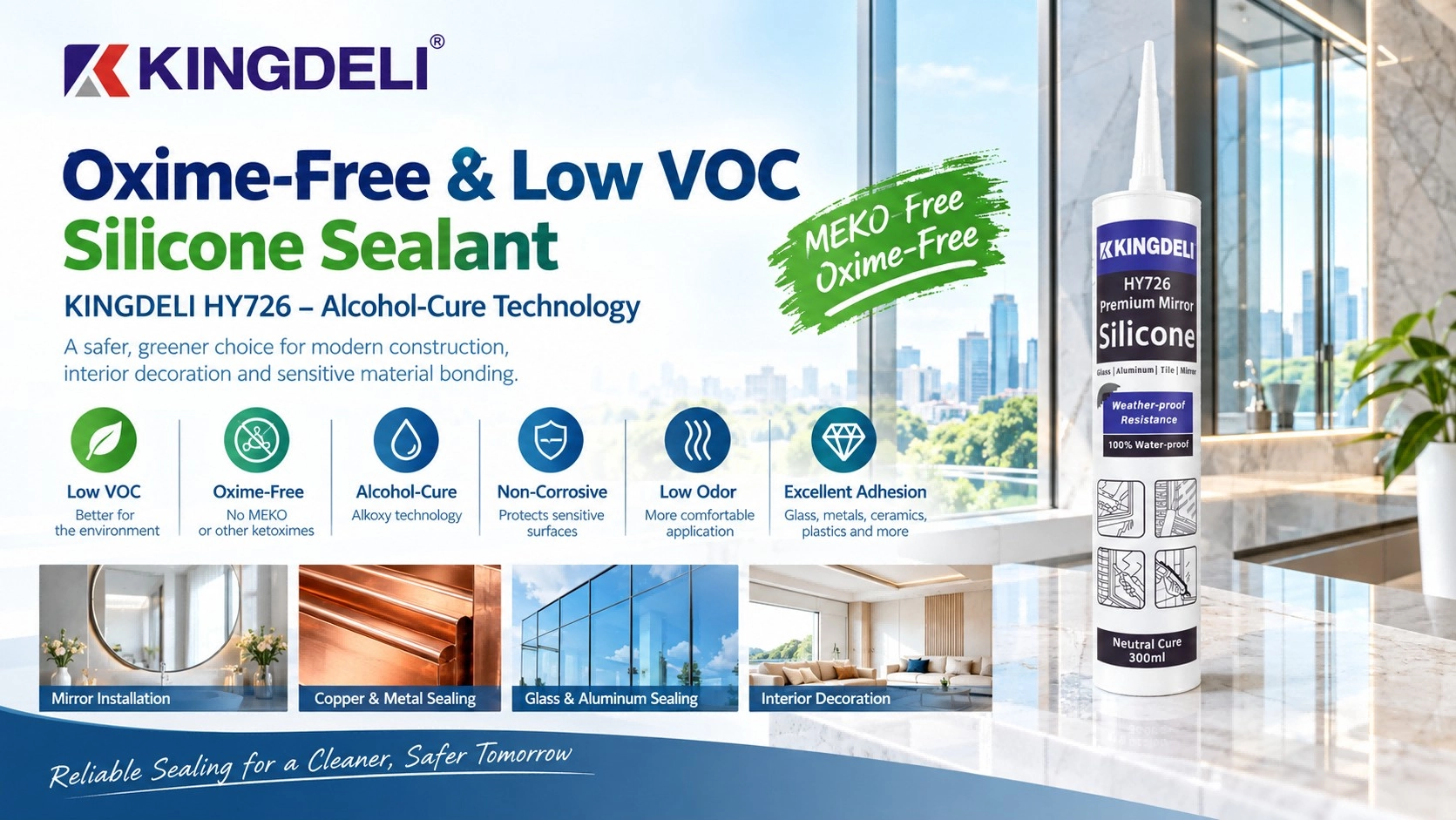
Oxime-Free & Low VOC Silicone Sealant: Discover KINGDELI HY726 Alcohol-Cure Technology
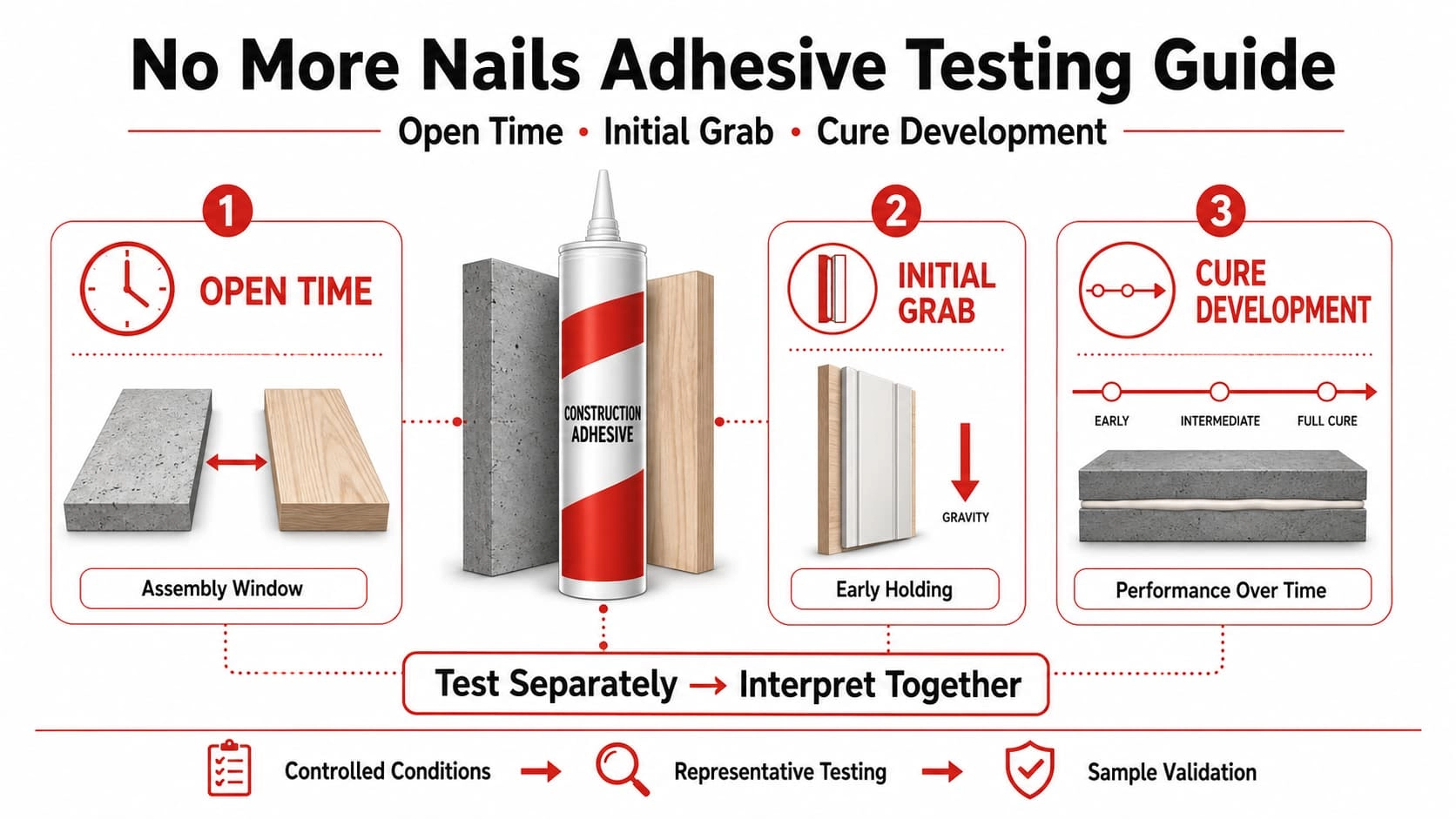
No More Nails Adhesive Open Time, Grab Strength, and Cure Testing Guide
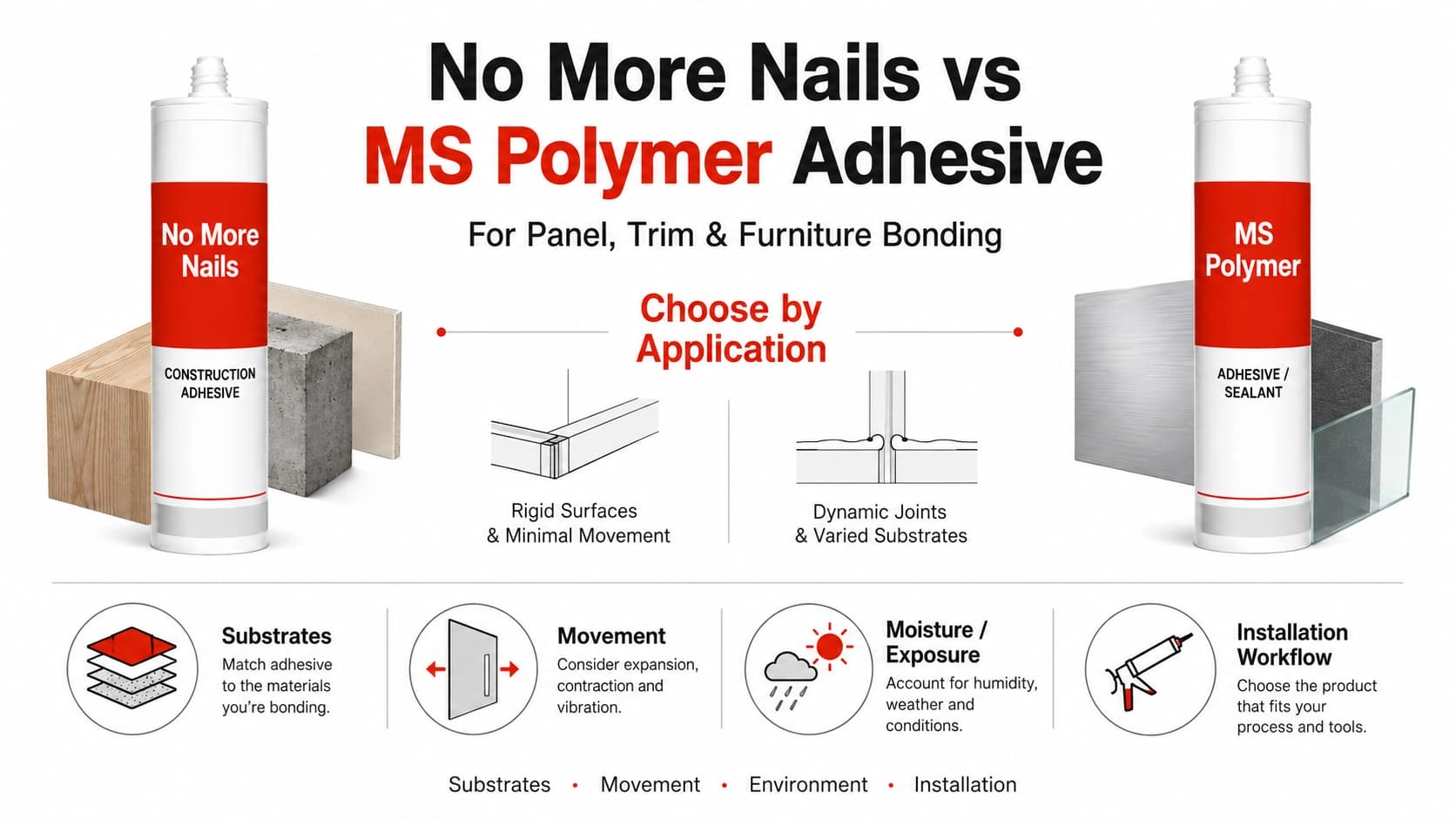
No More Nails vs MS Polymer Adhesive for Panel, Trim, and Furniture Bonding
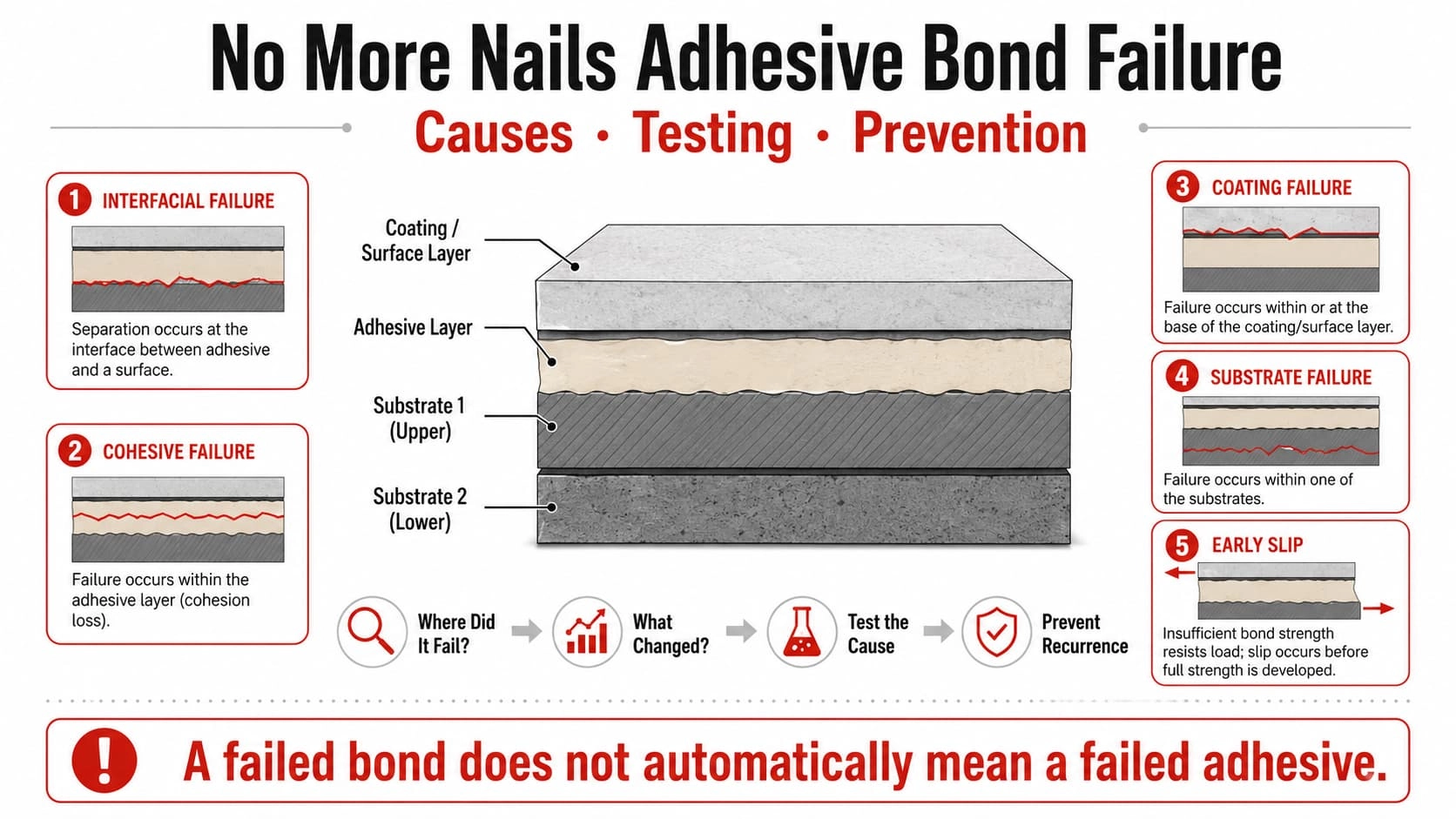
No More Nails Adhesive Bond Failure: Causes, Testing, and Prevention

HY992 Modified Polyurethane Construction Sealant
HY992 Modified Polyurethane Sealant is a one-component, moisture-curing construction sealant designed for professional building and structural sealing applications. It provides excellent adhesion, weather resistance, and durable elasticity, making it suitable for a wide range of construction materials.
The formulation delivers strong bonding performance without corrosion or substrate contamination, while maintaining low VOC content for environmentally responsible construction projects.

HY995 Crystal Clear Ms Polymer Adhesive/Sealant
HY995 Crystal Clear Ms Polymer Adhesive/Sealant is a new generation MS Polymer adhesive / sealant formulated for all bonding and sealing applications where long term reliability is required. It has excellent bonding strength on various materials. It will cure to form a durable, flexible, waterproof seal.

HY997 High-Performance Anti-Microbial MS Polymer Sealant
HY997 MS polymer sealant for is is a premium one-component, neutral-curing modified silane sealant engineered for demanding interior applications. It offers a Class 20 movement capability, ensuring long-lasting flexibility and reliable performance under dynamic joint conditions. Curing at room temperature, HY997 delivers superior anti-microbial and mildew-resistant properties, maintaining hygienic and clean environments over time.

KINGDELI HY732 Professional Acetoxy Cure Silicone Sealant
KINGDELI HY732 is a professional-grade, one-component acetoxy cure silicone sealant designed for fast curing, strong adhesion, and long-lasting flexibility. Ideal for aquariums, glass applications, aluminum doors and windows, kitchens, and bathrooms, it provides reliable sealing performance with excellent anti-fungal protection in high-humidity environments.
Let’s Build Stronger Bonds with Quality Adhesives and Sealants
Have questions about the topic or need tailored sealant solutions for your project?
Our team is ready to provide expert guidance, product recommendations, and application support.
Innovating with Integrity, Bonding the World
Since 1998, KINGDELI has delivered trusted, sustainable sealant solutions that connect industries and inspire progress worldwide.

Whatsapp: +8618825946249
Kingdeli
Kingdeli
Kingdeli
Kingdeli
Kingdeli