


How to Build a Sealant SKU Matrix for Hardware and Building Material Distributors
- Key Takeaways
- What Is a Sealant SKU Matrix?
- Why Do Hardware and Building Material Distributors Need a SKU Matrix?
- Step 1: Define Sales Channels and Customer Groups
- Step 2: Group Sealant SKUs by Product Category
- Step 3: Map SKUs by Application
- Step 4: Decide Packaging Formats and Unit Sizes
- Step 5: Plan Colors, Labels, and Performance Tiers
- Step 6: Add Sample Status and Approval Notes
- Step 7: Set Reorder Priority and Inventory Role for Each SKU
- Sealant SKU Matrix Template
- What Common Mistakes Should Distributors Avoid When Building a Sealant SKU Matrix?
- 1. Listing too many similar SKUs
- 2. Mixing neutral and acetic silicone without clear labels
- 3. Ignoring packaging format
- 4. Not separating retail and contractor demand
- 5. Not recording sample approval status
- 6. Choosing colors without market feedback
- 7. Treating project SKUs as regular stock SKUs
- 8. Comparing supplier quotes without matching packaging
- 9. Not reviewing slow-moving SKUs before reorder
- When Should Distributors Contact KINGDELI?
- FAQ
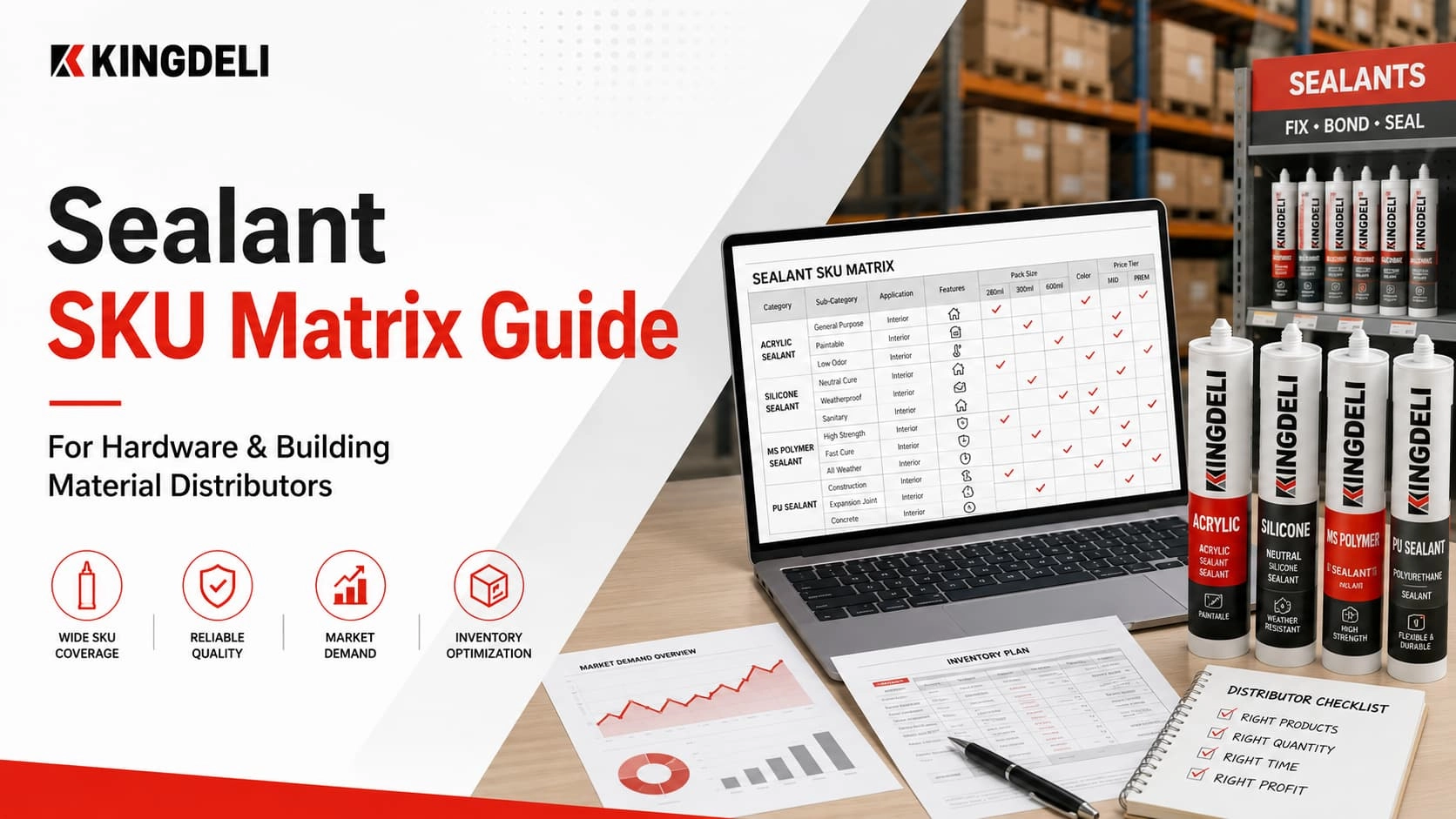
A sealant SKU matrix is a structured product assortment table that helps hardware and building material distributors organize sealant products by category, application, packaging, color, sales channel, sample status, and reorder priority. To build one, distributors should first define their customer groups and sales channels, then group products by sealant type, application, packaging format, color, label requirement, and performance need. The matrix should also record sample approval status, supplier references, documents, and reorder role. A clear SKU matrix helps distributors prepare more accurate RFQs, prioritize samples, avoid unnecessary overlap, and plan bulk orders with better internal alignment.
Key Takeaways
- A sealant SKU matrix is not just a product list. It connects product category, application, packaging, color, customer type, sample status, and reorder priority.
- Hardware and building material distributors should start with market needs and sales channels before choosing specific sealant SKUs.
- A balanced assortment may include silicone sealants, acrylic sealants, polyurethane sealants, MS polymer sealants, construction adhesives, RTV gasket makers, and epoxy tile grout, depending on local demand.
- Packaging, label language, color, carton information, barcode, and private label requirements should be included in the matrix before requesting quotations.
- Sample status and approval notes should be tracked in the SKU matrix before moving to bulk order planning.
What Is a Sealant SKU Matrix?
A sealant SKU matrix is a structured table that helps distributors organize sealant and adhesive products into a clear, manageable assortment. It shows which products are planned, tested, approved, stocked, reordered, or removed from the product range.
For hardware distributors and building material distributors, a SKU matrix is more useful than a simple product list. A product list may only show names and prices. A SKU matrix connects each item with its application, packaging, color, sales channel, customer group, sample status, supplier reference, and inventory role.
A sealant SKU matrix can include products such as neutral silicone sealant, acetic silicone sealant, acrylic sealant, polyurethane sealant, MS polymer sealant, No More Nails adhesive, RTV gasket maker, construction adhesive, and epoxy tile grout. Distributors can review KINGDELI’s sealant and adhesive products when comparing product categories for a planned assortment.
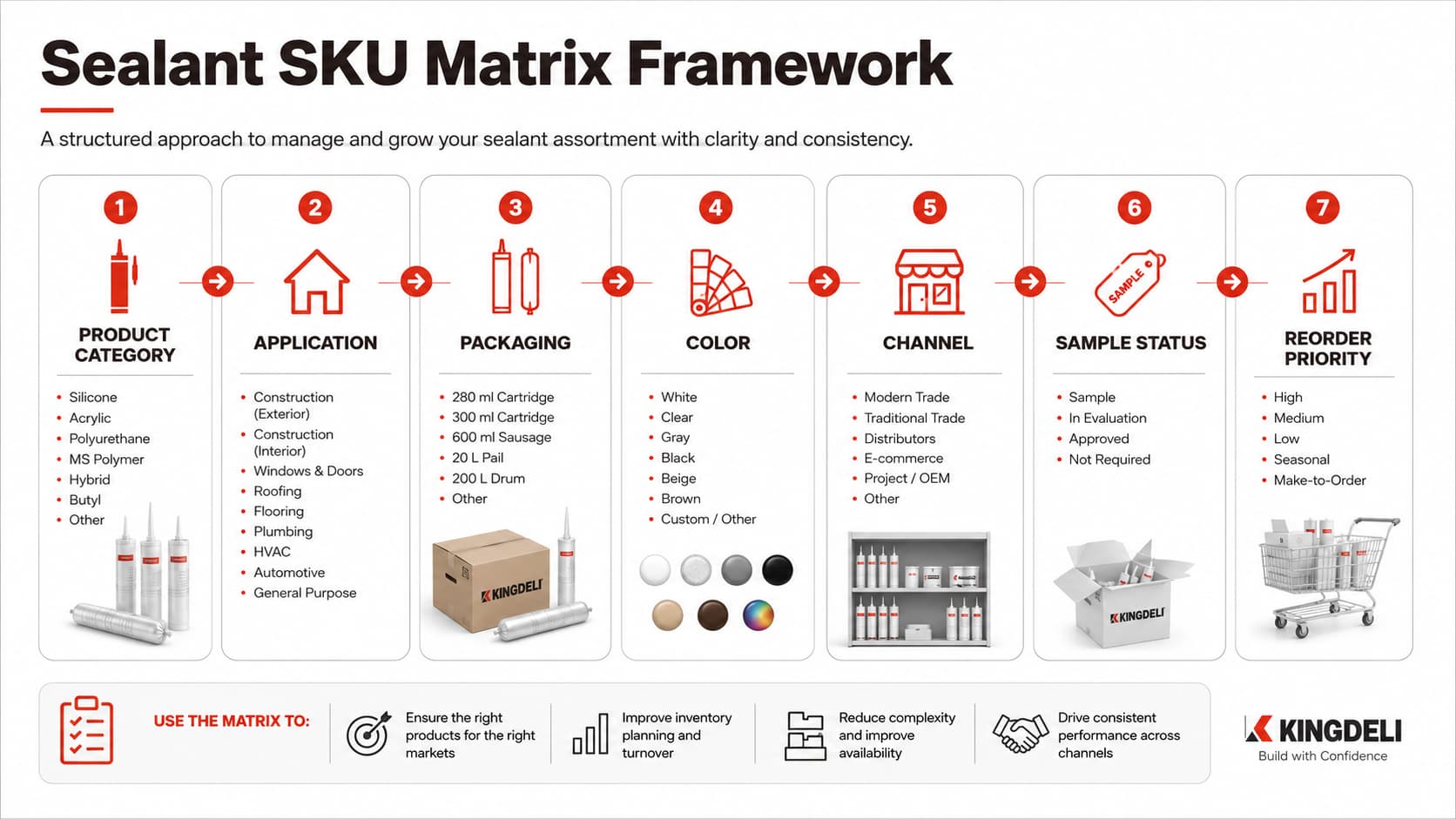
A practical SKU matrix helps distributors answer these questions:
- Which product categories should be included in the starting range?
- Which applications does each SKU support?
- Which packaging format and color are needed for each market channel?
- Which samples have been requested, received, approved, or rejected?
- Which SKUs should be regularly stocked, tested, or ordered only for specific projects?
- Which SKUs should be included in the next RFQ or bulk inquiry?
The goal is not to create a large product range immediately. The goal is to create a clear structure that helps distributors launch, test, manage, and reorder sealant products more effectively.
Why Do Hardware and Building Material Distributors Need a SKU Matrix?
Hardware and building material distributors often handle many product types for different customers. A store may sell sealants to DIY users, repair workers, contractors, installers, glazing companies, tile contractors, automotive repair shops, and project buyers. Each group may need different products, packaging, colors, and application information.
Without a SKU matrix, distributors may face several problems:
- Too many similar products are added without clear purpose.
- Neutral and acetic silicone sealants are mixed without clear labeling.
- Retail products and contractor products are managed in the same way.
- Packaging formats are not defined before asking for quotations.
- Sample approval status is not recorded.
- Slow-moving products are reordered without review.
- Sales teams do not know which products to promote first.
- Procurement teams prepare RFQs without a clear SKU list.
- Private label items are discussed without label, barcode, or carton details.
- Project-specific products are mistaken for regular stock items.
A SKU matrix helps organize these decisions before procurement moves too far. It does not guarantee sales performance or inventory results, but it helps distributors compare options, plan samples, and communicate clearly with suppliers.
For distributors preparing product range discussions, KINGDELI’s distributor cooperation page can be used as a business reference point. For market applications in hardware and construction channels, buyers can also review hardware and building materials solutions.
Step 1: Define Sales Channels and Customer Groups
A sealant SKU matrix should begin with the sales channel, not with product names. Different customers may require different packaging, labels, performance levels, and reorder patterns.
A distributor selling mainly to hardware stores may need fast-moving cartridge products with clear labels and shelf-friendly packaging. A building material wholesaler may need broader product categories and carton-based purchasing. A contractor supply channel may need jobsite reliability, technical clarity, and practical application information. A private label buyer may need consistent packaging, local language labels, and supplier reference records.
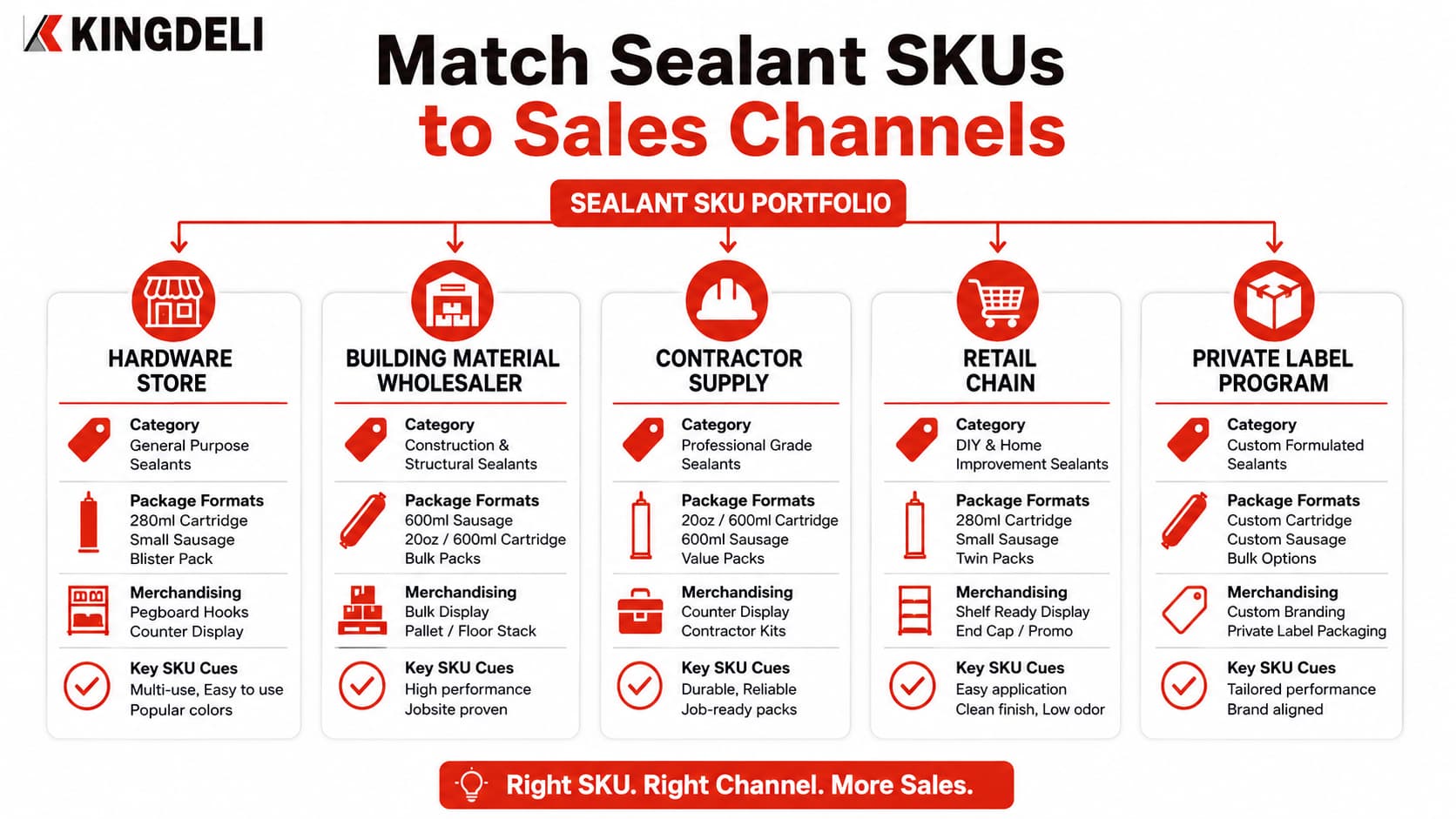
| Channel or Customer Group | Common Needs | SKU Matrix Notes |
|---|---|---|
| Hardware stores | Fast-moving cartridge products, clear labels, easy shelf display | Focus on recognizable applications, common colors, and retail packaging |
| Building material wholesalers | Broader categories, carton purchasing, contractor demand | Group SKUs by product type, carton quantity, and reorder priority |
| Contractors | Application performance, jobsite reliability, technical clarity | Organize by substrate, application, and performance requirement |
| Retail chains | Packaging consistency, barcode, SKU naming, shelf appearance | Record label language, barcode, carton marking, and shelf presentation |
| Private label buyers | Branding, packaging design, label language, repeatable supply planning | Track artwork, label version, sample approval, and supplier reference |
| Project buyers | Specific application conditions and approval documents | Separate project SKUs from regular stock SKUs |
This step helps prevent assortment confusion. A SKU that works well for a contractor may not be suitable for a retail shelf. A retail cartridge product may not be the right choice for project supply. By defining the customer group first, the distributor can build a matrix that reflects real market use.
Step 2: Group Sealant SKUs by Product Category
After defining sales channels, the next step is to group planned SKUs by product category. This gives the distributor a clear product structure and helps prevent unnecessary overlap.
The product categories below are common planning groups for sealant and adhesive distributors. The final range should depend on local market demand, customer needs, sample results, and supplier discussion.
| Product Category | Typical Distributor Use | SKU Planning Notes |
|---|---|---|
| Neutral silicone sealant | Windows, doors, general construction, and applications where neutral cure is preferred | Plan by color, application label, packaging format, and market channel |
| Acetic silicone sealant | Glass, glazing, and general sealing applications where suitable | Separate clearly from neutral cure products to avoid user confusion |
| Acrylic sealant | Interior gaps, cracks, and paintable joints | Consider indoor use, paintability, packaging, and common colors |
| Polyurethane sealant | Construction joints and stronger bonding or sealing needs | Clarify application, packaging, and contractor requirements |
| MS polymer sealant | Multi-purpose bonding and sealing applications | May fit premium or specialized applications depending on market demand |
| No More Nails adhesive | Panel, trim, and construction bonding | Plan retail packaging, label clarity, and application wording |
| RTV gasket maker | Automotive repair and maintenance channels | Plan by color, application, package size, and user segment |
| Epoxy tile grout | Tile joints, wet areas, and commercial interiors | Plan by color range, project demand, and packaging format |
| Construction adhesive | General bonding for building and repair work | Group by application, packaging, and retail or contractor use |
This structure allows procurement teams to see whether the range is balanced. If a distributor has too many SKUs in one category but lacks products for a major customer group, the matrix will show that gap. If several items serve the same application with similar packaging and color, the team can review whether all of them are necessary.
Distributors should avoid adding product categories only to make the range look large. A smaller, clearer assortment may be easier to test, explain, sell, and reorder.
Step 3: Map SKUs by Application
A product category tells the distributor what the product is. The application tells the distributor why the customer needs it.
For a hardware or building material channel, application mapping is essential because many customers buy sealants based on the task they need to complete. For example, they may ask for a product for window installation, bathroom sealing, tile joints, panel bonding, automotive maintenance, or exterior construction joints.
| Application | Possible Product Category | Distributor Notes |
|---|---|---|
| Window and door sealing | Neutral silicone sealant, acrylic sealant, or other suitable products depending on use | Record indoor or outdoor use, color, and packaging |
| Glass and glazing | Acetic silicone sealant or neutral silicone sealant depending on substrate and requirement | Separate product labels clearly to avoid misuse |
| Bathroom and kitchen sealing | Silicone sealant or other suitable wet-area products depending on application | Consider color, wet-area needs, and retail packaging |
| Interior gaps and cracks | Acrylic sealant | Note paintability, indoor use, and common cartridge sizes |
| Panel and trim bonding | No More Nails adhesive or construction adhesive | Record bond application, packaging, and target customer |
| Automotive maintenance | RTV gasket maker | Plan by color, pack size, and repair channel needs |
| Tile joints and wet areas | Epoxy tile grout | Plan by color range and project demand |
| Building façade or exterior joints | Silicone, PU, MS polymer, or other suitable products depending on project requirement | Separate project approval SKUs from regular retail SKUs |
| General repair and DIY use | Silicone sealant, acrylic sealant, construction adhesive | Keep labels simple and applications easy to understand |
This application view helps reduce confusion between similar products. Two sealants may both be sold in cartridges, but one may target interior paintable joints while another may target glass or exterior sealing. Application mapping also helps distributors train sales teams and prepare buyer-facing product explanations.
Step 4: Decide Packaging Formats and Unit Sizes
Packaging is one of the most important parts of a sealant SKU matrix. It affects quotation, shelf display, warehouse handling, carton planning, customer experience, and private label discussions.
Before requesting quotations, distributors should record the required packaging format and unit size for each planned SKU. This helps avoid comparing quotes that are based on different packaging conditions.
Common packaging fields include:
- Cartridge format
- Sausage format
- Pail format
- Drum format
- Tube or bottle format, if applicable
- Unit size
- Pieces per carton
- Carton size or marking requirements
- Nozzle or cap requirement
- Retail packaging
- Private label packaging
- Label language
- Barcode or SKU code
- Carton printing or sticker requirement
- Pallet or warehouse handling notes
Packaging decisions should be connected to the sales channel. A hardware store may prefer clear retail labels and easy shelf display. A contractor channel may care more about carton purchasing and jobsite use. A private label program may require artwork, barcode, carton design, and consistent label language.
Distributors should compare quotations only when packaging conditions are clearly defined. If the team has not yet prepared a clear RFQ, they can review how to prepare a complete sealant RFQ before sending a bulk inquiry.
A useful matrix field is “packaging status.” This can show whether the packaging is standard, under review, private label pending, approved, or needs revision.
Step 5: Plan Colors, Labels, and Performance Tiers
Color and label planning can strongly affect distributor assortment. Some colors may be fast-moving in one market but less important in another. Some applications need clear product names and simple labels, while others require technical information or project approval details.
A SKU matrix should record color, label language, label version, and performance tier for each planned product.
Common color planning options may include:
- White
- Clear
- Black
- Gray
- Beige
- Brown
- Project-specific colors if required
- Market-specific colors based on distributor feedback
Distributors should not select colors only because they are available. Color planning should be based on local demand, customer feedback, historical sales if available, contractor needs, and sample approval results.
For performance tiers, avoid vague labels such as “best” or “top.” A safer and clearer structure may include:
- Basic range
- Standard range
- Specialized range
- Contractor range
- Private label range
- Project-specific range
The matrix should define what each tier means for the distributor. For example, a basic range may support common retail applications. A specialized range may support specific substrates, weather exposure, or project conditions. A private label range may require additional packaging and approval steps.
For OEM or private label programs, distributors can review OEM and ODM sealant solutions when preparing packaging and labeling questions for supplier discussion.
Step 6: Add Sample Status and Approval Notes
A SKU matrix should not only show planned products. It should also show where each product stands in the sample approval process.
This is especially important when a distributor is testing several products at the same time. Without sample status records, teams may forget which sample was requested, which version was approved, which packaging needs revision, or which document is still missing.
Useful sample status options include:
- Not requested
- Requested
- Received
- Under testing
- Approved
- Approved with changes
- Rejected
- Needs revised sample
- Pending documents
- Pending internal review
The matrix should also record approval notes, such as sample code, supplier reference, sample received date, tested substrate, packaging version, label version, approved color, required changes, document status, internal reviewer, approval date, and next action.
Distributors can use the SKU matrix together with a formal sample approval workflow. After the product range is planned, buyers should approve sealant samples before bulk ordering to confirm product, packaging, documents, and internal feedback before placing a larger order.
Step 7: Set Reorder Priority and Inventory Role for Each SKU
A sealant SKU matrix should help distributors decide not only what to launch, but also what to reorder. Each SKU should have an inventory role. This prevents trial products, project products, and regular stock products from being managed in the same way.
| Inventory Role | Meaning | Planning Notes |
|---|---|---|
| Core SKU | A regularly stocked product | Review based on sales records, customer demand, and reorder history |
| Seasonal SKU | A product with demand that changes by season or project cycle | Record season, promotion period, or expected demand window |
| Project SKU | A product ordered for specific project requirements | Avoid treating it as regular stock unless repeated demand appears |
| Trial SKU | A product used for market testing | Set a review date and approval criteria before reorder |
| Private Label SKU | A branded or customized item | Track artwork, label version, packaging status, and supplier reference |
| Slow-moving SKU | A product that needs review before reorder | Check sales records, customer feedback, and replacement options |
| Replacement SKU | A product considered as an alternative to an existing SKU | Compare application, packaging, price factors, and approval status |
The reorder priority should be based on distributor data and market feedback when available. Useful inputs include sales records, customer feedback, contractor demand, sample approval results, project frequency, stock movement, packaging acceptance, and supplier communication.
If this information is not yet available, the matrix can mark the SKU as a trial item or pending review. This prevents the distributor from overcommitting to products that have not been tested in the market.
Sealant SKU Matrix Template
Distributors can use the following template to organize their sealant and adhesive assortment.
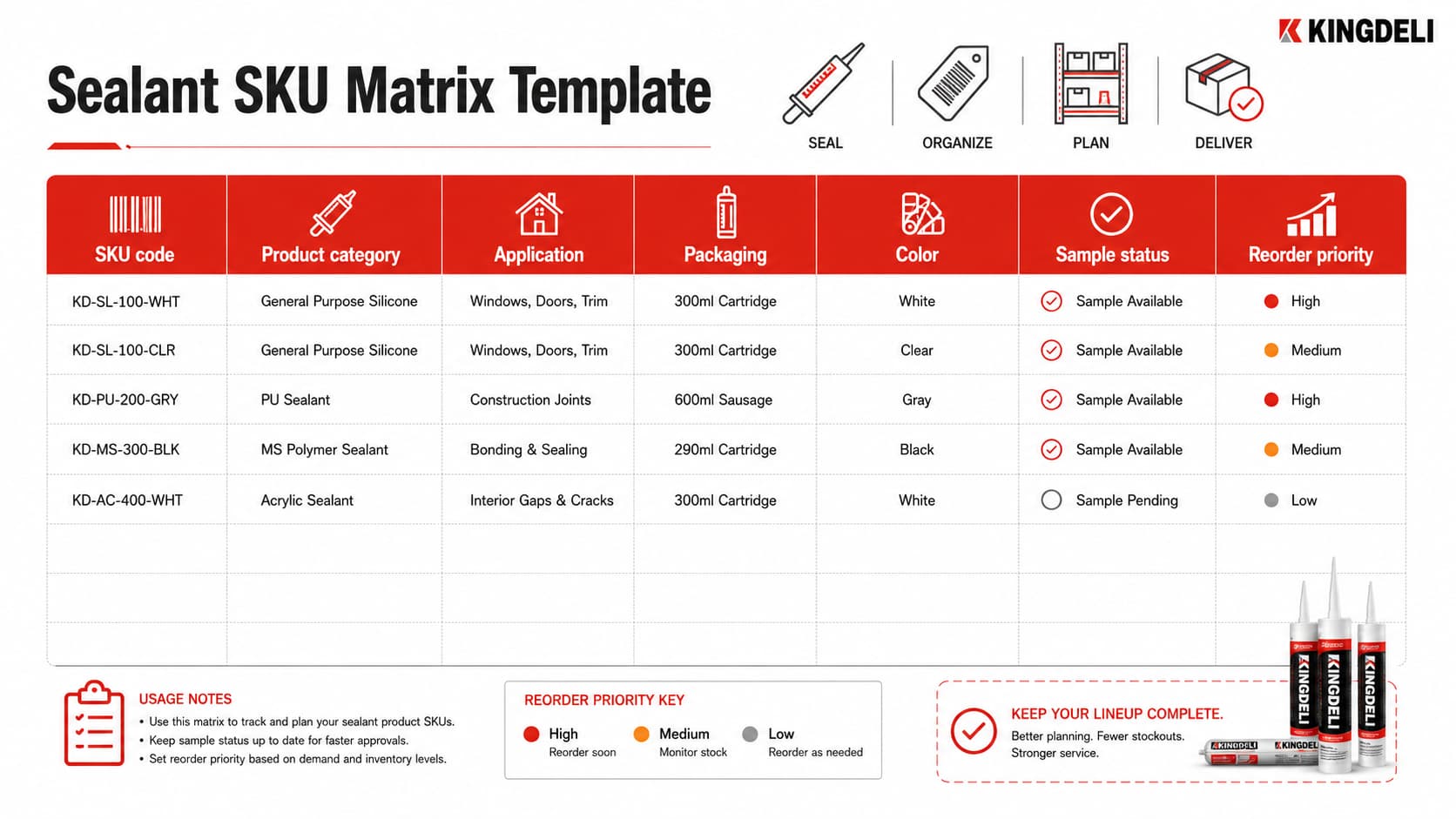
SKU Matrix Fields
SKU code:
Product category:
Product name:
Application:
Target customer:
Sales channel:
Packaging format:
Unit size:
Pieces per carton:
Color:
Label language:
Private label: Yes / No
Barcode or SKU code requirement:
Sample status:
Sample code:
Approval date:
Required documents:
Supplier reference:
First order quantity:
Reorder priority:
Inventory role:
Required changes:
Notes:
| Field | What to Record | Why It Matters |
|---|---|---|
| SKU code | Internal distributor code or planned code | Helps connect procurement, sales, and warehouse records |
| Product category | Silicone, acrylic, PU, MS polymer, adhesive, RTV, grout, or other category | Shows the structure of the product range |
| Application | Window, glass, bathroom, panel bonding, automotive, tile, façade, or other use | Helps sales teams explain the product |
| Packaging format | Cartridge, sausage, pail, drum, carton, retail pack, or private label pack | Affects quotation, storage, shelf display, and reorder |
| Color | White, clear, black, gray, beige, or project-specific color | Helps plan market demand and inventory |
| Sales channel | Hardware store, wholesaler, contractor, retail chain, project buyer, or private label | Links the SKU to the customer group |
| Sample status | Requested, received, approved, rejected, or pending revision | Shows whether the SKU is ready for bulk discussion |
| Required documents | TDS, SDS, label file, packaging specification, test report if required | Supports buyer, QA, and project review |
| Reorder priority | Core, seasonal, project, trial, private label, slow-moving, or replacement | Helps manage inventory planning |
| Supplier reference | Supplier item name, sample code, or quotation reference | Helps avoid confusion during RFQ and order communication |
This template can be adjusted to match the distributor’s internal purchasing system, warehouse process, or ERP format. The important point is to keep product, packaging, sample, and reorder information connected.
What Common Mistakes Should Distributors Avoid When Building a Sealant SKU Matrix?
A SKU matrix is useful only when it helps the distributor make clearer decisions. The following mistakes can reduce its value.
When Should Distributors Contact KINGDELI?
Distributors can contact KINGDELI when they are preparing a sealant SKU matrix, reviewing product categories, planning packaging requirements, organizing private label details, or preparing a bulk order inquiry.
Before contacting a supplier, it is helpful to prepare:
- Target sales channel
- Customer groups
- Product categories needed
- Application priorities
- Packaging formats
- Common colors
- Label language
- Private label requirements
- Sample status
- Document requirements
- First order plan
- Reorder expectations if available
If you are building a sealant SKU matrix for hardware or building material distribution, share your product categories, target applications, packaging requirements, label needs, sample status, and expected order plan with KINGDELI for further discussion.
A clear SKU matrix helps distributors move from product range planning to RFQ preparation, sample approval, and bulk order discussion with fewer misunderstandings.
FAQ
What is a sealant SKU matrix?
A sealant SKU matrix is a structured table that helps distributors organize sealant products by product category, application, packaging format, color, sales channel, customer group, sample status, supplier reference, and reorder priority. It helps teams manage product range planning before quotation, sample approval, and bulk ordering.
How do hardware distributors choose sealant SKUs?
Hardware distributors should choose sealant SKUs by reviewing their sales channels, customer groups, common applications, packaging needs, color demand, sample approval status, and reorder plan. They should start with clear core applications and expand the range based on market feedback and sales records when available.
What sealant categories should building material distributors include?
Building material distributors may consider categories such as neutral silicone sealant, acetic silicone sealant, acrylic sealant, polyurethane sealant, MS polymer sealant, construction adhesive, No More Nails adhesive, RTV gasket maker, and epoxy tile grout. The final assortment should depend on local market demand, customer needs, applications, and sample approval results.
How many sealant SKUs should a distributor start with?
There is no fixed number of sealant SKUs that fits every distributor. A distributor should start with core applications, common packaging formats, and products with clear demand. Trial SKUs can be added for market testing, while slow-moving or project-specific SKUs should be reviewed before regular stocking.
Should private label products be included in a sealant SKU matrix?
Private label products can be included in a sealant SKU matrix if the distributor plans branded packaging or customized labels. The matrix should record label language, artwork status, packaging format, barcode, SKU code, sample approval status, supplier reference, and required changes before bulk ordering.
How often should distributors update a sealant SKU matrix?
Distributors should update a sealant SKU matrix when they receive new sales data, customer feedback, sample approval results, packaging changes, supplier updates, seasonal demand changes, or slow-moving inventory signals. Regular review helps keep the assortment aligned with market demand and purchasing priorities.
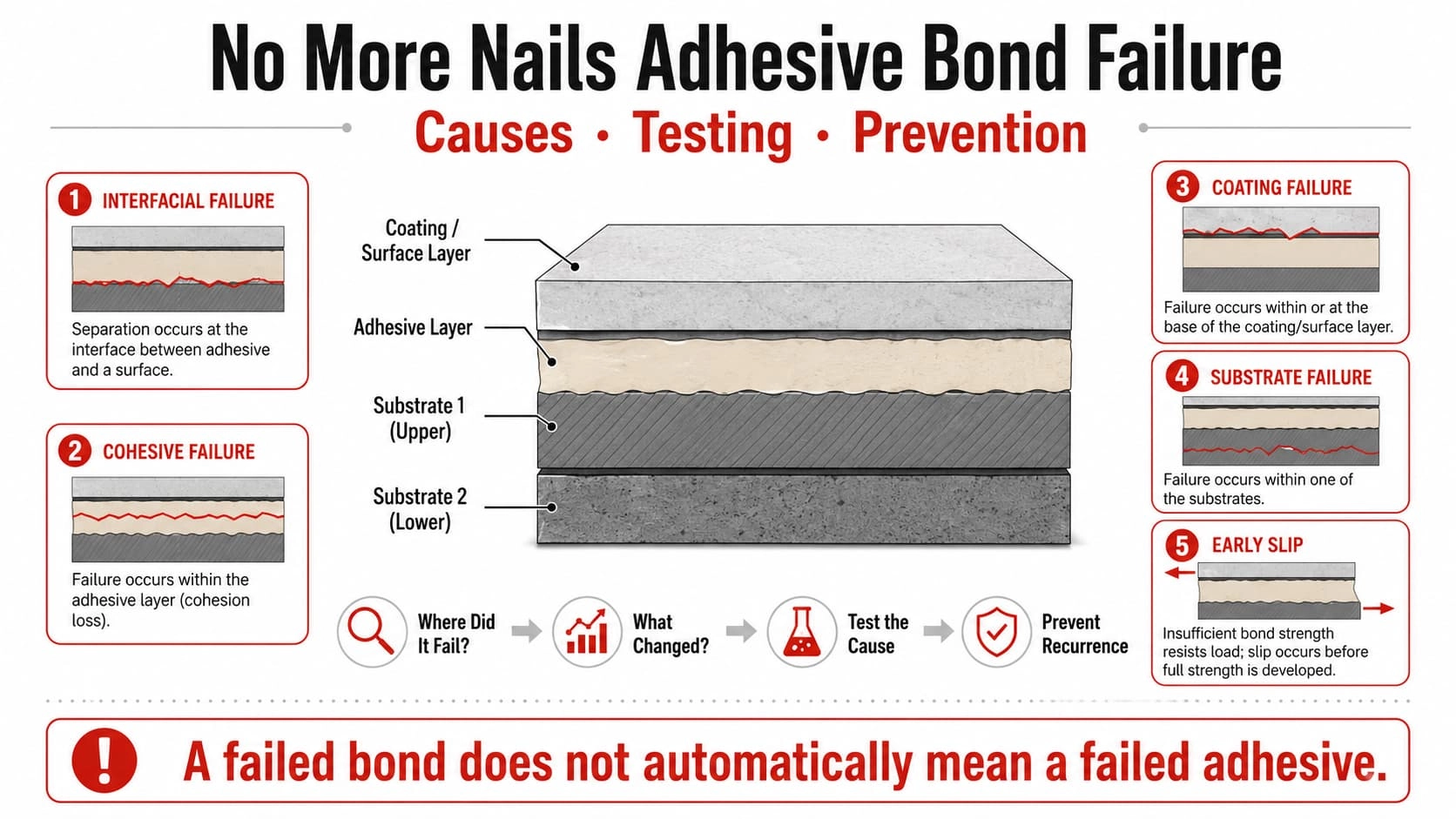
No More Nails Adhesive Bond Failure: Causes, Testing, and Prevention
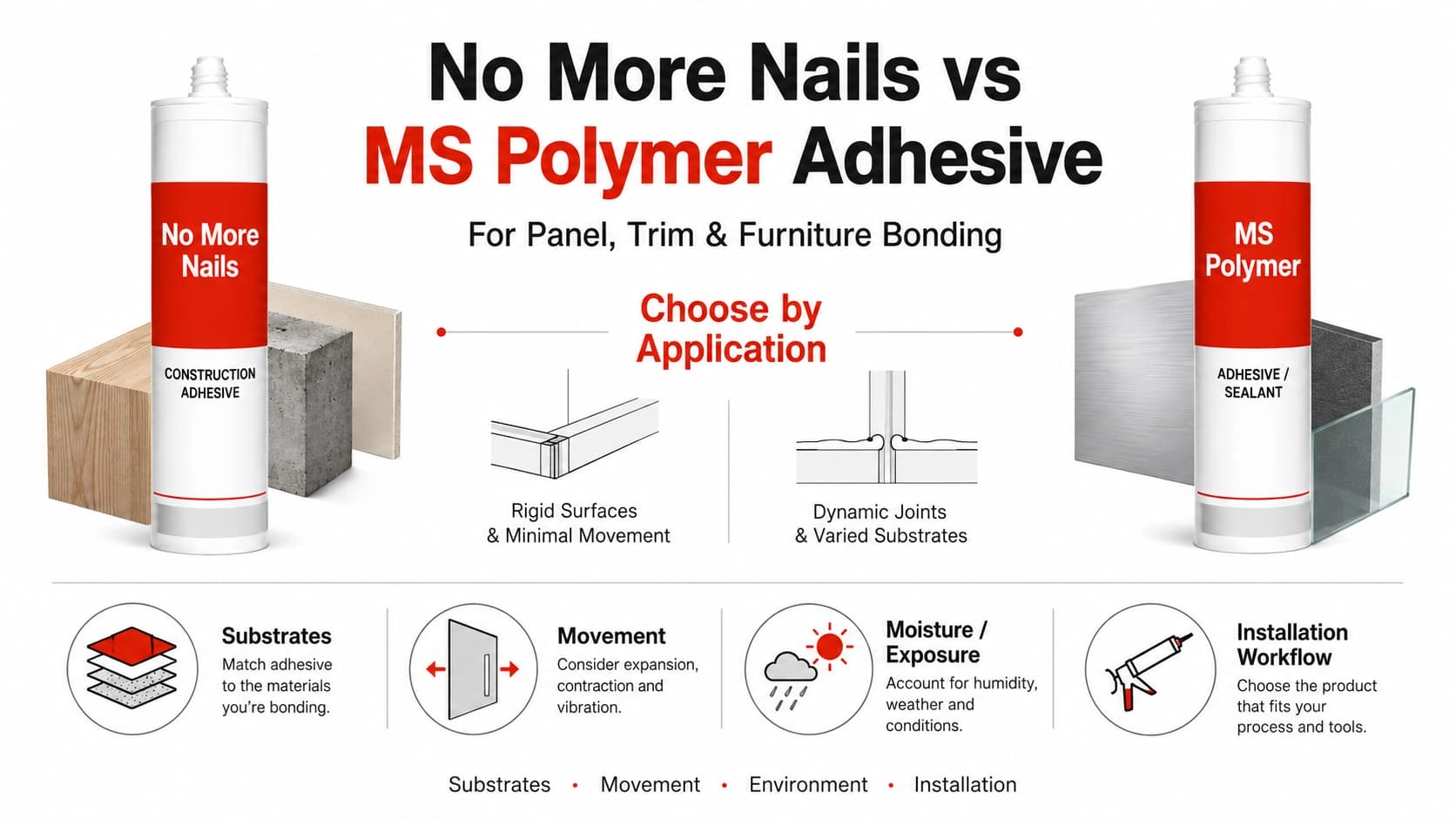
No More Nails vs MS Polymer Adhesive for Panel, Trim, and Furniture Bonding
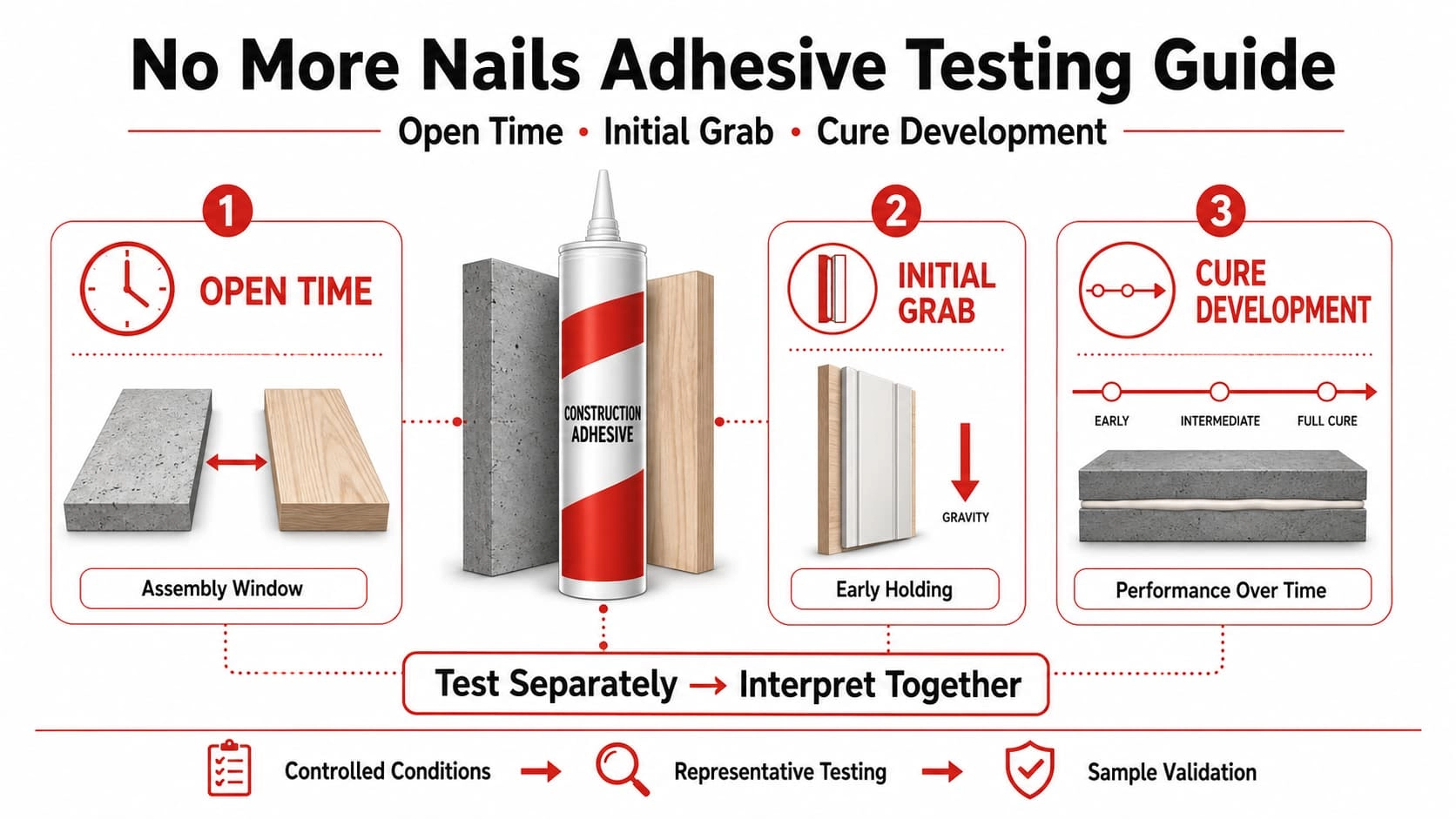
No More Nails Adhesive Open Time, Grab Strength, and Cure Testing Guide
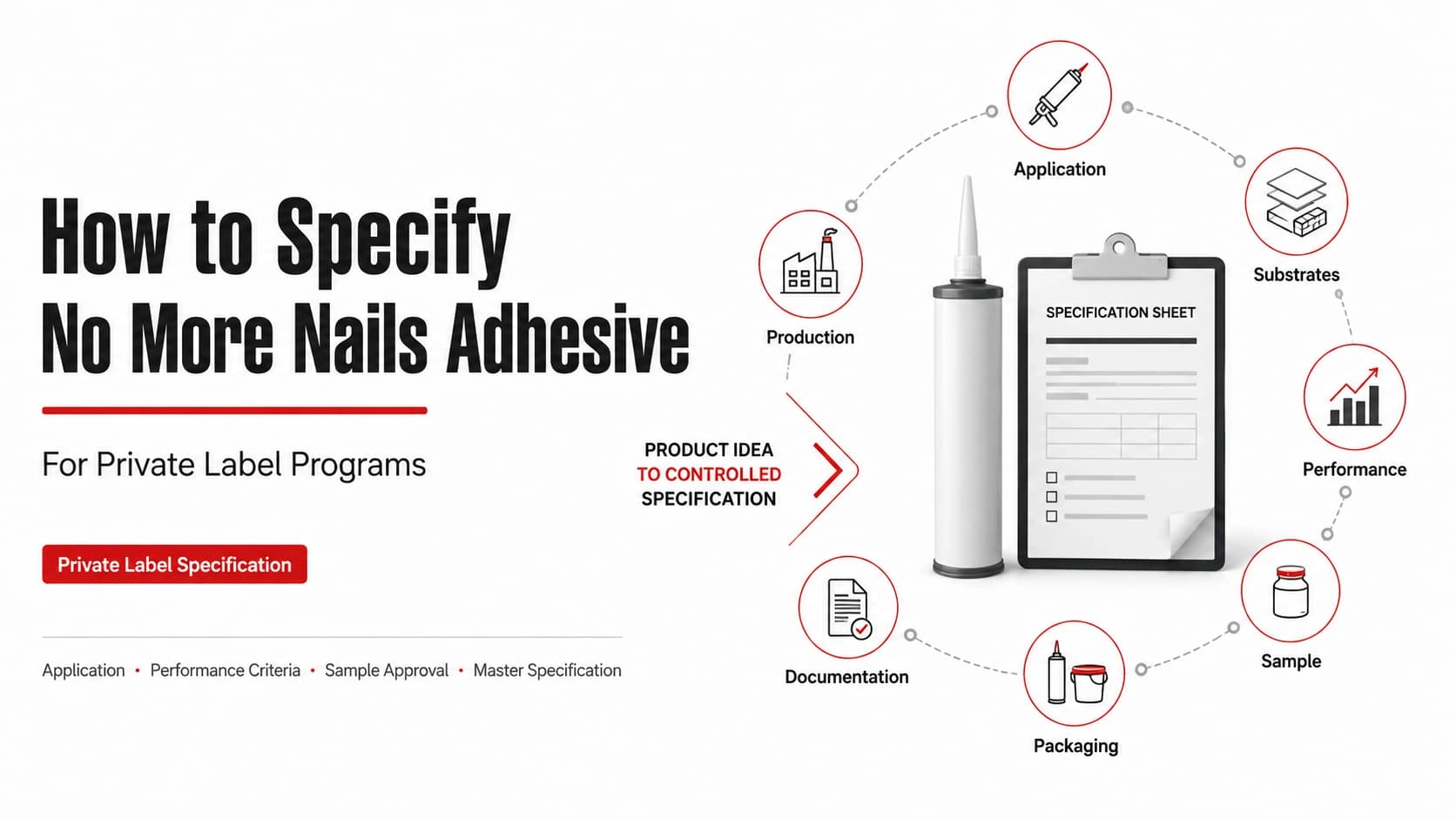
How to Specify No More Nails Adhesive for Private Label Programs

HY992 Modified Polyurethane Construction Sealant
HY992 Modified Polyurethane Sealant is a one-component, moisture-curing construction sealant designed for professional building and structural sealing applications. It provides excellent adhesion, weather resistance, and durable elasticity, making it suitable for a wide range of construction materials.
The formulation delivers strong bonding performance without corrosion or substrate contamination, while maintaining low VOC content for environmentally responsible construction projects.

HY995 Crystal Clear Ms Polymer Adhesive/Sealant
HY995 Crystal Clear Ms Polymer Adhesive/Sealant is a new generation MS Polymer adhesive / sealant formulated for all bonding and sealing applications where long term reliability is required. It has excellent bonding strength on various materials. It will cure to form a durable, flexible, waterproof seal.

HY997 High-Performance Anti-Microbial MS Polymer Sealant
HY997 MS polymer sealant for is is a premium one-component, neutral-curing modified silane sealant engineered for demanding interior applications. It offers a Class 20 movement capability, ensuring long-lasting flexibility and reliable performance under dynamic joint conditions. Curing at room temperature, HY997 delivers superior anti-microbial and mildew-resistant properties, maintaining hygienic and clean environments over time.

KINGDELI HY732 Professional Acetoxy Cure Silicone Sealant
KINGDELI HY732 is a professional-grade, one-component acetoxy cure silicone sealant designed for fast curing, strong adhesion, and long-lasting flexibility. Ideal for aquariums, glass applications, aluminum doors and windows, kitchens, and bathrooms, it provides reliable sealing performance with excellent anti-fungal protection in high-humidity environments.
Let’s Build Stronger Bonds with Quality Adhesives and Sealants
Have questions about the topic or need tailored sealant solutions for your project?
Our team is ready to provide expert guidance, product recommendations, and application support.
Innovating with Integrity, Bonding the World
Since 1998, KINGDELI has delivered trusted, sustainable sealant solutions that connect industries and inspire progress worldwide.

Whatsapp: +8618825946249
Kingdeli
Kingdeli
Kingdeli
Kingdeli
Kingdeli