


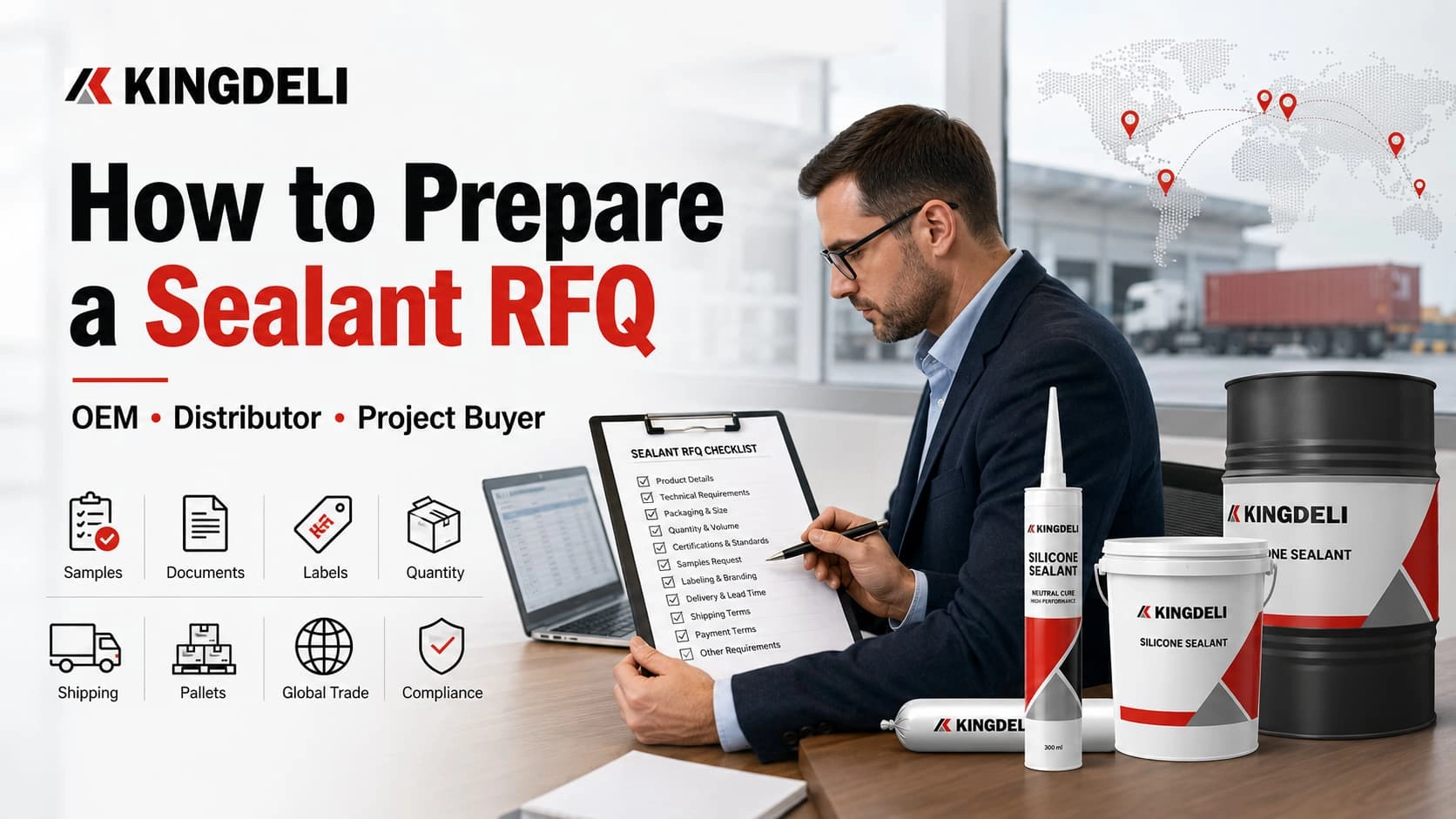
How to Prepare a Sealant RFQ for OEM, Distributor, and Project Buyers
- Key Takeaways
- What Is a Sealant RFQ?
- Why Do Many Sealant RFQs Receive Slow or Inaccurate Quotes?
- What Should Every Sealant RFQ Include?
- Which Product and Application Details Should Buyers Clarify Before Asking for Price?
- Product Category
- Application Surface
- Performance Expectations
- What Should OEM and Private Label Buyers Include in a Sealant RFQ?
- What Should Distributors Include in a Sealant RFQ?
- What Should Project Buyers Include in a Sealant RFQ?
- Which Documents Should Buyers Request From a Sealant Supplier?
- What Packaging, Labeling, and Logistics Details Should Be Included?
- Sealant RFQ Example Message
- Sealant RFQ Template Buyers Can Copy
- What Common RFQ Mistakes Should Buyers Avoid?
- 1. Asking for price before defining the product
- 2. Sending only a photo
- 3. Ignoring packaging and labeling
- 4. Not mentioning target market
- 5. Comparing quotes with different product conditions
- 6. Skipping sample approval
- 7. Not asking about storage and shelf life
- 8. Treating OEM, distributor, and project RFQs as the same
- When Should Buyers Contact KINGDELI for RFQ Support?
- FAQ
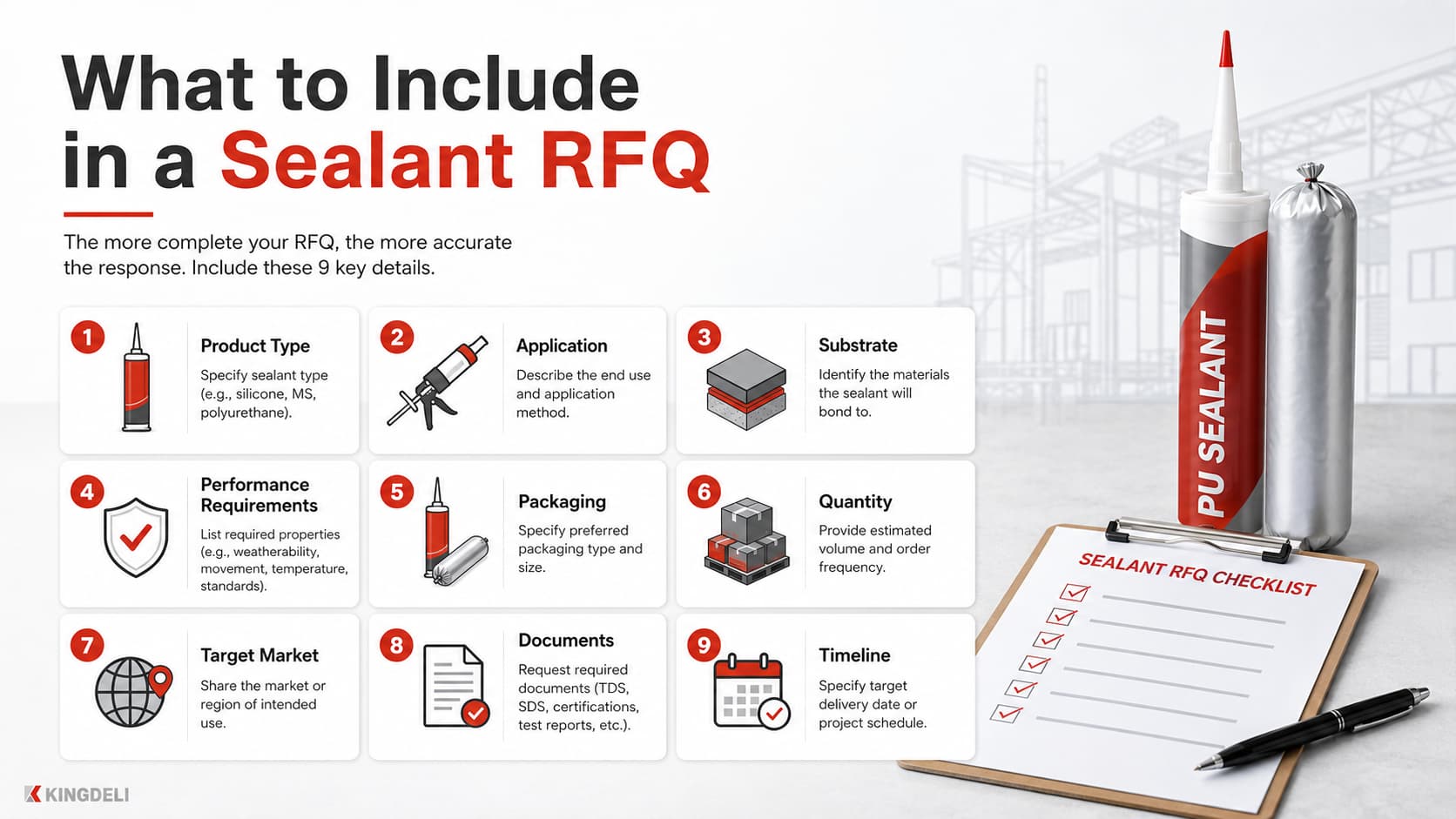
A sealant RFQ should clearly describe the product type, application, substrate, performance requirements, packaging format, order quantity, target market, labeling needs, sample requirements, documentation expectations, delivery timeline, and approval process. OEM buyers should also include private label, formula benchmark, artwork, and packaging requirements. Distributors should clarify SKU range, retail packaging, replenishment plans, and local market needs. Project buyers should provide site conditions, substrate details, installation schedule, and document requirements. A complete RFQ helps suppliers confirm feasibility, recommend suitable products, and provide a more accurate quotation.
Key Takeaways
- A sealant RFQ should do more than ask for price. It should explain the application, product type, packaging, quantity, target market, and approval requirements.
- OEM and private label buyers need to include label language, packaging design, formula expectations, sample approval needs, and market details.
- Distributors should describe SKU mix, retail packaging, carton requirements, local market fit, and expected reorder patterns.
- Project buyers should provide substrate, joint conditions, site environment, construction schedule, test requirements, and approval documents.
- A clear RFQ reduces quotation delays, avoids mismatched products, and supports smoother sample approval before bulk ordering.
What Is a Sealant RFQ?
A sealant RFQ, or Request for Quotation, is a document or message that buyers send to suppliers when requesting pricing, product recommendations, samples, and supply conditions for sealants or adhesives. In B2B procurement, an RFQ is not only a price request. It is also a way to help the supplier understand the buyer’s application, performance expectations, packaging needs, target market, and order plan.
A sealant RFQ may apply to many product categories, including silicone sealant, polyurethane sealant, MS polymer sealant, acrylic sealant, RTV gasket maker, construction adhesive, No More Nails adhesive, and epoxy tile grout. Buyers can review KINGDELI’s sealant and adhesive products before preparing an RFQ if they are still comparing product categories.
Each product family has different application conditions, packaging formats, curing behavior, and testing requirements. For that reason, a buyer who only asks for “sealant price” may receive an incomplete or inaccurate quote.
A well-prepared RFQ helps the supplier answer three important questions:
- Which product or product family may fit the application?
- What packaging, labeling, or documentation is required?
- What sample, production, and delivery conditions should be confirmed before a bulk order?
The goal is not to make the RFQ complicated. The goal is to make it specific enough for both sides to evaluate the order properly.
Why Do Many Sealant RFQs Receive Slow or Inaccurate Quotes?
Many sealant RFQs are delayed because the buyer does not provide enough application or order details. When the supplier has to ask basic follow-up questions, the quotation process becomes slower. In some cases, the first quote may also be inaccurate because the product, packaging, or performance requirement was not clearly defined.
Common RFQ problems include:
- Asking only for “price per carton” without naming the product type
- Sending a product photo without explaining the application
- Not stating whether the sealant is for glass, aluminum, concrete, ceramic tile, wood, plastic, automotive parts, or another substrate
- Leaving out indoor, outdoor, wet-area, UV exposure, or temperature conditions
- Asking for OEM packaging without providing label language, artwork needs, or target market
- Comparing quotes based on different cartridge sizes, carton quantities, or packaging formats
- Not clarifying whether samples, technical data sheets, safety data sheets, or test reports are needed
- Not providing order quantity, destination country, or expected delivery timing
Sealant suppliers often need these details before they can recommend a product, check packaging feasibility, prepare a sample, or estimate production and logistics requirements. The more complete the RFQ is, the easier it is to receive a useful response.
What Should Every Sealant RFQ Include?
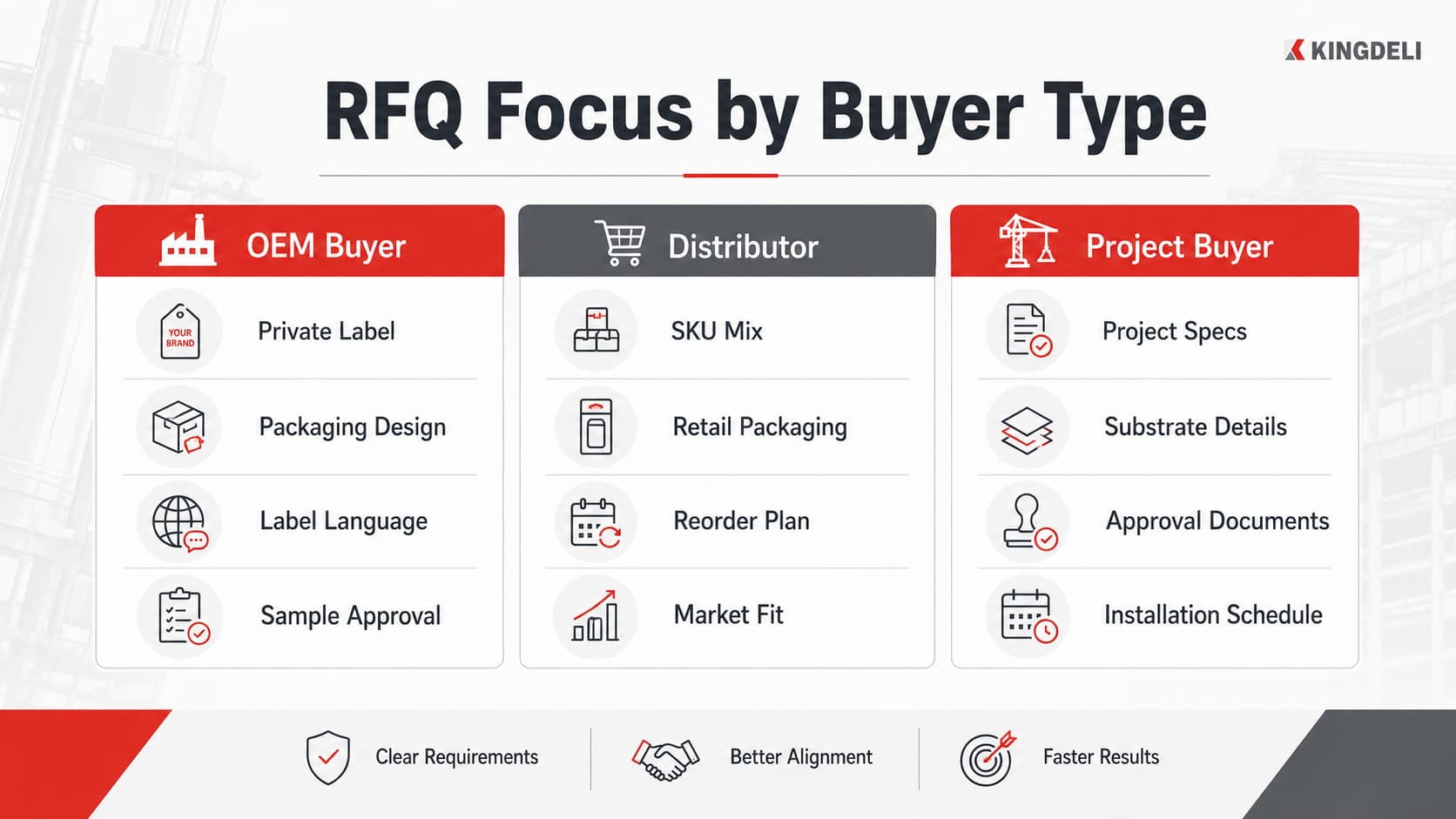
A strong RFQ begins with basic but specific information. Buyers do not need to know every technical detail before contacting a supplier, but they should provide enough context for the supplier to understand the project or purchasing goal.
| RFQ Item | What to Provide | Why It Matters |
|---|---|---|
| Product type | Silicone, PU, MS polymer, acrylic, RTV, construction adhesive, or grout | Helps the supplier identify the correct product family |
| Application | Glazing, façade, bathroom, flooring, automotive, panel bonding, or general construction | Determines performance and compatibility needs |
| Substrate | Glass, aluminum, concrete, ceramic tile, wood, plastic, metal, or painted surface | Affects adhesion, preparation, and product selection |
| Environment | Indoor, outdoor, wet area, UV exposure, heat, cold, or chemical contact | Helps evaluate durability requirements |
| Performance needs | Elasticity, paintability, weather resistance, heat resistance, adhesion, or chemical resistance | Helps compare suitable products |
| Quantity | Trial order, first order quantity, monthly volume, or annual forecast | Affects quotation, production planning, and packaging discussion |
| Packaging | Cartridge, sausage, pail, drum, carton, private label pack, or retail display pack | Affects cost, MOQ discussion, logistics, and branding |
| Target market | Country or region where the product will be sold or used | Helps identify label language, document, and compliance needs |
| Timeline | Sample deadline, production deadline, shipment window, or project approval date | Helps the supplier assess feasibility |
| Documents | TDS, SDS, test report, label information, packaging specification, or certificates if required | Supports technical and procurement review |
This table can be used as the foundation for almost any sealant RFQ. Buyers can then add more details depending on whether the inquiry is for OEM production, distributor supply, or a construction project.
Which Product and Application Details Should Buyers Clarify Before Asking for Price?
Price is important, but price should not be the first and only question in a sealant RFQ. Sealants that look similar may have different chemistry, curing behavior, application limits, packaging costs, and approval requirements. Before asking for a final quotation, buyers should clarify the product and application conditions.
Product Category
The buyer should first explain which product category is needed. For example, a request for silicone sealant is different from a request for polyurethane sealant, MS polymer sealant, acrylic sealant, RTV gasket maker, or construction adhesive.
When the product category is not yet confirmed, the RFQ can describe the intended use instead. For example:
- “We need a sealant for aluminum window and glass installation.”
- “We need an adhesive for bonding decorative panels and trim.”
- “We need an RTV gasket maker for automotive maintenance use.”
- “We need a paintable sealant for interior gaps and cracks.”
- “We need grout for commercial tile joints in wet areas.”
These descriptions help the supplier suggest a suitable product category without turning the RFQ into a vague price request.
Application Surface
Substrate information is especially important. Adhesion and performance may depend on the surface material, surface preparation, movement, moisture, and temperature. Buyers should describe the main substrates involved, such as glass, aluminum, steel, concrete, ceramic tile, stone, wood, plastic, painted metal, or automotive parts.
If multiple substrates are involved, the RFQ should list them clearly. For example, a façade project may involve glass, aluminum frame, and weather exposure. A construction adhesive application may involve wood trim, wall panel, PVC, or painted surfaces. A grout project may involve tile type, joint width, cleaning method, and wet-area conditions.
Performance Expectations
A buyer does not always need to specify detailed laboratory values in the first RFQ. However, the buyer should describe the performance expectations that matter most.
- Weather resistance
- UV resistance
- Movement capability
- Paintability
- Adhesion to specific substrates
- Elasticity
- Curing speed
- Temperature or chemical resistance
- Indoor or outdoor durability
These points should be written as requirements to confirm, not as assumptions. For example, instead of saying “send your best outdoor sealant,” a buyer can write, “The product will be used outdoors on aluminum and glass, with UV exposure and seasonal temperature changes. Please recommend a suitable product and provide relevant technical information.”
What Should OEM and Private Label Buyers Include in a Sealant RFQ?
OEM and private label sealant RFQs require more detail than standard bulk purchasing inquiries. In addition to the product and application requirements, the buyer should provide information about branding, packaging, labeling, formula expectations, and market requirements.
Buyers preparing private label or custom packaging programs can also review KINGDELI’s OEM and ODM sealant solutions before sending a detailed RFQ.
Important OEM RFQ details include:
- Brand name or private label brand
- Label language
- Cartridge, sausage, carton, or display packaging requirements
- Color requirements for the product, cartridge, cap, nozzle, or carton
- Artwork status, such as whether the buyer already has a design file
- Barcode, item code, or SKU requirements
- Target market or country of sale
- Benchmark sample or target product, if available
- Product category and application
- Expected order quantity by SKU
- Sample approval process
- Required technical or safety documents
- Packaging compliance or labeling requirements for the target market
OEM buyers should also explain whether they are looking for a standard product with private label packaging or a more customized solution. These are different types of inquiries. A standard private label request may focus mainly on packaging, label language, carton layout, and order quantity. A more customized inquiry may require additional sample testing, formula discussion, and approval steps.
Example OEM RFQ:
“We are preparing a private label inquiry for a neutral silicone sealant for window and door applications. The target market is Southeast Asia. We need 300 ml cartridges with private label artwork, English label text, and carton packaging. Please confirm sample availability, packaging requirements, estimated order quantity per SKU, and the documents needed for review.”
This type of message gives the supplier a clear starting point.
What Should Distributors Include in a Sealant RFQ?
Distributors, wholesalers, hardware chains, and building material suppliers usually need more than one sealant item. Their RFQ should explain the intended product range, retail or wholesale packaging needs, and expected sales channel.
Buyers planning local wholesale or retail supply can refer to KINGDELI’s distributor cooperation page when preparing business and market details.
- Product categories needed
- Number of SKUs planned
- Fast-moving sizes or colors
- Cartridge or sausage size
- Pieces per carton
- Retail label or neutral packaging requirement
- Local market preference
- Target customers, such as contractors, installers, repair shops, or hardware stores
- Expected reorder frequency
- Trial order quantity
- Annual volume estimate if available
- Shelf display or carton marking needs
- Common questions from local installers or end users
For distributors, the RFQ should not only ask for the lowest price. It should help the supplier understand how the product will be sold and used in the market. A product that fits a construction project may not be the same as a product designed for retail shelves. Packaging, label clarity, product naming, color range, and carton information may all affect the distributor’s buying decision.
A distributor may also ask the supplier to recommend a starting SKU list. For example, a building material distributor may need a basic range of silicone sealants, acrylic sealants, construction adhesives, and related products. A good RFQ should explain the market, sales channel, and product priorities so the supplier can respond with a more useful recommendation.
Before sending a distributor RFQ, buyers can also build a sealant SKU matrix to organize product categories, packaging formats, sample status, sales channels, and reorder priorities before asking for quotation.
What Should Project Buyers Include in a Sealant RFQ?
Project buyers usually source sealants for a specific construction, façade, flooring, bathroom, kitchen, automotive, or maintenance application. Their RFQ should include the project environment and approval requirements.
For construction-related inquiries, buyers may review KINGDELI’s construction sealant solutions. For façade-related applications, the building façade sealant applications page can help buyers align the RFQ with project conditions. For automotive maintenance or assembly-related needs, buyers can refer to automotive sealant solutions.
- Project type
- Application area
- Substrate and joint condition
- Indoor or outdoor use
- Exposure to moisture, UV, chemicals, heat, or cleaning agents
- Installation schedule
- Sample or mock-up requirements
- Approval documents needed by the contractor, consultant, or owner
- Color requirements
- Batch consistency requirements
- Delivery sequence or project timeline
- Contact person for technical clarification
Project buyers should also explain whether the sealant must match a specification, drawing, sample, or previously approved material. If there is a project document, the buyer can summarize the key requirements in the RFQ instead of sending only a long attachment without explanation.
Example project RFQ:
“We are preparing sealant approval for a commercial façade project. The product will be used for glass and aluminum joints in outdoor conditions. Please recommend a suitable sealant and advise what documents are required for technical review, sample approval, and bulk supply.”
This type of RFQ helps the supplier understand that the inquiry is not only about unit price. It involves technical review, document preparation, and project approval.
Which Documents Should Buyers Request From a Sealant Supplier?
Documentation needs vary by market, application, and buyer requirements. A distributor may need label and packaging information, while a project buyer may need technical documents for consultant approval. OEM buyers may need packaging specifications and sample approval records.
- Technical Data Sheet, also called TDS
- Safety Data Sheet, also called SDS
- Product label information
- Packaging specification
- Color card or color confirmation
- Sample approval record
- Test report, if required by the application or project
- Certification documents, if applicable
- Storage and shelf life guidance
- Batch or lot information
- Installation or application guidance
- Carton marking information
- Private label artwork confirmation
These documents should be requested based on actual market or project needs. Not every order requires every document. However, asking about documents early helps avoid delays after pricing has already been discussed.
For bulk orders, buyers can also prepare a sealant lot traceability checklist to connect RFQ details with batch codes, label versions, packaging records, document status, and incoming inspection notes.
For technical or regulated applications, buyers should clarify which documents are mandatory and which are optional. They should also confirm whether the documents need to match a specific product, factory, batch, standard, or target market.
What Packaging, Labeling, and Logistics Details Should Be Included?
Packaging can change both the quotation and the approval process. The same product may be quoted differently depending on cartridge size, sausage size, carton quantity, pail size, drum format, label design, carton printing, pallet requirement, and shipment destination.
- Requested packaging format
- Unit volume or weight
- Pieces per carton
- Carton size or marking requirements if important
- Private label or neutral packaging
- Label language
- Barcode or SKU code
- Nozzle, cap, or accessory needs
- Pallet requirements
- Destination country or port
- Shipment timeline
- Storage or temperature concerns during transport
- Trial order and repeat order plan
Packaging details are especially important for OEM buyers and distributors. A retail distributor may need a clear cartridge label, shelf-friendly carton, barcode, and consistent SKU naming. A project buyer may care more about carton identification, batch information, delivery sequence, and product storage.
Buyers should avoid comparing two quotations unless the packaging conditions are the same. A quote for standard cartridges may not be comparable with a quote for private label cartridges, custom cartons, sausages, pails, or drums.
When the packaging format is still undecided, importers can compare cartridges, sausages, pails, and drums with a sealant packaging decision matrix before confirming the final RFQ or sample request.
Sealant RFQ Example Message
Buyers can use a short message like this when starting the RFQ process:
“We are sourcing a neutral silicone sealant for aluminum window and glass installation in outdoor conditions. The target market is [country or region]. We need [packaging format], [estimated quantity], and [label language or private label requirement]. Please recommend a suitable product, advise sample availability, and confirm which technical documents are required for review.”
This example should be adjusted based on the actual product category, application, market, packaging format, and approval requirements. Buyers should avoid copying a template without checking whether it matches their real project or purchasing conditions.
Sealant RFQ Template Buyers Can Copy
Buyers can use the following template when preparing an RFQ for sealants or adhesives.
Sealant RFQ Template
Company name:
Buyer type: OEM / Distributor / Project buyer / Other
Target market or country:
Product category needed:
Application:
Main substrate:
Indoor or outdoor use:
Environmental conditions:
Performance requirements:
Preferred packaging format:
Labeling or private label needs:
Estimated quantity:
Trial order or sample requirement:
Expected monthly or annual volume:
Required documents:
Testing or approval requirements:
Expected delivery timeline:
Destination country or port:
Questions for supplier:
Attachments available: photos / drawings / benchmark sample / artwork / specification
A buyer does not need to complete every line in the first message. However, the more complete the RFQ is, the easier it is for the supplier to recommend the right product, prepare samples, and provide a useful quotation.
What Common RFQ Mistakes Should Buyers Avoid?
A sealant RFQ can be short, but it should not be vague. Buyers can avoid many delays by checking the following common mistakes before sending an inquiry.
When Should Buyers Contact KINGDELI for RFQ Support?
KINGDELI is a Foshan-based manufacturer of sealants and adhesives. Buyers preparing an RFQ can share product category, application, packaging format, estimated quantity, target market, and document requirements for further review.
For OEM and private label inquiries, buyers can prepare brand, label, packaging, and sample approval details before discussion. For distributor inquiries, buyers can share SKU range, local market needs, and expected order plan. For project inquiries, buyers can provide substrate, application area, approval documents, and delivery schedule.
Before contacting a supplier, it is helpful to organize the RFQ around the following questions:
- What product or application problem needs to be solved?
- Which substrate and environment will the product face?
- What packaging format is required?
- Is the order for OEM, distribution, or a specific project?
- What documents or samples are needed before approval?
- What quantity, timeline, and destination should the supplier consider?
If you are preparing a sealant RFQ, SKU plan, sample approval record, packaging decision, or lot traceability checklist, share your product category, application, packaging format, estimated quantity, target market, sample status, and document requirements with KINGDELI for review.
A clear RFQ helps both the buyer and supplier move faster from inquiry to sample review, quotation, and bulk order planning.
FAQ
What should I include in a sealant RFQ?
A sealant RFQ should include the product type, application, substrate, indoor or outdoor use, performance requirements, packaging format, estimated quantity, target market, document needs, sample requirements, delivery timeline, and destination country. OEM buyers should also include private label and artwork requirements.
How do I ask for a bulk sealant quotation?
To ask for a bulk sealant quotation, first describe the product category and application. Then provide quantity, packaging format, destination country, sample needs, document requirements, and delivery expectations. This helps the supplier confirm feasibility and quote based on comparable conditions.
What is different about an OEM sealant RFQ?
An OEM sealant RFQ usually includes private label requirements, label language, packaging design, artwork status, target market, SKU list, benchmark sample, formula expectations, and sample approval process. It may require more packaging and documentation discussion than a standard bulk order inquiry.
What information do distributors need before sourcing sealants?
Distributors should prepare information about target market, sales channel, product categories, SKU range, packaging sizes, carton requirements, label needs, trial order quantity, expected reorder frequency, and common applications in their local market.
Should I request samples before placing a bulk sealant order?
For many bulk sealant orders, sample review is recommended before full order approval. Samples can help buyers check application fit, packaging, color, curing behavior, and document requirements. The exact sample process and acceptance criteria should be confirmed with the supplier.
Which documents should I request from a sealant supplier?
Depending on the market and application, buyers may request a Technical Data Sheet, Safety Data Sheet, product label information, packaging specification, test report, certification document if applicable, storage guidance, shelf life information, color confirmation, and sample approval record.
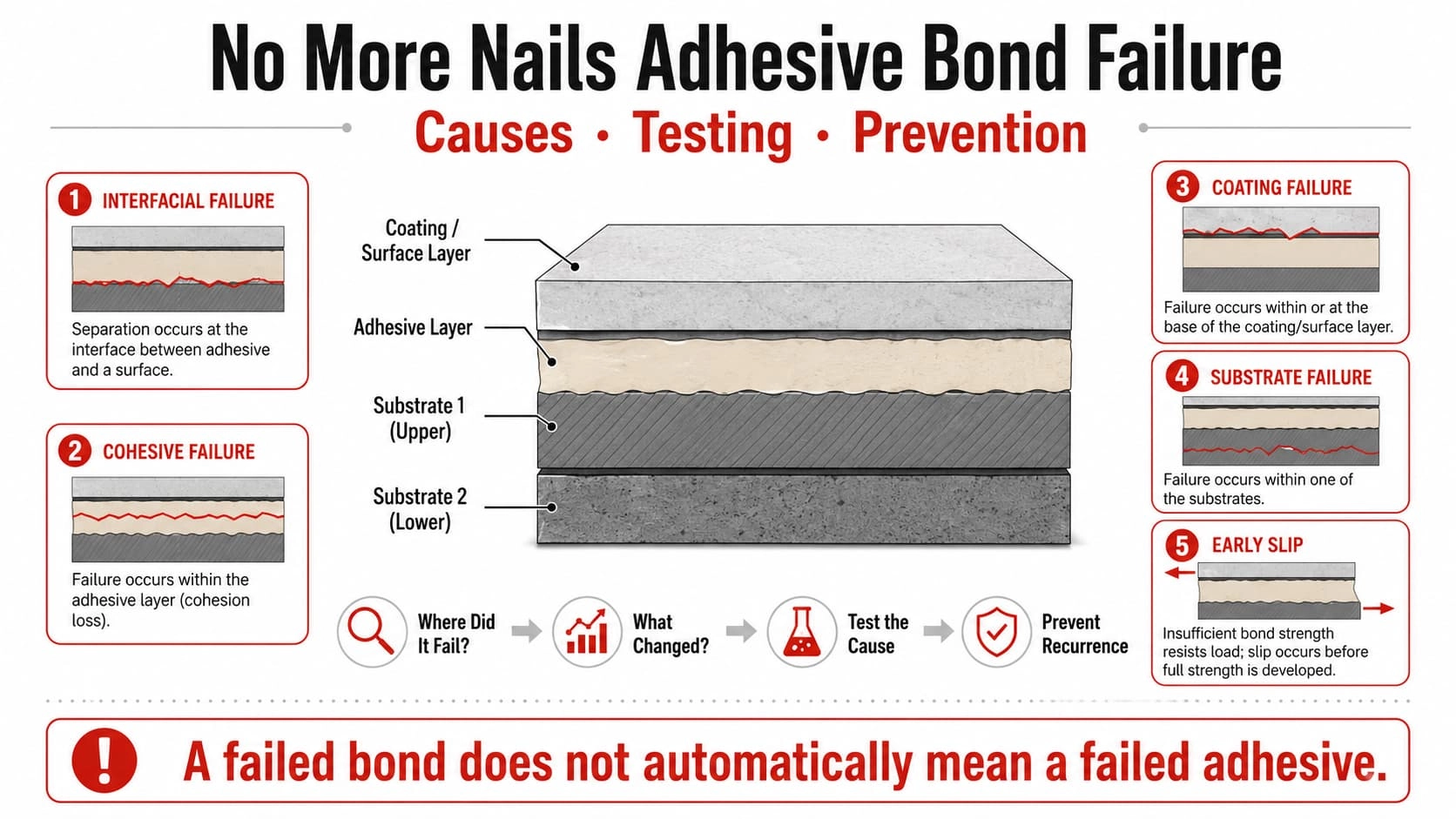
No More Nails Adhesive Bond Failure: Causes, Testing, and Prevention
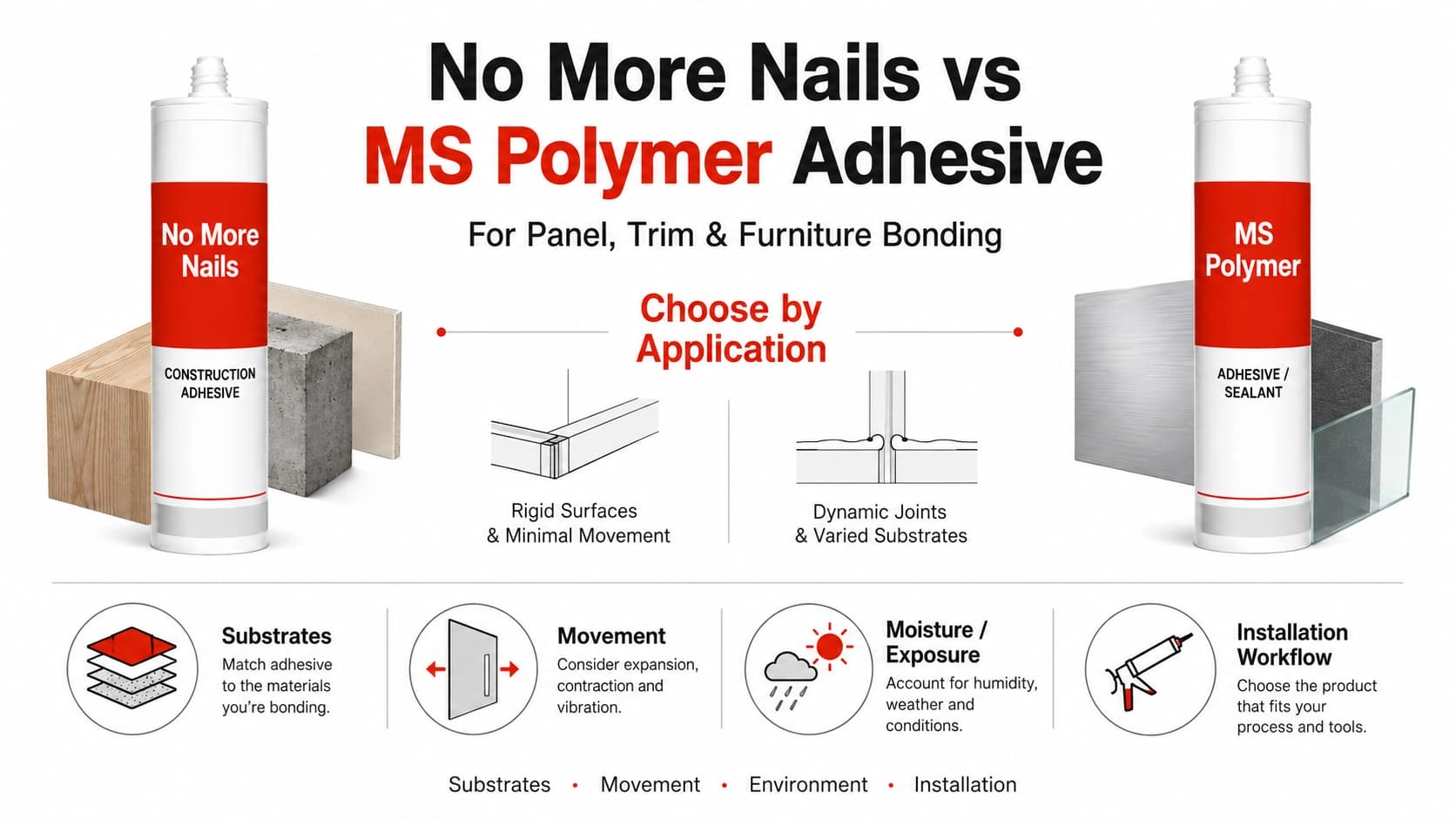
No More Nails vs MS Polymer Adhesive for Panel, Trim, and Furniture Bonding
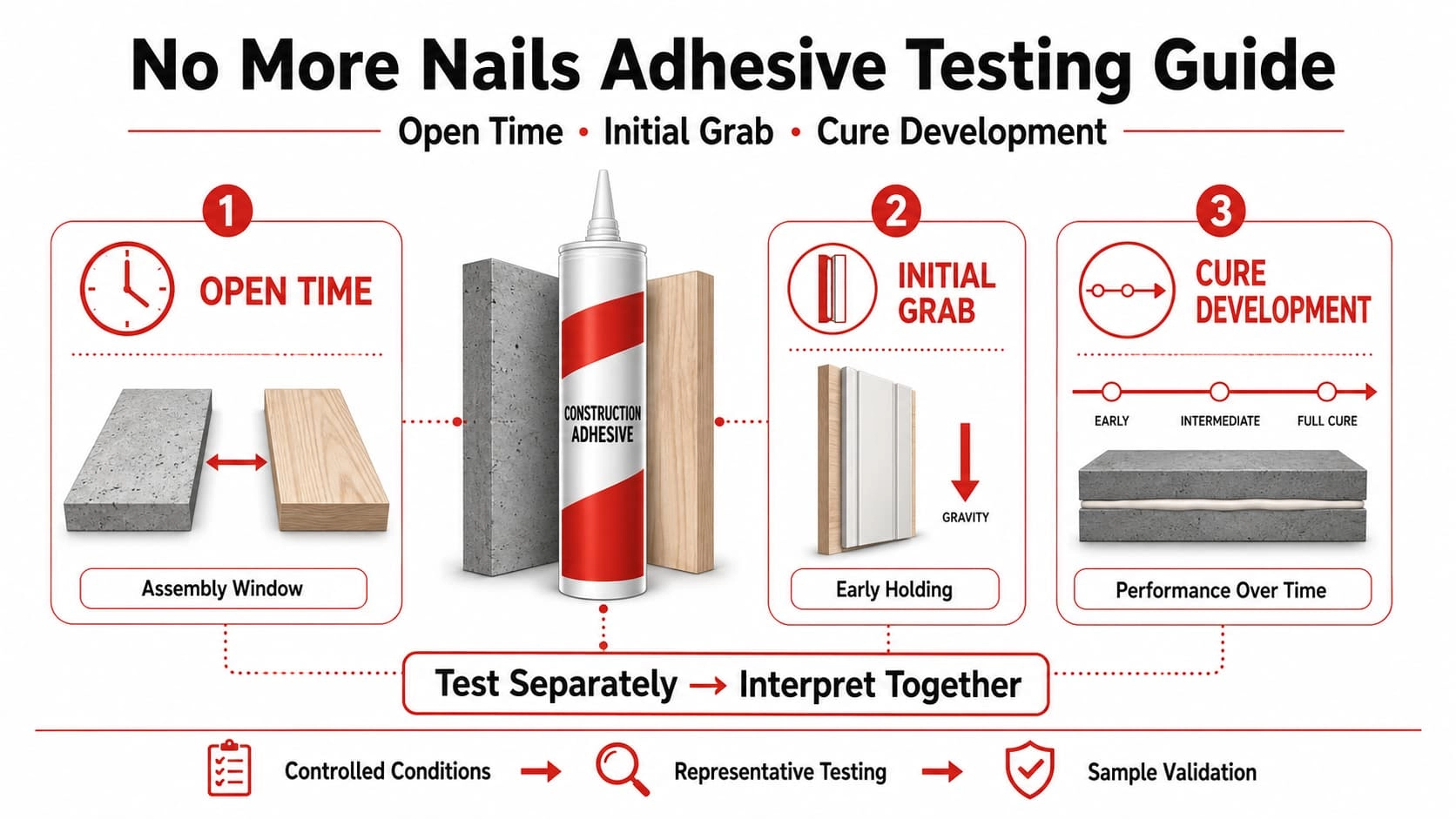
No More Nails Adhesive Open Time, Grab Strength, and Cure Testing Guide
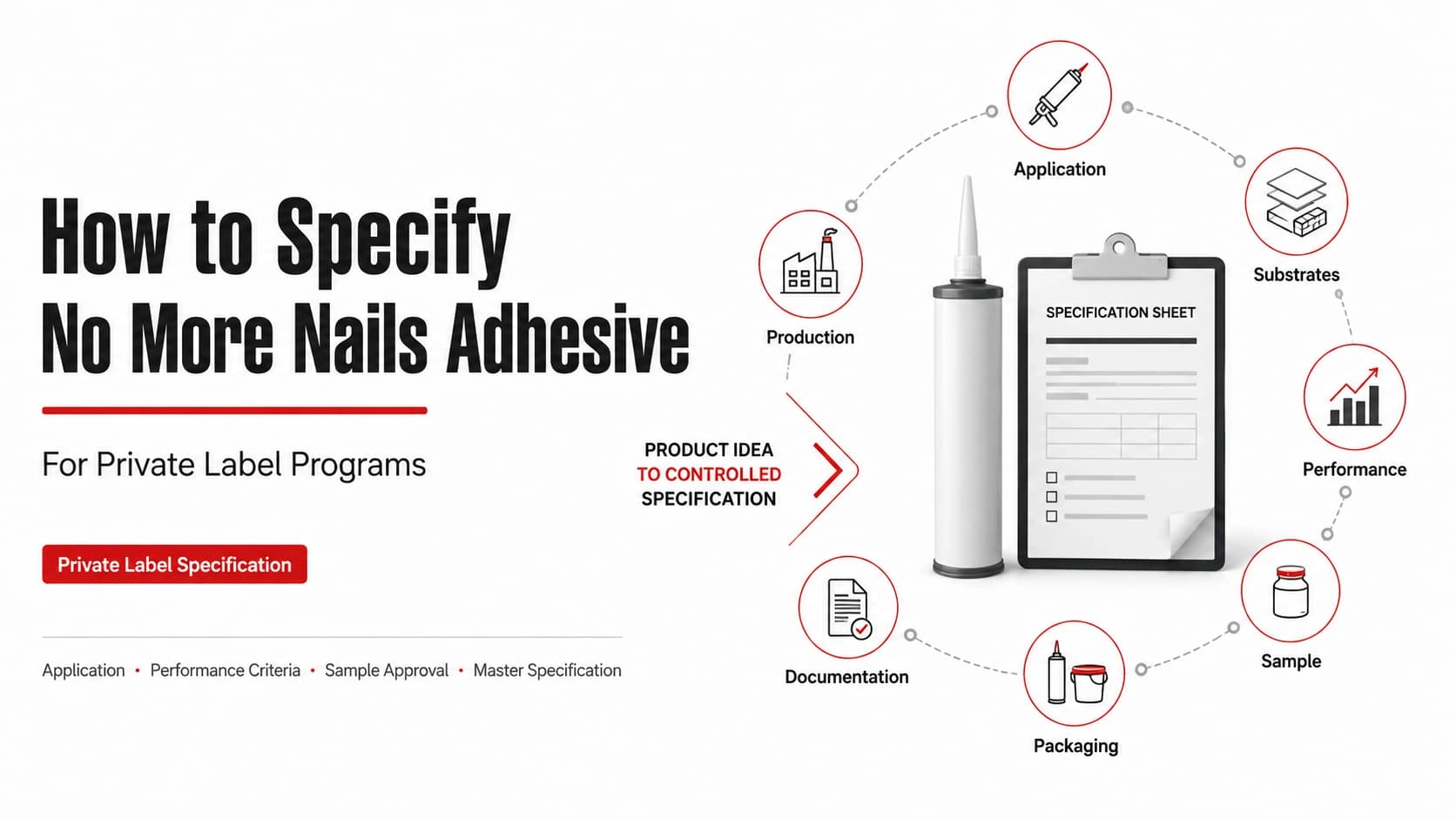
How to Specify No More Nails Adhesive for Private Label Programs

HY992 Modified Polyurethane Construction Sealant
HY992 Modified Polyurethane Sealant is a one-component, moisture-curing construction sealant designed for professional building and structural sealing applications. It provides excellent adhesion, weather resistance, and durable elasticity, making it suitable for a wide range of construction materials.
The formulation delivers strong bonding performance without corrosion or substrate contamination, while maintaining low VOC content for environmentally responsible construction projects.

HY995 Crystal Clear Ms Polymer Adhesive/Sealant
HY995 Crystal Clear Ms Polymer Adhesive/Sealant is a new generation MS Polymer adhesive / sealant formulated for all bonding and sealing applications where long term reliability is required. It has excellent bonding strength on various materials. It will cure to form a durable, flexible, waterproof seal.

HY997 High-Performance Anti-Microbial MS Polymer Sealant
HY997 MS polymer sealant for is is a premium one-component, neutral-curing modified silane sealant engineered for demanding interior applications. It offers a Class 20 movement capability, ensuring long-lasting flexibility and reliable performance under dynamic joint conditions. Curing at room temperature, HY997 delivers superior anti-microbial and mildew-resistant properties, maintaining hygienic and clean environments over time.

KINGDELI HY732 Professional Acetoxy Cure Silicone Sealant
KINGDELI HY732 is a professional-grade, one-component acetoxy cure silicone sealant designed for fast curing, strong adhesion, and long-lasting flexibility. Ideal for aquariums, glass applications, aluminum doors and windows, kitchens, and bathrooms, it provides reliable sealing performance with excellent anti-fungal protection in high-humidity environments.
Let’s Build Stronger Bonds with Quality Adhesives and Sealants
Have questions about the topic or need tailored sealant solutions for your project?
Our team is ready to provide expert guidance, product recommendations, and application support.
Innovating with Integrity, Bonding the World
Since 1998, KINGDELI has delivered trusted, sustainable sealant solutions that connect industries and inspire progress worldwide.

Whatsapp: +8618825946249
Kingdeli
Kingdeli
Kingdeli
Kingdeli
Kingdeli