


The Role of MS Polymer Sealant in Automotive and Marine Industries

- Why Vehicles and Boats Are the Ultimate Test for Sealants
- The Problem with Traditional Welding and Rivets
- Why Legacy Adhesives (Like PU) Are Falling Behind
- Hitting the Road: MS Polymer in Automotive and RV Manufacturing
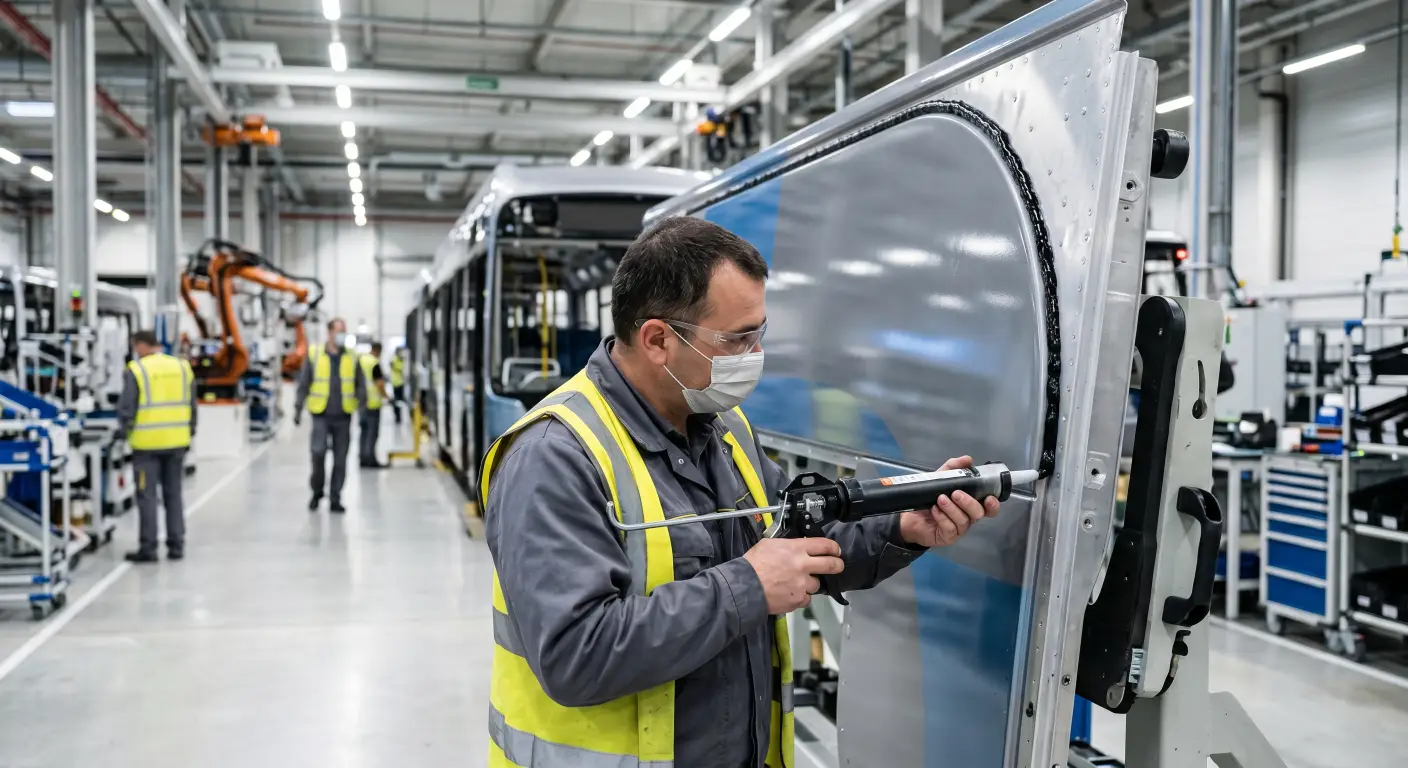
- Bonding Bus Panels and RV Roofs Without Screws
- Absorbing Vibration and Reducing Cabin Noise
- Conquering the Waves: The Ultimate Marine-Grade Sealant
- Surviving Saltwater and Harsh Ocean Sun
- Sealing Boat Decks and Hulls with Zero Shrinkage
- The Factory Floor Advantage: Speeding Up Production
- Primerless Adhesion: Saving Hours on the Assembly Line
- A Safer, Toxin-Free Workspace for Assembly Workers
- Sourcing Smart: How to Choose the Right MS Polymer
- The Pitfalls of Large-Scale Procurement: Beware of Diluted Formulas
- The Solution: Securing Your Supply Chain with KINGDELI
- Conclusion: Build Lighter, Stronger, and Faster
- FAQs
While architects and builders rely on advanced chemistry for high-rise facades, the true test of an adhesive's durability happens in motion. In the heavy-duty manufacturing sector, materials are subjected to relentless kinetic energy, thermal shock, and aggressive environmental exposure. For engineers designing the next generation of transportation, selecting the right structural adhesive is a critical safety and performance decision. To understand the full scope of this advanced chemistry across all building sectors, refer to our comprehensive MS Polymer Sealant: The Ultimate Professional Guide for Modern Construction. Today, an Industrial MS polymer sealant is rapidly replacing legacy mechanical fasteners and older glues, fundamentally changing how we construct vehicles and vessels.
Why Vehicles and Boats Are the Ultimate Test for Sealants
Transportation manufacturing operates in a fundamentally different reality than static construction. A commercial bus hitting a pothole at highway speeds or a yacht crashing through ocean waves generates immense torsional stress across the chassis and hull. These dynamic loads require an Industrial MS polymer sealant that possesses extraordinary elongation properties to absorb the shock without tearing the bonded substrates.
The Problem with Traditional Welding and Rivets
For decades, heavy manufacturing relied entirely on mechanical fasteners like rivets, screws, and spot welding. However, these traditional methods present severe engineering drawbacks:
- Stress Concentration: Screws and rivets create isolated points of intense pressure, which often lead to metal fatigue and cracking over time.
- Weight Penalties: Thousands of metal fasteners add significant, unnecessary weight, reducing fuel efficiency and payload capacity.
- Galvanic Corrosion: Combining dissimilar metals with mechanical fasteners in wet environments inevitably leads to rust and structural decay.
Why Legacy Adhesives (Like PU) Are Falling Behind
To solve the weight issue, the industry adopted Polyurethane (PU) adhesives. While strong, PU has critical limitations on a modern assembly line. It is highly susceptible to UV degradation, turning brittle when exposed to the sun. Furthermore, PU almost always requires a toxic, time-consuming primer to stick to metals and plastics, slowing down the entire manufacturing process.
Hitting the Road: MS Polymer in Automotive and RV Manufacturing
The modern automotive sector is obsessed with lightweighting and aerodynamics. To achieve sleek, fuel-efficient designs, engineers require adhesives that can seamlessly bond composite plastics, aluminum, and glass. An Automotive MS polymer sealant delivers the exact balance of tensile strength and flexibility required to hold these massive panels together under extreme highway conditions.
Bonding Bus Panels and RV Roofs Without Screws
In commercial vehicle production, eliminating roof leaks is a top priority. When building recreational vehicles, using an MS polymer sealant for RVs allows manufacturers to bond massive fiberglass roof panels and side skirts without drilling a single hole. This screwless bonding technique eliminates the penetration points where water typically enters. Furthermore, an Automotive MS polymer sealant accommodates the differing thermal expansion rates of aluminum frames and fiberglass panels, preventing the roof from buckling under the hot summer sun.
Absorbing Vibration and Reducing Cabin Noise
Passenger comfort heavily depends on reducing NVH (Noise, Vibration, and Harshness). Because it cures into a flexible elastomer, this chemistry acts as a highly effective Vibration dampening adhesive for vehicles. Instead of rigid welds transferring engine and road vibrations directly into the cabin, the Automotive MS polymer sealant absorbs the kinetic energy. This results in a significantly quieter ride and protects sensitive internal electronics from shock damage.
Conquering the Waves: The Ultimate Marine-Grade Sealant
The ocean is arguably the most destructive environment on earth for synthetic materials. Relentless UV radiation, pounding waves, and corrosive saltwater destroy standard adhesives in a matter of months. To ensure the structural integrity of a vessel, shipwrights require specialized Marine industry sealants engineered to survive the abyss.
Surviving Saltwater and Harsh Ocean Sun
Unlike standard polyurethanes that chalk and crack under the sun, a true Marine-grade MS polymer sealant features an inorganic backbone that makes it virtually immune to UV degradation. It functions as a powerful Saltwater resistant marine sealant, protecting critical joints above and below the waterline from corrosive chloride ions. Whether sealing portholes or bonding deck hardware, a Marine-grade MS polymer sealant maintains its elasticity and watertight grip despite years of harsh ocean exposure.
Sealing Boat Decks and Hulls with Zero Shrinkage
Teak decks and fiberglass hulls require precision sealing. Because it contains no volatile solvents, this advanced chemistry acts as a Zero shrinkage boat sealant. It cures completely solid, ensuring that deck seams remain perfectly flush without caving in and trapping water. Additionally, it serves as an excellent Primerless sealant for boat decks, bonding aggressively to fiberglass, gelcoat, and treated wood without the need for expensive surface primers.
|
Performance Metric |
Mechanical Fasteners (Welding/Rivets) |
Polyurethane (PU) |
MS Polymer Sealant |
|
Weight Contribution |
Very Heavy |
Light |
Light |
|
Vibration Dampening |
None (Transfers shock) |
Good |
Excellent (Absorbs shock) |
|
UV & Weather Resistance |
N/A (Prone to rust) |
Poor (Requires painting) |
Excellent (UV stable) |
|
Application Speed |
Slow (Labor intensive) |
Medium (Needs primer) |
Fast (Primerless adhesion) |
The Factory Floor Advantage: Speeding Up Production
For plant managers, the value of an Industrial MS polymer sealant goes beyond the final product; it drastically optimizes the manufacturing process itself. Marine industry sealants and automotive adhesives must perform predictably on fast-paced assembly lines.
Primerless Adhesion: Saving Hours on the Assembly Line
In vehicle manufacturing, surface preparation is a major bottleneck. Workers traditionally spend hours cleaning, scuffing, and applying chemical primers before using PU adhesives. By utilizing this advanced hybrid technology, factories can skip the primer stage entirely on most substrates. This primerless capability accelerates the assembly line, reduces labor costs, and eliminates the recurring expense of purchasing primer chemicals.
A Safer, Toxin-Free Workspace for Assembly Workers
Traditional heavy-duty glues release volatile organic compounds (VOCs) and contain hazardous isocyanates, requiring assembly workers to wear heavy respirators and factories to install massive ventilation systems. Upgrading to an Isocyanate-free assembly adhesive transforms the factory environment. It is completely safe to handle, odorless, and poses no respiratory threat to workers, helping factories easily pass strict environmental and occupational health inspections.
Sourcing Smart: How to Choose the Right MS Polymer
Once engineers decide to upgrade their production lines, the immediate challenge shifts to supply chain security. Procuring massive quantities of an Automotive MS polymer sealant or an MS polymer sealant for RVs requires strict quality vetting, as utilizing an inferior product can cause catastrophic failures across an entire fleet. For a detailed breakdown of supplier evaluation criteria, explore our comprehensive Sourcing Guide: How to Choose a Reliable MS Polymer Sealant Manufacturer.
The Pitfalls of Large-Scale Procurement: Beware of Diluted Formulas
The industrial market is flooded with low-cost adhesives that disguise themselves as premium hybrids. To lower production costs, untrustworthy suppliers dilute their mixtures with cheap solvents. When these solvents evaporate during the curing process, the adhesive loses its structural integrity and shrinks heavily. Using a diluted product negates the benefits of a Zero shrinkage boat sealant and leads to severe water leaks in vehicle cabins.
The Solution: Securing Your Supply Chain with KINGDELI
To prevent catastrophic assembly failures, leading manufacturers source their materials directly from trusted, high-capacity factories. By partnering with a facility that controls the chemical synthesis from the ground up, you guarantee that every single cartridge or drum delivered to your factory floor contains 100% pure, unadulterated hybrid chemistry capable of meeting extreme mechanical demands.
Conclusion: Build Lighter, Stronger, and Faster
The transition from mechanical fasteners and legacy PU to advanced hybrid chemistry represents a major leap forward in manufacturing. Whether you are seeking to reduce cabin noise with a Vibration dampening adhesive for vehicles or protect a hull with a Saltwater resistant marine sealant, this technology delivers unmatched durability and production efficiency.
For large-scale industrial buyers looking to secure a competitive edge, partnering with the right chemical manufacturer is essential. As a leading OEM industrial sealant manufacturer and Bulk automotive sealant supplier, the KINGDELI MS polymer factory offers 100% pure formulations and high-volume Wholesale marine sealant supply. Choose us as your Factory direct vehicle sealant partner to ensure uninterrupted production, superior structural integrity, and maximum profitability for your manufacturing operations.
FAQs
Can MS polymer completely replace welding in vehicle manufacturing?
While it cannot replace structural frame welding (like the chassis), it completely replaces welding and rivets for bonding exterior panels, roofs, and side skirts, significantly reducing vehicle weight and preventing rust.
Does it cure underwater for emergency boat repairs?
Yes, high-quality hybrid formulations can cure in the presence of moisture and can even be applied underwater for emergency leak sealing on boat hulls, making them indispensable for marine maintenance.
How does primerless adhesion actually work?
The silane-modified backbone of the chemistry contains built-in adhesion promoters that chemically react with the microscopic moisture on the surface of metals, plastics, and fiberglass, creating a permanent bond without separate primer chemicals.
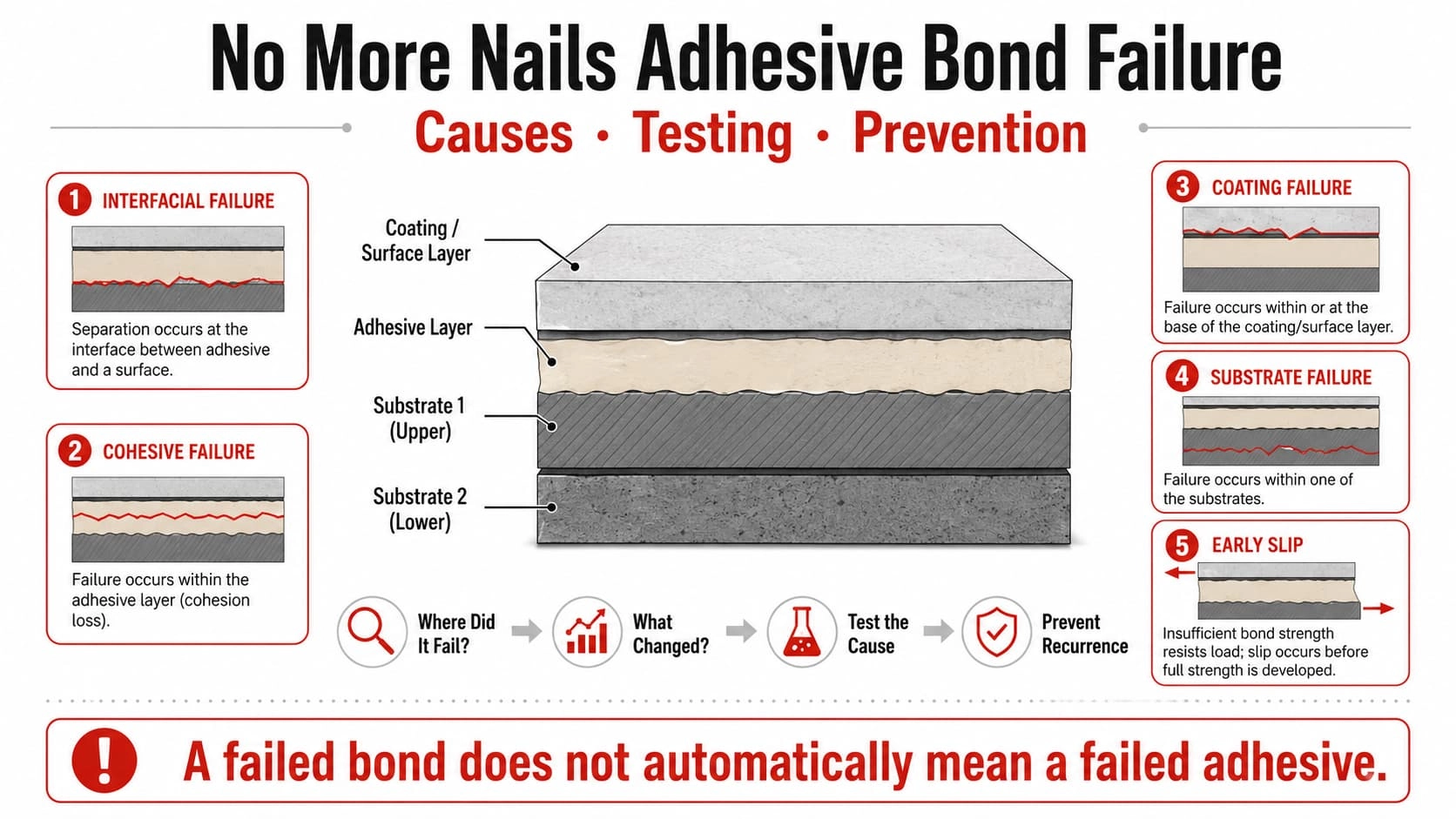
No More Nails Adhesive Bond Failure: Causes, Testing, and Prevention
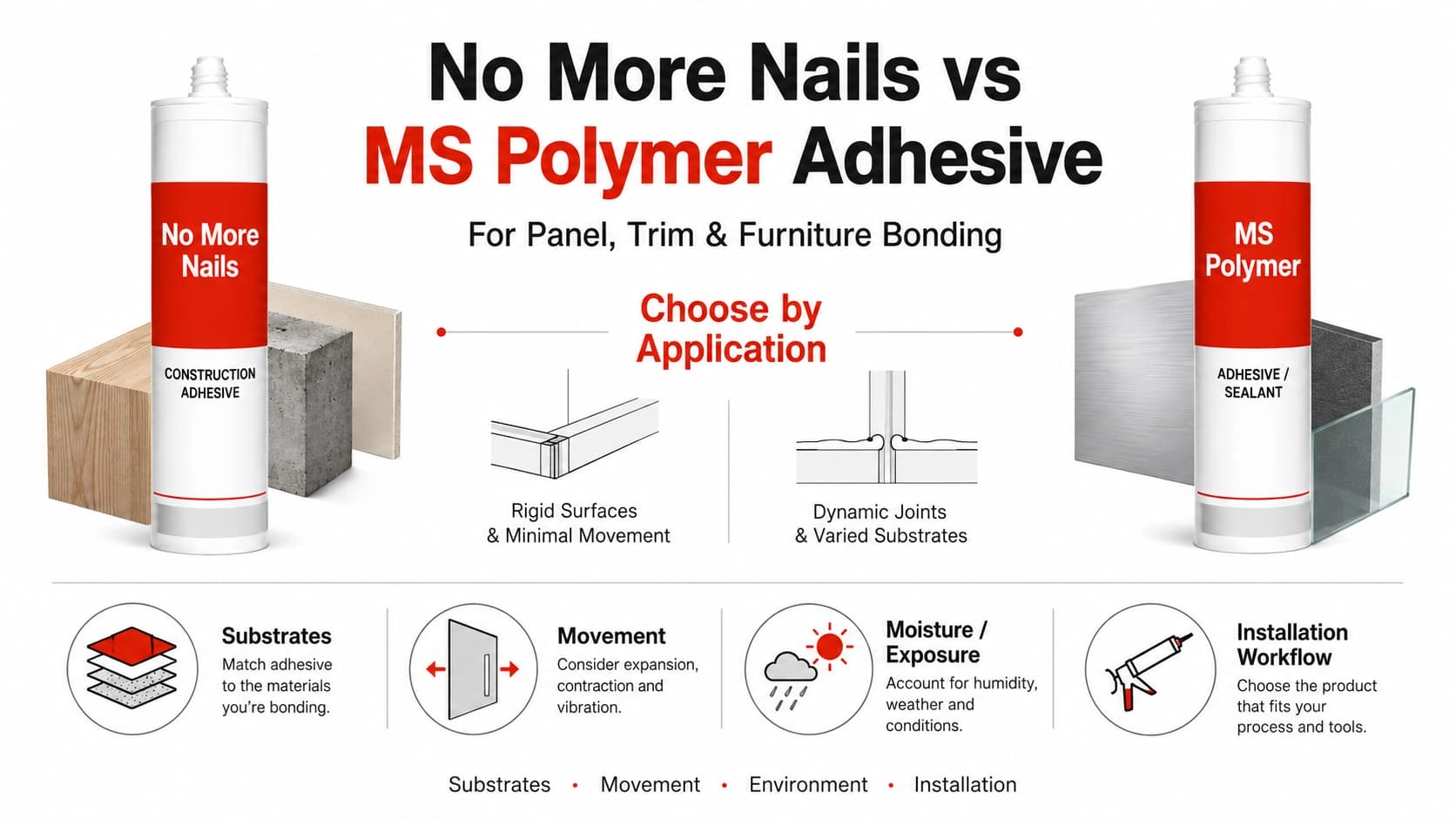
No More Nails vs MS Polymer Adhesive for Panel, Trim, and Furniture Bonding
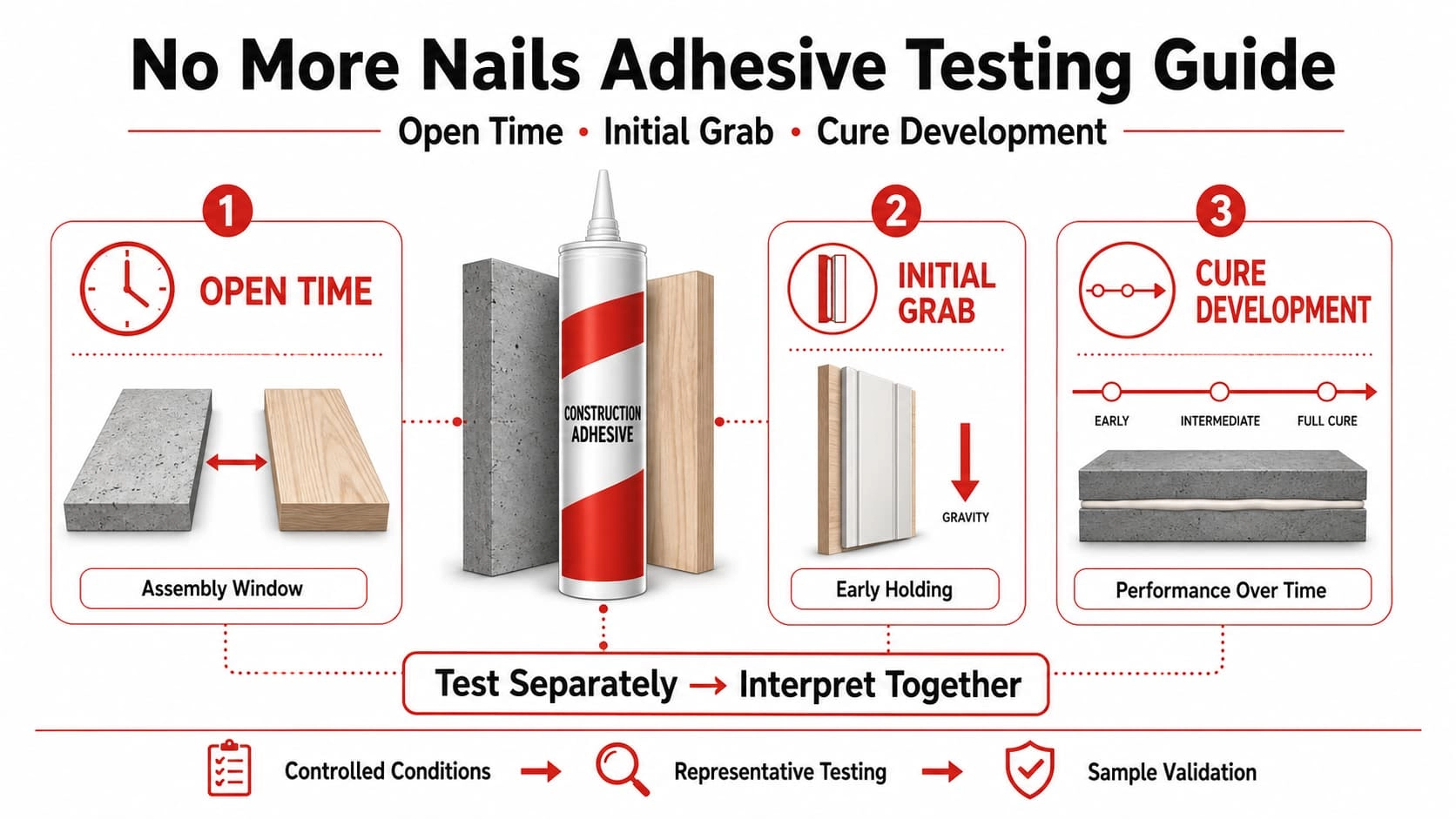
No More Nails Adhesive Open Time, Grab Strength, and Cure Testing Guide
How to Specify No More Nails Adhesive for Private Label Programs

HY992 Modified Polyurethane Construction Sealant
HY992 Modified Polyurethane Sealant is a one-component, moisture-curing construction sealant designed for professional building and structural sealing applications. It provides excellent adhesion, weather resistance, and durable elasticity, making it suitable for a wide range of construction materials.
The formulation delivers strong bonding performance without corrosion or substrate contamination, while maintaining low VOC content for environmentally responsible construction projects.

HY995 Crystal Clear Ms Polymer Adhesive/Sealant
HY995 Crystal Clear Ms Polymer Adhesive/Sealant is a new generation MS Polymer adhesive / sealant formulated for all bonding and sealing applications where long term reliability is required. It has excellent bonding strength on various materials. It will cure to form a durable, flexible, waterproof seal.

HY997 High-Performance Anti-Microbial MS Polymer Sealant
HY997 MS polymer sealant for is is a premium one-component, neutral-curing modified silane sealant engineered for demanding interior applications. It offers a Class 20 movement capability, ensuring long-lasting flexibility and reliable performance under dynamic joint conditions. Curing at room temperature, HY997 delivers superior anti-microbial and mildew-resistant properties, maintaining hygienic and clean environments over time.

KINGDELI HY732 Professional Acetoxy Cure Silicone Sealant
KINGDELI HY732 is a professional-grade, one-component acetoxy cure silicone sealant designed for fast curing, strong adhesion, and long-lasting flexibility. Ideal for aquariums, glass applications, aluminum doors and windows, kitchens, and bathrooms, it provides reliable sealing performance with excellent anti-fungal protection in high-humidity environments.
Let’s Build Stronger Bonds with Quality Adhesives and Sealants
Have questions about the topic or need tailored sealant solutions for your project?
Our team is ready to provide expert guidance, product recommendations, and application support.
Innovating with Integrity, Bonding the World
Since 1998, KINGDELI has delivered trusted, sustainable sealant solutions that connect industries and inspire progress worldwide.

Whatsapp: +8618825946249
Kingdeli
Kingdeli
Kingdeli
Kingdeli
Kingdeli