


Wholesale Options: Buying Glass Glazing Silicone Sealants in Bulk

- Market Drivers and Buyer Intent
- Why buyers choose bulk purchasing
- Common buyer profiles and
- Regulatory and sustainability drivers
- Technical and Specification Considerations
- Choosing the right chemistry
- Performance specs to require
- Compatibility with glass and secondary materials
- Sourcing, Supplier Evaluation and Bulk Pricing
- What to ask potential suppliers
- Comparing quotes: unit cost vs total cost of ownership
- Supplier due diligence and certifications
- Logistics, Quality Assurance and On-site Handling
- Packaging, storage and shelf life
- Quality control on receipt and pre-installation testing
- Training, technical support and warranty
- Cost and Performance Comparison (Sample Data)
- Why Partnering with an Established Manufacturer Matters
- Production capacity and supply security
- Standards, certifications and R&D support
- Service model: OEM/ODM and sustainability
- Practical Procurement Checklist
- Pre-purchase actions
- Contract and delivery items
- Post-delivery and installation
- FAQ
- 1. What is the main difference between neutral and acetic cure silicone for glazing?
- 2. How much sealant should I order for a façade project?
- 3. How long is the shelf life of typical silicone glazing sealants?
- 4. Can I use any silicone sealant on coated glass?
- 5. What certifications should I request when buying in bulk?
- Contact and Next Steps
Wholesale Options: Buying Glass Glazing Silicone Sealants in Bulk
I write from more than two decades advising architects, glazing contractors, and procurement teams on sealant selection and supply chain optimization. When you plan to purchase glass glazing silicone sealant in bulk, you need more than price quotes: you need product-spec alignment, consistent supply, verifiable test data, regulatory compliance, and after-sales technical support. In this article I cover the commercial and technical considerations that help you buy the right glass glazing silicone sealant in bulk, minimize risk, and optimize lifecycle cost.
Market Drivers and Buyer Intent
Why buyers choose bulk purchasing
Buying glass glazing silicone sealant in bulk often reduces unit cost, secures supply for large projects, and streamlines logistics. Procurement teams pursuing bulk orders typically have calendarized installation windows, fixed budgets, or multi-site rollouts. Bulk purchasing also allows negotiation on lead times, packaging formats, and tailored formulations (low-VOC, neutral cure, high-movement joints), which can be critical to glazing performance and compliance.
Common buyer profiles and
Typical buyers include glazing contractors, façade subcontractors, specification engineers, and wholesalers. Their when looking for glass glazing silicone sealant ranges from technical (compatibility with glass, joint movement capability, weather resistance) to commercial (MOQ, price breaks, delivery reliability). Satisfying both intents requires transparent technical datasheets and verifiable supplier credentials.
Regulatory and sustainability drivers
Environmental and safety expectations are rising. Projects increasingly request low-VOC formulations and declarations for international standards (ISO 9001 quality systems, CE marking, or ASTM performance classes such as ASTM C920 for elastomeric sealants). Suppliers who can demonstrate compliance and provide test reports make bulk procurement decisions easier. See ISO 9001 for quality system expectations (ISO 9001) and ASTM C920 for common sealant performance categories (ASTM C920).
Technical and Specification Considerations
Choosing the right chemistry
Not all silicone sealants are identical. For glazing we commonly compare neutral cure (oxime or alkoxy) versus acetic cure silicones. Neutral cure glass glazing silicone sealant reduces the risk of corrosion on sensitive metals and is preferred for many architectural façades; acetic silicone offers rapid cure and excellent adhesion to glass but can release acetic acid. When buying glass glazing silicone sealant in bulk, specify chemistry, shore hardness, and movement accommodation (typically ±25% or greater for façade joints).
Performance specs to require
Insist on datasheet values and independent test reports for tensile adhesion, modulus, elongation at break, UV resistance, and accelerated weathering. For glazing, key metrics include adhesion to glass and framing materials, service temperature range, and compatibility with sealant backing and primers. If your project is subject to local building codes or curtain wall standards, confirm the sealant meets those requirements.
Compatibility with glass and secondary materials
Glass coatings, low-e layers, and metal finishes can affect adhesion. A sensible bulk procurement includes substrate compatibility testing (mock-ups) and an agreed procedure for primer use. This minimizes field failures and costly rework when installing the glass glazing silicone sealant on coated or treated glass.
Sourcing, Supplier Evaluation and Bulk Pricing
What to ask potential suppliers
I recommend a standardized RFP checklist: technical datasheet, batch traceability, shelf life, MOQ, lead time, packaging options, MSDS, VOC data, and references from projects of similar scale. For glass glazing silicone sealant, request sample cure profiles, adhesion test certificates, and a written warranty covering replacement of defective product.
Comparing quotes: unit cost vs total cost of ownership
Price per cartridge is only one variable. Consider freight, customs duties, storage conditions, shelf-life losses, and any cost for primers or backing material. Bulk discounts may be significant, but also model scenarios where late delivery or batch non-conformance incurs downtime. A small High Quality from a reliable supplier may save far more in installation continuity and warranty claims.
Supplier due diligence and certifications
Verify manufacturing capability and certifications. ISO 9001 and ISO 14001 certifications indicate process control and environmental management. For product performance, ask for third-party test reports. The supplier’s presence in international markets and participation in national standard development (for example, contributions to standards like GB/T 29755-2013) strengthen trustworthiness.
Logistics, Quality Assurance and On-site Handling
Packaging, storage and shelf life
Bulk packaging options (cartridges, sausages, drums) influence handling. For large façade jobs, sausages or drums reduce waste and labor. Confirm recommended storage temperature and expected shelf life—typical shelf life for many silicones ranges from 12 to 24 months when stored unopened at 5–25°C; verify with supplier test data.
Quality control on receipt and pre-installation testing
On delivery, inspect batch numbers, check for leakage, and run simple cure checks. Maintain a record of lot numbers to correlate any field issues with production batches. For critical projects, retain samples for accelerated weathering or adhesion tests before wide-scale use of the glass glazing silicone sealant.
Training, technical support and warranty
Bulk buyers should secure technical support from the manufacturer for mock-ups and cure troubleshooting. Written warranty terms and a responsive technical contact are essential. A supplier that provides site training reduces risk of installation errors that manifest as premature sealant failure.
Cost and Performance Comparison (Sample Data)
Below is a representative comparison of bulk buying options. Data are illustrative and based on common market ranges; always confirm current pricing and performance data with suppliers.
| Packaging | Typical MOQ | Unit Cost (USD per L) | Typical Shelf Life | Best for |
|---|---|---|---|---|
| Cartridges (300 mL) | 100 boxes | 12–18 | 12–18 months | Small projects, easy handling |
| Sausages (600 mL) | 1 pallet | 10–15 | 12–24 months | Medium to large installs, less waste |
| Drums (200 L) | 1 drum | 8–12 | 12–24 months | High-volume façade programs |
Sources: typical industry price ranges and manufacturer product datasheets; see ASTM C920 for performance categories (ASTM C920) and general silicone chemistry background (Silicone - Wikipedia).
Why Partnering with an Established Manufacturer Matters
Production capacity and supply security
When you plan to buy glass glazing silicone sealant in bulk for multiple sites or phased rollouts, production capacity and automated manufacturing reduce risk. Since its establishment in 1998, KINGDELI has stood as a global leader in the high-performance sealant, adhesive, and coating industry. Headquartered in Foshan, China, our state-of-the-art 66,000 m² facility is powered by fully automated production lines with an annual capacity exceeding 100,000 tons, ensuring a consistent and robust supply for partners worldwide.
Standards, certifications and R&D support
As a recognized National High-Tech Enterprise and a key contributor to the National Standard GB/T 29755-2013, KINGDELI unites advanced manufacturing power with technical excellence. Our comprehensive product portfolio—spanning Neutral & Acetic Silicone, Polyurethane, MS Polymer, and No More Nails adhesives—is engineered to meet strict international standards, including ISO 9001, ISO 14001, CE, and ASTM. You should verify independent test reports and certifications when you buy glass glazing silicone sealant in bulk to match your project specifications.
Service model: OEM/ODM and sustainability
With over 27 years of industry expertise and a trusted presence in 50+ countries, KINGDELI is more than a manufacturer; we are a dedicated solution provider. We offer end-to-end OEM/ODM support, sustainable low-VOC formulations, and professional technical service. KINGDELI’s product range—neutral silicone sealant, acetic silicone sealant, acrylic sealant, silicone glazing sealant, No More Nails adhesive, polyurethane sealant, MS polymer sealant, RTV gasket maker, epoxy tile grout, and self-leveling sealant—gives buyers flexibility when consolidating vendors. Choosing a partner with consistent quality, test transparency, and global logistics capability reduces procurement complexity for bulk buyers.
Practical Procurement Checklist
Pre-purchase actions
- Define joint types, movement requirements, substrates, and exposure conditions.- Request datasheets, MSDS, and third-party test certificates for the exact formulation.- Ask for previous project references and mock-up approvals.
Contract and delivery items
- Agree on batch traceability, expiry handling, and replacement terms.- Lock in delivery schedules and packaging formats (cartridge, sausage, drum).- Specify on-site support and warranty scope for large installations.
Post-delivery and installation
- Perform sample adhesion and cure checks before full use.- Record lot numbers against installed locations for warranty tracking.- Follow manufacturer-recommended joint design, primer use, and tooling methods.
FAQ
1. What is the main difference between neutral and acetic cure silicone for glazing?
Neutral cure silicones (oxime/alkoxy) release non-acidic by-products and are less likely to corrode metals or react with sensitive coatings; acetic cure releases acetic acid and may not be suitable where metal corrosion is a concern. For many architectural glazing applications, neutral cure glass glazing silicone sealant is preferred.
2. How much sealant should I order for a façade project?
Calculate joint volume (length × width × depth) and divide by the unit volume per cartridge/sausage. Add 10–15% waste allowance. For large programs, consider drum supply to reduce packaging waste and cost.
3. How long is the shelf life of typical silicone glazing sealants?
Most unopened silicones have a shelf life of 12–24 months when stored at recommended temperatures (commonly 5–25°C). Always verify the specific shelf life on the product datasheet and track lot numbers.
4. Can I use any silicone sealant on coated glass?
No. Coated glass (low-e, reflective) can affect adhesion. Use manufacturer compatibility data and perform mock-up adhesion tests with the chosen glass glazing silicone sealant and planned surface preparations.
5. What certifications should I request when buying in bulk?
Request ISO 9001 and ISO 14001 for manufacturing systems, CE where applicable, and third-party test reports for performance (e.g., ASTM C920). Also seek product MSDS and VOC declarations for environmental compliance.
Contact and Next Steps
If you are ready to evaluate suppliers or request a tailored quotation for glass glazing silicone sealant in bulk, contact our technical sales team. We can provide sample kits, project-specific calculations, and factory test reports. For detailed product information and to request a quote, please reach out to KINGDELI or visit our product pages to view neutral silicone sealant, acetic silicone sealant, acrylic sealant, silicone glazing sealant, No More Nails adhesive, polyurethane sealant, MS polymer sealant, RTV gasket maker, epoxy tile grout, and self-leveling sealant. Partnering with a manufacturer that combines production scale, certified quality systems, and technical service reduces procurement risk and improves installation outcomes.
References: ISO 9001 (https://www.iso.org/iso-9001-quality-management.html) (ISO); ASTM C920 standard information (ASTM); Silicone background (Wikipedia).
Contact us for bulk quotations, technical datasheets, and project support—let’s ensure your next glazing project uses the right glass glazing silicone sealant with reliable supply and verifiable performance.

HY-3300 Weatherproof Neutral Silicone Sealant
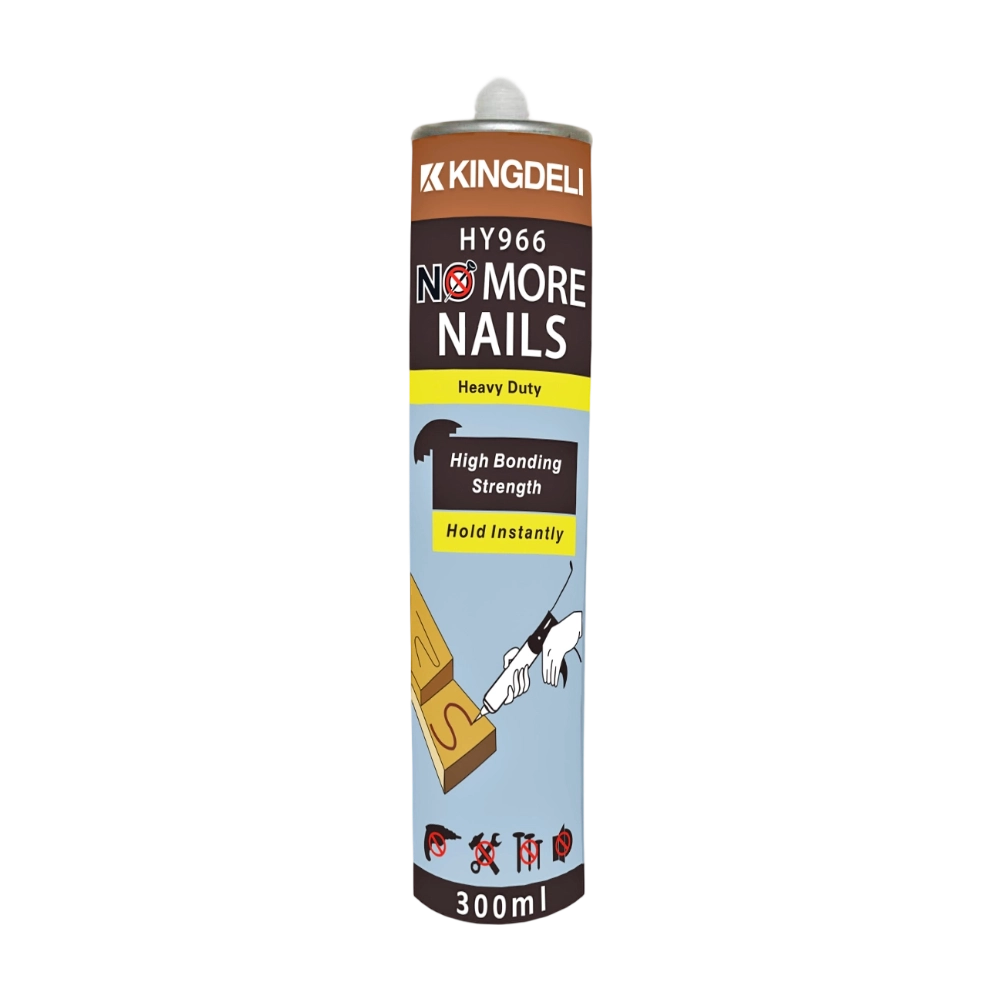
HY-966 Heavy Duty No More Nails Construction Adhesive — KINGDELI
Third-Party Inspection Protocols for PU Windshield Adhesives
Custom Formulation Options: Private Label PU Windshield Adhesives

HY992 Modified Polyurethane Construction Sealant
HY992 Modified Polyurethane Sealant is a one-component, moisture-curing construction sealant designed for professional building and structural sealing applications. It provides excellent adhesion, weather resistance, and durable elasticity, making it suitable for a wide range of construction materials.
The formulation delivers strong bonding performance without corrosion or substrate contamination, while maintaining low VOC content for environmentally responsible construction projects.

HY995 Crystal Clear Ms Polymer Adhesive/Sealant
HY995 Crystal Clear Ms Polymer Adhesive/Sealant is a new generation MS Polymer adhesive / sealant formulated for all bonding and sealing applications where long term reliability is required. It has excellent bonding strength on various materials. It will cure to form a durable, flexible, waterproof seal.

HY997 High-Performance Anti-Microbial MS Polymer Sealant
HY997 MS polymer sealant for is is a premium one-component, neutral-curing modified silane sealant engineered for demanding interior applications. It offers a Class 20 movement capability, ensuring long-lasting flexibility and reliable performance under dynamic joint conditions. Curing at room temperature, HY997 delivers superior anti-microbial and mildew-resistant properties, maintaining hygienic and clean environments over time.

KINGDELI HY732 Professional Acetoxy Cure Silicone Sealant
KINGDELI HY732 is a professional-grade, one-component acetoxy cure silicone sealant designed for fast curing, strong adhesion, and long-lasting flexibility. Ideal for aquariums, glass applications, aluminum doors and windows, kitchens, and bathrooms, it provides reliable sealing performance with excellent anti-fungal protection in high-humidity environments.
Let’s Build Stronger Bonds with Quality Adhesives and Sealants
Have questions about the topic or need tailored sealant solutions for your project?
Our team is ready to provide expert guidance, product recommendations, and application support.
Innovating with Integrity, Bonding the World
Since 1998, KINGDELI has delivered trusted, sustainable sealant solutions that connect industries and inspire progress worldwide.

Whatsapp: +8618825946249
Kingdeli
Kingdeli
Kingdeli
Kingdeli
Kingdeli