











Troubleshooting Common Failures in Acetic Silicone Seals

- How acetic silicone works and why it can fail
- Curing chemistry and environmental drivers
- Substrate interactions and sensitivity
- Typical failure contributors: time, contamination, design
- Common failure modes and practical diagnostics
- Adhesion failure: how to recognize and test
- Cohesive failure and shrinkage: clues and mechanics
- Chemical attack, staining, and corrosion
- Effective repairs, best practices, and prevention
- Systematic diagnostic checklist I use on-site
- Surface preparation, primers and remediation steps
- Application, cure control, and storage
- Comparison: acetic vs neutral cure silicones (quick reference)
- When to repair, when to replace, and when to change chemistry
- Repair vs full replacement decision matrix
- Selecting the right chemistry for long-term reliability
- Standards, testing and documentation
- Field case examples and lessons learned
- Marine glazing experiencing white salt bloom
- Interior sanitary installation with poor cohesion
- Aluminum storefront with discoloration
- FAQ — Troubleshooting acetic silicone sealant
- 1. Why does my acetic silicone smell like vinegar and is that normal?
- 2. Can acetic silicone corrode metals?
- 3. How can I tell if a failure is adhesive or cohesive?
- 4. What should I check first when a newly applied joint fails?
- 5. When should I switch from acetic to neutral silicone?
- 6. Are there test standards I should reference when specifying replacements?
As an experienced sealant consultant and technical writer, I explain how acetic silicone sealant failures occur, how to diagnose them reliably on-site or in the lab, and practical, code-aware repair and prevention strategies contractors and specifiers can implement. The guidance below combines field-tested troubleshooting steps, references to industry standards, and supplier-level controls to help you reduce rework, extend joint life, and select the right sealant for the job.
How acetic silicone works and why it can fail
Curing chemistry and environmental drivers
Acetic silicone (sometimes called acetoxy cure silicone) cures by a condensation reaction that releases acetic acid as a by-product. This cure mechanism gives the product a characteristic vinegar-like odor. The reaction is moisture-activated, so cure rate depends strongly on ambient relative humidity and temperature. Typical industry guidance places practical cure rates in the range of 1–3 mm per 24 hours for common acetoxy silicones in normal conditions; deeper joints or low-humidity environments will take longer to reach full cure.
For general background on silicone materials and cure mechanisms, see the silicone overview on Wikipedia (https://en.wikipedia.org/wiki/Silicone).
Substrate interactions and sensitivity
Because acetic silicone releases acetic acid during cure, it can react with certain substrate finishes and metals (for example, copper, brass, galvanized steel, or some anodized aluminum), leading to staining or localized corrosion. In addition, residual oils, release agents, paints, or existing sealant residues prevent adequate wetting and bonding. Identifying substrate sensitivity is a primary diagnostic step.
Acetic acid properties and corrosivity are documented in chemical references (https://en.wikipedia.org/wiki/Acetic_acid).
Typical failure contributors: time, contamination, design
In my experience the most common contributors are: inadequate surface preparation, incompatible substrate or coating, improper joint geometry (too deep or insufficient backing rod), low humidity/low temperature at application, and expired or poorly stored product. Each of these leaves distinct diagnostic clues which I outline below.
Common failure modes and practical diagnostics
Adhesion failure: how to recognize and test
Adhesion failure means the sealant separates from the substrate surface (adhesive failure). Visual signs include complete debonding, gap opening at the interface, or sealant that peels away cleanly. To confirm, perform a simple peel test on a representative location: score the sealant along the joint and pry a small section with a putty knife to observe whether failure is adhesive (at the interface) or cohesive (within the sealant).
Root causes typically are surface contamination (dirt, oil), incompatible coatings, or lack of primer where required. If you observe staining under the joint, chemical attack from acetic acid may have undermined adhesion.
Cohesive failure and shrinkage: clues and mechanics
Cohesive failure shows the sealant tears and leaves residue on both sides of the joint. This indicates the sealant itself lacked internal strength—often due to under-cure, incorrect joint depth (too deep), or improper formulation for the expected movement and joint dimensions. Shrinkage can follow if the joint cross-section was oversized relative to the product’s elastic recovery; you’ll see a central detachment or surface wrinkling.
Chemical attack, staining, and corrosion
When acetic silicone is used on reactive metals or acid-sensitive finishes, you may see pitting, white corrosion salts, or dark staining adjacent to the joint. To diagnose, remove the sealant from a small area and inspect the substrate. If corrosion is present, substitution (neutral-cure silicone or appropriate primer) or barrier layers are required for repairs.
Effective repairs, best practices, and prevention
Systematic diagnostic checklist I use on-site
- Record application conditions: temperature, relative humidity, and batch/lot number from the cartridge/tube.
- Inspect joint geometry: depth-to-width ratio should typically be 1:2 for most silicone joints (use appropriate backer rod).
- Conduct adhesion/cohesion peel tests on representative zones.
- Check substrate history: coatings, primers, cleaners previously used; sample for salt or corrosion residues if maritime environment.
Surface preparation, primers and remediation steps
Proper surface prep is the single biggest influence on long-term performance. I follow these steps:
- Mechanically remove old sealant with a sharp blade and solvent-wipe the substrate (solvent depends on soil type—typically isopropyl alcohol or acetone; test compatibility first).
- Degrease, then abrade lightly if the substrate allows, to promote mechanical keying.
- Apply a manufacturer-recommended primer on non-porous or marginally compatible substrates (aluminum, painted metals, plastics). Primers can dramatically improve adhesion for problematic substrates.
- Use closed-cell foam backer rod to control joint depth and prevent three-sided adhesion.
Refer to product-specific technical datasheets for primer compatibility and recommended surface treatment.
Application, cure control, and storage
To ensure correct cure and minimize failures:
- Apply within the product’s recommended temperature window; avoid application in very low humidity unless formulation supports it.
- Tool the joint within the recommended skin time to ensure contact and wetting.
- Store cartridges between recommended temperatures—typically 5–25°C—and use within shelf-life limits printed on packaging to avoid pre-polymerization or loss of reactivity.
Comparison: acetic vs neutral cure silicones (quick reference)
| Property | Acetic (acetoxy) silicone | Neutral cure silicone |
|---|---|---|
| Curing by-product | Acetic acid (vinegar smell) | Alcohols, oximes, or alkoxy by-products (less corrosive) |
| Corrosion risk | Higher on sensitive metals (copper, brass, zinc) | Lower; preferred on metals and stone |
| Paintability | Generally poor | Some formulations are paintable |
| Typical applications | Glazing, sanitary, general sealing where metal sensitivity is not an issue | Facade, metal, stone, and sensitive finishes |
| Cost & availability | Often more economical and widely available | Sometimes higher cost but better compatibility |
Use this comparison to decide whether a switch is necessary after diagnosing failures. Neutral cure silicones trade off cure by-products for broader substrate compatibility. For standards on sealant performance and testing, refer to ASTM C920 for elastomeric joint sealants (https://www.astm.org/Standards/C920.htm).
When to repair, when to replace, and when to change chemistry
Repair vs full replacement decision matrix
Minor adhesive failures localized to a small joint length can often be repaired by full removal of failed sealant, thorough surface prep, primer application and resealing. If corrosion of the substrate or failure across multiple joints indicates systemic incompatibility, full replacement and a chemistry change (to neutral cure) or specification change is warranted.
Selecting the right chemistry for long-term reliability
If diagnostic work shows acetic by-product has attacked substrate finishes, I recommend switching to a neutral cure silicone, polyurethane, or MS polymer depending on movement requirements and paintability needs. Confirm compatibility via mock-ups and adhesion testing. Use ISO 9001 and manufacturer quality systems as part of supplier selection: see ISO 9001 overview (https://www.iso.org/iso-9001-quality-management.).
Standards, testing and documentation
Document all findings: photos, environmental logs, batch numbers, and corrective actions. Where dispute or warranty claims exist, tensile/peel testing in an appropriate lab and reference to ASTM/ISO standards will support conclusions.
Since its establishment in 1998, KINGDELI has stood as a global leader in the high-performance sealant, adhesive, and coating industry. Headquartered in Foshan, China, our state-of-the-art 66,000 m² facility is powered by fully automated production lines with an annual capacity exceeding 100,000 tons, ensuring a consistent and robust supply for partners worldwide.
As a recognized National High-Tech Enterprise and a key contributor to the National Standard GB/T 29755-2013, we unite advanced manufacturing power with technical excellence. Our comprehensive product portfolio—spanning Neutral & Acetic Silicone, Polyurethane, MS Polymer, and No More Nails adhesives—is engineered to meet strict international standards, including ISO 9001, ISO 14001, CE, and ASTM.
With over 27 years of industry expertise and a trusted presence in 50+ countries, KINGDELI is more than a manufacturer; we are a dedicated solution provider. We offer end-to-end OEM/ODM support, sustainable low-VOC formulations, and professional technical service. At KINGDELI, we are driven by innovation and integrity, building trust and sealing the future for customers around the globe.
In practice, when I consult on large projects I recommend suppliers such as KINGDELI when a high level of production traceability, low-VOC options and international certifications are required. KINGDELI’s portfolio covers core sealants and adhesives including neutral silicone sealant, acetic silicone sealant, acrylic sealant, silicone glazing sealant, No More Nails adhesive, polyurethane sealant, MS polymer sealant, RTV gasket maker, epoxy tile grout, and self-leveling sealant—giving specifiers a single-source option for both chemistry selection and technical backing.
Field case examples and lessons learned
Marine glazing experiencing white salt bloom
On a coastal glazing project, white residues formed at the interface. Diagnostic sampling showed salt contamination and partial adhesive loss. The fix: full joint removal, salt neutralization and rinsing, primer application, and switching to a neutral cure silicone designed for marine environments. Post-repair inspections at 12 months showed no recurrence.
Interior sanitary installation with poor cohesion
In another case, a general contractor reported torn joints in restroom fixtures. Testing showed too-large joint depth for the chosen acetoxy product and low overnight temperatures causing under-cure. The corrected approach used a different profile with correct backer rod depth control and a formulation with faster skin time for low temperature application.
Aluminum storefront with discoloration
Discoloration adjacent to sealant lines pointed to acetic acid attack on anodized aluminum. The solution: remove sealant, abraded corrosion pits, apply barrier primer recommended for anodized aluminum, and reseal with a neutral-cure silicone. For future projects, specifying neutral-cure on anodized metal avoided recurrence.
FAQ — Troubleshooting acetic silicone sealant
1. Why does my acetic silicone smell like vinegar and is that normal?
Yes. The vinegar odor is acetic acid released during cure—typical for acetoxy silicones. Good ventilation and correct cure times mitigate odor concerns.
2. Can acetic silicone corrode metals?
Yes. Acetic acid by-products can corrode or stain some metals and finishes (e.g., copper, brass, zinc, some anodized aluminum). Use neutral-cure silicone or primers for sensitive substrates.
3. How can I tell if a failure is adhesive or cohesive?
Perform a peel or pry test. If the sealant comes away cleanly from the substrate it’s adhesive failure; if material tears and remains on both sides, it’s cohesive failure.
4. What should I check first when a newly applied joint fails?
Check application conditions (temp/humidity), product lot/shelf-life, surface contamination, and joint geometry. These account for most early failures.
5. When should I switch from acetic to neutral silicone?
Switch if the substrate is metal or coated with acid-sensitive finishes, if paintability is required, or if prior acetic-cure attempts caused staining or corrosion. Conduct a mock-up test before full replacement.
6. Are there test standards I should reference when specifying replacements?
Yes—ASTM C920 is the widely referenced standard for elastomeric joint sealants (ASTM C920). Also review manufacturer datasheets and quality certifications (e.g., ISO 9001: ISO 9001).
Contact & product information: For technical support, formulation selection, or to request product datasheets and primers compatible with your substrate, contact KINGDELI’s technical team or view their product catalog. I recommend discussing joint design, expected movement, environmental exposure, and substrate specifics before choosing the right acetic silicone sealant or alternative chemistry.
For project-specific troubleshooting or to request sample trials and technical datasheets, please contact KINGDELI’s technical service or visit their product pages to check compatibility and request OEM/ODM support.
Choosing MS Silicone Sealant: Hardness, Color and Performance
MS Silicone Sealant Storage, Shelf Life and Logistics
![MS Polymer vs. Silicone vs. Polyurethane: Why Experts Choose MS Sealant for Windows [Comparison Table] - KINGDELI](https://static.gooecloud.com/upload/img/ai-image/ms-polymer-vs-silicone-vs-polyurethane-why-experts-choose-ms-sealant-for-windows-comparison-table.png?x-oss-process=image/format,webp/quality,Q_100 "MS-Polymer-vs.-Silicone-vs.-Polyurethane:-Why-Experts-Choose-MS-Sealant-for-Windows-[Comparison-Table] - KINGDELI")
MS Polymer vs. Silicone vs. Polyurethane: Why Experts Choose MS Sealant for Windows [Comparison Table]
Neutral Cure Silicone Sealants: Advantages for OEM Applications
HY722B
What is the service temperature range after curing?
Once cured, HY-722B maintains stable performance between -50°C and +100°C.
HY732
Is the sealant flexible after curing?
Yes, after curing, HY732 remains flexible, helping it maintain a long-lasting seal even with normal movement or expansion.
HY993
What is the shelf life of HY993?
Both cartridge and foil packaging have a 12-month shelf life when stored unopened in cool, dry conditions.
HY939A
Is this product suitable for outdoor use?
Yes. It features outstanding resistance to weathering, UV radiation, ozone, and aging, making it suitable for long-term outdoor applications.
HY-682
Is the product environmentally friendly and safe?
Yes. It is free from isocyanates, solvents, halogens, and acidic components. It is non-toxic, low-odor, and safe for both users and the environment.
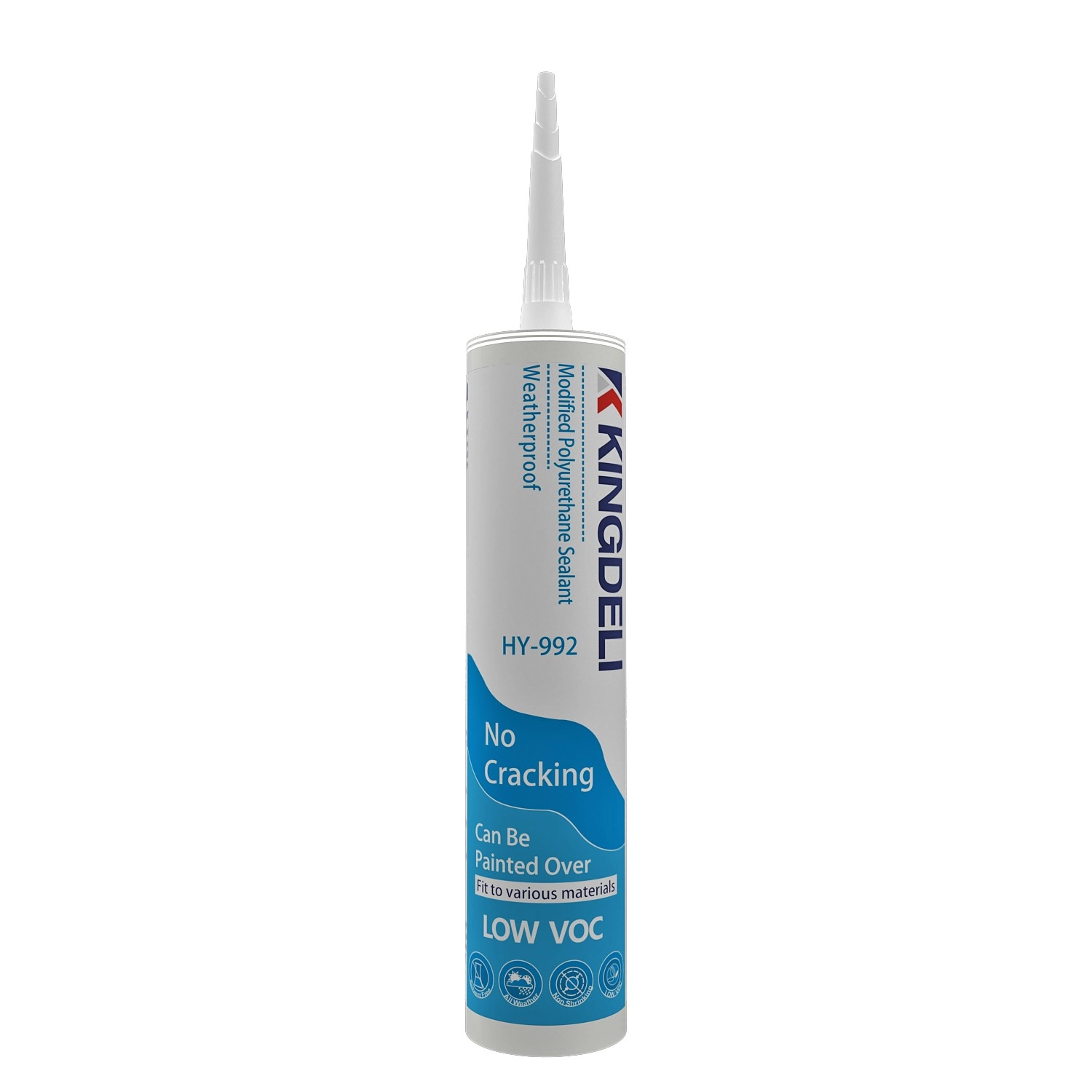
HY992 Modified Polyurethane Construction Sealant
HY992 Modified Polyurethane Sealant is a one-component, moisture-curing construction sealant designed for professional building and structural sealing applications. It provides excellent adhesion, weather resistance, and durable elasticity, making it suitable for a wide range of construction materials.
The formulation delivers strong bonding performance without corrosion or substrate contamination, while maintaining low VOC content for environmentally responsible construction projects.

HY995 Crystal Clear Ms Polymer Adhesive/Sealant
HY995 Crystal Clear Ms Polymer Adhesive/Sealant is a new generation MS Polymer adhesive / sealant formulated for all bonding and sealing applications where long term reliability is required. It has excellent bonding strength on various materials. It will cure to form a durable, flexible, waterproof seal.

HY997 High-Performance Anti-Microbial MS Polymer Sealant
HY997 MS polymer sealant for is is a premium one-component, neutral-curing modified silane sealant engineered for demanding interior applications. It offers a Class 20 movement capability, ensuring long-lasting flexibility and reliable performance under dynamic joint conditions. Curing at room temperature, HY997 delivers superior anti-microbial and mildew-resistant properties, maintaining hygienic and clean environments over time.
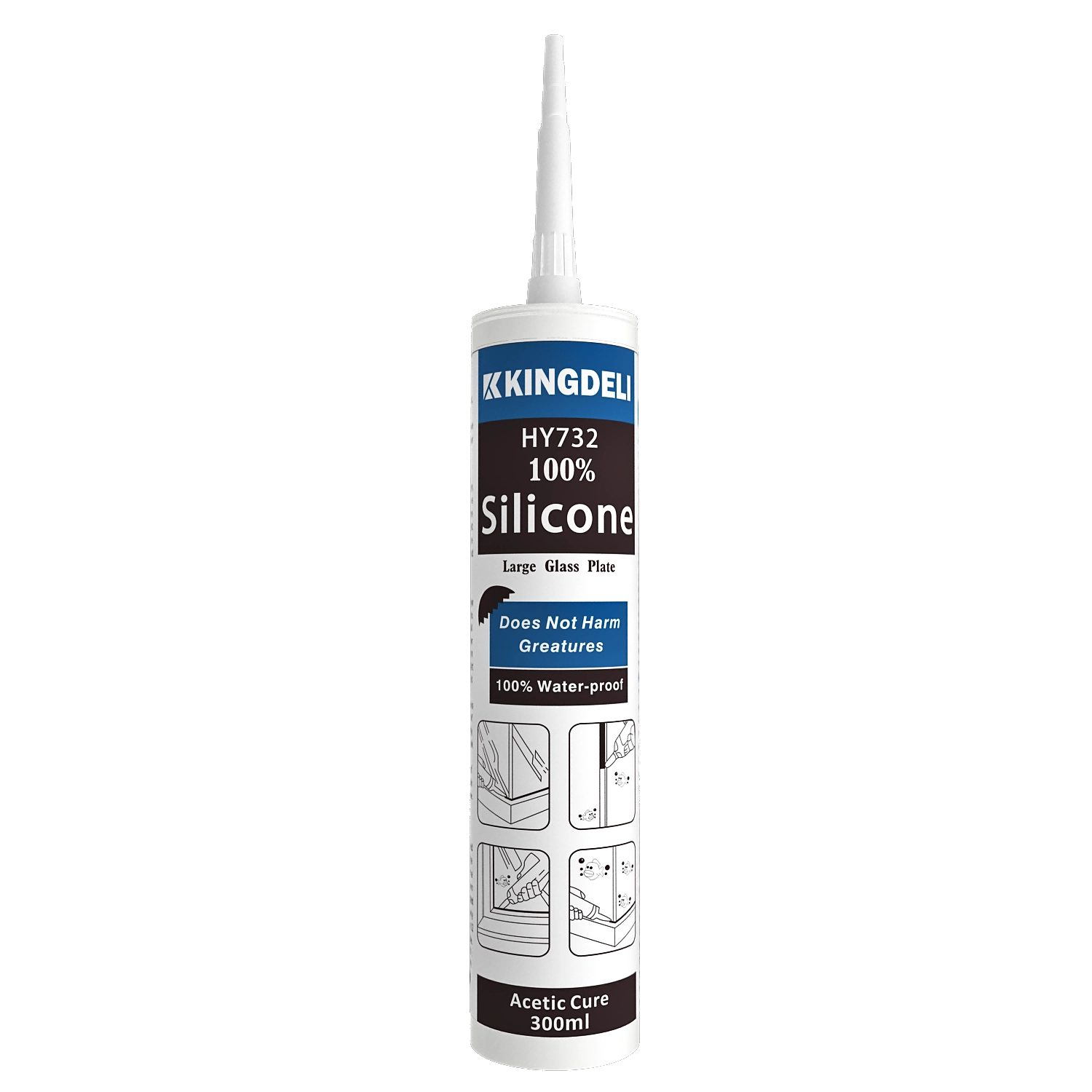
KINGDELI HY732 Professional Acetoxy Cure Silicone Sealant
KINGDELI HY732 is a professional-grade, one-component acetoxy cure silicone sealant designed for fast curing, strong adhesion, and long-lasting flexibility. Ideal for aquariums, glass applications, aluminum doors and windows, kitchens, and bathrooms, it provides reliable sealing performance with excellent anti-fungal protection in high-humidity environments.
Let’s Build Stronger Bonds with Quality Adhesives and Sealants
Have questions about the topic or need tailored sealant solutions for your project?
Our team is ready to provide expert guidance, product recommendations, and application support.
Innovating with Integrity, Bonding the World
Since 1998, KINGDELI has delivered trusted, sustainable sealant solutions that connect industries and inspire progress worldwide.
Whatsapp: +8618825946249
Kingdeli
Kingdeli
Kingdeli
Kingdeli
Kingdeli