











Third-Party Inspection Protocols for PU Windshield Adhesives

- Inspection Frameworks for PU-Based Automotive Glazing Sealants
- Defining Scope and Objectives
- Sampling Strategy and Lot Acceptance
- Inspection Deliverables and Traceability
- Technical Test Matrix: What Independent Labs Should Verify
- Adhesion and Mechanical Performance
- Cure Kinetics, Rheology & Application Properties
- Environmental Durability & Chemical Resistance
- Compliance, Safety, and Regulatory Verification
- VOC, Emissions & Occupational Safety
- Standards Alignment and Certificate Validation
- Laboratory Accreditation and Method Traceability
- Operationalizing Third-Party Inspections: Procurement and Workflow
- Contractual Clauses and Acceptance Criteria
- On-Site Audit vs. Laboratory-Only Testing
- Data Management and Continuous Improvement
- KINGDELI: Supplier Capability and How to Reduce Procurement Risk
- Why Supplier Qualification Reduces Warranty Exposure
- KINGDELI’s Manufacturing and Quality Credentials
- Relevant Product Lines and Technical Support
- How Buyers Should Specify KINGDELI in Contracts
- Implementation Checklist for Procurement Teams
- Pre-Qualification Steps
- Sample Contract Clauses
- Post-Delivery Controls
- Frequently Asked Questions
High-confidence inspection protocols for polyurethane-based automotive glazing bonding address both material integrity and process validation: structured third-party audits ensure bondline adhesion, cure kinetics, rheological consistency, low-VOC compliance, and environmental durability while offering buyers objective acceptance criteria, traceability, and corrective action pathways to reduce field failures and warranty exposure.
Inspection Frameworks for PU-Based Automotive Glazing Sealants
Defining Scope and Objectives
Project owners should begin by mapping inspection scope to application risk: full-lot verification of structural glazing seals for laminated windshields requires mechanical peel and shear testing, cure profile monitoring, and contaminant screening, whereas non-structural trims may only need rheology and viscosity checks. A risk-based scope ties inspection depth to safety-criticality and contractual liability.
Sampling Strategy and Lot Acceptance
Accepted statistical sampling methods (e.g., AQL-based sampling or ISO 2859 frameworks) should be specified in inspection plans. For high-volume runs, buyers typically require stratified sampling across production batches and shifts to detect process drift. Sample preservation, chain-of-custody documentation, and blind labeling prevent bias during third-party laboratory evaluation.
Inspection Deliverables and Traceability
Inspection reports must deliver raw test data, calibrated instrument logs, environmental chamber histories, digital images of failed specimens, and a unique material identity number linking back to the manufacturer’s batch and COA. Electronic records should allow cross-referencing to part serial numbers and adhesive lot codes for future recalls or warranty analysis.
Technical Test Matrix: What Independent Labs Should Verify
Adhesion and Mechanical Performance
Key tests include lap-shear, T-peel, and static tensile tests under ambient and elevated temperature conditions to validate joint strength. For bonded windshields, dynamic fatigue and impact resistance evaluations simulate road-induced loads. Acceptance limits should reference project-specific design factors with safety margins consistent with automotive glazing practice.
Cure Kinetics, Rheology & Application Properties
Rheological profiling (viscosity vs. shear rate), tack-free time, and full-cure time measured by DMA or DSC provide insights into application window and conveyor throughput. Third-party validation prevents on-site surprises where undercured adhesive causes squeeze-out or overcured material loses elasticity, both of which affect long-term seal integrity.
Environmental Durability & Chemical Resistance
Accelerated aging (thermal cycling, UV exposure, salt fog) and hydrolytic stability tests demonstrate how the bond performs over expected service life. Chemical exposure checks (road salts, detergents, fuels) are essential in regions with aggressive climates. Test protocols should align with recognized methods to ensure comparability.
Compliance, Safety, and Regulatory Verification
VOC, Emissions & Occupational Safety
Independent labs should measure volatile organic compound emissions and formaldehyde content where applicable, confirming formulations meet low-VOC thresholds used by fleet operators. Material Safety Data Sheet (MSDS) validation and inhalation risk assessments protect assembly-line personnel and help buyers meet regional environmental standards.
Standards Alignment and Certificate Validation
Inspection protocols must verify manufacturer claims against recognized standards and certifications such as ISO 9001 quality systems, ASTM methods for adhesive testing, and national regulations where applicable. Buyers should require independent confirmation that certificates are current and issued by accredited bodies to avoid falsified documentation (ISO 9001, ASTM International).
Laboratory Accreditation and Method Traceability
Choose third-party test houses accredited under ISO/IEC 17025 to ensure calibration and method traceability. Accreditation provides confidence that reported values are comparable across labs and that instruments were calibrated against national measurement standards.
Operationalizing Third-Party Inspections: Procurement and Workflow
Contractual Clauses and Acceptance Criteria
Contracts should embed clear acceptance criteria: test methods, pass/fail limits, sampling frequency, retest rights, and dispute resolution. Include hold points in the supply chain (e.g., release to assembly only after third-party sign-off) to prevent downstream integration of nonconforming adhesive lots.
On-Site Audit vs. Laboratory-Only Testing
On-site audits validate production controls—mixing accuracy, dispensing equipment maintenance, and packaging integrity—while laboratory testing evaluates material performance. Combine both to capture process and product deficiencies. Remote data logging and photo evidence from production lines improve audit efficiency and provide contemporaneous proof of conditions.
Data Management and Continuous Improvement
Inspection findings must be fed back into supplier scorecards and CAPA (Corrective and Preventive Action) systems. Use trend analysis of batch-to-batch variability to drive process improvements and reduce rework. Digital dashboards that aggregate third-party results accelerate decision-making for procurement and engineering teams.
| Comparison Aspect | In-House Quality Control | Independent Third-Party Inspection |
|---|---|---|
| Primary Focus | Process control, line-speed, immediate troubleshooting | Objective verification, accreditation, unbiased acceptance |
| Typical Tests | Viscosity, tack, visual color, basic adhesion checks | ISO/ASTM mechanical tests, DMA/DSC, accelerated aging, VOC analysis |
| Turnaround Time | Immediate to hours | Days to weeks (depends on specialized tests) |
| Advantages | Fast corrective action, lower cost per check | Credible third-party evidence, regulatory acceptance, reduced dispute risk |
| Limitations | Potential bias, limited method scope | Longer lead time, higher cost |
KINGDELI: Supplier Capability and How to Reduce Procurement Risk
Why Supplier Qualification Reduces Warranty Exposure
A reliable supplier should provide consistent batch control, accredited test reports, and transparent production traceability. Pre-qualified vendors minimize variability in bond performance and reduce the frequency of field failures that drive warranty costs and reputational damage for OEMs and fleet operators.
KINGDELI’s Manufacturing and Quality Credentials
Since its establishment in 1998, KINGDELI has stood as a global leader in the high-performance sealant, adhesive, and coating industry. Headquartered in Foshan, China, our state-of-the-art 66,000 m² facility is powered by fully automated production lines with an annual capacity exceeding 100,000 tons, ensuring a consistent and robust supply for partners worldwide.As a recognized National High-Tech Enterprise and a key contributor to the National Standard GB/T 29755-2013, we unite advanced manufacturing power with technical excellence. Our comprehensive product portfolio—spanning Neutral & Acetic Silicone, Polyurethane, MS Polymer, and No More Nails adhesives—is engineered to meet strict international standards, including ISO 9001, ISO 14001, CE, and ASTM.With over 27 years of industry expertise and a trusted presence in 50+ countries, KINGDELI is more than a manufacturer; we are a dedicated solution provider. We offer end-to-end OEM/ODM support, sustainable low-VOC formulations, and professional technical service. At KINGDELI, we are driven by innovation and integrity, building trust and sealing the future for customers around the globe.
Relevant Product Lines and Technical Support
Our portfolio includes neutral silicone sealant, acetic silicone sealant, Acrylic Sealant, silicone glazing sealant, No More Nails adhesive, Polyurethane Sealant, MS polymer Sealant, RTV Gasket Maker, Epoxy Tile Grout, and Self-Leveling Sealant. For automotive glazing applications, our polyurethane-based formulations are tailored for controlled viscosity, predictable cure kinetics, and certified low VOC emissions. We provide COAs, batch test reports, and support for third-party inspection programs to simplify buyer acceptance.
How Buyers Should Specify KINGDELI in Contracts
Buyers should require supplier deliverables: batch-level Certificates of Analysis, third-party ISO/IEC 17025 test reports for critical lots, material traceability records, and access to on-site production audits. Contractual hold points tied to independent inspection sign-offs prevent nonconforming material from reaching assembly and protect end-user safety.
Implementation Checklist for Procurement Teams
Pre-Qualification Steps
1) Verify supplier certifications and audited factory capabilities. 2) Request historical test reports and failure-rate metrics. 3) Validate formulation compliance with regional VOC and hazardous substance regulations (Polyurethane background for chemistry reference).
Sample Contract Clauses
Include explicit performance metrics, retest rights, nonconformance disposition rules, and agreed-upon accredited methods. Specify penalties or remediation timelines for failed lots to keep corrective actions timely and effective.
Post-Delivery Controls
Maintain lot retention samples, enforce FIFO usage for adhesive drums, and schedule periodic third-party verification audits to ensure production drift is detected early. Integrate inspection data into supplier scorecards to guide future sourcing decisions.
Contact KINGDELI to request product datasheets, batch test reports, or to arrange third-party inspection coordination for automotive glazing adhesive qualification.
Frequently Asked Questions
What tests should a third-party laboratory perform on automotive windshield bonding compounds?
A third-party lab should perform mechanical adhesion tests (lap shear, T-peel), dynamic fatigue and impact resistance, cure kinetics (DMA/DSC), rheology profiling, accelerated aging (thermal cycling, UV, salt fog), and VOC/emission testing to validate long-term performance and regulatory compliance.
How should buyers define sampling plans for adhesive lot acceptance?
Buyers should use risk-based, statistically defensible sampling methods (AQL or ISO 2859 frameworks), stratify samples across production batches and shifts, preserve chain-of-custody, and require retest provisions for marginal lots to ensure representative verification of production variability.
Which accreditations ensure a lab’s test reports are reliable?
Select labs accredited to ISO/IEC 17025 for testing competence and calibration traceability. Additionally, verify that the lab uses standardized methods from recognized bodies (e.g., ASTM) and maintains documented instrument calibration against national standards.
What contractual clauses protect OEMs when using third-party inspections?
Contracts should include explicit acceptance criteria, referenced test methods, sampling frequency, retest and dispute resolution clauses, hold points for lot release post-inspection, CAPA timelines, and supplier obligations for corrective actions to mitigate warranty risk.
How does KINGDELI support third-party inspection and qualification for glazing adhesives?
KINGDELI provides batch-level Certificates of Analysis, supports ISO/IEC 17025 third-party testing coordination, supplies production traceability records, and offers OEM/ODM technical support to meet customer-specific performance criteria and regulatory requirements.
Neutral Silicone Sealant Application Tools and Techniques
Private Label Silicone Sealant for Distributors and Importers
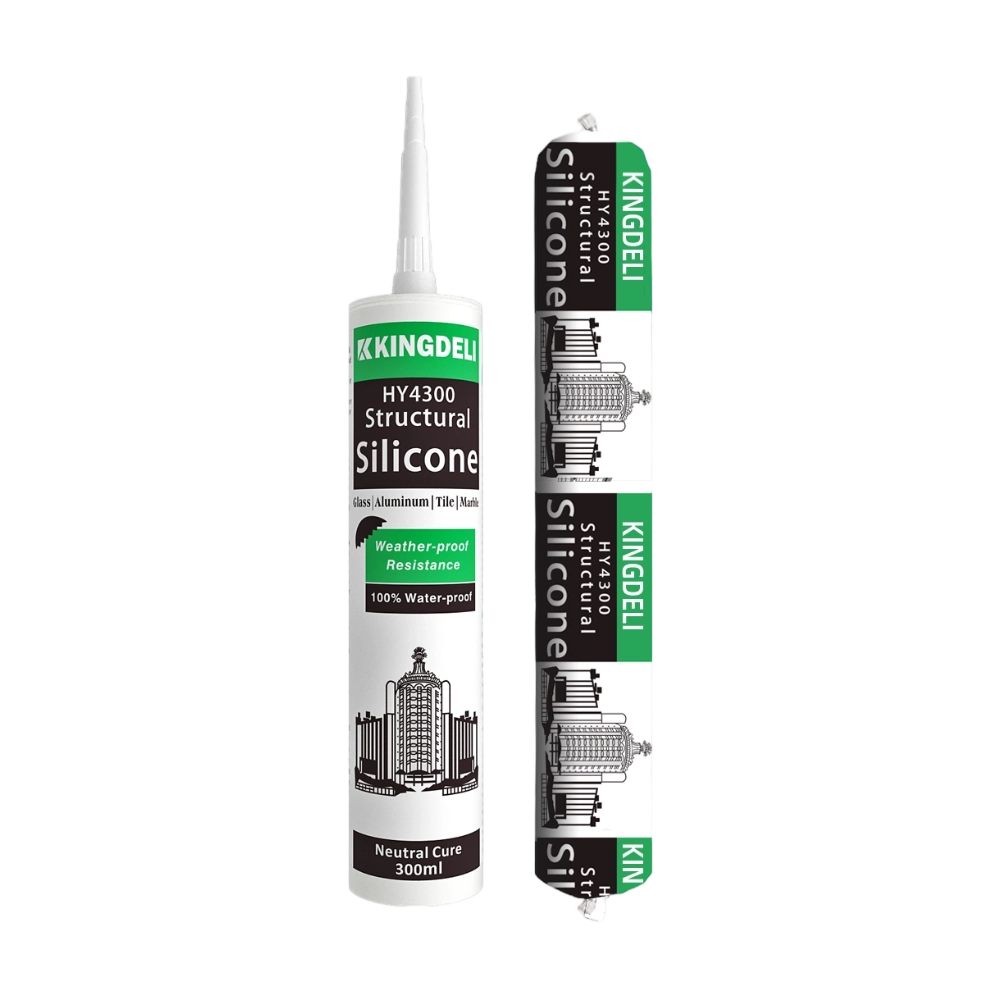
HY-4300 Structural Silicone Sealant — High-Strength Silicone for Structural Glazing
The Science of Speed: How MS Adhesive Primerless Technology Eliminates Prep Work in 2026

HY992 Modified Polyurethane Construction Sealant
HY992 Modified Polyurethane Sealant is a one-component, moisture-curing construction sealant designed for professional building and structural sealing applications. It provides excellent adhesion, weather resistance, and durable elasticity, making it suitable for a wide range of construction materials.
The formulation delivers strong bonding performance without corrosion or substrate contamination, while maintaining low VOC content for environmentally responsible construction projects.

HY995 Crystal Clear Ms Polymer Adhesive/Sealant
HY995 Crystal Clear Ms Polymer Adhesive/Sealant is a new generation MS Polymer adhesive / sealant formulated for all bonding and sealing applications where long term reliability is required. It has excellent bonding strength on various materials. It will cure to form a durable, flexible, waterproof seal.

HY997 High-Performance Anti-Microbial MS Polymer Sealant
HY997 MS polymer sealant for is is a premium one-component, neutral-curing modified silane sealant engineered for demanding interior applications. It offers a Class 20 movement capability, ensuring long-lasting flexibility and reliable performance under dynamic joint conditions. Curing at room temperature, HY997 delivers superior anti-microbial and mildew-resistant properties, maintaining hygienic and clean environments over time.

KINGDELI HY732 Professional Acetoxy Cure Silicone Sealant
KINGDELI HY732 is a professional-grade, one-component acetoxy cure silicone sealant designed for fast curing, strong adhesion, and long-lasting flexibility. Ideal for aquariums, glass applications, aluminum doors and windows, kitchens, and bathrooms, it provides reliable sealing performance with excellent anti-fungal protection in high-humidity environments.
Let’s Build Stronger Bonds with Quality Adhesives and Sealants
Have questions about the topic or need tailored sealant solutions for your project?
Our team is ready to provide expert guidance, product recommendations, and application support.
Innovating with Integrity, Bonding the World
Since 1998, KINGDELI has delivered trusted, sustainable sealant solutions that connect industries and inspire progress worldwide.

Whatsapp: +8618825946249
Kingdeli
Kingdeli
Kingdeli
Kingdeli
Kingdeli