










The Science of Speed: How MS Adhesive Primerless Technology Eliminates Prep Work in 2026

- What is MS Adhesive Primerless Technology?
- Key Takeaways: The Primerless Advantage
- The Chemistry Behind the Speed: How Built-In Adhesion Promoters Work
- Quantifying the ROI: Labor Savings and Efficiency Gains
- Substrate Compatibility: What Can You Bond Without Prep?
- Expert Tips and Common Mistakes in Primerless Application
- Future Trends: The Evolution of MS Adhesives in 2026 and Beyond
- Conclusion
- Frequently Asked Questions
- What is the difference between MS polymer and polyurethane?
- Do MS adhesives really need zero surface preparation?
- How long does it take for primerless MS adhesives to cure?
- Can you paint over MS polymer sealants?
- Are MS adhesives suitable for outdoor applications?
- What are the environmental benefits of primerless MS technology?
- Why is primerless adhesion important for automated manufacturing?
- How does the cost of MS polymers compare to traditional adhesives?
What is MS Adhesive Primerless Technology?
MS adhesive primerless technology refers to advanced Silyl Modified Polymers SMP engineered to bond directly to substrates without surface primers. These adhesives utilize built-in adhesion promoters that react with moisture to form high-strength chemical bonds immediately upon application.
The core function of this technology lies in its ability to bypass traditional multi-step preparation phases. In the past, achieving a durable, industrial-grade bond required extensive surface cleaning, followed by the meticulous application of toxic chemical primers. These primers acted as a mandatory chemical bridge between the adhesive and the substrate. Today, the chemistry has fundamentally evolved. By successfully eliminating the priming step entirely, this technology drastically reduces prep work, labor time, and material costs across automated assembly lines and commercial construction sites.
Furthermore, as reported by Wikipedia, SMPs are the main components in solvent-free and isocyanate-free sealant and adhesive products, offering high opacity, short drying times, and exceptional adhesion to a wide range of substrate materials.
Here is a closer look at what defines this modern bonding solution:
- Direct Substrate Bonding: These adhesives are explicitly engineered to adhere to materials seamlessly without the intervention of a secondary surface primer.
- Moisture-Cured Chemistry: They effectively utilize built-in silane adhesion promoters that react favorably with ambient atmospheric moisture to form incredibly high-strength, durable chemical bonds.
- Massive Efficiency Gains: By intentionally eliminating the laborious priming step, this technology drastically cuts down on necessary prep work, manual labor time, and extraneous material costs.
- Versatile Adhesion: It consistently provides exceptional, long-lasting adhesion on both porous and highly non-porous surfaces, and even performs reliably in damp or challenging environmental conditions.
Key Takeaways: The Primerless Advantage
The primary advantage of primerless technology is its ability to eliminate up to 50 percent of surface preparation time while significantly reducing Volatile Organic Compound (VOC) emissions compared to traditional polyurethane sealants. This ensures high green strength without slowing down overall production.
Understanding the direct operational benefits of adopting silane-modified sealants requires looking at both the structural and environmental advantages. When large-scale manufacturers remove harsh chemical primers and aggressive solvent cleaners from their daily workflow, they are not only accelerating their cycle times; they are fundamentally improving the health and safety of their workforce. The immediate, robust grip provided by these advanced adhesives changes the way engineers approach challenging materials like untreated aluminum, fiberglass, and engineered plastics.
The most notable advantages of this technology include:
- Dramatic Time Savings: Actively eliminates up to 50 percent of standard surface prep time compared to using older-generation polyurethane sealants that require extensive flash-off times.
- Environmental and Safety Improvements: Radically reduces toxic VOC emissions by entirely removing harsh chemical primers and aggressive solvent cleaners from the manufacturing workflow.
- Unmatched Initial Tack: Consistently ensures remarkably high green strength and immediate, reliable grip on notoriously difficult substrates like anodized aluminum and smooth glass.
- Financial Efficiency: Substantially lowers overall project costs by aggressively streamlining the application process, reducing labor overhead, and cutting down on raw material procurement.
The Chemistry Behind the Speed: How Built-In Adhesion Promoters Work
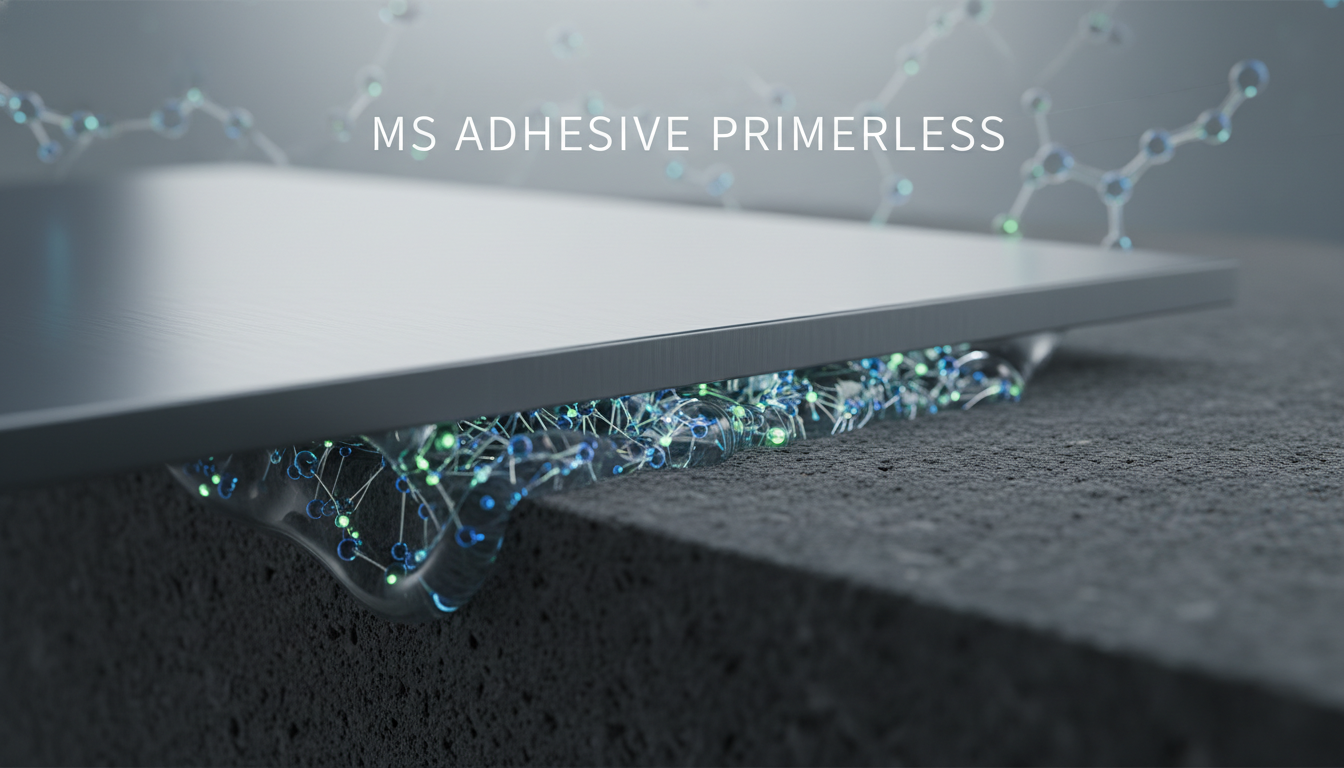
Built-in adhesion promoters work through molecular interactions where reactive silane groups cross-link with substrate surface energy, triggered entirely by ambient moisture rather than a chemical primer catalyst. This specialized process yields immediate surface wetting and long-term stability simultaneously.
To truly appreciate modern primerless bonding chemistry, one must understand what happens at the microscopic level when the adhesive finally meets the substrate. Unlike traditional adhesives that merely sit on top of a surface or strictly require a primer to chemically etch into the material, MS polymers actively and efficiently wet out the surface. The moisture-curing mechanism initiates a chemical reaction where the silane groups form permanent siloxane bridges directly with the substrate. As highlighted by the American Chemical Society, the catalyzed moisture-curing of these specialized polymers creates robust siloxane cross-links, enabling impressive strain-at-break metrics without requiring any separate primer application.
The fundamental chemical processes driving this speed include:
- Molecular Interaction: Harnessing the deep molecular interaction between reactive silane groups and the specific surface energy of the targeted substrate.
- Moisture-Triggered Curing: Utilizing ambient moisture-curing mechanisms to trigger rapid, thorough cross-linking without ever needing an external primer catalyst or extreme heat activation.
- Superior Surface Wetting: Maximizing the advanced surface wetting capabilities of MS polymers, which flow into microscopic surface defects far more effectively than traditional high-viscosity silicones.
- Simultaneous Durability: Perfecting the complex science of achieving long-term UV stability, extreme weather resistance, and high elasticity all at the exact same time.
Quantifying the ROI: Labor Savings and Efficiency Gains
Primerless application ROI is directly quantified by analyzing the vast reduction in manual labor costs, the complete elimination of primer purchasing, and the dramatic decrease in cycle times within fast-paced industrial assembly and commercial construction environments.
When facility managers and project leads evaluate new adhesives, the focus invariably and understandably shifts to the bottom line. The true financial cost of surface preparation is often hidden in wasted minutes. Applying primer takes time; waiting for that primer to chemically flash off (dry) takes even more time. If the primer is applied incorrectly, or if it gets severely contaminated by airborne facility dust before the adhesive is applied, the entire part must be painstakingly reworked. By transitioning to a one-step, primerless application, businesses unlock massive throughput potential.
To properly measure this return on investment, consider the following critical metrics:
- Labor Cost Reduction: Accurately analyzing the true, often underestimated financial cost of surface preparation and manual primer application in large-scale industrial assembly and construction.
- Accelerated Cycle Times: Tracking real-world case studies demonstrating significantly reduced cycle times and much higher throughput in fast-paced manufacturing and automated environments.
- Material Cost Savings: Documenting concrete material cost savings achieved by directly eliminating the continuous need to purchase, safely store, and meticulously apply highly volatile primers.
- Quality Control and Rework: Eliminating expensive application errors and frustrating rework commonly caused by improper primer flashing, uneven manual application, or environmental contamination.
Substrate Compatibility: What Can You Bond Without Prep?
Primerless silane-modified sealants can successfully bond both non-porous materials like glass and anodized aluminum, and porous materials like concrete and brick, without requiring traditional surface preparation or aggressive chemical priming agents.
One of the most defining characteristics of modern MS adhesives is their incredible versatility across the vast materials spectrum. In the past, a commercial contractor or assembly line worker might need three completely different adhesives and two different chemical primers just to bond glass to steel, and steel to wood. Today, a single, versatile SMP adhesive can flawlessly handle the entire assembly. This cross-substrate compatibility is a massive game-changer for modular construction, automotive assembly, and marine applications, where highly dissimilar materials must be securely joined. Furthermore, their performance in damp conditions far outstrips older polyurethane formulas.
Here is a comprehensive breakdown of what you can confidently bond:
- Non-Porous Champions: Achieving exceptional, reliable adhesion on notoriously difficult smooth surfaces such as glass, anodized aluminum, stainless steel, and rigid PVC.
- Porous Powerhouses: Delivering deep, penetrating grip into highly porous materials including standard concrete, traditional masonry brick, treated wood, and unglazed ceramics.
- Handling Damp Surfaces: Capitalizing on the fact that MS polymers consistently outperform traditional polyurethanes in wet conditions, primarily because they do not release CO2 (which causes bubbling) when reacting with water.
- Acknowledging Limitations: Understanding exactly when basic surface cleaning or light mechanical abrasion is still strictly required to safely remove heavy surface oxidation or extreme industrial grease.
Expert Tips and Common Mistakes in Primerless Application
The most common mistake in primerless application is skipping basic substrate cleaning, as surfaces must still be completely free of heavy grease, dust, and standing water to ensure the Silyl Modified Polymers SMP achieve optimal chemical adhesion.
"Primerless" is occasionally and incorrectly misinterpreted as "prep-less." This is a dangerous engineering misconception. While you absolutely do not need to apply a chemical coupling agent (primer), the laws of physics still strictly apply: an adhesive can only bond to the surface it actually touches. If there is a microscopic layer of machine oil, loose dirt, or heavy condensation between the adhesive and the substrate, the adhesive will securely bond to the contaminant rather than the structural material itself. Understanding the strict environmental boundaries of these adhesives is highly critical for long-term success.
To guarantee success, strictly adhere to these expert tips and fiercely avoid these common pitfalls:
- Mistake - Skipping Basic Cleaning: Primerless absolutely does not mean dirtless; for a truly strong bond, surfaces must fundamentally be free of loose dust, debris, and heavy industrial oils.
- Tip - Test Unfamiliar Materials: Always proactively perform a quick peel adhesion test on new, unfamiliar, or highly engineered composite materials before moving them to full-scale production.
- Mistake - Ignoring Temperature Limits: Dangerously overlooking application temperature limits, which can severely alter the chemical curing speed, initial tack, and overall handleability of the part.
- Tip - Monitor Ambient Moisture: Consistently maintain proper ambient humidity in the workspace, as MS polymers strictly rely on airborne moisture to accurately cross-link and achieve their full cure strength.
Future Trends: The Evolution of MS Adhesives in 2026 and Beyond
By 2026, the evolution of MS adhesives will focus heavily on ultra-fast curing hybrids for automated robotics, bio-based sustainable formulations, and the complete phase-out of solvent-based primers driven by stricter global environmental regulations.
The global adhesive industry is currently at a major inflection point. As robotics and automation rapidly become the standard rather than the exception, the demand for high-strength adhesives that can safely keep pace with robotic assembly speeds has skyrocketed. At the exact same time, environmental governing bodies worldwide are heavily restricting the industrial use of VOCs and toxic isocyanates. MS polymer technology sits perfectly at the intersection of these two massive demands. As advocated by the Adhesive and Sealant Council, accelerating the widespread adoption of sustainable, solvent-free adhesive solutions is critical for the industry's future growth, workforce safety, and strict regulatory compliance.
Looking ahead, the industry is aggressively pivoting toward the following future trends:
- Automated Assembly Integration: The rapid, ongoing rise of ultra-fast curing MS hybrids specifically designed to keep pace with high-speed, fully automated robotic assembly lines.
- Regulatory Compliance: Stricter global VOC regulations actively and decisively driving the complete, industry-wide phase-out of toxic, solvent-based surface primers.
- Sustainable Formulations: The highly anticipated development of bio-based Silyl Modified Polymers SMP aimed directly at reducing carbon footprints for green building and sustainable construction projects.
- Smart Indicators: The futuristic integration of smart, color-changing chemical indicators designed to visually verify full core cure without requiring expensive destructive physical testing.
Conclusion
MS adhesive primerless technology fundamentally transforms industrial bonding by maximizing application speed without sacrificing structural strength. By expertly leveraging advanced built-in adhesion promoters, modern manufacturers and commercial contractors can confidently bypass costly, time-consuming surface prep work. Adopting these highly efficient Silyl Modified Polymers SMP not only ensures strict, ongoing compliance with future environmental and safety standards but also significantly boosts the operational bottom line through immensely reduced manual labor and material costs.
Contact us today to discuss how our primerless MS adhesive solutions can accelerate your next project.
Frequently Asked Questions
What is the difference between MS polymer and polyurethane?
MS polymers do not contain isocyanates, making them far safer and much more environmentally friendly for workers to handle on a daily basis. They also offer superior UV resistance compared to polyurethanes, meaning they will not chalk or degrade in sunlight, and crucially, they do not bubble when applied directly to damp surfaces. Ultimately, MS adhesives typically provide much better primerless adhesion across a significantly wider range of substrates, greatly reducing the need for multiple products.
Do MS adhesives really need zero surface preparation?
While they successfully and entirely eliminate the need for costly chemical primers, basic surface cleaning is still an absolute requirement for structural integrity. Surfaces must always be free of standing water, heavy machine grease, loose dust, and any flaking debris to ensure a true, unhindered bond. For optimal, long-lasting performance, simply wiping the substrate down with a basic solvent or approved surface cleaner is highly recommended before directly applying the adhesive.
How long does it take for primerless MS adhesives to cure?
Skin formation usually occurs quite rapidly, typically within 10 to 30 minutes depending heavily on the ambient temperature and the relative humidity of the specific environment. The actual deep curing process typically progresses inward at a steady, reliable rate of roughly 2 to 3 millimeters per 24-hour period. While the initial grip and green strength are essentially immediate, full mechanical structural strength is generally achieved after 7 to 14 days of completely undisturbed curing.
Can you paint over MS polymer sealants?
Yes, one of the major, highly sought-after functional benefits of utilizing MS polymers is their exceptionally excellent overall paintability in aesthetic applications. They can usually be successfully painted wet-on-wet with standard water-based paints almost immediately after the sealant is initially applied to the joint. However, as an absolute best practice, it is always recommended to test paint compatibility beforehand on a scrap piece, especially if you are working with slower-drying alkyd resin paints.
Are MS adhesives suitable for outdoor applications?
Absolutely, MS polymers possess genuinely excellent inherent UV stability and exceptional weather resistance right out of the application tube. Unlike older traditional sealants, they do not shrink, permanently crack, or turn visually yellow over time when repeatedly exposed to harsh, direct sunlight or freezing rain. Furthermore, their high elastomeric flexibility safely allows them to easily accommodate the natural daily thermal expansion and contraction of building materials in extreme outdoor environments.
What are the environmental benefits of primerless MS technology?
They significantly and immediately reduce Volatile Organic Compounds (VOCs) on the job site by entirely eliminating the need for highly evaporative solvent-based chemical primers. Because they are 100 percent free from toxic isocyanates, they drastically reduce severe respiratory health risks for the laborers and applicators physically handling them. Additionally, less overall material waste and fewer moving chemical components lead to a noticeably smaller overall environmental carbon footprint for large-scale operations.
Why is primerless adhesion important for automated manufacturing?
It actively and permanently removes an entire, time-consuming step from the automated assembly line, which dramatically increases overall daily production speed and total throughput. It fundamentally reduces the heavy engineering complexity of robotic dispensing systems by entirely eliminating the need to carefully build, program, and maintain a separate primer station. Consequently, it significantly lowers the inherent risk of human error or costly mechanical failure directly associated with inconsistent primer application.
How does the cost of MS polymers compare to traditional adhesives?
While the initial upfront retail or wholesale cost per tube or large drum may be slightly higher than older, traditional polyurethanes, the financial return is rapid. The total long-term cost of ownership is demonstrably lower when accurately factoring in the complete elimination of primer purchasing costs, storage space, and massively reduced manual labor time. Ultimately, fewer individual application steps, zero primer flash-off waiting periods, and much faster assembly cycle times lead to far greater overall project profitability.
MS Sealant vs. Silicone: 5 Reasons Why Every Contractor is Switching to Paintable Hybrids in 2026
MS Silicone Sealant Joint Design and Movement Capabilities
Top silicone sealant Manufacturers and Suppliers
![7 Costly Mistakes to Avoid When Matching MS Sealant Colors [2026 Expert Guide] - KINGDELI](https://static.gooecloud.com/upload/img/ai-image/7-costly-mistakes-to-avoid-when-matching-ms-sealant-colors-2026-expert-guide.png?x-oss-process=image/format,webp/quality,Q_100 "7-Costly-Mistakes-to-Avoid-When-Matching-MS-Sealant-Colors-[2026-Expert-Guide] - KINGDELI")
7 Costly Mistakes to Avoid When Matching MS Sealant Colors [2026 Expert Guide]
HY-682
What are typical applications?
Typical applications include sealing and bonding for:
✓Expansion and settlement joints
✓Roof cracks and structural walls
✓Underground garages and basements
✓Industrial floors (epoxy and painted surfaces)
✓General indoor and outdoor sealing and positioning
HY993
Can this product be used outdoors?
Yes. HY993 offers excellent weather resistance, UV stability, and long-term durability suitable for exterior applications.
HY-3300
Do you offer technical support or application guidance?
Yes. Our technical team provides professional guidance on product selection, application methods, and troubleshooting to ensure optimal performance.
HY982
What type of adhesive is HY982?
HY982 is a one-component, neutral, silane-modified polymer (SMP) adhesive. It is solvent-free, paintable, and designed for high-performance flooring and panel bonding applications.
HY-2100
How should the sealant be stored?
Store in a cool, dry place below 27℃. Avoid direct sunlight and keep the container sealed before use.
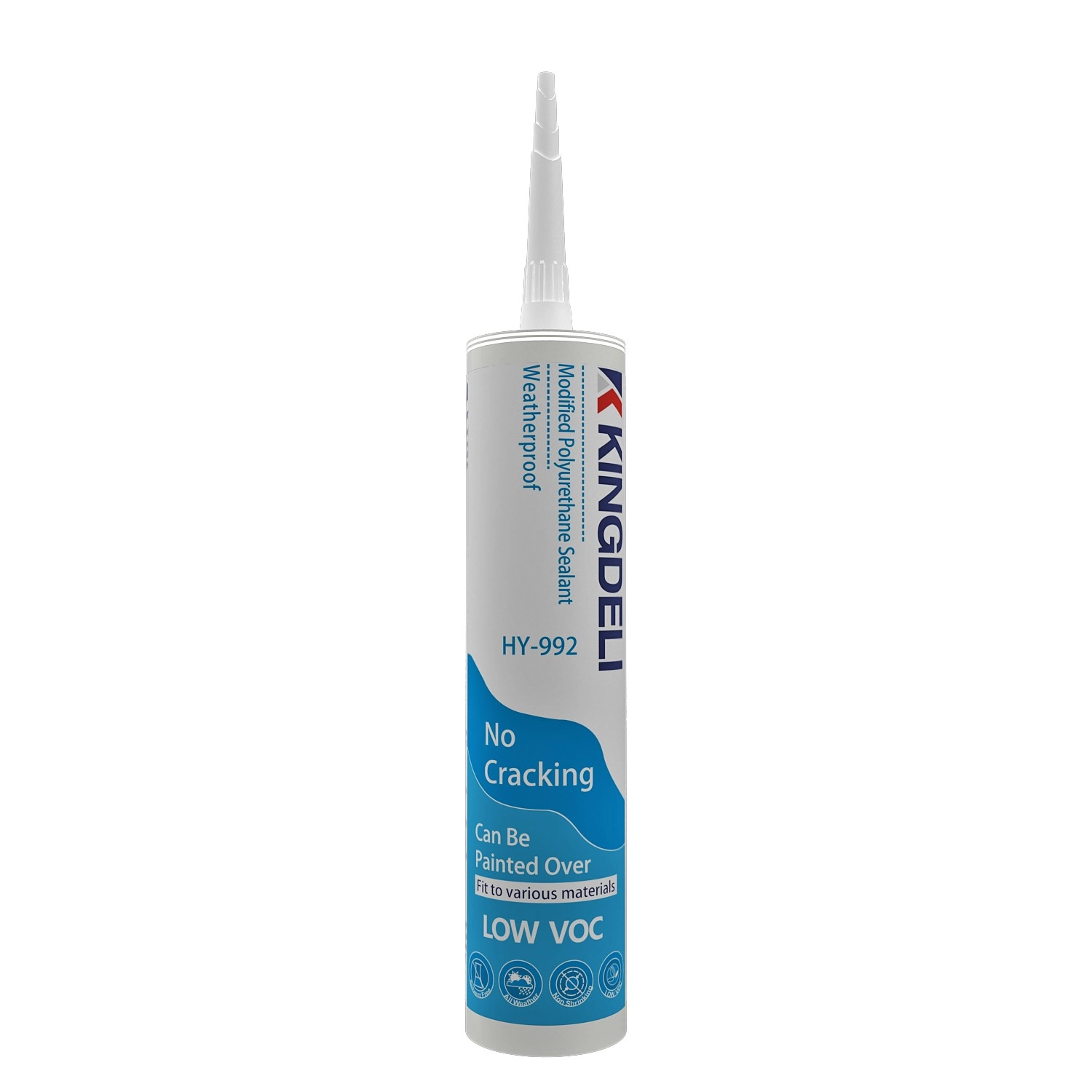
HY992 Modified Polyurethane Construction Sealant
HY992 Modified Polyurethane Sealant is a one-component, moisture-curing construction sealant designed for professional building and structural sealing applications. It provides excellent adhesion, weather resistance, and durable elasticity, making it suitable for a wide range of construction materials.
The formulation delivers strong bonding performance without corrosion or substrate contamination, while maintaining low VOC content for environmentally responsible construction projects.

HY995 Crystal Clear Ms Polymer Adhesive/Sealant
HY995 Crystal Clear Ms Polymer Adhesive/Sealant is a new generation MS Polymer adhesive / sealant formulated for all bonding and sealing applications where long term reliability is required. It has excellent bonding strength on various materials. It will cure to form a durable, flexible, waterproof seal.

HY997 High-Performance Anti-Microbial MS Polymer Sealant
HY997 MS polymer sealant for is is a premium one-component, neutral-curing modified silane sealant engineered for demanding interior applications. It offers a Class 20 movement capability, ensuring long-lasting flexibility and reliable performance under dynamic joint conditions. Curing at room temperature, HY997 delivers superior anti-microbial and mildew-resistant properties, maintaining hygienic and clean environments over time.
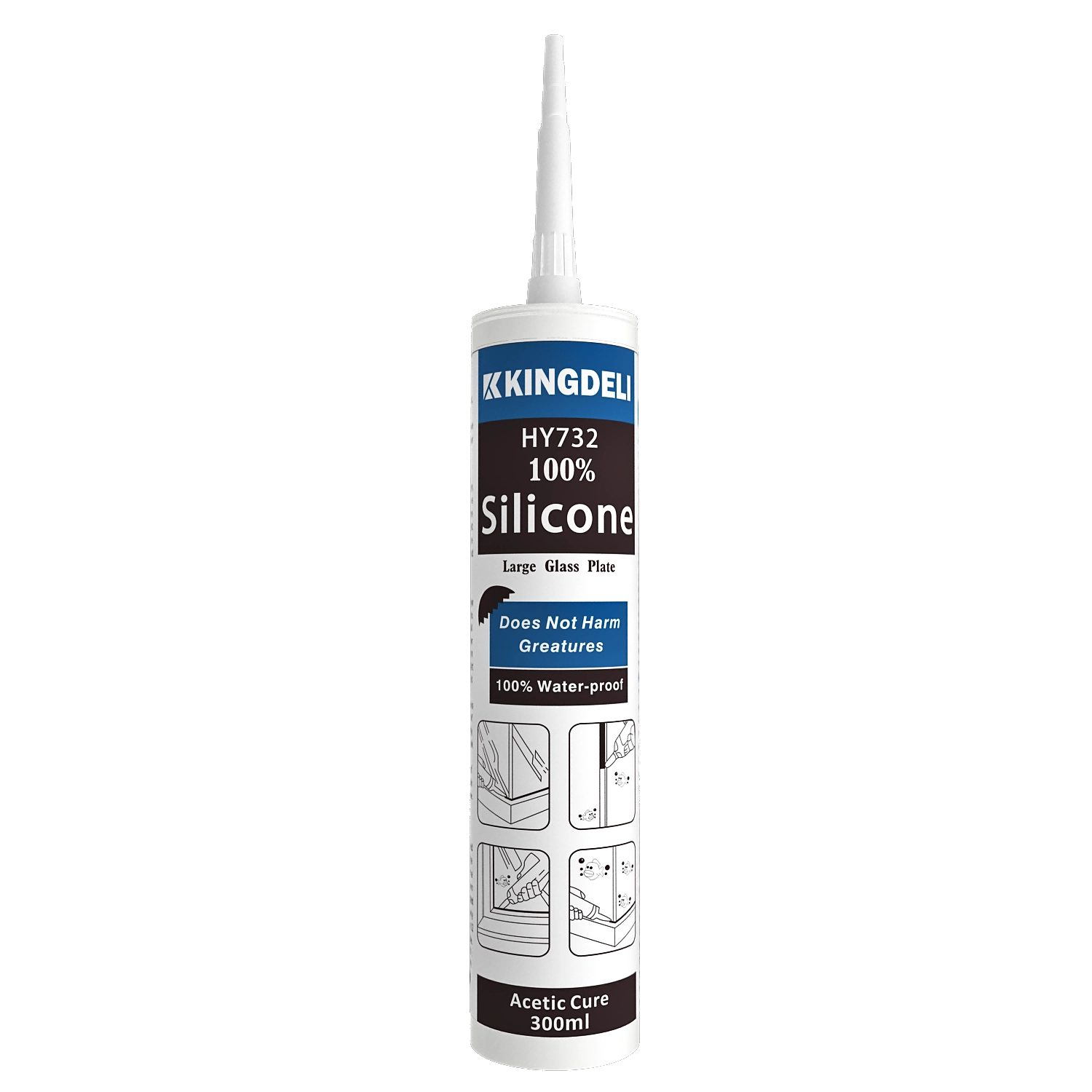
KINGDELI HY732 Professional Acetoxy Cure Silicone Sealant
KINGDELI HY732 is a professional-grade, one-component acetoxy cure silicone sealant designed for fast curing, strong adhesion, and long-lasting flexibility. Ideal for aquariums, glass applications, aluminum doors and windows, kitchens, and bathrooms, it provides reliable sealing performance with excellent anti-fungal protection in high-humidity environments.
Let’s Build Stronger Bonds with Quality Adhesives and Sealants
Have questions about the topic or need tailored sealant solutions for your project?
Our team is ready to provide expert guidance, product recommendations, and application support.
Innovating with Integrity, Bonding the World
Since 1998, KINGDELI has delivered trusted, sustainable sealant solutions that connect industries and inspire progress worldwide.
Whatsapp: +8618825946249
Kingdeli
Kingdeli
Kingdeli
Kingdeli
Kingdeli