


Testing Neutral Silicone: ASTM and EN Standards Explained

- Cure Chemistry, Formulation Classes and Practical Implications
- Neutral-curing mechanisms and why they matter to specifiers
- Performance attributes tied to curing path
- Storage, pot life and shelf stability
- Key International Test Protocols: ASTM, EN and ISO Frameworks
- ASTM C920: what it covers and procurement checkpoints
- EN 15651 family: European performance requirements
- ISO standards and classification guidance
- Interpreting Laboratory Results for Specification and QA
- Tensile/elongation, modulus and movement capability translation
- Adhesion testing and primer strategy
- Durability, accelerated weathering and acceptance criteria
- Specification Strategy, Field Verification and Risk Management
- Writing unambiguous performance specifications
- Mock-ups, compatibility matrices and finish testing
- Field QA, installation controls and acceptance testing
- KINGDELI: Manufacturing Capabilities, Certification and Product Range
- Manufacturing scale and quality governance
- Standards leadership and certification
- Product breadth tailored for project requirements
- What buyers should require from suppliers
- Frequently Asked Questions
This technical guide decodes test methods and compliance criteria for neutral-cure silicone systems used in construction and industrial sealing — mapping ASTM and European requirements to procurement checkpoints, lab acceptance criteria, and on-site performance expectations; it explains cure chemistry implications, adhesion and durability test protocols, environmental and VOC considerations, and offers actionable specification language and QA controls for buyers and specification engineers seeking internationally certified, long-term sealing solutions.
Cure Chemistry, Formulation Classes and Practical Implications
Neutral-curing mechanisms and why they matter to specifiers
Neutral-cure silicone systems release non-acidic by-products during polymerization, typically oximes, alkoxy groups, or acetoxy variants with non-acidic substituents depending on the catalyst system. This low-corrosivity profile reduces the risk of metal staining, coating incompatibility, and glass edge degradation—critical when sealing coated aluminum curtain walls, anodized metals or laminated glass. Spec writers should call out compatibility tests or mock-ups for any coated substrate to avoid field failures.
Performance attributes tied to curing path
Neutral formulations tend to provide reliable adhesion without primer on common building substrates and exhibit lower corrosive potential than acid-curing counterparts. Procurement teams must still require specific adhesion tests, modulus measurements and movement capability ratings because cure type alone does not guarantee adhesion to specialty paints, plastisol, or powder-coated finishes.
Storage, pot life and shelf stability
Stability and shelf life depend on formulation and packaging—many neutral systems maintain factory-specified shelf lives at 5–25°C with desiccated packaging. Buyers should include storage and accelerated aging clauses in purchase orders and request certificate-of-analysis with batch-specific shelf-life and viscosity data to prevent warranty disputes.
Key International Test Protocols: ASTM, EN and ISO Frameworks
ASTM C920: what it covers and procurement checkpoints
ASTM C920 is the primary U.S. reference for elastomeric joint sealants used in buildings. It classifies sealants by movement capability (e.g., +/-25%, +/-50%), adhesion properties, and specifies tests for extrudability, tack-free time, adhesion-in-peel, and accelerated weathering. Buyers should specify the relevant class and movement rating, as well as required test reports demonstrating conformance to the cited edition.
EN 15651 family: European performance requirements
The European harmonized framework covers facade and interior sealants for non-structural applications. Test modules include resistance to weathering, tensile properties at different temperatures, and volatile organic compound (VOC) emissions relevant to construction products compliance. For regulatory alignment and CE marking, confirm which EN 15651 part applies to the intended use and request Declaration of Performance (DoP) documentation from suppliers.
ISO standards and classification guidance
ISO 11600 provides classification for sealants used in building construction based on movement capability and consistency. While ISO classifications are useful for global tenders, combining ISO classification with region-specific test evidence (ASTM/EN) produces the strongest contractual protection for international projects.
Interpreting Laboratory Results for Specification and QA
Tensile/elongation, modulus and movement capability translation
Laboratory tensile curves and modulus figures are predictive of field performance under cyclical movement. Specifications should translate lab metrics into allowable joint width-to-depth ratios and expected life-cycle movement; for example, a sealant with high elongation but high modulus may transfer more stress to bond lines, increasing de-bonding risk on rigid substrates.
Adhesion testing and primer strategy
Peel and shear adhesion tests under dry and conditioned states (salt spray, thermal cycling) are essential. Where direct adhesion is marginal, require primer compatibility tests as part of the bid package. The contract should define when a primer is mandatory, supply responsibilities, and acceptable failure modes from adhesion testing.
Durability, accelerated weathering and acceptance criteria
Accelerated UV, damp heat and freeze-thaw cycling are standard. Acceptance criteria should include no cracking, no cohesive failure beyond X% of tested area, color stability limits, and retention of minimum elasticity after aging. For coastal projects, specify salt-fog resistance thresholds in addition to standard EN/ASTM modules.
| Standard | Region | Scope | Typical Tests | Procurement Focus |
|---|---|---|---|---|
| ASTM C920 | United States / International | Elastomeric joint sealants for building envelopes | Movement capability, adhesion-in-peel, extrusion, weathering | Class & movement rating, test reports per edition |
| EN 15651 (family) | European Union | Sealants for façade, glazing and sanitary applications | Durability, tensile properties, emission testing (DoP) | Applicable EN part, CE marking, Declaration of Performance |
| ISO 11600 | International | Classification of sealants by movement and consistency | Classification metrics (movement capability) | Global tenders: include ISO class with regional test evidence |
Specification Strategy, Field Verification and Risk Management
Writing unambiguous performance specifications
Effective specifications require combining the applicable standard (explicit edition), movement class, adhesion acceptance criteria, environmental exposure class, and VOC limits. Specify sampling frequency, independent third-party labs for verification, and failure remediation pathways to reduce disputes during commissioning and handover.
Mock-ups, compatibility matrices and finish testing
Require full-scale mock-ups for critical façades and compatibility matrices for substrates and paints. Mock-ups verify sealant appearance, tooling behavior and long-term color stability under real exposure conditions and are often contractually required for warranty acceptance.
Field QA, installation controls and acceptance testing
Field QA should include pre-installation substrate inspections, moisture/content checks, primer application logs, and post-installation adhesion checks where practical. Define inspection intervals and acceptance thresholds and require installers to retain batch identification to enable traceability for any future warranty claims.
KINGDELI: Manufacturing Capabilities, Certification and Product Range
Manufacturing scale and quality governance
Since its establishment in 1998, KINGDELI has stood as a global leader in the high-performance sealant, adhesive, and coating industry. Headquartered in Foshan, China, our state-of-the-art 66,000 m² facility is powered by fully automated production lines with an annual capacity exceeding 100,000 tons, ensuring a consistent and robust supply for partners worldwide.
Standards leadership and certification
As a recognized National High-Tech Enterprise and a key contributor to the National Standard GB/T 29755-2013, we unite advanced manufacturing power with technical excellence. Our comprehensive product portfolio—spanning Neutral & Acetic Silicone, Polyurethane, MS Polymer, and No More Nails adhesives—is engineered to meet strict international standards, including ISO 9001, ISO 14001, CE, and ASTM.
Product breadth tailored for project requirements
With over 27 years of industry expertise and a trusted presence in 50+ countries, KINGDELI is more than a manufacturer; we are a dedicated solution provider. We offer end-to-end OEM/ODM support, sustainable low-VOC formulations, and professional technical service. At KINGDELI, we are driven by innovation and integrity, building trust and sealing the future for customers around the globe. Our product lines relevant to building envelope and industrial sealing include neutral silicone sealant, acetic silicone sealant, Acrylic Sealant, silicone glazing sealant, No More Nails adhesive, Polyurethane Sealant, MS polymer Sealant, RTV Gasket Maker, Epoxy Tile Grout, and Self-Leveling Sealant.
What buyers should require from suppliers
Require batch-specific test certificates, DoP/CE or equivalent declarations for European projects, ASTM/ISO test reports for movement and adhesion, VOC emission data, and documented factory QA processes. For turnkey projects, include factory acceptance testing and witnessed production sampling as part of the contract to manage continuity and warranty exposure.
For independent background on silicone materials and industry context, consult general references such as the Silicone sealant overview on Wikipedia, the ASTM C920 standard page, and the ISO 11600 entry as starting points for technical alignment and standards selection.
Contact KINGDELI technical sales to request test reports, batch documentation, or to arrange a mock-up and factory acceptance test.
Frequently Asked Questions
What is the primary difference between neutral-cure and acid-cure silicone systems?
Neutral-cure systems release non-acidic by-products during cure and are less likely to corrode metal or attack coated substrates; acid-cure types (acetoxy) release acetic acid and can cause staining or compatibility issues with certain metals and coatings. For coated or anodized substrates, neutral cure is typically preferred and primer compatibility testing is recommended.
Which standard should be specified for building joint sealants in U.S. projects?
Specify the applicable edition of ASTM C920 and include the required movement class, adhesion acceptance criteria, and any environmental exposure testing. Request certified test reports from an accredited lab demonstrating conformance to the named edition.
How do European EN standards differ from ASTM when specifying façade sealants?
EN standards (such as the EN 15651 family) focus on performance modules and CE marking requirements for the European market, including Declaration of Performance and emission testing; combining EN compliance with explicit performance metrics yields stronger contractual protection for European projects.
What laboratory tests should buyers insist on before accepting a sealant shipment?
Insist on tensile/elongation and modulus data, adhesion-in-peel results on the actual substrates or mock-up panels, accelerated weathering outcomes, VOC emission reports, and batch traceability documentation. For coastal or chemically aggressive environments, include salt-spray or chemical resistance tests.
How should procurement teams manage primer requirements and surface compatibility?
Include mandatory primer clauses where adhesion testing indicates marginal bond, require compatibility matrices from the supplier, and contractually require supplier-supported mock-ups. Define who supplies and applies primers in the scope, and require documented installer training and application records.
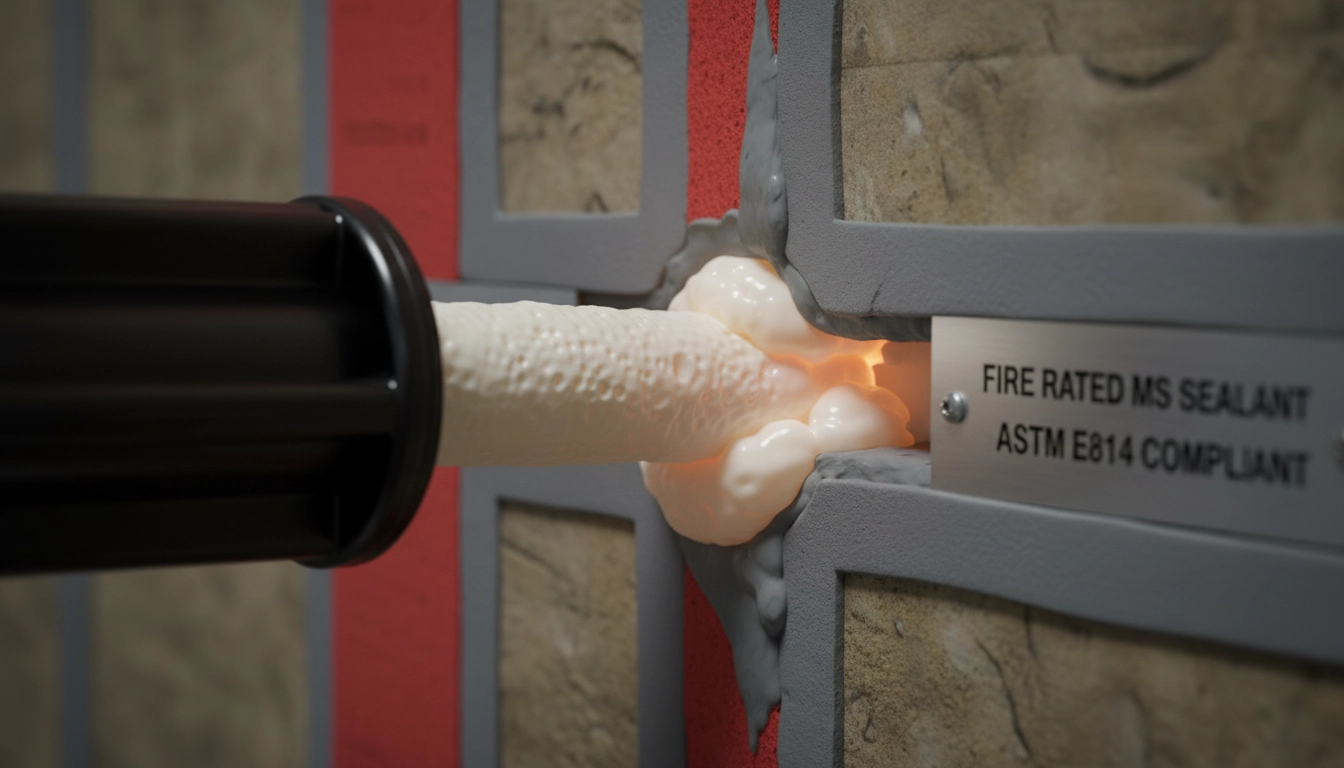
The Ultimate Guide to Fire-Rated MS Sealants: Everything You Need to Know for 2026
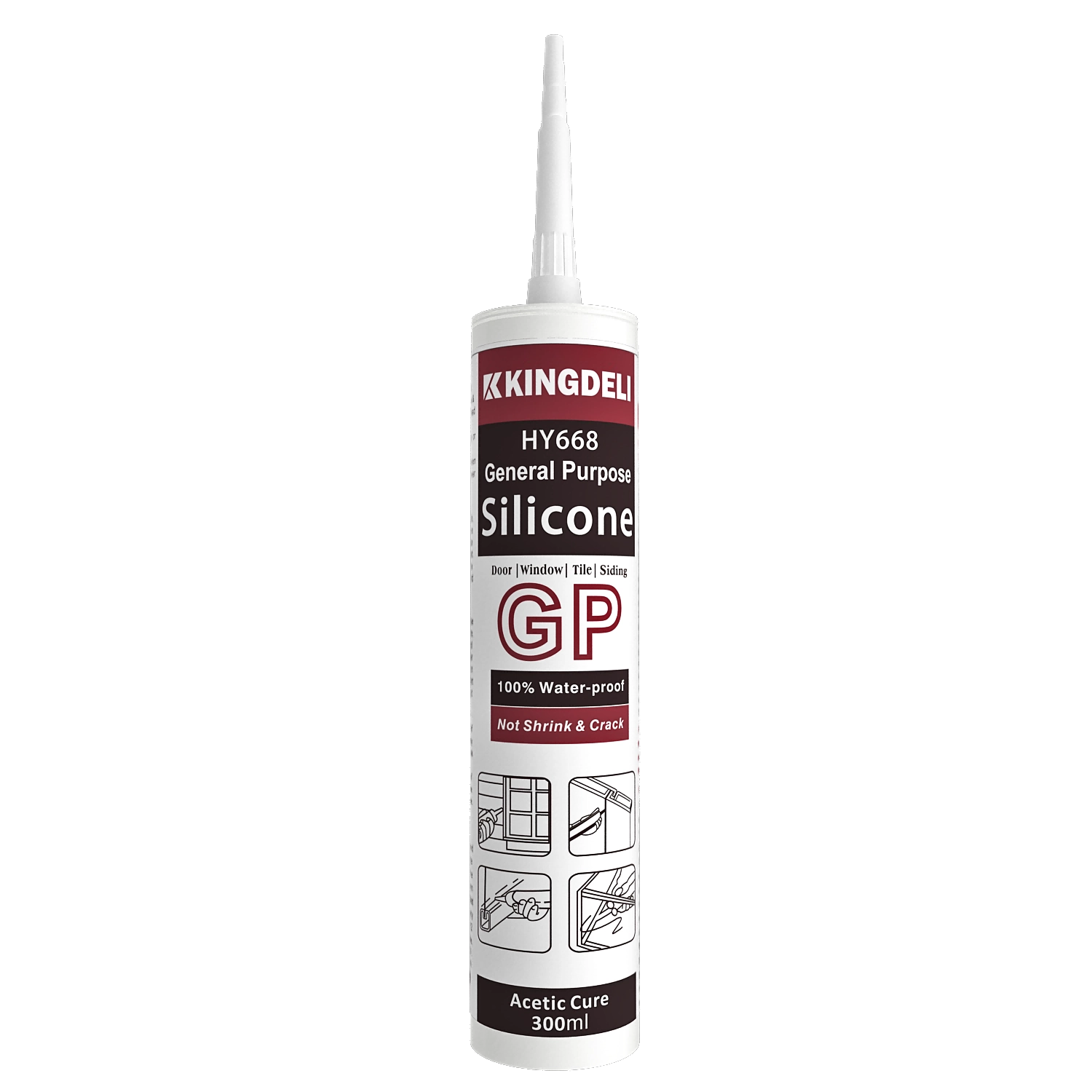
HY668 General Purpose Acetic Silicone Sealant | KINGDELI
Custom Formulations and Private Label MS Silicone Sealant
Specifying Low-VOC MS Silicone Sealant for Regulatory Compliance

HY992 Modified Polyurethane Construction Sealant
HY992 Modified Polyurethane Sealant is a one-component, moisture-curing construction sealant designed for professional building and structural sealing applications. It provides excellent adhesion, weather resistance, and durable elasticity, making it suitable for a wide range of construction materials.
The formulation delivers strong bonding performance without corrosion or substrate contamination, while maintaining low VOC content for environmentally responsible construction projects.

HY995 Crystal Clear Ms Polymer Adhesive/Sealant
HY995 Crystal Clear Ms Polymer Adhesive/Sealant is a new generation MS Polymer adhesive / sealant formulated for all bonding and sealing applications where long term reliability is required. It has excellent bonding strength on various materials. It will cure to form a durable, flexible, waterproof seal.

HY997 High-Performance Anti-Microbial MS Polymer Sealant
HY997 MS polymer sealant for is is a premium one-component, neutral-curing modified silane sealant engineered for demanding interior applications. It offers a Class 20 movement capability, ensuring long-lasting flexibility and reliable performance under dynamic joint conditions. Curing at room temperature, HY997 delivers superior anti-microbial and mildew-resistant properties, maintaining hygienic and clean environments over time.

KINGDELI HY732 Professional Acetoxy Cure Silicone Sealant
KINGDELI HY732 is a professional-grade, one-component acetoxy cure silicone sealant designed for fast curing, strong adhesion, and long-lasting flexibility. Ideal for aquariums, glass applications, aluminum doors and windows, kitchens, and bathrooms, it provides reliable sealing performance with excellent anti-fungal protection in high-humidity environments.
Let’s Build Stronger Bonds with Quality Adhesives and Sealants
Have questions about the topic or need tailored sealant solutions for your project?
Our team is ready to provide expert guidance, product recommendations, and application support.
Innovating with Integrity, Bonding the World
Since 1998, KINGDELI has delivered trusted, sustainable sealant solutions that connect industries and inspire progress worldwide.

Whatsapp: +8618825946249
Kingdeli
Kingdeli
Kingdeli
Kingdeli
Kingdeli