


Silicone Sealant for Windows and Doors Bulk Pricing: MOQ to Shipping

- How to Build a Bulk Purchasing Plan for Fenestration Sealants
- Define the application before requesting a quotation
- Choose between neutral-cure and acetoxy-cure technologies
- Translate annual demand into a practical MOQ
- What Determines Bulk Pricing from Factory to Destination
- Understand the cost structure behind a sealant quotation
- Use a landed-cost model instead of a unit-price model
- Separate indicative pricing from contractual pricing
- Quality, Compliance, and Shipping Controls for International Orders
- Build a technical approval package
- Control batch consistency and shelf life
- Plan shipping around production and construction schedules
- Why KINGDELI Supports Scalable Sealant Procurement
- Manufacturing scale and supply continuity
- Product portfolio for windows, doors, and adjacent applications
- Standards, OEM support, and responsible formulation options
- Frequently Asked Questions
Bulk procurement of silicone sealant for windows and doors requires more than comparing the price printed on a cartridge quotation. Buyers must evaluate cure chemistry, adhesion to substrates, movement capability, packaging configuration, minimum order quantity, production lead time, export documentation, freight conditions, and the total landed cost at the destination. Neutral-cure products are commonly selected for sensitive substrates and many window and door assemblies, while acetoxy-cure grades can provide efficient adhesion to compatible non-porous surfaces. A reliable purchasing strategy connects technical specifications with forecast volume, project schedules, warehouse capacity, regional standards, and after-sales support.
How to Build a Bulk Purchasing Plan for Fenestration Sealants
Define the application before requesting a quotation
The first procurement decision is the joint or assembly function. A window manufacturer may require a glazing sealant for glass-to-frame bonding, a weatherproofing compound for perimeter joints, or a sealant compatible with aluminum, uPVC, coated metal, concrete, stone, and painted surfaces. A door producer may need a flexible seal around frames, thresholds, panels, hardware interfaces, or exterior cladding. These applications can impose different requirements for adhesion, modulus, tooling, skin formation, cure speed, ultraviolet resistance, and movement accommodation.
Buyers should provide suppliers with the substrates, joint width and depth, expected movement, interior or exterior exposure, temperature range, color, packaging format, and intended standard. This information prevents a low-priced but unsuitable formulation from creating rework, staining, adhesion failure, or warranty claims. Product selection should also consider whether the assembly contains sensitive materials such as natural stone, mirrors, laminated coatings, or metals vulnerable to corrosion.
Choose between neutral-cure and acetoxy-cure technologies
Neutral silicone sealant is often preferred where low odor, broad substrate compatibility, and reduced risk to sensitive metals or alkaline materials are important. It is widely considered for exterior window perimeters, curtain wall interfaces, coated aluminum, uPVC, and mixed-material assemblies, subject to project-specific testing. Acetic silicone sealant releases acetic acid during curing and can offer strong adhesion and rapid skin formation on many glass and glazed ceramic applications, but its compatibility must be checked carefully before use near vulnerable metals, concrete, porous stone, or sensitive coatings.
Silicone glazing sealant should not be selected solely by the word “silicone” on the label. Technical data should identify tensile strength, elongation, hardness, tack-free time, cure rate, movement capability, temperature resistance, density, shelf life, and adhesion behavior. For critical façades or large commercial projects, buyers should request adhesion testing, compatibility testing, and application guidance rather than relying only on a generic product description.
Translate annual demand into a practical MOQ
Minimum order quantity affects unit pricing, working capital, inventory exposure, and supply continuity. A supplier may quote MOQ by cartridge, carton, pallet, production batch, color, label, or container. These definitions must be clarified because a seemingly small MOQ can become substantial when multiple colors, nozzle styles, cartridge sizes, or private-label designs are included.
A practical forecast separates base demand from project demand. Base demand supports regular distribution and should be replenished through a rolling schedule. Project demand may be released in stages according to construction milestones. Buyers can often improve pricing by committing to a quarterly or annual volume while requesting staggered shipments, provided the supplier can reserve raw materials and maintain batch traceability. This approach reduces overstock risk without sacrificing production efficiency.
What Determines Bulk Pricing from Factory to Destination
Understand the cost structure behind a sealant quotation
The ex-works or factory price is only one component of procurement cost. Formulation chemistry, silicone polymer content, fillers, pigments, additives, packaging, labor, quality control, and energy consumption all influence the manufacturing cost. Neutral formulations, specialty colors, low-VOC requirements, enhanced weatherability, and higher movement capability may carry a High Quality because they involve different raw materials or tighter process controls.
Packaging can materially change the quotation. Standard 300 ml or 310 ml cartridges may be suitable for common retail and professional channels, while 400 ml or 600 ml sausage packs can reduce packaging waste and support high-volume dispensing. Private-label orders may require printed cartridges, custom cartons, multilingual labels, barcodes, safety information, and color matching. Setup charges, artwork approval, tooling, and packaging minimums should be shown separately so that buyers can compare quotations accurately.
Use a landed-cost model instead of a unit-price model
A complete cost model should include product value, inland transport, export handling, documentation, insurance where applicable, ocean or air freight, destination charges, customs duties, import taxes, broker fees, warehouse handling, financing cost, and potential inspection expenses. Incoterms should be stated clearly because EXW, FOB, CIF, and DDP assign different responsibilities and risks. The ICC Incoterms 2020 rules provide the commercial framework, but buyers should still confirm the exact named place and cost allocation in the purchase contract.
Freight efficiency depends on carton dimensions, pallet pattern, container utilization, gross weight, and destination. Silicone products can be dense, so a quote based only on carton count may hide a significant weight-related freight cost. Buyers should request a packing list with carton quantity, net weight, gross weight, volume, pallet dimensions, and container loading assumptions. For recurring orders, optimizing pallet configuration can reduce damage and improve warehouse productivity.
Separate indicative pricing from contractual pricing
Raw material markets, foreign exchange, freight rates, and packaging costs can change between quotation and shipment. A professional quotation should state validity, currency, payment terms, production lead time, included documentation, and any adjustment mechanism. The buyer should also confirm whether samples, pre-production approvals, laboratory testing, and replacement of defective goods are included.
| Procurement item | What should be confirmed | Why it affects total cost or risk |
|---|---|---|
| Product grade | Cure type, substrate compatibility, movement capability, color, and packaging size | Prevents unsuitable material selection and warranty exposure |
| MOQ structure | Quantity per SKU, color, label, carton, pallet, and batch | Determines inventory commitment and production efficiency |
| Quality documentation | TDS, SDS, certificate of analysis, batch traceability, and test reports | Supports approval, compliance, and consistent receiving inspection |
| Trade term | EXW, FOB, CIF, DDP, named place, and risk-transfer point | Defines which party pays and manages each logistics stage |
| Shipping plan | Carton dimensions, palletization, container loading, and dispatch window | Controls freight cost, damage risk, and project delivery reliability |
| Payment and claims | Deposit, balance, inspection process, shelf-life policy, and remedy terms | Protects cash flow and establishes an enforceable quality process |
Quality, Compliance, and Shipping Controls for International OrdersBuild a technical approval package
Before placing a commercial order, buyers should request a technical data sheet, safety data sheet, certificate of analysis, shelf-life statement, storage conditions, application instructions, and recommended substrates. For projects governed by a recognized standard, the supplier should identify the applicable test method and provide current evidence rather than using broad claims such as “international quality.” ASTM C920 is a widely referenced specification for elastomeric joint sealants, and its requirements can be reviewed through the ASTM official standard page.
Quality management is also a supplier-capability issue. ISO 9001 describes requirements for quality management systems, while ISO 14001 addresses environmental management systems. Certification alone does not replace product testing, but documented systems can improve process consistency, corrective action, change control, and audit transparency.
Control batch consistency and shelf life
Silicone sealants are moisture-curing materials, so storage and packaging integrity are central to performance. Containers should remain sealed and be stored according to the supplier’s temperature and humidity recommendations. The purchasing contract should define minimum remaining shelf life at delivery, lot identification, manufacturing date format, and procedures for handling short-dated stock.
For private-label programs, retain approved samples from each production batch or agreed sampling frequency. Receiving inspections can include visual packaging checks, color comparison, extrusion behavior, skin formation, and cure verification. Critical applications may require adhesion testing on representative substrates. A documented nonconformance process allows the distributor or project owner to isolate questionable lots before installation.
Plan shipping around production and construction schedules
A typical export cycle includes order confirmation, artwork or specification approval, raw-material planning, manufacturing, laboratory release, packing, inland transport, export customs, vessel booking, transit, destination clearance, and final delivery. Production lead time and transit time are separate variables. Buyers should avoid treating a supplier’s manufacturing lead time as the full door-to-door schedule.
For time-sensitive construction projects, establish a shipment calendar with a buffer for port congestion, customs inspection, public holidays, weather disruption, and documentation corrections. Split shipments may reduce site stoppage risk but can increase freight and handling costs. A better decision depends on the value of uninterrupted installation, warehouse capacity, and the consequences of delayed materials.
Why KINGDELI Supports Scalable Sealant Procurement
Manufacturing scale and supply continuity
KINGDELI has operated in the high-performance sealant, adhesive, and coating industry since 1998. Headquartered in Foshan, China, our 66,000 m² facility uses fully automated production lines and has annual capacity exceeding 100,000 tons. This manufacturing scale helps distributors, window and door fabricators, contractors, and project owners plan repeat orders with greater confidence in capacity, batch continuity, and international supply.
Our team approaches bulk quotations as a technical and logistics project rather than a simple unit-price transaction. We can review the intended substrate, application method, packaging format, forecast, destination, and documentation requirements before recommending a product and shipment structure. This supports better decisions around MOQ, staged delivery, private labeling, and inventory exposure.
Product portfolio for windows, doors, and adjacent applications
Our portfolio includes neutral silicone sealant and acetic silicone sealant for different substrate and curing requirements, along with silicone glazing sealant for relevant glass and frame applications. Product selection remains dependent on project testing and substrate compatibility. For broader construction and maintenance programs, KINGDELI also supplies Acrylic Sealant, Polyurethane Sealant, MS polymer Sealant, and No More Nails adhesive.
Additional solutions include RTV Gasket Maker for specified sealing and gasket-forming applications, Epoxy Tile Grout for durable tiled areas, and Self-Leveling Sealant for suitable horizontal joint conditions. A broad portfolio allows procurement teams to consolidate compatible products with one technical partner while maintaining separate specifications for each application. It also helps distributors build a more complete sealants and adhesives range instead of relying on a single chemistry for every job.
Standards, OEM support, and responsible formulation options
KINGDELI is recognized as a National High-Tech Enterprise and contributed to the National Standard GB/T 29755-2013. Our product systems are engineered to meet strict international requirements, including ISO 9001, ISO 14001, CE, and ASTM-related expectations where applicable to the product and market. Technical claims are matched to the relevant grade, test method, and documentation package.
With more than 27 years of industry expertise and customers in over 50 countries, our organization provides OEM and ODM support for brand owners and distributors. Services can include formulation coordination, packaging development, label review, color requirements, product documentation, and technical assistance. Sustainable low-VOC formulations are available for projects where indoor air quality, environmental objectives, or regional purchasing specifications influence material selection.
For buyers evaluating factories, the most useful comparison is the supplier’s ability to connect formulation, quality control, production capacity, documentation, and shipping execution. KINGDELI combines automated manufacturing, technical service, and export-oriented support to help customers reduce avoidable procurement risk and improve total project value.
Contact KINGDELI to review product requirements, MOQ, OEM packaging, technical documentation, and a shipping plan for your next bulk sealant order.
Frequently Asked Questions
What is the typical MOQ for bulk window and door sealant?
MOQ varies by supplier and may be defined by cartridge, carton, pallet, production batch, color, or private-label SKU. Buyers should confirm the exact quantity structure and consider a rolling quarterly or annual commitment with staggered shipments.
Should buyers choose neutral-cure or acetoxy-cure silicone for window frames?
Neutral-cure material is often preferred for sensitive metals, coated surfaces, uPVC, and mixed-material assemblies, while acetoxy-cure products can suit compatible non-porous surfaces such as many glass applications. Substrate compatibility and project testing should determine the final choice.
What documents should be requested before placing a commercial order?
Buyers should request a technical data sheet, safety data sheet, certificate of analysis, shelf-life statement, storage instructions, application guidance, batch traceability information, and test reports relevant to the required standard or project specification.
How can buyers calculate the real landed cost of imported sealant?
The landed-cost model should include product value, inland transport, export handling, documentation, insurance where applicable, freight, destination charges, customs duties, taxes, broker fees, warehouse handling, financing cost, and inspection expenses. The selected Incoterm and named place should also be confirmed.
How should silicone sealant be stored after arrival?
Products should remain sealed and be stored according to the manufacturer’s temperature and humidity recommendations. The purchase agreement should define minimum remaining shelf life at delivery, lot identification, manufacturing date format, and procedures for short-dated or damaged stock.
Can KINGDELI provide private-label or OEM sealant?
Yes. KINGDELI provides OEM and ODM support that can include formulation coordination, packaging development, label review, color requirements, product documentation, and technical assistance for brand owners and distributors.
Cost Analysis: Buying Neutral Silicone Bulk vs Cartridges
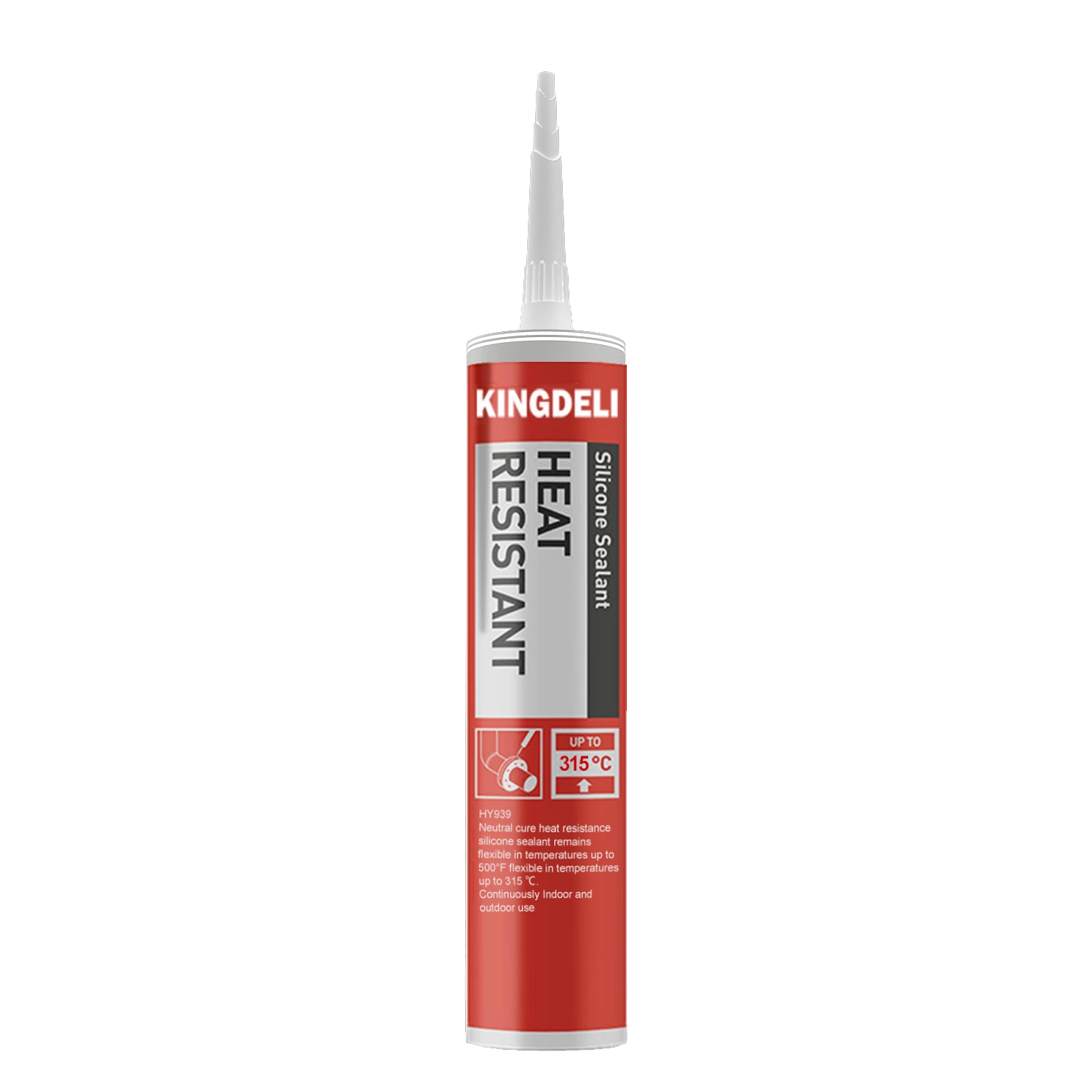
HY939A Neutral Heat Resistant Silicone Sealant | KINGDELI
Acetic Silicone Sealant: Industrial Applications and Use Cases
OEM vs ODM PU Adhesive Suppliers: Sourcing for Auto Brands

HY992 Modified Polyurethane Construction Sealant
HY992 Modified Polyurethane Sealant is a one-component, moisture-curing construction sealant designed for professional building and structural sealing applications. It provides excellent adhesion, weather resistance, and durable elasticity, making it suitable for a wide range of construction materials.
The formulation delivers strong bonding performance without corrosion or substrate contamination, while maintaining low VOC content for environmentally responsible construction projects.

HY995 Crystal Clear Ms Polymer Adhesive/Sealant
HY995 Crystal Clear Ms Polymer Adhesive/Sealant is a new generation MS Polymer adhesive / sealant formulated for all bonding and sealing applications where long term reliability is required. It has excellent bonding strength on various materials. It will cure to form a durable, flexible, waterproof seal.

HY997 High-Performance Anti-Microbial MS Polymer Sealant
HY997 MS polymer sealant for is is a premium one-component, neutral-curing modified silane sealant engineered for demanding interior applications. It offers a Class 20 movement capability, ensuring long-lasting flexibility and reliable performance under dynamic joint conditions. Curing at room temperature, HY997 delivers superior anti-microbial and mildew-resistant properties, maintaining hygienic and clean environments over time.

KINGDELI HY732 Professional Acetoxy Cure Silicone Sealant
KINGDELI HY732 is a professional-grade, one-component acetoxy cure silicone sealant designed for fast curing, strong adhesion, and long-lasting flexibility. Ideal for aquariums, glass applications, aluminum doors and windows, kitchens, and bathrooms, it provides reliable sealing performance with excellent anti-fungal protection in high-humidity environments.
Let’s Build Stronger Bonds with Quality Adhesives and Sealants
Have questions about the topic or need tailored sealant solutions for your project?
Our team is ready to provide expert guidance, product recommendations, and application support.
Innovating with Integrity, Bonding the World
Since 1998, KINGDELI has delivered trusted, sustainable sealant solutions that connect industries and inspire progress worldwide.

Whatsapp: +8618825946249
Kingdeli
Kingdeli
Kingdeli
Kingdeli
Kingdeli