


Silicone Sealant for Windows and Doors: 2026 Market Trends

- 2026 Demand Signals in Fenestration and Building-Envelope Sealing
- Energy performance is increasing the value of perimeter sealing
- Low-emission and healthier-material specifications are expanding
- Automation and productivity are influencing pack-size decisions
- How Buyers Should Compare Sealant Chemistry and Performance
- Neutral-cure versus acetic-cure silicone
- Movement capability and joint design
- Weatherability, adhesion, and glazing compatibility
- Procurement Controls for Reliable Window and Door Joint Performance
- Build a technical approval file before volume purchasing
- Control installation variables at the project site
- Evaluate total cost of ownership, not only unit price
- KINGDELI Capabilities for Fenestration and Construction-Sealant Programs
- Large-scale manufacturing with documented technical depth
- A product portfolio designed for different assembly requirements
- OEM, ODM, and technical service for global buyers
- Frequently Asked Questions
In 2026, silicone sealant for windows and doors is no longer purchased solely as a basic perimeter filler. It is increasingly treated as a performance component of the building envelope, influencing air leakage, water penetration, acoustic comfort, thermal efficiency, façade durability, and warranty exposure. Window manufacturers, façade contractors, distributors, and project owners are therefore comparing cure chemistry, movement capability, adhesion, weathering resistance, volatile organic compound profile, application productivity, and documented quality controls before approving a material.
The strongest market direction is toward fit-for-purpose formulations supported by traceable technical documentation. Neutral-cure products are gaining attention where compatibility with concrete, coated metal, natural stone, plastics, and sensitive substrates is important, while acetic-cure grades remain relevant for many glass and non-sensitive applications. At the same time, silicone glazing sealant is being specified for demanding fenestration and façade interfaces that require durable weather resistance and reliable adhesion. The following analysis explains the 2026 procurement logic and how KINGDELI supports buyers seeking consistent supply and technical confidence.
2026 Demand Signals in Fenestration and Building-Envelope Sealing
Energy performance is increasing the value of perimeter sealing
Building owners are placing greater emphasis on the continuity of the air and water barrier around window frames, curtain walls, doors, and expansion joints. A sealant joint that is poorly designed, inadequately cleaned, or incompatible with the adjacent materials can become a pathway for drafts and moisture. Although a sealant cannot compensate for an incorrectly designed frame or failed drainage system, a correctly specified elastomeric joint helps preserve the intended performance of the assembly.
In practical terms, procurement teams are asking for more than a product name. They need joint-design guidance, recommended tooling practices, substrate preparation instructions, primer requirements, curing information, and evidence of adhesion testing. This shift favors suppliers able to connect laboratory performance with jobsite implementation instead of treating the cartridge as an isolated commodity.
Low-emission and healthier-material specifications are expanding
Green-building programs, indoor-air-quality objectives, and public procurement policies are encouraging the use of low-VOC construction materials. VOC limits vary by jurisdiction and product category, so buyers should request the applicable safety data sheet, emissions information, and conformity documentation rather than relying on the phrase “eco-friendly.” Low odor can improve installation conditions, but odor alone does not establish long-term performance or regulatory compliance.
For projects involving occupied buildings, schools, hospitals, hotels, and high-density housing, a low-VOC neutral silicone sealant can simplify material approval when supported by appropriate testing. The formulation must still deliver adhesion, elastic recovery, weather resistance, and compatibility with coatings, insulating glass components, gaskets, and façade substrates.
Automation and productivity are influencing pack-size decisions
Fabricators and contractors are increasingly measuring installation economics through labor hours, rework rates, nozzle changes, curing downtime, and waste. Sausage packs and bulk packaging can reduce packaging waste and improve throughput on high-volume lines, while standard cartridges remain practical for service work and smaller projects. Consistent extrusion force is particularly important for robotic or pneumatic dispensing, where viscosity variation can disrupt bead geometry.
Digital project management is also improving batch traceability. Buyers may expect lot numbers, production dates, technical data sheets, safety data sheets, and application records to be connected to a project or delivery. This documentation supports root-cause analysis when a joint fails and helps distributors manage inventory across multiple markets.
How Buyers Should Compare Sealant Chemistry and Performance
Neutral-cure versus acetic-cure silicone
Neutral-cure silicone generally releases alcohol, oxime, or another neutral by-product during curing, depending on the chemistry. It is commonly considered for metals, masonry, coated surfaces, plastics, and other substrates where acidic by-products may create compatibility concerns. Acetic-cure silicone releases acetic acid and can provide strong adhesion on many glass and ceramic surfaces, but its odor and substrate compatibility require closer evaluation.
The correct choice depends on the actual assembly. Aluminum finish, powder coating, zinc, concrete alkalinity, stone porosity, paint system, plasticizer migration, and contact with insulating glass sealants can all affect performance. A technical approval process should include representative substrates and, where relevant, a compatibility assessment with glazing tapes, setting blocks, gaskets, and adjacent sealants.
Movement capability and joint design
Silicone is valued in fenestration because cured elastomers can accommodate cyclic movement caused by temperature changes, wind load, material expansion, building settlement, and frame deflection. However, movement capability is meaningful only when joint width, depth, backer-rod selection, bond-breaker placement, and application geometry are correctly controlled.
Buyers should review the product classification and test basis rather than comparing movement percentages without context. ASTM C920 provides a widely recognized specification framework for elastomeric joint sealants, while ISO 11600 addresses building construction sealants and classification. These references do not replace project-specific testing, but they provide a common language for performance discussions.
Weatherability, adhesion, and glazing compatibility
Exterior window and door joints face ultraviolet radiation, rain, humidity, freeze-thaw cycles, airborne pollutants, and repeated thermal movement. A credible evaluation should consider adhesion retention, elastic recovery, surface chalking, cracking, discoloration, and resistance to water exposure. Accelerated laboratory testing is useful, but field exposure, local climate, and installation quality remain relevant.
For insulated glass and structural or semi-structural glazing, the approval process is more demanding. The sealant may interact with spacers, secondary seals, coatings, films, and setting materials. A project should not substitute a general-purpose bathroom or household product for a glazing-grade material without documented compatibility and engineering approval.
| Procurement factor | Neutral-cure silicone | Acetic-cure silicone | Buyer verification |
|---|---|---|---|
| Typical compatibility profile | Often suitable for a broader range of sensitive construction substrates | Often effective on glass and ceramic, subject to substrate limitations | Request adhesion and compatibility data on project materials |
| Curing by-product | Neutral chemistry varies by formulation | Acetic acid and characteristic vinegar-like odor | Review technical and safety documentation |
| Exterior exposure | Can provide strong weathering performance when properly formulated | Can provide strong weathering performance in suitable applications | Check movement, UV, water, and aging test results |
| Common procurement risk | Assuming every neutral formulation is compatible with every coating or plastic | Using it on corrosion-sensitive or chemically incompatible substrates | Conduct a project-specific sample test before approval |
| Best purchasing practice | Match cure system to substrate, joint geometry, and emissions requirements | Match cure system to glass, ceramic, and approved non-sensitive surfaces | Approve the complete assembly, not only the sealant cartridge |
Procurement Controls for Reliable Window and Door Joint Performance
Build a technical approval file before volume purchasing
A professional approval file should include the technical data sheet, safety data sheet, batch identification method, shelf-life statement, curing conditions, application temperature range, movement classification, hardness, density, tensile or adhesion information, and storage requirements. Where a project specification cites standards, the supplier should explain which tests were conducted, by which method, and under what laboratory conditions.
Quality management is also part of product performance. ISO 9001 provides a framework for quality management systems, while ISO 14001 addresses environmental management systems. Certification does not guarantee that a specific sealant is suitable for a particular window or door, but it can indicate that the manufacturer operates documented systems for process control, corrective action, and continual improvement.
Control installation variables at the project site
Many joint failures originate from contamination, trapped moisture, incorrect joint dimensions, insufficient tooling, premature water exposure, or movement before adequate cure. Installers should clean surfaces using methods approved for the substrate, remove dust and release agents, mask adjacent finishes, use a compatible backer rod where required, and tool the bead to eliminate voids. The curing rate depends on temperature, humidity, bead dimensions, and ventilation, so accelerated schedules should be validated rather than assumed.
Adhesion tests on actual substrates are especially valuable when the assembly includes powder-coated aluminum, anodized profiles, painted steel, uPVC, treated wood, stone, or composite panels. A small preconstruction mock-up can reveal adhesion loss or staining before the issue reaches a production line or completed façade.
Evaluate total cost of ownership, not only unit price
The lowest purchase price can become expensive when it produces slow extrusion, inconsistent cure, rejected beads, damaged finishes, rework, or warranty claims. A more useful calculation includes material consumption per linear meter, labor productivity, packaging waste, shelf-life losses, transport conditions, failure risk, technical support, and supply continuity.
Distributors should also assess private-label consistency, multilingual documentation, carton and cartridge labeling, regulatory support, minimum order quantities, and contingency capacity. For international projects, a supplier with established export processes can reduce delays related to customs documents, packaging changes, and market-specific compliance requirements.
KINGDELI Capabilities for Fenestration and Construction-Sealant Programs
Large-scale manufacturing with documented technical depth
Since 1998, KINGDELI has developed as a global manufacturer of high-performance sealants, adhesives, and coatings. Headquartered in Foshan, China, our 66,000 m² facility uses fully automated production lines with annual capacity exceeding 100,000 tons. This scale supports stable supply for distributors, window and door manufacturers, façade contractors, and project owners managing recurring demand across multiple markets.
As a recognized National High-Tech Enterprise and a contributor to the National Standard GB/T 29755-2013, we combine manufacturing capacity with formulation and application knowledge. Our quality framework includes ISO 9001 and ISO 14001 certifications, while selected products are engineered to meet international requirements such as CE and ASTM. Buyers should still confirm the exact certificate and test report applicable to the selected product and intended use.
A product portfolio designed for different assembly requirements
Our neutral silicone sealant range is positioned for applications where broad substrate compatibility and lower-odor curing are priorities. Our acetic silicone sealant range serves suitable glass, ceramic, and other approved applications requiring rapid surface skin formation and dependable adhesion. For façade and fenestration projects, our silicone glazing sealant options are evaluated according to weather exposure, joint movement, substrate combination, and project-specific compatibility requirements.
KINGDELI also supplies Acrylic Sealant for paintable interior joints and lower-movement applications, Polyurethane Sealant for robust elastic bonding and sealing, and MS polymer Sealant for applications requiring primerless adhesion potential, low odor, and a balanced performance profile. These alternatives help procurement teams consolidate suppliers while still matching chemistry to the assembly rather than forcing one product across every use case.
OEM, ODM, and technical service for global buyers
With more than 27 years of industry expertise and a presence in over 50 countries, KINGDELI supports private-label and project-specific programs through OEM/ODM services, packaging coordination, product selection, and professional technical assistance. Low-VOC formulation development can support sustainability goals when combined with the correct documentation and market requirements.
Beyond window and door sealing, our portfolio includes No More Nails adhesive for installation and assembly tasks, RTV Gasket Maker for formed-in-place sealing, Epoxy Tile Grout for durable tile joints, and Self-Leveling Sealant for applications requiring controlled flow and surface leveling. This breadth can simplify vendor management for construction-material distributors and manufacturers that need complementary sealants and adhesives from one qualified source.
Our operating principle is to connect formulation consistency with practical project outcomes. That means helping buyers review substrates, packaging, curing conditions, production forecasts, and quality expectations before a purchase order is released. For recurring programs, batch control, export experience, and capacity planning are essential safeguards against product variation and delivery interruption.
In 2026, the strongest purchasing strategy is not simply to select the most popular silicone chemistry. It is to approve a complete sealing system based on substrate compatibility, joint movement, climate exposure, emissions expectations, installation controls, documentation, and lifecycle cost. Suppliers that can demonstrate stable manufacturing, transparent testing, responsive technical service, and scalable delivery will be better positioned to support durable windows, doors, façades, and renovation programs.
Frequently Asked Questions
Which silicone chemistry is better for aluminum window frames?
The correct choice depends on the aluminum finish, coating system, joint design, and adjacent materials. Neutral-cure silicone is often considered where compatibility with coated metal and other sensitive substrates is important, but buyers should approve the product through adhesion and compatibility testing on the actual frame.
Is acetic-cure silicone suitable for exterior windows and doors?
Acetic-cure silicone can be suitable for glass, ceramic, and other approved non-sensitive surfaces, including some exterior applications. Its use should be reviewed against corrosion risk, substrate compatibility, glazing components, weather exposure, and the manufacturer’s technical data.
What documents should a commercial buyer request from a sealant supplier?
The approval file should normally include the technical data sheet, safety data sheet, batch identification method, shelf-life statement, curing conditions, application temperature range, movement classification, test information, storage requirements, and any certificates or declarations required by the project.
How can window and door contractors reduce sealant joint failures?
Contractors should control cleaning, substrate dryness, joint dimensions, backer-rod placement, masking, tooling, curing conditions, and premature exposure to water or movement. Adhesion tests and a preconstruction mock-up on representative materials can identify problems before full installation.
Does a low-VOC sealant automatically provide better performance?
No. Low VOC or low odor addresses an emissions or installation-comfort objective, but it does not by itself prove adhesion, movement capability, weather resistance, curing reliability, or compatibility. The complete technical and regulatory documentation should be reviewed for the intended application.
What should distributors consider when selecting a global sealant manufacturer?
Distributors should evaluate formulation consistency, production capacity, quality systems, export experience, technical documentation, packaging flexibility, OEM/ODM support, minimum order quantities, shelf life, delivery reliability, and technical service. Total cost should include waste, rework, inventory risk, and warranty exposure.
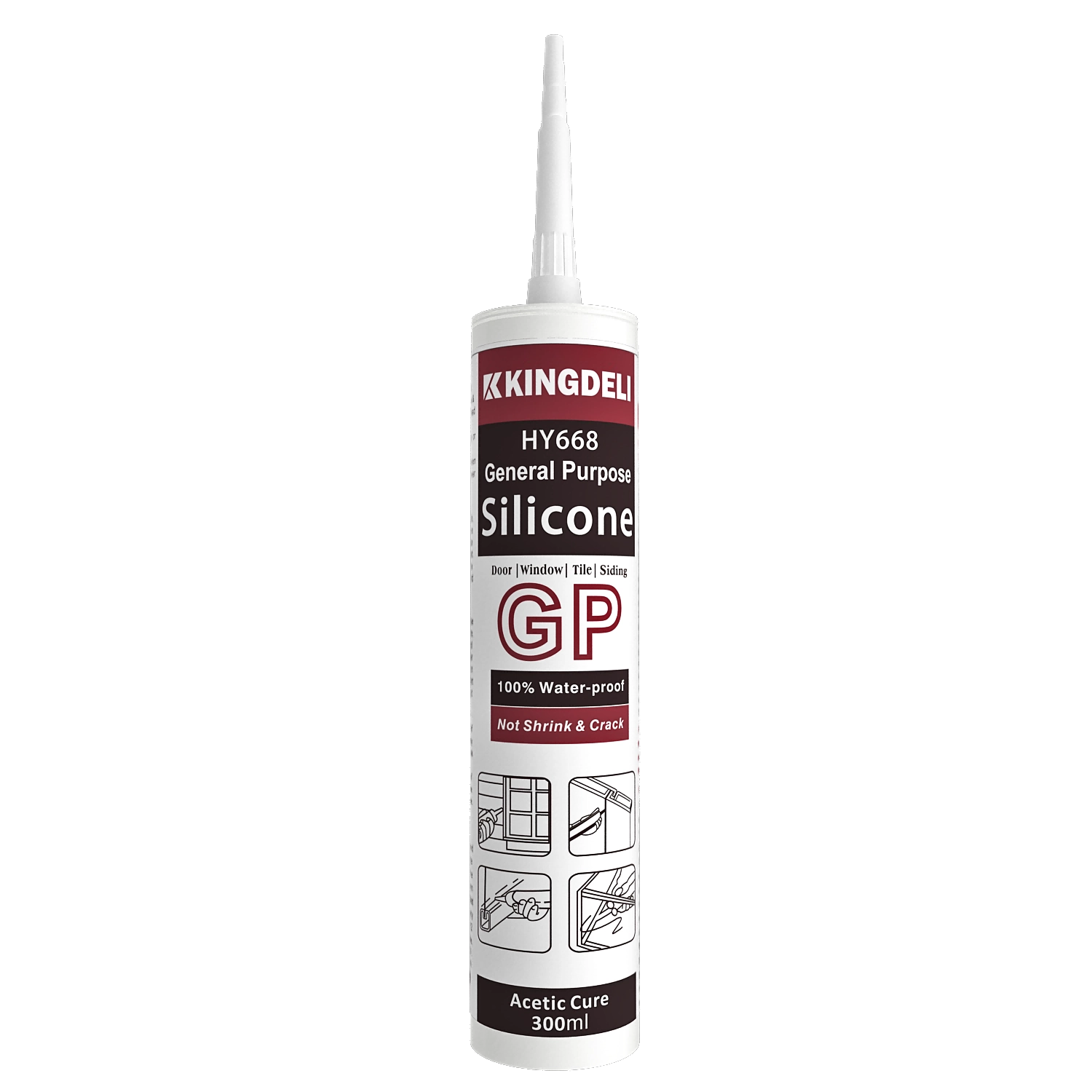
HY668 General Purpose Acetic Silicone Sealant | KINGDELI
Neutral Silicone Sealant Formulations: Acid vs Neutral Cures
Cost Saving Tips for Bulk Procurement of MS Silicone Sealant
How to Vet a Private Label Silicone Sealant Manufacturer

HY992 Modified Polyurethane Construction Sealant
HY992 Modified Polyurethane Sealant is a one-component, moisture-curing construction sealant designed for professional building and structural sealing applications. It provides excellent adhesion, weather resistance, and durable elasticity, making it suitable for a wide range of construction materials.
The formulation delivers strong bonding performance without corrosion or substrate contamination, while maintaining low VOC content for environmentally responsible construction projects.

HY995 Crystal Clear Ms Polymer Adhesive/Sealant
HY995 Crystal Clear Ms Polymer Adhesive/Sealant is a new generation MS Polymer adhesive / sealant formulated for all bonding and sealing applications where long term reliability is required. It has excellent bonding strength on various materials. It will cure to form a durable, flexible, waterproof seal.

HY997 High-Performance Anti-Microbial MS Polymer Sealant
HY997 MS polymer sealant for is is a premium one-component, neutral-curing modified silane sealant engineered for demanding interior applications. It offers a Class 20 movement capability, ensuring long-lasting flexibility and reliable performance under dynamic joint conditions. Curing at room temperature, HY997 delivers superior anti-microbial and mildew-resistant properties, maintaining hygienic and clean environments over time.

KINGDELI HY732 Professional Acetoxy Cure Silicone Sealant
KINGDELI HY732 is a professional-grade, one-component acetoxy cure silicone sealant designed for fast curing, strong adhesion, and long-lasting flexibility. Ideal for aquariums, glass applications, aluminum doors and windows, kitchens, and bathrooms, it provides reliable sealing performance with excellent anti-fungal protection in high-humidity environments.
Let’s Build Stronger Bonds with Quality Adhesives and Sealants
Have questions about the topic or need tailored sealant solutions for your project?
Our team is ready to provide expert guidance, product recommendations, and application support.
Innovating with Integrity, Bonding the World
Since 1998, KINGDELI has delivered trusted, sustainable sealant solutions that connect industries and inspire progress worldwide.

Whatsapp: +8618825946249
Kingdeli
Kingdeli
Kingdeli
Kingdeli
Kingdeli